hello and welcome to the byzantine scotus today i'm going to be taking a look at the franciscan view of the trinity so i'm going to be primarily looking at scotus but i'm also going to be looking at st bonaventure to help us enhance scotus's account and more fully understand it because this is always how the franciscan tradition has read scotus but what i especially want to look at here and i think is very important to grasp with scotus is scotus is trying to reconcile the eastern and western views on the trinity and so i think
scotus can actually be very helpful here in ecumenical dialogue to show that the latin understanding of the trinity need not be opposed to the eastern review but the two can work harmoniously with each other so before we jump into looking at scotus's view of the trinity we should first just remind ourselves the basic dogmas of the trinity now if you don't know anything about the trinity whatsoever this probably is not the introductory video because i'm not going to explain the basics but essentially we have one nature essence which is shared then by three persons or
hypotheses and the relations between them is that the son is begotten of the father and then in the original nicene creed it says that the spirit proceeds from the father but later latin creeds added on and the sun here not to contradict the earlier creeds but to clarify them in they would argue to be in line with even the eastern fathers who were at the council of nicaea who originally formulated this view there's essentially two different explanations or models for the trinity among the fathers and the scholastics russell friedman calls these two views the relational
view of the trinity and the emanationist view of the trinity and i do have a bibliography here at the end if people want to read friedman's book on this and so in the relational um explanation for the trinity persons are defined by relations of opposition so we know that the father and the son are distinct because of the relation affiliation so the son is begotten of the father and um so we have begottenness and then we have paternity as the relation of the son back to the father versus in the emanationist view persons are defined
by the mode of procession and so the reason that the sun is distinct from the father is that he is begotten of the father there's actually is an emanation from the father that terminates in the person of the son and so as a result of this we're going to see many different details that come out of this so for example in the relational explanation of the trinity persons can share personal properties because personal properties are not essential for defining them so the spirit can be can proceed from both the father and the son because it
is not the difference between a beginning and procession is simply the number of persons it comes forth from rather than the actual mode itself so the reason that the spirit is distinct from the sun in the relational view is that the spirit comes forth from two persons while the sudden comes forth from only one person however in the emanationist view the reason that the sun and the spirit are different persons is because the sun is begotten and the spirit proceeds these are actually two different modes of coming forth it's not simply the number of persons
it comes forth from and this is the personal properties that we're gonna see right so the personal property of um the father within the relational view is that he is unbegotten he neither begets nor proceeds the son is both unbegotten but he is a spirator he does spirate the spirit and the fought and he shares that with the father the father and the son are both spirators within the relational view and that's because personal properties aren't really a category within the relational view and so this is fine but for the emanationist view personal properties are
everything basically here so um the father is unbegotten the son is begotten and the spirit proceeds or spirated each one has one personal property and everything else in the trinity is shared in common but each of these has these one personal property that makes them distinct from the others and this then goes forth into the filioque which is the end the sun of the latin nicene creed that the philly oakway is necessary within a relational view because it's the only way you can distinguish the spirit from the sun however within the emanationist view the philly
oak way is not strictly necessary because the sun and the spirit come forth in different modes and so it's not necessarily necessary we then come to the difference of the divide essence this is a little more obscure uh richard cross has done good work on this in his many different articles on trinity but he shows that within augustine the divine essence is very strictly not a universal augustine is very clear about this however in the greek fathers the divine essence is kind of treated like a universal within them and it comes i think quite explicitly
within um gregory of nisa in john of damascus and i highly recommend richard cross's work on this where he shows that they did indeed hold the divine essence to be a universal i think the most clear statement we get on this is from gregory of nisa where he makes the point of there's actually only one humanity but simply we talk about many different humans um just colloquially likewise there's really only one god because there's one universal godness to all three of them now this is really not the universal view no pun intended there of the
eastern fathers and i think that this is this even this statement is strictly indicative of gregory of nisa's own ideas but you can see where gregory of nisa is going down with that train of thought there that the divine essence really is a universal shared among the three persons and as i was just hinting at there um then the relational view is the augustinian view it's very very clear in augustine and it is the view that continues all the way forward there into the middle ages and the emanationist view is the view of the greek
fathers and it's very very clear in the greek fathers you can just look at the types of arguments the greek fathers make and you'll see it lines up with the emanationist view here and then we get to the middle ages here and the relational view is very very clearly upheld by saint thomas and it's very strongly the thomist view and the franciscan view is grouped in by russell friedman as an emanationist view and i think that's mostly fair it is mostly an emanationist explanation of the trinity but i think we're going to see that it
takes some important elements from the relational view and is able to more strongly explain some of the problems within the emanationist view by integrating the best aspects of the relational view and so it's able to take in the best aspects of both the latin and the greek fathers on the trinity i explicitly also say the greek fathers here because it's not um as i'm not looking so much at the alexandrian fathers or the syriac fathers or anything like that i'm really not familiar with those fathers i'm really looking here at the byzantine tradition of the
capital oceans maximus the confessor and john of damascus now why would we want to seek to reconcile these two views of the trinity well i think we have to if we want to get to a genuine mind of the fathers we can't simply dismiss one tradition uh entirely this is often done within the eastern tradition to just entirely dismiss the latin tradition of augustine and everything coming out of augustine we really have to take seriously both the eastern and the western views and understand them in together so that both neither one is wrong that they
both enhance one another and i think this is demonstrated really well by um robert grotesque who's quoted by blessed scotus in the ordinatio to show why we need to reconcile the two but who dares accuse this author namely john damascene and blessed basil cyril and other like greek fathers of being heretics who indeed will accuse again blessed jerome augustine and hillary and other like latins of being heretics it is likely then that there is not under the said contrary words and opinion of contrary saints when it is more subtly understood and distinguished no opposed opinion
would appear all right so now let's turn to scotus's own views on the trinity so as i mentioned earlier the main problem within an emanationist account of the trinity is that it seems to make the divine essence into a universal and this is of course problematic because then we essentially have a social trinitarianism we have three gods that yes they all share one common divine nature but there is no real one divine nature that they all share they're still numerically three here this is i think especially as i quoted earlier a problem within saint gregory
of nisa i don't think saint gregory wants to go down that route but he's not sure of how to avoid this problem and i think that scotus is going to give us the solution to this problem so within a classical philosophy we have two types of realism we have the aristotelian moderate realism and a platonic ultra realism so oh if you go back to the basic idea of universals go back to your freshman 101 philosophy class you have plato and for plato there is a world of form so out in this heavenly realm there is
a world of forms and these are the perfect universals of things so if we say have three dogs each dog is participating within the form of dogness that exists off in the world of forms in each one then there's only one real dogness that is participated in by three dogs now aristotle does agree that there is genuine universals but aristotle pushes back to more moderate realism there's not some heavenly world of forms the form or the essence of a thing is in the thing itself i know in scholastic philosophy form and essence are not the
same thing but for aristotle they are the same thing and so there is then three instances of the essence of the thing there's only one common nature to all three but it's instantiated three times in these three dogs here um so we have three distinct dogs now scootis is going to want to say that most things fall within moderate realism most things the essence of it is within the thing itself so scotus would say in that case of those three dogs that there are numerically three essences there's a common nature to all those essences but
it's instantiated three distinct times in scooters we'll see that all finite beings have this and this also has to push back a little bit against etienne jealous misreading of um scotus on the universals because scotus does hold to a concept of divine ideas but the divine ideas are not the essence of the thing they're god's idea and will to create the particular thing this is also the case in saint augustine saint maximus saint vaughn adventure really even in saint thomas and so i think jill songs claim that this is an essentialist metaphysics it's misreading it
um and if you don't understand that you haven't read your song don't worry too much about that but i think the essential point here is that we have many instances of each thing because it's the essence of the thing is in the thing itself but scudus doesn't deny the existence of ultra-realism he says that there is a sense in which ultra-realism is true and that's an infinite being so if we have an infinite being that infinite being could is fully its essence but the essence could be in multiple instances of it but it would still
remain numerically one and so of course scotus does admit that there really is an infinite being and if you want to see more of what scotus means by an infinite being watch my videos on the divine attributes and on university but going on from that we have god is indeed an infinite being and god is a singular infinite being god is not three infinite beings he is one infinite being and so for scotus then the divine essence is an ultra real universal and there is this one ultra real um divine essence and it's instantiated in
each person so the father is fully the divine essence the son it fully is the divine essence the holy spirit fully is the divine essence but they are not each other how is this it's because if you take infinity and divide it by three you just have infinity and if you take infinity and you add it up three times you still just get infinity no matter how you work with infinity you always end with a singular infinity and so each person is this one infinite god in each and so god also remains numerically one so
it's not like we can add up the three persons if we add up the three persons there's still only one divine essence and the divine essence it's not strictly like plato's concept of ultra realism it is in plato's concept of ultra realism they're off in some separate worlds of forms now for um for scotus each one fully is that divine essence and so it's not a separate fourth thing it's instantiated three times but only as one singular thing so it's similar to plato's concept of ultra realism but since it's not being instantiated in finite beings
but being instantiated infinite beings it doesn't fall into the problem that plato has that you're simply adding an extra thing to it and therefore you don't fall into all the problems that platonic realism falls into and if you want to know more about scotus on um his view of realism and how it applies to the trinity i highly recommend richard cross's article on this which will again be included in the bibliography at the end of this video and so you still have to distinguish the three persons of the trinity though if they're each fully the
divine essence and scotus is going to do this by using both relation and emanation so if you see on the bottom part of the screen i have an example of how you could explain emanation and so we have right the sonic comes forth from the father and the spirit comes forth from both the father and the son together and this is how they receive their divine being so the father is still the sole source of the trinity well he's still the monarch of the trinity but we have to also take into account this is the
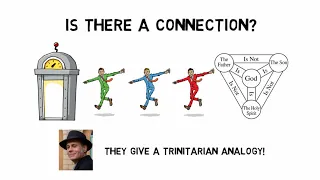
important part in which bonaventure and scotus will emphasize is that it terminates in a distinct person and therefore there is still subsisting relations so if we look at the chart on the right you'll see that right the sun is related to the father because the father has paternity towards the sun and the sun has affiliation back towards the father right and so it's through these subsisting relations that they can be distinguished from one another but they ultimately still come forth from certain sources so we have emanation which terminates in relation and so it's not one
or the other but rather the two working together which help us to understand relation in the trinity i highly recommend here both russell freeman and jared goff who help us understand this russell friedman thinks that bonaventure hasn't fully developed this yet but he's mostly looking at bonaventure sentence commentary but i think the useful help that jared goff shows is if you look at st bonaventure's uh question disputed questions on the mystery of the trinity you actually do get a very developed account here and bonaventure develops four different modes of being which he's going to use
to explain it so we have the absolute mode of being and the absolute mode of being is each person fully being the divine essence then we have though the respective mode of being so the sun has his respective mode of being of being from the father through emanation and the spirit of being from both the father and the son through emanation and then the from that though we then have the modes of having themselves these are subsisting relations and so each person it terminates in the subsisting relations we have the point of origin but then
we also have the point of termination at which now they can each relate to each other through these subsystem relations and so we don't have to have just one or the other then bonaventure has on top of this the rashionis habendi the reasons of having which are the divine attributes through which we can know each of the persons so we can know that they all have the attributes of god but they are all are still distinct from one another there's a good book on this and um this idea within gregory of nisa i think by
um michelle renee barnes i highly recommend his book on this um dinamis in gregory of nisa and so i've been saying a number of times here that the spirit does in fact proceed from the sun so why do we know that the spirit also proceeds from the sun something rejected in the east this is of course called the filioque and the primary spot where scotus draws this from is from saint augustine specifically his psychological analogy so let's first think of the mind in um saint augustine he talks about right memory produces intellect to examine itself
so the intellect comes forth from the memory and the memory in the intellect together bring forth the will because the intellect analyzing the memory then makes choices outwards and that is the will and um scotus doesn't use the term memory he does fold memory into intellect so that memory and intellect are two aspects of this one uh faculty which he just calls intellect but there still is the same pattern from saint augustine the same three-fold patterns there's two parts to the intellect the memory and the understanding and within the thomas school it's very often just
taken this psychological analogy as merely an analogy but the franciscan school is something that russell friedman emphasizes very well really it does sort of run with this psychological analogy and use it as the primary way in which we can understand the trinity so if the son is the logos he is the self-thought of the father he as a saint paul calls him in first corinthians or um colossians rather the image of the invisible god so god thinks of himself the father thinks of himself and this is the begetting of the son of this self-thought and
then the father sees the son and he loves the son and love is an act of the will it's an act of charity and so the spirit then proceeds as the love from the father to the son and the sun then loves the father backs there's this mutual indwelling of the father and the son through the holy spirit that we hear this a bunch in um in traditional um latin canons will have who lives and reigns with you in the unity of the holy spirit that the holy spirit and these canons go long before this
ism this is the western trinitarian theology coming out of augustine that the unity of the father and the son is found in the love communicated through the spirit so that the son is the self-knowledge of the father and the spirit is the love between the father and the son and so the father is still the primary principle in the sun spiration but the sun shares in this singular um spiration through this mutual reciprocity right because the spirit proceeds because the sun is beloved if the sun was not there there would not be a procession of
the spirit because there must be some object to love in order to have love and of course always when we're speaking this we always want to be careful we're speaking in a human manner but we can say that the spirit proceeds in order that he may love the son and so we see this actually in saint augustine himself that saint augustine he he does say that there needs to be a uh two sources for the spirit to be distinct from the sun but scotus actually quotes another part from on the trinity by saint augustine to
show that there is actually some more nuance here so again from book 1 distinction 11 of um the ordinancio scotus quotes book five of the day tuners hate where saint augustine says it is clear that the holy spirit is not a son although he exits from the father because he exits not as in some way born but as in some way given right so the holy spirit does in fact come forth from two principles right he comes forth from the sun but from that's not from two principles so he comes forth from a singular principle
of two persons that together the sun is shares in the father's singular principle of spiration by being the object of his love and so that is the difference then between a procession and rather between begetting inspiration is that uh begetting is to come forth as a son but spiration is to come forth as in some way given as saints augustine says there it's frequently objected though that this is unique to saint augustine and this view never comes up in the east well first of all it's actually not for it never comes up in the east
um gregory palamos does in fact cite augustine here he doesn't actually cite augustine directly but he draws on augustine here and says that the spirit is the love of the father towards the sun and so it's not true that this theology never shows up in the east but you do actually find before palamos still before augustine really becomes influential in the east a parallel theology going on in the east and uh scotus quotes st john damascene here of book one of the day few day orthodoxa which i think is actually very helpful um for showing
that saint john damascene is getting at the same ideas as augustine is here even if he's getting at it in a different way so i'm gonna use some different quotes from book one chapter seven and eight of um the day few day orthodoxa and then we're gonna develop from there what saint john damascene's trinitarian theology is we have this first quote it is further necessary that the word have a spirit thus even our own speech is not devoid of breath unquote so we see here right that the relationship between the two is word and breath
that right breath is how you convey a word the spirit conveys the son to us and so for john damascene the relation between the sun and the spirit is very close just like that physical analogy of speech in breath and we then see though some people might want to argue well that's merely temporal but saint john jameson chapter 8 then rejects that merely temporal understanding he says the holy spirit quote proceeds from the father and abides in the sun often translate also as rest in the sun there right the relationship between the son and the
spirit is eternal the spirit eternally proceeds from the father and rests in the son he doesn't entirely say why here the holy spirit does but i think if we bring in augustine here we start filling out this picture and really understanding it now another let me read the next quote here i think we start getting to it areas that might be a little more problematic for scooters but i think still think we can fully reconcile and so we have here quote we have learned that there is a difference between begetting and procession but what manner
of this difference is we have not learned at all unquote so we see here for john damascene he does want to be very careful and say that we can't really get at what beginning and procession are and he's drawing this here from saint greg green aseansen and this could sort of be the ultimate argument right against the filioque here because saint augustine does tell us what the difference is one is to come forth to the sun the other one is as given but the original argument from saint gregory and asean zen its original context is
um that right he says tell me the unbegottenness of the father and i will tell you the begottenness of the son and the procession of the spirit it's that god is infinite and infinitely beyond us that we can only somewhat grasp what these are we cannot really grasp the essence of these different modes and i don't think then we have to throw out what saint john damascene is saying here but we want to nuance what he's saying and i think his own words within the same passage right the holy spirit proceeds from the father and
abides in the son gives us warrants to nuance saint john damascene's own words and to more closely understand them and then these last quote here quote fruit is only in these personal properties us begetting in procession and so forth that the three persons uh differ from one another being indivisibly divided by the distinctive note of each individual person right and so we see here in a very eastern view of the trinity a very emanationist field in which personal properties alone make this distinction but i think so long as when we grasp scotus's point that each
procession has to terminate a distinct person that therefore exists by then some subsisting modes of relations that then we can understand okay even if it's not in time subsisting relations don't have to be opposed to personal properties because personal properties and the emanations that happen from these personal properties are then what allows us to know these rather what causes these subsisting relations to be so when we understand the subsisting relations we're really just phrasing these personal properties in another way and so we don't have to understand them as opposed both enhance one another and help
us understand one another once we grasp especially saint bonaventures different modes of being and so i actually think then that the philly oak way is extremely important for us understanding it now if we want to get into discussions of should it be added to the creed over the course of history you can go back and forth all day on it but i think the theology behind it is extremely important to understand i think it is really the traditional eastern view and that the spirit proceeds from the father in order that he might abide in the
sun this is actually said specifically by father dimitrov and right why is this it's because the spirit is the love of the father towards the son now if that's the case then then the sign up participates in the father's causality of the spirit because the spirit wouldn't come forth if it wasn't for the son it's by a singular principle the son doesn't have his own causality there's not two fountain heads you turn on that then combine and make the spirit it's a singular principle that comes forth from both together and we then see here that
right um father to be true in low eye is going to want to push back and he does in his book in the beginning there was love in his book on the trinity he pushes back against saying that this is causality this is if this is causality then the sun rather the spirit has to be a cause of the sun because the sun is begotten in order that the spirit might proceed to him but i think here this messes up the toxics of persons right there's a specific order to the persons that happens here and
it happens because of this relation the spirit proceeds in order that he might abide in the sun yes the sun is begotten in order that the spirit might uh abide in him but there's a clear order here i think we see that clear order once we understand the psychological analogy yes intellect exists in order that we may know something to make a decision in the will but it is the intellect that brings forth the will not the will that brings forth the intellect and just make clear girls the psychological analogy this is not the same
as st thomas's understanding of psychology this augustinian account of psychology which i think also appears in the east in saint maximus the confessor in his theology of the will that these then come together within scotus who's bringing and also in st bonaventure who are following this much more uh maximin and augustinian account of human psychology and not the aristotelian account of psychology that appears in saint thomas but anyways going back here to the trinity i am going to make a later video on uh scotus's psychology of the mind but we can see here there's this
three-fold aspect of memory intellect and will and so we go back into the trinity the father then is the singular source of um the spirit's spiration but it's the primary principle in the sun it shares in it so we could even say that the spirit proceeds from the father alone if we don't understand alone there in that really strict sense because it is just from the father but it's in the sun participating in the father's causality and if the son then did not participate in the spirit's causality the son and the spirit would still be
distinct persons because they still have distinct personal properties and that that then lead to distinct uh modes of procession scotus does not need to follow through with the argument that you need these to differentiate them but rather when we grasp what spiration is we understand that spiration is to be given and to be given it must have an object and therefore there must be the sun and therefore you must have these distinct persons and we can also now better understand the odd extra mission of the spirit that the spirit sends the sun sends forth the
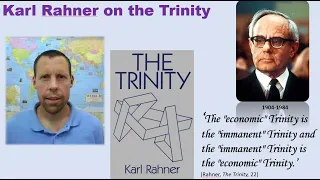
spirit right the father sends the son and the father and the son together send the spirit this odd extra sending reveals the odd intro relation we cannot know the trinity by natural reason only by revelation and so the economic trinity is the only way we can understand the in the imminent trinity the odd intro trinity and so that's how we know this odd intro relation is by this odd extra relation now saint bonaventure makes the good point that these this is in the itinerarium he makes the good point that these reveal this oneness and freeness
of god reveal god in distinct ways when the old testament where god is one is the main theme what's the primary name of god it's yahweh i am who i am but in the new testament we get uh the the trinity revealed right what does our lord say he says no one is good but god alone and likewise saint john says god is love right this revealing of god is goodness and love happens through the revelation of the trinity because the father sends forth the spirit to the son in order that may be united in
love and we have three distinct persons then who are eternally united in love as love being their source and so the theology of the filioque then is what makes sense of the whole of trinitarian theology and so i hope you enjoyed this video i have up on the screen here for those watching the version as the video i know i'm behind on releasing audio versions of a number of these uh i'll try and get back to that and for those who don't know on anchor and release to a few different podcasting platforms i'm trying to
get these out in podcasting form um but anyways if you're watching here on the video version which i assume most people are you'll see up here three um good articles or books for further understanding this that were very helpful for me in making this video so i have um done scotus on divine substance in the trinity is a great article by richard cross on scotus's view of the universals have here russell friedman's medieval trinitarian thought from aquinas to occam he doesn't touch much on skoda specifically but i think he gives a good job showing the
distinction between the relational and emanationist views of the trinity and how these developed in dominican and franciscan thought and then finally i have on screen here uh caritas and primo by dr uh jared goff or i think it's jay isaac goff in the published version and he's uh very done a very good job especially showing bonaventure's more developed trinitarian theology and the de mysterio and it's this more developed trinitarian theology that we see in john of peckham and then especially uh blessed john john scotus as the franciscan view so it does all come out of
saint bonaventure it's not a later development here and so i hope you enjoyed this video if you did like this video please give it a like um hit the subscribe button and hit the bell icon so you can get notified uh comment below in addition uh if you like this video tell me what you'd like to see going forward i just did for patreon subscribers recently a interview of allen rule on claims of anti-semitism within catholic history where he's going and showing and debunking these claims that the church is anti-semitic um i then also was
on allen rule's channel this is free you can go see it um we discussed old testament prophecies of christ and responding to jewish apologetics and so i hope you enjoyed this and thank you for watching