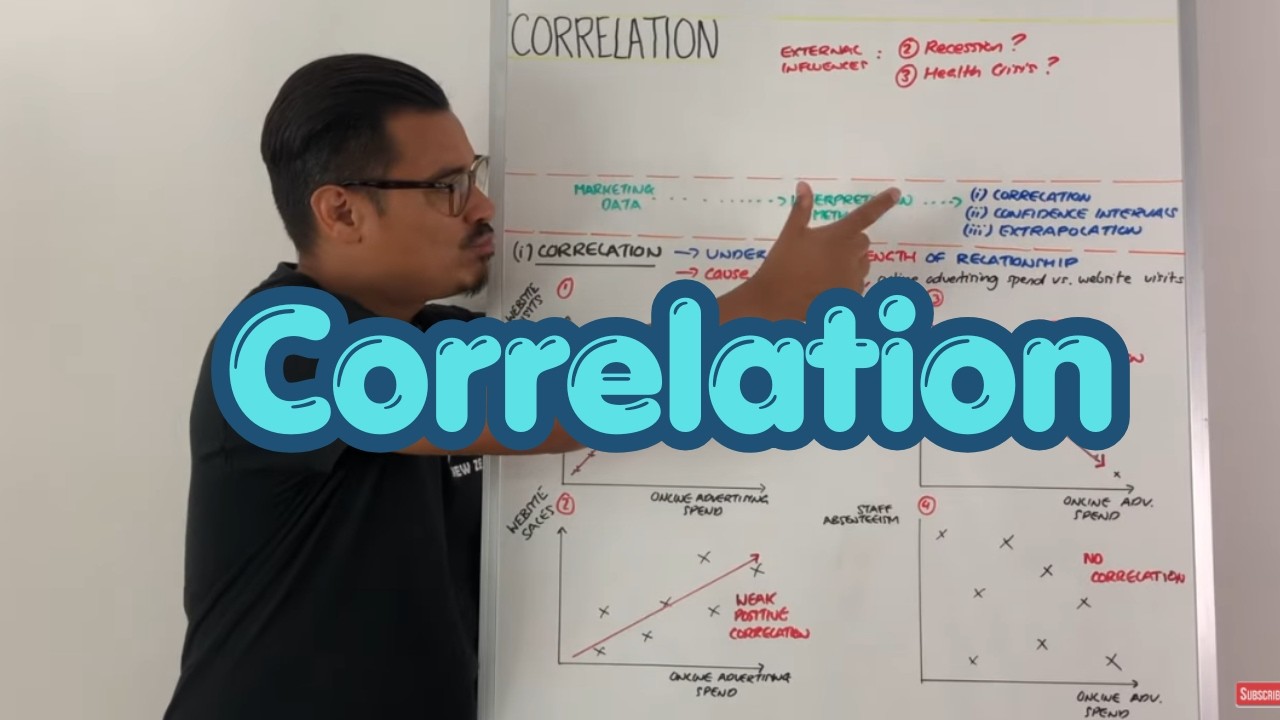
as a sessional confidence intervals so if you have marketing data you will need to interpret that marketing data in order to do that you need interpretation methods so you could use correlation you could use extrapolation or as in this video you could use confidence intervals so confidence intervals are effectively just a range of values that your data suggests something is likely to occur within we're giving examples so there's an example you have a product launching don't your marketing data and you have a 95% confidence level that the total volume of sales will be it will
be between 300,000 units sold or 325 thousand units on so that is your confidence interval and that's based on a confidence level of 95% sometimes your confidence interval we call your margin of error it's just the same thing if you see their key things to know is that your confidence level of 95% you seen as standard to make business decisions on nice 5% it's kind of your ceiling approval other things to think about is that confidence interval well the narrower the range the smaller range let's say it was three hundred ten thousand two to three
hundred fifteen thousand units instead well that's better because you can make more effective decisions that tighter the range and number three is whatever this is based on well if the sample size is larger and that's likely to me it's going to bear better accuracy I hope that helps I see you of a next step [Music]