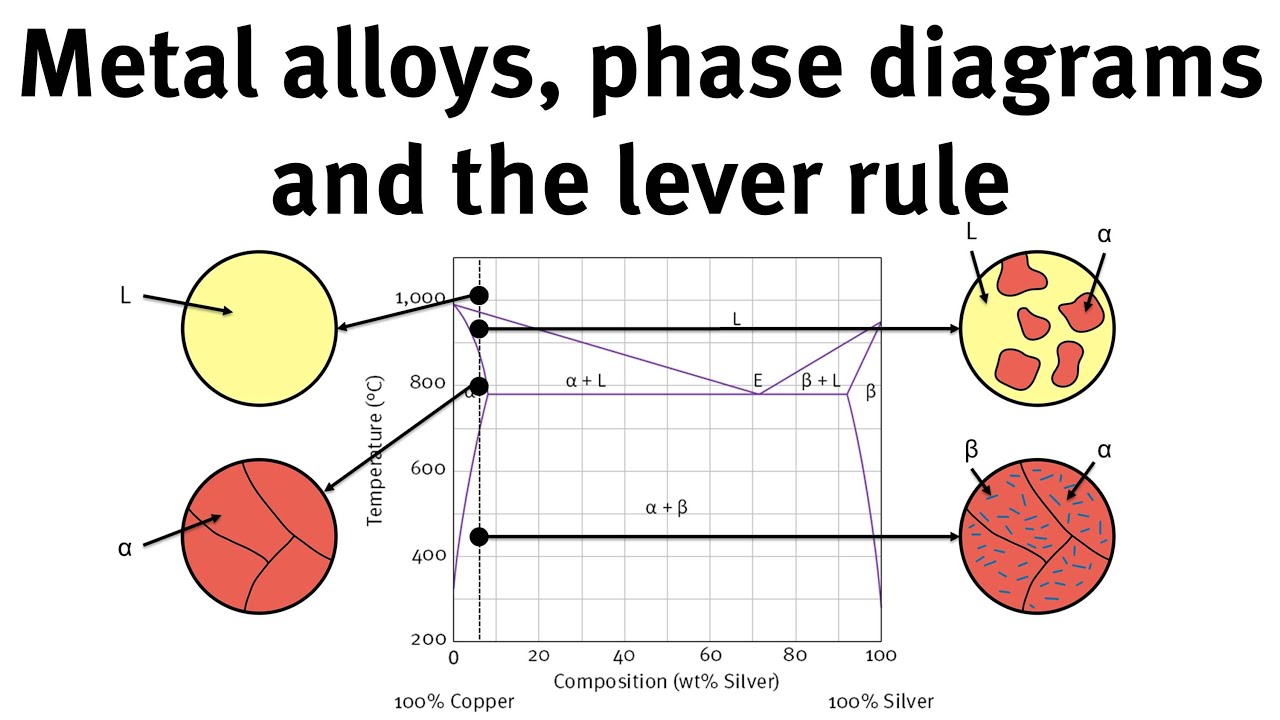
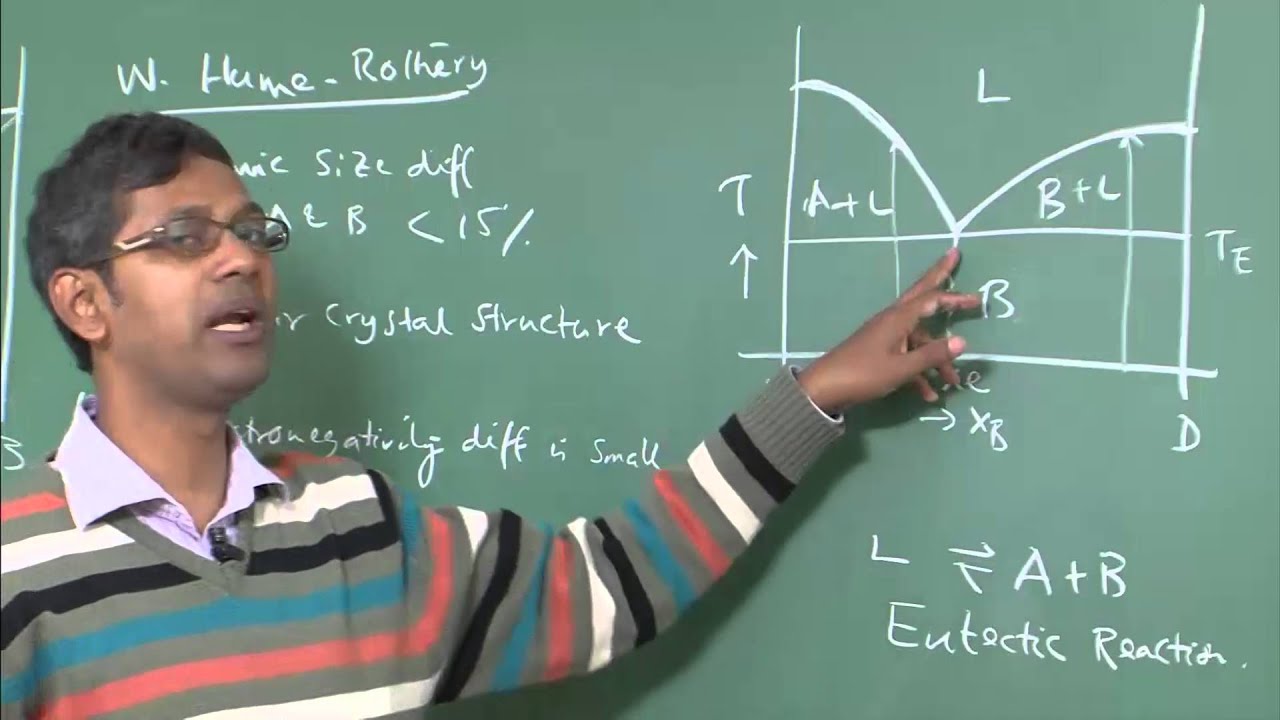
okay here we go buckle up buttercup I'm going to reach a level of honesty that I don't often achieve in online lectures and I'm going to say that this is starting to get super complicated um so make sure that when you go back over this lecture that you take good notes and that you read the chapter very carefully and make sure that you understand everything fully because it's about to get a little crazy around here here we go binary UT tactic systems all right binary of course that means two components tic is a new fun word that means easily melted and so what we're going to have here is we're going to look at some Alloys where the minimum melting point of the Alloy at that tic Point um and the atic composition is lower than the melting points of the individual components so the fun news is this makes great solder right so we're going to look today at uh the tin Le um phase diagram among some others and you might have heard of tin lead solders um tin lead solders kind of fell out of favor of course because of the whole people get Poison by lead thing but um it's still used okay so here we go so let's look at the um copper silver phase diagram first um and point out what these phase diagrams look like and the regions and make sure that we kind of get the overall picture before delving into the specifics all right so here we go we've got on the left hand side an alpha phase this Alpha phase is basically the structure of the copper okay because along the bottom here you see that we're we're plotting increasing weight percent of silver As you move to the right so here on the left hand side we're all copper so this Alpha phase is basically copper pure copper structure now as you move to the right you can see on this side a beta phase the beta phase is basically the structure of silver okay so this is all silver over here and this has the same structure that you would expect for a pure silver lattice now in the middle here you have this Alpha plus beta region see silver and copper they don't want to mix together um Metals might not want to mix together for various violations of those Hume or authory rules either their atomic radi aren't the same they don't want to pack in the same kind of crystallin structure maybe one's FCC and one's BCC they have different Electro negativities for whatever reason they don't form this really pretty perfectly mixed solid solution and so what that means is instead of forming a structure where everything can go anywhere it likes to segregate you like to have your Alpha phase over here and your beta phase over here but if you can't get that right then you're going to mix together and form little regions of alpha phase and little regions of beta phase okay that's what's Happening Here in this um copper silver phas diagram now we also have up here the pure liquid okay that's pretty easy to understand you melt it right now we have the intermediate regions in between the liquid and the alpha plus beta phase you've got your Liquid Plus Alpha phase right here and you've got your Liquid Plus beta phase right here okay hopefully you understand that okay um let's go over a little bit more vocabulary here we've got our liquidous line our liquidous line we've talked about before is the boundary in between the liquid and the Liquid Plus alpha or Liquid Plus beta phase we've got our solidus line and that's the ba bar boundary between the alpha phase and the Liquid Plus Alpha phase that's right here and right here between the Liquid Plus beta and the beta phase we also have a new line it is called the Solis line and that's the barrier in between the alpha phase and the alpha plus beta phase or the alpha plus beta phase and the beta phase okay so that's called a solice line and then you might also notice this horizontal line here which is a tic isotherm okay so this is a tic system an easily melted system and you can see that there's a horizontal line that distinguishes the alpha plus beta phase from the Liquid Plus Alpha and the Liquid Plus beta phases okay so that's here all right that horizontal line is called the TIC isotherm isotherm just means same temperature of course horizontal lines on these phase diagrams are at the same temperature all right so a tic reaction is when a liquid changes into a solid with two distinct phases what they look like on phase diagrams is kind of V's so you can see that there's a v that forms here okay from this liquid to this Alpha plus beta phase so when you're at the TIC composition which for copper silver occurs at 71. 9% by weight of silver right which means the rest is um uh copper right there at that composition as you drop down in temperature from hot temperatures and you cross that tic isotherm at 779 degrees C then you go from a pure liquid phase to the segregated Alpha plus beta phases okay that's a tactic reaction often times they're written like a chemical reaction okay so you have this liquid going into Alpha plus beta and it's reversible of course if you heated it back up um you could go back to a liquid so the arrow has two sides there all right now it's important to understand that um when you cross that tic isotherm that your composition of your Alpha phase and your beta phase can be understood by looking at the intersection of your tie line which here is the TIC ism itself with the other phases so when you cross the tie line right here then you look and it intersects with the alpha phase at 8% by weight okay so that means that your Alpha phase is going to have 8% by weight of silver now your beta phase if you trace that over to where it intersects with the beta it intersects at 91. 2% by weight of silver so your Alpha phase is mostly copper and only 8% by weight of silver and your beta phase is mostly silver 91.
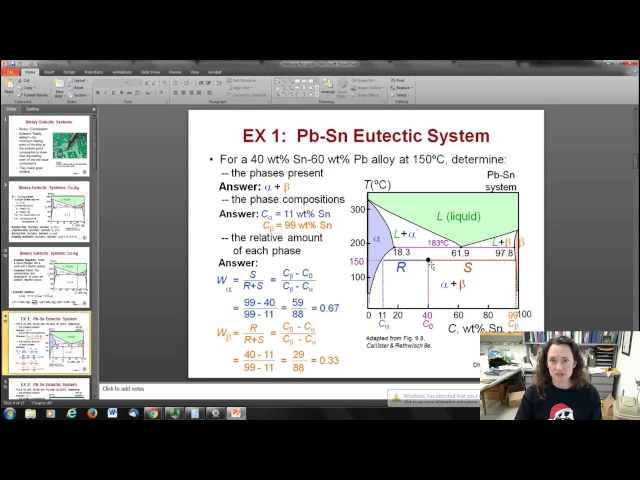
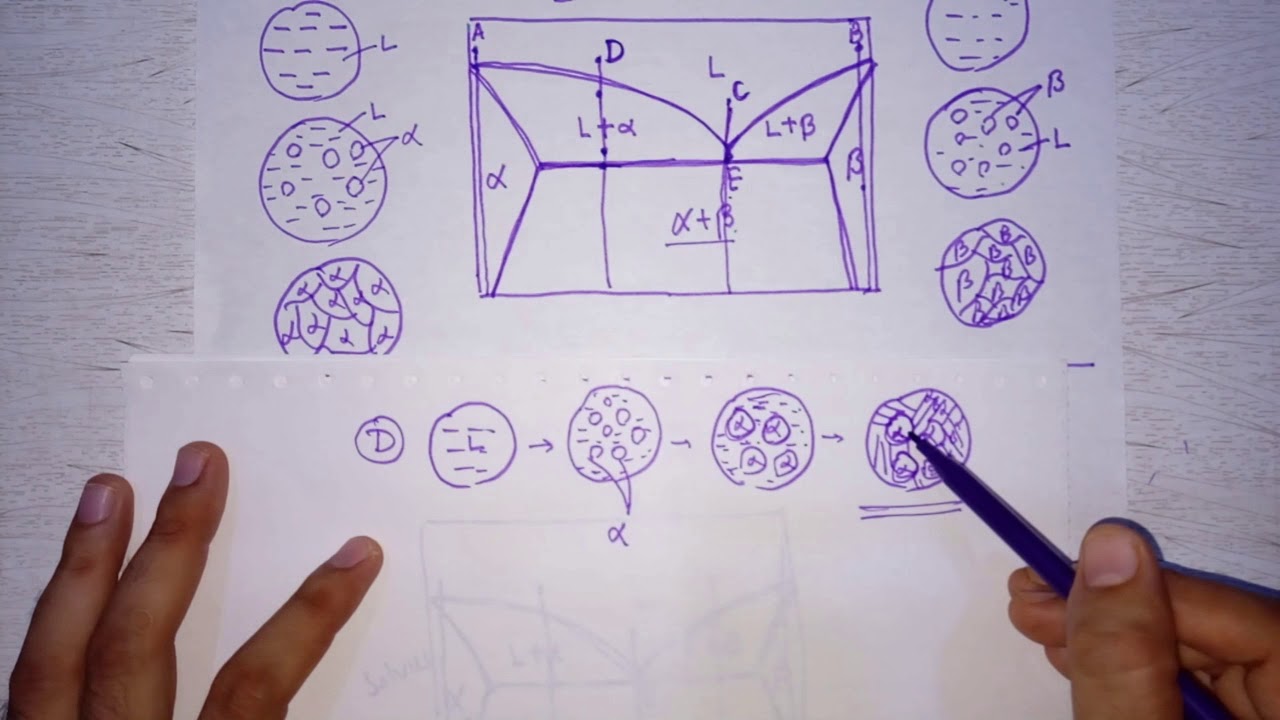
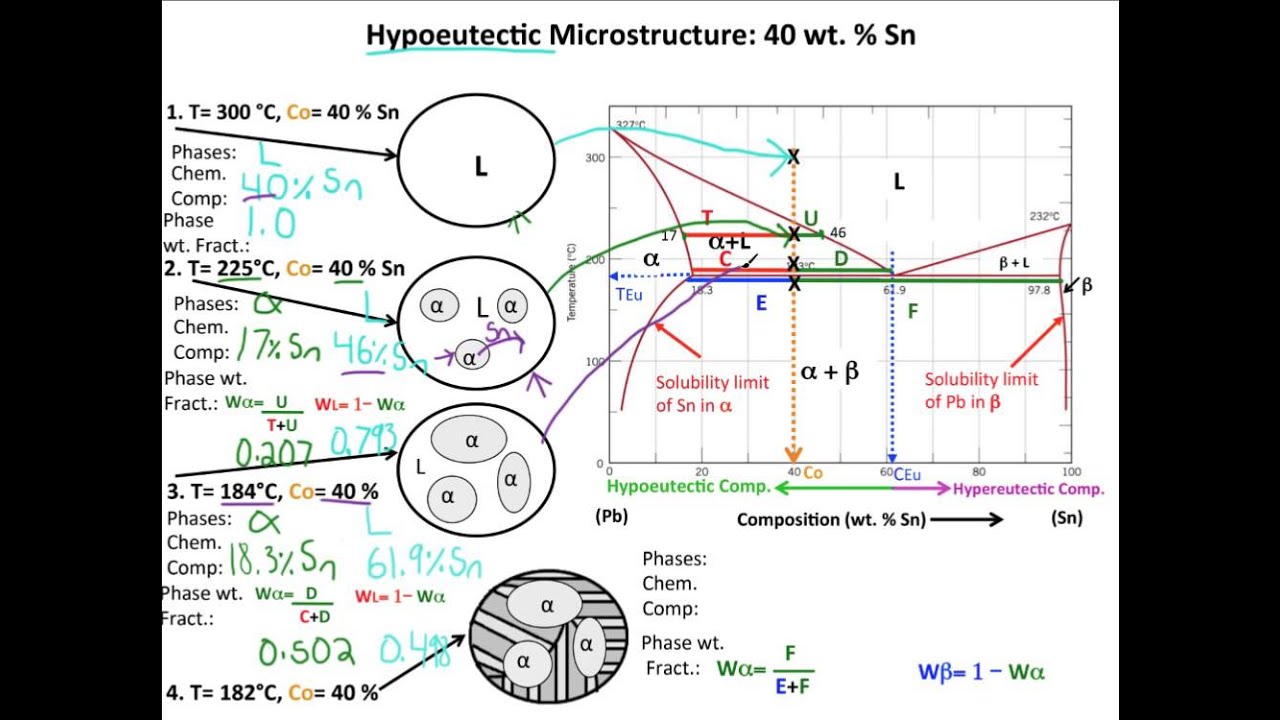
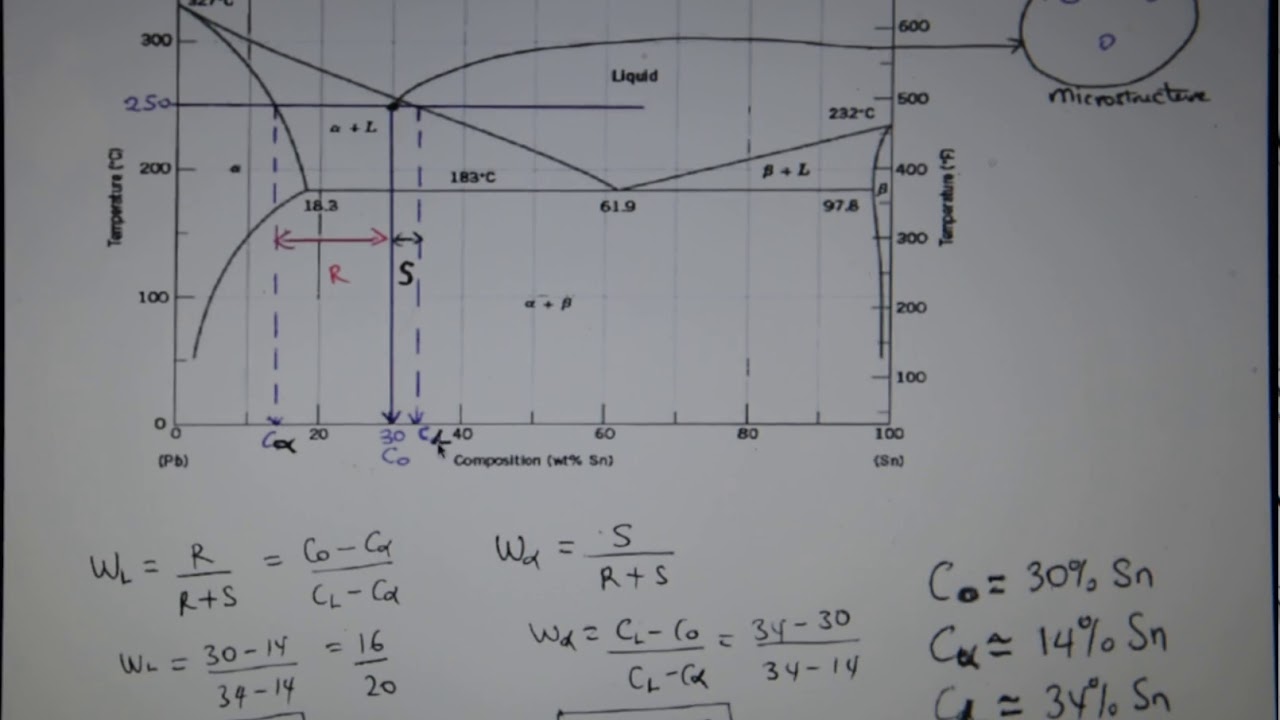
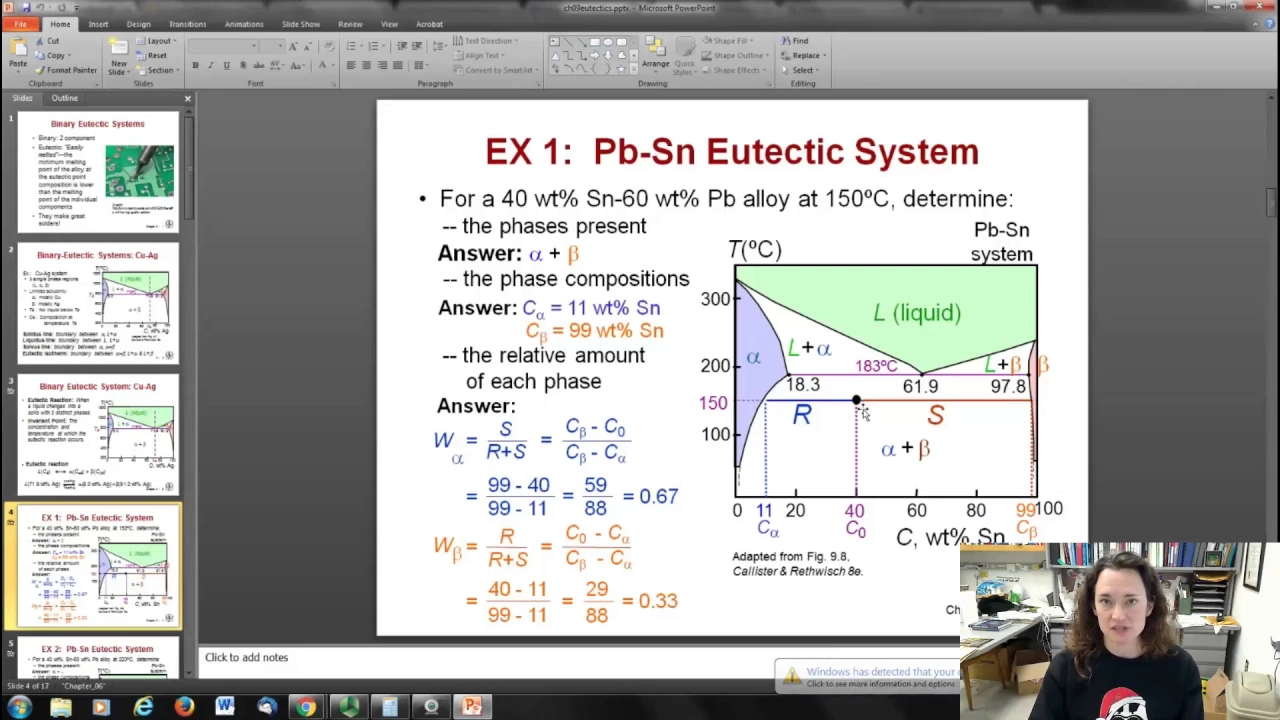
2 weight per all right so that gives you the compositions of your phases remember the composition of the phase can be done by figuring out where that time line intersects with the boundary all right so let's go over this example um this one looks at a different phase diagram it's that lead tin system that I promised you earlier it's also a tic note the temperatures here the temperature of the TIC isotherm is 183° C so that's actually a pretty low temperature for a metal to melt right which is why it makes such a great solder okay um for a 40% by weight Alloy at 150c determine the phases present the phase compositions and the relative amount of each phase okay so you can ruin anything right by putting math to it so here we go um if you're at 150c that's shown here between the 100 and 200 where I've got the ti line constructed okay and it's a 40% by weight 10 here on this uh diagram we start off with pure Le at the right and go all the way to Pure 10 as we move to the right so 40% is here at the purple dashed line at 40% by weight okay so here's my timeline RS constructed all along uh that horizontal isotherm right there okay so that puts me right here in this uh at this dot which puts me in the alpha plus beta phase regime so the phases present are solid Alpha and solid beta that's my phase composition or that's my phases present now the compositions of those phases how much percentage of 10 I have for each one of those Alpha and beta phases I can figure out by looking at the intersection of my ti line um with the phase transformation so when I go from the alpha plus beta to the pure Alpha region if I look at the intersection of my Tha line at that point that'll give me the weight percent I'm sorry the percentage of alpha that I have for that so the composition of my Alpha phase will be 11% by weight 10 now if I look at the intersection with the tie line on the opposite side with the beta phase over here that'll give me the composition of my Beta phase and that is 99% by weight of 10 I'm estimating of course it's kind of hard to tell exactly what what these values are but it looks like about 11 and about 99 there so that's my estimate okay so 11% by weight 10 for the alpha 99% by weight 10 for the beta okay now if I want the relative amount of each phase that's when I need to apply my lever rule on my ti line okay so the weight of my Alpha and the weight of my Beta I get from doing the comp uh the lever rule computation on the ti line so the weight of the alpha if my ti line here is R and S then the weight of my Alpha phase would be S over r + S okay so reading off um I've got for the length of s 99 minus 40 right and then divided by the total length of my ti line r+ S which is 99 minus 11 and then I plug that in and I get 067 which would give me 67% by weight Alpha phase now if I've get 6 7% by way Alpha phase that means the rest is beta or 33% but just to comfort yourself if you'd like you can do the other Tha line computation which is R over r+ s and that gives you 33 of course okay let's say that we're at a different temperature okay let's say that we're above the TIC isotherm um temperature we're at 220° C so now let's determine the phases present the compositions and the relative amount of each phase there okay here we go if I'm right here at 220 and I'm at 40% that puts me in this L plus Alpha phase region okay so I my my phases present are solid Alpha phase and liquid done next to phase compositions now I construct my tie line and I looked at my intersection of my ti line with the neighboring phase okay so for my weight percent of 10 for my Alpha phase I look at the intersection with the alpha phase region over here and I get 177% by weight 10 of course that's an estimate I'm just I balling it okay for my liquid phase I look at the intersection with this liquidous line here okay and so that I'm estimating is about 46% by weight 10 for my liquid phase okay so my liquid phase has 46% by weight 10 and my Alpha phase has 17% by weight 10 now if I want the relative amount of each phase then I have to construct my ti line and use my lever rule computation so for the weight of the alpha phase that would be CL minus C KN okay um which is 46 minus 40 so it's basically s over R plus s okay so here I have 46 minus 40 over the total length of my timeline which is 46 - 17 and that gives me. 21 or 21% by weight Alpha okay if I'm 21% by weight Alpha that means the rest is liquid but if you'd like you can do the computation for the lever rule for the other side and get 79 okay or 79% all right let's do some more because this can be super confusing and examples are really helpful for straightening things out in your head site the phases present in the phase compositions for the following Alloys right this is our copper silver phase diagram and it's asking you about a 55% by weight silver um composition and it's asking you first for 900 C and then for that same weight percentage but at 800 C okay so 900 C 55% by weight so here's the 55 right here this is my 50 55 and then I go up at 900 Celsius there's a isotherm right there for 900 and so that puts me at that green star that's where I am the green star right there now this is the liqu liid regime okay so this is a pure material it's all liquid it's not a mix of phases if it's a pure material and not a mix of phases then I can say for sure for the liquid that that means that it's 55% silver and 45% copper and it's a liquid done straightforward okay now the next one's not so straightforward that's asking for that same percent composition but at 800 C 800 C would put us in this Alpha plus liquid re region down here okay so that's covered on the next slide so on this slide here's my ti line it's in red and green right here um at the isotherm for 800 and the red meets the green for the Tha line at the percent composition that I'm at 55% so I've got Alpha plus liquid phases and the percentage of my liquid will be this is at 55 it intersects on this side at 8 and then I estimated that it intersects my liquidous line over here at 67 okay so the weight of the liquid would be 55 minus 8% I'm subtracting off the red portion here of my ti line and then divided by the total length of my Tha line 67 minus 8% when I do that I get 797 so about 80% or so liquid and 20% solid Alpha phase I hope that's clear okay micro structural developments and new tactic systems here we go here's what it looks like let's say that we're to the left of the composition where your tic isotherms um intersects your your primary Alpha phase okay so we're to the left of that concentration so let's look at a very low concentration percentage of the other material like less than 2% by weight of 10 for the lead tin um diagram now let's look what happens when we start from the molten material and cool it down so we start out and we're all liquid and everything's fine and then we cross over um this transition temperature and we move into a liquid plus Alpha region so what happens there is these little uh nodules of alpha phase start to form within the molten liquid and then as you cool it down even further those nodules grow and grow until they meet neighboring nodules and now you're in the solid phase regime okay so we're in the solid phase regime and we have all alpha particles so it's polycrystalline material with grains of the alpha phase having a composition of less than 2% by weight say of 10 all right well that's not very interesting that is almost like a pure molon material going to a pure material so not super interesting not different let's move a little bit further to the right increasing our composition of uh weight percent of tin a little bit okay so we're in the multimaterial whatever we cool it off now we've got these little Alpha phase particles starting to form okay now here's where the really interesting part comes we transform over we form a PO poly Crystal material with Alpha phase particles but now we cross over another transition line and we're in the alpha plus beta phase so what that means is that we've got these Alpha primarily Alpha crystallin structures but we have these little particulates or precipitates almost of beta phase within the alpha phase Matrix okay so we have these little precipitates of beta phase in our Alpha phase okay so that's what happens there now at the TIC concentration right here that's when the fun really starts okay so we're in our molten State okay then we cross atic um temperature and composition and we solidify what do we solidify into this cool zebra striped Lamar structure looking thing right here all right it's um very uh indicative of these tics and as you'll see in the next lecture eutectoid as well micro structures it forms these what are called lamell a Lamar structure um as it cools okay so you'll have these domains and the Lamar the lamell will change direction change their angle as they cross the crystall in boundary there which is kind of fun now why does it do that well the alpha phase and the beta phase they don't like each other okay they might be even different structures one might be FCC one might be BCC who knows right but they definitely have different crystall spacings and they have different characteristics different physical properties so they really don't want to intermix intermingle okay so what happens is you'll get a region Alpha phase region that's primarily lead okay and the tin doesn't want to go there because it doesn't like to fit inside of that primarily Le Alpha phase region and so it'll move away the in the liquid of course diffusion can happen a lot easier than it does in the solid so as the solidification occurs the material in the liquid will preferentially move and absorb at sites um where it it's happy okay so the tin will move to the beta phase and the lead will move to the alpha phase and these lelli will grow outward as the material solidifies so that's what happens okay so what happens if you're not exactly at your tic concentration what happens if you're to the left or to the right okay so let's go through that well you start off with a molten material and then you cool down and as you cool down you move into this Liquid Plus Alpha phase region right here all right that means that you get these little Alpha phase particles that begin to form within your liquid you continue cooling okay once you cross that tic isotherm what happens is the lelli form all right so you have this what's called primary alpha particles or procto particles a protic particles pardon me protic particles eutectoid is the next lecture calm down so we have these primary alpha protic particles okay and then everything that was Liquid in this Liquid Plus Alpha region right at that tic isotherm that becomes the lamell the Lamar structure okay so then you have these layered tic Alpha tic beta phases for the rest of the material so the structure looks like that now if you're to the right and you have a higher concentration of your uh say for example here 10 then your protic particles are the beta phase and not the alpha phase okay so these are scanning electron microscope images of these different um phases and so here on the left you can see that you're in the hypo tic region hypo means less than the TIC concentration okay and so your protic particles are alpha phase particles and then surrounding your Alpha phase dark particles you've got your um lamell okay right at the TIC you've got no nodules all a Melly right and then the hyper tic which is the higher concentration you've got your protic beta phase particles surrounded by lamell all right so that's what happens it's kind of beautiful right um it looks a little bit like a couch from the 70s okay okay so I can ruin anything with math so let's figure out what the weight percentages of these materials would be you can figure out what the the mass fraction or the weight fraction of your tic portion is and also your protic particles all right so let's say that you're at composition C4 here so we're looking at the hypo tic stuff okay your composition C4 well what happens is you're moving from this Alpha plus liquid region into the alpha plus beta region so you're protic alpha particles have formed before you cross this tic isotherm and then everything that was a liquid becomes the lelli or tic microconstituent that's also called the lamell TIC micr constituent so right above that tic isotherm for a material with composition C4 the alpha phase particles form and the remaining liquid phase will become the TIC micro constituent after the temperature drops below the isotherm that means that if I'm trying to figure out the weight of my tic versus the weight of my protic alpha particles then my ti line would be this p+ Q TI line right here and it would go from 18. 3% right here all the way to 61.
9% okay this is only for uh lead 10 if you had a different phase diagram it would go from whatever the intersection concentration is to whatever the TIC concentration is okay just depends upon what you're looking at so that would mean that the weight of my tic micr constituent would be p over p+ q and the weight of my um protic Alpha Particle would be Q over p+ Q okay now this is only good for concentrations that form tic micr structures if for example in this isotherm I were less than 18. 3% okay then um I'm not going to get that I have an alpha phase and it would go to Alpha phase with those little particulates of the beta phase in it it wouldn't form the lelli okay you have to be between 18. 3 and 97.
8 to form that Lamar micro structure all right now these formula these give the concentrations or the percent compositions for total amount of Alpha and total amount of beta phase so for example the weight of the alpha phase that I show here in this formula that includes the primary alpha particles or the protic particles and the tectic micr constituent so it sums up all possible contributions to Alpha phase in there okay also these formula are only good for concentrations between the uh 18. 3 and the 97. 8 it doesn't help so much with uh this guy right here okay so here's my ti line it goes PQ to R right PQ to R and the weight of my Alpha phase would be q+r over p+ q+r and the weight of my Beta phase would be you know one minus that or p over p + Q + r all right hope that helps so let's put this into action for an ally of Ally alloy of 40% by weight of 10 then we could figure out first of all just above the TIC transformation temperature what the compositions were and then what the relative weights were for the Alpha and the liquid phases so let's do that so we go here and we're drawing in and we're just above our tic isotherm now the intersections with the TIC isotherm and the Alpha and the liquid phases are at 18.
3 and 61. 9% so what that means is that um for a 40% by weight 10 right above the TIC isotherm I'm going to have alpha particles and those alpha particles will have a concentration of 18. 3% by weight of 10 my liquid phase will be looking at the inter ction 61.
9% by weight of 10 okay so that's my composition now the weight of the phases that's different I use the tie line to figure that out so for the tie line I'm going to do for the weight of the alpha phase 61. 9 - 40 over 61. 9 - 18.
3 and that gives me 0. 5 so that means that 50% of my uh total weight is alpha particles and of course that also means that 50 50% by weight of my total is liquid okay so 50% is liquid of that liquid 18. 3% of that liquid is 10 50% is alpha particles so on and so forth okay hope that's clear wait yeah all right so um once I go below my tic temperature okay now my ti line runs from 18.
3 all all the way over to 97. 8 and when I do that I'm figuring out the total composition of the material the total percent composition of the Alpha and the beta phases okay so here I go I'm dropping down okay and if I look at it then my uh weight percentage I can use by the ti line I've got 97. 8 - 40 over 97.
8 - 18. 3 and that will give me the total amount of alpha that I've got including the protic Alpha and the TIC okay so I've got the nodules and the stripes and that gives me 73 or 73% so 73% of my material is in the alpha phase and that means of course that 27% is in the beta phase now of the stuff that's in the alpha phase if I go back to where it intersects my next phase that's at 18. 3 so that of the stuff in that Alpha phase it's 18.
. 3 weight per 10 of the stuff that's in the beta phase which is only 27% of the material 97. 8% of that is 10 okay so the beta phase is 97.
8% by weight 10 the beta phase is not is 27% of the total material present I hope that's clear it's really tough to keep straight I think what is the weight of the phase itself because that's a percentage there and then what percent by weight of the material of the atom is the phase so let's go over it one more time remember that you get the composition of the phase by looking at where the tie line intersects the next phase so here we go down we're on this uh lead 10 phase diagram as we drop down from the liquid phase to the Liquid Plus Alpha phase now right above this UTC right right of the sutic isotherm I can trace it back right it intersects the alpha phase right here at 18. 3% by weight so that means that my Alpha phase particles are 18. 3% by weight 10 okay okay now once I cross the TIC isotherm okay then I get this uh Lamar structure if I trace it back to where it intersects it's about 18.
3 if I'm just below it it's still super close so that means that the alpha phase in here is 18. 3% by weight 10 if I want to figure out the percentage of my Beta phase I trace it to the other side okay the other side to where it intersects the beta region when I do that I get 97.