Have you ever thought about a question: Why does the United States always have a large and continuous trade deficit We have a powerful diagram I have calculated the current account balances of all countries in the world in the past 35 years In this diagram the top ones are surpluses, and the bottom ones are deficits. If we separate the US, China, Germany, Japan and oil-exporting countries, it is obvious that the United States at the bottom has held up the banner of trade deficit and carried it all by himself become the world's most "buy, buy, buy" country. To put it nicely, it is the world's largest clients This is actually what makes Trump very unhappy.
He has mentioned many times that he wants to reduce the U. S. trade deficit.
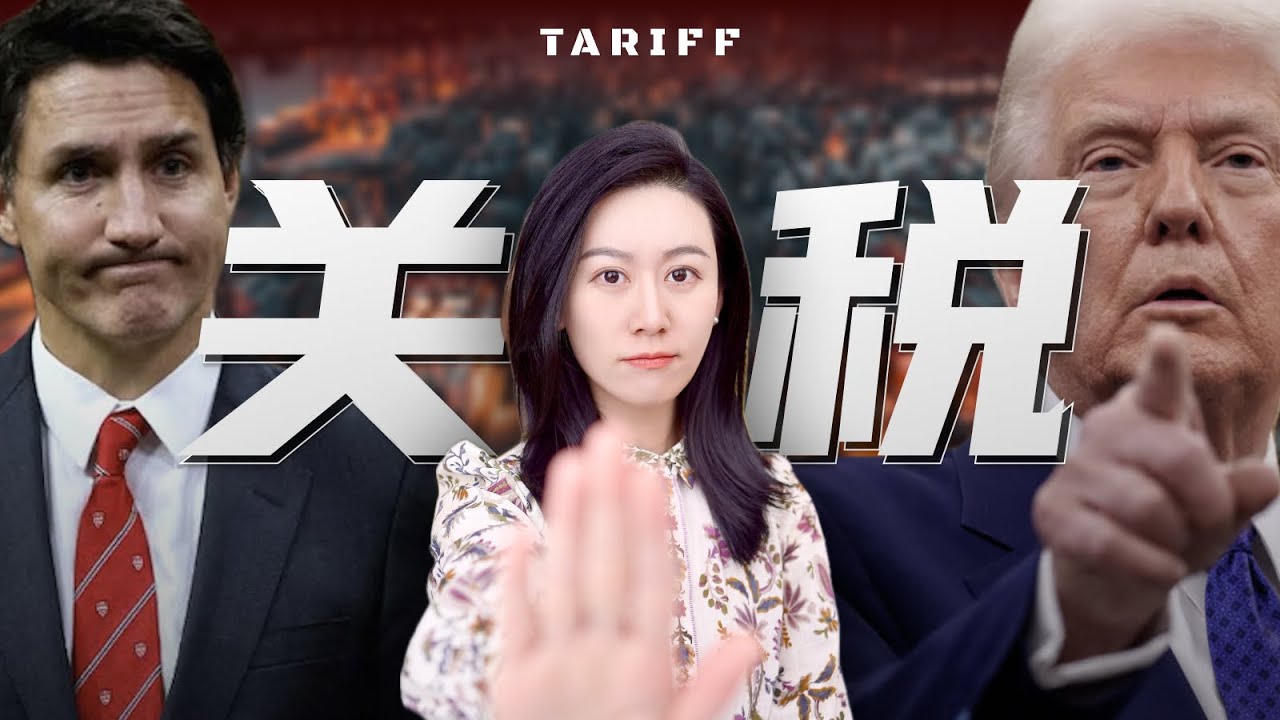
You see, his first priority after taking office is to start a trade war and increase tariffs on Canada, Mexico, and China. These three countries happen to be the three largest importing countries of the United States The official last reason is to retaliate against border security, drug problems, and immigration issues. But many people think that this is probably related to the huge trade deficit of the US.
Throughout history, the U. S. trade deficit has been continuously expanding since the 1970s.
This phenomenon can be said to be unique among all countries in the world Why is the United States accumulate such a large trade deficit? And why only the United States can accumulate such a large trade deficit Is the trade deficit really bad? These problems may not be as simple as you think.
Everyone, please be mentally prepared. I think the content for this episode is very interesting but relatively speaking it may be more hardcore. If you think it is too dry, I suggest you save it and watch a few more times.
The trade deficit is very intuitive, it is the total import volume of a country> the total export volume means that what is bought is more than what is sold. So when we analyze how this trade deficit comes from, the most intuitive thing is to consider from these two sides, either there is too much import or too little export. Some people say that total imports is too many because foreign things are too cheap, like in East Asia and Southeast Asia, labour costs are too low.
In addition, these exporting countries may have various subsidies or even suspicions of dumping. They are deliberately seducing or attracting American merchants or consumers to import their goods. When export is too little people may say that the US manufacturing industry is not competitive enough and cannot keep costs down to compete with overseas companies, etc.
However, if you ask an economist or even an economics student what causes the trade deficit, he will be able to tell you that it is because of the insufficient savings rate of this economy. Don’t be scared. Let’s enter this small economics class Through the derivation of a very basic series of formulas, we can get a very important formula which is: a country’s trade balance = Total Savings - Total Investments Let me briefly explain the definitions of savings and investment here It may be different from our usual personal savings and investments.
The total savings defined by economics is annual income minus consumption. For example, this year you earned a total of 100,000, and then consumed 60,000, and the remaining 40,000, whether you deposited in the bank, or bought financial investment products or bought stocks are all called savings. buying financial products is not called investment but it is called as savings What does total investments means?
It refers to those investments that can truly drive productivity. For example, if you buy a factory, build a factory, or buy equipment this is called investment . When a country is completely closed and has no trade balance, its total savings is equal to its total investment How can it keep up?
That's why he opened his mouth and said that the trade deficit is because of insufficient savings rates But let me tell you, this makes the causal relationship unclear. To put it bluntly, it is a formula derivation. It's just a meaningless statement It is equivalent to you asking why the water overflowed from the cup and he told you that it is because there is too much water in the cup.
What we want to know is why there is too much water in the cup. Why there is too much water in the cup in the United States. Why the savings rate in the United States is insufficient Some people will further explain that lower savings means that your consumption may be too high, because Americans love to consume so much that they keep buying things The US can no longer meet such a huge demand for consumption It can only import from overseas, which has led to such a large trade deficit.
Doesn’t it sound reasonable? There is a Nobel Prize winner Stiglitz. thinks that Trump, don’t you want to reverse the U.
S. trade deficit? Then you should encourage everyone to spend less and save more money and the trade deficit will naturally come down.
Another explanation is that the U. S. government’s deficit is too serious and it spends too much money.
The savings rate is too low. It’s the government’s problem not the citizens'. So the U.
S. government needs to spend less, and borrow less then the trade deficit will naturally come down. There are actually many similar statements, and they all sound reasonable.
However, I don’t think this is what makes US stays in trade deficit for a long period of time that is to say, all those are meaningless. because in the analysis structure there is one missing variable a very, very important variable that can be said to play a decisive role The exchange rate. In fact, we talked about the exchange rate in the foreign exchange issue before.
The exchange rate is essentially a conversion relationship between the price coordinate systems of different countries This thing is really a devil . It exists everywhere. Whoever touches it will affect it.
When it moves, it affects everyone Now when we are analysing the trade issue, how can you avoid this devilish exchange rate? Suppose the US dollar depreciates by 50% overnight. suppose the prices of all goods remain unchanged, for those who hold non-US dollars, all American things are equivalent to a half-price sale.
Apple phones and Nvidia chips are all half-price. Double Eleven and Black Friday are all weak. Think about how crazy the global market will be.
I bet that The US trade deficit will be gone overnight I actually don’t dare to bet. Just saying this is a relatively extreme example to let everyone understand the impact of exchange rate on trade. An increase in exchange rate, increase in export and decrease in export will lead to a larger trade deficit On the contrary, if the exchange rate decreases, exports increase and imports decrease, that is a trade surplus.
The more amazing thing about foreign exchange is that it is not only a converter between currencies of different countries, it is also a very sensitive automatic adjustment device. What does it mean? If you have a persistent trade imbalance, the exchange rate will automatically adjust your trade level through appreciation or depreciation .
Let me give you an example. For example, if the milk tea country has a trade deficit and keeps importing and importing means paying in USD so it will continue to buy US dollars and sell milk coins. The milk coins will have depreciation pressure depreciation will stimulate exports and suppress imports Gradually, it can reach a balanced state, and at this time, the depreciation pressure of milk coins will disappear.
So if there is no artificial intervention in the foreign exchange market, the foreign exchange will adjust like an invisible hand to maintain a country's trade level in a balanced state. At a glance the reasons we mentioned earlier for example, Americans' consumption and government deficit in short term, it may be the explanation for the U. S.
trade deficit But in the long term, it stands to reason that the market will automatically adjust to let the dollar depreciate and gradually correct the U. S. trade imbalance.
But in fact, the U. S. has already been in trade deficit of nearly half a century that's why we need to figure out why the automatic adjustment mechanism of the US dollar has failed and is not working.
This may be the key to explaining why the US has a persistent trade deficit. First of all, a very normal guess is that someone has artificially intervened in the market and distorted the automatic adjustment mechanism of foreign exchange. For example, there are many developing countries in order to maintain stable trade and economic stability, they will peg to the US dollar.
Or the central bank may be very active in regulating exchange rate These artificial means have inhibited the automatic adjustment of foreign exchange. Eventually, the local currency will often be overvalued leading to trade deficits. The IMF once calculated that at the beginning of 2000, about 1/4 of the world's currencies were overvalued.
The official price was 10% higher than the black market price. As for the United States it has indeed intervened in foreign exchange before, but in the opposite direction. It wanted the depreciation of the U.
S. dollar to ease its trade deficit. This is what everyone may have heard of as the "Plaza Accord" In the 1980s, the United States' tight monetary policy and expansionary fiscal policy caused a sharp appreciation of the U.
S. dollar which damaged U. S.
exports It was especially affected by Japan 's export of car and electronic products President Reagan dragged Japan, France, West Germany, and UK half threatening them I'm not having a good day you all better start adjust and appreciate your currencies and let USD depreciate take care of our exports and reduce US trade deficits This actually worked After 1985, the U. S. trade deficit shrank significantly.
This was due to the depreciation of the U. S. dollar after the Plaza Accord.
But let me stress that this does not mean that the Plaza Accord was very successful Foreign exchange intervention had many side effects which we will not go into today. But if we look at it from the perspective of exchange rate impact on trade, this is indeed a very good example. However, since then, US has rarely directly intervened in the foreign exchange market.
Even if it does, the amount is very small Look at the U. S. trade deficit after 1985 It was intensifying and continuing to expand, so it is obvious that the continuous trade deficit in the United States is not caused by the US government or the central bank raising the dollar exchange rate.
We are now getting to the core of this problem bit by bit. In fact, foreign exchange automatically regulates not only the country's trade balance but the overall external capital flow. What does it mean?
It is not just the capital flow brought about by selling goods and services. It also includes the flow of capital itself. For example, if I remit money across the border, invest across the border, or buy U.
S. stocks, these are the flow of capital itself Although the United States has always been in deficit in trade if we look at the flow of financial accounts and capital accounts together, what a beautiful and perfect axially symmetrical chart. So this automatic exchange rate adjustment mechanism is actually not malfunctioning.
But what you usually hear may only be half of the story. This diagram is the essence of this video, is the whole story. Listen to me and I will give you a detailed breakdown.
A country generally has three major external accounts, current account, capital account and financial account, Current Account Capital Account Financial Account The combination of these three major accounts is a country's overall balance of payments. Balance of Payment Why is this becoming an English class. .
. Under this current account, the most important one is trade. In addition, there may be some investment income, dividends, wages, etc.
but it is mainly trade. So most of the times people will mix the trade surplus and deficit with the current account surplus and deficit. You may not have heard much about the latter two, capital accounts and financial accounts but they are very important.
They include the cross-border flow of all financial assets and financial liabilities such as the FDI that everyone often hears about, cross-border direct investment For example, banks, insurance companies, and funds in different regions and countries might buy U. S. stocks and U.
S. government bonds. including central banks the US stocks and bonds are all belong to financial accounts.
As for the balance of payments of most countries it mainly concerns the current account which refers to the capital flows related to trade But the United States is different. Its capital account and financial account especially financial account its flow iss very frequent and these funds are very flexible. For the United States, the financial account and the capital account are more dominant compared to the current account.
Don't be confused. So if we combine these three accounts, we will have the diagram we just saw. For the United States, its overall balance of payments is almost flat.
It's just that between the financial account and the current account, one is high and the other is low. It has been in a combination of a long-term current account deficit and a financial and capital account surplus. Everyone invests in U.
S. dollars and the United States uses these U. S.
dollars to buy goods abroad. That's about it So for half a century, US has been in continuous trade deficit is mainly because or even the only reason is due to continuous capital flows have made the USD appreciate, which has led to the U. S.
trade deficit. On the financial account, a large amount of money has flowed to the US from all over the world to buy U. S.
Treasury bonds, corporate bonds and stocks, so that U. S. companies and the government can have sufficient capital to invest, expand and spend money.
From this perspective, the US is actually a very big beneficiary. Especially Wall Street and Internet companies, and of course the U. S.
government. Many times when you hear the U. S.
media or some politicians, they may only emphasize commodities and say, we have so much deficits it feels like they have been wronged so much that all the money has been made by others. But in fact, the U. S.
trade deficit is not that people earned their money it is actually because there is an unbalanced relationship between their current account and financial capital account So after you understand this level, it is easy to analyse that if the US only imposes trade sanctions on one or two countries or certain categories of goods may indeed have eased trade deficit for a short term but in the long run, it may theoretically just restructure the structure of U. S. imports.
Originally, you went to Canada, Mexico, China , and now it may become Japan, Australia, the European Union, and the like. the demand for inflows from the financial account and capital account is very strong, the trade deficit will be difficult to alleviate. So why do you think there is such a large amount of funds flowing to the US through financial accounts?
Some people may think that the U. S. economy is good and there are many investment opportunities.
The internet giants and financial giants are all in the US This is true, but I think the most critical reason here is also the most special about US They print USD It is the world's currency. Let's take a look at how the central banks of various countries accumulate their foreign exchange reserves. For example, take the milk tea country which exports a large amount of milk tea and makes a lot of money most of it is USD theoretically it needs to convert USD to local currency in the market Milk coins so that it can be circulated in the milk (tea) country Some merchants need to go to the market to sell USD to buy milk coins which will lead to fluctuations in the price of milk coins .
So in many countries in order to avoid fluctuations in the price of milk coins, what will they actually do? Their central bank will tell these merchants that you should not go to the market to exchange. You all come to me, give me the USD and I will give you milk coins In this way, the central bank actually printed some milk coins out of thin air and then accumulated these foreign exchange reserves.
In other words, how many foreign exchange reserves the central banks actually possess will show how many banknotes they printed out of thin air. Are you a little confused? Why am I talking about this?
Don’t fret. What I want to say is after this milk tea country has accumulated such a large amount of foreign exchange reserves, what will it do with the money? Is it to buy gold?
Generally, no After all, the USD is the major currency. So most central banks will actually invest a large part of their foreign exchange reserves into the US market such as buying US Treasury bonds MBS. For example, corporate bonds, for example, the most typical example is Japan trillions of dollars in foreign exchange reserves which are then invested back to buy U.
S. Treasury bonds. It is also the largest creditor of the U.
S. government abroad So you see that it has gone in such a big circle. The money earned by various countries from trade surpluses flows to the central bank.
Finally, most of it is invested back into the U. S. dollar This part of the capital flow is probably hundreds of billions of dollars every year and it is not just from the central banks of various countries.
For example insurance companies, bank, funds are all similar because the U. S. dollar is the world's currency and most of the world's investment commodities are priced in U.
S. dollars. So the money everyone earns in the international market may be Australian dollars, Japanese yen, and euros but in the end, a lot of it flows to the U.
S. dollar and is invested in U. S.
dollar assets. In this way, it continuously form an imbalance of financial account surplus and a current account deficit And if you look at the period of time when the United States began to have a trade deficit , it just confirms this theory. Look at the trade deficit it happens to be after US withdrew from Bretton Woods system The U.
S. dollar no longer needs to be backed by gold It laid the foundation for the petrodollar allowing US to continue and boldly expand its debt and credit scale allowing international USD cycle to expand exponentially. This is why you will see a very interesting phenomenon The better the U.
S. economy is, the greater the trade deficit will be. If you think about it, if its economy is good, it will attract investment.
The current account surplus will be larger, the dollar will appreciate, and the trade account deficit will be larger. So from this perspective, the better Silicon Valley and Wall Street in the United States develop, their manufacturing industry will naturally be suppressed to a certain extent. Let me quote a quote from the Federal Reserve to give us a conclusion for this long logic chain.
When the US can purchase goods from the world market simply by printing money or issuing debt, it is destined to run persistent trade deficit. The current international monetary system based on the USD as the dominant world reserve currency and US government securities as the most sought-after store of value is the root cause of persistent trade deficit in the US. You see, I am not simply making the analysis The Federal Reserve itself has admitted it.
In fact, there is no clear distinction between good and bad, or right and wrong in this but sometimes some media or politicians will use a small piece of this puzzle to create a drama I just hope that that after watching our video today and listening to today's analysis you can see through their language tactic at a glance. In fact, what we just talked about is the Triffin problem Triffin Dilemma Triffin was a very famous economist as early as in the 1960s, he pointed out that countries that issue international currencies will inevitably run into trade deficits. Think about it, it was still running gold standard at that time.
He can be said to have predicted the current long-term trade deficit in the United States. When discussing trade deficits, many people feel that it is a very bad phenomenon that is very detrimental to the economy, because people may think that if you have a trade deficit, buying goods from others allowing others to make the money it's a bit like losing to other countries. Is this trade deficit really so bad so lousy and terrible?
In fact, most scholars do not agree with the idea that trade deficit is harmful to the economy, but you definitely can't say it is good. If you have to ask me to sum it up in one word, then I will probably give the word that most economists love to use, which is also very annoying answer that is Uncertain It depends. .
. We have analysed so much today. I believe you should have a feeling that this trade deficit is a manifestation and a symptom.
Whether it is good or bad for a country's economy depends on the reason behind the symptom. It is like saying that a person's heart beats very fast can you say that he is unhealthy? Well, it depends on the situation.
If he has just run a kilometer or sees someone who makes his heart beat faster, this is a healthy sign. But if he has myocarditis, irregular heartbeat and panic, then you have to go and check quickly, right? The trade deficit is similar.
If it is because of strong investment demand and strong consumer demand, you see that many countries that are in a period of rapid growth or have many investment opportunities have experienced trade deficits. For example, Australia has maintained a current account deficit for decades because behind it is it continues to attract overseas investment. It is normal for the heart to beat fast.
But if some countries' economies are overheated, consumption is too strong, and they borrow too much, for example, before 2010, non-German countries in the Eurozone collectively had a trade deficit with Germany and money earned through German export was invested in cheap bonds in Spain and Italy. Eventually, the European debt crisis broke out. At that time, Italy, Spain, and Greece were obviously overheated.
Why else would Germany be so concerned about saving Greece and Italy after the European debt crisis broke out? I remember that Merkel often held meetings with leaders of various countries At first glance, you think Germany really has the aura of a big brother save those younger brothers. In fact, Germany happens to be the biggest creditor of these countries, so he is also saving himself.
There is also a trade deficit, which is also very bad. For example, Sri Lanka's economy was facing collapse. The government has borrowed a lot of foreign debt, and its currency is facing the pressure of collapse.
The central bank has to artificially raise the exchange rate. It has also fallen into a serious trade deficit and even a shortage of goods. So you can see that, this trade deficit, it can happen in a very healthy country and it can also happen in a country whose economy is in a quagmire.
That's why, economists will tell you it depends. . .
This video is actually some small thoughts that I came up with when I was doing the tariff video. To be honest, it may be a bit theoretical it actually involves a lot of derivation and logical thinking. It is not the kind for story telling.
So for those of you who have made it this far it’s also been tough on you all. Thank you for watching!







![全球唯一能在「髒亂差」上全面碾壓印度的國家!盛产美女,靠女性以「獨特」方式拉動全國GDP,孟加拉國的經濟有多魔幻 [She's Xiaowu 小烏]](https://img.youtube.com/vi/W6EC7GCadoo/maxresdefault.jpg)