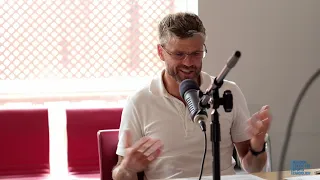
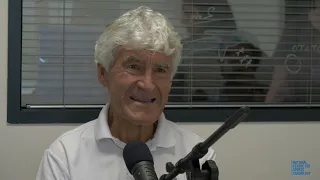
Welcome to racing heart a podcast presented by the national Center for sports Cardiology a center that specializes in an athlete's most important tool their heart a quick reminder before we get into this episode that the views expressed in this podcast are designed to be General in nature and should not be used to substitute for personal medical assessment if you have symptoms or concerns please consult your Doctor in today's episode we've got Bruce Carter who talks through his journey of heart disease and of course we've got Dr Andre legersh there to run us through the science
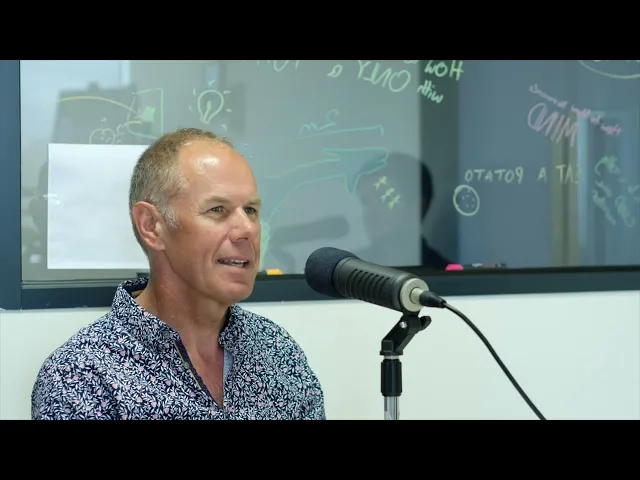
behind heart disease and what we know through as we talk through Bruce's Journey a big thanks to Bruce for sharing this story and the important messages that do come out of it I hope you enjoyed this episode and thanks for tuning in thank you Welcome Andre welcome Bruce to the podcast the national the National Sports Center for sports Cardiology podcast welcome Bruce thank you Alex uh today we're going to chat about Bruce's experience with his previous heart attacks and heart disease and then get Andre's take on where where everything's at why this happened to Bruce
and the kind of the kind of Research that's out there today but first of all Bruce can you just talk to us about what what your life was like 2015 2016. 2017 2017. what what were you doing what was going on um I was uh you know director of a company that I had uh you know founded with a few Partners in early 2000 um you know I was working you know reasonably but not excessively uh and cycling uh a lot you know uh having a Young son that was was a man mad cyclist and
wanting to uh you know pursue it potentially as a long-term career um you know I was out most weekends training with him uh and look at I was probably you know most weeks upwards of probably 400 to 450k plus um and a lot of it was probably you know pretty high intensity as well uh and I was feeling good life was good So you were training a lot obviously healthy uh I was healthy look I'm I'm a bit lighter these days and I than I I was but you know I was healthy you know I
didn't smoke uh I was eating well I was at a normal weight uh I was not overly stressed uh you know exercise regularly I sleep well you know ticked all the boxes so you know if if uh you know you're writing me uh you know out of 10 there's a healthy lifestyle I might have got an eight and A half you get a 10 dude can you give someone a 10. all right you can I I would have thought your description there you're pretty close to a team yeah like I like eight and a half
yeah it was never a perfect score and then what happened in 2017 um I still remember the day you know was um September 23 2017 so it was um uh beginning of the school holidays so uh um you know Maggie was uh wanting to go And do a you know a long ride um it was a hot day I was even remember that and we were going to go and do a sort of 110k Hill Loop sort of around the uh you know Northern suburbs back home again so we left home uh from Hawthorne and
you know about halfway around Cuba Boulevard I had sort of this intense indigestion pain uh and I'll just you know not buckled over with pain but you know it was really uncomfortable Um and um you know I said to make it time look I've just got upside down I got really bad indigestion um you know I'll take it easy uh and you know I struggled around um that right in fact we cut it short in the end you know so um it was probably you know meant to be 110 we might have done 90k and
I was just exhausted came home sort of collapsed on the couch Uh and sort of after that didn't think much about it was that nor would it be that exhausted after it no no it definitely wasn't and you know it was a it was a pain you know I mean you've probably experienced it yourself um you know you you've had breakfast you go out and exercise hard you sort of get that that acute indigestion pain and I've look I had it before probably five years earlier when I was using a drink supplement that had a
high magnesium Level so it was not something that I had thought I hadn't experienced before but that that to me you know that was the day that things changed and then what happened after that um I I continued to struggle I I had you know every time I went and wrote I'd have you know I felt sort of just tired you know this pain had come back again I started modifying the diet thinking it was a dietary related issue I went and Saw my GP and majupi got me some some you know somax um you
know to try to help uh relieve gastric reflux uh I was scheduled for just a colonoscopy saying I was in the 50s uh and he thought it was probably you know just precautionary if I had a gastroscopy if I pronounced that right at the same time um all of which came back clear um you know and I continued to have pain So I I was at home not in the office I went and saw an alternate GP um sort of he asked me all the new usual questions gave me a different uh drug for reflux
but thought I should go and have you know blood test and a and a at rest um ECG which I went and did and all of that came back quite normal but you know I I as I keep describing to people I just felt as I I'd had a few spark plugs pulled out I couldn't get energy and I Was still trying to do efforts unsuccessfully you know McKays are dropped off from sort of 450 down to 350 and you know looking back at my training file now it was just sort of a downhill trajectory
um and you know all the time I was writing it off as a as a more of a digestive issue than anything else more on the basis that um uh you know I I you know I had this this probably Typical view of of what heart disease was and who had heart disease and you know I didn't ever consider that I would be a a potential candidate or or be at risk you know I as Andre was saying he thought maybe I'd I'd give myself eight and a half not a ten but you know coronary
artery disease and heart attacks was something that people who were older you know overweight didn't exercise regularly smoked and generally had an unhealthy lifestyle so I didn't At any point in time put myself in that category um and you know if I had maybe I would have been more proactive in in following up with my doctors and and maybe trying to direct them a little bit more uh than I had been but if you've been it sorry two health professionals and the two doctors that both said not so good and I've got this drug for
you yeah You're probably in your right mind think oh yeah yeah it's okay right why would they not consider that Andre I mean the the problem is that everything's easy in retrospect and and um and I can't say the devise in in the uh chair I would have got it right but having said that on the other hand when you're when you you're a heart specialist you see things at the end of the chain and and I I call that sort of situation the Iron Man Syndrome because I see it a lot which is that
the the younger person who's really Fit and Well can present with because your symptoms actually are absolutely classical for heart disease that you know I've lost two cylinders I feel fine when I'm at rest as soon as I go up a hill I've got this indigestion pain I mean that if if you were 20 kilograms heavier um and and and had a red face and blah blah blah people would have thought ah Heart disease but the problem is and I tell people this all the time is that you know the expression people will be standing
on the tram and they'll say geez that guy's a heart attack waiting to happen we're so bad at that we we're not good at The Stereotype that we've put is the heart attack waiting to happen is so far from from correct especially looking at people and then even when we do all of the all of the risk stratification with with blood Pressure and cholesterol and things we we're better at picking heart disease risk but we're still far from perfect and and the way that we the way that we do risk scores we can identify people
who are at high risk so age as you pointed out people with high cholesterol high blood pressure smokers Etc but they have they actually represent a minority of the population so the majority of heart attacks occur in people who are low to low moderate Risk so we we do need to and it's a good message for athletes because without being you know without being too alarmist I don't want people sort of out there riding and petrified but but young people and and middle-aged people who who consider themselves immune from heart attacks are one not immune
and two if they get new symptoms they they really need to be checked out you're in the difficult because you did everything right you went and you were checked out Um but it's um you know it's a message that I'm trying to push across to Medical practitioners all the time as well which because I just so often see the syndrome of people who I'm sure in another context would have been seen you know harder heart disease would have been higher on the list but you know to look at you Bruce you would say you you're
the absolute picture of health and and from what I understand if we've done more tests we still would have said You the picture of Health but unfortunately heart disease is common and yeah and and at the time I thought you know I was a unicorn unique um you know two years later um I couldn't have been more wrong uh you know the number of you know the more you tell your story The more uh you know you realize that a lot of people you know have been in my situation and not all of them get
this opportunity uh to be around and tell their story the Numbers are as you probably know just awful as far as the Survivor right that that you made the comment about you know the Ironman syndrome and you know I in some ways you know I in the 20s you know it was a triathlete and did several Iron Mans and you know continued to ride and I think you you developed this athletic mentality but if it hurts you push harder and that's the way that I saw that pain it was just something that I had to
manage it was not unusual Pain is just something that you experience every day when you exercise you know so you know it's a it's a pain to manage not a pain to be concerned about and also in athletes it's interesting because some of the people like uh where you can look back retrospectively and that they know what the pain was often that pain in some people feels like the extremes of what they do with exercise it's almost like it's coming on a bit Earlier yours was more a classical pain some people get this shortness of
breath and tightness which which is not that different from what people would have when they're absolutely at the limit anyway yeah but it's coming on earlier and they're thinking oh what you know what's going on here I'm unfit yeah but you know why am I unfit so it's interesting in athletes you I I used to think that athletes would be hypersensitive at identifying symptoms But it's much more the other way where exactly as you just said athletes are so used to dealing with with pain and sort of you know working their way through excuses if
that makes sense yes and so it's it's more more frequent that that you're in this situation where where where like an example there was um a patient I saw who arrested at the finish line of the marathon and then in retrospect I said you know did you have any chest pain said yeah every time I Got money I was getting this but I just thought I'd get it checked out after the marathon yeah so so people are used to dealing with a bit of leg pain or a bit of whatever and they sometimes just see
this as one to work through and and that's got to be a key message here don't work through that one yeah and I I think you know I'm guilty of it as well you you the mental process is I don't want to have something wrong with me that Prevents me from continuing to do what I do uh you know because you're all you know you get into this routine you get you know you're used to the endorphins every day you don't want that routine to be disrupted and you don't want your program to be thrown
out as a result of having an illness that prevents you from continuing to do it and I think you know there is then this you know um uh you know mental process to go through that that rules out anything That might be serious and you just you know come back to the point saying it's all right I'll just work through it uh more importantly we've got some coffees here so from this point Bruce when you started to get there you started to struggle out training started to get this pain you're going to see these GPS
what how long was it till you had your first heart attack uh well um can I just I've had I've had one heart Attack and one Cardiac Arrest all in sequence um uh and I've I had further issues but we'll we'll get to that um following that event um yeah so 23rd of September 2017 was when I distinctly remember having symptoms and they just came on it was just like somebody turned the switch I don't know why that's the case uh and it was on the night of the um 30th of November um um you
know I'd ridden that day until I think I went back and looked at looked at my file and I've sort of done 40 or 50k you know that afternoon um uh Sarah went out for dinner um so I was home alone and um uh you know I went to bed about 11 o'clock um maybe 10 30 I think Um uh Sarah just got home you know I was stuffed as usual it was the case at that stage uh went to bed and three days later you know woke up in a white gown uh three days
in ICU at the Alfred hospital I have the only thing that you know I know about what happened on that night was from talking to the paramedics and Sarah and macking um so I have zero recollection of of the Event um but you know uh uh from while I understand I um was you know Sarah woke up because she thought I was having a bad dream was was sort of groaning she tried to roll me over and realized I was just more of a dead weight um turned on the light which is about one o'clock
in the morning Um you know turned on the light and sort of thought you know something was seriously wrong um and called triple zero so that was um you know the beginning of of a um you know very traumatic process for them what was happening at that point what so so basically Bruce with with these narrowings in the in the arteries to the heart Um sometimes when the heart doesn't give get enough blood flow it can it can become irritable you know from an electrical point of view and and so what happened on that night
was was um most likely that one of the arteries actually blocked so that's what we refer the term heart attack gets a bit confused here but the most common use of heart attack is when there's a blockage of one of the arteries and and that stops blood flow getting to the heart or To part of the heart and then what happened is what we call a cardiac arrest where the heart as a consequence of not having enough blood flow went into a very rapid heart rhythm and then basically it went into a complete what we
call ventricular fibrillation where it's doing no meaningful activity at all so um you know it's but people say that the heart stopped it's more like the heart went went berserk right how you are yeah How you are and and at that point essentially uh you know Bruce Bruce died and it was a matter of him being resuscitated or or wouldn't be around and uh I did after that look up Kerry Packer's quote from when he was resuscitated following his cardiac arrest and I can I can vouch for the fact that there was nothing there right
um I I Um you know I learned a new term when I was moved to the cardiac Ward after I'd been um discharge from the RCU and it was it was called down time not downtown but downtown um yeah the cardiac nurse came along was looking at my chart and and said oh wow you're lucky um you had 35 minutes of down time and I said what what's what's downtown So it's effectively 35 minutes of no um voluntary circulation um you know I'm I'm here for for you know Sarah's responsiveness you know the fact that
she reacted as quickly as she did to call Triple zero um you know the fact that um you know triple zero you know was on to marker straight away and instructing Sarah to start CPR you know the fact that we were you know 10 minutes away From uh the Alfred hospital at two o'clock in the morning um but you know I I learned the pretty awful statistics after the event and you know my my tents of or anybody's chance of surviving an event like that is you know 10 I think the numbers are Andre yeah
or perhaps even slightly lower yeah of arriving at a hospital or alive and I think you've got another uh you know of those 10 of there are only about half of them you know come Out of Hospital in a in a reasonably functional state so um you know the the the chain of survival you know um on that night work for me um you know very lucky my chest hurt like crazy for three months afterwards but you know I'm alive um so if you know Sarah spent 15 minutes um uh giving me CPR and then
Mark arrived and I think that thought she was doing Such a good job while I was setting up they left her to it and I think um you know for talking to one of the markers following that I think there was um uh throw attempts to defibrillate before they got some sort of Rhythm back and whatever unknown quantity of drugs I think including adrenaline Android phone correct would have been administered and they managed to get uh again correct me on the terminology but it's return of Circulation is that the right to return as spontaneous yes
yeah after 35 minutes so so the key there is when the hearts you know is essentially Haywire there's no cardiac output so the the the the body's not getting any Oxygen the brain's not getting any oxygen and so the the the race is to get electricity to the heart because when the heart's Haywire a big shock of electricity can put the heart back into it into a normal Rhythm and the sooner it is from when the heart's gone Haywire to when that electricity is given the better chance there is of resetting it but in the
meantime uh you the the applying CPR or cardiopulmonary resuscitation and heart massage is quite an effective way at getting enough blood flow it's just a mechanical pump you know you're pushing on the chest and squeezing blood around the body and that can give enough blood flow to keep to Keep the brain and and organs alive if you like until electricity is given we talk about sort of the golden four minutes which is um sort of the the downtime if there were no CPR where there's a good chance of electricity resetting things and there being minimal
damage to the body but that four minutes can be prolonged with good CPR and in Bruce's case that was he had very good CPR the other Factor here is that we know from statistics that Young fit healthy people have better statistics than than otherwise there's something also I'm I'm almost certain that that that eight and a half or what we'd call 10 out of 10 was actually extremely helpful in that situation because one of the things being athletic trains the body to do is to take up oxygen you know very avidly brilliantly and so athletes
can get by on on very minimal circulation we actually see this when we Measure them when they sleep you know very little blood pressure is required and and so chances are that that your Fitness also contributed to the excellent outcome you know that that you had thankfully the um that's an interesting comment because the one of the marker ambulances who I was speaking to and still in contact with um um you know after he came to the house you know it said Wayne when he arrived Um you know and they they obviously they go home
unsuccessfully most times when he arrived and until I had saved shaved legs and was really reasonably fit he said oh we might have half a chance here to himself um you know which I thought was an interesting comment yeah it's it it it is remarkable how often and um you know there was a big study in in France where they looked at outcomes of Resuscitations across the whole of France and one of the the strongest predictors of good outcome was was being young and athletic um there's a few sort of because some sometimes that also
means that cardiac arrests are more likely to happen in a in a sporting venue and areas where there's more likely to have good CPR but you know in the setting that like like happened you know with you I think if if there were Um I'm almost certain that your Fitness has played into into the good outcomes well I'd like to think so but you know it's interesting you know the the general populations preconceptions as well and following the event you know I had a few comments from from around to people saying do you think it
was my exercise that caused the problem in the first place [Music] And I think the reality of it is you know it was it was my fitness and my writing that in fact saved me from um you know a situation that was probably going to occur anyway absolutely it's um I don't even know how to tackle that one but it's one of the most common misconceptions is that is that uh I think partly because people being as fit as you were and riding 450 kilometers a week is less than one percent of society and So
people uh I think therefore the default becomes oh that's not right that's weird to do that and it can't be healthy or something but every single you know marker we have that's that's that's not correct and um one of one of the one of the kind of if you like funnier well not funnier but one of the most quoted examples is is Jim fix who was the wrote The Law of running and he um you know sort of was the picture of Of of the Fitness revolution in the sort of 70s in America and then
died of a heart attack in in I think his mid or late 40s and and in a way he gave birth to this whole idea that you you know it's not good for you what people don't realize about gym fix or often choose to forget was that he had a very very strong family history he was a heavy smoker and and he had in fact only been running for for a decade Or so and all even with that had outlived almost all of his family members so even one of the most quoted examples is is
is a horribly sort of misquoted I mean we know that if it could be that if it weren't for the cycling that that heart attack could have presented earlier on the other hand it could be that if it were for the cycling uh someone might have thought to to think harder about it being heart disease but Uh and I would have been better off if I was overweight in a Chainsmokers it might have been taken seriously I mean the key the key here is that is that it's absolutely true that that having a good diet
doing exercise all of these things reduce your chance of having a heart attack but there's just no um insurance policies and so whilst all of the public health messages you know the life being at ads in the 80s and and they're brilliant and it's great to Encourage the population to to exercise more but I think that the in the mindset that became so entrenched that people thought you do those things and you can't have a heart attack it's all about sort of relative risks and and and people should do all the right things but then
at the same time realize that the chances of having a heart attack are not so massive that people have to worry about on a day-to-day but if they have new symptoms it has to be checked out And I suppose if I went back to just very quickly to that your original presentation where you had the ECG and the and the blood test at rest had you had an exercise test I would be almost certain that we would have that that would have led to to the right diagnosis and things been being fixed so if people
have symptoms like that they need to have um you know a hard a more appropriate test to look for for heart disease I Would agree I was reasonably pain-free when I was not exercising it um and you know maybe my level of fitness and you know the fact that you know I I as I've learned subsequent to the event my heart had developed a whole range of collaterals which was supplying blood sort of past where the narrowing was occurring but obviously we're doing a very good job when I wasn't exercising yep so can you look
back on This example and know exactly why it occurred uh yes and no so so the reason that this occurred was because of because of what we call ischemy heart disease ischemic meaning sort of lack of blood flow to the heart which is due to this these fatty plaques in the arteries which which like a sort of kink in the hose if you like just stops the flow getting to the heart and in that setting so that's what causes the chest pain when Bruce was Riding and that is also associated with with then having a
cardiac arrest now where Bruce was unlucky is that is that is unlucky to have coronary heart disease particularly in the absence of of much in the way of risk factors but then also unlucky because even though a cardiac arrest is a potential consequence of of heart disease it's it's still only a minority of people so it was it was unlucky on Two accounts one for a picture of Health to have um symptomatic heart disease and chest pain and then secondly to have have have a cardiac arrest so I've got the double whammy yeah but then
fortunately then played against the statistics as you pointed out very very nicely and did you know did extremely well through the through the arrest um And again I'll just write Place well sorry you know things went against me but you know as far as you know surviving an event like that everything worked for me so unlucky but lucky yeah can you talk to this brace about what happened after is he back at home um ah yeah gone it's all a bit of a blur um um yeah back at home you know I had lost five
or six Kilograms probably in a week in in hospital um you know I felt as I had been hit part truck um you know I saw everywhere particularly in the chest you know and the energy levels were pretty low um but I think uh you know I had about a week in the hospital uh in total and um I think on about day two or three I started walking around the block which you know from from you know being quite Active and being able to go on ride for five hours and being able to walk
a kilometer um around the block uh you know was a was a um you know major event uh and I look I I pretty quickly improved from there I still was in in at that point atrial fibrillation which which was I think as a result of the event so you know mo Atrium was beating out of step with with the other Part of my heart uh so you know if I test my pulse rate it felt like Morse code more than anything else is that the right description that's beautiful I like it um um but
I was you know I'd started exercising you know about when you know two weeks walking to then getting back on the bark um uh and and you know working up to to In fact because her son was leaving to go to France to ride for a French team which was um on the the 9th of January um and he had national championships about four days before that which I attended and I was getting we were getting ready to jump on a plane to go to Europe um less than six weeks uh after my heart attack
cardiac arrest and in fact the day after I went into the Epworth to Um I had what they call a cardioversion to try to resolve my atrial fibrillation um so that's basically they anuthortized you hit you with a defibrillator get your heart back to a normal Rhythm send you home again so you know day after having that done we're on a flight to Europe and that was all successful you walked out of there going job tick next yeah it survived that event um get on with life basically was was Was um I guess my Approach
at that point and um you know I don't know how far you want me to keep going but you know I kept you know I started building up again I was back to 300 plus kilometers a week we traveled several times um uh back to Europe um over the early part of that year uh and and ended up um going back for a a two-month stay um from June uh through to July so Um I took a bike with me so you know I was out riding around France we we spent um time in Italy
around like Como and then went to the Italian Alps and probably was while I was in in um um Italy climbing some of the hills that you know I was getting indigestion problems again and you know I was still having those uh you know problems while I was climbing you know hills around the Italian Alps Uh and um thought you know it's bloody annoying that it's indigestions back again it can't be heart related because I was discharged with effectively a clean bill of health from the Alfred hospital after that scanned me and and stented me
um so again you know didn't think you know in fact you know at that time and even following the discharge from the Alfred didn't class Us by myself as being you know somebody with coronary artery disease that that happened to other people you know so this this reoccurring problem that I had you know with indigestion was indigestion um I didn't feel too bad you know mentally I was probably not in a you know best possible shape um but you know I didn't feel as though I you know I had the same You know cylinders pulled
as I I had six months previously uh so we got back from European in uh July I had a follow-up just normal follow-up with um my cardiologist in August mentioned in passing to him this indigestion who suggested I'd probably come in and have a an angiogram which is where they put a catheter into your heart with dye and have a look for any sort of the narrowings so I was sort of reluctantly Agreed to that you know two weeks later uh you know an expected um to be a waste of everybody's time to be honest
um so I still remember so when they give you these these angiograms you still conscious they give you a mild you know bit of pain relief and you know I expected to be all over and done within about five minutes and off you go you know thank you very much You're all good I'm probably about halfway through the procedure um you know I think this is this is not sounding like I thought it was going to sound uh it's not sounding overly positive just sort of the murmurings between the cardiologist and the nurse and the
technician um you know so they removed the catheter wheeled me out and um you know my cardigo had just came and spoke to me Afterwards and and uh you know was suggesting that I might want to talk to a cardiac thoracic surgeon I thought well this is interesting um you know why do I why do I need a surgeon um uh but as it transpired I'd had you know in the course of eight months by that stage it probably would have been significant further disease developed in um what they call my proximal uh lad Which
is your left um um anterior descending artery which is the what I think Andre called they commonly called the Widowmaker is that the right terminology yeah so it's it's sort of the heart the artery that runs down the front of the heart and supplies the biggest amount of territory so it's it's it's the number one in terms of our concerns yeah so I had an 80 to 90 narrowing of of that coronary artery and Another narrowing of a of a less major artery uh on the right hand side of my heart um so I was
not allowed to go home um you know go straight to child do not pass go yeah uh and um you know it was in the cath lab the following day having additional stints um in the proximal ID which was I think from my understand a tricky procedure because they had to maneuver around the previous stint that was was there Following um my initial heart attack which was why you know it was thought that it may not be resolvable with with um um stents and I may need to have a bypass fortunately it all worked um
and you know I was out of Hospital four days later um you know so that was that was probably a yeah that was a shock To be honest and you know I think uh you know a turning point as far as me accepting at that stage uh probably like the alcoholic um yeah saying that you know you know to admit you won before you can go into recovery um you know that I had heart disease and you know I haven't changed you know much of what I do um Um but you know now you know
very much accepting the fact that that you know I do have coronary artery disease and that it's a it's something that I now continue to have to manage and I think following the first event um I think I just felt it was a you know one-off you know all the weekend you know just get on with it you know anomaly as you said yeah there's a number of things there because I think it's a national natural Human reaction as well to one even when something really significant has happened is is is almost a little bit
of denial sort of coming through what is also interesting is from the cardiologist perspective because whilst I pointed out beforehand we're not very good at predicting the person who's going to have a heart attack what we do know is the person who has had a heart attack or who has heart disease are in the highest Risk category and so you know when Bruce came back from Europe saying I get this chest pain the cardiologist has basically gone straight to the biggest test like bypass doing an you know a stress test or any of that because
in his mind he said Bruce is at the highest risk and he's got chest pain he needs an angiogram which is exactly the right thing to do and so although Bruce was saying I'm going in and I've got five minutes and this will all be normal the Cardiologist would have been thinking quite differently to that and and the other thing that's you know for people who are listening to this podcast who have heart disease or who have had a heart attack there's a lot of um sort of pros and cons and a lot of public
opinion about some of the medications that we use to prevent a heart attack the most common and effective one we have being Statin Medications and perhaps in the past sometimes they were overused for primary prevention or preventing heart attacks before they happen in people who have had a heart attack they are one of the most important medications we have and we're always impressing upon people that you know that that there's very very good reasons for for being on medications like this and again it's it's not it's not like you stop the medications and you're going
to have a Heart attack or if you're on the medications you definitely won't have a heart attack it's all reducing your risk and they reduce your risk about 30 percent but you know these are the sort of things that we can do once people have had a heart attack to it that that make a difference and then even with the best possible sort of medications there's still the chance of you know recurrence and hence being alert to the symptoms Both the patient and also the the doctor and and so that that again was you know
a difficult experience but a good call and good management yeah and um you know my two attempts at self-diagnosis today pretty bad you know and I I anyway I'm saying to Alex when we were coming here that um you know I I'm now trying to work out you know what's normal and what's Abnormal um you know I still have strange you know Sensations um um you know but I've had you know more recent stress echo cutting your arms done which are all clear so I'm still trying to work out in my head now you know
what's a what's a normal chest pain and and what's a chest pain that I need to be aware of and then should have followed up yep so I'm probably overly Cautious now which is not a bad thing I think as cardiologists particularly in people that have had a heart attack where we should be you know very sensitive to people coming in and saying you know I've had this twitch and I'm worried about it and it's our job to work that out and reassure and I'd much rather my patients be jumping jumping at shadows in a
way to a degree and then quite typically um just as you're describing people Become more and more aware of the things that that they can quite safely ignore but often that comes with just some false alarms and reassurance which is part of our job yeah how do you reflect on the last two years now looking back at the way you approached it Managed IT um I think um you know um you know following the event and and You know the West best way I can described it you know it's a bit like um you know
doing the control alt delete on your computer um you know um you know just cleared a whole hypocrite um you know that your ability you know anyway it just put life back into perspective um you know with with phenomenal Clarity um you know so you clear all the junk Out of the files you know and you know I I felt um um you know I I went through a period of distillation you know with with with phenomenal Clarity of thought um you know that I I assume most people have following events like that um Um
you know that sort of followed in into a period of of I wouldn't call depression but you know you know um in a period where you know I went through you know which was part of the period while we were one and I think you know my my well developing heart disease at the time probably had an impact on on my mental health to some extent um and that you know was interesting following you know having the additional stints Um you know September last year you know that um immediately improved you know you know my
mental health I was feeling far better and more positive again you know so this whole correlation which I think is also a very interesting one between you know hidden heart these I don't know how how scientifically proven it is but you know I just the the the the the the the the way that my You know perspective changed immediately following that was extraordinary um you know I think for for all of us you know the the whole family that's been involved in the process um you know look I think there's been a an element of
you know I think you'd call it post traumatic stress but you know I I think um more so it's been sort of post-traumatic development you know it's Been um you know you know it's bizarre to say but in some ways it's been you know it has been enlightening and it has been you know a difficult experience but you know um I think we've come out of it the other side um a bit of paper and a sort of trade carefully here because you know I can at Various times when you've spoken it's um I'm still
I've still got a bit emotional about it yeah I'm not sure whether you're picking that up but absolutely and I reckon that's completely understandable and and it must be again strange because you look absolutely the picture of health and you are the picture of Health but but people would find it hard to believe what's what's happened uh one of the things that that Is difficult in in sort of in raising awareness of these problems from from from our um you know from a cardiologist's perspective is that you know there's not really it I think it's
hard for people to to fully empathize or to to understand the the gravity of what's happened and and that's true sort of for survivors because I'm sure when when if you're at a dinner party or something and you Mention it people wouldn't just not even know where to start to believe or or grapple with things um but similarly you know had things gone differently I think it's really challenging for because you know heart attacks and um if we were to create the stereotypical type of situation it would be it would be the middle-aged male and
you know you you living an extremely successful life your son's about to go Off and compete and you're training with him everything's going well and the thing that that that I sort of sometimes think about it'd be going off to work one day and and and kind of not coming home and you've sort of faced that and now you're on the other side and when you mentioned before about Kerry Packer's uh kind of there's nothing there yeah I won't use the explosive of course yeah but now how much does that ever consume Your thoughts like
how you know does that create a sense of sort of a fear or or more of determination um um no I don't live in fear um um you know I I I live with the knowledge um you know that that look could have another event but I'm not fearful of it um you know it does put Um you know once you've had an event like that it does put your mortality and death into perspective um but you know I'm in death you know after doing it sort of having government at once um you know it
doesn't doesn't concern me but you know which it might be a you know strange way to look at it um you know I'm I'm you know far more Accepting and relaxed about it and you know if if unfortunately you know I'm still alive two years later but um you know but I do face the prospect you know that that I could have in another event but it doesn't affect me it doesn't affect me die by diet something that sits in the back of my my mind but you know it doesn't prevent me from from doing
anything yeah um I just want to clarify as well because what um you know with the the right medication and awareness we'd be expecting you to to live a good healthy long life now but it's more more just as you said I think that that very few people um get to have this perspective have this perspective and and um and and I think it's a very varied response you know some people are left With a sense of fear and I'm I find it really impressive the the the way you've you've approached things afterwards yeah probably
the the you know and and you know the most in some ways the most traumatic part of it for me um is is not what happened to me it it it it is you know the trauma um you know that that uh Sarah went through on that day Um you know Mackie was at home at the time as well you know one o'clock in the morning you know you're woken up to that sort of commotion um you know your husband you know your father's you know unconscious on the floor um you know that's yeah you
know that that you know I'm talking About it now I mean that's that's you know what I get emotional about yeah you know and that you know and you put yourself in in their shoes and you know on two days in ICU you know nobody's providing any assurance of what my state of health is going to be when they bring me out of that induced coma you know so there's days of uncertainty you know there's that initial trauma of of that night or the event Um you know and there's there's just days of unknown that
you're having to live with and manage and you know it um you know that's what that you know you know that's what makes me so emotional you know what happened to me seems still feels as how it happened to somebody else I I you know it's not you know that we hear it's sort of you know almost like an out-of-body experience in Some ways um but you know I I you know and I'm happy to do things like this to help educate more to say you know um you know other families from the same event
and Trauma you know I came out of it the right side but you know the amount of trauma would have been even more extreme you know if I hadn't survived the event okay you know what just quickly I can't I really think everyone would be very Grateful for the because the the the other thing is that I find that once people you know people in your situation it's not necessarily the norm to then go and be an advocate and to to share that experience because because it is you know somewhat traumatic and um uh and
and people don't necessarily want to relive that um but it's really beneficial for people to hear this and and to um you know you're you're you're an inspiration even Though it was um even though it was by no means deliberate yeah no reluctant um reluctant inspiration um look to me talking about it you know I I do find bits of it still had two years later um um but you know to me it's quite normal to try to communicate you know that event and you know with the hope that you know things like this will
help you know communicate the fact that Um you know normal people are at risk yep um and you know um don't ignore the obvious signs um um you know get it checked out I suppose that that that also comes to the because people will be listening to this and saying oh geez I don't want that to happen to me um how can I be Sure that that I won't have a heart attack and and a number of the things that have come up in the conversation uh uh are brilliant examples of of exactly how that
works and the first is that people who who have a cardiac arrest about half of those people will have had symptoms leading up to the event so just as as happened to yourself although unfortunately weren't picked up but um you know the first and most important Message is if people do have feel like they've lost two years whilst they're cycling or have indigestion or really sometimes we say any pain from the from the knees to the top of the head uh particularly when it occurs with exercise you need to get that checked out that leaves
another 50 of people who will have a heart attack who have no symptoms and have no idea and that's the really tough nut for us to crack is to Try to predict those people who are at risk of having a heart attack when they have uh have no symptoms and the the the ways that we can do that are firstly to to check out people's risk factors so to to get people's blood pressure measured and their cholesterol to know about their family history and whether they've smoked or have diabetes for example a lot perhaps some
of the people listening to that might and fall so much into the latter categories but But definitely even you know even people who you know 25 30 years onwards you should be having your blood pressure and cholesterol checked in for you know infrequently every five years unless there's a problem to get some idea on what that risk is that that helps us put people into a into a low medium or higher risk category and and then we can you know then there's some preventive therapies or further investigations that might Happen the truth is though that
we we're moderately good at that at Best in terms of in terms of predicting the person standing on the tram who's going to have a heart attack the the cardiologist is only going to be moderately good at that process there are some New Kids on the Block in terms of trying to identify risk one that's getting a lot of publicity is what we call a coronary artery calcium score where we do a quick scan and look at whether there's any Bony deposits in the in the arteries of the heart and that is another way of
of predicting someone's risk it's still definitely not binary we can't say your coronary calcium score is this you will have a heart attack or it is zero and you will not have it but it does help us if you like sharpen the pencil but that that also is not a yes no thing I would not be recommending that everyone goes out and has a coronary artery calcium score the best advice we Have at the moment would be to get things done like your blood pressure and cholesterol and if that puts you into a moderate or
higher category than we would talk to people about the pros and cons of a calcium score because at the end of that calcium score all the all that we really have which is still helpful is lifestyle advice use of some medications like Statin medications to reduce the risk of having a heart attack and and then the other thing that that Is really key again coming back to it is is that feelings of symptoms and and particularly if they're new onset they really need to be checked out what about the research that's happening in this space
where where is the direction for that so it's it's a bit of a Holy Grail because perhaps I didn't say at the beginning but you know uh coronary heart disease or fatty deposits in the artery is is the number one killer of of uh males and the number one Or two killer of females around the world and in Australia um and and being able to pick the person who's going to have a heart attack is really would be one of the you know the the great discoveries of medicine and at the moment as I said
those sort of measure blood pressure and cholesterol um give us some idea but it's far from perfect so some of the things that we're doing for research are things like genetic tests uh to to because we know That family history is a risk which gives us a bit of an insight into genetics but there's now tests you can do where you do a risk a genetic score where it takes all of your genes and and uses sort of a mathematical algorithm which again can sort of sharpen the pencil so you're at greater or lesser risk
it's still not perfect things like the coronary calcium score and Advanced Imaging all of these things with the hope that we'll be able to um to more Accurately identify people who are going to have a heart attack then also in terms of research because already some of the things that have occurred over the last decade or so have been significant steps forward so for example you know Bruce was saying that he was in intensive care for for two to three days in an induced coma the reason they do that is they cool the body because
we know that in cooling the body the better the chance the the brain has of Recovering and that's now standard of care and the research that led to that actually came from from some investigators in Melbourne so each of these if you like incremental discoveries can in themselves save lives so our job and the reason that we're involved in this research is is that we have we have a big problem which is which is heart disease it's common it affects people that uh you Know where it's if you like unfair it's not it's not right
that Bruce doing everything right should have a heart attack and and to be able to get better at predicting and to be able to better treat and and look after the consequences things like you're having more availability of defibrillators having them in the right spot there's some clever apps now Good Samaritan apps where people who can do resuscitate CPR can put their name on an App and if an arrest happens you get an alert on your phone and you run to the spot all of these intersections between technology there's a group in Canada that are
using drones to fly defibrillators into spots where there's an arrest I mean each one of these things might prove successful in reducing the you know making an impact on the problem I've actually got more faith in in a whole lot of those little discoveries Making cumulatively a big impact rather than there being a Magic Bullet you know where we where we find one discovery that solves the whole problem not saying we shouldn't try but but that that seems a little bit simplistic for for a big problem to me I'm not sure whether Sarah would uh
put her name up as being a potential resuscitative yeah I think once as well once is enough and he's covered yeah well I I think um You know the other thing that perhaps could be mentioned is that you know Bruce's has um has also financially been a big supporter to to help people in in a similar situation and and and you know a huge thanks from that perspective as well because it's it is I my the problem is uh you know um I am a researcher so I believe in research I believe that the advance
in in medical care comes through looking for new Discoveries and I'm really quite confident that as I said 20 years ago it may be that Bruce's outcome would be different and in another 20 years it may be that Bruce's heart attack wouldn't have happened at all and you know they're they're the kind of advances where where when you've got when you've got a a face in front of you where you see the impact of of the research it's really um you know that's why we do it and uh That's why we support it you know
with as a um you know we're we're looking forward to you know saying where that research goes uh and you know strong Believers in supporting you know cardiac research and education um there's got to be some good that comes out of these sort of events and as I said you know I think it has very much Changed our perspective uh on life and the world and you know we we've got so much out of you know putting back in in a whole range of different ways um so um you know bad bad bad things uh
uh can uh you know provide um you know a lot of positive benefits in the long term well thanks for sharing your story Bruce and thanks for your support thanks Andre As always and thanks for listening thanks Alex thank you