While there are many mysteries within astronomy that remain unexplained, there are some that remain somewhat obscure, but very strange indeed. So here are Ten Obscure, but perplexing unexplained mysteries of the universe. Number 10.
The Kuiper Cliff The far outer solar system is a place that was once thought to be a frozen wasteland of sparsely distributed material where not much generally happens. This has turned out to not be the case. With the flyby of Pluto and Ultimate Thule, and the discovery of numerous minor planets in kuiper built, things have gotten very interesting indeed.
And there’s even the possibility of at least one full on planet, and possibly two, lurking out there, planet nine and planet ten. Mysteries galore. One of these is lesser known however.
It’s called the Kuiper Cliff, and it seems that at a distance of about 47. 8 Astronomical Units the number of objects present in the belt abruptly drops off. This may either be a cliff altogether, or just a broad gap and there maybe more objects further out.
This situation defies all predictions, which had previously stated that the number of objects out there should actually increase rather than drop off before you leave the belt entirely. The reason for the cliff is unknown, but it may be that matter that far out was simply too rare to be able to accrete into large objects. Or, as one hypothesis states, it’s possible that an unseen roughly Earth-sized planet cleaned the area out.
If so, that planet is presumably still out there, distinct from possibilities of planet nine and ten. Do three undiscovered planets lurk in the outer solar system? Number 9.
Space Roar In 2006 NASA’s ARCADE instrument detected something really bizarre. The instrument was designed to be mounted on a very high altitude balloon in order to get above most of the atmosphere and study how the earliest stars in the universe heated it up. In July of that year, they detected a very strange radio phenomenon that to this day remains completely unexplained.
Called “Space Roar”, this radio signal was six times stronger than what was predicted before the experiment launched. It’s loud so to speak and every explanation for it to this point has fallen flat. This included abundant radio galaxies, which are not abundant enough to account for it.
Gas in the outer reaches of the Milky Way was also ruled out, as was noisy primordial stars. All that’s known is that that the source is very far away, dating from the early days of the universe. Past that, it’s an unknown.
Number 8. The Flyby Anomaly One of the stranger phenomena when dealing with the normally clockwork like physics of the solar system is the flyby anomaly. One of NASA’s major tools in sending out probes to explore bodies in the solar system is flyby gravity assist, where a close flyby of a planet gives a spacecraft a boost in speed.
In principle, this process should be completely predictable in its behaviour. Trouble is, it isn’t. Instead, what happens is that the spacecraft gain greater speed than they should.
And it’s been seen in multiple spacecraft using multiple techniques. But it also doesn’t always happen. The phenomenon was first noticed with the Galileo mission in 1990 as it swung past Earth.
Yet, when it flew by Earth again in 1992, the anomaly was not seen, though it may have been present but lost in the noise as that flyby was quite close. Other spacecraft to have experienced the effect include Cassini-Huygens, NEAR and Rosetta. Yet MESSENGER did not see it.
But Messenger was different in that it passed at the equator, where all the others did not, which might suggest that whatever is responsible has to do with the earth’s rotation. Other spacecraft that did not see it was Juno in 2013, and a 2009 pass of Rosetta where the anomaly was specifically looked for, but not seen. Possible explanations include a dark matter halo around earth, problems with the network used to receive data from the spacecraft, or some misunderstanding within physics, though none seem particularly satisfying explanations and the flyby anomaly remains a mystery.
What else remains a mystery is that the effect is not usually noted with other planets. Whatever it is, Earth seems special in this regard. Number 7.
M82 X-2 This object is quite the enigma. It shines at about 100 times brighter in X-rays than our theories suggest that something of its mass should be able to do. It was originally thought to be a black hole, but it isn’t.
Observations indicate that it is actually a pulsar. But if it is, then two questions arise. How can it remain stable, and where did it come from?
The basic problem with this object is something called the Eddington limit, which places an upper limit on the brightness that something of a given mass, such as a star, should be able to produce. This pulsar simply violates it. Very much so.
And while there are a handful of other stars that also seem to violate it, and the limit is really more of a guideline than a real limit, they don’t do it to this extent. There must be something very special and crazy going on with this pulsar. But no one’s thought of anything good yet to explain it.
The best guess is that the geometry of material falling into this pulsar along its magnetic lines is somehow rare and different than normal pulsars, producing an effect that appears to violate the Eddington Limit, but actually probably doesn’t, at least as that limit is set up. It’s just some kind of odd and very special circumstances producing a kind of illusion. How this situation came to be is an unknown, and given that M82 X-2 is the only known instance of this, then it must be some very rare circumstances indeed.
Number 6. The Lithium Problem. While the element lithium famously tends to be the least interesting of the elements produced by the big bang, there is a mystery surrounding it.
Of particular interest is the isotope Lithium-7, which current models of the big bang all predict that it should be three times as abundant in the universe than it is. This is strange because these models predict other isotopes of other elements very precisely against what is observed. There are also other odd observations regarding lithium in the universe.
For example, stars that are known to have planets seem to have significantly less lithium than stars without planets. There may be a mechanism for this, it could be that the gravity exerted by planets on a star might cause the lithium to sink into the core where it is destroyed. This has led to an interesting possibility that a new way of detecting planets around stars could lie in studying lithium abundances in a star.
Why Lithium 7 is so deficient in the universe is not understood. Explanations put forth include unforeseen reactions during the Big Bang nucleosynthesis. Others include the involvement of Dark Matter, but given that dark matter has never been directly detected, and it’s nature only hypothetical, it’s anyone’s guess what might be happening there.
But this is not the only time that Lithium-7 has surprised us. During the Castle Bravo nuclear test in 1954, a detonation 2. 5 times the size of what was predicted occurred.
This was because the Lithium 7 involved in the bomb’s reaction was thought to be inert, and would not contribute to the reaction. This was a huge error, and the Castle Bravo detonation of 15 megatons remains the largest nuclear test the United States has ever conducted, albeit unintentionally. Number 5.
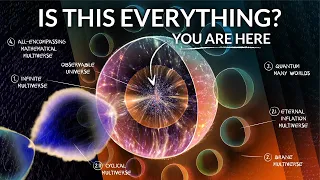
How Big is the Universe? Within the universe exists a certain reality that’s hard to fathom. There are parts of it that we, as humans, will never know and interact with.
Entire galaxies, and groups of galaxies, as far as we know, we have no hope of ever knowing about. This is due to the speed of light and the expansion of the universe. Eventually, over great distance, you get too much expanding universe for the speed of light to ever overcome it.
So the assumption is made that there is more universe than what we can actually see, which we term the observable universe. The unobservable universe is, well, not observable so it may be that we can never know how large it actually is. You can change this by travelling at relatavistic speeds, parts of the universe you were not able to see should come into view, but you are limited by the speed of light so you can’t ever overcome it enough in order to see the entire universe.
This leads to an interesting conundrum. The question has to be asked if the universe is finite, or infinite. If finite, then it may be only a small amount of the universe that we cannot see.
Or it may be significantly larger. Or even infinite. We’ll probably never know which is the case.
But if it’s infinite, then, if you travel far enough, one might come across near carbon copy earths, full of near carbon copy people, right down to you and me. If that’s the case, then the “are we alone? ” question takes on a completely new meaning.
Number 4. Why is the Sun’s Corona So Hot? One problem in solar physics is why the sun’s corona, it’s atmosphere, is millions of degrees kelvin hotter than the sun’s actual surface.
This problem stems back to the early days of solar physics. Certain lines were seen in early spectra taken of the sun that led some researchers to suspect that they were actually seeing the absorption lines of an unknown element on the periodic table. It was actually even named, Coronium.
But this turned out to not be the case, and in fact reflected known elements that were in very intense states of ionization. This in turn led researchers to conclude that the sun’s corona was ridiculously hot. Yet the surface of the sun is, in comparison, much cooler.
The problem lies with the second law of thermodynamics, meaning that heat coming from the sun’s surface can’t flow directly to the much hotter corona enough to account for its temperature. In turn this means that there must be another mechanism involved for transferring energy to the corona. There have been a number of theories to explain this that have been advanced, including a recent one that seemed to reveal braid-like structures in the corona.
This led to a hypothesis that magnetic reconnection and these braids unraveling might produce the heat. But, ultimately, no one knows why the sun’s corona is so hot. But we may be near an answer for this one, one of the objectives of the currently active Parker Solar Probe is to look into this mystery, and may well find an answer.
Number 3. Baryon Asymmetry We can make anti-matter, but it’s not easy. Or cheap.
In fact it’s one of the most expensive substances on earth. But we can do it. And nature does it too, there is a fountain of some sort near the center of the galaxy that’s literally shooting out positrons that annihilate when they hit normal matter to the tunes of millions of tons of the stuff being out there at any given time.
Anti-matter exists, and we, and nature, can create it. But there is a deeper problem. While we do see anti-matter being created in nature and in the laboratory, there seems to be no reason why the big bang should not have created just as much anti-matter as matter.
Baryonic matter, or normal matter, seems to have been made assymetrically to anti-matter. Trouble is, there’s no reason why this should be. Neither the standard model nor Einstein’s general relativity, give any kind of reason why this arrangement should be.
Instead, the big bang should have produced equal amounts of both, and they should have annihilated on coming into contact with each other. There must have been something that favored baryonic matter and produced some quantity more of it than anti-matter. What this mechanism was and how it all came to be is unknown.
But in the end, if you think about it, it digs directly in the origin of matter itself, something not often discussed. Matter can lead to life, and life leads to us. Had things been different, we could have easily been borne of anti-matter rather than baryonic matter as the two are identical other than charge.
Could there somewhere be anti-life? Number 2. Ultra-High Energy Cosmic Rays One of the most mysterious, and rarest, phenomena we detect coming from space are known as ultra-high energy cosmic rays.
These rays enter our atmosphere at very extreme levels of energy, the most energetic particles known, as much as a million times that which we can produce in an atom smasher here on earth. Problem is, the energies observed in these particles shouldn’t happen. The real question here is what’s producing them.
It must be some kind of extreme environment, such as a starburst galaxy. But If they are being generated by something very active but distant, such as active galactic nuclei, then there’s a huge problem. They should only be able to travel at these energies for about 150 million light years, past that they would be slowed due to the interaction of the particles with the cosmic background radiation.
Most extragalactic sources would seem to be too distant. Yet, we see them. Possible causes are that the sources for these particles are actually close but seem a bit less likely, such as neutron stars with very strong magnetic fields.
But that’s the case, why would the sources be so rare. Another are supernovas, accelerating the particles to these energies. More exotic options include dark matter being converted by black holes into normal protons.
But there’s another problem, It seems that the higher energy the particle, the heavier it gets. This means that at high energy, the particles are protons. But at higher and higher energies, they are helium nuclei, then carbon and so on with one hypothesis stating that they might even go as heavy as iron.
This is the exact opposite of what is expected. And more, heavier particles should be subject to even more scatter than normal cosmic rays, which tend to be so hopelessly scattered that their sources can’t be determined. Yet with the ultra high energy cosmic rays, the scatter is much less, opening the possibility of eventually determining a source.
And, it gets stranger. For these particles to exist, the source must be producing them close to it’s top possible energy. It’s unknown what that kind of object could be.
But secondly, there must be something about the circumstances of travel through space that allows these rays to maintain their energies. Another oddity is that at the exact energy that normal galactic cosmic rays stop, the ultra high energy cosmic rays start. That may just be a coincidence, or there is either something wrong with our models of how particles in general behave, or how we detect them in the earth’s atmosphere.
Or it might be even more exotic, and that the highest energy rays aren’t really heavier nuclei, but protons just acting like it. This gets into even more strange and speculative territory, such as the protons forming mini black holes in their initial collision making them appear heavier, but that requires things we have no real understanding of yet, such as large extra dimensions of the universe, which we have no indication even exist. But in the end, no know knows what creates such high energy particles in the universe, and if they do turn out to be from distant sources, then we will have an even larger mystery on our hands, one that might even violate the laws of physics as we understand them.
Number 1. Is it all Even Real? There’s no question that the universe, in some respects, is a very strange place.
One that we very well may never understand completely. And some aspects of it are so strange that it’s led to some thinking that the universe may not be as it seems. The first take on this is a very old idea, going back to Descartes in its original form.
The idea is a philosophical one, rather than a strictly scientific one, and in a nutshell states that if you were a brain in a jar, with all sensory input about the universe fed to you, say through electrodes or some other technological means, then you may not ever know that none of it is real. To you it would seem so, but it wouldn’t be. Another take is that it’s all a simulation, and that we are all some sort of intelligences embedded within it.
In this case, strange possibilities come into play. Perhaps we are humans of the future simulating ourselves, and the universe, as it was in the past in what’s called an ancestor simulation. Or worse, that we are a simulation being concocted by another thought experiment, a boltzmann brain.
In this concept, if you wait long enough in an infinitely existing universe, consciousnesses, or even gigantic sentient supercomputers capable of simulating a universe, will eventually and randomly come into existence. Imagine if you suddenly woke up to find yourself in an ancient, dark and very dead universe. Trying to figure out the nature of it, or to just avoid the infinite darkness, you might just try to simulate a universe, or something like one.
Are we the fever dreams of an utterly alone boltzmann brain? But, in the end, those are really more of a matter of thought experiments than anything else. But one last possibility does come from science.
We know that on the quantum level, particles behave like waves, and exist in quantum superpositions until they are forced to collapse through observation. So the question is, does the entire universe itself also have a wave function that’s being collapsed? Some scientists suspect yes, others suspect no.
But if it does, what would happen to the universe is there was no one to observe it? At that point, would the universe even matter? Thanks for listening!
I am futurist and science fiction author John Michael Godier currently existing in a state of collapsed quantum superposition while concurrently preparing to dine on some take out food. Is the crab rangoon really there if I’m not observing it? Does it really matter, since it will cease to exist entirely just after I hit the stop button on the recording software.
The universe is a little spooky, especially if you’re a crab rangoon and be sure to check out my books at your favorite online book retailer and subscribe to my channels for regular, in-depth explorations into the interesting, weird and unknown aspects of this amazing universe in which we live.