All of these five tribes are 70 years old. They were there from the beginning. Is that remarkable? In the world of AI, where change is perpetual and never more rapid, certain things are remarkably constant. One of which is these five paradigms. They haven't changed. They all were all invented in the ' 50s. All of them in one way or another. And they're still the same ones today. When I talk to people about the five schools, People who are not AI experts, the one that immediately resonates with them is reasoning by analogy. Everybody can understand because
because we do it all the time. Create an oasis with Thuma, a modern design company that specializes in furniture and home goods. By stripping away everything but the essential, Thuma makes elevated beds with premium materials and intentional details. I'm in the process of reorganizing my house and I'm giving Duma a serious look for help in renovating and redesigning. Thuma combines the perfect balance of form, craftsmanship, and functionality. With over 17,000 five-star reviews, the Thuma bed collection is proof that simplicity is the truest form of sophistication. Using the technique of Japanese joinery, pieces are crafted from
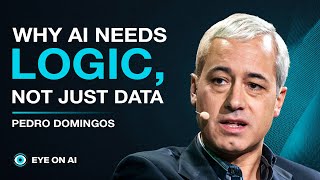
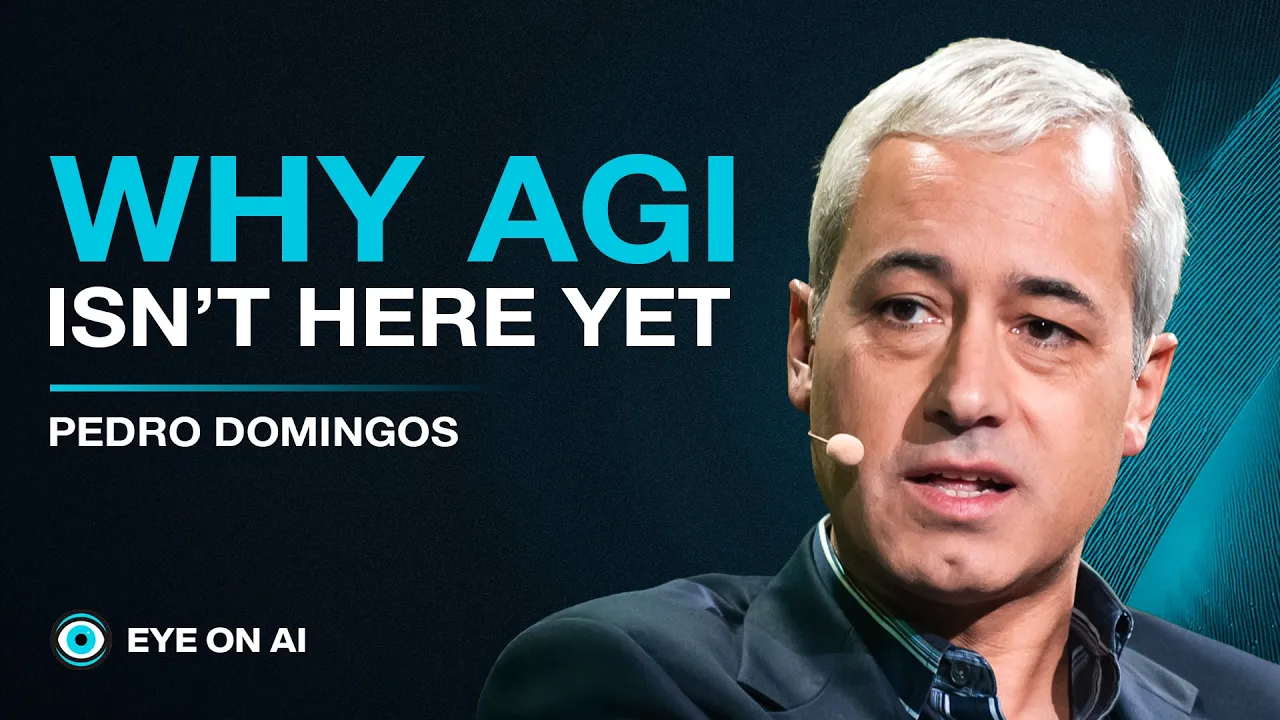
solid wood and precision cut for a silent, stable foundation with clean lines, subtle curves, and minimalist style. The Thuma Bed collection is available in four signature finishes to match any design aesthetic. Headboard upgrades are available for customization as desired. To get $100 toward your first bed purchase, go to thuma. That's t hu ma.co/ionai. Ion AI. All run together. Eye o n ai. So for $100 off your first purchase, go to thuma.co/iona. co/ionai. That's t hu ma.co/iononai to receive $100 off your first bed purchase. Hi, I'm Pedro Domingos. I'm a professor of computer science at the
University of Washington and an AI researcher. A few years ago, I wrote a book called The Master Algorithm that was an introduction to what I call the five tribes of machine learning. the five main paradigms and we've been going through them one at a time. We've covered the symbolists who traditionally dominated AI. Uh the connectionists or deep learning who dominated today uh the Beijans who you know have always been There and always will be and and today we're going to do the last two uh which is the evolutionaries who do AI inspired by evolution and
and the analogizers who do um reasoning by analogy. Okay. Uh well, why don't why don't we start with the uh evolutionaries as or or the other way around? Which other whichever is more current? I mean, they're both current. Maybe the evolutionaries are are a nice uh segue from uh the connectionists because they have Something very important in common, which is they are also inspired by biology. Yeah, the evolutionaries and the connectionists both believe in doing AI inspired by psychology. The others don't. The others think that's a silly idea because biology is a mess and suboptimal
and blah blah. But the connectionists are inspired by the brain, the architecture of the brain. If we can produce that in hardware, then we're on our way. Uh but the Evolutionaries say like, well, wait a second, that's really not the whole problem. Like where did that architecture come from? Right? You're only tweaking some way. It's big deal, right? What you want to know is like how do you create a brain in the first place? And uh you know nature has an algorithm for creating brains and and and robots and a lot of other things and
that's evolution. And you truly can't think of evolution as an algorithm. In Fact you know people in the 19th century already saying the equivalent thing. I forget who it was that said maybe it was George Bull right who invented the logic that computers are based on. He said were to the effect that God does not create animals and plants. He creates the algorithm by which animals and plants are made. M so you know what we're going to do is be a little god on the computer and mimic the the evolutionary process on the computer Except
that instead of evolving animals and plants we evolve programs circuits robots in fact people have done the whole gamut even there's patents for I don't know things like radios and amplifiers based on on designs that were created by by some of these so-called genetic algorithms because they're they're inspired by genetics and there's also this whole field of genetic program where you evolve programs And and it's interesting how um your Basic genetic algorithm is really a very literal translation into the computer of our basic understanding of evolution. There's a population of strings, literally bit strings uh
uh and then there's several generations. You start out with random ones. This is the amazing thing. You start out with random strings and after a while you're doing amazing things. Like for example, there's this guy Hod Lipson who's at Cornell or maybe somewhere else now. He Has this lab where they literally evolve robot insects from scratch. They start by doing it in simulation and after a while they just manufacture them like they 3D print them or something and they start crawling and flying in the real world. Uh so you start with with these random strings
and then you mutate them you cross them over right that is the key thing in in evolutionary computing that is not present in say you know uh gradient descent or things like that. There there's you know you measure the fitness of your of your systems or programs or whatever based on that string at the task right there as usual a reward and objective function of some kind and then the the best performing ones get to mate literally it's like sex on a computer um and and uh and then the offspring right are the new generation
and those in turn will be evaluated and so on so it's this very basic um mimicking of evolution that works to a Surprising degree. Now, we can go into some of the history and why they kind of diverged from the rest of of machine learning and some people are very skeptical about AI and whether or not they're truly capturing the important things about evolution and what the future of the whole thing is. But there certainly a lot of interesting things there. Let me just ask, can you define when you say these strings are are you
talking about u functions or or what What are you talking about when you say strings? Sorry. Yeah, I I elapsed into technical jargon there. A string in computer science is just a series of bits, okay? I mean, it can be a series of characters. For example, a sentence in English for a computer scientist is a string of characters, okay? Because it looks like a string, right? It's it's a long linear thing. And and and and a genome, right? A a DNA is a string of Letters. That's the amazing thing is that like everything about how
you and I are made is encoded in a bunch of these strings of TGA, TC, etc., etc., right? It's it's kind of mindboggling, right? But but there it all is, right? If we know how to manipulate those strings, maybe we can get far. So it's not a function. It's it's it's about a string is just about the simplest thing you can possibly have in computer science. Yeah. And and the what would and you say you Start with random strings. uh how then do do they evolve? Do you have uh an algorithm operating on them? The
again the the idea is kind of mind-bogglingly simple and it shouldn't work but it does and you know the proof is real life evolution right so so let's suppose that I want to uh what's a simple example I want and this is a real example I want to build a radio right a radio is a bunch of electronic components put together you know a Transistor you know resistors capacitors blah blah blah you need to tune it to whatever frequency Right? We know how to do that. But maybe there's better, more efficient ways to to to
do to make a radian. So the way you do is gener algorithm is that you start out with a bunch of random strings, but what you have and often this is a very simple algorithm, but it needn't be is something that that string is a specification of how to build a radio in That case. Like for example, if there's a one in a certain position, it means that this transistor is connected to that resistor. So you say like I have a pile of transistors and resistors and my string just specifies who's connected to whom, right?
If you have all the necessary components and we know what they are and you allow possible connections, one of those strings is your radio, right? And another string is potentially an even better radiant, Right? So now you take a random string, you build the corresponding radio and you know in practice you only have to simulate it, right? There are there's packages to do that, right? That electrical engineers use. And then it's probably a terrible radio. Like your first generation of a thousand things, they're all terrible radios, right? But one of them kind of picks up
a little bit of something, right? Just randomly. Some will be better than others. And so There's another. So then you take those two strings and you randomly mutate them, right? Because some of evolution is is driven by random mutations, meaning like you just flip some of the bits, which means, oh, you know, this transistor was connected to this resistor, but now let me connect it to that capacitor instead at random. and more powerful in principle, right? And this is really where the interesting part is. You say like, well, here are Two strings that actually seem
to be better than random at describing a radio. Let me do a crossover between them like you do in, you know, in in in in evolution, which is I'm going to take half of the string from one side and half from the other, the mom and the dad, if you will. And now I have a new string that's a new radio. And maybe that string is actually more garbage than the previous ones were. But if you think about it, like if this string had Something good here and this string had something good here, if you
pick this part and this part, the new string is actually better than either the previous ones. And if you do that for 100 generations, lo and behold, you actually have a fantastic radio. and and driving that the mutations and uh choosing the the leaders uh or the winners out of the offspring. Is that is that uh reinforcement learning or what is the what is the assessment Uh algorithm? It's not reinforcement learning but in fact you can think of reinforcement learning as being sped up evolution. It's actually good to and you know some people have actually
formalized this and there's interesting lessons like you reinforcement learning is what animals do right and it's discovering how to do something properly which prior to there being reinforcement learning was could only be done by evolution. So you can It's actually the other way around. You can you can think of reinforcement learning as a more efficient way to evolve. And in fact you think of us people having ideas as an even more efficient way to evolve and you know things keep speeding up. But evolution actually is is is or at least this basic you know version
of evolution uh which is really a cartoon understanding of evolution is really just this. How does evolution evaluate animals? It throws Them out in the world and sees if they survive and reproduce. That's that's what it is, right? and and and um you know there's a mathematical theory of evolution at this point which of course you know Darwin didn't have but is you know part of the so-called modern synthesis and there's this notion of a fitness function which is really the equivalent of the reward function in in uh in reinforcement learning reward function is you
know you touch the stove You get pain right you eat an ice cream you get pleasure right the fitness function in evolution is essentially how many offspring do you have but of but how how many offspring you have is driven by how well adapted to the environment you are. So if you're a bird and you have a better wing or you have a lighter skeleton, you're able to fly better, faster, farther, etc., etc. So that's your fitness function. So the whole art, if you will, there's always Somewhere in machine learning where the whole art goes
and and and and in generic albums, it's in defining the feature, the fitness function. Yeah. Right. So I mean and for example in the in the case of the radio that I was talking about your fitness function can literally be there for example this thing called spice which is a software package that will simulate any electronic circuit right you you define your your your circuit as I described Using a random string or at some point a not random string but then you you you create that circuit in software you put it through spice and and
and you test it as a radio you go okay let me try to listen to you know FM101 does does that work when I do So you have this battery of tests which is you know the the the generic algorithm equivalent of like throwing out the circuit in the real world and seeing if it actually does you know what it's supposed to be fit for Which is you know uh let you listen to the radio and this this process you said you know uh you end up you know 10,000 generations down and you have something
uh it's all automated or does it require uh intervention. No, I mean there's all sorts of variations, but the basic version does not require an intervention and it works surprisingly well and it's often not even 10,000 generations. I remember a Long time ago I seeing this demo of something that was very famous then called the connection machine. It was one of the first massively parallel computers and it did the following thing. This was at, you know, some graphics exhibition or something. It showed you 10 random images, random images, and you pick the one that you
like best, right? Why not, right? Like in abstract art. And and you do this for half a dozen times. And even after that Small number of times, right? Literally, while other people are standing in line, after after those let's say 10 generations, it's actually generating really amazing images, right? So it's Yeah. Evolution is a shockingly effective uh learning method. Yeah. Are there any practical u applications out there that use this method? I mean, you talked about the insects. Uh, was that at CMU? You said the insects were at Cornell. Is this guy called Lipson? I
Think he's moved to NYU or or some somewhere else. But anyway, uh, it it uh there So, as I mentioned, there have been, you know, real radios and amplifiers and whatnot designed in this way. the the genetic algorithms folks have a whole list of of things they claim are successes of uh uh genetic algorithms like creating a you know robot playing soccer a robot soccer playing team etc etc. This is very controversial however because the other People in machine learning are like nah those applications aren't really real and you could do them with you know
just greedy search and and you know there was actually at one point a very famous bust up uh which we could go into and the the consensus in in machine learning is that that stuff is useless. In fact many of the machine learning people when when they saw my book said they're like why did you even write a chapter about that? On the other hand, on the other hand, you could have said that about neural networks, SIRA 2000. Like, why did you even write a chapter about that? That that's crap. It doesn't work. So, you
know, place your bets. Okay. And then the analogizers. Let's talk about the analogizers. So, analogizers are we're going to do um machine learning and AI based on reasoning by analogy. So, first of all, what is reasoning by analogy? Is I have a problem to solve and what I do is I retrieve from my memory similar problems that I solved before. I don't I you know typically yeah like you build up your solution one little piece at a time which is incredibly expensive and inefficient right and you do train of thought prompting and like who like
blah blah blah right and the analogist go like oh my god that's such a headache what you do what you and I do right is we ret we and we do this automatically Every day from the smallest things to to the biggest ones is like we retrieve from memory similar episodes similar problems and then we adapt the solution to that problem to the new one this is an incredibly powerful thing to do and in fact the terminologizer was coined by a famous guy Douglas Hofftater the writer of Gleserbach uh his most recent book is is
is called surfaces and essences analogy as the fuel and fire of thinking and it's Basically 600 pages proving according to him that every single thing in cognition from the simplest word used things to the highest achievement ments of the Einsteins and and whatnot. It's all reasoning by analogy and nothing else, right? So, it really is, you know, um he really does think that analogy is the master algorithm. Now, I think he's gone a little too far, of course, because again, analogy solves some problems, but not all of them. But there's no denying That this argument
has a lot of force and I would even say that reasoning by analogy is the most unfairly ignored uh uh uh school in AI. However, right um you're so so interesting point when I talk to people about the five schools like you know people who are not AI experts the one that immediately resonates with them is reasoning by analogy you know bian learning that's that's what is that like base theorem Symbolic AI all of that is like not you know neural networks yeah the brain but it's a pile of numbers but yeah reasoning by analogy
everybody can understand because because we do it all the time right So, so there's a there's a lot of intuitive appeal in it. And moreover, and very importantly, in psychology, in cognitive science, there is a literature going back decades of thousands of papers doing this thing of showing how You do all these things by analogy often in different ways than what Douglas of Statter says like you know there's this thing called structure mapping and whatnot which is you know which which uh which has gotten you know um a lot of play. It was invented by
by Dejner etc etc. So that's one aspect but this was influential maybe in AI I don't know like decades ago right what what is more relevant is that until fairly recently until the AlexNet Explosion the dominant paradigm in machine learning was kernel machines right everybody did everything using kernel machines including vision right the state of the art of vision was a so-called support vector machine which is a simple form of of of kernel machine right that That's that that was the state-of-the-art like that that's what people believed was the right thing to do. They don't
call themselves analogizers and like you know people Like like Hofftater but it really you know like kernel machines are are are a primitive form of reasoning by analogy is the similarity function. Yeah. And I I just for listeners I I did an episode on on support vector machines. Um but can you describe uh define for listeners what a kernel machine is? Yeah. So what is a kernel machine? Right. First of all, what is a kernel? A kernel is just a a clunky mathematical term for a for a function that measures the similarity of Two objects.
Yeah. Right. You give it two objects, you know, you give it you and me and it gives us a score for how similar we are using some set of attributes, right? You know, like how tall are you, how smart, what is your job or whatever, right? or how similar to images are based on the pixels or something more sophisticated. Again, in kernel machines, the secret sauce is how you design the kernel and it could be learned and whatnot. But then what it Does is like for every pair of examples, it spits out a number saying
you're very similar or not so similar, right? And then the kernel machine in addition to the kernel, what it has is a bunch of examples that it saw in the past from your so-called training data is all machine learning. It throws out most of them, but it saves some key ones. And those are the support vectors. Support vector machine comes from the term support vector. And a vector is just, You know, it's an example, right? It's it's a series of values of pixels or or or whatever, right? It stores those support vectors because they're the
ones that are going to support the decisions that you make. And then when a new example comes along, it's actually very simple. Like I'm a doctor. I want to diagnose my new patient. I don't know. Let's say I don't know about anything about medicine, right? Um and and and what I what do I have? I have a file of Past patients. I have a new patient in front of me. I ask her, "What are your symptoms?" Tell me like I fill out this vector for her. And then I go in my file system and I
look for the patient with the most similar symptoms and I say, "Oh, this patient had whatever COVID. You have COVID, too." Which sounds incredibly dumb and simplistic, but there's a mathematical proof, right? that if you do this with enough examples, you can learn any function. In Fact, nearest neighbor, which we talked about before, is is the the simplest analogy, you know, similarity based algorithm is nearest neighbor, right? Which is as simple as as it can get. And kernel machines are really just a more sophisticated version of the nearest neighbor algorithm. Yeah. So how how does
uh ho how does I mean beyond support vector machines how does uh the how do the Analogizers develop new architectures or algorithms to do new things. Uh let me give you an example. So actually first of all let me tell you what structure mapping is. Structure mapping is probably the key concept in in reasoning by analogy. And the idea in structure mapping is that every problem every domain has a structure and what I do to solve a new problem is map the structure from the problem that I've Seen. So for example famous example of structure
mapping reasoning by analogy Neils bore's model of the atom. Mhm. Right. In his time people discovered that hey you shoot you shoot these alpha particles at at a at an atom and most of them go right through. A few of them bounce right back. They knew that there were electrons with negative charge around somewhere. And now clearly the positive charge seems to be concentrated in a small thing in the middle, right? Most of it is vacuum. What does this remind you of? It reminds you of the solar system with the nucleus as the sun and
electrons as the planets. Yeah. And so Neilsmore was like, "Aha, I'm going to do a model of the atom by analogy with the solar system." Which actually historically turned out to not to be that accurate, but it was a very it was a key step in in in the development of quantum mechanics. So what did he do, Right? He noticed a similarity between the atom and the solar system. And then he mapped the stretch of the solar system with the sun in the middle and the planets revolving around it at various distances to the atom
which in many ways is a remarkably accurate picture with the different shells you know which are electrons at different distances you know roughly speaking and so on right so mapping the structure gives you such a leap in problem solving Right you're like you're not lost in the woods anymore now you're like okay this is how I'm going to try to solve the problem and now let me adjust it to give a more modern and more relevant Example, one form of of of analogy, you know, based AI is called case-based reasoning, which is reasoning by cases.
And it has actually been very popular for decades in call centers and help centers. And they work is like this, you know, like you have, you know, you're Microsoft, you have a help desk for people who are having problems with whatever Windows, right? And and and you call up and say like, hey, you know, my printer isn't working. It's spewing out garbage. Help me, right? And then what the system does and again this works really well in a large fraction of the case like it asks you a few stock questions and it goes like aha
what are the problems in my in my database right or knowledge base that have these Characteristics and let me not just suggest the same solution but now tweak it. Oh, you have a different version of Windows, so this part changes. And your printer is Epson instead of SP, so this part changes. But you take that solution and you adapt it to the new customers. And the shocking amount of the time this this works. This solves the problem at of course much less cost than asking a human or having some big, you know, symbolic AI or
or like large language Model spending a ton of money to get to the same conclusion. Yeah. or but that to me sounds like a a kind of search not a of a a a way to solve more complex problems or or are there so um nearest neighbor and kernel machines effectively they you could say they don't do any search there are versions of them where for example I mean like let me refine that the basic and we'll we'll do this in a few stages the basic neural net problem doesn't do any search it Remembers all
the examples and it just spits out the answer. You have whatever breast cancer or you don't or etc. Right now there are versions of nearest neighbor that try to cleverly select the best examples to remember. So they don't have to remember all of them and it's more efficient and that's what a support vector machine is. It's actually a clever way to search for the best examples. So there's already some search going on there. Now what is the Advantages of of structure mapping or casebased reasoning? You're right. There is still search going on here. But the
key thing is that this search is way more efficient than trying to find your solution one step at a time. It it's it retrieves a whole chunk of some literal in psychology they call this a chunk, right? It retrieves a whole chunk that is relevant to solving your problem that you then only have to tweak. So you're right. It's a I mean on a on on an ideal Day there is no search. You found the answer, you give it to me, right? your my problem is exactly the same as the one that somebody had. That
actually happens a good chunk of the time. But more generally, there will be search, but the number of of steps in that search might be, you know, a dozen instead of, you know, a million. Yeah. Yeah. Um, okay. So, so I want to spend uh the last half hour talking about uh how these Schools where they stand today and and I remember talking to you uh a few years ago about uh the master algorithm in the book and you were saying that well the master algorithm is probably not a single algorithm. It's it's it's a
system of algorithms or a family of algorithms that that work on different parts of any problem. Uh and how much I mean certainly reinforcement learning uh is Is being blended with uh generative AI with transformer architectures. uh but but how much uh blending or or uh working together is is going on these days among these different schools or do they remain fairly siloed? Uh no they don't. So in fact um it used to be so there's a very interesting history in all of this. The first point of which is That all of these five tribes
are 70 years old. Mhm. They were there from the beginning. This is actually remarkable in in in a in the world of AI where change is perpetual and never more rapid. Certain things are remarkably constant. One of which is these five paradigms. They haven't changed. They all were all invented in the 50s. All of them in one way or another. And they're still the same ones today. And another very interesting Point is every decade a different one dominates. Mhm. Right. in in the 60s you know neural networks dominated and then in the 70s it was
symbolic AI etc etc like you know the 90s were the Beijian decade the 2000s were the kernel decade and then you know and then neural networks came back right now you could say uh well you know this time is different neural networks are going to Dominate forever and the others are now irrelevant a lot of people think that right or you could say well you know extrapolating from history some other one of these predominant is going to make a comeback any day Right now it used to be that these paradigms were fairly separate and had
the people actually had a somewhat antagonistic relation. Right? Cir 1990 the symbolist would say like neighbors are a bunch of garbage and the new People would say symbolic AI is a bunch of garbage right uh and so on. And then the Beijians came along and said like no you guys are both a bunch of garbage. I mean I remember I used to go to ICML that was the symbolic machine learning conference and to NIPS which was the neural you know conference and almost nobody there were like half a dozen people in the world that actually
went to both of them right but then they actually melded right and this was Really largely brought about by support vector machines that first took over the neural network community and then took over the symbolic community and then people started publishing in one or another indiscriminately. At this point today there is no difference between ICML and Europe. So at that level things have completely merged. Now there are still people who identifiably work in these paradigms but there are also a lot of people including myself who've done a Lot of work combining them. Right? So for
example there's this whole area called neuros symbolic AI whose whole agenda is is to combine neural AI and and and and and symbolic AI. And in fact this was popular in the 80s. You know, Jeff Hinton circa 1990 was doing what they called connectionist symbol processing. Yeah. Right. And and here's the thing. It comes and goes, but actually right now at this very moment today, combining symbolic and and and Neural AI is the thing, right? Not necessarily by that name, but what you see in the papers is getting these neural models to reason, which is
of course is what symbolic AI is for. And what people have been doing sometimes consciously, sometimes unconsciously and reinventing the wheel is bringing techniques from symbolic AI over. So for example, what is 01, right? Chatty PT is 01. It's a combination of an LLM, which is a neural system with symbolic search In ways that they haven't made public, but in one way or another, this is what's going on. So this agenda of combining the paradigms is very much alive and and I would say gaining power. Although again, this waxes and waines, right? There was a
previous one a few years ago that petered out and maybe this one will peter out as well. My bet is at the end of the day you will need to combine these and and not just ideas from two of them but from all of them Right uh how long that will take to happen is an open question. Now you mentioned that that I say there is necessarily one master algorithm. What I mean by that is not that you're going to have this. A lot of people do this like I have a symbolic subruine that I
call when I have a symbolic problem like you know retrieval augmented generation for those of you who are familiar with it is a really a symbolic subruine in a neural system right that is not that's a very Shallow combination of the two and you know I spent some time in the book explaining why that is not the answer. I really think you did the deep unification of the two and you know a good analogy to this you know reasoning by analogy is electromagnetism right you know Maxwell didn't say you know uh uh you know the
physical world is a program that has the the the electricity sub routine that it calls some of the time and other times He calls the magnetism sub routine that's not it at all what he actually showed brilliantly is that they are the same force right it's a unification not a combination Right? And I believe this is actually what's needed. And when AI is mature as in any mature science, this is what we'll have. Now there's an important point here which is the the the that algorithm there's no single form that it has to take like
and again a good Analogy here is Turing machines, right? Alen Turing discovered or invented the concept of a touring machine which is a machine that can do anything, right? Which at the time was a very strange idea, right? like a sewing machine would sew and a typewriter would type. But what's a machine that both sews and types? But a computer, this is the essence of a computer. Is that a machine that does anything? But there are hundreds or probably even thousands These days of different things that are what are called Turing complete or tuning equivalent,
right? His actual machine nobody uses. We have a Vonoyman computer. What what you have in your cell phone and we all have are Vonoyman computers which is an architecture. So the real machine is the vonoman architecture but conceptually they're the same right and and they will continue to be new ones right so my point is that like we need to arrive at The first form of the master algorithm in some ways it doesn't even matter what is then there will be many variations that are good for different things but like in machine learning if you
will it's inductive reasoning we don't even have what they have for deductive reason which is the concept of the ting machine and that's the first thing we need to get to yeah um and and to get to these uh you know these reasoning models whether whether They're unified or whether they're uh you know two systems one calling the other um as they get more powerful I mean do you think that they will uh help solve this problem of how to unify the various tribes? I mean uh do you have any confidence in reasoning models ability
to advance scientific research? Yeah. So uh there are many paths to the master algorithm and people are Following them. You could start with any two of these things, combine them, unify them and then bring in the third. That's largely what I've done over the last 20 years. And and and so there are many ways to get there. The one that is most popular right now is to start with a connectionist system with a deep learning system and then bolt-on uh symbolic reasoning capabilities. the way that has been done mostly so far is very shallow and
I don't think it's gonna It's gonna you know um survive the test of time right but I do think you know in in very concrete ways that there is a deep combination of them I but you know to take maybe a better example think of transformers right a transformer is a type of neural network right transformer is a neural network but is much more powerful than a multi-layer perceptor which was the architecture that preceded it in a way that you know there's there's many attempts to understand what It's doing, but I would say that, you
know, at least my best understanding of of of what it's doing is it actually has some of the capabilities that symbolic AI has that previous neural networks didn't have. So, in a way, a transformer is in a way that we don't fully understand yet, a combination of of connectionist and symbolic features. And that's what makes it so powerful. In fact, the closest thing to the mass that we have today is a transformer. And if You think about it, right, a lot of people were skeptical when the book came out because it was before Transformers came
out. But Transformers today are one algorithm, right, that does all of these things that you see in the media every day. It's remarkable. Yeah. Uh but but on the idea of of using AI to to advance research um you know, basically transformer-based systems. Uh do you see promise in that or do you think that uh The AI itself won't be able to advance thought that we're we're still going to need uh human intuition and and creative thought and and all of that. I mean it's at some point it's you know it's it it's seems like
these models are becoming powerful enough and there's enough uh human knowledge encoded uh out there that that they can ingest that that there'll be some Creativity. Uh so you have I think you have a number of uh questions there. So let me let me try to you know this one part at a time. creativity, right? People used to think that creativity uh was something that computers would never have. You know about Moravex paradox, which is this notion that the things that we think are easy for AI are hard and vice versa. Yeah. Because the things
that are easy for humans are easy for Humans because evolution spent 500 million years evolving us. And I have this slide that I've used in various talks that is more ofx paradox easy versus hard. And one of the lines that I have in there is easy, creativity hard, reliability. And I would say to people, reliability is hard, creativity is easy. And be like, what are you talking about? You're smoking. And even a couple years ago, right? And these days I just rest my Case and I like like creativity is like well, you know, use whatever
Dali or Mid Journey like generate videos, generate poems, generate music just like, you know, whatever. Creativity is easy. reliability no one knows how to make an LLM reliable today and that's the problem right so I don't think creativity intuition are there's nothing magical about them right we I mean I used to be a musician and write songs and people you know have this notion Like writing a song is like some kind of magical inspiration that comes to you from the muse right it's not right in fact anybody can write an okay song writing a hit
is really hard right but you know like if you spend you know whatever a year learning to play guitar piano and start playing you will write okay songs right so creative is not magic so I don't think there's anything that humans do that at the end of the AI can't right and most people in the Community this is what they believe it might be very hard it might take a long time but unless you have some mystical belief about what goes on in the brain it's a bunch of atoms and and in fact you know
if you believe in redu reductionism then the master exists because it's the one running in your head and mine right now right so I think at that level there's no doubt that we'll get there now where are we in terms of AI being able to for example do Real scientific discovery. Yeah. Right. Could an AI for example come up with general relativity or solve the problem of unifying it with the standard model? And the answer to that is today we're nowhere close to that. And this is very interesting. In fact, people have remarked on this
that they have, you know, like AI, the application of AI across the sciences is progressing very rapidly, right? Physics, economics, biology, etc. They're full of AI these Days. But it's AI that does lower level stuff. Yeah. Yeah, but it doesn't do that really creative, you know, things like people Newton and Einstein and whatnot did, right? And and and it's interesting because the the LMS have a bigger knowledge base. They've read every paper that's ever been written. So come on, like where are the discoveries, right? A human being with that with that like with that knowledge
base would be doing amazing things every day now. So Clearly something is still missing. And our job the researchers is to discover that thing that's still missing, right? And you like I have this you know longunning argument going on with Yan Lun because Yan he's you know he thinks back propagation uh is the master algorithm. He thinks gradient whatever machine learning will evolve and blah blah blah but at the end of the day the solution is still going to be gradient descent right he's like a fundamentalist Connectionist in that regard and you know and I
asked him this question that he has no answer to is like okay how did Einstein come up with general relativity by gradient descent right like there's no answer to that question so clearly something is missing and do you think what's missing is in one of these schools that you defined. Exactly. That is the right question. So for Example, Douglas Had in his book that I mentioned, general relativity is one of these examples of something that you know was discovered by analogy. So clearly reasoning by analogy is important. And again, it's very interesting that Jeff Hinton
who's really the godfather of deep learning, you know, he he says he's been saying this forever that like, you know, neural networks are better than symbolic AI because they reason by analogy. But Jeff, where is the reasoning by analogy? Explain to me where it is. Now I I mean I can tell you like where I think the reasoning by analogy is happening in neural networks and and and and at the end of the day we're going to have a single algorithm that in a way looks like a neural network but does reasoning by analogy and
does symbolic reasoning and you know we could get into the wheats there but this is I think you know where the solution is. Are there are there is there active research on that in uh in building uh reasoning by analogy into these systems? There's uh so for example there's a there's a long-standing active area of research on what is called automated discovery. Mhm. And and it started in the 70s uh with people like Pat Langley doing thesis where they show like look this system rediscovers Kepler's laws or or Boil's law or simple Laws like that.
And actually again recently that's picked up and people have all this work on you know discovering differential equations and and discovering you know how different systems work using AI. It's it's still I think at the level of Kepler not at the level of Newton. The level of Newton requires I think some of this reasoning by analogy and and again there there are people like you know in psychology and computer science who have looked at you Know how that might work right so there's there's a lot written on this. I don't think anyone has solved it.
I also think that disappointingly in mainstream AI research there's a lot of stuff going on but not this. There aren't a lot of people going like explicitly like how can we get a neural network to reason by analogy and therefore do scientific discovery which to me is a scandal right like you know some some fraction of people should be doing this instead of Doing more tweaks on LLMs. Yeah. And also the evolutionary uh uh tribe or or school that sounds very promising. I mean, you don't have to start uh with random strings. You can start
with a system that's already very advanced and uh and go from there. I mean, are there people doing that? I mean, there are and and and what you make a very good point is like you probably don't want to start With random strings. Unfortunately, a lot of machine learning people have this machine learning and the connectionist and evolutionaries are both great examples of this. They have this fundamentalist machine learning attitude in like no we want to learn everything from scratch. If you put in knowledge you're cheating. The Beijians and the and the symbolists don't have
that problem at all. On the contrary, the Beijans are all about priors which is Literally putting in your prior knowledge. And the symbolists are all about combining learning with knowledge based AI which is because that's what symbolic traditionally was. Like you start with the knowledge base and then you refine it which I think is an excellent idea, right? So why why throw that away, right? and and and you could think of what LM are doing today is like they are acquiring a knowledge base from text. That's what they're doing in a Very convoluted way. And
then they're flexible about how they reason with that knowledge base. It's very opaque. And then clearly what's missing is the ability to reason on top of that text which really is what things like a one and so on and deepseek are trying to do. So so there is a way to look at all this and say like yeah you know in one way or another things are moving in the right direction and we will eventually get there. Yeah. Um the uh it just seems that there there is enough research out there now and in all
these different um disciplines or schools that these AI reasoning models could or should be able to to to go across uh all of it and and you know find analogies or go across all of it and find opportunities for evolutionary Algorithms to advance what's already there or I I would um I mean it's interesting because Um I mean so so to take the evolutionaries to begin with they are at this point the tribe that is most distant from the others the other four I mean the support vector machine people I mean like all these people
they're mixing it up at this point the evolutionaries there's very little but There are a few things like you know genet um generative adversarial networks as as you very uh sharply pointed out last time there is an evolutionary there is a flavor of coeolution to that so there is one path by which they could come in. There's also this whole area of multi-agent systems. uh so there there's a type of reinforcement learning that is very close to to ideas from from generic algorithms open AI at one point you know before the whole chat GPT thing
they had These papers showing like look you know there all the there are a lot of problems for which surprisingly in if instead of reinforcement learning we just use a simple generic algorith right so a lot of this is happening now unfortunately the problem is that like there's more AI research than ever before today like by an order of magnitude or two but most of it is along a very narrow front and you know one common view I would even say Probably the prevailing view is that like you know we're just going to keep pounding
on this and you know we're going to do so many things eventually we'll solve the problem I'm not so sure because you know the saying that you know nine women can't make a baby in one month right you don't get you know you don't get for example to general relativity by having you know a thousand random physicists just do what they do for for a century it doesn't work that Right? Or or you know one way that I often put this is like solving AI is not a sprint it's a marathon. I really think you
know somebody needs to go really deep and and there is I mean there are people trying to do that but I think not enough and then you know like once we do that like we will see how all these people were just spinning their wheels and all of that unfortunately is going to go in the garbage can of history and like I know which part of those I want To be in. Um you you know I've I've been talking to people about quantum computing u in the past week which is advancing and you know and
the timeline is is looking more real not realistic I should say it's looking shorter to getting to a practical quantum computer. Uh do you think that will advance any of this? I mean, if you can and and in in with not for just Large problems that classical computing struggles with, but presumably with quantum computers, you'll you'll begin to understand where uh quantum uh physics and Newtonian physics meet. like what happens at the quantum level when uh when a virus attaches to a protein, you know, right now it's very Newtonian the way people think about it.
you know, It's a it's shapes and and uh but anyway, is do you do you track what's happening in quantum and think about how that may address some of these issues? So, the promise of quantum computing is that it can solve problems exponentially faster than classical computing. And if that ever comes to pass, boy, can we ever use it in AI like we will be the biggest consumers of quantum computing in the universe. No questions asked. Okay, so that is the number one promise of quantum computing. Now, having said that, there are a lot of
caveats here. One of the one of them is that if you talk to the people who are kind of like serious and knowledgeable quantum computing as opposed to the people hyping various things, they will tell you that it's exceedingly unlikely at this point that there will ever be a general purpose quantum computer in the same way that there are general purpose Classical computers, right? That's that's just not it doesn't look like it's going to happen. There may be quantum computers for specific problems that are that that is the hope, right? And those problems are are
important enough then great and and those some some of those problems are in AI. So in fact there's one type of quantum computing that is about finding global optima by tunneling out of the of the local ones right there. This company Called D-Wave that you know uh claims to have done this and yeah we could totally use that. So that's that's the promise. Now um will that ever happen and and how soon will that be? we are still you know I roughly track not very closely what's happening in quantum computing just out of curiosity more
than anything else um I mean I honestly I think um it's a hard bet to lay because quantum computing is such a hard problem right and there's This whole notion like well there's all this computing in superposition and that's where the magic happens but the air correction really kills you right the whole thing is so fragile and making it robust is so expensive right you need a thousand cubits to have a robust one and and it it goes on from there. You need super super low temperature, right? And and you know the the first real,
you know, quantum computer that does something useful is years away, maybe Decades away, right? And you could also make arguments which some people do about why this is never going to happen that all of quantum computing is really a misunderstanding and a misconception and and they're just eluding themselves or that it's a very nice idea at a theoretical level which is where it began but it'll never be practical. So you know as an AI person my attitude to this is I wish them great success. I don't think we we in AI we we will Depend
on that success. We you know in in a way AI is about a different path to doing exponentially faster computation is about being smart about your classical algorithms and in fact one suspicion that some people have and in fact Demis was talking about it this the other day is that maybe and I think this is a real possibility we in AI or in computer science more journal will discover algorithms that are smart enough that actually you don't need the Quantum computing anymore that exponential gain we can already have it in other ways that you know
just use classical computers. So we'll see. It's an interesting space. But I think um you know um for the most and there's I mean there's a lot of you know there's papers on like quantum machine learning and blah blah blah. I should say there's another way intriguing one in which quantum computing might be relevant to AI which is there are Ideas. This is often how fields of research wind up having an impact is not in what they were trying to do because it failed but because people came up with ideas that were then useful somewhere
else. Right? And it could be that quant it could very well be that quantum computing comes up with ideas that in the end will actually be useful in machine learning. You know there's almost nothing in this world that isn't potentially used in machine learning. So Uh I could see that happening with quantum computing. But so far on either that front or the front of practical computers I haven't really seen anything that I think people in AI need to be paying attention to. Having said that I've heard rumors that this is what Ulyskever is doing in
his new company is quantum computing for AI. So um uh we'll see. Yeah. Uh you know since you wrote the book u AI has advanced dramatically and and very Quickly and seems to not be slowing down. There was talk like two or 3 months ago that everything was slowing down and you know I don't see it slowing down. So, um, do do you have in your head kind of a timeline for how close we're getting to a master algorithm? Uh, great question and and uh, you know, my answer is we could be almost there or
it could be very far away. Nobody really Knows. Anybody who gives you a precise prediction is is making it up or deluding themselves. Now uh here's why uh technology progresses in scurves right it's something slow progress and then fast progress and then it slows down again and plateaus right the early part of an S-curve looks mathematically like it is an exponential but then what people forget is that the you know the slowdown is coming right you have an initial pace of in phase of increasing Returns that's the exciting one and then a phase of of
of of decreasing returns which is where most technologies are stuck for most of their existence like cars and planes and and TVs and whatnot. And now the thing that has happened in AI in the last 10 years is clearly we've been on that upward curve, right? And and every few years people go like, "Oh, things are slowing down now." In fact, I forget if you mentioned this already, but like I had this conversation with Eliciz at Icleair in 2017 where he said like, "Oh, you know, deep learning is slowing down. Like, you know, there's no
more progress." I was like, "Well, not so fast." Like, you know, new things will come up, right? And you know a month later the transformers paper came out. So you know and there are people today I I could actually argue both sides of this like you could look at today and say like well but things are slowing down. In particular the way you See things slowing down is that it takes exponentially more resources to produce the same amount of progress. In fact, the folks that you know open the Anttopics are like, "Yeah, yeah, that's the
way it is, right?" You know, like you gave me a billion dollars and now you have to give me 10 billion and tomorrow it'll be a trillion, you know, pony up, right? Which to me is alarming, right? So, but by that standard things are slowing down and but again that you Know that's normal, right? The question is like will there be a new idea that gives us another boost and you know for example alexnet was one such idea it was really just doing things on GPUs but that's fair game right and transformers are another idea
and in many ways you could say there hasn't been a big idea and you know GANs maybe were such an idea again it plateaued but you you know some people say there hasn't been any major progress in AI since transformers Came out which is almost 10 years ago or attention right attention is 10 years old now right so so who knows Right. It really depends. There's this is not pre-ordained, right? It's not like we're on some deterministic curve. It's like, you know, we the researchers have to, you know, come up with ideas and if we
do, you know, the the exponential will keep going until finally it saturates somewhere. The question is, is it about to saturate and will it saturate for a Year or 10 or 100? My hope, right, uh uh is that no, we we we if I had to lay down my bets, right? I said like no, we are not about to plateau. We are going, you know, like this fast progress of the last 10 years is going to look slow compared to the next 10, right? Get your head around that. But this is not going to happen
by magic. It's really going to require uh major new ideas of which, you know, with all due respect to the guys doing 01 and deepseek, those are not Those are tweaks. They're nice. They're perfectly good work, but those are not the thing that's going to give us, you know, the next phase of the exponential. Yeah. Uh al although you know and granted uh Sam Alman is uh you know he's got a a proprietary model that he's trying to protect and and generate excitement around. But uh it it does when you listen to him, it does
feel like Uh this reasoning is going to continue to develop. When you listen to Jeff Hinton, I mean, he already thinks uh these generative pre-trained models are uh conscious at some level. I mean, it's incredible the the stuff he's he he he he interpolates or or uh sees in these models and and then you have um you know Rich Sutton's team, I mean Elia's team and and all of these people are starting to jump ahead to ASI To artificial super intelligence. like don't even worry about general intelligence. Well, but I don't know. I'm a journalist
and I've I've seen what the field has done since I started paying attention in 2017 when I first met you. Uh, and you know, if we get to super intelligence, then basically we have the master algorithm, right? Well, once we have the master algorithm, uh, we have AGI. I mean, by definition, we have AGI. Otherwise, it's not the master algorithm. And again, as people never tire of pointing out, once we have that, then just scaling it up, we can have 10 or a thousand times or a million times the intelligence of a human being, right?
So, that part is easy. The hard part is getting to that master algorithm, right? But, you know, like you mentioned people like Samman, Jeff, Etc. It's interesting because these are all different cases, right? and and they have different reasons to say what they do. And it's good to understand a little bit of that. Sam Alman is a very smart guy, but he's not um he's a he's a VC. He's a great hustler, right? He's great at raising capital and and sniffing out opportunities. He's really good at that, right? And persuading people and so on. But
his technical knowledge, I think he himself would admit it, is not very Deep, right? And I remember him saying like in an interview with Ruth, you know, Hoffman like years ago like, "Yeah, transformers aren't going to do it." He doesn't say that now because of being convenient, but he didn't know what would he said like something else is going to have to come along, but he didn't know what it was. And I I I think that's true, right? It's just not what you will hear him say today, right? I think it's easy for a lot
of people and I think he partly has fallen into that. You see what these algorithms are doing and you get very excited and go like, "Oh, super intelligence is almost here." You have to remember that when you see I mean like this is a lesson that you have to learn in machine learning is like the algorithm always seems to be doing a lot more than it really is. You find examples where it's amazing. You're like wow you know super intelligence. But then there's other examples where you Know it does stupid things that a child wouldn't
right and that problem is still with us. So you have to not get too carried away with that. There's also the sales pitch but but ignoring that right now Jeff Hinton right is a guy who is perennially opt over optimistic about what neural networks can do and you know more power to him because that's what kept him going for 40 years right whereas others gave up but he has always I think underestimate he has this notion That the like let me put it this way Jeff does believe in the master algorithm as does rich Sutton
in fact I asked a bunch of people at the time I was writing the book and those were the two strongest yeses I got were you know Jeff and Rich of course they're different for them but I think Jeff believes in a no like what Jeff thinks of as the master and how the brain works is too simple he actually I I think Jeff massively Underestimates the true complexity of the human brain or even a simplified algorithm that would do the same so every decade and in fact this is a well-known joke in the field
and he will say that himself you know in a self-deprecation way he's he always thinks that like yeah I I've just figured out how the brain works. We're on the verge of whatever consciousness et etc. So in a way his latest things about like chat GPT being blah blah are They're totally consistent with Jeff but unfortunately they're totally consistent with him seeing more than is there and underestimating the the you know the uh the length and the difficulty of the path to to human level intelligence. And Rich Sutton in his own way with reinforcement learning
instead of neural networks is also uh uh prone to that. I think he's you know at this you know like Jeff in some ways to oversimplify has been very successful and Rich Hasn't. So in a way rich has learned the famous you know bitter lesson and I think he's a little bit more um uh a little wiser now if you will but but at the end of the day I mean I think um you know let me put it this way. The founding fathers of AI were crazy, right? In the 1950s, we're saying we'll have
human level intelligence in 10 years. They're crazy. They were mad men. But thank God for those madmen because they started the field, right? So, in a Way, it's good to have those madmen and those are optimistic people. But if you are an investor deciding what to invest in, I would take what people like Jeff and and and Rich and and Sam say with a large grain of salt. Yeah. Uh although you know you have models now that that uh well and they're not single models they're assemblies of models but that can handle uh uh audio
uh you know or speech they can handle Text they can handle uh imagery they can handle uh you know whatever other modalities are out there and they can ex you know generate answers in all these different modalities. I mean that's certainly more general than than things were in in uh in the '9s or the early 2000s. So there there is I mean AGI it's not going to be a moment. It's we're there's a spectrum and it seems to me we're in the early Part of that spectrum where yeah you have these models that are multimodal
uh and and now have a certain amount of reasoning. Uh so if you look at it that way it's it's there's a progression and we're moving along that spectrum. Oh absolutely. So uh let me even you know make that point more strongly before making some caveats. These aren't even assemblies of models. You have some of these Transformer-based models that one model, the same model does audio and video and text and speech and all of that. It's remarkable, right? This really is the closest to the master we've ever gotten. And it is a completely different place
from where we were in the 90s. Like it just doesn't compare, right? I mean in the 90s I was doing my PhD thesis on data sets with you know 500 examples trying to learn to do medical diagnosis and you know credit assignment and Things like that we're in a complete different place now right having said all that and you very you know you made a key point there which is AGI is not a point is like AGI is you know human intelligence is a whole bunch of different abilities in some of them computers already way
better than humans right they can add to numbers a lot faster than your I can play chess better but in other ways they little far behind. So there's not going to be a Point at which to reach a GI or a point at which to reach super intelligence. You need to think at a final like in each of these dimensions, how far along are we? And in some of those dimensions, we are far along. However, and and you know this is the big caveat is like where's my housebot? My housebot is nowhere in sight, right?
We're nowhere near AGI, right? Like you could say, oh, you've reached AGI once you beat humans at Every single one of those things. of all to take the two end of the spectrum we're nowhere near there on you know producing Einsteins right we have these systems that know more than anybody ever could but no Einstein or you know a maid right a maid is an incredibly sophisticated system that no AI can mimic right now making the beds you know you know loading the dishwasher like we don't have that we don't have that and we do
not have I mean I talk to robotics People not I'm not robotics myself like so you know what's happening and like no Everyone has a, you know, despite what you might hear in the media, you know, like we do not currently have a path to having a housebot in your house anytime in the next whatever five or 10 years. Right. Right. Okay. Well, we're we're up to over an hour. Uh let's leave it here and I I really enjoyed this series and I'm hoping listeners have learned a lot. Uh Are you working on a new
book? Um I so uh I do have a couple of books that I want to write and that I'm making notes towards right but I did recently publish a book 2040 a Silicon Valley satire. The main focus of my you know work right now is doing research. So I do want to you know like I I I have something that I think will make a big difference and I want to get that ready and release it and then see where that goes. And then after that, I probably Will be writing my next book, Create an
Oasis with Thuma, a modern design company that specializes in furniture and homeg goods. By stripping away everything but the essential, Thuma makes elevated beds with premium materials and intentional details. I'm in the process of reorganizing my house and I'm giving Duma a serious look for help in renovating and redesigning. Thuma combines the perfect balance of form, craftsmanship, and functionality. With over 17,000 five-star reviews, the Thuma bed collection is proof that simplicity is the truest form of sophistication. Using the technique of Japanese joinery, pieces are crafted from solid wood and precision cut for a silent, stable
foundation with clean lines, subtle curves, and minimalist style. The Thuma bed collection is available in four signature finishes to match any design aesthetic. Headboard upgrades are Available for customization as desired. To get $100 toward your first bed purchase, go to thuma. That's t hu ma.co/ionai. ioni. All run together. Eo n ai. So for $100 off your first purchase, go to thuma.co/iona. co/ionai. That's t hu ma.co/ionai co/ionai to receive $100 off your first bed purchase.
![Tensor Logic "Unifies" AI Paradigms [Pedro Domingos]](https://img.youtube.com/vi/4APMGvicmxY/mqdefault.jpg)