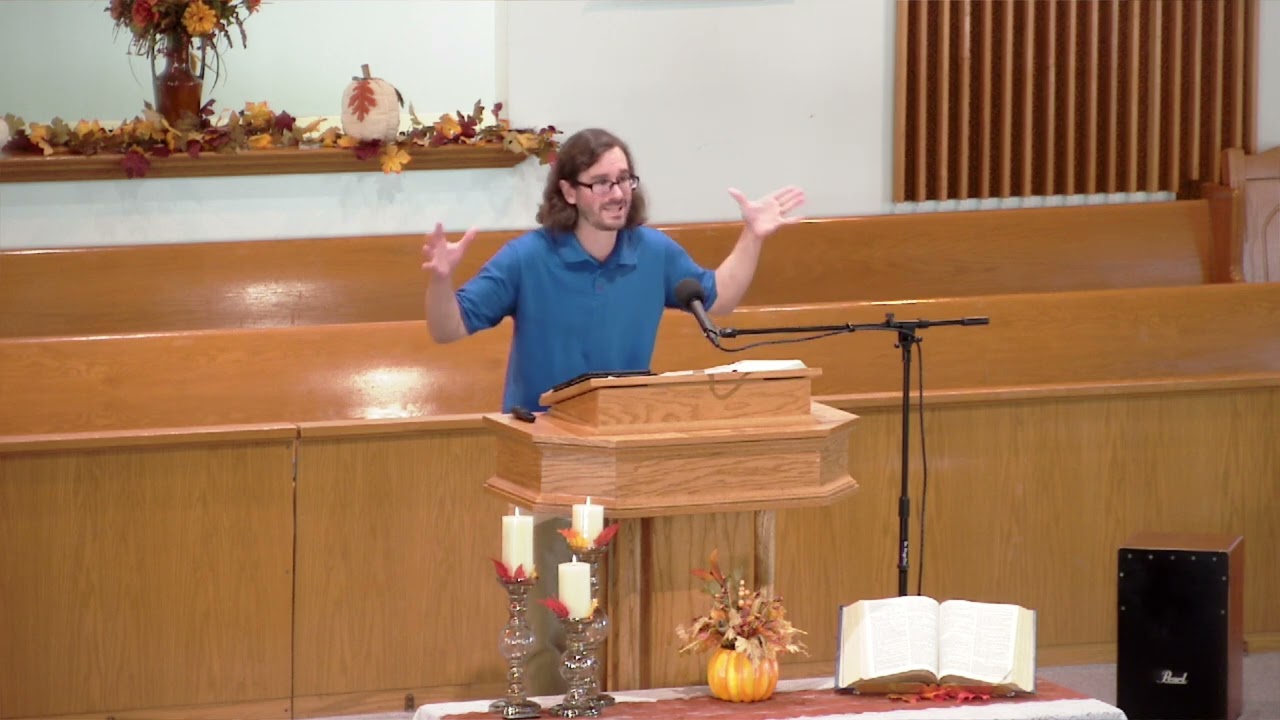
Please pray with me. Heavenly Father, we thank You once again for what You have taught us, led us through, and allowed into our lives over this past week. You have revealed more things about Yourself; You have taught us more truths from Your Word.
We have been strengthened through the power of communing with You and in reading Your Word, and You have brought us once again back to Your house, back to Your Word, and back with each other as the body of Christ and the family of God. So, Lord, as has already been prayed, I pray that You would open our minds and open our hearts to hear and to see what You have for us this morning. That You would make a change in our hearts and that we walk out of here a little bit different than when we walked in.
And I pray all these things in Jesus’ name. Amen. Time and time again, financial experts will tell you that what real estate right is one of the best investments you can make, which got me thinking, I wonder to what lengths and for how much money have the most expensive buildings, adjusted for inflation, been built?
So, I found out there’s an article on Insider. com that actually lists the top 19, but I’m not going through all of them; don’t worry, I’m only going to mention a few I found the most interesting, and these start in the billions of dollars. Okay, the City of Drams casino resort in Macau, China, cost $2.
75 billion to build and includes a room that’s just four giant screens and offers visitors an immersive underwater experience. Why? Just ‘cause.
The Freedom Tower in New York City made the list, costing $4 billion to build. That huge amount doesn’t surprise me, as the building symbolizes the American spirit in ending terrorism. A staggering and almost unbelievable amount of at least $30 billion was spent on upgrading the world’s most sacred mosque in Mecca.
It covers 88 acres and hosts 5 million Muslims each year. But the one that really caught my attention on this list was the most controversial one. Indian billionaire Mukesh Ambani chose to build his residence on the site of an orphanage in Mumbai.
His home, which he named Antilia, cost $2. 5 billion to build and has often been criticized for being such an extravagant home in the middle of so much poverty and destitution. Something tells me he just doesn’t care.
Some of these properties just blow your mind with how much money these people invested in these pieces of real estate, but you know what? And I’m sure you already knew this: no matter what kind of rate of return they made on those investments, they ultimately translate into not one cent when it comes to eternity. We'll be talking about one of Jesus’ parables, a famous one, this morning, and in it, Jesus talks about that eternal investment—what we invest in on this earth with the time we have left.
That will all be that matters when we either take our last breath or Jesus comes back for us. Today’s parable is connected to the truth of Jesus’ return for His church, known as the Rapture, but it has to do with how we should be focused on spending our time now in light of the possibility that Jesus could return for us at any moment. So, if you brought your Bible with you today, please turn to Matthew 25.
We’ll be picking up in verse 14. If you didn’t, that’s okay; there should be one located in the pew in front of you. Please also turn to Matthew 25:14 or look this up on your favorite Bible app on your smartphone.
This is what we read: "For it is just like a man about to go on a journey, who called his own slaves and entrusted his possessions to them. " The first word of this section, "for," tells us that this section continues to be connected to everything else immediately before it. Since everything else immediately before this is directly connected to Jesus returning for His church or the Rapture, this parable is also directly connected to Jesus returning for His church, and this is meant to describe the setting of how we should be in the days leading up to Jesus’ return for us.
As I’ve explained in the past when we’ve come to these words, the term "the word" translated as "slave" here does not mean that Jesus is condoning slavery as we understand it, especially in this country, where a fellow human being made in the image of God is stripped of their basic human rights and treated as anything less than God’s wonderful creation. In Jesus’ day, in Jewish culture, these would have been people referred to as bond servants. These were fellow Jewish people who owed so much money to another person that they became indentured servants of that person for a set period of time and afterward were to be released with their debt fully erased.
That’s the type of person that Jesus is referencing here in this parable. So, a presumably wealthy man who has indentured bond servants as a part of his household is about to go on a journey away from his home. He calls his servants to himself and entrusts all of his earthly possessions to them.
In addition, verse 15 reads: "To one he gave five talents, to another two, and to another one, each according to his own ability; and he went on his journey. " The coin known as a talent in the Roman world was worth a considerable amount of money. Scholars differ on the exact worth, but it's probably about $10,000.
To make that a little bit more understandable to us today. . .
A denarius was worth a full 12-hour's worth of work and could be used to buy food for a family for that day, or equal to about $20 today. You might say, “What? No!
$20 is not going to buy food for a full family. ” Multiply that by 10,000 and you have just one talent, worth over 30 years' worth of work. Everybody still with me?
All right, one talent is worth over 30 years of work. To take this amount one step further, if you translate one talent into U. S.
dollars today, you have just one talent worth about $200,000. Even today, that's a sizable amount of money. Would somebody want to say, “Hey, you want the amount of a talent?
Sure, sign me up for that! ” Even today, that's a sizable amount of money entrusted to you. Did this wealthy man only distribute one talent per servant?
No! What did we just read? He distributed five talents to one, two talents to another, and one talent to the third.
So while the third servant was entrusted with about $200,000, the second servant was entrusted with $400,000, and the first servant was entrusted with a whopping $1 million. For whatever reason, we're not told why the wealthy man entrusted these varying amounts of money to these three servants. Perhaps he already had an inkling of what kind of person each of them was and was really testing the third servant.
We're not told, though. But what would you do if you were entrusted with $1 million to do something while the guy you worked for went out of town? That was a large amount of money to invest and get a return on.
If you had $1 million just to invest, not to buy things you needed, but just to invest in good stocks, you'd get a decent return back. And that's exactly what the first servant did. Verse 16: “Immediately”—you like that word, immediately!
—“he took the $1 million. ” Immediately, the one who had received the five talents went and traded with them and gained five more talents. The word here for “traded” in the NASB can also mean “worked with.
” In the first-century Jewish world, according to Jewish law, Jewish people weren't supposed to charge their fellow Jewish neighbors interest on anything that was lent to them, but Gentiles were fair game. Gentiles were not held to that same standard, and Jewish people could charge Gentiles interest on what they lent to them. According to one biblical scholar, Jewish aristocrats operated more like the Greek world than holding to Jewish law standards.
Anyway, as has been noted, in the first-century Roman world, interest rates were outrageous. You think interest rates are bad now? In the first-century Roman world, interest rates were outrageous.
There was absolutely no governmental influence on interest rates, so they were sky-high. In fact, there is a record of a very wealthy person in this time period lending money to an entire city at a 50% interest rate! That's just insane.
The current mortgage fixed 30-year New Jersey interest rate recently was around 6. 84%. Long story short, what this first servant did was take that $1 million and lend it to money changers, who, with that exorbitant interest rate, as we see in verse 16, over some time earned that first servant another cool $1 million; he doubled his investment easily over time.
We read that the second servant went and did the exact same thing as the first with what he was given. Verse 17: “In the same manner, the one who had received the two talents gained two more. ” So the second servant also took his $400,000 and went and lent it to money changers at an exorbitant interest rate, also doubling his investment over time, ending up with $800,000.
You would expect the third servant to do the same thing. That's what you would expect, right? With his $200,000 entrusted to him, you might watch the other two go do what they did; you would expect him to do the same exact thing.
But no. Verse 18: “But he who received the one talent went away and dug a hole in the ground and hid his master's money. ” This third servant goes and buries his talent in the ground somewhere.
Now you might think, “Well, why did he do that? That's very strange. ” This was a common practice in this time and culture.
If you wanted to keep your money safe, you would bury it somewhere like a pirate. In fact, Jesus had a whole other parable based on that concept—one where a poor man accidentally digs up another dude's treasure that he had buried and probably forgot even existed. But here's the thing: this servant knew better than to just do that.
He knew better! It's not like the other two servants did what they did with their money in secret, and it's not like he didn't have the knowledge that that was a very good way of investing and making a very good return. The master calls him out for that when he returns.
The very least that this third servant could have done with this entrusted money was to put it in a bank, which existed back then and would have been every bit as safe as just burying it in the ground. If the money was put into a bank, some kind of interest could have been made on it, even if it was just a small amount. But this third servant—what this tells us is that he simply didn't care, and really his action proved how selfish he truly was.
See, as pointed out by one biblical scholar, the third servant knew exactly what he was doing. He wasn't ignorant; he wanted to do something else with what was entrusted to him. Him that something else was this, that third servant watched the Master of the House leave on his journey with the other two right beside him, and had doubts that the master would return.
That's huge, and here's why: If the third servant doubted his master would return, what would he want to keep for himself if his doubts proved true and his master never did return? Now it all of a sudden makes sense, doesn't it? That $200,000.
So he buried it instead of putting it in a bank. If the third servant had put the money in the bank, it would have been recorded as such under his master's name. No bank would take $200,000, and a bond servant showed up out of nowhere claiming it was his; it would have to be recorded as that servant's master's in order to even be deposited.
But that's the very last thing this third servant wanted. He still wanted the chance— even if it was small—he still wanted the chance that if his master did not return, he could claim the money for himself. And so the only thing he could do with that motivation was to bury it.
Should the master not return, once everything calmed down and the estate he left behind settled, the third servant could go dig up that $200,000, disappear into the night, and make a whole new life for himself. But what that third servant didn't take into account was what would happen to him if the master did indeed return. That's what he did not take into account.
All he was thinking about was the possibility of him not returning and what he could get out of it. And later than expected, the master does return from his journey. Verse 19: Now after a long time, the master of those slaves came and settled accounts with them.
See, back in this time period and in this culture, wealthy businessmen would often go away on business trips, but because of the unreliability of transportation, weather disturbances, and dangerous highways filled with hidden thieves, no one could pinpoint when that businessman would return. Sometimes those business trips were waylaid so much that it took a long time for somebody to return. The third servant was banking on him not returning at all—banking on him dying somewhere.
But lo and behold, finally that businessman returned, and not only did that businessman return, but he wanted to know what happened with all the money he had entrusted to his servants. As expected, the first servant eagerly came up, laid out all $2 million in front of his master with a huge smile on his face. Verse 20: The one who had received the five talents came up and brought five more talents, saying, "Master, you entrusted five talents to me.
See, I gained five more talents! " I mean, no wonder the master was so happy about what the first servant did with that amount of money. He took $1 million and turned it into $2 million, and the master didn't even have to do anything about it to do that.
And so, verse 21, his master said to him, "Well done, good and faithful slave! You were faithful with a few things; I will put you in charge of many things. Enter into the joy of your master.
" Apparently, that original $1 million wasn't even a whole lot to this businessman because he calls it few or small. Because of the first servant's faithfulness with the $1 million that was entrusted to him, his master will now put him in charge of a whole lot more valuables. That was an honorable position in those days.
An honored servant in a rich household was usually in a higher social status and treated better in society than peasant free people—peasants who worked out in the fields all day. In addition, according to one biblical scholar, the word for joy here can also mean feast. So upon his return, this businessman threw a feast in the first servant's honor, and that first servant was an honored guest at that feast.
The same thing happened with the second servant, and the same response was given by his master. Verses 22-23: Also, the one who would receive the two talents came up and said, "Master, you entrusted two talents to me. See, I have gained two more talents.
" His master said to him, "Well done, good and faithful slave! You were faithful with a few things; I will put you in charge of many things. Enter into the joy of your master.
" Both the first and second servants were to be honored guests at this feast for their extreme faithfulness with what was entrusted to them. But now here comes the third servant. Now notice what he tries to excuse himself with.
Verses 24-25: "And the one who had received the one talent came up and said, 'Master, I knew you to be a hard man, reaping where you did not sow and gathering where you scattered no seed, and I was afraid and went away and hid your talent in the ground. See, you have what is yours. '" You see that?
He tries to use gaslighting. He tries to cover up his lack of trust in his master's return and subsequent lack of faithfulness with what was entrusted to him. In reality, it was extreme selfishness and wanting to keep it for himself by acting like, "Oh, I was just too scared to do anything with it.
" We know that wasn't the reason, though, at all, and his master sees right through it. It's probably because the businessman already distrusted this guy to begin with. That's the whole reason he only gave him one talent.
Now his suspicions are confirmed by the third servant's measly and weak excuse for not doing anything. Verses 26 through 27: But his master answered and said to him, "You wicked, lazy slave! " "Knew that I reap where I did not sow and gather where I scattered no seed, then you ought to put my money in the bank; and on my arrival, I would have received my money back with interest.
" See, his master sees right through that third servant's excuse. In fact, he calls him out; he straight up calls him wicked and lazy. Not only was the third servant lazy in that he couldn't be bothered to do anything with what was given to him, but he was wicked because, in the back of his mind, he was hoping to keep it for himself.
In reality, he was hoping the master would die somewhere. Notice what else the master responds with too. As pointed out by one biblical scholar in the preceding verses, the third servant referred to his master as a hard man who reaps where he doesn't sow or plant seed.
But in the master's response, he doesn't even dignify the third servant's calling him a hard man with his response. The master knows that entrusting his money with these servants was not something unbearable or mean, and he's not going to let this servant's conception of him as a jerk give him any excuse for his behavior. He knows that what he did was not mean or unbearable, and he's not going to let what the servant thought about it be any excuse.
The businessman does, however, pick up on the third servant referring to him as an industrious and creative businessman. He turns those words around on the third servant, though, by basically saying, "So if you knew me to be an industrious and creative businessman, why did you still not even attempt to be even the slightest industrious with what I gave to you and do the bare minimum? The bare minimum thing that literally everyone who has any kind of money does is put it in the bank.
At the very least, I could have made the bare minimum interest rate for that deposit in the bank. " The truth of the matter is that the businessman—see, he didn't become rich because he was an idiot; this guy was also extremely intelligent. The truth of the matter is that the businessman knew all along what motivated the third servant, what he was thinking this entire time to do what he did: pure selfishness.
Furthermore, the hope that the businessman would actually die and never show up again. Because of this servant's wicked selfishness, what he was hoping—beyond hope—for is exactly what he loses. Verse 28: "Therefore take away the talent from him and give it to the one who has the ten talents.
" This isn't a slight towards the second servant; it's just highlighting the high return that the first servant earns for his master. See, even though both servants end up doubling their investment, the first servant had to work a little bit harder to double his. It's one thing to make another $400,000 from an original $400,000; it's another to make an additional $1 million from starting with $1 million.
Anything could have happened to that money: the first servant could have been swindled or cheated by which money changers he chose to go into business with, or the money could have been stolen by a common thief. Beyond that, the first servant would have been even more tempted than the second servant to skim a little off the top for himself, and no one would have known. But the fact that his wisdom avoided all of these different scenarios, and he ended up making a whole other $1 million—$600,000 more than the second servant—what that does is tell us just how faithful the first servant was.
That's what that does. The first servant's wisdom, diligence, and faithfulness were rewarded. This verse doesn't necessarily mean that this first servant received any of that money that he just got $200,000 out of nowhere.
In fact, why was he there in the first place? Because through whatever circumstances, he had owed this businessman so much money he had to start working for him. Why would this businessman then turn around and give him a bunch of money on top of what the bond servant already owed him?
What this verse probably means, then, is that the first servant would be given the same further responsibility and honor for the 2. 2 million dollar return he actually earned, and the honor and responsibility derived from an extra talent on top of that, which he didn't technically earn. Again, this shows just how much—this is what the focus is on—just how much this master is rewarding the first servant for his extreme faithfulness.
By way of the businessman, Jesus gives the moral of the story next, verses 29 through 30: "For to everyone who has, more shall be given, and he will have an abundance; but from the one who does not have, even what he does have shall be taken away. Throw out the worthless slave into the outer darkness; in that place, there will be weeping and gnashing of teeth. " In the interpretation of this parable, the businessman is Jesus, who has left this earth and has been delayed in returning for 2,000 years.
The three servants are those who connect themselves to his household, or the church. Now, let's start with the wicked servant first. What I want to be upfront with immediately is that this does not teach that one can lose their salvation.
There have been other parables with very similar characters and the exact same outcome. What are they? Those were the tares or wheat, looking like weeds that were allowed to grow up with the actual wheat until the harvest.
The fish, fish that looked good from a distance but were actually dead. Sickly, which were removed from the actually healthy and good fish; the wedding guest who tried to get away with not putting on the wedding clothes but got called out for it and thrown out; and the selfish bridesmaids who tried to get away with looking like diligent bridesmaids but were found out. In all these parables, there was a character who looked like what a Christian is supposed to look like and, for all intents and purposes, appeared to be morally good on the outside.
However, in all these parables, that character—who thought they were good enough on their own and didn’t have to do what was expected of them—was eventually found out. They could not hide the fact that they didn't do what they were supposed to do to be honored and rewarded. It's the exact same understanding for the third servant in today’s parable.
He thought he could look like his fellow diligent, wise, and faithful servants on the outside, but he could only fake it for so long. In reality, he didn’t actually believe the master would ever return; he was kind of hoping he wouldn’t and so wanted to reap the benefits and blessings of being connected to the church family without ever actually being faithful to Jesus. Those who think they can just fake their faith their entire lives or who think they’re good enough on their own, without ever actually asking Jesus for forgiveness or surrendering their lives to him or serving him in any way, will discover one day that the master has indeed returned, and they’ll be found out for who they really are.
Because Jesus will snatch up all those who had put their faith and trust in him and served him faithfully, they will be left to face the coming and horrific tribulation judgments. They will lose everything they thought they would be able to enjoy: God’s favor, God’s blessing, God’s reward, along with his protection during the tribulation period. They will be swept away by the destruction of those judgments and face the exact same fate as those who consciously and repeatedly rejected Jesus their entire lives.
That’s what Jesus ends this parable with: those who never actually accept Jesus as their Savior and King, ask him for forgiveness of their sin, and surrender their lives in service to him—no matter how good they thought they had been on this Earth and no matter how well they think they faked their faith—will be thrown into the outer darkness, as verse 30 is very clear about: in banishment from God’s presence; a place where weeping and gnashing of teeth describes intense physical and emotional pain; a place we all deserve for our sin by default—a place called hell. But Jesus has provided a way of escape from that, taking our place on the cross and paying the payment for our sin—death—by a perfect person that we had no hope of paying ourselves. We need only to accept that for ourselves and, therefore, ask him for forgiveness and surrender to him our lives to transform and do with as he deems best.
There is eternal freedom in that— not holding on to any part of our lives for ourselves, since in reality none of our lives is ours to begin with. Amen. The talents have differing interpretations by biblical scholars.
Some interpret it as what we do with the money God has entrusted to us to use for his work. Some interpret it as other non-monetary resources, like our time, talents, skills, and gifts. Others interpret it as opportunities that God gives for us to serve him.
My take is, why can’t it be all of that? It can be interpreted as all of that; really, any and all of it is true. Jesus, our master, has gone away on a journey back to heaven for the time being in order to prepare our heavenly homes for us and intercede for us before the great throne of the Father.
But make no mistake: like the first and the selfish servant, Jesus is coming back. His delay, as Peter tells us, is to allow for more people to put their faith in him, but there will be a day when he will return for his true servants—those who actually trusted in him for their salvation and then served him with good works out of love for his salvation. We will be rewarded for what we’ve done for his kingdom.
We don’t know what that reward will be, and it doesn’t affect our salvation, but brothers and sisters, never underestimate what reward will be due to you from Jesus the King himself. Never underestimate that this reward may take the form of higher governing positions in the earthly 1,000-year Messianic Kingdom that Jesus will establish following his full second coming. The first and second servants were rewarded with greater responsibility and honor in their master’s household, and the same could be true for faithful servants in the Messianic Kingdom on Earth.
The more work—think about it—the more work done for Jesus now may result in greater responsibility and honor in governing under Jesus’s reign on this Earth. Or it may be another reward. Whatever it is, any work done solely for Jesus in this life will be rewarded by himself at the time that he returns for his church.
So let’s take an honest look—let’s all take an honest look—at what God has entrusted to us as individuals and as a church to serve him with during what remaining time there is left on Earth before Jesus returns. Let’s take an honest look at. .
. That has God blessed you with monetary resources? What are you doing with them?
Just be honest about it; they’re His to begin with. What are we doing with them? How are you serving God with them?
Believe it or not, Jesus talks about money and what we should be doing with the money God has entrusted to us more than any other topic in the New Testament. Did you know that? Are you only using the money God has entrusted to you for yourself and your own selfish desires, like the third servant sought to do?
Or are you investing it? Are you investing it in building and furthering God’s spiritual Kingdom by way of His church, missionaries around the world, and other ministries that care for the physical needs of people and offer the hope of Jesus right along with that? Rest assuredly, through this parable in which Jesus says, “Store up for yourselves treasures in heaven,” the sacrifices you make with the money God has entrusted to you in this life to build and further His kingdom will earn you overwhelming reward when He returns.
That’s not just coming from a pastor; that truth is given both here in the parable we just talked about and in numerous other places in God’s word. God has blessed each and every one of us with different things to further His kingdom. Did you know that?
God has blessed each and every one of us with different things to further His kingdom. It can be money, time, and talents that He’s entrusted to us as His children, co-heirs with Jesus and fellow workers of the Great Commission of taking the gospel message to the entire world. What are each of us doing with anything and everything God has entrusted to us?
Are we being at all faithful, wise, and diligent with the blessings God has given to us, whether they be money, time, or talents? After all, like I said a few seconds ago, are they yours to begin with? No, they’re all His to begin with.
So what are we doing with them for Him and His kingdom? This message is nothing new, and scripture is very clear that believers in Jesus will be judged for what we do with what God has entrusted to us. The Apostle Paul tells the Corinthian Church that everything we’ve said and done in this life will pass through the fire of judgment.
Our salvation will not be affected, but if we did nothing for Jesus in this life, all that will be left will be a handful of ashes to account for our entire life on Earth. Those things we did for Jesus will survive the fire and translate into heavenly reward. It’s never too late to make some changes.
We’ve just started a new year. If you haven’t really been all that faithful with what God has entrusted to you as a servant, you can start being faithful with it. You can start using the money, time, and talents He’s given to you to serve Him with all your heart, and like the first two servants, you too will be rewarded by the Master when He returns and will hear the words we all long to hear at the end that are often repeated at memorial services for our brothers and sisters: “Well done, good and faithful servant.
Enter into the joy and feast of your Master. ” Amen. Let’s pray.
Heavenly Father, we thank You for this parable. We thank You for the truths You teach us in it. This is a touchy and tough subject, but it’s one that is in Your word; it is one that needs to be talked about and preached on.
Lord, everything that we have, everything that You’ve blessed us with—whether it be money, time, or talents—you've given to us because You’ve entrusted it to us to use, to invest, like the Master did with His servants. You’ve entrusted it to us to further Your kingdom. Lord, I pray that if there’s any of us that has been thinking, operating, and using what You have entrusted to us like the third servant—just simply for ourselves and only thinking about ourselves and not really thinking about Your return for us and only thinking about our life in this world—I pray that You would grab us by the heart and show us the truth through Your Holy Spirit and Your word: that everything and anything that we have isn’t ours; it’s all Yours to begin with.
All it is is what You’ve entrusted to us to use for Your glory and Your kingdom. I pray that You would give us the power and strength to use everything You’ve given to us for those purposes. And I pray all these things in Jesus’ name.
Amen.