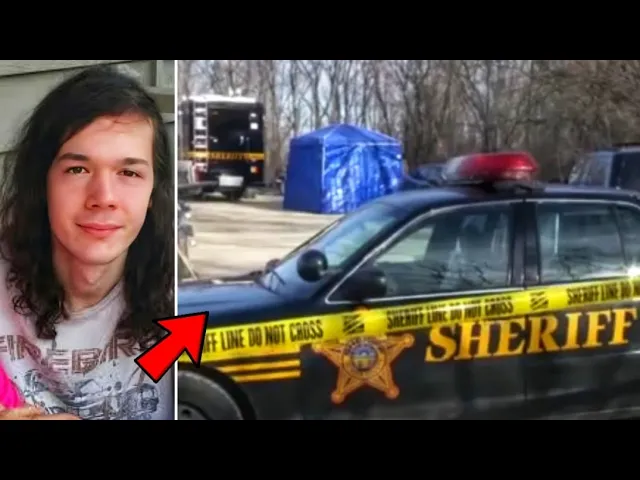
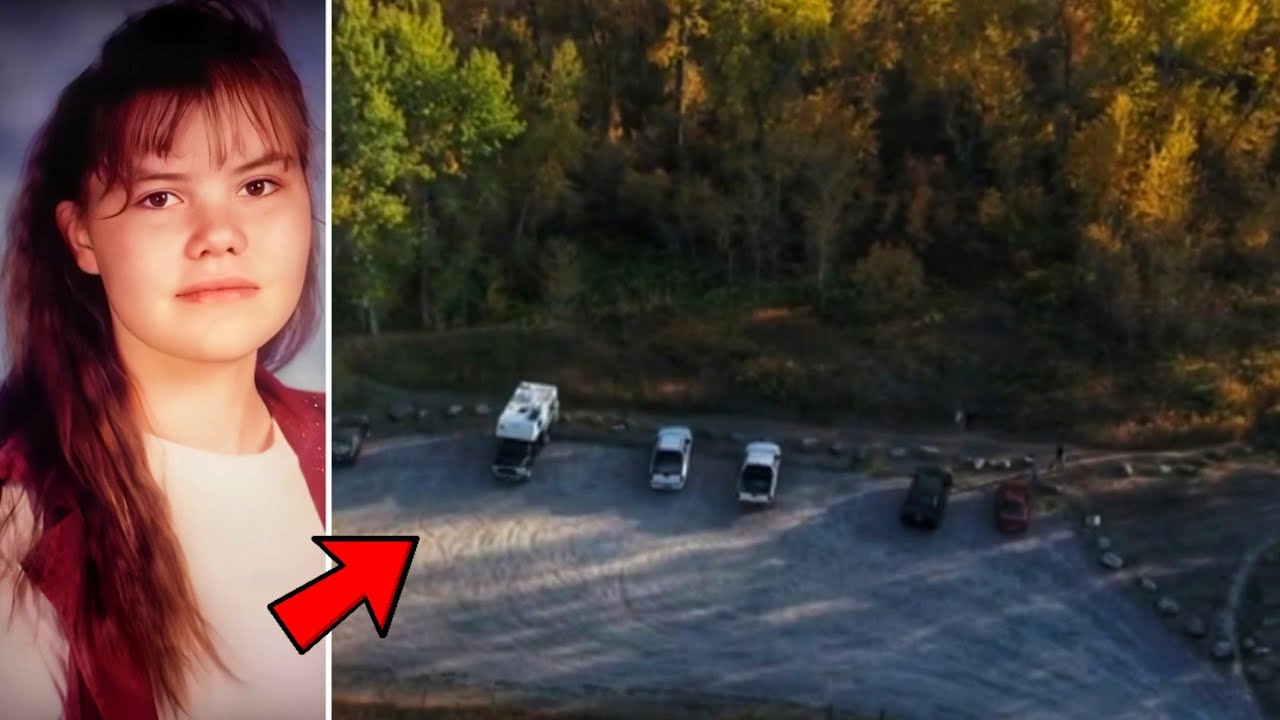
[Music] The case of a man who wanted to discover their true self but ended up paying with his life was cold for some time until a breakthrough came. On the afternoon of January 5th, 2016, a person walking on the west side of Grand Lake St. Mary State Park in Mercer County, Ohio, stumbled upon what they believed to be human bones and called the police.
The caller said, "I may be totally off my rocker, but I was just out walking my dog and I came across some bones that looked to me to be human. It was confirmed that the discovered remains were indeed human. However, upon further investigation, it was determined that they were only a portion of a larger body.
The remains that were found comprised a significant portion of the torso area, but did not include any parts from the elbows or knees down. Additionally, the skull was also missing and was not among the discovered remains. The remains found showed apparent saw marks indicating that the individual had been dismembered.
The state investigators and deputies worked together to search for clues while a forensic anthropologist analyzed the bones and concluded that the victim was a male aged between 20 and 35 years old. The subsequent task was to establish the victim's identity, prompting the bones to be sent to the Ohio Bureau of Criminal Investigation for DNA Extraction by the Forensic Biology Lab. Despite the successful DNA extraction, no match was found to identify the victim, and the case went cold.
Four years later, criminal intelligence analyst Jennifer Lester was reviewing Columbus missing person's cases when she came across the case of a 22-year-old man who had been missing since 2015 and whose family's DNA had never been collected. Once they obtained DNA samples from the man's parents in Corbin, Kentucky, Ryan Zimmerman was positively identified in June of 2020. However, before the detectives could determine who was responsible for ending his life, they needed to learn more about Ryan and his life.
Ryan's father reported him missing on November 17th, 2015 after the city of Columbus, Ohio, notified the family that his car had been impounded, but they could not reach their son. Ryan, who had told his family he was moving to Columbus in August 2015 to live with friends, last spoke to his family on September 25th, 2015. His car was impounded 2 days later.
According to Ryan's family, he was fond of video games, computers, cartoons, and enjoyed playing with his brother. However, there was a part of Ryan's life that none of his family members were aware of. Upon investigation, it was discovered that Ryan had made a post on Craigslist personals in which he expressed interest in being the submissive female in a relationship.
He had also been exploring the possibility of transitioning to a female gender, including hormone therapy and voice training to facilitate the transition. Additionally, Ryan had been shopping for female clothing. Jennifer Lester from the Ohio Bureau of Criminal Investigation provided many of these details.
She analyzed Ryan's Google searches, phone records, and social media activity to uncover information about his interests and activities leading up to his disappearance and demise. The data analysis revealed that Ryan had met someone online using the screen name Laurel Emerson. However, it was later discovered that the person behind the screen name was a married man named Cory Buzzard.
In August 2015, Ryan moved from Corbin to Columbus and began living in an apartment with Corey, his wife Sarah Buzzard, and a third person named Naira Whitaker, who was a transgender woman. Initially, Ryan had a relationship with Cory while Sarah was in a relationship with Naira. However, by late September that year, Cory no longer wanted Ryan to stay and asked him to leave.
While Cory left the apartment for the weekend of September 25th till the 27th to meet up with another person from Athens, Ryan appealed to Sarah to let him stay. Ryan was not seen again after that weekend. Sarah and Corey filed for divorce in November 2015, and 2 months later, their marriage was officially over.
She married Naira less than 2 weeks later. In July 2021, the investigators were closing in on the case. They searched the Columbus apartment where Ryan lived in 2015 with Cory, Sarah, and Naira.
Mercer County Sheriff Jeff Gray said that they were able to trace the Toyota Corolla car that Ryan's remains were transported in when he was left in the park. That car had been traded in shortly after the crime occurred, and they were able to trace and find that car with the help of computers. Traces of human blood were found in both locations.
On August 25th, the investigators arrested Sarah in Marian, Indiana on several charges connected to Ryan's demise, including abuse of a corpse, grand theft of a motor vehicle, and tampering with evidence. The police attempted to arrest her wife, 33-year-old Naira, later that same day at the couple's home in Marian, Indiana. But Naira shot herself in the head shortly after the police arrived.
She was announced deceased at the scene. After Sarah's arrest, she confessed to being angry at Ryan for ruining her marriage with Corey and said that they had repeated arguments about him. According to Sarah, she told Ryan that he needed to leave since Cory no longer wanted him to stay.
She mentioned that Ryan was only there for Cory's purpose and not hers. Sarah then discussed the conversation with Naira, and together they developed a plan to get rid of Ryan. When Corey went away for the weekend, she knocked Ryan down after he exited their home's bathroom and then held him in a chokeold until well after he lost consciousness.
She said that Naira helped her dismember Ryan's body in the bathtub. And she also helped cleaning up afterwards and disposing of the body parts in several parts of Ohio. She told the police that she and Naira drove Ryan's body parts to multiple locations besides the park where his torso was found, including several different gas station dumpsters.
The police and prosecutors said that Corey Buzzard is not a suspect in the case. A grand jury had indicted Sarah Buzzard in September 2021 on two counts of aggravated slaying, two counts of slaying, three counts of kidnapping, assault, abduction, tampering with evidence, grand theft auto, possessing criminal tools, and two counts of abuse of a corpse. In January 2022, 30-year-old Sarah Buzzard pleaded guilty to one count of aggravated slaying in Mercer County Common P.
She received a life sentence on January 20th as part of a plea deal that allowed her to avoid an end of life sentence. Her guilty plea agreement dismissed all other charges against her. During her plea agreement, she read a statement acknowledging she was a flawed person.
She said, "Not a day goes by that I do not wish for a chance to take it all back. I accept responsibility in the role I played in Ryan's demise, and I will live every day for the rest of my life attempting to redeem myself through positive actions and deeds. " She will be eligible for parole after 30 years.
A West Virginia family's decadesl long search for their missing husband, father, and grandparent ends with news from Norfolk, New York decades later. In 1954, Wilfr Morton went missing at age 27. His wife, Opel, and four children always wondered if he was still alive.
He had left the coal mines years before for the steady employment of driving to Southbend, loading up a truck with stewed bakers and then delivering them to dealerships throughout the Carolinas, a process that took 2 weeks. He was working for a trucking company in Indiana when he disappeared. Opel called her husband's employer shortly after he disappeared.
The company told her that Wilfford had not worked there in 4 years. Anna, the oldest daughter, was 7 years old when she watched her father wave goodbye. She never saw him again.
Decades later, Anna's granddaughter, Kaye Bruce, was determined to get those answers. She wanted answers for her grandmother before she passes away. A junior studying criminal justice at the University of Toledo in Ohio.
Kaye had more than a promise to keep. She had the resolve and experience. She said, "I just questioned everything about it.
With me being a criminal justice major, unsolved mysteries like that just eat at me. I mean, how can someone just disappear and fall off the face of the earth like that? The challenge was rather daunting, but he was finally tracked down to a Norfolk cemetery after 67 years of searching by his family.
It was a missing person's piece aired on August 21st, 2021 on the YouTube channel Mysterious WV that cracked the case. Shawn McCracken, mysterious WV's producer, said, "The great granddaughter told me Saturday night they were already in tears, and I was quite frankly on cloud9. " Immediately after the YouTube broadcast, someone named Edward messaged Shawn about when, where, and how Wilfr passed away.
Then they found a newspaper article from 1956. It described the car crash on Route 56 in Norfolk that took his life. Anime Nichols, daughter of Wilfford, said, "There was a part of me that always thought he would be 95 today, that if we found out at this point, he probably would have not been alive anymore.
But to find out that he passed away so young was very difficult. " Anna said, "I always knew even if he was living today, he would know where we were and did not reach out to us. So when we had come to that realization, we would not look anymore and then drop it for a long time, but then we would start looking again.
Finally, the mystery is solved. All this time, Wilfford was buried at Pineroveve Cemetery in the town of Norfolk. In South Wales, United Kingdom, three 16-year-old girls were strangled.
This incident launched the country's biggest manhunt and the groundbreaking way the police found the serial perpetrator known as the Saturday Night Strangler. In July 1973, 16-year-old Sandra Newton had been out with her boyfriend in nearby Britain Ferry when she disappeared on her 5-m walk home at about 1:00 in the morning. Sandra's body was found 2 days later.
She had been indeently assaulted, hit over the head, and strangled with her own skirt. She was dumped in a ditch near a coal mine in Tanmar. Little attempt had been made to hide the body with it being left at the entrance of a culvert.
The police suspected a local man was responsible due to the detailed knowledge of the area. The perpetrator would have needed to be aware of the remote dump site. The police believed that she had tried to hitchhike her way home.
Then two months later in September, 16-year-old best friends Geraldine Hughes and Pauline Floyd were found deceased in Woodland in nearby Landers after hitchhiking their way home from a night out in Swansea. The girls had been indeently assaulted, beaten, and strangled before their bodies were dumped just 7 mi from where Sandra was found. It appeared that one girl had attempted to escape from her attacker and had made it yards from the road near to where her father worked, but had been caught by her attacker and was slain.
These brutal attacks on the teenage girls sparked Wales's biggest manhunt for the person responsible. A team of 150 police officers questioned 35,000 people who loosely fitted the description of the last person seen with Geraldine and Pauline. The suspect was described as having bushy hair, a mustache, and being a man between 30 and 35 years of age.
Luckily, this was not the only lead for the investigators. The detectives also had a description of the car he had been driving. Their key witness had seen the girls leaving Swansea that night, getting into a light colored Morris 1100 being driven by a man.
These crimes stunned an area where brutal crimes like these rarely happened. The shock of young girls going out for fun and never returning home created a real sense of fear. And this man was still at large.
There was a tremendous outpouring of grief. The communities were desperate for somebody to be caught, but no one was arrested and there were no strong leads. Many feared that the detectives would never find the perpetrator known as the Saturday Night Strangler.
There were so many areas where the perpetrator could have come from. Working without computers, the police faced an impossible task as they sifted through a huge pool of possible suspects from a mountain of paperwork. Officers at the time considered that the same person was responsible for all three crimes, but someone was already in the frame for Sandra's.
The prime suspect for Sandra's demise was the last person who saw her, and that was her boyfriend. But he maintained his innocence and was never charged. Despite the brutal similarities between the two cases, the detectives continued to run separate inquiries into Sandra's demise and the case of Geraldine and Pauline until almost 30 years later.
Both investigations were linked in the early 2000s by an emerging crime-solving tool when South Wales police started reoping cold cases, hoping DNA could finally bring the people responsible to justice. Firstly, male DNA stains on Geraldine and Pauline's clothing were isolated to show they matched that of the same man, but the person was not on the recently opened DNA database. But a year into the new Operation Magnum inquiry, tests on Sandra's underwear gave the detectives their first major breakthrough.
There was DNA present from an unknown male. Forensic scientist Dr Colin Dark said, "I recognized straight away from a particular feature of the DNA. This was the land perpetrator.
This was an absolute bombshell because this meant there was a serial offender operating in South Wales in 1973, ending the lives of young girls. " The breakthrough also categorically proved Sandra's boyfriend was completely innocent. The detective that led the investigation, Detective Inspector Paul Bethl, said, "This was the first time in almost 30 years we knew that the same man had took the lives of all three girls.
" Because there was no matching sample on the national database, the perpetrator's identity still remained a mystery, and the detectives asked BBC Crime Watch for help. But scientists had come up with another trailblazing way of using DNA to catch the offender. Dr Dark, whose team was continually checking the sample with new profiles on the ever growing DNA database, said, "We started to think, was it possible that we could use the idea that crime can run in families?
You inherit your DNA from your parents and you pass your DNA on to a child. So, could we look on the DNA database for a child of the offender? " This was a definite possibility.
Dr Dark said that meant getting a spreadsheet print out of several thousand DNA profiles from men in the South Wales area, sitting down with a pencil and a ruler, and crossing out everyone that does not match. He said, "After several hours of going through the process, we were left with about 100 names. They were all exact half matches to the offender's profile, so they were potentially children of the offender.
" This was a groundbreaking technique, the first time it has ever been done in the UK and possibly the world. And from there, the new investigative tool, now known as familial DNA, was developed. Meanwhile, the detectives had painstakingly whittleled down the list of 35,000 possible offenders to just 500 prime suspects.
Detective Inspector Bethl said that their short list was based on the description of the individual, whether the person owned an 1100 car, and whether they had previous convictions of violence or offenses. After cross-referencing both lists, one surname stood out. Kappen.
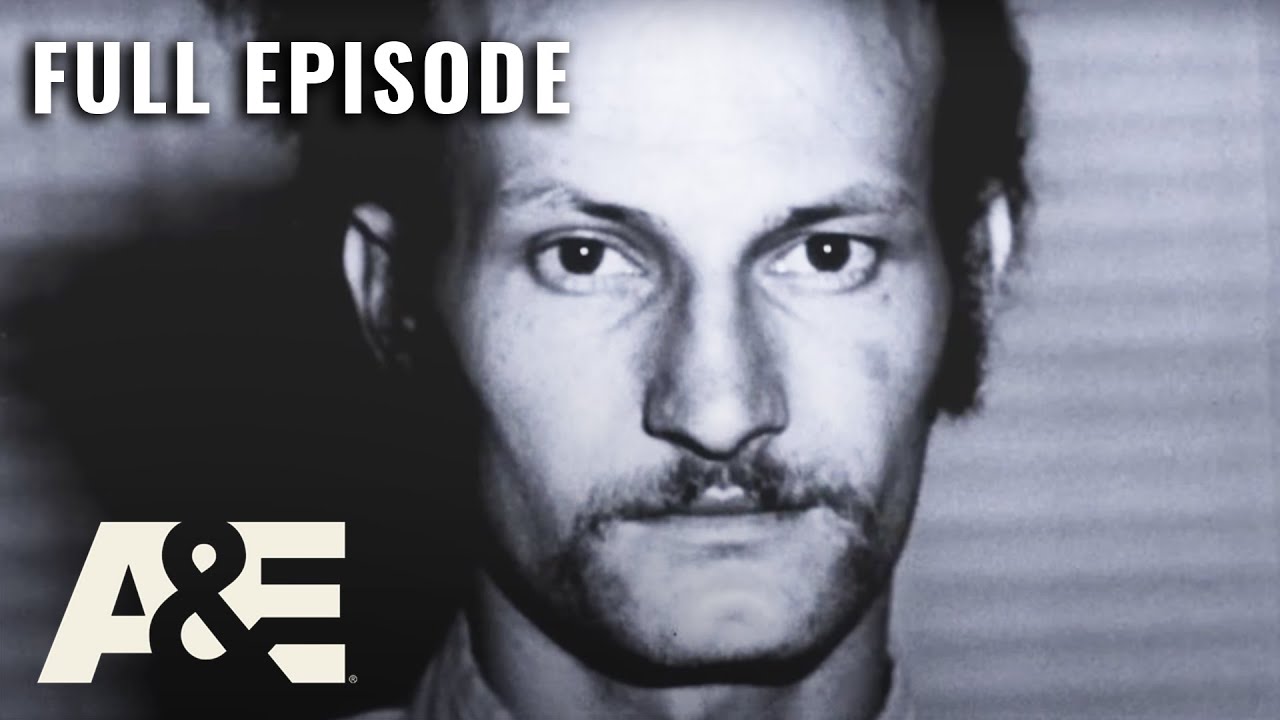
Local car thief Paul Kapp's DNA was on the database after committing offenses in and around the Port Talbat area, but he was only seven at the time of the crimes. His dad, however, had been questioned back in 1973 because he fitted the description of the wanted man and drove a light colored Morris 1100. That same year, the police visited a nightclub bouncer and part-time bus driver Joseph Joe Kappen's house on Port Talbett's Sandfields Council estate, but he had an alibi from his wife, and he claimed that his car was broken down on the night of the attacks.
According to Detective Inspector Bethl, Joe was known in the community as a bit of a thug and he had a history of domestic violence and had been to prison on several occasions. With his son's DNA proving he was a 50% match of the offender's DNA, Joseph William Kappen became the prime suspect decades after the crimes happened. But there was a problem getting a DNA swab from him when they knocked on his door.
Kapp had passed away of lung cancer 11 years earlier in 1990 at the age of 48. To confirm the police suspicions, scientists requested DNA swabs from Kappen's ex-wife and daughter to compare them to the perpetrator's sample. That gave them 2/3 of a full profile for Joe Kappen.
When that DNA was compared to the crimestain profile, they could see that it matched, but needed the full profile to make absolutely sure that they had identified the perpetrator. The detectives were determined to be absolutely certain that Ken was the perpetrator so that the families of the three girls could have some sort of closure. That meant exuming Kappen's body, which would be the first time that a suspect would be exumed in the UK to prove guilt.
The detectives needed to go to the top for permission and seek the home secretary's approval. The then home secretary, Lord Blunkett, said he gave approval for Captain's body to be exumed to find the truth. He said, "My main concern was whether there was sufficient evidence because it is a big step, and if you get it wrong, the families involved would rightly be agreved.
" My decision was very clear that Joseph Kappan's body should be exumed to test once and for all that this was the man who committed the crimes and bring whatever comfort we could to the families. For the sake of everyone, finding the truth was really important. History was made in May 2002 when exumation of the threeperson grave began on the stroke of midnight.
Dr Dark recalled, "It was a horrible night, and just as we got to Captain's coffin, there was a clap of thunder. It was the feeling that evil had been identified. It sent shivers down my spine.
" In 2003, forensic DNA examination at nearby Morrison Hospital in Swansea proved that Kappen was the perpetrator of all three girls after almost three decades. Kappen was born in 1941 and had six siblings. His parents' marriage broke up when he was young, and he was raised by his stepfather in Port Talbet, a heavily industrial town in Wales, dominated by its large steel works.
Kappen began attracting the police's attention for petty offenses since the age of 12. He went on to accumulate over 30 convictions for car theft, petrol theft, burglary, and assault, and spent years in and out of prison. He never stayed in employment for long, and he was described as a loner.
In 1962, Kappen met his first wife, 17-year-old Christine Powell, and they married in February 1964. 10 days after they got married, he was sent to prison for burglary. Christine then gave birth to a daughter and then to a son, Paul, after she was indeently assaulted by Kappen after his release from prison.
Christine later testified that Kappen was physically abusive towards her and would assault her every 2 weeks. At one point, he fatally strangled the family dog in front of his son while walking it on a nearby beach because it was too old. Kappen was known to regularly pursue local teenage girls during the marriage.
With his job as a bouncer, giving him an opportunity to interact with them. When working as a bus driver, he was known to use his rest breaks to approach teenage girls on the village green at Lander Sea. In 1964, Kappen attempted to force himself on a 15-year-old school girl in his Sandfields housing estate, but she managed to escape.
In February 1973, a man resembling Kappen picked up two female hitchhikers and drove them to a nearby isolated road before attempting to indeently assault both of them, but they also managed to escape. The victims did not report the incident as one thought she would get into trouble with her father. Joseph William Kappen is notable for being the first person to be postumously identified as a serial perpetrator via familial DNA profiling.
He was also the first documented serial perpetrator in Welsh history. Kappen will always be known as the Saturday Night Strangler. He is also suspected of committing a fourth crime in February 1976.
Julie Begley, Geraldine's cousin, said, "No words can describe the way we all felt. It was a huge relief. None of us ever stopped hoping that one day we would find out who he was.
Although you get on with your life, it never goes away. Geraldine was a fantastic girl. She was always full of fun.
It was not just closure for Geraldine and Pauline's loved ones, but for Sandra's family and close friends, too. Sandra Newton's friend Terresa May said, "I believe I will see her again, and we have got a lot of catching up to do. I have been going down to her grave for 49 years and it is hard to believe she is there.
My beautiful friend. She had her life taken away from her, her future taken away from her. I still think about her now.
All these things that we could have and should have done together. But after all of those years, she can finally rest in peace now.