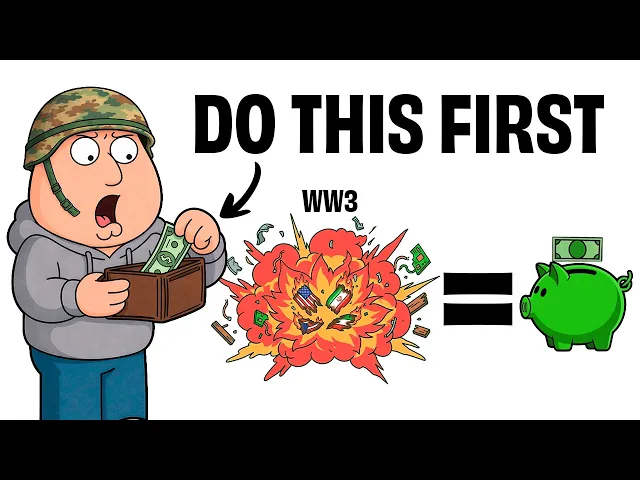
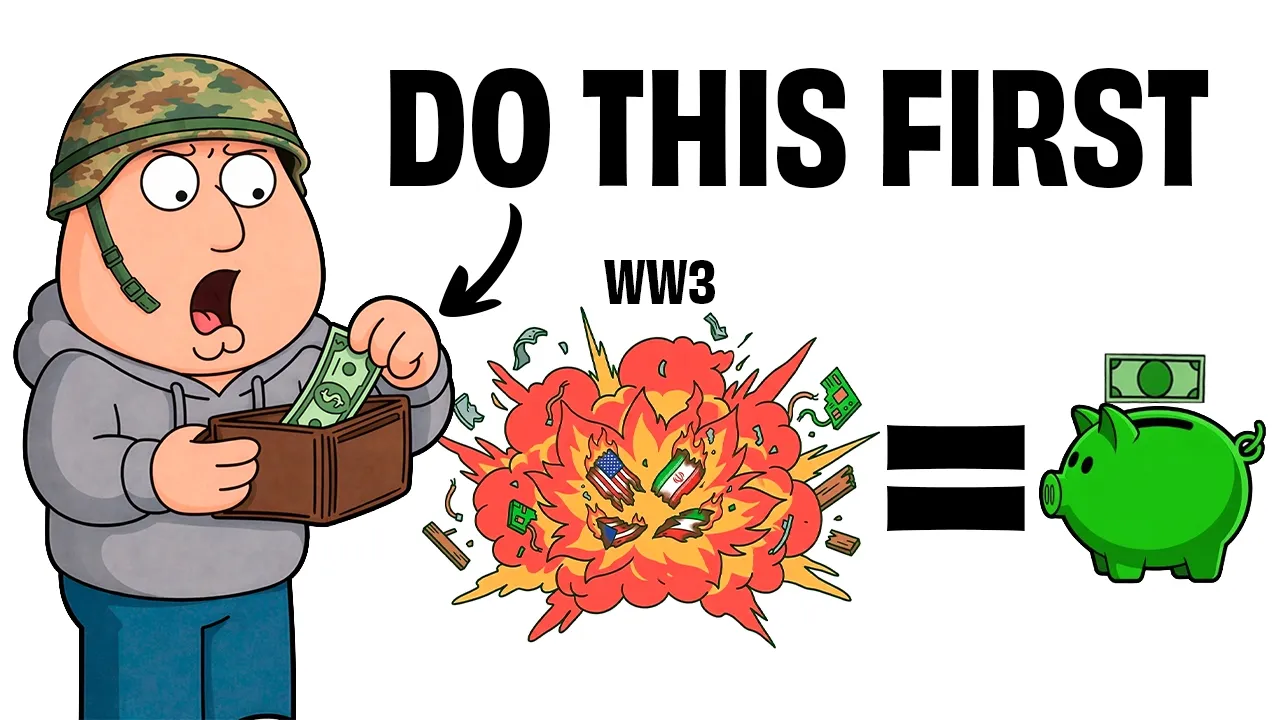
The first thing most people would do if World War II started tomorrow is open their brokerage app, not call their mom, not check on their neighbors, their brokerage app, because that's what financial anxiety does to you. It hijacks every primal instinct and redirects it toward a portfolio that in the grand scheme of global conflict probably doesn't need your help right now. And here's where it gets interesting.
Because while you're doing that, while you're panic selling your index funds at 6:00 a. m. and congratulating yourself for being proactive, someone else is doing something that looks from the outside completely insane.
They're buying, not randomly, not recklessly, in a very specific order based on what actually happens to money during every war this country has ever fought. My name is Nick and what I'm about to show you is going to feel wrong the entire time I'm saying it because the history of war and money is one of the most counterintuitive stories in finance. And if you don't know it, the next crisis will cost you a fortune.
Before we talk about a single investment, I need to introduce you to the people who are rooting hardest for you to make the wrong decision. They're not foreign governments. They're not hedge funds.
They're the financial media. And I don't mean that as a vague conspiracy. I mean it as a direct business model observation.
Every time geopolitical tension spikes, viewership goes up, ad revenue goes up, engagement goes up. The more scared you are, the longer you watch. The longer you watch, the more money they make.
Your panic is literally their product. So when markets drop 2% on a war headline and the Chiron reads global markets in freef fall, understand what's happening. A 2% drop is a Tuesday.
It's been called a freef fall because freef fall makes you click. Moderate pullback consistent with historical conflict patterns doesn't get the same ratings. Never has, never will.
This matters because the financial media doesn't just report on your fear. It manufactures urgency around it. It finds the most alarming expert it can, gives them 17 minutes of airtime, and then cuts to a commercial for a brokerage platform that will happily facilitate your panic-driven trades for a small fee.
The entire ecosystem, the news segment, the expert, the platform, the ad profits from you doing the exact wrong thing at the exact wrong moment. Meet Mark. He's a reasonably smart person with about $40,000 in index funds, a stable job, and a habit of watching too much financial news.
When Russia invaded Ukraine in February 2022, Mark watched the coverage for 3 hours straight, saw the word crisis approximately 47 times, and sold everything by 9 a. m. Then meet Sarah.
Same portfolio, same morning, same news alerts. Insera read one data point that the SNP500 had recovered from every single major conflict since World War II within an average of 47 trading days, turned off the TV, and went to work. Everything that follows in this video is the story of what happened to their money.
And the gap between them by the end of it is going to make you genuinely angry. Not at Mark, at the system that convinced him he was being smart. Here's the data point that financial media will never lead with because it would immediately reduce your anxiety and they cannot afford for you to be less anxious.
Markets don't die in wars. They dip. They panic for a few weeks and then almost without a single historical exception across 110 years of data.
They climb. The Dow gained 50% during World War II, 60% during the Korean War, 27% during Vietnam. The S&P 500 has delivered positive one-year returns after 73% of all armed conflicts since 1945.
The stock market has now survived two world wars, a nuclear standoff, a pandemic, multiple assassinations, and a debt-seealing crisis, which impressively nearly killed it without involving a single weapon. At this point, the market is basically a cockroach in a suit, and the suit is doing fine. I know it feels wrong, but here's why it's true.
Wars are economically speaking the most aggressive government stimulus programs in human history. When a country goes to war, it spends without limit. Weapons, fuel, food, logistics, medical supplies, communications infrastructure, intelligence systems, all of it flows directly into publicly traded companies.
The government becomes the world's largest customer overnight and it pays whatever the invoice says. That money has to go somewhere and it goes into earnings. Are the investors who came out worst in every single conflict of the past century weren't the ones who held.
They were the ones who sold their broad market exposure to get to safety. and then watch the recovery from the sidelines in cash, which was quietly losing purchasing power the entire time they waited to feel calm enough to get back in. Here's what happened to Mark.
He sold his $40,000 in index funds at 9:00 a. m. on February 24th, 2022.
The S&P 500 fell 2. 5% that morning and then closed the day up 1. 5%.
The market had already priced in the uncertainty. The moment the invasion actually began, the range of possible outcomes narrowed and capital started moving rationally again. Mark missed the intraday recovery.
He sat in cash for 4 months. By the time he felt safe enough to reenter, he'd missed the best stretch of returns, paid capital gains taxes on his sale. Here's the part that really stings.
the financial news channel he'd been watching the entire time ran an ad for an investment platform in every commercial break. Sarah, meanwhile, did nothing. She went to work.
She left her automatic contributions running and then she made three specific additions to her portfolio that we're going to walk through right now in the exact order she made them. I need to pause here before the investment framework because there's something that will undermine every piece of information I'm about to give you if we don't address it first. You can know everything in this video and still make the wrong decision because the wrong decision won't feel like the wrong decision when you're making it.
It'll feel like clarity. Here's what panic selling actually feels like from the inside. It doesn't feel like fear.
It feels like you finally seen through the noise. The market is falling. the news is bad is the situation is genuinely uncertain and selling feels like the rational response.
You hit the button and feel a wave of relief. You've done something. You're not just sitting there helplessly watching a number go down and then the market recovers.
Maybe it gets worse first. Maybe it takes 3 weeks, but it recovers because it always has. and you're on the sidelines holding cash that's losing purchasing power by the day trying to figure out when it's safe to get back in.
The answer your brain gives you is always not yet. Once things settle, once there's more clarity, by the time there's clarity, you've missed the snapback. JP Morgan tracked this precisely.
A $10,000 investment held in the S&P 500 from 2005 through 2024 grew to $71,000 if left untouched. Miss the 10 best trading days in that stretch. 10 days out of roughly 5,000 and you end with 32,000.
Miss 30 days and you're essentially at break even for 20 years. Seven of the 10 best trading days in any given stretch happen within 2 weeks of the 10 worst. The crash and the recovery are practically the same event.
The financial media knows this. They cover the crash breathlessly. They barely cover the recovery because a recovery is good news.
and good news as a business model is basically worthless. Now, with that understood, here's what Sarah did, and here's the exact order she did it in. Most people when they think about crisis investing immediately think gold, which is the right instinct for roughly the wrong reasons at roughly the wrong time in roughly the wrong amount.
Let's fix that. The order here matters because each step creates the foundation for the next one. You can't deploy capital intelligently if you're one emergency away from needing to liquidate it.
And you can't hold a position through volatility if you're psychologically and financially overexposed. So we start at the base and build up. Step one, the cash flow.
6 to 12 months of expenses, no more. Before a single dollar goes into any investment, Sarah made sure she had 6 months of living expenses in a high yield savings account, a government money market fund, and a and I know this is going to sound slightly dramatic. $2 to $5,000 in physical cash at her actual house.
Here's why the physical part matters and why it's not as paranoid as it sounds. When Russia was cut from Swift in February 2022, Russian citizens woke up to nonfunctional ATMs, not because their money was gone, because the digital infrastructure that moves it was switched off. Cyber warfare isn't theoretical.
It's the documented first strike tool in every major modern conflict, and its most effective target is the payment infrastructure that lets you buy things. Physical cash for a few weeks of expenses isn't prepping. It's a basic hedge against a three-day banking disruption.
Here's the critical part. This is where you stop with cash. Buffett said it directly.
Holding excess cash during wartime is one of the worst things you can do with money. Wars are inflationary. Wartime inflation averages 4.
5% versus 3% in peace time. Every dollar beyond your emergency buffer sitting in a savings account is slowly evaporating while real assets go up without you. Build the floor.
Stop there. Move on. Step two, gold.
10 to 15% of your investable assets, but not for the reason you think. Here's the instinct most people have about gold during a crisis. Buy it now because the world is ending and gold survives the apocalypse.
But that instinct is right about the asset and catastrophically wrong about the timing. The people who bought gold at its January 1980 peak during the Soviet invasion of Afghanistan waited 26 years to break even in inflationadjusted terms. 26 years.
The people who bought at the 2011 debt ceiling peak lost 30% over the following two years. The pattern across every crisis in modern history is identical. Gold spikes on the fear and then gives back the fear premium once the worst case scenario doesn't doesn't materialize.
You know, gold is best bought before the crisis is on the front page. If you're reading a news headline about gold hitting all-time highs, some of the move is already behind you. And yet, uh, right now, gold is holding strong, but for a different reason than fear.
It's structural demand. Central banks went on an absolute buying spree starting in 2022, purchasing over 1,000 tons annually, the highest levels on record. They aren't panic buying.
This is institutional repositioning by the people who manage sovereign wealth to diversify away from the dollar. When that is happening, the move isn't over. the practical vehicle I AU or SG both holding physical gold at near zero cost.
Keep a small slice 5% of your gold allocation in actual physical coins. Not for the apocalypse. For the scenario where digital infrastructure is disrupted for 2 weeks and something tangible has immediate value, Sarah bought IAU.
She already owned it before February 2022. She watched it climb toward $2,000 an ounce while Mark was watching his cash sit still. Step three, defense 10 to 15%.
This is the trade that wartime history hands investors every single time, and most people don't take it because it feels uncomfortable, which is understandable. and profiting from weapons manufacturing doesn't fit neatly into most people's self-image. The financial media, to their credit, will sometimes mention that defense stocks go up during conflicts.
What they won't tell you is the magnitude because the magnitude is embarrassing for everyone who didn't own them. Rathon gained 37% in the week after 911. A $10,000 investment split across the top five defense contractors on September 18th.
2001 was worth $97,000 by August 2021. Loheed Martin has returned over 1,200% since the war on terror began. In 2022, while the S&P lost 18%, defense stocks outperformed it by 28 percentage points.
European defense stocks have surged 260% since February 2022. Right now, the defense sector is sitting on backlogs that would take years to work through, even if every conflict ended tomorrow. RTX over $200 billion locked 160 billion.
Poland is spending over 4% of GDP on defense, double the NATO target. Germany, famously pacifist for decades, shocked the world in 2022 by approving a€ 100 billion euro special defense fund overnight. And the EU as a block has shattered defense spending records every year since.
This isn't a war trade. It's a decadel long structural shift that war just accelerated. In the cleanest ETF XR, equal weighted, so you're not betting everything on two companies.
and it's returned over 20% annually for the past decade. ITA is more liquid but topheavy. XR gives you better diversification for the same exposure.
Sarah bought X AR. It was up double digits before Mark had finished reading his first analysis article about whether to get back into the market. Step four, energy 10 to 15%.
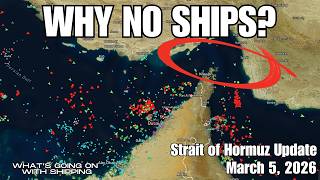
Ukraine sent Brent crude above $130. And anytime tension flares in the Middle East, we see pressure on the straight of Hormuz, which carries 13 million barrels a day. The script never changes.
Conflict restricts supply. Panic drives premiums and energy stocks print cash. XLE nine basis points concentrated in Exxon and Chevron is the simplest vehicle.
In 2022, when the S&P lost 18%, XLE gained 64. But that 82 point gap in a single year is the largest divergence between energy and the broad market in the ETF's history. Note what the financial media was covering in 2022.
Instead of telling you to buy XLE, the tech selloff, NASDAQ and freef fall, the end of the growth era, they were right about all of it. They just forgot to mention the thing that was quietly going up 64% in the same year. Step five, consumer staples 10 to 15%.
People do not stop buying Tide during a war. They cancel vacations. They skip restaurant reservations.
They do not stop buying Tylenol, bounty paper towels, and Coca-Cola. Because it turns out humans require caffeine and clean surfaces regardless of geopolitical context. When the S&P was down 17% through August 2022, XLP, which holds Proctor and Gamble, Costco, Coca-Cola, and Walmart lost 4%.
13 percentage points of cushion, nine basis points of expense ratio on and a 2. 5% dividend yield. It is the financial equivalent of a beige cardigan.
Nobody is impressed. It will absolutely keep you warm. Step six, inflation protection 5 to 10%.
And a warning about the trap. Here is the most counterintuitive fact in this entire video. During World War II, US government treasury bonds lost 67% of their real value.
In the classic safe haven, the thing every financial news anchor tells you to buy during uncertainty, was one of the worst trades of the entire war. Because wars are inflationary. Governments borrow massively, issue enormous amounts of new debt, and inflate their obligations away over time.
Standard treasuries get destroyed. What works instead? Tips, treasury inflation protected securities, which adjust their principle automatically when CPI rises.
The ETF version is tip or series 1 savings bonds bought directly from treasurydirect. gov. Zero expense ratio, fully inflationadjusted, $10,000 per person per year, one-year lockup.
The lockup is annoying until you realize it's the government forcing you not to panic sell your own inflation hedge. Avoid TLT. Long duration nominal treasuries are exactly what gets crushed when inflation runs hot and the government is issuing debt to fund a war.
The financial media will not tell you this. Um, partly because it's complicated and partly because their advertisers include the brokerages that profit from you trading in and out of bond funds. And the one thing you absolutely do not touch, your index funds, your VO, your VTI, your SPY, untouchable, CFA institute data across every major war found that large cap stocks returned 11.
4% 4% annually during wartime, higher than the 10% peacetime average with lower volatility. The war economy is a stimulus economy. If the government becomes the largest customer in the world overnight, and that spending flows into earnings.
Keep contributing automatically. If you have a Roth IRA, a downturn is the single best time to convert or contribute. You're buying tax-free growth at a discount.
The market goes down, you buy more, you don't look at it for six months, and you quietly thank yourself later. Let's close Mark and Sarah's story with numbers. Mark sold $40,000 in index funds on the morning of February 24th, 2022.
He sat in cash for 4 months, paid capital gains tax on the sale, and re-entered the market in late June after the index had recovered from its invasion day dip after energy had already run 64% after defense had already outperformed by 28 points. He captured none of the crisis upside and locked in the downside permanently via the tax bill. His $40,000 four years later is worth roughly 48,000.
Now look at Sarah. Her original 40,000 plus the automatic monthly contributions she kept making while the market was down, plus her tactical positions in XAR and XLE is worth roughly 91,000. Same starting point, same news alerts, but a $43,000 difference.
Understand this. Sarah didn't win because she picked a magical stock that went to the moon. She won because while Mark was sitting in cash, she was buying highquality assets at a discount every single month.
She bought the fear. Mark paid for it. So, back to that morning.
Your phone is exploding. The Chirens are red. Some analyst with perfect hair is explaining why this time is categorically different from every other time the market has recovered.
The person without a plan opens their brokerage app, sells everything, feels briefly smart, spends the next year watching the recovery from the sidelines, while the financial channel that scared them into selling runs ads for the brokerage platform that processed the trade. The person with a plan checks the structure they already built, the cash floor, the gold, the defense, the energy, the staples, the inflation protection, the untouched index funds, puts the phone down and makes coffee. One of those people builds wealth.
That's the other funds the system that was designed to prevent them from doing so. The time to become the second person is right now. Not when the missiles are flying.
Now. If this reframed anything for you, hit like and subscribe. It's free.
It takes two seconds. And unlike the financial media, I don't profit when you're scared.