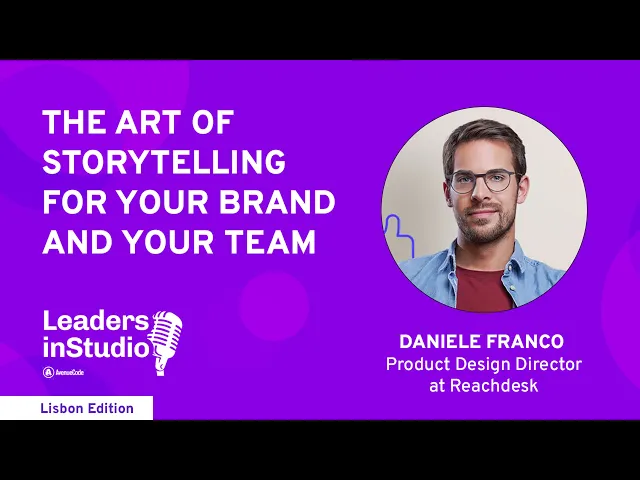
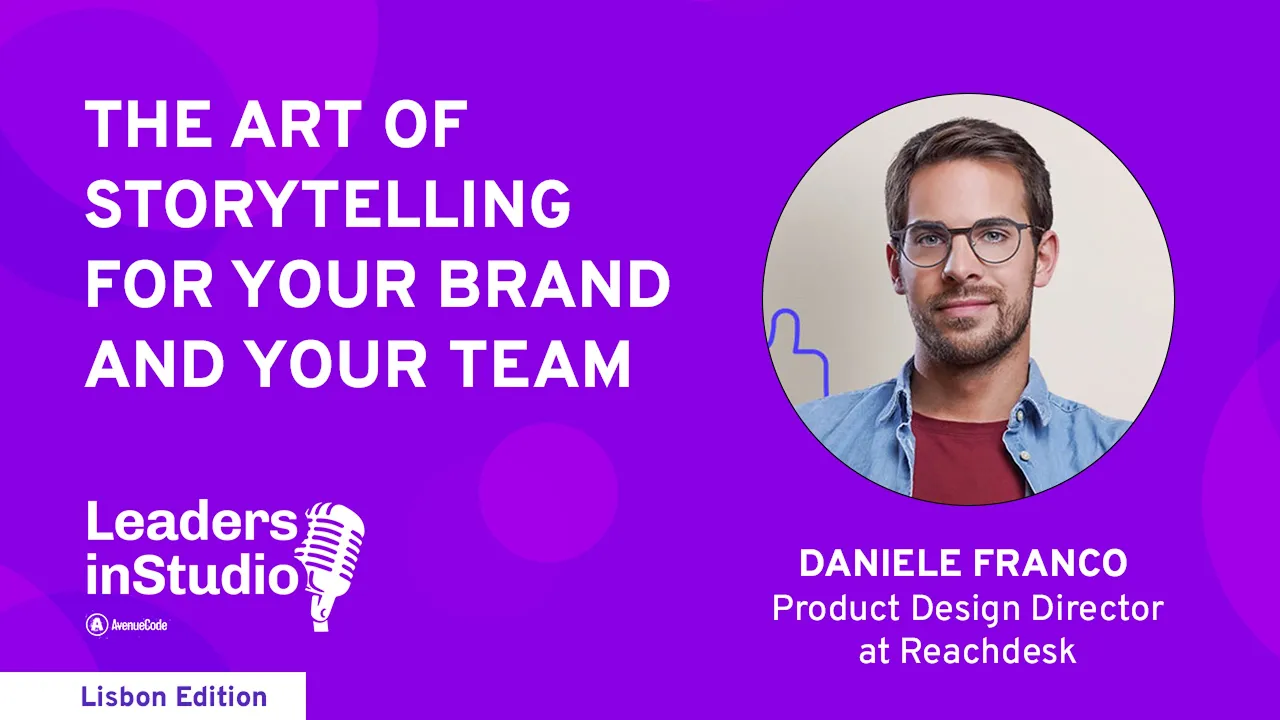
[Music] foreign I'm Holly campanes director of design and creative services at Avenue code my guest today is Daniela Franco product design director at reach desk daniele has a wealth of experience managing Global design teams for international tech company and holds multiple postgraduate degrees in the humanities philosophy and strategic marketing welcome danieli thank you welcome Holly it's great to be here with you today it's great to be here thank you for invitation my pleasure let's get right into it I'm going to ask you a philosophical question off the bat to play to your degrees nice what
is designed to you nice nice That's a good one there's a quote I'd like to to to introduce when I talk about design which is design it's the art of A Faculty of shaping a context and make it functional for for the human being eventually so when you when you when you think about that everything's an act of design let's say but I guess the most interesting part is that you really need to to know the needs of the human being in order to create a good sign of the environment you are trying to shape
in so yeah I think that would be the best because I think it's broader than just you know the art of crafting but it's really about the act of thinking in an environment and make it functional make it clear for being used for being functional for really what you you need to actually to achieve when you put it that way it's a very broad practice and discipline so what brought you in your career to product design specifically cool I guess it was you know I wouldn't expect to work in a design area because I was
studying human Sciences so my background is really in human science it's philosophy anthropology art so poetry as well then I start working on Startup in the beginning of my career and I started discovering this kind of feel which is you know the user experience the design part of the digital products where you really need to understand human needs and to put the human the client the user in the center of your decision in order to build a better product so in the end it was a good fit with what I was actually studying because back
in the human science masters and stuff we were really studying the the humans the behavior so I I I just feel there's a lot of complementary things that I brought from my background to the design area and eventually it's how it started so it started like really as an early beginner experience when I was in the beginning of my career and I found like a good angle you know it was like a normal um a normal Evolution my career so I'm now leading design teams but yeah back in the beginning it wasn't truly what I
was expecting to do but I guess it was a natural evolution of my study and then eventually when you get to an industry like the uh when you're building products for startups of course this is something that you you really need is trying to make your product functional for users So eventually to connect the technology the engineering part with the usability with the user needs part so yeah you know we talked a little bit about that that we both had backgrounds and Fields other than design and for me also studying literature and theater I think
something I think about often is storytelling right we we study storytelling we study narrative and themes and motifs how does that play a role in digital design and how does it impact companies trying to reach their audiences cool I think storytelling today it's it's a must it's an asset but it's a must because you really need a good story to engage people uh there's a lot of noise a lot of digital noise a lot of you know communication we live in a world full of communication so if you know how to tell a great stories
of course you have an advantage because you can have like a different stage in front of your audience But ultimately for me it's also important as a leader to inspire the team right because eventually when you're leading a team you need to tell the story of your team you need to be to inspire the people that you have your teeth but also stakeholders you need to try to to tell to stakeholder what you're actually doing with your team what's the purpose of your team what's the climax and the story of your team when is a
milestone in your team that you want to communicate so I guess the Art of Storytelling it's really telling the right thing and the right moment to the Right audience and it's an art it's a technique as well so this is something that you can really study and eventually get better but I think it's it's an asset if you're a leader to top great stories if you are a brand it really puts you in the position where your product is a value but also what's behind your but what's your problem says what's the store your product
can also be a value so it increase also the value to the market and and in general I think it it really connects with the audience it creates this kind of of connection where both feel uh match let's say and and able to continue the story together it's a very reactive and to build connection through narrative but I'm gonna ask you something because I've been personally wrestling with this do you ever feel that uh people whether it be users or stakeholders or the business they're coming to a strategy session already with a story that they
want to tell or a story that they believe that maybe there are moments that we need to resist storytelling and say let's step outside of that and put away assumptions and do you find that that innate urge towards narrative which can be so impactful on the other hand can also be a liability in those moments that's an amazing observation because yeah storytelling eventually it's a narrative so we have we can have a lot of narratives but in the end when we build digital products the only narrative which makes sense is the narrative from the point
of view of the user so sometimes we build story or narratives based on business so the protagonist the business the protagonist revenue and it's of course it's really important but I guess design for example needs to tell the story in a company from the side of the user so putting the customer in the center of the story and of course find that Common Ground between business and clients uh and I do believe the best stories is when we start from different narratives so we have business we have technology we have customers and clients needs we
have all the needs coming together trying to dialogue and find a common ground to in the end release the product and eventually the storytelling of what we want to deliver with this product so a common ground between three areas and three different narrative eventually but yeah I do believe that a good storytelling especially between areas it's based on dialogue and different point of view which comes together and eventually we are able to release the best value to the client to a business to Tech for example yeah okay let's go a little deeper on that because
you've lived and worked in so many different countries I know Italy Portugal Brazil I'm sure there are many more I'm forgetting so I I guess I'm curious you know when it comes to cultural differences language differences uh those kind of any things that we believe about life and reality and what it means to be human um how do you how do you navigate that as a as a director of design in a world that's becoming increasingly more Global what should companies keep in mind and what do you as a design leader need to keep in
mind nice I guess it's to keep in mind it's really the importance of the cultures because we were saying design it's an act of shaping a context a sometimes contests are different so to build a product in Brazil is different from building a product in Argentina or in the UK in the US so the importance of localization to localize products according to the market where you're landing and this is for one hand on the other hand you also have the importance of being aware of different different cultures while you are leading a team to give
you an example I was there when I was in Argentina the Argentina they are really straight away with words very direct to the point so also my kind of leadership was really straight you know direct to the point while in Brazil the the communication uh it's kind of let's say softer so you really you can't be so straight so direct but sometimes you really need to to talk more through things so in order of course you know to respect the Enviro the cultural environment we are getting and and to extract the best to extract the
best for me to to actually to work well to enjoy it so and when you're leading Multicultural team from different cultures I guess from us from from leaders what it is required is to be really aware of the difference and not just to act horizontally like the same tone of voice the same way the same behavior but to really know the difference and appreciate each difference and try to build also our Persona according to different cultures right trying to understand what works better for one culture what works better for another culture and learn I guess
learning when it's about cultural learning is the key word you need to be open accept what a culture has to give you pros and cons of course because it's something that you may not may not be used so it's really about learning and from this learning extract the best that you can but to be aware of different cultures the difference but as each culture has I guess it's it's key today in terms of leading teams and in terms of launching products for new for new markets and I think it's becoming increasingly common to see this
sort of Multicultural team and geographically distributed teams so we were talking about how special it is when you get to see your team members in person but unfortunately it's not something that we all can do all the time so let me ask you when you welcome a team member from a new country or even if you're launching a product or a service in a new country any tips for other leaders out there that that you could share for how do you step back and listen and understand nice nice I remember once uh when I was
working at Latin Brazil we we on board a girl from Mexico she was the first one in Mexico so the only one in Mexico so you can kind of and she just speak that well Portuguese in the in the beginning we decided together to be like to build up Brands let's say so instead of hiding you know sometimes you feel like shy to be the only person from another country so you try to homologate yourself to another culture but what we do together was hey trying to bring the Mexican culture trying to really bring this
flag here so you can be the person also helping us in future build our product there so it was really about creating some moments informal moments like coffee break with the team and sharing cultural um interest topics for example I remember she she she prepared a little presentation about her City about her was living in Mexico about some cultural festivities that they have so she was opening our eyes to another country to another culture and that was good for her because she found a place to Eva to give value actually to be recognize for her
diversity cultural diversity and also for us as a team we were just you know traveling in Mexico without leaving Brazil so it was a great and you kind of and build this connection where you see that the differences are what enrich eventually a team yeah and a product itself in the end so you have you've kind of alluded to this a couple times but the way you described this it almost sounded like you were introducing a new character into the story of your team so this idea of leadership as storytelling and and thinking about how
do you develop each of these characters where did you get this framework of leadership is this something you you came to over time did you have a mentor that taught it to you tell me a little bit about the origins nice I guess this is really about my passion my passion is storytelling so I see the word as a story I see my work as a story as a cycle for example so each story has a climax as a protagonist as a hero as a challenge has collaborators Etc so I guess it's really how I
try to frame the words that I leave also because I do believe in the power of stories they are really logical so they put things on order so and maybe it's a bias from my background let's say but it's really nice the idea of putting or seeing a team with as different person and characters because again I guess leadership it's really about empowering people but empowering not from an horizontal point of view where we're just you know it's really getting aware of differences the differences of the talent and extract the best of each challenge so
if if you know that a character let's say let's call it a character is different for an hour because it has different tools different talents and of course you're demanding different things from one to the other so and in the end you have a richer story and you have eventually you have people which are ready to solve a conflict which you can find a common Conflict for example when I talk about design and say hey our big objective is to to gain visibility in the company so maybe you have a character so a person your
team which is amazing with metrics and then you have another which is amazing communicating yeah so of course you're not asking for communication to the one including metrics you're just trying to use the talent that you have to empower the Italian that you have in order to then resolve so the conflict of The Objective that you eventually have as a team you know I've I've literally never thought about it that way but I think that is so beautiful and inspiring and just intuitive as a way of operating as as a leader but I want to
ask you uh thinking about your leadership career about your your trajectory in general and everything you've learned everything you've experienced is there one moment that you can point to like your career as a story uh where is the the climax uh something you can point to that you're like yes this moment was one of it just I was shining through I was fully expressed I was being a contribution nice well I have something really fresh in my mind actually and last week we have an off site here in Lisbon so we're talking a little bit
more in the beginning but we had you know we work remotely and once or twice per year we had this kind of meeting where we meet in person so last week we have people from the UK from Brazil from India from Verizon to Portugal joining here in Lisbon and for me it was amazing to have these Spirits all the team together so we really get to know each other to spend more time you know for drinking a coffee and talk about personal stuff but eventually I had a chance to present to represent the design team
and presentation in front of other stakeholders as well so I do realize that for the team and for me that was kind of a milestone you know it was kind of a moment where after six months the first semester of working this is the climax this is where we where we are together and we show the work we show what we've done that's a part of a story where we are actually telling the story of your team you're actually representing the team you're actually uh showing the amount of work and the quality of the work
that we delivered over the last six months and that makes me feel proud and because because I I saw that the team was really proud about that because eventually we built it together so yeah I guess I was quite proud of it and I think it represented a milestone for the team as well congratulations and I know it you know reach desk is growing so quickly and you're working on some really incredible things so anything you'd like to share about the work you're doing there or anything that you you know not confidential but that you
can share with us that you as a team had to accomplish sure sure I think in terms of products we have an amazing opportunity it is it is kind of a new business we are a three years old company and of course we are a new product so we're a lot of things to to do especially talking from the design perspective in order to improve our ux our UI the usability the look and feel of a platform as a whole so I guess our challenge today is really to give the design team tools and confidence
and the protagonist talking about storytelling uh you know to to really be the owner of this kind of improvement that we want to make in our platform and and and to raise the bar of of a product itself so I guess really it will be set the tone of the experience in order to do that of course we needed to to solidify our processes so we are starting for example using a graph as a tool for for tracking design work and have some metrics we'll start to Define our our star metrics as a design team
which is you know it's never easy to find metrics on design but of course so we are kind of napping the matters we would like to have in our hands and and of course trying to get numbers for fulfill this metrics so I guess it's uh if I if I should uh set a world map until the next uh the end of the year will be be the the team that set the tone of the experience meaning Talent stakeholders as well showing to stakeholder which kind of product we want to be eventually in five years
so it's really about maybe preparing a vision of the problem we want to be so today we are here we are young product this is how we work but eventually this is how we can grow and how we should go so it's really trying to inspire stakeholders to the company to work eventually to get there so then nearly outside of leading your team and the work you're doing at reachdesk you also Mentor a lot of young designers and students don't you yeah uh what what is a common thing that you see in terms of mindset
or advice that you find yourself giving often nice I guess I guess in the beginning it's really about there are a lot of fears so sometimes when you're you're younger and you you don't you want for example to migrate from a career to another and it's never easy to do this step there's a lot of uncertainty so it's really about the beginning to empower the person and try to put away the fear that the person have and try to to show the long term the long-term roadmap so hey yeah you can achieve you can go
they can arrive here but if you if you're blocked by your fears then eventually it's gonna be harder so it's really trying to understand which is the fear which is which is blocking you the most trying to in a rational emotional way to take it out and then leading you know helping growing Evolution the evolution on their career so yeah I guess in the beginning would be really about confidence but and try to to really get to read over fears that sometimes unlock us to an extent I'm reading and thinking a lot about fear in
in the role of development and I'm curious your take on it you know is it something that you live with and act anyway is it something that you face and try to dispel what's your philosophy of fear I guess fear is an amazing tool if we know how to use it I guess to give you an example before join Rich desk to join a company which was an English speaker first I had fear in the beginning because you know when I lead the team um amital I'm passionate and I'm not Designer in terms of crafting
as a background but I guess my strength is about its own words it's about storytelling so it's really about words so I really use the language as a tool I speak other languages but you know I didn't speak English on a common basis before reach this so in the beginning I was like I don't know if I can lead a team and inspire a team with a language which is now you know my common language the language I'm used to use for telling story and stuff because I really need the language as a tool for
inspiring people but eventually that was like one of the reasons another reason because I said yeah I really want to prove myself that I can do it and then I can really inspire people with languages I don't feel comfortable now but of course in six months I'm gonna be comfortable with that so if we can use the art of vulnerability and and also say hey guys I need to improve on that give me time I'm working on that and use the fear as an engine for what you want eventually to achieve I think it's an
amazing tool but if on the other hand if you are blocked by our fear we step back we step back and you don't grow and eventually you will live with some regrets and regrets thinking about how how could it be if if one day if I write so I really in life are really My Philosophy it's really try to analyze your fear and try to use it as an engine for your next step I think what I love about what you just shared is that your fear for you it kind of points you back toward
what you love and and where you are strong which is this this language and the storytelling and you know using the passion to communicate and bring out the best in other people so that strikes me as something really valuable about fear as well that it tells you something yes something you're afraid of but it also tells you something that you know you're strong that you can shine it is true actually the fear in terms of emotional they they they they help us they are protectors they're our Guardians the fear for example falling is eventually because
we don't want to die yeah it's primary protection feeling which is good because eventually the field wants to protect something that it's worthy for you right and it's it's true if you're good at something you want to protect the thing that you are good at but eventually eventually this is this is a good point because the fear can also be the barrier right right so if you're a barrier so if you work on that you can expand what you're good at and recognize that yeah the protector maybe can be a little bit forward and set
the bar to a next step right yeah absolutely so you mentioned and I'd like to go back to this you mentioned that you know you are not a the craft of design of course we know it's so important but for you your background you're not coming at it from a visual perspective or from UI perspective per se so I'm curious you know when you think about design broadly and we looked at this a little bit in the beginning of our conversation but what are the skills that a good designer must bring to the table and
how do they contribute in building an organization or creating an impact nice I guess today nowadays it will have a problem solving we are building a in general in the market we are building the complex products we have complex problems all around the world uh Global problem so we need to build Global platforms and when you think about that it's not just not really about the visual part which is of course important and it's fundamental to have good designers different talents in your team so you have the guy amazing individual the guy is amazing in
the discovery part but in the end today I guess the Common Ground should be be able to solve problem which means understand the complexity that you're acting understanding the business and and be a strategic thinker so you eventually you know how to solve a problem in the best way in the context where you're acting so in the company where you're acting because each company each organization has you know its own way to solve problem and so if you're a good Problem Solver you can read all the situation another situation and find the best way in
in the context where you're acting so I would say that the greatest tool or of skills today it's really about problem solving which is eventually it's the core of a design system process it's really about understanding the problem and solve a problem and I guess the quality of a design it's really how you do that I love that all right this uh does not follow our narrative structure but it's just there in my mind so I want to come back to something you said earlier and ask you in this framework of of leadership of thinking
about the narrative and the team the story of your team how do you avoid making individual people villains in that story nice I guess it's trying to build a common hero which is eventually let's say the design theme so if you if you give to my I mean you shouldn't create personal Heroes but like a common hero which all the person represents so all the person and a part of a unique character the most important character which is eventually for us in these moments the design team it's our hero and as design team who is
our our challenge our villain let's say so and I guess it's really the villain it's in general the kind of problem or challenges that the team feels so today it would be for example visibility it would be um raise the bar of our product so and this is how we're trying to not make someone that villain and and also not to build particular Heroes because otherwise you're gonna have like ego fights you know because you you everybody want to be the hero story so if you create if you create let's say a common hero and
you you feel like as product design you feel like you're part of this person you're building uh this hero I think you're all on board you're all on board in with the same culture the same Spirits the same mindset as well so that would be I guess the yeah the the trick I love that I love that all right I think that covers everything and a little bit more but are there any final thoughts that you'd like to offer for other design leaders or we have a lot of other leaders in Tech that participate and
and watch the series as well so any final words you'd like to share nice uh I think the final word will be I guess today now in the moment we are living as design team I think we have a challenge to really put design a position where um of importers in the company we all design leader are working on that of course to give more responsibility to the design team to be more part of a business conversation so it would be really a push for us to be really more business driven without losing you know
without using the the our our core value which is bringing the human being the clients the customer in the middle of conversation but being able to articulate this discussion and be really strategic thinker in order to really achieve design or a design team and core in the organization so I guess it will be the natural maturing of a design area in the market would be to be really more into business to the business sea levels and able to to have this kind of conversation uh with with the the sea level stakeholders as a whole beautiful
all right we had some great insights today from centering the voice of the user speaking to the business creating the story of your team thank you so much Daniella thank you pleasure it was a pleasure thank you thank you [Music]