Have you ever wondered why after Jesus' death he had to descend into hell? It's a question that might seem strange or even unsettling at first, but understanding the biblical reasons behind it can unlock deeper layers of meaning in the gospel. We know Jesus came to earth to die for our sins.
But why did he take those three days to go to hell? And what does this event really mean for us today? Think about a time in your life when you had to face something headon, something daunting or difficult, and the process changed you.
Now imagine someone who is faced with not just the challenge of dying, but of confronting the very depths of darkness itself. All in the name of love. Jesus time in hell wasn't just about his suffering.
It was a profound act of victory, one that we often overlook. Let's dive into why this was so essential to his mission and how it applies to your life. To understand why Jesus had to go to hell, we must first explore ancient views on death shaped by beliefs and a profound promise in the Old Testament.
Death was seen not just as the end of life, but as the separation of the body and soul, an event shrouded in mystery, especially for those unaware of what lay beyond. People generally believed that death led to a place called Sholol, the Hebrew term for the realm of the dead. Shol was a shadowy, unseen existence where all souls, both righteous and wicked, awaited their fate.
It wasn't a place of torment, but rather a temporary holding ground, a waiting area before the final judgment. Shiel wasn't the final destination of suffering we often associate with hell today. It was an ambiguous realm where souls were suspended in a state of separation from the living and awaiting judgment.
For the righteous, it represented rest. For the wicked, darkness. While this concept wasn't unique to Israel, it was deeply embedded in their religious understanding.
The earliest biblical references to Shol suggest that it was a place where God's presence and judgment were not fully known to those residing there. Now, why would Jesus, the son of God, need to go to this place of death after his crucifixion? Theologically, Jesus death wasn't just about the physical pain or the excruciating humiliation of the cross.
It wasn't just about the blood he shed. It was about the spiritual weight of what he was doing. Jesus' death, though a horrific act, was the fulfillment of God's plan for salvation.
The crucifixion was God's way of dealing with the sin of humanity. A way to restore the broken relationship between humankind and himself. But death had a deeper hold on humanity.
And Jesus needed to go to where all humanity went after death. By going to Shol, Jesus would experience the full depths of humanity's separation from God and in doing so defeat it. Jesus' death was not merely a physical event.
It was the culmination of a cosmic struggle and shol represented the deepest part of this struggle. If Jesus mission was to redeem humanity and bridge the gap between heaven and earth, then he had to go into the very depths of human existence to break the chains of sin and death that bound everyone righteous and wicked alike. Jesus in his death had to enter the very domain of death itself to declare victory.
And that domain was shol. The world Jesus entered wasn't merely the realm of the dead. It was a place marked by the reign of death.
A place from which humanity needed deliverance. This is where he went to confront the ultimate power of death. Death that had reigned ever since the fall of Adam and Eve.
First, let's consider the events leading up to Jesus' death. Jesus, as the incarnate son of God, had lived a life that no one else could live, one of perfect obedience to the will of God. From his birth, his life was marked by divine purpose.
He was sinless, fully human, and fully divine. The only one in history to fulfill the law of God perfectly. Jesus wasn't simply a teacher of profound wisdom or a miracle worker.
He was the promised Messiah, the savior sent by God to bring restoration to a fallen world. This wasn't just about Jesus living a perfect life. It was about him living it in such a way that he could be the perfect sacrifice for the sins of all mankind.
The death of Jesus wasn't just the result of human betrayal and cruelty. It was the fulfillment of an ancient divine plan. The prophecy of the Messiah's suffering and ultimate sacrifice was foretold hundreds of years before Jesus walked the earth.
In the book of Isaiah, specifically Isaiah 53, we see one of the most vivid prophecies of the suffering Messiah. Isaiah writes that the Messiah would be despised and rejected by men, pierced for our transgressions, and crushed for our iniquities. This suffering wasn't merely symbolic or an accident of fate.
It was part of God's predetermined plan. Isaiah's prophecy doesn't just describe the events of the cross. It also speaks of the reason for those events.
Jesus didn't die because he was overwhelmed by the forces of evil. He died because he chose to. The suffering he endured was part of God's plan to atone for the sins of the world.
The prophecy told that the Messiah would bear the sin of many and make intercession for the transgressors. Isaiah 53:12. This was the work Jesus had come to do.
And it wasn't just about his death. It was about his death being the ultimate act of atonement. As Jesus journeyed toward his death, it wasn't merely the inevitable result of his enemy's hatred.
It wasn't just a human tragedy. Jesus knew exactly what he was doing. His death was a fulfillment of what God had promised in the Old Testament.
He was the lamb of God who came to take away the sin of the world. John 1 29. The sin of mankind had to be paid for.
And Jesus was the perfect sacrifice, pure, holy, and without blemish. His crucifixion wasn't an accident. It wasn't the failure of a divine plan.
It was the ultimate expression of God's love. Jesus was not only paying for the sins of those living at the time, but for every sin ever committed from the beginning of the world to the end of time. This is why his death was so monumental.
The significance of his death can't be overstated. He didn't die just for the sin of one individual, one group, or one nation. His death was a once and for all sacrifice that covered the sins of all who would ever believe in him in every time and place.
Jesus death was the fulfillment of every sacrificial system, every prophecy, and every promise that had been made from the dawn of creation. He was the lamb slain before the foundation of the world. The one who had been chosen by God to carry the sins of humanity upon his shoulders.
In this way, his death didn't just fulfill prophecies, it brought them to completion. The Old Testament sacrificial system pointed forward to this moment when the perfect sacrifice would be offered. Every lamb that had been slaughtered for the sins of the people was a shadow, a temporary means of atonement.
But Jesus' death was the fulfillment, the final sufficient sacrifice. The prophets had spoken of a coming redeemer, but it was through his death and resurrection that their words would be fully realized. When Jesus was crucified, it wasn't just the physical pain he endured that made his death so significant.
The true weight of his suffering lay in the spiritual burden he bore. The physical aspects of his death, the scourging, the crown of thorns, the nails in his hands and feet were excruciating, no doubt, but they were not the deepest part of his suffering. The true cost of Jesus' death was not measured merely by the hours he spent hanging on the cross.
It was found in the ultimate separation from God that he experienced. In the Gospels, we see that as Jesus hung on the cross, he cried out, "My God, my God, why have you forsaken me? " Matthew 27:46.
This is a moment of profound spiritual anguish as Jesus who had known perfect unity with the father from eternity past was now experiencing the horror of that unity being broken. This wasn't just a moment of emotional pain. It was a cosmic event as the pure and holy son of God who had never known sin was now bearing the weight of the world's sin.
The father in his holiness could not look upon sin. And in this moment Jesus was treated as though he himself were the sinner. This moment was more than physical agony.
It was the ultimate expression of God's justice. Sin had entered the world through Adam and Eve and with it the separation of humanity from God. For thousands of years, humanity had been in desperate need of a savior.
Someone who could bridge the gap between the holy God and the fallen world. Jesus, the lamb of God, was that savior. On the cross, he took upon himself the punishment that was meant for humanity.
He became the sacrifice for sin. And in doing so, he bore the full weight of divine wroth. The spiritual burden Jesus bore was immense.
He didn't just die for the sins of the people alive at that time. He died for the sins of every person from Adam to the very last human being to ever live. Every sin, every lie, every act of hatred, every moment of selfishness, every betrayal of God's law was laid upon Jesus.
This is why the death of Jesus is often called the atonement because he atoned for the sins of all humanity. But it wasn't only the sins of the living that he bore. It was the weight of death itself.
Jesus in his infinite love and mercy stepped into the very domain of death and defeated it. Death which had reigned over humanity ever since the fall of Adam was now subject to Christ's power. Jesus death wasn't just a payment for sin.
It was the ultimate triumph over the greatest enemy of all, death. In that moment, he didn't just die for humanity. He died so that humanity could be freed from the power of death forever.
The physical suffering of the cross was horrific, but the emotional and spiritual suffering was far greater. As Jesus hung on the cross, he not only bore the punishment for sin, but he also became sin itself. According to 2 Corinthians 5 21, this moment of separation from the father was the very essence of his sacrifice.
Jesus didn't just suffer for our sins in a detached way. He became sin. This was the depth of his suffering.
The profound burden he carried. The anguish he felt in that moment was beyond anything we can fully comprehend. And it's through this sacrifice that the world would be reconciled to God.
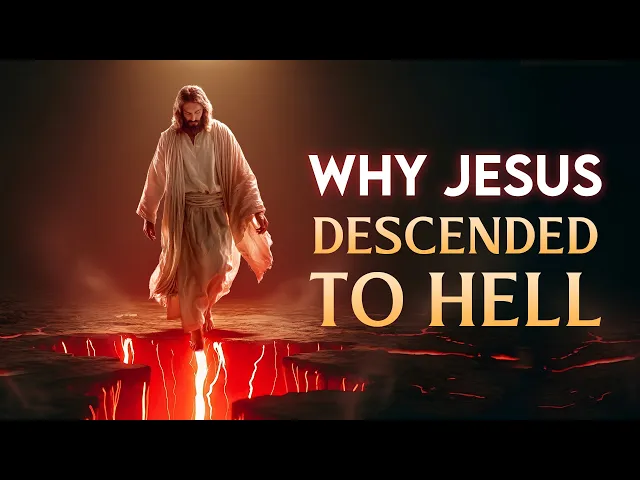
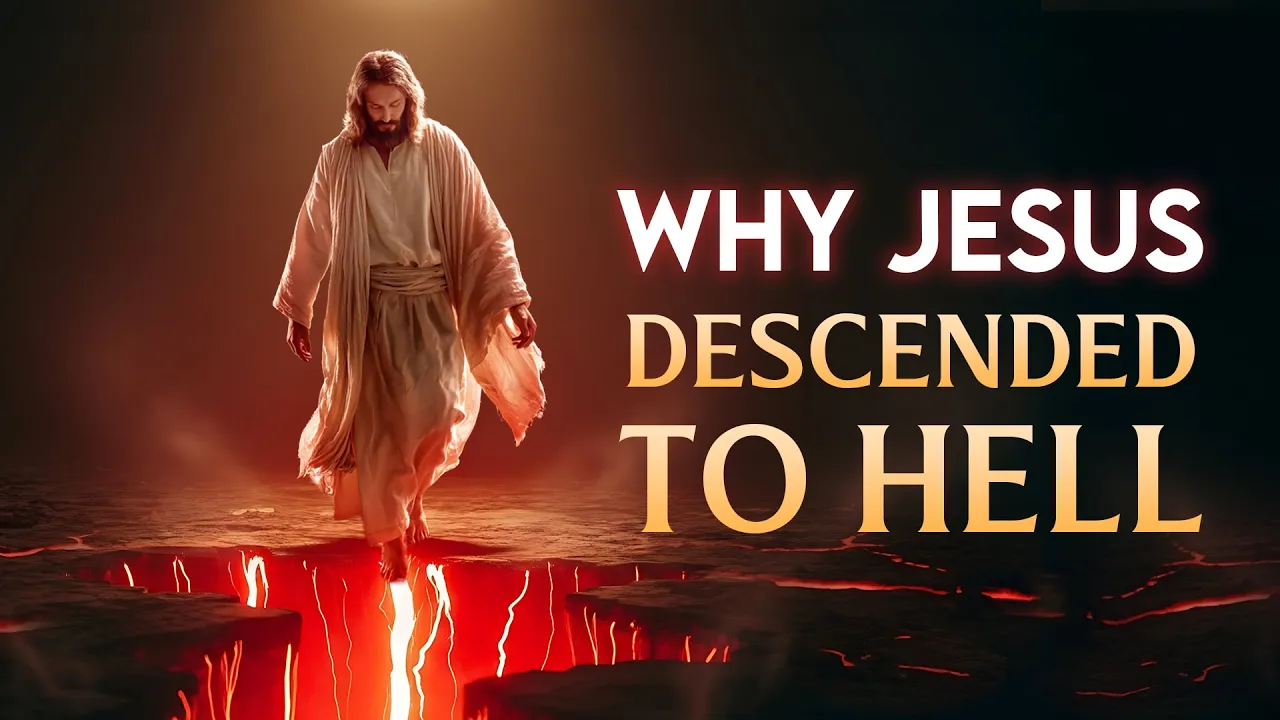
After his death, as his body lay in the tomb, Jesus' spirit descended into hell. Now, it's important to clarify what this means because the hell we often think of with fire and brimstone isn't the same concept that the Bible describes in relation to Jesus descent. The term hell in the context of Jesus descent doesn't refer to the place of eternal torment but to the realm of the dead often called sholol in Hebrew or Hades in Greek.
This was not a place of eternal punishment but a shadowy existence where souls went after death awaiting the final judgment. Jesus descent into hell wasn't an indication of his defeat. quite the opposite.
It was a powerful declaration of his victory. It was a declaration that he had conquered sin, death, and the powers of darkness. It was a public proclamation that no power, whether spiritual, physical, or demonic, could hold him.
Jesus went to the very place where death had held dominion, and he announced his triumph. This is the core of why his descent was so essential. He didn't merely die for humanity's sins.
He went to hell to defeat the very forces that had kept humanity in bondage. The Apostle Peter writes in first Peter 3 18 to19 that Christ also suffered once for sins, the righteous for the unrighteous to bring you to God. He was put to death in the body but made alive in the spirit.
After being made alive, he went and made proclamation to the imprisoned spirits. This passage highlights the power of Jesus descent. He went to the spirits in prison, not to suffer, but to declare his victory over death and sin.
He went to those who had died before his coming, offering them the fulfillment of God's promises. In this act, Jesus was proclaiming his victory to all who had been waiting for the Messiah, the hope of Israel, and the hope of all humanity. But why did he need to do this?
Why not just rise from the dead and leave it at that? The reason lies in the fact that Jesus was reclaiming authority over everything that had once held humanity in bondage. Death, sin, and hell had ruled over humanity ever since the fall of Adam and Eve.
These powers had separated humanity from God. But Jesus through his death entered into these very realms to take away their power. By descending into hell, Jesus demonstrated that there was no realm he would not enter to save humanity.
There was no darkness he would not overcome. In the process, Jesus' descent into hell also fulfilled a key prophecy found in Psalm 16:10, where David speaks of God's promise not to abandon his holy one to the grave. Jesus descent wasn't a sign of defeat.
It was the fulfillment of God's promise to his people. Jesus was not abandoned in the grave. He rose again, proving that death and hell had no hold on him.
His resurrection wasn't just a physical return to life. It was the final victory over the powers that had held humanity captive for so long. Jesus proclamation to the spirits in prison was not just an announcement of victory.
It was an invitation. It was an invitation to those who had been waiting for redemption to finally receive it. Jesus didn't just conquer death for those alive at the time.
He conquered it for all of humanity, those who had gone before him and those who would come after. His victory in hell was a victory for all people in all times. It was a declaration that the ultimate enemy, death, had been defeated and that eternal life was now available to all who would believe in him.
But why was it necessary for Jesus to go to hell? The answer lies in the ultimate authority and power that he needed to reclaim for humanity. To fully grasp this, we must take a step back and consider the deep consequences of the fall of Adam and Eve in the Garden of Eden.
When Adam and Eve chose to disobey God, they ushered in sin, which brought with it death, the ultimate separation from God. Death in biblical terms wasn't just about physical decay. It was about the complete rupture in the relationship between humanity and the creator.
The separation that began with sin meant that all of creation was placed under the dominion of death. The power of death is not just the sessation of life. It is the force that holds humanity in bondage, creating an insurmountable chasm between mankind and God.
This death, which reigned from Adam to the last person to be born, had enslaved humanity for centuries. In the Old Testament, the people of Israel were constantly battling with the reality of sin and its consequences, sacrificing animals as a temporary measure to atone for sin, yet never truly conquering death. This was the state of the world when Jesus came.
Jesus mission was not just to die on the cross for the forgiveness of sins. It was to confront and defeat death itself. Death was not only the physical end of life, but it was the spiritual prison that held humanity captive.
When Jesus died and descended into hell, he did not do so as one defeated. He did so as a conqueror. His descent into hell wasn't a punishment for him.
It was the victory lap over the very forces that had reigned supreme for millennia. In hell, Jesus wasn't fighting for his own life. He was fighting for ours.
He took the battle to the heart of the enemy's territory. This act of descending into hell and proclaiming victory was the reclaiming of the authority that Adam had lost in the garden. Jesus as the second Adam entered into the domain of death and sin to take back the keys to life.
As Revelation 1 18 tells us, Jesus declares, "I am the living one. I was dead and now look, I am alive forever and ever, and I hold the keys of death and Hades. " By entering the very realm of death, Jesus defeated it, proving once and for all that he had authority over it.
He had taken back what was lost by Adam, and he had done so for all who would believe in him. When Jesus proclaimed his victory in hell, he wasn't just asserting his own power. He was opening the door for us to walk out of death's dominion.
Through his victory, believers are no longer slaves to the fear of death or the eternal separation from God it represents. Jesus had to go to hell because it was there at the heart of death's domain that he secured our freedom. He didn't just come to forgive sins.
He came to undo the power that sin and death had over us. This act of reclamation was the key to the promise of eternal life. By entering hell and coming out victorious, Jesus laid the foundation for a new humanity, one where death no longer holds sway.
This victory has practical consequences for every believer. It means that through Christ, we are no longer under the control of death. It means that when we face our own trials, even those that seem like the darkest and most hopeless of times, we can face them with the knowledge that Jesus has already won the battle.
We don't have to fear the grave, nor do we have to live in the shadow of eternal separation from God. Jesus has taken care of that. His victory was complete and now it is ours to share.
The significance of Jesus descent into hell is also deeply connected to the fulfillment of prophecy, especially the prophecy found in Psalm 16. In this psalm, David writes, "You will not abandon me to the grave, nor will you let your holy one see decay. " Psalm 16 10.
This was a promise from God that his Messiah would not remain in death but would triumph over it. Jesus descent into hell and his subsequent resurrection were the ultimate fulfillment of this prophecy. Psalm 16 though it was written centuries before Jesus' birth speaks directly to the hope of the resurrection.
David in his time could not have fully understood the depth of this prophecy, but he was speaking to the heart of what would be accomplished in Christ. The Holy One, the Messiah, would not be left in the grave. Death would not have the final say.
And indeed, Jesus resurrection was the fulfillment of that promise. When Jesus descended into hell, he wasn't abandoning his mission. He was fulfilling it.
His body was in the tomb, but his spirit went to the depths of death itself to declare victory. This moment wasn't just a temporary detour on his journey. It was a crucial part of the redemption process.
Jesus in his descent was ensuring that he was not only fulfilling prophecy, but securing the eternal destiny of all those who would believe in him. His resurrection was the ultimate sign that death had been defeated and that the grave no longer had the power to hold anyone. The resurrection was not just the physical return to life for Jesus.
It was the triumph of life over death. It was a declaration that the Messiah had come and that through him death would be forever conquered. Jesus resurrection confirmed that his victory was complete.
It wasn't just a temporary fix to the problem of sin. It was the ultimate solution. As he rose from the dead, he proved that God's promises were true, that the Holy One would not be abandoned to the grave, and that those who place their faith in him would share in that victory.
This resurrection then is not just about Jesus. It's about us. Jesus victory over death became our victory.
Because he lives, we can live. The resurrection is the hope of every believer. And it is the proof that Jesus's mission was completed.
He didn't simply die to pay for our sins. He died and rose again to ensure that we too could share in that resurrection. As Paul writes in Romans 6:5, "If we have been united with him in a death like his, we will certainly also be united with him in a resurrection like his.
" The resurrection is not just an event in history. It is the foundation of our hope. Through it, we can have confidence that just as Jesus rose, we too will be raised to new life.
This fulfillment of prophecy is a powerful reminder that God's word is trustworthy. When God makes a promise, he keeps it. And in Jesus resurrection, we see the culmination of all the promises made throughout scripture, especially the promise of eternal life through him.
But Jesus time in hell wasn't just about victory over death. It was also about fulfilling the justice of God. This is an aspect of Jesus descent that many overlook or fail to fully grasp.
You see, God's justice isn't just about punishing evil. It's about the restoration of all things. It's about ensuring that every wrong is made right, every broken relationship restored, and every price paid for sin.
From the very beginning of human history, God had established that the consequences of sin were death. Genesis 2 verse1 17. And for thousands of years, humanity lived under the weight of that death sentence, separated from the life of God.
When Jesus died on the cross, he didn't just offer a symbolic gesture. He paid the full penalty for the sins of humanity. But this payment was not complete until he had gone into the very realm of death itself.
Jesus had to descend into hell to fulfill God's justice by ensuring that the consequences of sin were fully met. This is where his descent becomes a critical part of God's redemptive plan. The law demanded that sin be paid for.
And Jesus, the perfect sinless son of God, took upon himself the entire weight of the law's penalty. Jesus descent into hell was a crucial act in this process of fulfilling divine justice. For centuries, righteous individuals who had died.
Those who had faithfully followed God before Jesus atoning sacrifice were waiting in shol unable to enter the full presence of God because the ultimate sacrifice had not yet been made. They like all of humanity were bound by the power of death. They needed the fulfillment of God's promise of a Messiah who would atone for sin and reconcile them to God.
In descending into hell, Jesus fulfilled this divine justice. He went to those who had died before his sacrifice and proclaimed his victory over sin and death. His mission was not only to offer salvation to the living, but to complete the redemptive process for all who had been waiting.
The promise of salvation given throughout the scriptures was now fulfilled. Jesus descent into hell was an essential step in God's justice system, ensuring that no one from the beginning of time would be left without the hope of salvation. He preached to those who had been held captive by sin, declaring that the atonement for their sins had been completed.
This act reveals the depth of God's justice. It wasn't enough for Jesus to die for the sins of the living. He had to reach into the past into the waiting souls and declare that he had conquered death for them as well.
Jesus did this because for God, justice means ensuring that everyone, no matter when they lived or when they died, has the opportunity to be reconciled to him. By fulfilling his promises and accomplishing this act of justice, Jesus bridged the gap between the old and new covenants, offering salvation to all who had died before and after his coming. This is why we can have complete confidence in the justice of God.
Jesus work on the cross was not incomplete. He didn't leave any stone unturned. By descending into hell, he demonstrated that nothing could separate humanity from God's redemptive love.
Sin and death had no power over him, and as a result, they have no power over us. This was the fulfillment of God's justice. Through Jesus, the final payment was made.
All the sins of the world, past and future, were atoned for. And because of this, justice was not only satisfied, but mercy was extended to every person who would believe. So what does all of this mean for us today?
Why does Jesus descent into hell, his victory over death, and the fulfillment of God's justice matter for our lives in the 21st century? The implications of Jesus' victory stretch far beyond theological discussions or historical events. The truth of Jesus' descent into hell and his resurrection speaks directly to the struggles, fears, and challenges that we face today.
For many of us, the thought of facing suffering, hardship, or even death, can be overwhelming. There are moments when we feel that darkness is closing in around us and the fear of the unknown, whether it's the fear of death itself or the fear of eternal separation from God, can be paralyzing. Jesus's victory over death, though, assures us that we do not have to live in fear.
No matter what we face in life, we can rest in the knowledge that the greatest enemy, death, has already been conquered. Jesus went to the very depths of hell itself and returned victorious. And because of that, we too can face our fears with hope.
What's more, Jesus descent into hell means that no one is beyond the reach of God's love. It doesn't matter how deep the darkness is in your life. It doesn't matter how far you feel from God or how hopeless your situation may seem.
Jesus has already entered the darkest places and emerged victorious. This truth should give us tremendous hope. If Jesus could defeat the ultimate darkness, then there is no area of our lives where his light cannot shine.
No matter how far we've fallen, no matter how much we've struggled, there is nothing that can separate us from the love of Christ. Jesus victory also means that our struggles are not in vain. Often we face difficulties that seem insurmountable.
Whether it's battling personal sin, experiencing the loss of a loved one, or struggling with doubts and fears, it's easy to feel overwhelmed. But Jesus journey to hell and back reminds us that he understands our pain. He didn't just die on the cross for us.
He endured the full weight of human suffering. And in his resurrection, he guarantees that our struggles will not last forever. Just as he triumphed over death, he will one day deliver us from all suffering and restore all things.
Furthermore, Jesus victory over hell has practical implications for how we live in the present. Because Jesus has conquered sin, death, and hell, we are now empowered to live victoriously. We are no longer slaves to fear, to sin, or to the idea of separation from God.
As believers, we can live boldly, knowing that our future is secure in Christ. We are no longer bound by the consequences of sin. We have been set free to live for God and to share his love with the world.
Jesus' victory also calls us to live as people of hope. In a world that can often seem dark and filled with uncertainty, we are called to reflect the hope of Christ to others. The resurrection is our source of hope.
And it's not just for us. It's something we are meant to share with the world. Jesus descent into hell and his victory is a message of hope for everyone.
It's a reminder that no one is too far gone, no situation is too dark, and no life is beyond redemption. As we reflect on Jesus' descent into hell and his ultimate victory over death, the resurrection, and the powers of darkness, we are left with one overwhelming truth. He did not go through all of this for no reason.
Jesus journey to the depths of hell, his victory over the grave, and his resurrection are not just events to be admired from a distance. They are meant to transform how we live our lives every single day. The truth of what Jesus accomplished changes everything about our present reality.
When Jesus triumphed over death, he didn't just secure a future for us. He secured a new way of living for us here and now. His victory means that we can live without the fear of death, without the fear of separation from God.
It means that we can face life's challenges and hardships with a new perspective, knowing that our savior has already conquered the greatest battle that could ever be fought. And because he has conquered that battle, we are more than equipped to face whatever trials come our way. The Apostle Paul in Romans 8:37 tells us, "No, in all these things, we are more than conquerors through him who loved us.
" This isn't just a nice sentiment or a platitude. It's a declaration of truth. Jesus victory over sin, death, and hell is the victory we share in as believers.
The battles we face, whether they are battles with fear, anxiety, temptation, or loss, are all temporary in comparison to the eternal victory that we already have in Christ. We are no longer fighting from a place of defeat but from a place of victory. When we live in light of Jesus victory, it transforms how we approach suffering.
The trials we experience in life, though difficult, are not the end of the story. Jesus resurrection guarantees that there is something far greater waiting for us. The Apostle Paul speaks about this hope in 2 Corinthians 4:17 where he writes, "For our light and momentary troubles are achieving for us an eternal glory that far outweighs them all.
" No matter how dark the present moment may feel, we know that it is temporary. The victory that Jesus secured for us means that we have a hope that cannot be shaken. A hope that death itself cannot destroy.
This hope, however, is not just for us alone. The victory Jesus achieved is meant to be shared with the world. The same power that raised Jesus from the dead is available to us today.
As believers, we are called to reflect the light of Christ in the world to show others that there is hope beyond the darkness, hope beyond the fear of death, and hope beyond sin. Jesus victory is meant to empower us to live lives that reflect his love, mercy, and grace. The world needs to see that death is no longer the end, that sin is no longer the defining power in our lives, and that we are not just survivors, but overcomers in Christ.
When we live in light of Jesus' victory, we also live with a renewed sense of purpose. We are no longer just going through the motions of life. We are called to be agents of God's kingdom, bringing his message of hope and salvation to a world that desperately needs it.
The victory Jesus won in hell is the ultimate demonstration of God's love for humanity. Now, it's our turn to take that victory and share it with others. As we come to the end of our exploration of Jesus descent into hell, his victory over death, and his resurrection, one truth stands out above all else.
Victory is already won. Jesus has already done the hardest part. He has already defeated the greatest enemy of all.
He's already overcome sin, death, and hell. This is not a future hope alone. It is a present reality for every believer who trusts in him.
The victory of Jesus changes everything about the way we live our lives. It means that we no longer have to live in fear of death or eternal separation from God. It means that we no longer have to be bound by the chains of sin, guilt, and shame.
It means that we are free to live in the fullness of God's love and grace. No longer striving for victory, but living in the victory that has already been achieved for us. This victory has eternal implications.
The resurrection of Jesus guarantees that death does not have the final say. Our hope in Christ is not just a fleeting earthly hope. It is a hope that extends into eternity.
In Revelation 21:4, we are promised that in the new heavens and the new earth, God will wipe every tear from their eyes. There will be no more death or mourning or crying or pain for the old order of things has passed away. Jesus' victory over death ensures that the day will come when all things will be made new.
Sin will be eradicated, suffering will cease, and we will dwell with God in perfect harmony forever. But until that day comes, we live in the light of that victory. As we navigate our daily lives, we can hold fast to the truth that the victory over death and hell has already been secured.
The darkness we face is real, but it is temporary. The challenges and struggles we encounter are painful, but they will not have the last word. The victory belongs to Jesus.
And as his followers, that victory is ours to share in. In the face of life's difficulties, we can take comfort in knowing that the ultimate battle has already been fought. Jesus has already won.
And because of that, we can walk through life with confidence, courage, and hope. Knowing that no matter what comes our way, Jesus has already overcome it. Victory is not something we are waiting for.
It is something we are living in right now. So as you go through your day, remember that the victory over sin, death, and hell has already been won. Let that truth shape your thoughts, your actions, and your outlook on life.
No matter what you face, remember that Jesus has already secured the ultimate victory. And because of that, you are more than a conqueror in Christ. What do you think about Jesus descent into hell?
Does this change how you view his sacrifice? Leave a comment below and share your thoughts. I'd love to hear how this truth impacts your life.
And if you found this message meaningful, please like the video and share it with others who might need to hear it. For more deep dives into biblical truths like this, be sure to check out our other videos. You won't want to miss the next one where we explore how Jesus resurrection is the ultimate guarantee of our own victory over death.
Stay tuned. As you reflect on this truth, remember Jesus didn't just go to the cross for you. He went to hell and back to prove that there is no power greater than his love.
The darkness has been overcome. And through him, so can you. Keep that hope in your heart as you move forward and know that you are more than a conqueror in Christ.