So a marketplace is generally seeded by a pioneer. Some person decides they're going to be the first and they're going to go to an area and set up a particular accommodation. So once that accommodation gets set up, what generally happens later is that there is a social infrastructure that grows around that particular accommodation.
Hi there, Jing again from Market Insights on the Bali Business Review. Today we have a very interesting story that I'd like to present to our audience and users. The other day the team here at Bukit Vista, which is my own company, I know I have the Bali Business Review channel but I also have Bukit Vista, but anyways this is an interesting phenomenon.
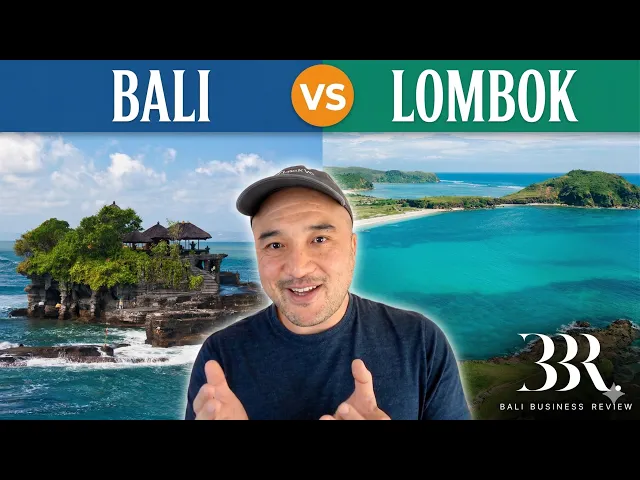
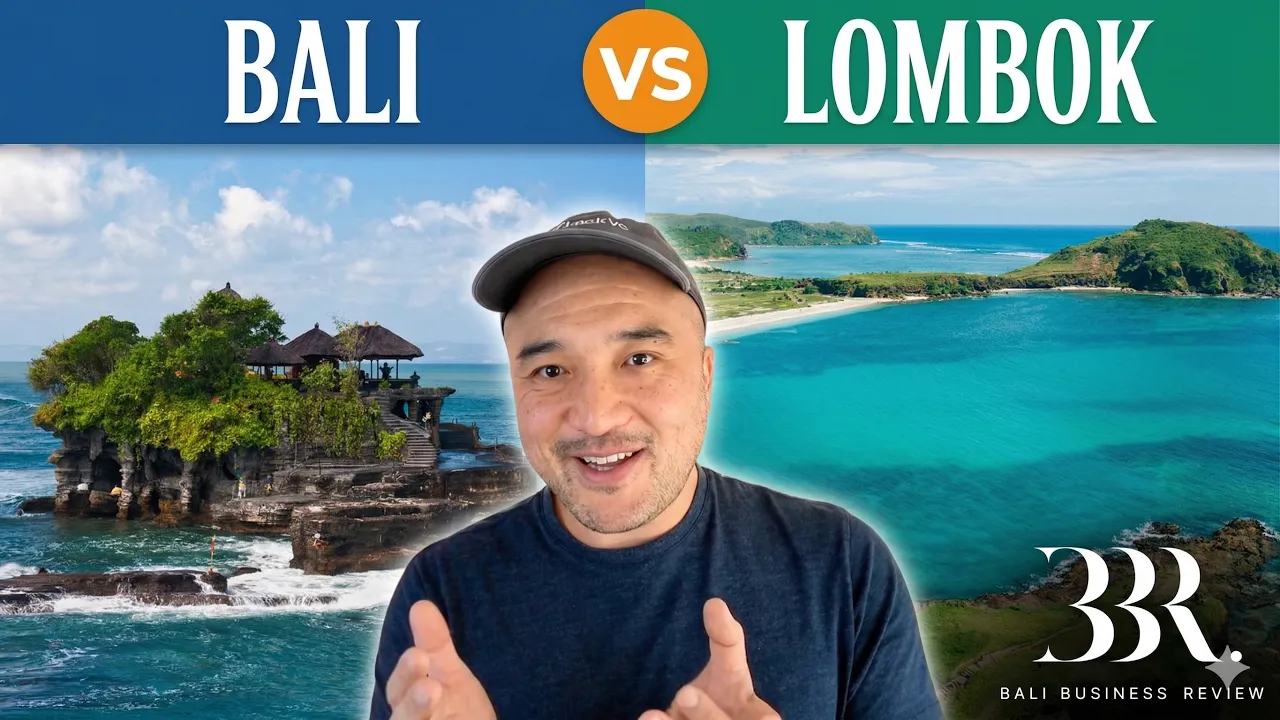
I just wanted to present this to our audience because we did see some interest from the investment community. So we put up this article a month ago on January 25th, actually it's closer to two months, it's now March 2025, but at the end of of Bali versus Lombok, choosing your ideal Indonesian getaway. So we basically did a side-by-side comparison of Bali versus Lombok in terms of the culture, in terms of the accessibility, in terms of the infrastructure, and the natural attractions, and we got some surprising results.
What did we see? This is what we saw. So on our Google Trends, which is the tool that we use to understand how things are going, we saw this spike, you see, boing, up here.
So in one day it basically took off and went viral. 6,000 people went to see it and they spent on average about a minute and 20 seconds looking at this particular article. We decided, okay, we'd follow up and see what was that hubbub about, was it a temporary thing, and let's analyze, right?
Let's analyze for the marketplace. Is 2025 a better investment strategy to pursue opportunities in Lombok or in Bali? So let's take a look.
So what we're going to do is simply this, okay? First is we're going to call up our 3D Spatial Map. This is a proprietary Book of Vista product, and what we can do is we can open this thing up, which has been written by some of our data scientists.
Let me tell you what you're seeing here, okay? So this is a really cool piece of technology that I'm very proud of. It's part of our engineering heritage here at Book of Vista.
We present it on the Bali Business Review exclusively to some of our viewer audiences, okay? So what you're seeing is a review distribution across Bali and Lombok of Airbnb stays. So what do we do?
We essentially compile all the data on Airbnb for Bali, and then we stack up all the reviews. So basically, listings and properties that get the most five-star reviews are the tallest and greenest, and listings that essentially get bad reviews are down here in the red, and that's why they're not growing because Airbnb, as any platform, is going to punish the particular items and listings on the website that have bad reviews, okay? So that's why you see short red dots over here, bing, over on this side, but it generally shows you the overall market activity and the proof of market activity in different marketplaces.
We'll try to zoom out here, and I'm going to pretend like I'm flying into the Deposar Airport at this point, and so we'll take a look at that perspective. So as we're flying in, we see Ubud over here on this side, over to our, I guess that would be your left, and then we see the Jimbaran and Kuta, Seminyak, Canggu, Permanan region over here, and then of course down in this area, we see the Bukit area. Okay, so as we're flying over, we want to take a look at the overall activity of Bali versus Lombok, okay?
So this is Nusa Penida, and we can see Nusa Penida is doing fairly well along the west coast, that's to be expected, because the west side of any particular island tends to get the sunset, the sunset tends to get the people who want to enjoy the sunset, and then a lot of accommodations decisions are basically made of being able to see the sunset. That's a rich feature, so it's not actually, it's not too strange to see the accumulation of beachfronts along the sunset side to be more densely packed than ones on the non -sunset side, okay? So what happens when we go to Lombok?
This is what we see. We see up here in the Gili, there is a fair amount of density in the overall proliferation of Airbnbs and the reviews that are being counted there. Over here on the northwest corner of Lombok, we see more moderate activity, and then over here in the interior, not so much.
There's a scattering of properties in Mataram, which is the main city of Lombok that has a bit of activity there, but as we go down towards, let's say, the south of Lombok, this is probably it, right? So the area around this area, this seems to be the place where we get the most amount of density in terms of activity in Lombok. So this looks like an emerging region.
I actually have no idea what this region is called, so let's go and try to find out what it is together, right? So we're going to have to open up a map on Google and take a quick look at what corresponding region of Lombok that is. So we'll put in Lombok, and yes, Lombok is in the West Nusa Tenggara, which means that it is in the west of the middle islands of Indonesia.
So we'll take a look there. I think that is the actual area. Surprisingly, this might come as a shock to everybody who's watching, there's a kuta in Lombok!
How bizarre is that? There's already, there isn't enough kutas in the world, so there's a kuta in Lombok, and surprisingly, it's called the same. So you can see over here in this particular region, there's a bay coming over here, which provides good surfing and also a good entry point to get in.
And this seems to correspond with the area that we see here on the 3D spatial map of where there is a high amount of, yes, it's that same feature. You see that that bay over here. So that area behind kuta right now seems to be an area that is growing in Lombok as well.
Okay, so let's take a look at some other areas on Lombok. Over here on this particular bay, over on this side, there seems to be some activity as well. Let me try to find what corresponding area that would be.
It looks like it's actually, actually I don't know, maybe it's Mawun or it's this Tampa beach. Let's go and take a closer look at the spatial map to what we find. Yeah.
So taking a closer look, I think that would be, let's see. Okay. So the shape of it is, well, okay.
All right. And the shape's over here. It seems like this bend.
Okay. Whatever that shape would be called. Let's look for that corresponding shape on Google Maps.
And yeah. Okay. So that seems to be, that seems to be, oh, interesting.
Interesting. Okay. That seems to be, now I'm trying not to look like I'm getting lost here, which, hey, look, I'm doing a live data analysis.
So it's real. It's authentic. Okay.
All right. Oh, I found it. Okay.
It's here. It's this particular area. It's Selang Blanik.
Selang Blanik. Okay. So if we take a look at the spatial map and we try to identify the area where we have a high density, and yes, we can see it underneath this particular pin Selang Blanik, which makes sense, actually.
If you take a look at Selang Blanik, which is really weird because, okay, this is where it's weird, right? This is where like my past is coming back to me. So my first job in Balik was actually at the exotic office in Jimbaran.
I was hired to work in the exotic office in Jimbaran because my boss, Michael Martin, had decided that he would expand into Lombok because Lombok was a more profitable region to actually sell real estate. His particular area of interest was in Selang Blanik. And now, well, this is almost, I guess it was my early days when my daughter was first born.
So that's about 16, 17 years ago. 17 years later, this particular area is now showing up as a rental area. Okay.
But let's take a look at what Selang Blanik looks like and see if it deserves the new fame it gets. And yeah, yeah, that's what Selang Blanik. Okay.
This is exactly what I remember. Correct. Selang Blanik is actually a very unique destination.
And the reason it's unique, that I recall, is that it's a silver beach. The sand is this silvery, metallic, condensed, pressed color. There's nothing quite like it.
It is quite beautiful. And there's these hill signs rising above. And then of course the locals in Lombok, they bring their water buffalos to the beach.
I remember seeing them walk along with maybe a tourist attraction at this point. But the hypothesis that I would offer at this point for the growth that you see in Lombok at this point, if there is any growth, is probably due to the initial seeding of the particular marketplaces. What do we mean by that?
So a marketplace is generally seeded by a pioneer. Some person decides they're going to be the first and they're going to go to an area and set up a particular accommodation. So once that accommodation gets set up, what generally happens later is that there is a social infrastructure that grows around that particular accommodation.
So first movers will build usually resorts. They'll build a resort and inside that resort they'll offer complete transportation, food, experiential features in the resort. And they'll try to keep, let's say, their guests contained in that particular resort.
But over time the competition will start rising because as people are going there, there'll be competitors that offer discounted travel or transportation, food, other options such that they will be trying to disentangle the resort experience from the guests that's there. So you see this social infrastructure build up in Changu. You see it build up in the Bukit area.
So most likely whoever seeded this particular area is now beginning to see, let's say, a proliferation of now secondary and tertiary parties following in to also follow, I guess, the momentum that's been invested there. Okay. So this is a live analysis.
I haven't prepared it all. I'm just doing this right in front of you so that you also can see what my analysis process is at this point. Okay.
Lofak in the Kuta area going back inland seems to be doing pretty well. And my guess for why this particular pattern shows and such is because most of the beachfront land probably has already been spoken for and purchased by large resort and hotel developers. So that's why you don't see so many short-term rentals developing up here.
Where you see short-term rentals developing is probably closer inland. And that's because the land in line probably was available to be leased and to be purchased by people who were not in the initial waves of investors that bought along the beach side over here. Okay.
That's what I see in Lombok. But if you zoom out overall and you take a look at the relative impact, let's say side by side of Bali versus Lombok, you can just look at, let's say, here we go. If you look at the horizon to Lombok from Bali, you'll see that Bali is truly like a Manhattan and Lombok is probably more like a Brooklyn or secondary city, right?
It's still very sparse. So not nearly the same level of activity that you would expect to find in Bali. Doesn't mean it's a bad entry point, but let's cross examine a few other stats too as well.
Okay. The next thing that we should probably take a look at is once again, we go to our trusty Google trends. Google trends essentially is a keyword capture website that looks at the relative popularity of one keyword versus another.
In this particular case, we're going to compare Bali to Lombok. And what we see from worldwide interest in Bali versus Lombok from 2004 until present. Okay.
Is this, we see that on average Bali is in terms of relative popularity in 2009, Bali was a 34 and Lombok was a two. And then at peak Bali was about a 98 in 2019 and Lombok was a six, but we really haven't seen Lombok really take off or even start competing against Bali in terms of its relative popularity. For comparison, we can change, let's say Lombok to a more competitive market.
So let's just say Thailand. Okay. Now in Thailand, you can see that it's neck and neck, right?
So Thailand and Bali now are peer competitors in terms of their overall popularity from a keyword standpoint, which makes this particular overall amount of demand valuation, demand prediction a little bit more. You can use some objective data to find out about that. But the next thing you should always look for is you should look at the airports.
Okay. The airports will show you the amount of inbound flights coming into the marketplace. So that gives also a picture of what is the overall carrying capacity of a location.
People are not going to drive to Lombok. People are not going to swim to Lombok. People are not going to take a boat to Lombok.
They will most likely fly it. So if you go ahead and you look at the airport and what's strange is that I don't see, oh geez, I don't see anything right now. Oh, here we go.
Okay. All right, here we go. So here is a list of arrivals to Lombok and you can see, it seems like all the arrivals are all domestic, domestic, domestic, domestic, domestic.
They're all domestic flights, which probably indicates to me that there is no international flights to Lombok. Yup. Yeah, that seems right.
Okay. So here's the facts. This is the Lombok official international airport website, and you can take a look.
And it seems like all of these flights are also fairly, yeah, they're all from domestic cities. They're coming from Surabaya. They're coming from Depasar.
They're coming from Jakarta. No international flights coming into Bali. So what does that mean in terms of Lombok's investment value?
No direct flights means that it will always be a, I guess a secondary city, right? A secondary location. It will be an afterthought.
So people will be essentially forced to transfer from Jakarta or from Bali to get to their way to Lombok. So that makes essentially a fast amount of increase less likely to happen, given that direct point to point travel is the more dominant way that you would be looking to get international tourists there. Okay.
What's my evaluation on Lombok? Great that Lombok is capturing interest. It's capturing a lot of fascination, probably due to some of the downfall in terms of market turbulence and these negative effects that we've been seeing in Bali.
But is it a potential long-term good investment yet? Until we see, let's say a pipeline of more direct flights coming into Lombok, I wouldn't get our hopes up that much yet. It seems like very much still a secondary destination.
And we know what those destinations are looking like. Those look like probably if you're in America, it looks like a New Orleans or maybe an Orlando, or if you're in, let's say Japan, probably in Osaka or Kyoto. So these locations are never going to do nearly as well as the primary first runner cities in those particular locations, right?
Like the Tokyos or the Paris, the New Yorks and Los Angeles in the United States. So we're probably looking at a situation until Lombok is able to attain a critical mass, get let's say international direct point to point contact and travel to that location, probably not going to out-compete Bali. But hey, anything can change in the future.
All right. This is Gene again from Market Insights with the Bali Business Review. Hopefully this little piece on analysis of Lombok versus Bali, given that we've seen a spike in interest in Lombok, will be a satisfying analysis for those of you who are considering also an investment in Lombok as an alternative to Bali.
All right. Once again, stay tuned for the next episode. If you haven't done so already, let's keep this conversation open.
Subscribe, comment, give me feedback, tell me that I'm bald, whatever you want to say. Okay. I'm open to all kinds of direct feedback to engage.
And after all, if you have any information, let's share it. Let's all make more informed, sustainable, good investment decisions. All right.
Signing off again. This is Gene.