our goal in this lesson is to understand the process of electrophoresis it is primarily used for sample analysis rather than purification this method separates molecules on the basis of their charge to mass ratios mobility is very according to charge shape and size and the molecules are grossest the gel component most often used in the electrophoresis of samples of nucleic acids and polyacrylamide is more commonly used in the analysis of protein samples in the picture below each blue band in the gel represents one or more proteins of the same size or molecular weight a type of
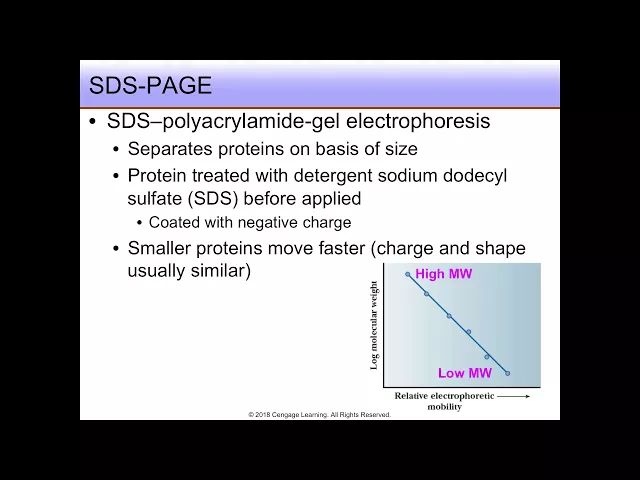
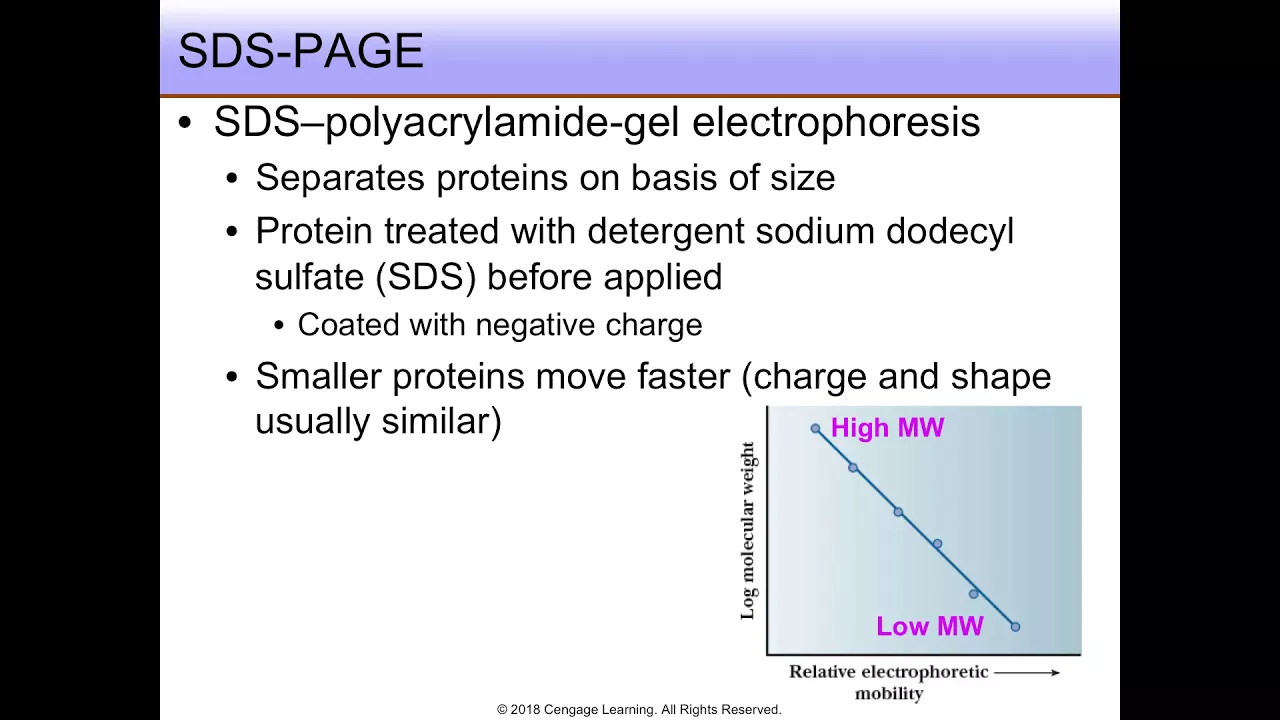
electrophoresis known as SDS page or sodium dodecyl sulfate polyacrylamide gel electrophoresis separates proteins based solely on size or molecular weight the protein sample is treated with SDS before it is applied to the gel this denatures the protein encodes it with negative charge the negative charge causes it to move toward the positive electrode when a current is applied note in the graph shown here electro phoretic mobility is inversely related to size on a log scale that is to say smaller molecules move faster we can plot the log of the molecular weight as a function of distance
traveled and we will get a line with a negative slope isoelectric focusing is a special type of gel electrophoresis in this case molecules are separated based on the pi or isoelectric point the pH of which the number of positive and negative charges are equal and they are therefore electrically neutral the gel is prepared with a pH gradient increasing up the gel proteins will migrate down the gel under the influence of an electric field so long as they are charged once the protein reaches a pH equals to its P I it becomes neutral and will stop
two of these techniques can be combined in sequence in order to accomplish a better separation of complex mixtures in this method the sample is first applied to an isoelectric focusing gel and proteins are separated based on P I or charge this gel is then applied to an sds-page gel and the samples are separated by size these are just some of the more common applications of electrophoresis in the analysis of sample solutions