Our meeting is being recorded so um welcome please uh go ahead and mute yourself if you haven't already um feel free to unmute yourself if you've questions during the presentation also questions can be typed into the chat box um shelby and melissa are monitoring the chat box if i don't see something pop up um and i'd welcome you to have Questions uh as we interact throughout if you'd like to have your video on that's great that means i can make contact with somebody and not with a little green dot on my computer but i totally
understand from a comfort standpoint whatever you feel comfortable in doing um today we're going to be talking about bipolar disorder management in the perinatal period i'm Going to jump into a case study right away um and i would love to be able to have some feedback from you about your initial thoughts on this case so again chat or unmuting yourself this is a case that we had from a phone call to the periscope project a young woman who is a few months postpartum she reported herself that she had a diagnosis of bipolar disorder she was
also utilizing marijuana several Times a day and came to her obstetrical provider with complaints of depressive symptoms and also quite a bit of insomnia um so having three kids myself i recognize that sleep issues are often common in the postpartum period but that red flag of whether or not she's able to sleep but the baby is sleeping she answered no um that she's had a really difficult time both falling Asleep and staying asleep until that until baby woke her she denied any current concerns for hypomania remaining denied any psychotic symptoms um with the general questions
um that the obstetrical provider had uh reported um and the patient had um said that the only previous medication trials that she had are were those listed so fluoxetine paroxetine Then the vaccine and duloxetine so two snris and two ssris she did report however that all of these medications when utilized had been beneficial to her so i'm going to pause there can anybody give me some thoughts about your initial thoughts about this this case things that you want to ask that obstetrical provider or more information That you need to be able to understand kind of
next steps and for recommendation so if i were in a classroom i'd be picking on somebody right now but i don't necessarily want to do that anybody at all want to share anything is she breastfeeding thank you neely she is uh not breastfeeding at this point so that's a great question not currently breastfeeding anybody else thoughts of harm thoughts Of self-harm or hurting others no um she denied denied any passive death wish uh denied any suicidal ideation intention or plan she's uh had it did not have a formal suicide screen um but said that she
was um just just describing more depressive symptoms felt that described her mood as low on some anedonia some worry feeling overwhelmed Anxious just um feeling more emotional and down um where is the rest of her mental health team where's the rest of her mental health team well that's a great question and they are non-existent um that their mental health team is non-existent so um unfortunately is the case with a lot of our perinatal patients they may or may not have a mental health Team um and this is a woman who had not been on any
medications throughout her pregnancy um and had been relatively stable throughout her pregnancy as far as what the obstetrician had reported and what the patient had reported so she had had one depression screen early in her pregnancy and was negative so she had a phq 9 and that was kind of below the cut off And really hadn't had much hadn't verbalized any concern nor had the provider um formally screened her since early in that meeting um so i saw support at home these are all great questions see now i've got y'all rolling that's fantastic so a
minimal support at home um father the baby is somewhat involved they are not together um that has not changed um Is she using any mania history just reporting so dr lynn dickey is winning here good job dr lynn dickey clearly i'm teaching her well she's one of my residents so is she having is she reporting a bipolar diagnosis or does she actually have a bipolar diagnosis so that is for the win okay so i think we're going to pause there um So that's a great question today is out right so patient reported that she had
a diagnosis of bipolar disorder and when i asked that question on my periscope call is exactly that is who made that diagnosis um what kind of mental health history she had what does that look like so all of those kinds of peace so what i have recommended is that we do another formal screen so let's do a depression screen she'd utilize the phq9 Earlier in the pregnancy let's get another phq man at this point let's get an mdq so a mood disorder questionnaire readily available online um and a screening tool for bipolar disorder so we
can actually understand this bipolar disorder history a little bit better because patients said that she'd actually never been diagnosed with bipolar disorder by a mental health professional and she Called herself bipolar because of her mood lability that went up and down throughout the day much like a roller coaster i see julie not being i love it so um so we asked all of these history questions and trying to ascertain all of that um so with all of this in place if all of this was negative so she had a negative mdq she'd never been had
true mania true psychosis never been Psychiatrically hospitalized no family history of um bipolar disorder if all of that was negative consider a cautious reinitiation of an antidepressant okay so that's that's what we have done over the phone from a periscope standpoint is and maybe we make sure that this is all negative and if it's not i think we need to get in for a psychiatric evaluation to really understand what the underlying Diagnosis is first and foremost so this is making sure we understand what the diagnosis is so let's just do a quick review of bipolar
disorder so bipolar disorder is a mood disorder obviously um that typically consists of both depressive symptoms as well as symptoms of mania bipolar disorder of type 1 and type 2 to differentiate For bipolar disorder type 1 according to dsm 5 you only need an episode of mania you actually don't need those depressive um episodes but you do need at least one episode of media okay most women with bipolar disorder are i should say most a lot of women with bipolar disorder are diagnosed prior to pregnancy um they carry that diagnosis um but it's not uncommon
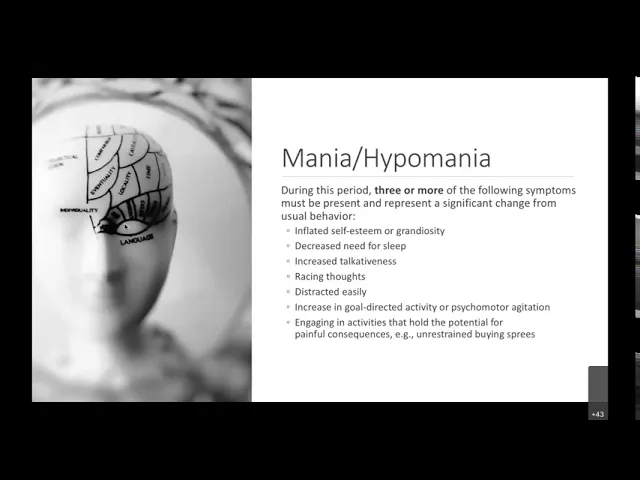
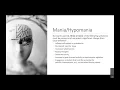
Then the age of when we see bipolar disorder present in younger reproductive age women that they may have their first onset of symptoms either during pregnancy and more frequently um immediately postpartum so what does this look like and what it what do we what are we looking for when we talk about mami or hypomania um so mania is this really expansive Elevated or irritable mood that must last for at least one week and be present the most most of the day nearly every day during that period of time and this is a really helpful question
that i utilize for my patients as well as when i educate um primary care doctors trying to tease this out is how quickly do patients talk about um their mood liability is it um that they're fluctuating and Having their roller coaster mood lability minutes and hours versus days or weeks because the minutes and hours or even day by day is probably much more um indicative of a personality disorder poor coping poor distress tolerance than we see with the bipolar disorder okay so that can be very helpful in teasing that piece out the other piece with
mania is that these Women have very poor functioning mania of most patients i think are going to end up either in psychiatric hospital or in jail or in some kind of trouble because of the poor decision making and certainly that's not always the case but these patients are not able to function well versus hypomania we're looking at elevated mood expansive mood irritability for at least four consecutive days again so a Prolonged period of time that's less severe and often women are still able to function during that period of time that they're experiencing these symptoms what
kind of symptoms are we talking about for mania and hypomania so during this period you're looking for at least three or more of the following symptoms they're listed here again the difference between hypomania and mania that i Primarily look for is that functionality okay are they still able to function in that home or work environment um so things um as far as increased self-esteem grandiosity decreased need for sleep and they don't feel like they need to sleep so it's not that they have insomnia and want to sleep and they feel tired it's that they are
elevated and energized and they don't need to fall Asleep i can go and go and go is what they tell you they're talking really fast probably like i am right now i don't think i'm hypomanic this is how um racing thoughts easily distracted there are lots of doing lots of doing is going on so i mentioned personality disorder before when i was talking about the mood up and down um and that roller coaster minutes or hours So i think it's helpful to i'm just going to throw this up here not that i'm going to focus
on personality disorders at all for this talk but i want to be able to differentiate between the two a little bit um but personality disorders particularly borderline personality disorders these are um women who have this really pervasive pattern of instability of their interpersonal Relationships um and they have oftentimes with marked instability in addition so that's where that rollercoaster of emotion and i you know i'm bipolar that can can be misdiagnosed but that instability is really in reaction to day-to-day events and they'll tell you i flip a switch i wake up feeling great something makes me
angry and i'm depressed suicidal and sound so it's very Quickly transitioning throughout a day others um criteria that we look for for personality disorder that impulsivity intense anger what we term as splitting as well so um people are either very good or very bad it's a very black and white thinking um oftentimes women with person borderline personality disorder may engage in recurrent suicidal Behavior or self-injury cutting or mutilating themselves as well they can however have these brief transient episodes of paranoia even minor psychotic associative symptoms um during these really intense periods where they they have
inability to cope again very different picture than what we see for bipolar disorder but there's obviously some overlap so it's helpful to kind of Be able to differentiate the truth so what are some features of bipolar disorder in women with postpartum depression i think this is really helpful to understand and recognize because when we have these young reproductive age women who may or may not who may not have had an episode of any mood symptoms previously are presenting with their first mental Health history that was part of depression and they're not getting better um it
makes you kind of wonder what is there something else going on so in women who have a diagnosis or postpartum depression or would look like a postpartum depression and they're not improving or something something seems off these are some features that may have you pause and think about whether or not This is actually a bipolar disorder that hasn't yet presented with a hypomania or mania oftentimes these are younger women they have depression immediately on after delivery so within those first couple of days they really crash so have that hormonal component um they have a higher
number of episodes they've had an episode before there's some seasonality component um certainly a History of family history bipolar disorder and oftentimes what i'm seeing is i'll get a referral they've been on a couple of different antidepressants and oftentimes what i'm hearing is that i felt great for the first few days after it or and then i kind of crashed again so whether they were getting hypomanic with the initiation of an antidepressant um or had some kind of other poor response or that they're not responding At all um so those are kind of some things
to be thinking about if you've got a patient with postpartum depression who isn't quite fitting your your classic presentation and maybe not improving why is this that why is bipolar disorder i'm so important to you to recognize there's obviously lots of different reasons but the risk of recurrence for our patients with bipolar disorder is Incredibly high this was really a landmark study done by kim yonkers back in the early 2000s that showed the risk of recurrence or bipolar disorder so a relapse of either hypomania or mania or relapse of depression um following medication discontinuation so
with abrupt discontinuation at the time of conception 100 of these mamas in this study relapsed at some point during their pregnancy or Postpartum period really high rates of relapse and even with a 14-day taper or more um these again two-thirds of these women are relapsing and so um the the gut reaction for a lot of women to discontinue their medications or their obstetrical providers to say yep hold off on everything if you've been able it doesn't work well with these women so that's Something that we need to be mindful of um viagra did a similar
study a few years later again looking at recurrence of bipolar disorder who continued versus discontinued um so the women with the purple line up on top they actually maintained their treatment and they still had a relatively high relapse rate still still pretty high relapse rate Either they were maintained on their medication obviously they fared much better than those who discontinued what are some of the risk factors for postpartum depression recurrence says again the bigger one of the biggest risk factors that we have for ppd um is actually this a diagnosis of bipolar disorder type 2
so type 2 is that hypomania and depressive episodes so many of our Mothers don't get diagnosed with bipolar disorder type 2 because they may be seeking care from their primary doctor complaining of their depression and don't necessarily disclose the episodes of hypomania or they may never even recognize that that episodes of hypomania are problematic and they may not be being screened for it Um on average there's been some studies that have shown that women with bipolar disorder type two are misdiagnosed for about seven to ten years after the first episode because we keep treating them
with antidepressants um because we're missing what happened what are some other what are um risks to the pregnancy of having the diagnosis of bipolar disorder um i'm going to reiterate this a couple Of times this is not this is independent of medication exposure so this is not simply due to mood stabilizers or antipsychotic exposure but these women who have bipolar disorder and are pregnant have higher rates of adverse pregnancy outcomes including gestational hypertension hemorrhage placental previa they have increased rates of labor of induction of Labor and caesarean section rates and they're more likely to have
babies that are quite tiny obviously we've talked about this increased risk for psychiatric illness including postpartum psychosis um huge risk with postpartum psychosis as well as suicide most of the studies that we have with attachment and maternal fetal bonding or maternal infant bonding have all been specifically looking at Depression we haven't had those studies with bipolar disorder mamas but it makes sense that if you have a mother who has an untreated bipolar disorder that those kiddos and that mother infant diet is also going to have some impaired bonding as well again these studies have indicated
worse pregnancy outcomes really regardless of medication exposure so we know that medication exposure is not the sole Reason for some of these adverse pregnancy outcomes that i just listed before so we really do believe that it's the illness itself and or in combination the behaviors that are associated with having the illness um impulsivity substance use risky situations poor prenatal care etc that have a negative effect on these pregnancy outcomes mentioned postpartum psychosis i just want to Reiterate that here um postpartum psychosis is one of these really true psychiatric emergencies in my book um i recognize
that i'm biased that i do what i'm doing what i do um but the the reason that i really feel strongly about this is the really high rates of suicide so about a five percent rate of suicide and a mom has postpartum psychosis And infanticide about a four percent rate of infanticide women who have postpartum psychosis and postpartum psychosis about 95 of these women develop symptoms and they have their diagnosis within the first four weeks after delivery this is not a mother who's developed psychotic symptoms secondary to a depressive episode months and months later these
women Decompensate very very quickly um often within the first three to 14 days postpartum and oftentimes these women can have very um telltale prodromal signs even within the first few days so prior to discharge from the hospital um they start to look a little bit hypomanic they almost look too good for having just had a baby um they you know they so some of that what i've talked about before the Pressured speech the lack of need for sleep they just are kind of going too much not that exhausted postpartum mom who needs some sleep in
those first couple of days that's not what we see they decompensate very quickly in terms of disorganized behavior psychotic symptoms hallucinations etc anyway why bring this up here with our polar disorder talk is there is an incredibly strong bi-directional link With bipolar disorder particularly bipolar disorder type one so that again high highs with true mania and and um major depressive episodes so if you have a woman who has a diagnosis of bipolar disorder type one that's a confirmed diagnosis you best be looking for a postpartum psychosis or be monitoring in fact be part of that
discussion and on the flip side If you have a mother who has no psychiatric history or only a diagnosis of depression perhaps and ends up with postpartum psychosis after she's treated and the dust settles her mental health team had better be looking for a postpartum for a bipolar disorder so it goes both ways okay um certainly if you have a woman with a new onset of postpartum psychosis no other mental health history obviously We also need to be doing an organic workout for new onset psychosis as well so we don't want to miss anything from
organic ideology okay so this is great and all and all of our standard um recommendations are for a screening of depression right so we all know that we should be used screening at least once during pregnancy utilizing a validated screening tool everybody knows that And have some follow-up systems in place but we're not screening for mania um or not consistently at least and so hopefully i've um convinced you enough in the last few minutes that we need to at least be doing some screening for mania as well um and that can be relatively easy um
sometimes i just say do a one-liner question has there ever been a period in your life where you felt Too good too happy over the top invincible where you could go and go and go for days and days on end and my mom started feeling really depressed are like you know that looks sounds great but no whitman i've never never felt like that if they pause or if they have to think about it or they say well there's this one time whip out an mdq print it off online go to google find it And do
a formal screening for mania or certainly if they have a history whether it's their own self-reported history or it's in their it's in their epic um or emr um take a peek and do a formal screening we don't want to make things worse by giving a patient an antidepressant who has a diagnosis of bipolar so the mdq again a very easy 15 item self-report inventory inventory Um i screenshotted it here just so you can see what it looks like yes no questions in that question one you're looking for more than seven yeses but even if
they have more than seven yeses they also need to have a yes to question two which is are they happening all at the same time for the same period of time and do they impact functioning to a moderate or severe level so again we Need all of them to to have a positive screen okay and again this the screening it doesn't mean that they have it but at least it gives us a little bit more information i'm going to pause here grab a sip of water and i'm going to ask if anybody has any questions
before i go on to save a farm all right hear a numb and seeing none of the chat box i'm going to keep moving and be thankful That my children have not busted in my door yet so we'll see if we can keep them out for another 30 minutes so let's start with lithium okay lithium old school old school however first time management remains first lane management in the management of bipolar disorder and pregnancy and the reason is is because we have data so that's the difference with a lot Of these different medications is that
we have data to support use now that being said i would argue that a lot of psychiatrists are not utilizing lithium with the frequency that we did maybe 10 or 20 years years ago so a lot of women are not coming to us reproductive age oftentimes they're coming on atypical antipsychotics we'll get there um but from a data Standpoint we have a lot of data to support use of lithium in pregnancy the answer on the board exam question is always epstein's anomaly right so we know that lithium has an increased risk of anomaly or right
ventricular outflow traffic attract obstruction um however in the the the newest best done studies so this was a new england journal of medicine study back in 2017 Um that had over 600 exposures with first trimester exposure use of lithium the the risk was much lower than what we had first thought or have reported so i've seen the anomaly in the general population is quite rare about one in twenty thousand um in looking at all cardiac defects for lithium um the risk was about 1.9 okay so i usually say two percent and the other caveat that
we have to have is That the general risk to the general population so if a woman does everything quote unquote right and has no exposures what is her risk of a cardiac malformation for her baby to have a cardiac information and the risk for that is usually about one percent and in this study the new england general medicine study they they had it at 1.15 so what i typically say is general population has a risk of one Percent exposure lithium has about a two percent risk is it statistically significant absolutely but 98 of babies who
are exposed to lithium will not have a cardiac defect i think it's really important to put that in terms of absolute risk to an individual patient versus just saying double the risk or you know a relative an odds ratio or what does all of that mean To an individual patient so if you can get it down to that percentage of what it means to them as an individual that's incredibly helpful other things that we worry about from a neonatal standpoint lethargy fatigue floppy baby syndrome i.e hypotonicity um hypo glycemia neonatal goiters um so these are
other things that have been reported with lithium utilization Throughout pregnancy polydipsine polyuria for for mom um can be exacerbated by what the amusement pregnancy so that that's something else that we are mindful of the other piece is again 15 years i'll date myself of how long i've been practicing we had this thought process of knowing that we had to increase lithium through lithium dosage throughout pregnancy Because of increasing gfrs and increasing blood volumes throughout pregnancy so the thought was that we had to be obviously quite careful of monitoring lithium levels and likely have to do
pretty careful looking um increases throughout pregnancy and drop that dose pretty precipitously postpartum so that women don't get living toxic This was a study of the british journal of psychiatry back in 2017 again um that monitored women over 100 pregnancies over 100 pregnancies and just followed their lithium levels and you can see that that percentage of lithium level change first through third trimester certainly does trend down absolutely um but probably not as far down as we Initially thought um and then it doesn't rise nearly as high as high as what we once thought so um
this is helpful to kind of understand and uh follow observationally and these women but what does it mean for actual use from a clinical standpoint so if i've got a woman who's on lithium and has been stable in lithium and wants to continue that throughout her Pregnancy we should be checking levels every three to four weeks throughout her pregnancy and probably even more frequently um after 34 weeks so about one weekly at after 34 weeks until delivery her dose of lithium should be adjusted based on her preconception lithium response so pre-pregnancy the dose of lithium
that kept her stable was a lithium level of 0.8 That's what we should try to maintain throughout her pregnancy and if we need to make dose adjustments throughout pregnancy to maintain that level that's what we should do twice daily lithium dosing can help minimize those peak lithium blood levels um and we need to make sure that delivery does not um increase lithium levels although that study just showed you Demonstrated that it probably wasn't as dramatic of an increase as we once thought so some of the some clinical recommendations are maybe just to hold lithium for
a day and then really have um careful lithium blood monitoring um or bringing that level back down or that dose back down um to her preconception dose um fairly quickly post delivery Let's talk a little bit about major malformations in the antioleptics so this was a international registry out of europe for europe um looking at anti-elective drugs um so these were not necessarily utilized just for psychiatric indications but again we're just looking at primarily this study was looking at major malformations i totally forgot to bring my mug so i'll tell you about my mug in
a minute and show everybody so what i pulled out Of this study was the most commonly utilized meat stabilizers for psychiatric indications given what we're here to talk about um and i would argue of these the most common is can obviously be b valproate carbamacepine and motrigine is typically what we see most in for psychiatric indications keeping in mind that the general population that the risk of major malformations in the general population Is between one and three percent depending on how all-encompassing we are you can see that valproac and carbamazepine are well above that um
from a major formation standpoint lamotrigine falls below that three percent of a slightly an ox carbamazepine although very similar structurally to carbamazepine appears to have um Some some kind of protection very different um that's been pretty consistent across a couple of different studies so it seems that our ox carbamazepine has less risk of major malformations as compared to carbon acid so valproate um my fellows this last year for christmas gave me a coffee cup and it says deficot is the devil and bless their hearts they made it all Special for me and i love it
and i should have brought it into chatty um and i carry that and they hear me preach on this that just because there is this very high rate of major malformation so ten percent is what that last study said the neural tube defect risk is about two percent and then we look at all of these other potential major male formations or minor male formations particularly cranio Facial defects um cleft lip cleft pellet cardiac issues hypospadias polydactyly like it's a it's a wealth of major malformations that can happen with this medication the other piece that we
need to keep in mind is that women with bipolar disorder that their risk of unplanned pregnancy is even higher than the general population it's about an eighty percent risk of unknown pregnancy So these women don't always go very early um when they find out that they're pregnant and so this is something that i don't recommend at all um for my reproductive age women and peer end of story and i'll show you some more data to support that the other the other piece is that there's really no safe dose of vlp there's dose correlation that's noted
you can see that Um with with uh total daily doses over 1400 um and 15 milligrams a day which isn't uncommon for management of bipolar disorder there's a 25 risk of major malformations okay so it's just very very high additionally there's new knocked and neonatal toxicity is possible and the neurocognitive development is impacted as well so when i get these calls or a frantic Email or text from a obstetrical provider saying i've got a woman she's already 10 or 12 or 14 weeks and she's on to a quote the horse is under the bar should
i just keep her on it the answer is no like no we shouldn't because of that risk of neural um developmental disorders including autism so we've got good data to support not utilizing Infiltrate throughout pregnancy other countries i think are doing a better job of really not managing um utilization of this medication in our reproductive age women i think our neurology colleagues are probably doing a better job of really managing managing and monitoring for long-term birth control of opioid um so i i don't feel comfortable with its use unless a woman doesn't have a uterus
Or um she's got an iud in place um and we've documented um that this is the only medication that's really working for her carbamazepine also probably should be avoided and see if possible again um that initial study for europe showed a major miles per mission risk of about um 5.5 percent overall neural tube defects and and another study was about one percent Other studies have shown as high as 11 percent facial defects for carbon acid and so again a host of major malformations with exposure again this is also dose dependent so higher than 700 milligrams
a day about double that risk so again this is not something that we should be utilizing our reproductive swimming if we can Avoid it there is a multiplicative effect when carbonazapine is utilized with our anti-convulsants particularly depth of coat also carries a fairly high risk of developmental delays so again exposure at no point in time i would feel comfortable um in my patients in with utilization as i mentioned earlier for ox carbamazepine or trilactol Seems to have something different even though it's against derived from and structurally similar to carboxyphene the major malformation risk appears to
be much lower with ox carbon as a penis compared to carbamazepine um the problem with this medication in particular is that we don't have nearly as much data with longer term neural cognitive development um so you know if we can avoid that that's Great um because there are other medications from a mood stabilization standpoint that we probably have a little bit more data with um and that includes lamotrigine primarily so lamotrigine is my go-to mood stabilizer um from a safety profile and pregnancy um if a woman's and particularly for bipolar disorder type 2 so it
has infers good utilization in that population It has a much lower risk of major malformation than other anti-convulsants there is an evidence of some dose response though so if you're utilizing higher doses um there is a higher risk of major malformations much like the other anti-leptic medications i would argue in psychiatric practice and typically not utilizing those doses but it's not uncommon again for our neurology colleagues to utilize those Sources for um seizure management i very clearly remember the question on my first set of boards about cleft lip and fluff palate um with lumotrigine exposure
um and so that was something that we had initially had seen a bump with however um it's been fairly controversial and more recent studies have not confirmed an increased risk of major malformations um so With cleft lip and cleft palate in particular um so that's something to be uh aware of as well there have been neural cogniti or cognitive neurocognitive development studies and following these thoughts um post mutual exposure and shows normal cognitive development up until about one year of age which again is quite reassuring the difficulty from a management Standpoint with low motion in
pregnancy is that estrogen increases the clearance by inducing the liver enzymes that are involved with its metabolism so pregnancy induces the metabolism of lamotrigine meaning that lamotrigine dose levels will decline throughout pregnancy even if the dose remains the same clinically i typically are not Monitoring the motrigine levels for my psychiatric patients so much like we talked about with lithium you could monitor low nitrogen levels and increase the dose of low motor gene prophylactically to keep that level steady most of the time with my patients with bipolar disorder seeing them about once a month anyhow and
so i monitor clinically and increase the dose if need be However if i've got a patient who who's using lamotrigine for both seizure management and mood management that's a different story so i don't want her i don't want um prolomotrigene level treatment from a seizure standpoint and so we'll probably work with neurology in monitoring that little motrig level and increasing um to increasing that the The dose at that point to keep that um you see a question of impact potential impact on babies development oh speak to a father having a bipolar disorder diagnosis and taking
let me answer that question real quick um i am not going to be able to speak to that because i don't know the data at this point about bipolar disorder diagnosis or are you thinking from a From a medication standpoint and and having decoded exposure from sperm jan is that what you're going to be asking so if that's the case i don't okay so that's the case i don't know the answer to that but there's been some studies looking at just the impact of paternal mental health on development but i don't know the Answer specifically
about um spermatogenesis and how that how defacto would impact that offhand my apologies okay so lastly there's uh there's some common question about lithium versus lamotrigine um so which one should we kind of go to um there's a danish national registry study that compared the risk of psychiatric hospitalization within three Months postpartum there were significant differences although those are pretty if you look at them a seven or seven percent risk of um hospitalization versus a 15 risk well not statistically significant those those seem very different a couple of problems with the study number one i
think the biggest issue is that lithium and lamotrigine are utilized for very different patients So um typically lithium bipolar disorder type one and lamotrigine for bipolar disorder type two it's not always the case um but i think it's it's basically what i'm trying to show is that lamotrigine is not inferior but i think there's more to the story than what this study demonstrates we get asked a lot about folic acid supplementation and if we just give her enough folate can we Continue on the carbon azopine or can we continue on without and the answer to
that is probably not um there's been pretty controversial data regarding folic acid supplementation and whether it actually does reduce the risk of major congenital malformations when you have an exposure to an anti-electric drug um so what the recommendation is is that if a woman's on Developed medications she should be receiving folic acid supplementation typically we recommend about four milligrams per day but that that may or may not um decrease the risk of a neural tube defect and so we shouldn't just have women supplementing with it thinking that that is going to be protective um and
certainly want to be protective With some of the other malformation or the neurocognitive disorder piece that we discussed so let's flip gears and talk a little bit about antiseptic use in pregnancy um this is older data at this point although the study was published in 2017 that the the graph is obviously only going through 2010 but even at that point you can see pretty rapid increa increases in those last few years Escalation of youth of the atypical antipsychotics um and i i would anticipate that that's even gone higher um in the last decade particularly because
we're utilizing these medications for more and more psychiatric indications first generation antipsychotics so what am i talking about um primarily with the most data has been looked at with how peridol or held all On a lot of these other medications have been looked at um the thing to remember about the first generation antipsychotics is that the vast majority of this data was derived from patients who were being given these medications to treat hyperemesis um and they weren't presumed to have a primary psychotic disorder so presumably they were taking these Medications at lower doses and on
a prn basis and likely not throughout the duration of their pregnancy so big caveats for the data for that case what we do know is that it doesn't appear to have a pattern of major nominations that are noted however it does appear to have slightly higher risks of major malformations as a class but no pattern so that brings into question Whether or not the major malformation is secondary to the drug versus the underlying disorder so that's kind of one of the things that we think about when we don't see a specific pattern we do know
that there are some risks to the neonate um so lower mean birth weight higher incidence of small for gestational age we don't see any demonstrated effects on Behavioral emotional cognitive development but we don't have any large scale prospective studies that have been completed they've all been smaller retrospective reviews typically limited to one year post delivery atypical antipsychotics as i mentioned with that first graph really exploded with utilization in the last two decades In the green box you can see kind of the most commonly utilized atypicals at this point those with the stars are the ones
that we have the least amount of data with so they tend the data that we tend to have with a lot of medications in general tend to be the older medications so with the exception of clozapine so clausapino was the first one but we don't have a lot of data on closet human pregnancy We've got this great national pregnancy registry that's run out of mass general so i really really encourage you that if you've got a woman who is choosing to stay on her atypical antipsychotic and she's pregnant that she um gets registered with this
registry you can go online google's your friend in this case women's mental health.org um and get her signed up or ask if she's been willing to do that it's a couple of Phone calls throughout pregnancy one postpartum um she can consent to have her medical records forwarded or not they'll still include her in the registry even if she chooses not to have a medical reference but this is the way we're going to get some additional data about these kinds of medications um so this this last p uh this this study um that was reported a
few Years ago now was fought prospectively following about 700 women um looking at exposure to second generation or asymptotical antipsychotics versus those women with psychiatric histories without any exposure most commonly utilized are photoiopine and arachioprazole it's definitely where we have the most data with those two medications this study was focused on a lot of these Early studies for these classes and medications are focused on major malformations in first-term master exposure um so they were not finding any statistical significance between those two groups which is again reassuring um but it's very much focused to that first
trimester exposure so what about comparing the two typical versus atypical antipsychotics um so the study on the left was a Meta-analysis and that included 13 cohort studies what it found was that all antipsychotics were associated with an increased risk of major malformations as well as an increased risk of cardiac defects and an increased risk of preterm delivery all of these medications do demonstrate a lower birth weight and small for gestational age there was not a difference in the risk Of major malformations between typical or atypical antipsychotics so the risk is elevated for across the board
there is not any specific pattern of major malformations with the exception of that blood of cardiac defects the the study on the right was a database review um that looked at prescription history and they didn't that database did not find any differences between Atypical and typical um antipsychotics in terms of malformations including information so you can see where the data is evolving here right so we've got some difference in controversial data no doubt this is very similar to what we experienced about 20 years ago um with the ssris and having conflicting data with the ssris
until we've got some better prospective Cohort studies completed with that as well this database specifically called out risperidone is having a highest risk of male formations as the only individual agent that's having a high risk of injury malformations so i've got a question here saying have there been any longitudinal studies that have been done long enough prenatal exposure to mood stabilizers and antipsychotics affects the risk Of developing bipolar disorder in first gen first degree offspring no um so the short answer is no for that question we know that the risk is going to be conferred
because of that genetic risk so we know that bipolar disorder in and of itself has a genetic linkage both maternal and paternal um but to my knowledge there has not been any studies looking to see if exposure to These medications confers a higher risk of development being a psychiatric disorder in the offspring as compared to just the genetic risk of what we would anticipate does that i hope that answers your question let me know if it doesn't okay um extrapyramidal symptoms and neonates um this was something that was um brought up by the fda several
years ago at this point so it's A just a war fda warning that includes both typical and atypical antipsychotics and it was based on about 70 cases of neonatal extrapyramidal symptoms that was reported to the fda address reporting system um the difficulty with this is that cases were typically not monotherapy so these babies are exposed to multiple medications um and symptoms included that were Listed here and i think would be difficult to tease out from extrapyramidal symptoms versus some withdrawals type symptoms particularly with the atypicals given that they are hitting multiple neural receptors what about
breastfeeding um somebody asked me a question the other day hey do you think you could do an entire lecture just on breastfeeding i said no probably but but it comes down very Quickly um because the vast majority of the medications that we do have um the data that we have does demonstrate that there is a quote-unquote safe proceeding ratio of infant dose exposure to maternal dose so what the aap american academy of pediatrics says is that as long as the relative infant dose less than 10 that's deemed to be safe And compatible with breastfeeding um
the vast majority of psychiatric medications are fall below that temperature risk of the medications that we've talked about today lithium and low motor gene are the two that exceed that threshold um lithium has an rid of anywhere from 25 to 50 so quite high um and a decade ago or so when i was first practicing really that the Standard of care was that women who were taking for lithium through pregnancy should not breastfeed because of that really high transfer rate into breast milk um there's been the pendulum has swung a little bit and the thought
process says that a baby was exposed to lithium throughout pregnancy we know that the amount of exposure via breastfeeding is is certainly less And is there a way that we can very closely monitor that baby um to allow for breastfeeding and working with pediatrician very closely so that i've had a handful of patients over the course of my career that have chosen to do that however it does really mean very close collaboration with the pediatrician and very tight monitoring of baby as far as babies lithium level their Kidney function their cardiac function their thyroid function
as well um and so because of that type monitoring most women choose not to breastfeed very long term so a few have chosen to breastfeed maybe for a few weeks or a month or so but not necessarily long term lamotrigine that the largest study has Been with 30 mother infant pairs and interestingly the milk to plasma ratios were really all over the place really really widely ranging as you can see there the average calculated relative in dose was about 10 in this study other studies have shown that it's maybe between 20 to 50 um maybe
not that high just has really been all over the place Similarly to lithium um we don't i think if there's been exposure to lamotrigine throughout pregnancy we're thinking that it's going to be less exposure again the the bigger there's highly variable ratios here um although there's not as much monitoring we would do with a lamotrigine exposed breastfed baby as we would do for a lithium-buster baby um most of the studies that are out There in the lipstick i should say are case case series of women ex choosing to breastfeed with um lamotrigine on board have
reported um jews with babies um so that's reassuring again if a mom chooses to breastfeed um what about antipsychotics um so the majority of known data of that we have with antipsychotics as i mentioned Um demonstrate relatively low levels of antibiotic medication and breast milk um again most of this data comes from case reports or face series and most of the data really has been pretty specific to olanzapine again particularly because the landscaping's been around the longest we get the most data with the older older medications but those have had undetectable levels in infant serum
However antipsychotics can all change because they work on dopamine it can change um levels of prolactin which then may impact lactation so there's been cases of lactation cessation so decreasing um her inability to breastfeed or decreasing milk supply however there have also been causes again both gamecomastia Bacteria have been reported with antipsychotic use in lactating women um there's very limited long-term follow-up within a psychotic exposure with breastfeeding um the data that we do have does not appear to indicate any adverse developmental effects as with any medication i would uh obviously ask that patient or pediatrician
or monitoring infant for changes and behavior Particularly if you're introducing a medication that baby's not been exposed to in that post-partum period monitoring for drowsiness sedation changing and feeding changing behavior developmental milestones um and and obviously need to be cautious about other side effects affect your ability to parent when i think about the older antipsychotics the biggest thing i worry about is sedation with a lot of them and so if She's going to be too sedated to be able to breastfeed safely overnight um so it's a little bit different with the antipsychotics just to keep
in mind that it may impact breastfeeding supply in one way or another so that's up there as well i would argue that the bigger thing that i spend time on however is not necessarily the transfer rate into breast milk and whether They're their safety with that because i think that there's some good evidence to to maybe continue that mood stabilizer but the big thing that i worry about is sleep and we know that disrupted sleep is a major trigger for bipolar disorder if these women are taking these medications the likelihood is that they have a
bipolar disorder and i get that that's often inevitable in that post-period post-partum period right so we know that women are very Sleep-deprived they're going to have sleep disruption so how can we spend time in that pregnancy really developing a solid need for and i think so many um obstetricians or even the patients themselves are so worried about the transfer rate they don't think about well if i'm exclusively breastfeeding by breast what is that going to look like all night long um and If i'm only sleeping 90 minutes or less at a time how is that
going to impact my my psychiatric disorder so we need to really think about that so i use the term sleep shifts so mom does a feeding at 9 00 pm she skips the next feeding you have early introduction of a bottle pumped breast milk if she wants to do exclusive breastfeeding allowing a partner or other support to Do that next meeting and then she's back on for that the feeding after that so she's hopefully getting at least a three or four hour stretch of time um utilization of a pier and sleeping which is not quote
unquote on duty so if they alternate days or nights excuse me um to be able to get some sleep and think about that um so i i push a lot that if my my bipolar patients Want to exclusively breastfeed can we early do early introduction of a bottle so that somebody else can help share the burden of feeding um to people to do that or do we do we think about just early introduction formula via bottle work as well so that other other purpose or supports can help feed baby too [Music] and so they do
questions or i've got another case study here that we can talk About too um hopefully this will be pretty easy at this point based on what we chatted about so my favorite my favorite cases are preconception planning um because that means they're thinking ahead said that a bipolar disorder patient type 2 confirmed the diagnosis i'm very classic she's been doing very well for the last 18 months on lamotrigine at 100 milligrams and she recently got engaged they're thinking about they're getting married and want to think about having a baby what do we do i do
hope that all of you in your heads are thinking we keep her on the limoche gene yes continue it thank you dr navarro we continue to absolutely discuss the high relapse rate of bipolar disorder and pregnancy We talk about the risks and benefits of continuation versus the risks of the medication postpartum concerns sleep hygiene etc etc so all of that peace as well so good one more case this woman's five weeks pregnant um she reports a diagnosis of bipolar disorder to her ob gyn um she's only taken at this point she's I'm taking 50 milligrams
of cortisone excuse me um her outpatient psychiatrist recommended that she continue but she discontinue it um however the patient says well i can't sleep without it so i need to take something um she's got no other psychiatric symptoms um she does describe this history of sexual abuse um she's had self-injury in the past unstable relationships Describes her mood as a rollercoaster change minute by minute so this is similar to that first case that we talked about really looking at diagnostic clarification as needed um so i would absolutely recommend that you contact that outpatient psychiatrist directly
to try to understand that diagnosis are we dealing with a bipolar disorder versus a personality disorder um i'd be concerned about a borderline personality disorder given Some of what she's describing at this point um and we can talk about it through quatio versus other sleep medications and we didn't focus on that for this slide set um but there's there's some options for nightly medications for sleep um so it may be worthwhile to explore what else she's tried that may or may not have that better data Um so once we figure that piece out we can
kind of go to the next steps with that good um there's a question about getting the powerpoint slides so this has been recorded um and so this this slide set in the recording will actually be available on our website um so we'll have that available as well just want to remind everybody about the periscope project again Free resource for everybody um so we provide our real-time providers provider teleconsultations um vast majority of the time i'm able to call folks back within about five minutes or so and certainly within 30 minutes we also have a host
of community resource information that's available um for you to be able to support your patients we know uh we know that there's an Increase in perinatal depression anxiety right now with with a coven pandemic and so making sure that you are asking you're asking questions to your patients and providing them the support that you can thank you to everybody for joining us today again our contact information is listed there i'm going to be quiet if anybody has questions i'd be happy to answer any of them Thanks everybody you