In the middle of the 14th century, people went to bed healthy and woke up dying.
A fever would strike without warning.
Dark swellings appeared under the arms and along the neck.
Within days — sometimes hours — entire families were gone. Church bells rang so often that cities stopped counting the dead.
Graveyards overflowed.
Streets fell silent.
And across Europe, a single terrifying question echoed everywhere: Was this the end of the world? What people didn’t realize at the time was that they were witnessing the deadliest pandemic in recorded human history — one that would kill up to half of Europe’s population and permanently reshape civilization itself.
This was the Black Death.
And once it began… there was no escape. To understand the devastation that followed, we must first understand the height from which humanity fell.
The early 14th century was not a time of darkness and stagnation, as often portrayed. It was the apex of the High Middle Ages, a period of remarkable stability, population explosion, and interconnectedness that Europe had not seen since the Roman Empire. Thanks to a climatic phenomenon known as the Medieval Warm Period, harvests had been bountiful for generations.
The population of Europe had nearly doubled in two centuries. Cities were bursting past their ancient Roman walls. Paris, Florence, Venice, and London were vibrant, chaotic, densely packed hives of human activity.
The Gothic cathedrals were rising, symbols of a society that felt closer to God and more technologically capable than their ancestors. More importantly, the world was connected. A merchant in Venice could buy silk that traveled the entire length of Asia without ever leaving trade networks secured by the Mongol Empire—the Pax Mongolica.
This vast network, the medieval "world wide web," moved spices, gold, ideas, and technology across continents with unprecedented speed. It was a glorious, bustling, optimistic world. But this interconnectedness was a double-edged sword.
The same caravans and ships that brought wealth were about to deliver the greatest catastrophe in human history. The infrastructure for global disaster was perfectly laid out. This society, seemingly so robust, was about to face an enemy it could not see, could not understand, and could not fight.
The origin of the apocalypse lay thousands of miles from the stone streets of Paris, in the vast, windswept steppes of Central Asia, likely in the region of modern-day Kyrgyzstan or northern China. This is a landscape of extremes—endless horizons of grassland, harsh winters, and blistering summers. Here, an ancient biological agent had existed for millennia: Yersinia pestis.
It is a bacterium of ruthless efficiency, endemic to the burrowing rodent populations of the steppes—marmots and ground squirrels. For centuries, the bacterium lived in a relatively stable ecological balance with its hosts, far from major human population centers. But in the 1330s, the delicate balance of the steppes was disrupted.
Climate historians point to a period of ecological stress—perhaps a severe drought followed by heavy rains—that devastated the rodent populations' food sources. Drven by hunger, the infected rodents migrated closer to human settlements, bringing their fleas with them. The leap from animal to human occurred in the trading outposts along the Silk Road.
The first human victims likely didn't understand what was happening. They developed high fevers, vomiting, and the terrifying, painful swellings in their lymph nodes—the buboes—that gave the disease its name. News in the ancient world traveled slowly, but rumors of disaster traveled faster than merchant caravans.
By the early 1340s, terrifying, fragmented reports began reaching Mediterranean ports. Merchants spoke of entire civilizations in the East vanishing, of "rains of fire" and pestilence that left India, Tartary, and Mesopotamia depopulated. The Europeans listened to these tales with a mix of horror and detachment, viewing them as distant tragedies in exotic lands, perhaps divine retribution for foreign beliefs.
They had no concept of germ theory. They didn't realize that the spices peppering their food were traveling the same road as their eventual executioner. The geographical pivot point of this history is the Crimean Peninsula, jutting into the northern Black Sea.
Here sat the magnificent city of Caffa. Caffa was not merely a town; it was a fortified, incredibly wealthy colony of the Republic of Genoa. It was the crucial hinge connecting the overland Asian routes to the maritime Mediterranean networks.
Inside its massive stone walls lived Italian merchants, Armenian traders, and a cosmopolitan mix of peoples protected by Genoese crossbowmen. In 1346, Caffa was under siege. The mighty army of the Golden Horde, a successor state of the Mongol Empire led by Khan Jani Beg, surrounded the city.
The Genoese were masters of defense and maritime resupply, and the siege dragged on for months in a brutal stalemate. But then, a silent killer began to stalk the Mongol camps. The besieging army, living in close quarters with poor sanitation, became the perfect breeding ground for the bacterium that had traveled with them from the East.
Soldiers began dying by the hundreds, then thousands, their bodies turning dark with gangrene before death. The Mongol army was dissolving not from enemy action, but from biology. Witnessing his army disintegrate and facing defeat, Jani Beg made a horrific decision that would change the course of history.
In an act of desperate, calculated psychological and biological warfare, he ordered the corpses of his plague-ridden soldiers to be loaded onto trebuchets. For days, the sky over Caffa rained dead bodies. The Genoese defenders watched in horror as the pestilent corpses smashed onto roofs and into market squares.
The psychological terror was immense, but the biological impact was immediate. The bacteria, carried by the fluids of the corpses and the fleas abandoning their cold hosts for warm living ones, infiltrated the city. The unbreakable fortress had been breached from within.
Panic gripped Caffa. The wealthy Genoese merchants, realizing the city was doomed, utilized their greatest asset: their ships. Twelve Genoese galleys loaded with refugees, cargo, and unseen stowaways slipped out of the harbor, fleeing past the dying Mongol army, heading for the safety of home.
They sailed through the Bosphorus, past Constantinople—which was soon devastated itself—and into the open Mediterranean. This sea was the economic engine of Europe, a zone of intense, fast-moving trade. The fleeing ships became vectors of death, docking at major hubs to resupply, unknowingly seeding the infection at every stop.
The first major European port to fall was Messina in Sicily. When the Genoese galleys arrived, the dockworkers who rowed out to meet them were greeted by a scene from hell. Contemporary chroniclers record that most sailors were dead, their bodies rotting on deck.
The few survivors were delirious, wracked with pain, covered in black boils dripping blood and pus. The port authorities of Messina realized too late the nature of the cargo. They ordered the ships expelled, but the true agents of transmission—the black rats ubiquitous on medieval ships, and the fleas on their backs—had already used the mooring ropes to scurry onto the docks.
Messina was the test case for Europe, and it failed miserably. The speed of the infection was paralyzing. The close-quartered living conditions of a medieval port city acted as an accelerant.
Within weeks, the social fabric of Messina disintegrated. People fled the city for the countryside, only spreading the contagion further across the island. News of the "Great Pestilence" spread, and other ports tried to close their harbors to ships from the East.
But medieval quarantine was a leaky sieve. Greed often overcame caution; a ship laden with valuable spices could often bribe its way into port. By early 1348, the great maritime republics were crumbling.
Genoa, the home port of the ships from Caffa, was devastated. Venice, the Queen of the Adriatic, faced an existential threat. The Venetians, the most pragmatic of merchants, eventually developed the concept of the lazaretto—islands in the lagoon designated as quarantine zones where arriving ships and crews had to wait 40 days (quaranta giorni) before entering the city.
It was a pioneering public health measure, but for the first wave, it was too little, too late. The gondolas of Venice became funeral barges, piling bodies high as they navigated the silent canals. From the Italian ports, the disease moved west to Marseilles, the great gateway to France, and crossed the Adriatic to Dubrovnik.
The coastal perimeter of Europe was breached. Now, the disease turned inland. As the plague moved away from the coasts, following river barges along the Rhône and carts along Roman roads, it encountered the dense heart of medieval Europe.
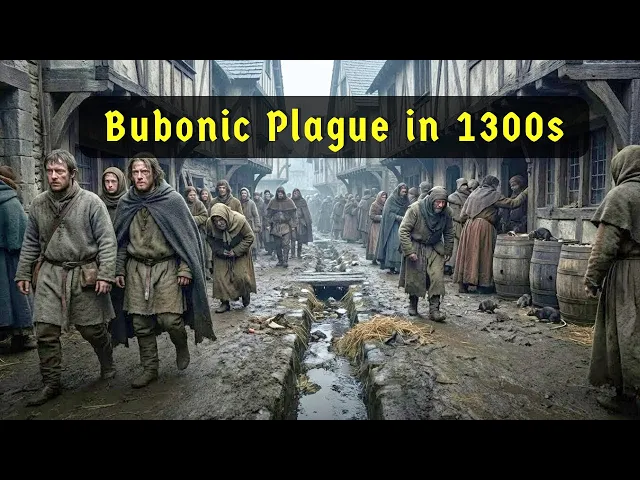
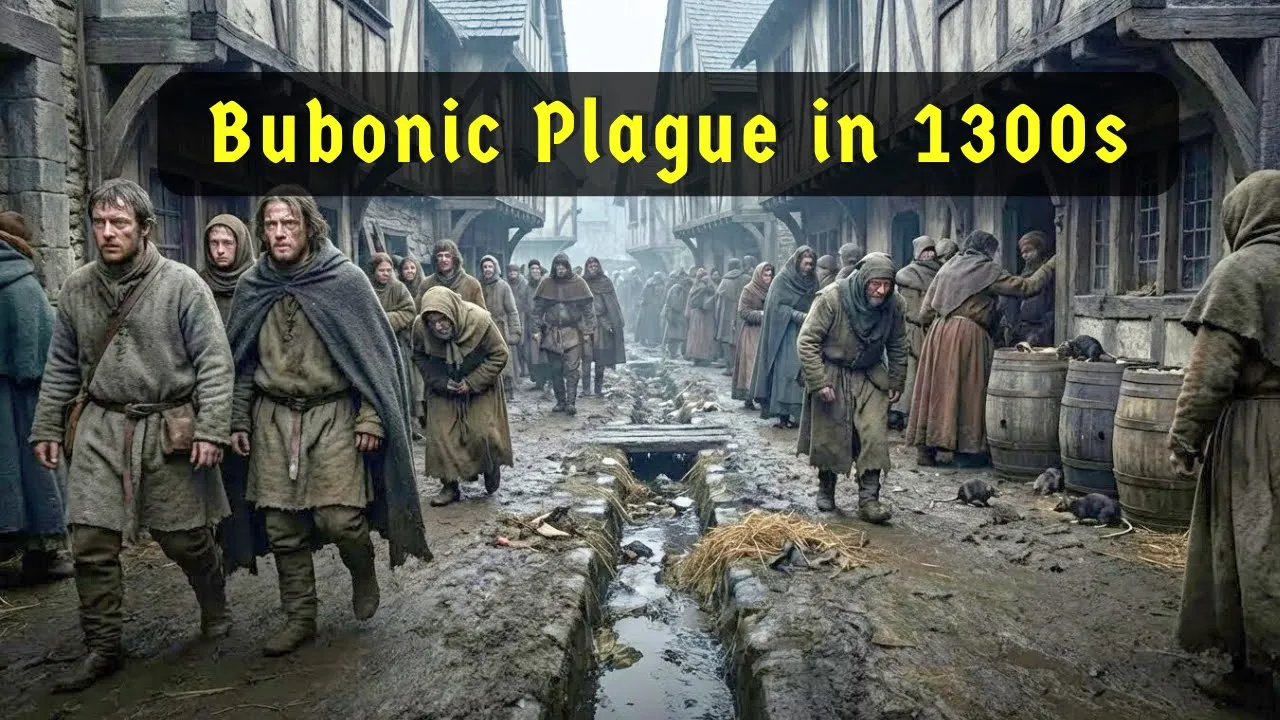
Cities like Paris, Florence, London, and Barcelona were walled enclosures of winding, narrow alleys, multi-story timber houses that blocked out the sun, and open sewers running down the center of streets. They were incredibly vibrant, rich places, but hygienically, they were tinderboxes waiting for a spark. When the plague hit a major metropolis, it didn't just kill people; it killed the city itself as a functioning organism.
We must understand the terror of facing this without modern science. The best minds of the 14th century—the doctors of the University of Paris—were baffled. Their framework was not germ theory, but the ancient Greek theory of humors and miasma.
They believed the air itself had been corrupted, perhaps by a specific planetary alignment of Saturn, Jupiter, and Mars in 1345 that released noxious vapors from the earth. Doctors advised people not to bathe, as it opened the pores to corrupted air. They burned aromatic woods like juniper and rosemary in street corners to combat the smell of death.
They bled patients already weakened by the disease. They lanced the buboes, which only spread the septicemic infection faster. Every rational attempt to stop the disease only seemed to feed it.
The realization that their best knowledge was useless created a profound psychological crisis. The Italian writer Giovanni Boccaccio, who witnessed the devastation of Florence—a city that lost perhaps 60% of its population—left us chilling accounts of the social collapse. The terror of contagion was so great that the most sacred bonds of humanity were severed.
Boccaccio wrote of fathers abandoning sons, wives leaving husbands to die alone in their beds. The sick were walled up in their homes. The intricate machinery of medieval life stopped.
Laws were ignored because there were no magistrates to enforce them. Courts closed. Bakeries stopped baking.
The sounds of a busy city—carts, shouting merchants, construction—were replaced by a heavy, oppressive silence, broken only by the constant tolling of church bells, until the ringers themselves died, or authorities banned the bells to stop spreading panic. The dead piled up faster than they could be buried. The consecrated ground of churchyards became full, leading to the digging of massive plague pits—trenches where bodies were stacked like cordwood, layer upon layer, covered with a thin dusting of soil.
In the 14th century, there was no distinction between the physical world and the spiritual world. An event of this magnitude could only be interpreted as direct divine chastisement—God punishing humanity for its manifold sins of greed, pride, and corruption. The Church, the bedrock of medieval life, faced an impossible test.
People flocked to cathedrals, praying for deliverance, massing together in processions that only served to spread the respiratory, pneumonic form of the plague faster. When prayers failed, and priests died just as quickly as sinners, a desperate, radical piety emerged. The Flagellant movement swept across Northern Europe.
Bands of hundreds of men, dressed in identical robes, marched from town to town. Twice a day, in the public square, they would strip to the waist and whip themselves with leather scourges tipped with iron spikes, drawing blood in a public display of penance, hoping to take the sins of the world onto their own flesh and appease God's wrath. They were a terrifying sight, bringing religious hysteria wherever they went.
But as the death toll mounted, the need for a tangible scapegoat grew darker. If God was not listening, perhaps the Devil was at work. A horrific conspiracy theory took root, particularly in the Holy Roman Empire and parts of Spain: that the Jewish communities were poisoning the wells of Christendom to wipe out the faithful.
Despite official condemnations of these theories by Pope Clement VI—who pointed out that Jews were dying of the plague just as quickly as Christians—the mob mentality took over. Fueled by centuries of anti-Semitism and the desperate need to blame someone, horrific pogroms erupted. Entire communities in cities like Strasbourg, Mainz, and Cologne were rounded up and burned alive in wooden houses or town squares.
The Black Death unleashed not just biological horror, but the darkest aspects of human nature. It is a mistake to think of the plague as purely an urban phenomenon. While cities were the epicenters, 90% of medieval Europe's population lived in the countryside.
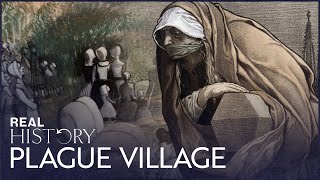
The plague traveled there too, carried by refugees fleeing the cities or itinerant peddlers. The devastation in rural areas was slower, but perhaps more profound in its long-term impact. Thousands of small villages, whose names are now lost to history, were completely wiped out.
The manorial system, which relied on a steady supply of peasant labor to work the lord's land, ground to a halt. Contemporary chronicles describe eerie rural scenes: harvests rotting in the fields with no one to bring them in. Herds of sheep and cows wandering aimlessly through the landscape, eventually turning feral or dying of neglect because all the shepherds were dead.
Wolves, emboldened by the lack of human presence, began encroaching closer to the remaining settlements. The carefully managed medieval landscape was being reclaimed by the wilderness. By 1350, the plague had reached the northern limits of the continent—Scotland, Scandinavia, and even the small settlements of Greenland, dealing a death blow to the Norse colonies there.
It had burned through the entire continent, from the warm Mediterranean to the frozen North. By 1351, the initial, catastrophic wave of the Black Death began to burn itself out. The bacterium had simply run out of easily accessible victims.
The fog began to lift, revealing a continent transformed. The exact death toll will never be known, but modern historians estimate that between 75 and 200 million people died across Eurasia and North Africa. In Europe alone, perhaps 50% of the population perished in less than five years.
The survivors emerged into a world that looked the same, but was fundamentally different. The immediate aftermath was economic chaos and severe inflation, but then something remarkable happened. The massive depopulation created a severe labor shortage.
For the first time in centuries, the peasant held the power. Lords, desperate to have their land worked, had to offer higher wages and better conditions. The rigid structures of serfdom cracked and, in many places, eventually broke.
The "Golden Age of the Laborer" had begun, born from ashes. The psychological scars ran deep. Art became obsessed with death.
The Danse Macabre—the Dance of Death—became a popular motif, showing skeletons dancing kings, popes, and peasants alike to the grave, a stark reminder that death was the ultimate equalizer. The Black Death was the greatest trauma Western civilization ever endured. It shattered the optimism of the High Middle Ages and proved the fragility of human systems against the power of nature.
The society that rebuilt itself was more cynical, more questioning, and forced to adapt. In the end, the path of death we have traced today cleared the ground for the slow, painful emergence of the modern world. For centuries, the Black Death was treated as a distant medieval nightmare.
But empty streets, locked homes, fear of the air itself. . .
Does that really sound like ancient history? Or does it feel uncomfortably familiar? The plague was a test of civilization.
And tests have a way of repeating. Anyways… I’m Tim. .
. watching the past so we can understand the present. And together, we keep history reborn.
I’ll see you in the next era.