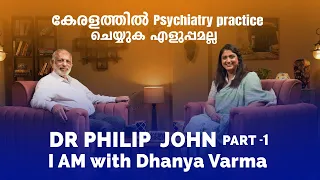
If you ask what's physical health. . .
Everybody will tell you that it is. . .
the absence of illness. But, if you ask what's mental health. .
. Ask even 100 people you won't get a consensus on that. Because not many will say or talk about it in a simplified manner.
Why social media usage is not taught to students properly in-school curriculum is the most crucial thing here. People think that consulting a psychologist or counsellor is to treat mental illness. Counselling is not a process where mental illness is healed completely.
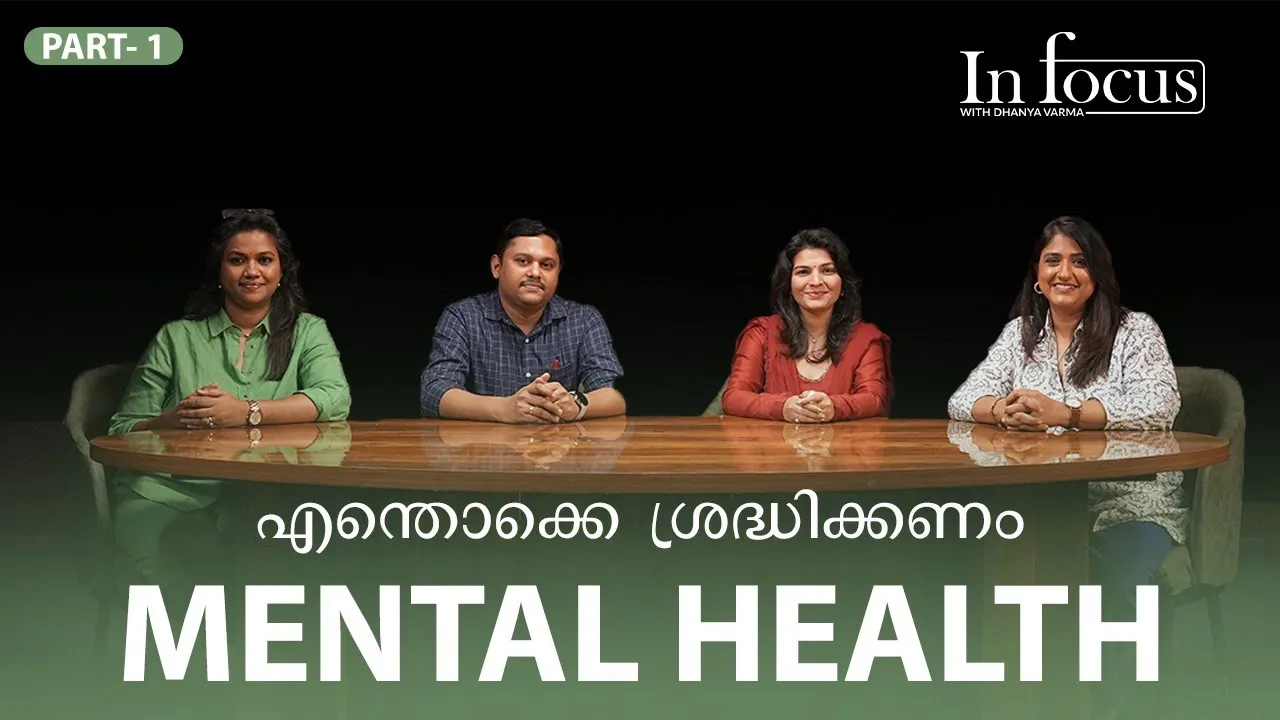
Hello and welcome everybody to In Focus I've been getting many requests from all of you for some time now. That you want a special series about mental health. And it is such a vast subject.
We can't contain it within 2-3 episodes. We can do it only as a series. So, I've planned this special mental health series for all of you.
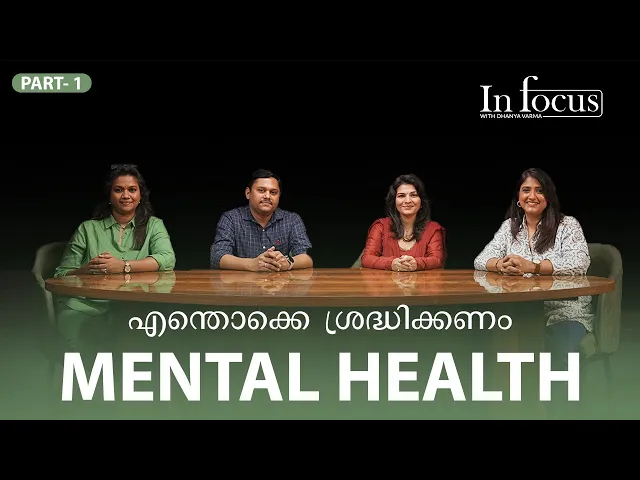
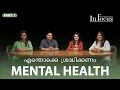
And this is the first introductory episode. I have requested and they have graciously obliged to be a part of this conversation. They are very busy professionals.
And they have found the time to be here with us. For all of us out here including myself. So, thank you first of all.
Let me introduce our panellist to you right away. First of all, I think I should invite and welcome Zaileshia to our show. Because she's a face we are familiar with as a prominent judge in many reality shows.
But I'm glad that she has found the time to be with us on this panel. She's a clinical psychologist and she's a psychotherapist who has worked for more than 20 years. And she's the founder and head of Mitra Clinic, the talk space.
Thank you so much Zaileisha for being a part. I know you guys are very busy but you made the time, thank you! Next, we have Ron Mathew Kuruvilla here.
And he's a rehabilitation psychologist. I talked about this for almost 30 minutes with Ron. ''What is this rehabilitation psychology?
" He is the head of the department of clinical and rehabilitation psychology at St. Gregorios Medical Mission Hospital, Parumala Last but not least, we have Rose Mary Antony with us. She's a consultant psychologist.
She's the founder and managing director of Yellow Cloud. Thank you so much for being a part. Currently, we are living in a social media era.
No matter which social media we go to, first, we can see a lot of conversations. . .
motivational and psychology-related content being generated. As you are working on this area, let me ask you. .
. How do you see this? We are frequently bombarded with information regarding mental health on social media without citing a source.
How do you feel about it and its influence on young people especially? Anybody can take the answer. I think it's excellent that everybody is talking about it.
But. . .
We need to develop the ability to filter out guidelines, expertise, and appropriateness as viewers. People are talking about it more off-late, because people are identifying more. And they want to address it.
In that way, it's excellent. People have the freedom to express their opinions about anything. But, we should consider the source's expertise and experience.
When we put out content on social media. . .
today, everyone will get content and information from social media. Long back, even if people are interested to know or talk about mental health people didn't express it. Nowadays, many people are healed through readings and videos.
Even though there are many negative sides to social media. As a psychologist, what I felt is. .
. it has managed to create a big impact on mental health awareness. Many people ask ''Why didn't you put out the video?
' Or some videos are missing. ''I could realize such things through that video. '' ''I understood that I had such symptoms.
'' ''I have identified. . .
'' I need healing for this. '' I think there's a big impact we can make on people through social media. And Ron, you work a lot with adults and young children.
What kind of feedback do you get from them? Importantly, from a child's viewpoint parents talk about social media very negatively. Like, children are negatively impacted through social media.
But something we can't deny is that. . .
technology is going up day by day. . .
the children's generation is entirely different from ours. We shouldn't blindly deny technology or social media. But we have to guide them.
Also. . .
Behaviour is something that's learned. So, we should make sure that children are learning it properly. Why social media usage is not taught to students properly in school curriculum is the most crucial thing here.
If we go to a shop, we will find things that we want and things we don't want. Same as that, we have things we want and don't want on social media. Among that, what we have to choose and what we shouldn't, that we have to teach the children.
Zaleshia, you have more than 20 years of experience. In that, what's the biggest change you have seen in your clients? People have become more receptive.
Receptive. Indeed, it's a significant change. In the first year of my practice, I would spend half an hour just to convince them that they have a problem, even though they came for help.
But it's not like that now. Now, people read about it and discuss it. Earlier, discussing it was also a stigma and shame.
Now, they are coming to us after already discussing it and identifying things with their friends and family. It's a big transformation, and it saves a lot of time and energy. When they are more receptive, then you can help them better.
For Rose, she worked a long time in Bangalore and then came to Kerala, so that difference is also there. It might be a big change. Is there any such change you see?
In India, especially Kerala, Mental health issues are getting considered as a person's failure. People try to run away from that and hide it. But a few realize it and think it needs external support.
Mostly, people think others go to a counsellor or psychologist to treat a mental disorder. Counselling is never a complete illness treatment and healing process. When a common man goes to a psychologist and opens up about his problems.
The psychologist has to follow 5 steps. One is to identify the problem. The second one is finding solutions for it.
Third, checking the positive and negative sides of each solution. So, a psychologist is a companion who helps to figure out the best solution and accompanies them until they achieve it. All individuals have the potential to solve any problem.
What people think is, "Do I need external support to solve my problem? " If we have diarrhoea for 3-4 days, we will seek medical help. But when mentally stuck somewhere, they think, "Oh, it's my fault.
" They realize they need help only when it gets worse. That's what I wanted to ask specifically because, in our family, we can see people saying that they've sleep issues. Or feel physically tired.
We hear such generic statements, and we also realize it's not related to something physical. But still, they won't show interest in seeing a doctor. But you're figuring out that it's something that may need to consult a psychiatrist or psychologist based on the symptoms.
As a person, how can I figure out that this is something that needs to be taken to a psychologist or psychiatrist? The day it affects our daily life, that moment we have to seek medical help. Often when we talk about these psychological issues through magazines and shows, People feel that yes, they have those problems.
Even we felt that during study days, "Do we have OCD? " But at the point where it affects daily life, there we have to seek help. I think we have to start with the definition of mental health.
In the case of physical health, everyone will say it's the absence of illness. But in the case of mental health, if you ask 100 people, you won't get a consensus on it. Because people normally won't talk about it in a simplified way.
Mental health is very simple. "Peace with oneself and harmony with others. " We are at peace, and we give others peace.
These two indexes we have to check up on. So if our peace gets disturbed, as Ron said, our daily functions will be affected. It causes problems for others as well.
Dhanya asked, "How can I identify that I need help? " The thing is, you can't always identify it yourself because there are two types. In one, you have insight.
On the other, you don't have insight; others have to tell you. - Insight? - The ability to look inwards There are illnesses in psychiatry or clinical psychology where insight will help, and not identifying it can be a challenge.
So not everyone could identify it themselves. So, we have to clarify starting from those myths. Oh, it's a very complicated area, even to know if we have insight or not.
There are six grades of insight. Six grades of insights too. I guess it needs a specific episode for it.
It's an ocean. If you're dedicating seriously, it is wonderful. Even if they couldn't get that insight, what she said is absolutely right.
A normal person can get that, like if our appetite changes or sleeping cycle gets disturbed. Or we couldn't concentrate on anything or make decisions properly, and it all affects our day-to-day life. So, if we could identify that we have these five symptoms and feel stuck somewhere, Then we can go for professional help.
It's not easy for everyone to realize that they have a mental health issue. And revealing themselves that they have a problem is really challenging. It's indeed very difficult.
If it disturbs my daily basic routine, then definitely I need help. So, if a person could realize that, then they will understand that they need mental health support too. If we look at it from the perspective of kids, it's really tricky and ambiguous for them.
Ron, please tell me about that also. And another question I want to raise to all of you is, It's not necessary for it to be a pronounced matter. But even we couldn't realize that this or that person is experiencing anxiety or suffering from depression.
So, how do we tackle it when somebody close to you has depression and doesn't have the insight to figure it out themselves? Biopsychosocial factors are indeed crucial in the treatment of these issues. When we ignore these social factors, It means when somebody from the family is going through these situations, how does social support come into play?
In some situations, family members may see it as, "Why is this person like this? Not behaving properly? " "Why doesn't he take care of himself properly?
" - They respond like that sometimes. - They blame them. Especially when spouses have these situations, like in postpartum depression, it goes unidentified.
Without realizing that it's not their fault, it goes to extreme blaming. So, in that time, the society around them, especially family, has to identify it and provide necessary help. Then only we can encourage them to adopt a help-seeking mentality.
And if a mental health patient is always in a toxic environment, it could also be a contributing factor. Then it won't have a solution. So, as a family unit, family has a very, very important role to play in the mental health of an individual.
Tell me some experiences where you have encountered issues related to insight. Cultivating insight in a person who doesn't have it can be challenging. Yes, there are insight-oriented psychotherapies designed to create insight.
In severe disorders like psychotic conditions, creating insight can indeed be challenging. Please break that point. Psychotic means insisting on believing things that are illogical, even when someone explains them logically.
They are creating their own world, so according to them, that world is the truth. In those situations, we will need medical support and treatment. Ultimately, it's the brain and all the neurochemicals at play.
The behavior is also just a wiring and interaction of two neurons. "Practice makes a man perfect. " When we do something constantly, it becomes a skill for us.
It's because those neurons are consistently working on it. It's ultimately the brain. The brain is a wonderful organ, and it's neuroplastic.
You can teach it anything. "Neuroplastic means we can train it anything? " Yes, we aren't valuing enough such a supportive organ.
Coming back to family, Toxic environment means it includes experiences and these biological factors. There are many longitudinal studies on it, meaning studies conducted over a longer period. It's all about why mental issues repeat for the same person.
And a major finding in that is if a person's environment has high EE (Expressed Emotion), It's Expressed Emotion (EE). If Expressed Emotion (EE) is present in a toxic environment, then it can create problems, maintain problems, and make sure that it won't improve. Three things are there in Expressed Emotion (EE).
One is critical comments, a kind of constant critique. The second is pure blaming, like "it happened because you did this or that. " It's just an assumption and wouldn't necessarily be true.
The third is hostility, which includes physical abuse. If these three are present in your environment, then it will be really very difficult. For example, if I clean this cup, it's useful only if I keep it in a clean place.
If I'm keeping it back in an unhygienic place, then there is no point in that. So, that's the role of family. Family is so powerful.
And they can do wonders, at least for the next generation. Yeah, Rosy wanna add something "As we talked about environment and all," Last day we gave medications and all to a borderline disorder patient, and they became stable eventually. Then the doctor asked him, "but your surroundings haven't changed.
" "Your relationship hasn't changed. You still keep a connection with such people. How will you set boundaries with them?
" Then the doctor called me and said, "Now we have to focus on how to convince the client about it. " It's challenging because I can't make decisions for her. They have to change by their decision.
So, even if a person takes treatment themselves, and becomes emotionally stable, but if still, their environment is not changing, then it becomes a loop. They will be again in that vicious cycle. Another episode, another treatment, it repeats.
For kids, it will have a huge impact. He said, "Tell me your observations or experiences. " When kids grow, this loop will be there from the parent's side.
When cases come to us, parents always accuse children. So, I never sit kids inside with parents because if they listen, they won't even cooperate with me. Because when they get blamed, they will think I'm also part of it.
So we should educate parents that the kids are new to this world. They are getting dragged into these behaviors due to the problems of the environment and parents. So the sole responsibility is of the family.
It will take a minimum of one hour to make them understand this. So what we teach them and the environment we keep them in all decide how healthy their personality will be in later stages. It's very important, and we have to educate them about it properly.
Parents might not be concerned about it now, and they might be seeking counseling after 14-15 years. And blames them, "he is doing that, this, obsession for mobile, throwing phone. .
. . " Many problems like this and not obedient.
But this problem might have started in the age range of 3-7 years. So proper management should have been done at that time, and it needs to be done within the family. That means the management is with the parents.
As a person, if I have insight that I have a mental health issue, I'm confused, I don't know where I have to go. Should I go to a psychiatrist? Or a clinical psychologist?
Or a psychotherapist psychologist? Or should I go to life coaches? Is there a difference between therapists, counselors, and psychologists?
There are many terminologies, and I don't know whom I should consult. Would you be able to give me some insight on it? "This thought is not there that these kids are the growing assets of society.
" We have to develop the new thought process. So in my work, I think if I mould the kids who are the future adults. Then they will be capable to handle the issues in the future.
These years helped me develop a mentality of listening to our kids non-judgmentally. It wasn't there from day 1. It helped me evolve.
Every client has helped me personally. People think that when they come and talk to us, a miraculous change happens that day only. But we never take decisions for others or solve the problem in a day.
It's not possible for anyone.