Have you ever thought about the common points between a bridge, a highway and a coffee warehouse? Please stay where you are, as we'll be discovering a new world of fibres revolutionising construction! STRENGTH LIGHTNESS TOUGHNESS LONGEVITY THE EXTRAORDINARY WORLD OF FIBRE Fatima and Artur is a couple who take every chance they get to go out!
He loves going to football games. Every weekend he goes to a big derby! Now, Fatima prefers parks and public spaces, and loves taking pictures, whether it's the greenest tree, or an insect, or even the feathers of the most beautiful peacock in the park.
They have their passion for the buildings and engineering of the great cities in common! A Sunday stroll cannot start without a visit to Drgao Stadium. Here, our eyes take us to the boulevard accessing it.
Torn and built for the Euro 2004, this infrastructure is an upgrade to this area of the Antas. Over the past eight years, thousands of cars and buses must have passed by both sides of the road. If we pay attention to the roadway, we'll see an almost new road, the reason for this is the performance of many metres of landscape fabric.
Now, we use more landscape fabric in construction than 20 or 30 years ago due to the features and improvement intended for this landscape fabric. Its main task is to protect, separate, and drain water, all related to the length of useful life of the construction itself, whether it's a road, an industrial park, or a building. Without landscape fabric, the weight of circulating vehicles plus rain and underground waters will contribute to the road's erosion.
The many layers of gravel and inanimate elements end up mixing, hence, accelerating the ground's strain leading to holes on the pavement. With landscape fabric, the several layers are separated and pressure is uniformly distributed through the structure. Water is drained by the landscape fabric, hence ensuring dimensional stability on the many ground layers.
The principle seems to be understood. Now, we need to figure out how we got here. Depending on the level of landscape fabric performance, we will use one of two different fibres.
The choice for the areas where most wear may take place due to cars, or rain, or the ground itself, is virgin polypropylene. When the product is required for structures without that responsibility such as gutters, industrial parks, or simple parks, then we can use a landscape fabric with a lower mechanical resistance made from recycled polyester polymer. There is the advantage of it being cheaper making the whole work cheaper.
The raw matter arrives at the factory in 661 lbs bundles. It doesn't seem like it at first sight, but each block has millions of polyester fibres cut into 3 inch long filaments. The polyester is introduced into opening scales, where a vertical conveyor with many ridge caps will unbundle and expand it.
The material is then weighed and the proper quantity is entered for the following stage. The loader is 22 ft high equipment that expands and distributes fibre until it is entered into the Card. At this stage, fibres go through a series of rolls with a rough texture.
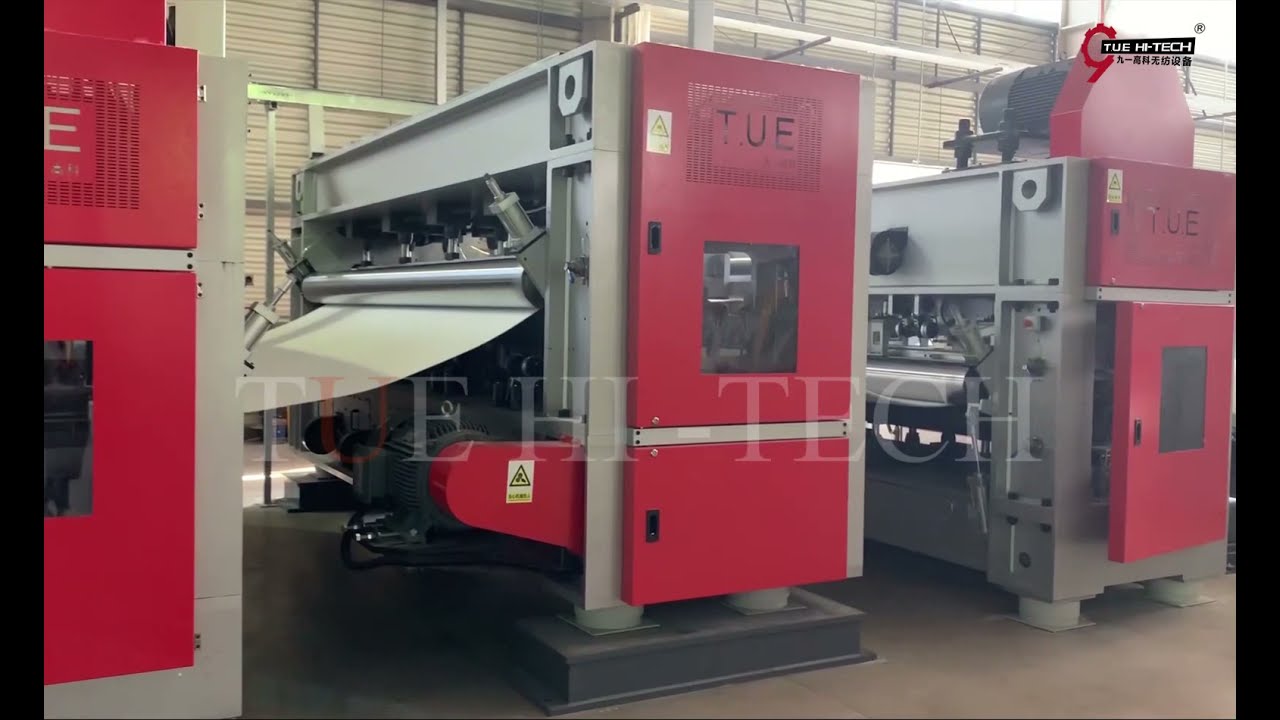
On the way out it looks like a mat, or as a fabric, which is not as stable as it should be to keep from ripping. In order to overcome this issue, the folder will overlap many layers of mat forming the proper thickness to be worked on by the needle punching lines A critical point reached in the production of landscape fabric. Needle punching lines intend to intertwine each filament and fibre, hence providing the product with the required resistance.
It is also an entirely mechanic process where particular needles with particular characteristics are used. These needles will intertwine filaments or fibres with each other in order to provide them with the highest number of contact points. Right now, the product is very close to the end landscape fabric result.
But it still goes through a calender with an adjusted temperature, which literally irons the landscape fabric, making it more stable and reducing its thickness as to ease transportation. Once 246 to 410 ft per roll has been rolled, the landscape fabric is ready. The land fabric is unrolled, usually on a highway, after land levelling.
The thickest crushed stone is placed on top of those landscape fabric rolls. More landscape fabric will be placed on top, and then a thinner stone. And only then will the tar be placed.
Artur and Fatima eat breakfast in Santa Catarina, Oporto's downtown. And they go to Majestic! It's a part of the city's history, which is a point of visit for tourists.
Here, Artur decides on a croissant and a healthy orange juice. Now, Fatima decides to wake up with a good coffee and a toast. And this isn't just any cup of coffee.
We could almost say that it's a 'cup with fibre'! The coffee we're talking about is made in this factory, in Campo Maior. The recent increase in demand had the brand increase their production.
But this need also brought a challenge with it. The warehouse needed to increase its capacity. This could be solved by building a new pavilion.
But that would have taken longer and been more expensive. That's why a more ingenious and original solution was chosen. The building's structure was fortified with carbon fibre laminates!
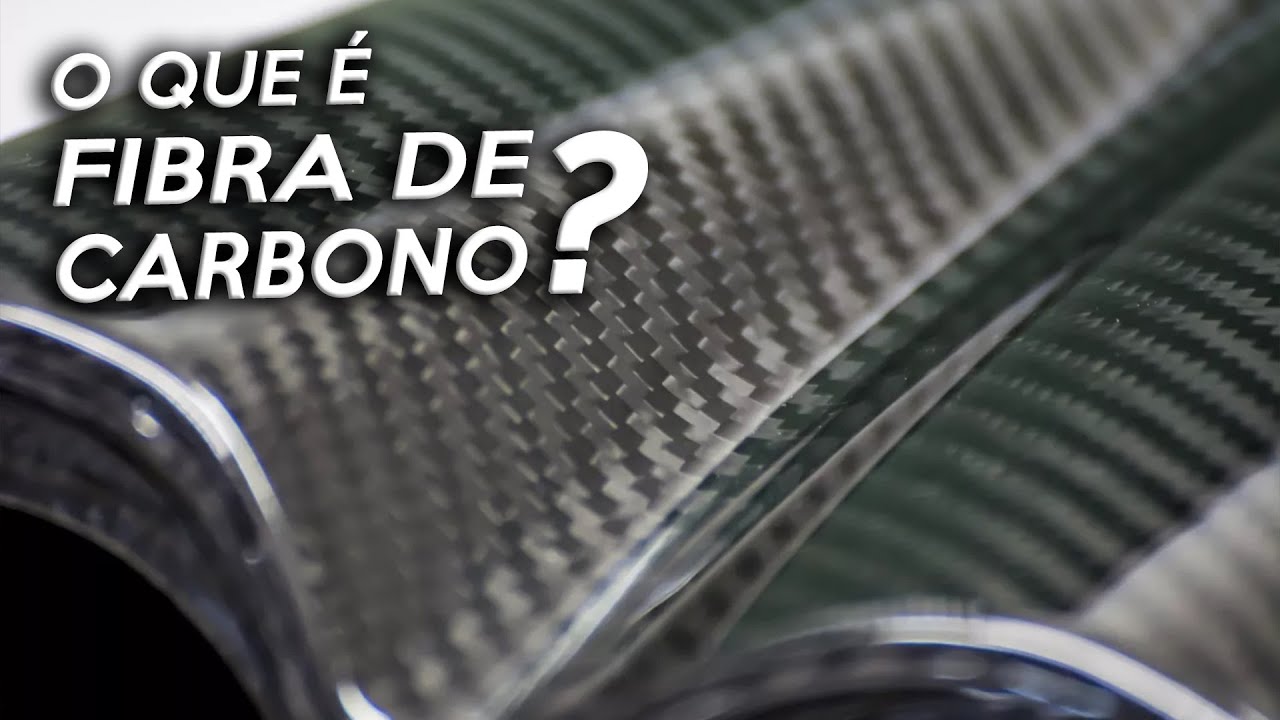
We have the fibre, on one hand, which stands out in the laminate. It provides it with resistance and mechanical characteristics. On the other hand, we have the resin, which will agglutinate all fibres and enable them to function as a whole, not just a single material.
So, these two important components form a compound. They provide it with high resistance and make it long-lasting. Production will begin in the shell.
A room with controlled temperature and environment. Carbon fire coils in roving are installed in a supporting structure, from where the several filaments come out originating in laminates. These filaments, the quantity of which is based on the type of laminate being produced, are horizontally organised and dipped into resin.
Then, the fibres will go through pressing equipment, which will remove any excess of resin and prepare them for the mould. The most delicate moment of the entire process. This stage combines temperature variables, pressure, pultrosion speed, and optimal conditions for the perfect curing.
There's a basic resin that will provide the resin with resistance. Then there's reagents making that resin harder at a certain temperature. It's all related with the temperature inside the mould and production speed.
There are additives improving the behaviour of the laminate in the mould so there's no sticking. I would say it's like internal wax. There are also additives that improve the way the resin covers the fibre.
These variables are the secret to the laminates produced by this company. A material with a completely different roughness and look leaves the mould. The laminate is now off to a reeling device at a speed of 1ft per minute.
In a work to be reinforced, in Ponte de Lima, critical areas were identified in need of structure reinforcement. The laminate is cut to the proper size and glued to the structure with epoxy. You can't stick the resin and laminate to a humid surface as they won't stay.
So, the surface must be dry. There's a series of factors limiting and guiding this application, so that it's a success at all times. After the surface is treated, the glue is very simple.
We only need to control how much resin is between the laminate and concrete. And that's also very important. From the moment the laminate is stuck to the bridge, it'll assume the same voltages and loading as the structure.
There will be 13123 feet of laminate on the bridge. Now, the Delta warehouses were reinforced with 6561 feet, which is enough to double the loading capacity of the warehouse. In both cases, these structural upgrades were only possible thanks to an intelligent compound.
Artur was never curious about the act of filling his car with fuel. Although he understands the fossil-based fuel, he never took the time to think about the process that takes this liquid from the place of extraction to the vehicle he drives every day. But it's worth expanding the plan to the North-American coast, where oil companies work 24/7 to extract barrels of black oil in order to meet the needs of the world's carbon economy.
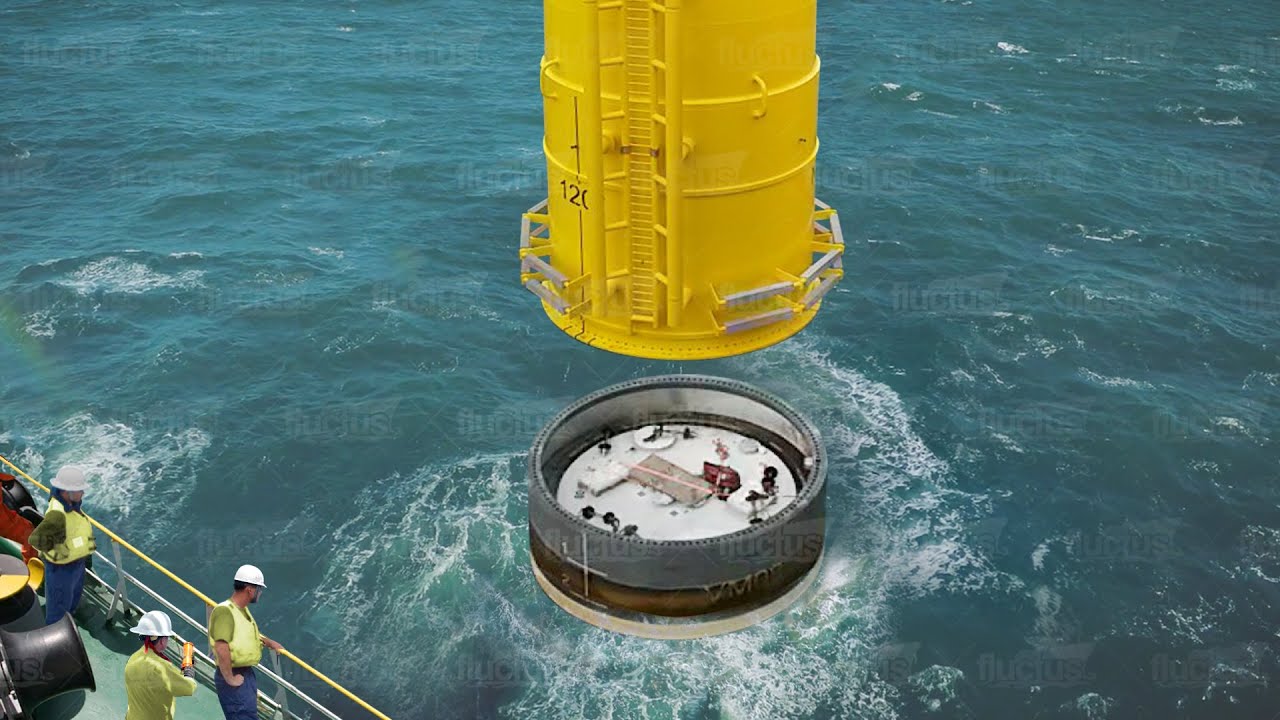
These man-made structures are, many times, floating cities based on areas of great maritime instability. Due to 12 mooring cords, chains, and anchors, the platform doesn't move. Polyester does not suffer corrosion, for example.
Polyester has some elasticity, which enables the platform to move a little and absorb its efforts due to a storm, for example, but mainly due to weight. Approximately seven or eight times lighter than steel, polyester lets platforms stay in deeper waters such as 0. 6 or 1.
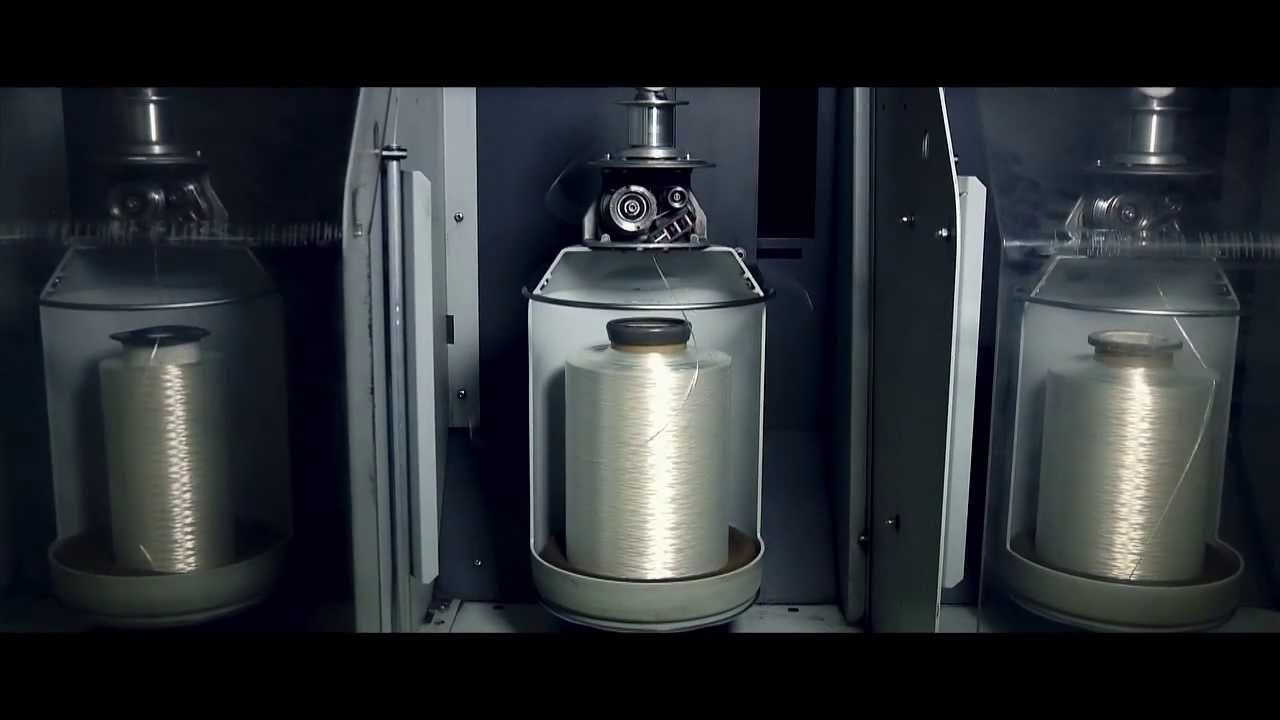
2 miles At Lankhorst, raw material is polyester fibre with Marine Finish treatment. Coils are installed in a warp creel, where 30 to 40 wires are introduced resulting in a twisting process leading to spinning. The next stage is the torsion of a chord with 50 spinning wires installed which are properly intertwined, hence resulting in a chord.
Here torsion takes place in two different ways: S or Z. To make a sub-cable you must combine eight cord coils in a braiding machine. Four of the cords have been braided as an S, while the others as a Z.
The coils go through a synchronised dance inside this machine. The end product is a sub-cable that is 2 inches thick and 4921 feet long. Four cords with a type of torsion, and the other four with another type will make for a balanced sub-cable.
That is, when tension is placed on a cable, it won't spin. As it's being stretched, it'll stay perfectly in line. That's pretty important, so that all the cables together on the platform won't cause strange movements on that same platform.
The final braiding machine is next. Between 12 and 18 sub-cables are joined in parallel with a braided cover over them, which will protect the cables. Deep down, this is great engineering work, where the united fibres are binding!
While the multifilament that arrives at the factory can take 44 lbs, a sub-cable is about 100 to 200 tons, and the final cable is 1000,1500, or even 2000 tons. The finishing stage is the splice. A grip will be manually sewn, which will connect to the oil platform.
This must be perfectly sewn, otherwise it will jeopardise the cable's performance, and even go as far as breaking it. Firstly we'll be placing the anchor and the chain. When it's time to place the cable, this grip will be placed on what we call a thimble, which is a type of roller around which the cable goes.
The roller has a hole for a shackle that will fit into the chain. All this then goes into the sea. Each cable has been designed in terms of a high performance.
Twenty-five-year intervals are expected, although the properties of this product allow for ten times more, that is, 250 years. In this case, the coil has been completed and is now ready to be sent to an oil platform. The red and green finishes aren't random.
This type of cable has the code name of 'Gama 98' in honour of Vasco da Gama having arrived in India 500 years before. You cannot be left indifferent to this bridge. And neither can Fatima.
She has lost count of the times she has passed it by foot or by tram, in order to have an incredible view over the river Douro. Over 120 years working non-stop, this bridge has seen carriages, cars, motorbikes, and buses. When it was decided that the tram would reach Gaia by the upper deck, the bridge had to go through reinforcement and deep recovery works.
And the technical specifications included a very particular category: structural monitoring. If I install a monitoring system on a bridge or a structure, or a tunnel, I'm able to detect anomalies and structural damages early on, and monitor their evolution. This will enable me to optimise maintenance.
In this case, a fibre optic sensor system was installed, which even the most focused photographer cannot see. This system monitors the tension in different points of the infrastructure Such data enables civil engineers to assess the bridge's health in time. This solution was developed by Fibersensing.
A Portuguese fibre optic company, like that providing us with broadband, which creates Bragg sensor networks. Fibre optic sensors have been replacing previously used sensors, which is what happens - ultimately - with competitive fibre optic sensors. After treatment with liquid hydrogen, fibre optic becomes photosensitive.
Then a small part of the coating is removed, so that the fibre may be inserted into the grating machine. The exposed area is then plagued by a laser beam, hence creating a sensor. The laser actually creates a microstructure in the fibre, hence changing its refractive properties.
After this, the light running through the fibre will reach the sensor and reflect back a certain frequency of the visible spectrum. This light that is reflected back has a well-established relationship with that pattern, that microstructure. If I change that pattern in any way, I'll change the reflected spectrum.
If I want to go overboard, I'll say 'I'm having a red retro-reflection'. Now, I'll change that pattern by stretching or heating the fibre and it'll change from red to green. From the analysis of changes in the reflected light, we extrapolate variables like temperature or deformations.
The exposed area of the fibre must be covered again with a protective layer. Connectors may even be installed at the ends, in some cases, which will be used as an interface between the fibre and hardware processing the collected data. These small variations in the wavelength are transformed either by the construction or the architecture of our measuring units, into intensity or time variations.
This is transformed into electric signals, which are then scanned. After the electric signals have been scanned, they are treated by software. Fibersensing technology is genuinely Portuguese.
It is standing out in the rest of the world as well as the national market. With ongoing projects in thriving markets, such as Angola and Brazil, The Bragg sensors produced by this company are already monitoring iconic works like the Brooklyn Bridge, in New York. Back by the Douro, Fatima convinces her husband to try something new.
There is a cable car on the Gaia Docks with a privileged view over Oporto. But not everything you see is that nice. Some buildings have been abandoned and degraded throughout the years.
Their closeness to the sea and the river doesn't help either. Besides a particularly rainy environment in the winter, this entire urban mesh faces fog and humidity, which lead to the degraded concrete and corrosion of steel of these buildings. Rehabilitation is urgent.
And we also need to find more resistant solutions for construction. The Labs of Minho University may have a possible answer. Here, the great improvement is a fibre compound with such characteristics that would turn steel green with envy.
We have developed a rod that cannot be corroded, since its material base is made of fibres and polymer on the resin. So, they're insensitive to chloride or carbonation. There's also a key factor.
While steel has a density of 7. 9 g per cm3, while this polyester resin has between 1. 3 and 2.
9 g per cm3. This solution is produced using a changed horizontal braiding machine. The first step is to install several carbon fibre and fibre glass coils, both of which will be the foundation to this rod.
The fibres are dipped into a special resin. At the same time, 38 rolls of blue polyester release filaments, which are braided around the impregnated fibre glass and carbon. This procedure is of particular importance.
Besides protecting the foundation of the rod, this polyester coating also provides a rough finishing, which will later serve as concrete interface. The rod is pulled inside a greenhouse, where it is cured. In the end, it'll show very different properties, with a roughness that is close to steel.
When we combine fibre with mechanic properties like carbon with fibre with lower properties like glass, or even natural fibre, we are able to create or design the rod’s own behaviour based on the necessity of the market. But these are not all the advantages of this technology. Carbon is a fibre that is a highly electric conductor, and these piezo-resistant properties can turn it into a sensor.
In order to test this theory, a small rod is placed in a machine, which does a little flexion experiment. The ends are connected to a multimeter that assesses resistance variations, while the computer shows a graph with the applied voltage by the machine. We can directly correlate the electric resistance variations and the deformation variations to which the rod is being subjected.
The couple we know are still travelling. Artur and Fatima have reached their final destination: the music house. This work by Dutch architect Rem Koolhaas is already an icon in Oporto.
They have bought a ticket. In the access to the Suggia hall you realise the presence of concrete. It is practically everywhere.
Concrete is the quintessential raw material in construction works. And research is turning it into a more versatile and intelligent material. That's the case of self-compacting concrete enriched with fibres.
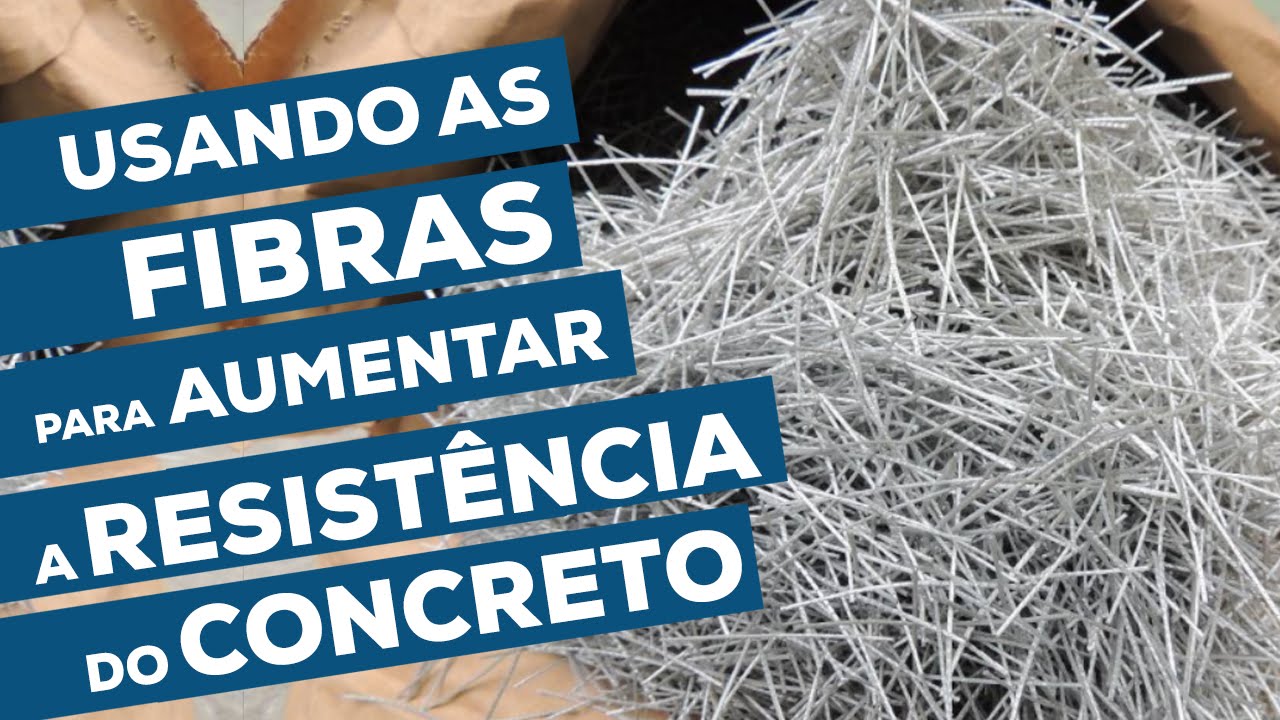
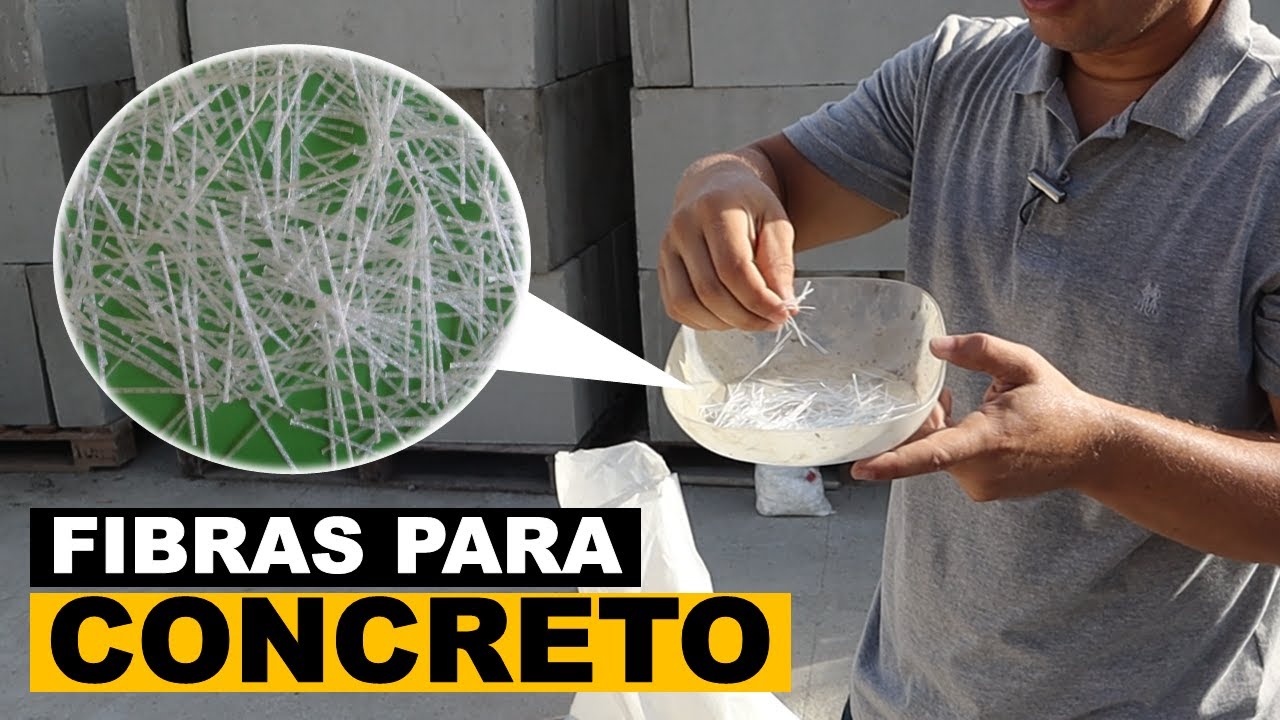
Three inert materials, crushed stone, medium sand, and fine sand, are placed in the concrete mixer, while in the Lab. A limestone filler is added; Then comes the concrete and a superplasticiser that increases the mixture's flow. After these have been properly mixed, a key ingredient is added: steel metal fibres of 1.
3 inches, with small deformations in the ends, which will later on serve as anchoring points for concrete. Fibre is mixed at the same time as these constituents are included, at the time flattening is taking place. It's like a more elegant and thinner element.
But it's actually a three-dimensional reinforcement. It is three-dimensionally distributed throughout the entire material. This solution exempts us from the task of reinforcing steel bars, which is one of the areas where you invest the most in labour, the steel fitter is the person who places, bends, and applies the steel.
By being self-compacting also exempts us from another task: vibration. We place this self-compacting concrete, which has already been mixed with the fibres, we wait for it to cure, and there's the solution in terms of structure. A solution that is 30% cheaper than a traditional construction.
Right now, there are projects with a promising application. Like this prototype of the Alumis bridge. A pedestrian bridge based on fibre glass profiles.
This model, built on a scale of 1 to 2, is intended to assess the structure's performance throughout time. We met another prototype at the Casais construction site. This is a fibre house built on a scale of 1 to 4.
If this experiment works, it'll be ground-breaking. Reinforced concrete with fibre should be applied on structures that take advantage of this three-dimensional reinforcement. What do the slabs supported on pillars that we saw mean?
It's a structure that is supported in many points, or, as we say in engineering, it's a statically undetermined structure. Self-compacting concrete has an excellent application. And why?
We can delete, or even eliminate the entire conventional frame. And we have the advantage of executing the structure as quickly as possible without the lasting issues related with corrosion. This goes very well with the low-cost housing solutions we are starting and building in international markets where Casais operates.
In all these scenarios, it has to do with this order of magnitude, prototype solutions, where we intend to then develop shuttering we're calling tunnel-type, which is a type of box, a rectangle, which may be removed and copied in terms of height and development, so that we may manufacture this kind of housing in two weeks. Right now, prototypes are being tested to the limit. This will enable setting rules for the project in the end.
And then, maybe in three years we'll be able to copy these structures anywhere in the world. Thanks to fibre, this couple were able to witness the resistance, solidity, and the resourcefulness of materials around us. From the roads, passing by factories, bridges, and even oil platforms, fibre is reinforcing structures and ensuring a good performance within a short amount of time.
They couldn't have spent a better afternoon. The concert has barely started for Fatima and Artur. However, our journey to the wonderful world of fibre will stop here for now.