Imagine standing on the equator 75,000 years ago. The sky above you should be blue, brilliant tropical blue. Instead, it's gray. Ash gray. The kind of gray that makes noon look like dusk. You don't know it yet, but 3,000 mi to the east, a mountain has just torn itself apart. Mount Tobber, in what will one day be called Somatra, has erupted with a force that defies comprehension. 2800 km of rock, ash, and superheated Gas have been hurled into the atmosphere. That's enough material to bury the entire United States under half an inch of volcanic debris. But
you're not in Somatra. You're in Africa. And still, the ash falls like snow. Within weeks, the sun becomes a pale ghost behind the thickening veil. Temperatures plummet. Plants wither. Animals starve. The cascade of collapse moves through the food chain with methodical cruelty. This volcanic winter will last not Weeks, not months, but years, perhaps a decade. And you, along with every other human being alive at this moment, face a simple equation. Adapt or disappear. Somehow, against odds that seem almost impossibly stacked, humans survived. not just survived, persisted, endured, eventually thrived. But here's what makes this story
truly remarkable. Toba wasn't unique. It wasn't even the worst of it. The question we're exploring tonight isn't simply how early humans Survived one catastrophic climate event. It's how they survived dozens. How they weathered ice ages that lasted a 100,000 years. How they adapted to droughts that turned grasslands into deserts. how they endured volcanic winters, rapid warming events, sea level changes, and ecosystem collapses that would have driven most species into extinction. The human journey through deep time is fundamentally a story about survival under pressure, about innovation born From desperation, about the strange and undeniable fact that
climate chaos, the very thing that should have erased us from existence, instead shaped us into the most adaptable species the planet has ever known. Let's establish some scale here because the numbers matter. They matter for perspective, for wonder, and for understanding just how improbable our existence really is. The genus Homo, our lineage, has been walking this planet for roughly 2 Million years. 2 million years of climate instability. The pleaene epoch, which encompasses most of this journey, wasn't a period of gentle gradual change. It was characterized by violent swings between glacial and interglacial periods. Ice ages
that locked up so much water in polar ice caps that sea levels dropped 400 ft. Warming periods so rapid that coastlines shifted by miles in a single human lifetime. 20 major glacial cycles, 20 times the ice advanced and retreated. Each cycle lasting roughly a 100,000 years driven by subtle changes in Earth's orbit and axial tilt. the Melankovich cycles that turned our planet into a climate laboratory of extremes. And through all of it, through every oscillation, every temperature swing, every ecosystem transformation, human ancestors not only survived but evolved. Homo erectus gave way to homohyensis. Neanderthalss emerged,
specialized for cold. Homo sapiens s appeared roughly 300,000 years ago in Africa carrying forward the accumulated adaptations of 2 million years of climate pressure. But here's the paradox. The beautiful and terrible paradox at the heart of human evolution. Climate instability didn't just threaten us. It forged us. Every ice age was a filter selecting for intelligence, cooperation, and behavioral flexibility. Every drought Demanded innovation in food acquisition. Every rapid change in environment rewarded those who could think abstractly, plan ahead, and teach their children new survival strategies. We are, in the most literal sense, the descendants of survivors.
Not just any survivors, the most adaptable survivors. The ones who looked at a frozen landscape and invented tailored clothing. The ones who faced food scarcity and developed long-distance Trade networks. The ones who stared into the ash darken sky after Tobber and somehow found a way forward. Tonight, we're taking a journey through deep time, a chronological exploration of the four major climate challenges that defined human evolution. This is designed as a sleepfriendly experience, steady pacing, a rhythm that carries you through the story without jarring interruptions. Think of it as a campfire tale told across millennia with
you Settling in for the long listen. We'll begin with the ice age crucible 2 million to 200,000 years ago when Homo erectus first mastered fire and began the great expansion out of Africa. We'll see how glacial cycles selected for larger brains, how cold weather pressure drove social cooperation, and how the simple act of controlling flame transformed human cognition itself. Then we'll confront the Toba catastrophe 75,000 years ago when the human Population may have crashed to just a few thousand individuals. We'll examine the genetic bottleneck, the archaeological mysteries, and the coastal refugeia where our ancestors clung
to existence by exploiting marine resources and developing symbolic thought under unimaginable pressure. Next comes the last glacial maximum 26,000 to 19,000 years ago. Earth at its coldest in a 100 millennia. We'll explore how humans responded not With retreat but with cultural fluoresence. Cave art, sophisticated tools, mammoth bone dwellings on the frozen steps. Innovation accelerating precisely when conditions were most severe. Finally, we'll examine the younger Dus 12,900 years ago when the warming world suddenly plunged back into ice age conditions for 1300 years. This abrupt climate reversal may have forced the single most important transformation in human
history. The invention of Agriculture, the birth of civilization itself emerging from climate crisis. Four challenges, four responses, four leaps in human capability. Each section reveals not just what happened, but why it mattered. How each adaptation built upon the last. how each crisis left its mark not only in our DNA but in our psychology, our social structures, our relationship with technology and each other. There's something deeply grounding about this story, especially Now. We live in an era of rapid climate change, of uncertainty about the future, of questions about human resilience. Looking back across 2 million years
offers perspective, not simple answers. History never provides those, but context, precedent, evidence of what humans are capable of when survival demands everything we have. Our ancestors face temperature swings they couldn't predict with science they didn't possess. They had no meteorology, No agriculture, no written knowledge to pass down through generations. What they had was observation, cooperation, the ability to teach and learn, the flexibility to change behavior when circumstances demanded it. And somehow, impossibly, it was enough. We carry their legacy in every cell. The genetic mutations that helped them tolerate cold, the brain structures that enabled complex
planning, the social instincts that made cooperation possible, the Cognitive flexibility that allowed behavioral innovation. But we also carry something less tangible. The inheritance of survival itself. The knowledge encoded in culture and consciousness that humans can endure. That we faced the worst this planet could throw at us and found ways through. So settle in, get comfortable. We're about to travel back through deep time to walk alongside our ancestors through ice and ash, through scarcity And transformation. We're going to explore not just how they survived, but what their survival cost, what it taught them, and what it
means for us, their distant descendants, still adapting, still surviving, still shaped by the climate pressures that made us human. The story begins 2 million years ago in Africa as the first members of our genus looked north toward lands locked in ice and made a decision that would change everything. But first, we Need to understand what they were walking into. Section one, the Ice Age Crucible. 2,200,000 years ago, the Pletosene epoch. Say that word slowly. Pletoine. It sounds ancient because it is 2.6 million years ago to about 11,700 years ago. A geological blink really in the
grand sweep of Earth's history. But for our story, it's everything. Because the plea scene was not one climate. It was dozens, hundreds perhaps, depending on how you count. Imagine Earth as a Pendulum swinging between two extremes, ice and warmth, glaciation and retreat. Every 100,000 years or so, sometimes shorter, sometimes longer, the planet would slide into deep freeze. Ice sheets would crawl down from the poles like slow motion avalanches, grinding continents beneath them, locking up so much water that sea levels would plummet 120 m. Then, almost as if catching its breath, Earth would warm, the ice
would retreat, forests would reclaim the Tundra, and the cycle would begin again. This wasn't random chaos. It was choreographed by celestial mechanics. orbital variations so subtle that ancient humans couldn't have perceived them yet so powerful they dictated whether your homeland would be covered in ice or grass land cycles named for the Serbian scientist who decoded them the eccentricity of Earth's orbit the tilt of its axis the wobble of its spin mathematical poetry Written in ice cores and sediment layers telling us that our planet has never been stable not ever and into this oscillating eating world
walked homo erectus. Picture them if you will. About 1.9 million years ago, somewhere in East Africa, a new kind of human emerged. Taller than their oralopithesine ancestors. Longer legs, shorter arms, a body built not for trees, but for walking. Truly walking with the Endurance to cover distances that would exhaust a modern ultramarathoner. Their brains were larger, too. Not as large as ours, but getting there. about 900 cubic centimeters at first, growing to 1/100 over the next million years. Homoerectus did something unprecedented. They left. Not just left their immediate territory the way a troop of baboons
might shift ranges. They left Africa entirely. They walked into Asia. They reached what is now Georgia by 1.8 Million years ago. Indonesia by 1.6 million years ago. They became the first truly global homminin, spreading across two continents, encountering climates and ecosystems their ancestors had never imagined. And here's what matters. They survived. For over a million and a half years, Homo erectus persisted through climate swings that would have annihilated a less adaptable species. They watched the ice advance and retreat. They experienced periods of Catastrophic drought in Africa. They endured and adapted and eventually gave rise to
later hominins including us. How? The answer begins with fire. Not the discovery of fire. That's too simple, too sudden. Fire was probably encountered many times. Lightning strikes, volcanic eruptions, wildfires sweeping through savas. Early humans would have seen fire, felt its heat, perhaps even opportunistically used it. But there's a difference between using Fire when you find it and controlling fire, making it, keeping it alive, understanding it. That transition from fire user to firekeeper is one of the most important moments in human history. The archaeological evidence is frustratingly sparse for the earliest periods. Burned bones, scorched earth,
these could be natural. But by 790,000 years ago at a site called Gisha Benoy Yakov in modernday Israel, we find something unambiguous. Hearths, Organized clusters of burned wood and stone, repeated use of specific locations for fire. This wasn't accident. This was control 790,000 years ago. Let that number settle. Nearly 800,000 years of humans tending flames, passing knowledge of firekeeping from generation to generation, an unbroken chain of light and heat stretching from then to the device you're watching this on right now. But fire gave us more than warmth. It gave us cooked food which Changed everything.
Raw meat is tough, hard to digest, energetically expensive to process. Cooking breaks down proteins, softens fibers, kills parasites. A cooked meal delivers more calories for less digestive effort. And those extra calories, they fed our growing brains. There's a hypothesis increasingly supported that cooking and brain expansion are linked. That the energetic demands of a large brain could only be met once we learned to predigest Our food with fire. Fire extended the day. Suddenly, darkness wasn't a time to huddle and hide. It was time to socialize, to plan, to tell stories. Firelight creates intimacy. It draws people
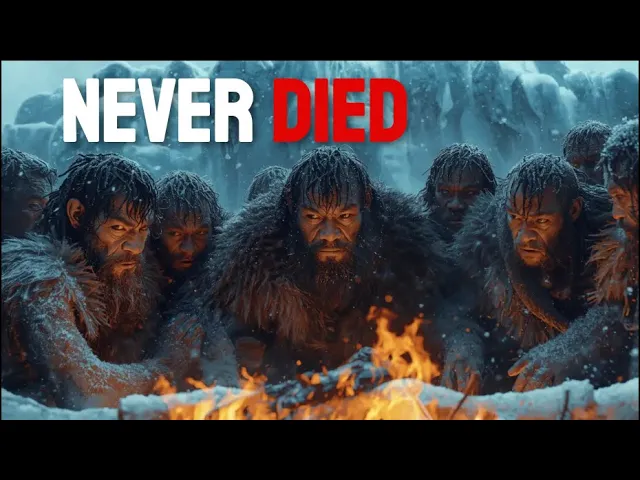
into a circle. And in that circle, language evolved. Knowledge was shared. The young learned from the old. Fire was a predator deterrent, a beacon, a tool for landscape management. Early humans almost certainly used fire to drive game, to clear underbrush, to Encourage the growth of favored plants. Fire was a revolution disguised as a simple spark, and it was essential for surviving the cold. Because as Homo erectus spread northward and the glacial cycles intensified, the climate became a crucible. The weak adaptations were burned away. The successful innovations were preserved, copied, spread. Consider the evidence we find
in the archaeological record from around 300,000 to 400,000 years ago. Stone Tools with peculiar wear patterns. Microscopic analysis reveals they were used to scrape animal hides, not just butchering. that leaves different marks. This is hide processing, cleaning, preparing clothing. We don't have the clothing itself. Of course, organic materials decay. But we have the tools that made it. And we have the logic of survival. A hairless ape in a glacial climate needs insulation. Homo erectus and their descendants solved this Problem not by evolving fur. Evolution is far too slow for that. But by stealing the fur
of other animals, by wrapping themselves in skins, by inventing in essence portable shelter, and shelter itself became increasingly sophisticated, we find stone circles in Europe and Asia, foundations for structures long since vanished. We find evidence of wooden posts of frameworks. These weren't elaborate buildings, but they were deliberate windbreaks, Leantos, simple tents perhaps, covered with hides. Each innovation small, each one alone unremarkable. But together, together they represent a species learning to create its own microclimate to carry warmth and protection wherever it went. The Achilan handax deserves its own moment of appreciation. This tool, a teardrop shaped
by facially worked stone implement first appears about 1.76 million years ago in Africa and then it Just continues. For 1.5 million years, the same basic design refined and reproduced across three continents found in Ethiopia and England, India, and Israel. Think about that. 1.5 million years. Modern humans have only existed for about 300,000 years. Civilization as we know it, agriculture, cities, writing, is only about 10,000 years old. The handax was so successful, so perfectly suited to its purposes that it outlasted entire species. What did it Do? Everything, apparently. Butchering, woodworking, digging, defense, a multi-tool before the
concept existed. And making one required skill, planning, an understanding of stone fracture mechanics. You can't accidentally nap an Aulian hand axe. You have to learn. Someone has to teach you. Which brings us to cooperation. Extreme cold doesn't just challenge individuals. It challenges groups. A lone human in an ice age is a dead human. But a band of Humans sharing knowledge, coordinating hunts, caring for the injured and the young has a chance. We see evidence of this in the fossil record. Homoerectus individuals who survived despite serious injuries, broken bones that healed, dental abscesses that should have
been fatal but weren't. Someone cared for them. Someone brought them food. Someone kept them by the fire. This is not instinct. This is culture. And culture accelerated. Groups that cooperated Better survived better. Groups that shared information where the herds were, how to predict weather patterns, which plants were edible had advantages. Natural selection began favoring not just individual intelligence but social intelligence. The ability to read faces, to communicate complex ideas, to teach and learn. The brain grew from 900 cm to sund to 200. By 600,000 years ago, some homminin brains were approaching modern human Size. But
size isn't everything. Structure matters. Connectivity matters. and the pressures of glacial survival, the need to plan, to innovate, to remember seasonal patterns and animal behaviors and toolmaking techniques. These pressures sculpted the brain from the inside. Each ice age was an examination, each warming period a reprieve. But the test always returned. And then around 400,000 years ago in Europe and Western Asia, we see the Emergence of a new hominin, stockier, more robust, with a distinctive brow ridge and a brain as large as ours. sometimes larger Neanderthalss. They deserve far more than the brief mention they'll get
here. They'll return in our story. But for now, recognize them as the ultimate ice age specialists. Their bodies were literally built for the cold. Shorter limbs to reduce heat loss. Barrel chests for warming frigid air before it reached the lungs. Massive Nasal cavities. Every aspect of their anatomy screamed glacial adaptation. They weren't a separate evolutionary experiment. They were our cousins. descended from the same earlier hominins shaped by the same climate pressures but in different environments. We evolved in Africa. They evolved in the north. And for hundreds of thousands of years, they thrived in conditions that
would kill an unprotected modern human in ours. But let's zoom out again. Let's look at the Pattern. The Milankovich cycles operated on scales of 100,000 years for the eccentricity cycle, 41,000 years for axial tilt, 26,000 years for precession. These cycles overlapped, reinforced, sometimes canceled each other out. The result was a complex rhythm of climate change. Long glacial periods, 80,000 to 90,000 years of cold punctuated by brief interglacial warmth. We're in an interglacial right now, by the way, have been for about 11,700 years, which means In the natural cycle of things, we're due for another ice
age. Though human activity may have changed that equation entirely, but that's another discussion. During the maximum extent of glaciation, ice covered Canada, Scandinavia, much of Britain and Northern Europe. The ice was kilome thick. Imagine the weight. Imagine the land itself compressed beneath frozen water, groaning, sinking, and around the ice tundra. And around the tundra, cold grasslands, the mammoth Step stretching from Spain to Alaska, the largest biomeear has ever known. This was the world humans navigated. They followed the megapora, mammoths, woolly rhinoceros, giant deer, bison. These animals were walking food supplies and early humans learned their
patterns. Migration routes became human migration routes. Hunting grounds became generational knowledge. But here's the thing about ice ages. They're not uniformly icy. There are Refugeia, pockets of relative warmth. Southern Spain, the Italian Peninsula, the Balkans, parts of the Middle East, Southern Africa. These places became sanctuaries during the worst periods. Populations contracted into these refugeia, survived, and then expanded again when conditions improved. And each time, each contraction and expansion, genetic diversity shuffled. Populations diverged, then reconnected. New adaptations emerged in isolation, then Spread through contact. The ice ages were filters, yes, but they were also mixing bowls.
Dietary flexibility became paramount. Humans couldn't afford to be specialists. The herds migrated. Plants had seasons. Coastal groups exploited shellfish. Inland groups hunted and foraged. Some populations likely relied heavily on scavenging. There's no shame in that. It's efficient. A lion's leftover kill, still rich with meat and marrow, is a gift in a landscape of Scarcity. Humans became generalists, behaviorally flexible, capable of switching strategies when the environment demanded it. This is perhaps our greatest adaptation, not claws or speed or venom. Flexibility, the ability to solve novel problems, to try something new when the old way stops working.
And the ice ages rewarded this flexibility while punishing rigidity. Species that couldn't adapt went extinct. Many did. The plea scene is a Graveyard of evolutionary dead ends. But humans, our ancestors in all their variations, persisted. Each glacial maximum eliminated populations who couldn't cope. Each interglacial period allowed expansion, experimentation, innovation. Over 2 million years, this cycle repeated dozens of times. And each time, the survivors were a little more clever, a little more adaptable, a little more human. By 200,000 years ago, Anatomically modern humans, Homo sapiens, had emerged in Africa. We were the latest iteration of a
lineage that had been tested and refined by ice and cold for 2 million years. We inherited the fire knowledge of Homo erectus, the toolmaking traditions of countless generations, the social cooperation that cold climates demanded. We were the beneficiaries of the longest, harshest filtering process imaginable. And yet, and yet, the ice ages, for all their Severity, followed patterns. The cycles were long, tens of thousands of years, but they were cycles. Populations could adapt over generations. Knowledge could accumulate. strategies could be refined. The ice ages were predictable in a sense. Harsh, yes, deadly, absolutely, but predictable. What
came next was different. What came next was sudden, catastrophic, a climate disaster compressed into a span so brief that no amount of gradual adaptation could Prepare for it. What came next nearly ended us entirely. But that's a story for the next part of our journey when we'll travel to 75,000 years ago to an island in Indonesia to witness the moment when the sky itself turned to ash and winter came in summer and humanity. For perhaps the only time in our history teetered on the very edge of extinction. For now rest in the knowledge that your
ancestors survived the unsurvivable that they learned to carry fire and wear the Skins of beasts and cooperate against the cold. that every innovation born of desperation became a gift passed down through time, eventually reaching you. The Ice Age Crucible forged us, made us clever, made us adaptable. It made us human. But the next test would determine if being human was enough. Sumatra. 75,000 years ago. Deep beneath the island's surface, magma had been accumulating for thousands of Years, pressure building, the Earth's crust groaning under incomprehensible force. And then, in a geological instant that would echo through
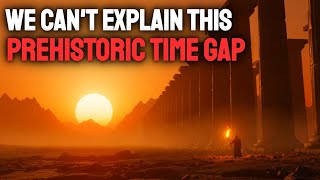
human history, it erupted. Not a volcanic eruption. The volcanic eruption, the largest explosion the planet had witnessed in 2 million years. Mount Toba, a name that wouldn't exist for another 74,000 years, detonated with a force equivalent to 3,000 times the atomic bomb dropped on Hiroshima. 3,000 times. Try to picture That. You can't. The human mind wasn't designed to comprehend violence on that scale. But your ancestors witnessed it, felt it, survived it. 2,800 km of rock, ash, and molten material ejected into the atmosphere. To put that in perspective, when Mount St. Helens erupted in 1980, an
event that seemed catastrophic to modern observers, it released about 1 km, Toba was 2,800 times larger. The entire island Collapsed into a calera over 60 m long. The sound alone would have traveled around the world multiple times. A rolling thunder that lasted for days. But the explosion itself was just the opening act. Within hours, a pyrolastic cloud superheated gas and rock fragments moving at hundreds of miles hour. Incinerated everything within a 200 mile radius. Within days, ash began falling across the Indian subcontinent, Southeast Asia, and East Africa. not a Dusting. Layers measured in feet. Entire
ecosystems buried under gray snow that didn't melt. And then came the darkness. Sulfur dioxide and ash particles injected into the stratosphere formed a veil around the planet. Sunlight dimmed. Photosynthesis slowed to a crawl. Plants withered. Herbivores starved. Predators followed them into oblivion. The volcanic winter lasted between 6 and 10 years. A full decade where summer never came. where growing seasons collapsed, Where the very chemistry of survival was disrupted, global temperatures dropped between 3 and 5° C. That might not sound like much. After all, you've experienced wider temperature swings between morning and afternoon. But this wasn't
weather. This was climate, a sustained worldwide cooling that pushed ecosystems past their breaking points. Tropical forests retreated. Grasslands turned to dust. Freshwater sources dried up or froze solid for longer each year. The world Didn't just change, it broke. And somewhere in East Africa, a small population of anatomically modern humans, our direct ancestors, faced a simple choice. Adapt or join the countless species disappearing into extinction. Here's where the story gets truly fascinating and controversial and deeply unsettling. In the 1990s, geneticists analyzing human mitochondrial DNA noticed Something peculiar. Modern humans, all 7 billion of us, spread across
every continent, adapted to every climate, show remarkably low genetic diversity, far less than you'd expect for a species that had supposedly been evolving for hundreds of thousands of years across vast geographic ranges. Chimpanzees, despite their much smaller population and limited range, have significantly more genetic variation than we do. So do most other large Mammals. It was as if humanity had passed through an evolutionary keyhole, a moment when our population crashed so dramatically that only a tiny fraction of our genetic diversity survived. The Tobber catastrophe theory was born. According to this hypothesis, the volcanic winter reduced
the human population to somewhere between 3,000 and 10,000 individuals, perhaps even fewer. For perspective, that's roughly the population of a small town. Every Human being alive today, every genetic variation, every bloodline, every family tree traces back to that handful of survivors huddled in refugeia while the world died around them. We came within a whisper of extinction, closer than most people realize, closer than we've come before or since. The archaeological record seems to support this terrifying possibility. Sites from this period are extraordinarily rare. There's a gap, a silence in the story of human habitation That coincides
almost perfectly with the Toba event. Where you'd expect to find evidence of thriving populations, there's absence. Tools disappear from the record. Settlements vanish. It's as if someone turned down the volume on human activity for thousands of years. But here's where scientific certainty gives way to debate. Not everyone accepts the Toba catastrophe theory. Recent archaeological discoveries have complicated the narrative. Some sites in India show continuous occupation through the Toba period. Stone tools found in ash layers suggest that at least some population survived without dramatic disruption. Genetic studies have produced conflicting timelines. Some supporting a severe bottleneck
around 75,000 years ago. Others suggesting the population reduction was more gradual or occurred at different times in different regions. The truth, as with most things in deep time, is probably more nuanced Than any single theory allows. Perhaps Tobber didn't cause a sudden catastrophic bottleneck. Perhaps it accelerated existing population pressures, pushing already stressed communities past their limits. Perhaps different human populations experienced different levels of impact, with some regions devastated, while others survived relatively intact. What seems increasingly clear is that something happened around this time. The genetic Evidence of reduced diversity is undeniable. Whether a single volcanic
event caused it or merely contributed to a longer period of population stress, that remains an open question. But let's assume for the sake of understanding that the basic framework holds, that human populations were dramatically reduced, that our ancestors faced genuine existential threat. How did they survive? The answer appears to lie along coastlines, while inland regions became Uninhabitable wastelands. too cold, too dry, too stripped of vegetation. Coastal areas offered crucial refugeia. The ocean's thermal mass moderated temperature extremes. Tides continued their eternal rhythm. And most importantly, marine resources remained relatively abundant even as terrestrial ecosystems collapsed. Shellfish
don't care if the sun is blocked by volcanic ash, muscles, clams, oysters. They filter feed on plankton and organic Particles that persist even during volcanic winters. rocky intertidal zones, tide pools, shallow reefs. These became humanity's lifeline. Our ancestors, it seems, became beach comas, shore dwellers, people who read the tides and harvested the ocean's edge. And here's where the story takes an unexpected turn into neuroscience. Shellfish are extraordinarily rich in omega-3 fatty acids, particularly DHA, Docosahexoninoic acid. This compound is essential for brain development and function. Human brains are metabolically expensive organs, consuming about 20% of our
total energy despite comprising only 2% of body weight. They require specific nutrients to develop properly and maintain cognitive function. Omega-3 fatty acids are one of those nutrients. When terrestrial food sources collapsed, when the megaporna migrations were disrupted, When plant foods became scarce, coastal populations with access to marine resources had something inland groups didn't. Brain food. The very diet forced upon them by catastrophe may have supported the neurological development that would define human uniqueness. It's a beautiful irony. The worst disaster in human history may have inadvertently optimized our diet for intelligence. The Pinnacle Point Caves located
along the southern coast of South Africa preserve A remarkable snapshot of this period. Archaeological excavations have uncovered evidence of sophisticated behavior dating to around 70,000 years ago right in the window of the Tobber catastrophe. Heat treated stone tools suggesting controlled use of fire at high temperatures. Systematic exploitation of marine resources and perhaps most intriguingly ochre processing. Ochre, red iron oxide, ground into powder mixed with fat or Water to create pigment used for what exactly? This is where we glimpse something profound emerging from crisis. Symbolic thinking, abstract thought, the capacity to ascribe meaning to materials and
create representations that exist beyond immediate survival needs. Okuse implies body decoration, ritual marking, perhaps even early art. It suggests a cognitive leap, the ability to think in symbols, to communicate complex ideas, to create culture rather than just Endure existence. Shell beads appear in the archaeological record around this same time. Tiny marine snail shells deliberately perforated, strung together as ornaments. These weren't tools. They weren't food. They were decoration, status symbols, gifts, objects that carried social meaning. In the midst of catastrophe, as populations clung to survival in scattered refugeia, humans began creating beauty, marking themselves, distinguishing their
group From others through shared symbols. Why? Perhaps because when your population is reduced to a few thousand individuals, social cohesion becomes paramount. You can't afford internal conflict. You need every person to cooperate, to share knowledge, to contribute to collective survival. Symbolic markers, body paint, beads, shared rituals create group identity. They bond communities. They transform a collection of frightened individuals into a unified tribe. Small Populations, it turns out, have certain advantages. Cultural transmission becomes more efficient when everyone knows everyone. Innovation spread rapidly through tight-knit groups. There's less room for free riders for individuals who don't contribute.
Social pressure to conform and cooperate increases. knowledge becomes precious, carefully guarded and deliberately taught. The genetic bottleneck, if it occurred, would have had another Profound effect, the founder effect. When a population crashes and then rebounds, the genetic variation in the surviving population becomes the template for all future generations. Whatever genes, whatever traits, whatever predispositions those survivors carried, they became humanity's inheritance. Every human alive today carries the genetic legacy of those few thousand survivors, their strengths, their vulnerabilities, their Adaptations. When you look in the mirror, you're seeing the result of the most dramatic evolutionary filter our
species ever experienced. But here's the question that haunts paleo anthropologists. Why did we survive when other homminin species didn't? Neanderthalss were thriving across Europe and Asia at this time. They were stronger than us, better adapted to cold climates with larger brains on average. Denisovvens occupied territories across Asia. Homo floresensis, the hobbit species, lived on Indonesian islands. Multiple human species shared the planet. And yet, within 50,000 years of the Toba event, only one species remained, us. What made the difference? The answer might not be physical. Neanderthalss were better suited to cold environments. They had stockier builds,
more efficient metabolisms for conserving heat. But they may have been too specialized, too adapted to specific Conditions. When those conditions change catastrophically, their specializations became liabilities. Modern humans, by contrast, were generalists, behaviorally flexible. We could eat almost anything. Meat, fish, plants, insects, shellfish. We could live almost anywhere, forests, grasslands, coasts, even marginal environments other species avoided. We could innovate rapidly, creating new tools and strategies to match changing Circumstances. We were, in a word, adaptable, not the strongest, not the most specialized, but the most capable of change. The Toba catastrophe, or whatever combination of events reduced
human populations around 75,000 years ago acted as a crucible. It burned away the inflexible. It eliminated populations that couldn't innovate, couldn't cooperate, couldn't fundamentally reimagine their relationship with the environment. What Emerged from that crucible was something new. Not just anatomically modern humans, we'd already evolved that body plan, but behaviorally modern humans. People who thought symbolically, who planned for distant futures, who created complex social structures, who taught deliberately rather than just letting children learn through observation. In other words, people who would recognize you as fundamentally similar, who would understand your jokes, your fears, your Aspirations, who
were in every meaningful sense, us. Catastrophe didn't just threaten humanity. It completed us. There's a perspective shift that happens when you sit with this story long enough. We tend to think of disasters as purely destructive events to be avoided, survived, recovered from, but the Toba event, this planetary scale catastrophe that nearly ended our species, may have been the crucible that forged behavioral modernity itself. Would humans have developed symbolic thinking without that pressure? Would we have formed such tight social bonds? Would we have become such obsessive teachers, such careful planners, such creative problem solvers? Maybe. Evolution
is contingent, not inevitable. But it's worth considering that the very traits we consider most essentially human, our creativity, our social complexity, our symbolic thought, may have crystallized under the most extreme Pressure our ancestors ever faced. We are who we are in part because we almost weren't. The genetic evidence shows it. The archaeological record hints at it. The comparative analysis of human cognitive abilities suggests it. Somewhere around 75,000 years ago, something fundamental shifted. A threshold was crossed. The survivors of that period weren't just lucky. They were transformed. And here's what happened next. As the volcanic winter
Gradually lifted, as ash settled and temperatures slowly recovered, those small populations of survivors began to expand. gradually at first, cautiously testing new territories, following coastlines, exploiting marine resources as they moved. Around 70,000 years ago, a small group of humans left Africa, perhaps just a few hundred individuals, maybe even fewer. They crossed into the Arabian Peninsula, likely during a period when lowered sea levels created Land bridges and coastal routes. They carried with them the innovations born of crisis. Symbolic thinking, sophisticated tool technologies, complex social structures, and an almost pathological adaptability. These weren't the first humans to
leave Africa. Homo erectus had migrated out nearly 2 million years earlier. Neanderthalss and Dennisovvens had established themselves across Eurasia. But this migration was different. This Was the one that would populate the world. Within 20,000 years, humans would reach Australia. A journey requiring deliberate ocean crossings and sophisticated planning. Within 40,000 years, we'd inhabit Europe, Asia, and the islands of Southeast Asia. Within 60,000 years, we'd cross into the Americas. The near extinction event became a launching point. The bottleneck became a dispersal. The population that almost died out instead became the most Successful large mammal the planet has
ever seen. But that expansion, that great migration that would carry humans to every corner of the globe, that's a story for the next chapter. For now, rest in the knowledge that your ancestors survived the unservivable, that they gathered shellfish on ancient shores while ash fell like snow. That they ground ochre and created meaning in the midst of meaninglessness. That they looked at a Dying world and chose to paint themselves to adorn themselves to remain human even as everything else fell apart. The Tobber catastrophe nearly ended us. Instead, it made us unstoppable. Section 3, the last
glacial maximum and human ingenuity. 26,000 years ago, Earth entered its coldest phase in a 100 millennia. Picture this. Ice sheets 2 m thick, blanketing North America, Northern Europe, and Asia. Glaciers so massive they literally pressed the Earth's crust downward under their weight. The kind of cold that doesn't just challenge survival, it redefineses what survival even means. This was the last glacial maximum, the peak of the ice age. And somehow, impossibly, humans not only endured it, they flourished. The world our ancestors knew had been fundamentally rewritten. With so much water locked up in Continental ice sheets,
sea levels dropped by 120 m. That's nearly 400 ft. Coastlines extended for miles beyond their modern positions. The English Channel, dry land, the Bearing Straight, a thousand km wide grassland corridor connecting Asia and North America. Indonesia's islands all merged into a single massive land mass called Sunderland. Land bridges emerged like pathways between worlds. And the geography of human possibility expanded Even as the habitable zones contracted. Because here's the paradox. Earth had more exposed land than ever before. But less of it could sustain human life. The ice wasn't just in the Arctic. It covered latitudes where
major cities stand today. Chicago, Berlin, Moscow, all buried under glacias. Most of Canada, 2 miles of ice, Scotland, ice, Scandinavia, completely intombed. The cold pushed human populations into refugeia. Pockets of relative Habitability scattered across three continents. Southern Europe, especially along the Mediterranean, the steps of Central Asia and Southern Siberia, parts of the Middle East and North Africa, isolated valleys and coastal zones where microclimates offered just enough warmth, just enough resources, just enough hope. And in these scattered refues separated by thousands of kilometers of frozen wasteland, human culture didn't just persist, it Exploded. Let's start in
southwestern Europe, where the solitary culture emerged around 22,000 years ago. These people, hemmed in by ice to the north and sea to the south, developed what might be the most exquisite stone tool technology in human prehistory. The solitary and laurel leaf blades are archaeological celebrities. Thin as cardboard, some spanning over a foot in length, napped with such precision that They seem almost impossible. Archaeologists who've tried to replicate them, modern experts with decades of experience struggled to match the craftsmanship. These weren't just tools. They were statements, proof of mastery in a world that demanded perfection because
there was no margin for error. Scarcity breeds refinement. When resources are abundant, you can afford to be wasteful, to be merely adequate. But when every piece of workable flint Matters, when a broken tool might mean the difference between eating and starving, you don't just make tools, you make art that cuts. But the real revolution, the innovation that made the difference between survival and extinction in the Arctic regions, wasn't a better spear point. It was a needle. Around 30,000 years ago, someone created the eyed needle. A sliver of bone or ivory carefully shaped with a hole
painstakingly drilled through one end. It doesn't sound impressive until you consider what it enabled. Tailored clothing. Before needles, humans wore animal skins draped over their bodies, tied or pinned in place. Effective enough in moderate climates. Utterly insufficient when temperatures plunge to -40°. When exposed skin freezes in minutes. When the wind cuts through loose garments like they're not even there. Tailored clothing fitted, layered, Sealed at the wrists and ankles creates a microclimate around your body. It traps warm air. It blocks wind. It transforms humans from tropical apes who borrowed fire and hides into genuine Arctic survivors.
The needle didn't just keep people warm. It opened the northern world to human habitation. It made Siberia survivable. And we know people took full advantage because of places like Sunia, Sunier, Russia, approximately 34,000 years ago. Here, Archaeologists uncovered one of the most spectacular ice age burial sites ever found. Two children buried headto-head in a single grave. Their bodies adorned with thousands of ivory beads. Thousands. Each bead individually carved from mammoth tusks, each requiring hours of meticulous work. One child wore a belt with 250 fox teeth. The other had an ivory pin decorated with carved dots.
Nearby, an adult burial contained similar wealth. ivory bracelets, a Carved pendant, a hat decorated with fox teeth, and more than 3,000 ivory beads sewn onto clothing that had long since decayed. Do the math. Conservative estimates suggest the beads alone represent 10,000 hours of skilled labor. That's five person years of full-time work for funerals for children. This isn't survival. This is society. This is culture so complex, so invested in symbolic meaning that it dedicates thousands of hours to honoring the dead, To making statements about status, about belonging, about what it means to be part of a
community. The last glacial maximum didn't strip away human culture. It concentrated it, refined it, made it essential. Because when the world is trying to kill you, meaning matters. Belonging matters. The stories that bind your group together become survival technology as crucial as the spear in your hand. Speaking of spears, let's talk about mammoth hunting. The woolly Mammoth, that icon of the ice age, was perfectly adapted to glacial conditions. 6-in thick fat layer, dense, shaggy coat, specialized blood that remained fluid in extreme cold. They were walking fortresses of evolutionary optimization, and humans hunted them regularly, successfully.
The evidence is everywhere across the Eurasian steps. Kill sites where mammoth bones show distinctive butchery marks. Accumulations of tusks and bones that could only have been Transported by humans. And most dramatically, dwelling structures built entirely from mammoth bones. Picture it. On the frozen plains of Ukraine and Russia, where trees are scarce or non-existent, where winter temperatures plunge to lethal extremes, humans engineered shelters from the bones of the very animals they hunted. Mammoth skulls for the foundation, leg bones and ribs arranged in circular walls, tusks arching overhead to support roofs made Of hide and sod. These
weren't crude huts. The best preserved examples show sophisticated architectural planning. multiple rooms, central hearths, storage pits dug into the perafrost to keep meat frozen for months. Some structures required bones from 20 or more mammoths, representing years of successful hunts and careful curation of materials. The engineering is impressive, but consider the cognitive leap it represents. Someone looked at a mammoth skeleton and Saw not just food, not just raw material, but a building. Someone planned structures that would stand through winter storms. Someone organized the labor to construct them, maintained the knowledge to replicate them, taught the next
generation how to do it. And all of this while living in one of the harshest environments humans have ever inhabited. Yet during this same period in caves scattered across Europe, humans were creating some of the most Breathtaking art our species has ever produced. Lasco, Chau, Alameira. names that echo through archaeology like sacred sites, which in a sense they were. Deep in limestone caves, often in chambers requiring difficult and dangerous access, ice age artists painted animals with such skill, such understanding of anatomy and movement that they still take our breath away 20,000 years later. Horses galloping
in profile, their legs positioned to show Motion. Bison rendered with shading that creates three-dimensional form on flat stone. Cave lions, mammoths, rhinoceroses, and dozens of other species depicted with an accuracy that speaks to intimate knowledge born from observation and necessity. Why? Why invest precious time and resources? The pigments alone required extensive processing in paintings hidden in darkness. There are theories, of course. Hunting magic, shamanic visions, Territorial markers, records of seasonal migrations, all probably contain fragments of truth. But here's another thought. Art thrives in adversity because humans need meaning more desperately when survival is uncertain. When
your existence is precarious, when you've lost friends to the cold and hunger and the random cruelty of a frozen world, you need something that says, "We were here. We saw beauty. We matter. The caves weren't just art Galleries. They were temples, schools, and archives. Places where stories were told and retold. Where children learned which animals were dangerous, which were good to eat, how they moved, how they behaved, where the accumulated knowledge of generations was encoded in pigment and passed down through firelet ceremonies that bonded communities across time. Storytelling wasn't entertainment. It was survival technology. The
group that could Transmit knowledge more effectively, that could coordinate hunts through shared narrative, that could maintain social cohesion through ritual and art. That group survived while others perished. And the archaeological record shows increasing evidence of exactly this kind of forwardthinking cooperation. Food storage, for instance. In the perafrost regions, excavations have found storage pits filled with preserved meat deliberately cashed for Later use. This is delayed gratification at a level that requires abstract thinking about future states. It requires trusting that you won't be robbed, that your group will still be here in 3 months, that planning for
tomorrow is worth sacrificing from today's abundance. It requires believing in a future. The trade networks tell a similar story. Shells from the Atlantic coast found 1,000 km inland. Highquality flint from specific quaries distributed Across hundreds of kilome. Amber from the Baltic, ochre from distant sources, traded and treasured for its symbolic value. These networks weren't just about goods. They were social infrastructure. A shell from the coast worn by someone in the interior was a connection to distant kin. A statement of belonging to something larger than your immediate band. A reminder that even in the depths of
the glacial maximum, you weren't alone. The trade routes were lifelines In more ways than one. They spread not just materials but ideas, techniques, stories. When groups met to exchange goods, they exchanged knowledge. A better way to hafting spear points, a new method for processing hides. Stories about where the herds were moving, where the ice was advancing, which valleys still had game. Information flow became as important as material flow. And nowhere was this more crucial than in Bingia, the vast grassland that Connected Asia and North America during the glacial maximum. This wasn't just a bridge. Binding
was its own world, stretching a thousand km north to south, supporting populations of humans and megaporna in a cold but productive ecosystem. Here, Asian populations diverged, some remaining in Siberia, others eventually moving into the Americas as the ice sheets permitted passage. The Bringingian refuge was isolated enough to allow genetic and Cultural divergence, but connected enough to maintain contact. It was a crossroads and a homeland, a launching point for one of humanity's greatest migrations. And the people there had their own innovations. Perhaps most significantly, the atal, the spearthrower, a simple device, a shaft with a hook
at one end that effectively extends your arm, multiplying the force you can put behind a throne spear. Physics transformed into hunting Advantage. With an atal, you can throw a spear twice as far with significantly more power. You can hunt from a safer distance. You can take down larger game with greater reliability. It's such an elegant solution that it was independently invented multiple times across the world. But during the last glacial maximum, when hunting efficiency could mean the difference between a group surviving or starving, the atls of years until the bow eventually Replaced it. But technology
alone doesn't raise children. And that's where the real story of Lus glacial maximum survival becomes profound. Because scarcity doesn't just demand innovation. It demands teaching innovation to the next generation. When resources are abundant, children can learn through trial and error. Mistakes are affordable. But when margins are razor thin, when a poorly made tool or a failed hunt has immediate Catastrophic consequences, education becomes formalized, structured, essential. The archaeological record from this period shows increasing evidence of teaching. Practice pieces where novices learn to nap stone under expert guidance. Simplified tools made by children found alongside the masterworks
of adults. patterns suggesting that knowledge transmission became more deliberate, more systematic. Teaching isn't just passing on Information. It's cultural evolution in action. The group that teaches effectively accumulates knowledge across generations. Each generation stands on the shoulders of the last refining techniques, adding innovations, building a corpus of survival wisdom, and the pressure of the glacial maximum accelerated this process. Groups that formalized teaching survived. groups that didn't didn't. Your ancestors were the children who learned, the adults who Taught, the grandparents who remembered, generation after generation, accumulating the knowledge that would eventually build civilization. But survival wasn't just
cultural. It was also biological. As populations adapted to northern latitudes, genetic changes accumulated. Pale skin, for instance, became advantageous in regions with limited sunlight. Lighter skin produces vitamin D more efficiently when UV exposure is Minimal. The alals for light pigmentation rare in Africa spread rapidly through European populations during this period. Metabolic adaptations followed bodies that could maintain core temperature more efficiently. Changes in fat distribution for better insulation. Physiological tweaks that made life in the cold slightly less lethal. These changes didn't happen overnight. They accumulated across thousands of years, Hundreds of generations. But the last glacial
maximum was a powerful selective pressure rewarding any adaptation that improved cold tolerance. Yet perhaps the most profound impacts were psychological. Humans living through months of winter darkness, through seasons where the sun barely rose, developed something we still carry. Seasonal patterns of mood and energy. What we now call seasonal effective disorder was probably just life for ice Age populations in northern latitudes. The winter blues weren't a disorder. They were the default. And maybe this is where spirituality deepened. When you live in darkness for months, when the return of the sun is literally the difference between hope
and despair, you don't just notice the solstice. You celebrate it. You ritualize it. You make it sacred. The cave paintings, the elaborate burials, the investment in symbolic Objects, all of it suggests an inner life as complex as our own. People who grappled with the same questions we do. Why are we here? What happens when we die? What do our lives mean in the face of a cold indifferent universe? The last glacial maximum didn't just test human bodies and human ingenuity. It tested human spirit. And somehow in the darkest, coldest, most challenging period our species had
yet faced, that spirit not only endured, it soared. Art Flourished. Society complexified. Knowledge accumulated and was passed down. Trade network stretched across continents. Children learned not just to survive, but to thrive. 20,000 years ago, as the glaciers began their slow retreat, humans stood poised on the edge of transformation. They had survived the unservivable. They had adapted to extremes that should have been impossible. They had maintained their humanity, their capacity for beauty, Meaning, and connection. Even when the world seemed determined to extinguish it. But as the ice began to retreat, they faced a different kind of
challenge. Not adaptation to scarcity, but adaptation to abundance. Not survival in refugeia, but expansion into newly opened territories. not just maintaining knowledge, but applying it to a world that was changing faster than ever before. The frozen world that had forged them was melting, and everything, Absolutely everything, was about to change. Section 5, the Younger, Dryus, and agricultural revolution 12-900, 11-600 years ago. Picture this. You're a human living 13,000 years ago. For generations, for centuries, your people have watched the world transform. The great ice sheets that dominated the northern lands are retreating. Forests are spreading where
tundra once stretched to the horizon. Game is Abundant. The climate is warming, stabilizing. Your ancestors survive the worst the planet could throw at them. And now, finally, the earth seems to be offering a reprieve. And then, in less than a decade, winter returns. Not gradually, not predictably, but catastrophically. Temperatures plummet 7° C in what might have been a single human lifetime, possibly faster. The forests die back. The rains fail. The animals your people Have hunted for generations disappear or migrate beyond reach. And this isn't a temporary cold snap. This is a return to ice age
conditions that will last 13 centuries, 1300 years of renewed crisis. This is the younger Dus and it changed everything. The name itself comes from a small Arctic flower Dus Octtopetler whose pollen suddenly reappears in the geological record across Europe after millennia of absence. A botanical signature of catastrophe. Scientists Discovered this abrupt climate reversal in ice cores and lake sediments. A sharp deviation in the otherwise steady warming trend that followed the last glacial maximum. The data shows a world that was healing, suddenly wounded again. But here's where it gets fascinating. We still don't know exactly what
caused it. The leading theory involves the massive ice sheets covering North America. As they melted, they created enormous glacial lakes. Lake Agassi alone contained more water than all of today's Great Lakes combined. These lakes were damned by ice. And when those dams broke, unimaginable volumes of fresh water surged into the North Atlantic. Not gradually, but in catastrophic floods that would dwarf anything in recorded human history. This freshwater deluge disrupted the Atlantic meridian overturning circulation. The ocean conveyor belt that carries warm water North and cold water south. When this system shut down or dramatically slowed, it
triggered a climate cascade. Europe and North America plunge back into near glacial conditions virtually overnight. But that's just one theory. Others point to evidence of a cosmic impact, a comet or asteroid air burst that scattered across the northern hemisphere 12,900 years ago. Proponents cite a layer of sediment rich in platinum, microscopic diamonds, and carbon spherules, Signatures of extraterrestrial impact. They argue this collision triggered wildfires across continents, injected debris into the atmosphere, and destabilized the ice sheets, causing both the flooding and the climate reversal. The debate continues. The data remains contested. But for the humans living
through it, the cause didn't matter. Only survival mattered. And this time, survival would require something unprecedented. Something that had never emerged in 2 million years of human evolution. It would require giving up the nomadic lifestyle that had carried our species across the planet. In the Levant, that fertile corridor stretching from modern-day Israel through Lebanon and Syria to southeastern Turkey, a culture called the Nufians was already pushing the boundaries of what it meant to be a hunter gatherer. They were semi-edentary, not fully settled, but Not fully nomadic either. They built permanent stone structures, circular dwellings partially
dug into the earth with wooden frames and thatched roofs. Some of these settlements housed dozens of families. They carved mortars and pestles from stone. They created art, carved figurines, decorated objects, elaborate personal ornaments, and crucially they were harvesting wild grains. The archaeological evidence is unmistakable. Sickle blades with a Distinctive polish, a microscopic sheen created only by cutting grass stems, appear throughout Nufian sites. These weren't occasional tools. They were standardized specialized implements produced in quantity. Groundstone tools for processing grains, storage pits, roasting facilities, the entire technological package for exploiting wild cereals. Wild wheat and barley grew
abundantly in the region during the warm wet conditions before the younger dus. The Nettoians had figured out they could harvest these grains seasonally, process them, store them, and rely on them as a staple food source. This allowed them to stay in one place longer than any previous human culture, to build more permanent structures, to accumulate possessions, to develop more complex social hierarchies. They were on the brink of something revolutionary. And then the younger driers hit. The wild grain fields that had sustained Increasingly large settled populations began to fail. The climate became colder, drier. The predictable
seasonal patterns that allowed passive harvesting of wild cereals disappeared. Faced with this crisis, the Nufians had several options. They could abandon their settlements and return to a fully nomadic lifestyle following the diminishing game and wild plant resources. They could stay and starve. Or they could do something no humans had Ever done before. They could actively cultivate the plants they depended on. This is the climate stress hypothesis of agricultural origins. The idea that farming wasn't invented during times of abundance and leisure but during times of crisis and desperation that the younger drius didn't just coincide with
the origins of agriculture. It caused them. The evidence is compelling. The earliest sites showing clear cultivation of domesticated grains date to the end Of the younger dus around 11600 years ago right when the climate finally stabilized. But the practices that would lead to domestication, selecting seeds, clearing land, protecting fields, likely began during the crisis itself. Because when your semi-edentary society is facing starvation, you don't give up and walk away from your investment in permanent settlements. You double down. You innovate. You try to control the very plants and animals your survival Depends on. But here's where
the story gets even stranger. In southeastern Turkey on a hilltop called Gobecepe, archaeologists discovered something that shouldn't exist. Massive stone pillars, some weighing over 10 tons, arranged in circular enclosures, elaborately carved with reliefs of animals, foxes, lions, scorpions, vultures, snakes. T-shaped megaliths standing like silent sentinels. Dozens of them. Hundreds of tons of carved stone transported and Erected with only stone tools and human muscle. The site dates to 11,500 years ago, right at the end of the younger Dus. And here's the twist. The people who built it weren't farmers. Gobeci was constructed by hunter gatherers. There's
no evidence of domesticated plants or animals at the site. No permanent dwellings, no signs of residential occupation. This was a ceremonial center built and used by people who were still following The ancient lifestyle of hunting and gathering. But they were building monuments that would dwarf anything constructed for thousands of years to come. Why? The traditional narrative of human development goes, first you develop agriculture, then you get surplus food, then you get specialized labor, then you get social hierarchies and monumental architecture. Farming enables civilization. Gobeclete reverses that sequence. It suggests that complex Social organization, hierarchies, and
monumental construction came first. That hunter gatherers were capable of coordinating massive labor projects, maintaining specialized roles, and developing elaborate ritual systems. That the drive to build sacred spaces might have actually preceded and perhaps even motivated the shift to agriculture. Think about what it takes to build something like Gobec. You need to quarry massive stones from bedrock using only Stone tools. You need to transport them somehow to the construction site. You need to carve intricate reliefs. You need to organize hundreds of people for extended periods. You need to feed them. You need surplus. And if you're
a huntergatherer society in the midst of the younger, dus climate crisis, facing declining wild resources, how do you generate that surplus? You start controlling food production. Some archaeologists now argue that the Need to support monumental ritual construction actually drove the development of agriculture. That religion, the need to gather, to build, to worship together created the conditions that made farming necessary. The sacred preceded the practical. It's a provocative idea and it highlights something crucial. The people who invented agriculture weren't primitive. They weren't simple. They had complex belief systems, sophisticated social Structures, and the organizational capacity to
coordinate massive communal projects. They were in every meaningful sense behaviorally modern humans facing an unprecedented challenge. The region where this transformation occurred, the fertile crescent, was no accident of history. Stretching from the Persian Gulf northwest through Mesopotamia, then south along the Levventine coast, this ark of land had a unique combination of factors. Mediterranean climate with Winter rainfall, diverse elevation zones creating varied ecological niches and crucially the wild ancestors of wheat, barley, lentils, peas, sheep, goats, cattle, and pigs all within the same geographic region. No other place on Earth had this combination of domesticable species living
in proximity. The process of domestication itself was gradual, probably unconscious at first. When you harvest wild wheat, you naturally select For seeds that don't shatter and scatter when ripe because those are the ones you can actually collect. When you plant those seeds the next season, you're inadvertently breeding for that trait. Over generations, the plants change larger seeds, non-shattering seed heads, genetic mutations that would be disadvantageous in the wild but beneficial under cultivation. The same with animals. The sheep and goats that tolerated human presence, that were less Aggressive, that matured more quickly, those were the ones
that survived and bred in captivity. Over time, you're not just keeping wild animals. You're creating new species that can't survive without human intervention. Domestication is a two-way street. We changed them, but they also changed us. The physical evidence is stark. Skeletons from early agricultural communities show a marked decline in average height compared to their Huntergatherer ancestors. Men lost an average of 6 in. Women lost four. Their bones show increased evidence of nutritional stress, disease, and repetitive labor injuries. Their teeth were worse, much worse. Cavities, abscesses, wear patterns from grinding grain. Early farmers were shorter, sicker,
and suffered more than the hunter gatherers who preceded them. So why did they do it? Because agriculture, for all its costs, had one overwhelming Advantage. It could support vastly more people per square mile. A huntergatherer territory might support one person per square mile, perhaps five in extremely rich environments. Agricultural land could support 50, 100, more. Once you start farming, your population can explode. And once your population explodes, you can't go back. There isn't enough wild game left to support a large population. The skills of hunting and tracking passed down through generations Begin to fade. The
knowledge of wild plant resources diminishes. Children grow up knowing only farming. It's a one-way door. And humanity walked through it during the younger dus and its immediate aftermath in a transformation so profound that we're still living with its consequences. Around 11600 years ago, the younger drius ended as abruptly as it began. The climate stabilized. The holene epic, our current geological period began. And Here's something remarkable. The holysine has been characterized by unusual climate stability. For the past 10,000 years, global temperatures have fluctuated within a relatively narrow range. No dramatic swings, no abrupt reversals, just steady,
predictable conditions. This stability is actually anomalous in Earth's climate history. And it's almost certainly not a coincidence that civilization emerged during this window. Agriculture needs Predictability. You need to know that the rains will come, that the growing season will be long enough, that winter won't arrive early and destroy your crops. In a climate as volatile as the plea scene, farming would have been nearly impossible. One bad decade could wipe out a sedentary population dependent on stored grain. But in the stable holysine, farming worked. And once it worked in the fertile crescent, it spread. Archaeologists call
it demic Diffusion. The spread of farming through population movement. Early farmers had more children than hunter gatherers. Their populations grew. And as they grew, they expanded into new territories, bringing their domesticated plants and animals with them across Anatolia into Europe, east into central Asia, south into Africa. The genetic evidence shows this clearly. Modern Europeans carry substantial ancestry from these early Neolithic farmers who Migrated from the near east. But it wasn't just population movement. It was also cultural transmission. Hunter gatherer groups on the borders of farming communities saw the advantages. The ability to support larger populations,
the ability to stay in one place, the accumulation of material goods. Some adopted farming themselves, others resisted, maintaining their traditional lifestyles for millennia. The choice wasn't always obvious. In Resourcerich environments, coastal areas with abundant fish, forests with plentiful game, hunting and gathering remained viable and arguably preferable. Why take up the backbreaking labor of farming when you can live well on wild resources? Many groups didn't make the transition until forced to by expanding agricultural populations or environmental change. But where farming took hold, it accelerated everything. Within a few thousand years, pottery Appears, necessary for storing and
cooking grain. Metallergy develops. Copper, then bronze, then iron. Driven by the need for better tools and weapons. Permanent architecture becomes monumental. Villages become towns. Towns become cities. And in Mesopotamia around 5400 years ago, writing emerges from the invention of agriculture to the invention of writing just 5,000 years. For context, anatomically modern humans existed for at least 200,000 years Before agriculture. Behaviorally, modern humans for at least 75,000 years. For the vast majority of human existence, we were hunter gatherers. Cultural change was slow, incremental, measured in millennia. But after agriculture, the pace of change becomes exponential. This
is the great paradox of the younger dus. The climate catastrophe that forced humans to abandon the lifestyle that had sustained us for 2 million years also triggered the cascade of innovations That would lead to everything we call civilization. cities, states, writing, mathematics, art and architecture on scales previously unimaginable, but also warfare, slavery, epidemic disease, social inequality on unprecedented scales. The agricultural revolution wasn't just a change in how we got food. It was a change in how we thought. Hunter gatherers live in the present tense with seasonal rhythms. You follow The game. You harvest plants when
they're ready. You move with the resources. Planning extends weeks or months ahead, but not years. Farmers live in the future tents with annual cycles. You must plant in spring to harvest in fall. You must store grain to survive winter. You must save seed for next year's planting. You must plan not just for this season, but for the next and the one after that. This cognitive shift from seasonal to annual thinking Fundamentally altered human consciousness. It made us future oriented in a way we'd never been before. It created the concept of investment, sacrificing present consumption for
future gain. It necessitated the development of counting, measuring, recordeping. It made property matter in new ways because land and stored resources became the foundation of survival. And it changed our relationship with time itself. Hunter gatherers experienced time as cyclical. Seasons returned. Game migrated in predictable patterns. Life followed rhythms that had existed since time immemorial. Farmers experience time as linear, progressive. You clear land, you plant, you harvest, you improve your tools, you expand your fields. Each generation builds on the last. The past is different from the present. The future will be different still. This is the
birth of historical Consciousness. The awareness that change is not just possible but inevitable. That human action can fundamentally transform the world. For better and worse, this is the consciousness we still inhabit. But here's something we rarely acknowledge. Modern humans genetically, psychologically are still adapted to the world of scarcity, not abundance. Our brains evolved over millions of years in environments where calories were uncertain. Where high Energy foods were rare treasures, where the ability to store fat was a survival advantage, where social bonds and group cooperation meant the difference between life and death. Where threats were immediate
and physical, agriculture emerged only 10,000 years ago, civilization only 5,000 years ago, industrial society only 200 years ago. Evolution works on time scales of tens of thousands, hundreds of thousands of years. We haven't adapted to the world We've created. We're still running stone age software on modern hardware. This explains so much about modern human behavior. Why we crave sugar and fat. Why we're tribal. Why we respond to immediate threats but struggle with abstract long-term dangers. Why we're so good at innovation under pressure but so resistant to change in times of stability. We are the descendants
of people who survived the younger Dryus by inventing agriculture. Who survived the Last glacial maximum by sewing tailored clothing and building mammoth bone houses. Who survived Tobber by exploiting coastal resources and developing symbolic thought. Every climate catastrophe didn't just reshape human behavior. It reshaped human consciousness itself. And here's the profound truth that emerges from this long story. We are adaptation incarnate. Not physical adaptation. Our bodies haven't changed much in 100,000 years. But behavioral adaptation, cultural adaptation, the ability to learn, to innovate, to transmit knowledge across generations, to fundamentally alter our survival strategies in response to
environmental change. This is our inheritance. This is what the younger Dryus and every climate crisis before it forged into the very core of human identity. The climate catastrophe that ended nomadic life didn't just create agriculture. It created civilization Itself. The pressure to control food production led to surplus. Surplus led to specialization. Specialization led to social complexity. Social complexity led to cities, states, and everything that followed. And it all began with a climate crisis that should have destroyed us. Instead, it transformed us from survival to civilization, from adaptation to innovation. From scattered bands of hunter gatherers
to a species that would eventually cover the planet, Build monuments that touch the sky and develop technologies that would have seemed like magic to those first farmers grinding grain in the shadow of GBCE. The question we face now, the question those ancient lessons pose to us today is whether we still possess that adaptive capacity. Whether we can respond to our current climate crisis with the same innovation, the same flexibility, the same willingness to fundamentally transform our way of life That our ancestors demonstrated again and again. We have advantages they never dreamed of. technology, global communication,
scientific understanding, the ability to see the crisis coming rather than simply reacting when it arrives. But we also face challenges they never imagined. The speed of change, the scale of impact, the complexity of global systems that must somehow be transformed without collapsing. The story of the younger Dryus and the agricultural revolution teaches us this. Humans can survive climate catastrophe. We can adapt. We can innovate. We can fundamentally reorganize our entire way of life. But survival comes at a cost. And the world on the other side of transformation is never the same as the world that
came before. Our ancestors paid that cost. They became shorter, sicker, worked harder, suffered more. But they survived. And they built something that Would endure. The question for us is not whether we can adapt. Our history proves we can. The question is what will become in the process of adaptation and what kind of world we'll build on the other side. Section six, conclusion and reflection, the legacy of survival. So here we are, the end of a journey that spans 2 million years. We've walked through ice ages that lasted a 100,000 years. We've survived volcanic winters that
blotted out the sun. We've watched The world freeze in a single decade. And we've witnessed the birth of agriculture from the ashes of climate catastrophe. Four great challenges. Four moments when everything could have ended. The place to ice ages. Those grinding cycles of freeze and thaw that selected for bigger brains and smaller bodies that taught our ancestors to control fire and hunt in coordinated groups. That turned scattered populations of early humans into global wanderers. The Toba Eruption, a volcanic winter so severe it may have reduced our entire species to a few thousand individuals, clinging to
survival on the coasts of Africa. A genetic bottleneck so tight that every human alive today can trace their ancestry to that small resilient population. The last glacial maximum, the coldest point in a hundred millennia, when ice sheets two miles thick covered a third of the planet, and humans responded not with extinction, But with exquisite art, sophisticated technology, and social networks that spanned continents. and the younger Dryus. That sudden cruel return to ice age conditions just as the world was warming. The climate whiplash that may have forced the invention of agriculture and with it the entire
trajectory of human civilization. Four challenges, four transformations. And if you look closely at these moments, a pattern emerges. Crisis, innovation, adaptation, Cultural leap. It happens again and again. The climate shifts, resources vanish, the old ways stop working. There's a moment of desperation. We can see it in the archaeological record. Those gaps in occupation, those shifts in tool technology that speak of populations under pressure. And then something new. Not just survival, but transformation. Not just endurance, but emergence. Fire doesn't just keep us warm. It Restructures our entire social world, changes what we can eat, alters the
very shape of our skulls. The bottleneck doesn't just reduce our numbers. It creates the conditions for rapid cultural transmission, for tighter social bonds, for the emergence of symbolic thought. The ice doesn't just challenge us. It produces the tailored clothing that will let us inhabit every latitude, the food storage practices that require future thinking, the art That suggests a fully modern consciousness. The younger drius doesn't just threaten us. It triggers the agricultural revolution that will support cities, writing, mathematics, everything we think of as civilization. The pattern is clear. But understanding why it happened, that's where it
gets interesting because we carry the evidence in our bodies, in our DNA. Every person alive today is descended from those who survived. Not the Strongest necessarily, not the fastest, but the most adaptable, the most flexible, the ones who could look at a changing world and imagine a different way to live. Geneticists can trace this legacy. The mutations that allowed our ancestors to digest new foods, to tolerate different climates, to resist diseases that emerge from living in close quarters with domesticated animals. These adaptations are written into our genome, a molecular record of Survival. But the genetic
legacy is actually the smaller part of the story. The behavioral legacy. That's what truly sets us apart. Modern human psychology was forged in the crucible of climate chaos. Our anxiety about the future. That's the gift of ancestors who learned to store food and plan for seasons they might not survive. Our tribalism. Our tendency to form tightin groups. That's the legacy of populations small enough that every Member mattered. where cooperation wasn't optional but existential. Our remarkable ability to teach and learn, to transmit knowledge across generations, that didn't evolve in times of plenty. It evolved when forgetting
could mean death. When the knowledge of how to find water in a drought or start fire in the rain was the difference between continuation and extinction. Even our capacity for abstract thought, for storytelling and art and ritual, These emerged under pressure. When the world is harsh, when survival is uncertain, humans don't just endure. We create meaning. We paint caves and carve figurines and bury our dead with ceremony. We make the suffering matter. This is the flexibility factor, and it's more important than any physical adaptation we ever developed. Neanderthalss were stronger than us, more robust, better
adapted to the cold in pure physical terms. Their stocky Bodies conserved heat more efficiently. Their large nasal cavities warmed frigid air before it reached their lungs. But Neanderthalss went extinct and we didn't. Why? Behavioral plasticity. The ability to change not our bodies but our behavior. To adapt not through genetic evolution, which takes thousands of generations, but through cultural evolution, which can happen in a single lifetime. When the climate changed, Neanderthalss kept hunting the same way In the same places. They were specialists, exquisitly adapted to a particular ecological niche. When the climate changed, homo sapiens changed
everything. Our tools, our prey, our social structures, our very way of thinking about the world. We were generalists. And in an unstable climate, being a generalist was the ultimate survival strategy. But here's what's crucial to understand. We weren't generalists alone. Social cooperation Was the key that unlocked everything else. Climate change didn't just make us smarter. It made us more collaborative, more dependent on each other, more invested in the survival of the group. You can see this in the archaeological record. The elaborate burials that show care for the elderly and disabled. The long-distance trade networks that
required trust between strangers. The standardization of tool types that suggest teaching and learning, not just Individual innovation. A lone human in the Ice Age was a dead human. Survival required the group, and the group required cooperation, communication, the ability to share knowledge and resources. The most successful populations weren't the ones with the smartest individuals. They were the ones with the best systems for transmitting knowledge across generations. This is our true adaptive advantage. Not intelligence alone, but collective Intelligence. Not innovation alone, but the ability to teach innovation to our children. technology and knowledge transmission. These are
what make humans uniquely dangerous as a species, uniquely adaptable, uniquely capable of surviving rapid environmental change. A polar bear adapts to the Arctic through genetics. It takes tens of thousands of years. A human adapts to the Arctic through culture. We learn to make clothing, build shelters, hunt seals. We Can do it in a generation. This is the lens through which we need to view our current moment because we are once again living through a period of rapid climate change and the ancient patterns have modern parallels. Rising temperatures, shifting rainfall patterns, extreme weather events, ecosystem disruption,
resource scarcity, population displacement. Our ancestors faced all of this. They survived. But before we take too much comfort in that fact, we need To acknowledge the differences. The speed is different, catastrophically different. Ancient climate changes unfolded over millennia, centuries, at the very fastest. The younger dryus, that sudden dramatic cooling we discussed, happened over a decade. And it was considered shockingly abrupt by geological standards. Modern climate change is happening over decades, in some cases over years. The ice ages gave our ancestors time to migrate, to adapt, To develop new technologies and pass them to the next
generation. Populations could shift gradually, following the resources, maintaining cultural continuity. We don't have that luxury. The pace of modern change compresses the timeline for adaptation to a scale humans have never experienced. And yet, there are reasons for hope. We have survived worse with far less technology. The tober bottleneck reduced humanity to a few thousand individuals with stone Tools and fire. We survived. We recovered. We thrived. Today we are 7 billion strong. We have agriculture, medicine, global communication networks, the accumulated knowledge of thousands of generations. We have the ability to understand what's happening, to model future
scenarios, to coordinate responses across continents. Our ancestors survived climate chaos through adaptation and innovation. We have those same capacities amplified by orders of Magnitude. The human capacity for behavioral plasticity hasn't diminished. If anything, modern humans are even more adaptable than our ancestors. We inhabit every environment on Earth from deserts to tundra, from sea level to high altitude. We've proven again and again that we can adjust to new conditions. But there are also reasons for caution, serious ones. Past survival came at tremendous cost, population crashes, starvation, suffering on scales we can Barely imagine. The genetic bottleneck
that followed to meant that countless lineages simply ended. Entire populations, entire ways of life gone. The transition to agriculture improved our chances of survival as a species, but it made individual lives harder, shorter, more painful. The skeletal record shows the cost in malnutrition, disease, bone stress from endless labor. Survival, yes, but at what price? And we need to acknowledge something else, Something humbling. Luck played a role. The Toba eruption could have been worse. The volcanic winter could have lasted longer. The population bottleneck could have been tighter, a few hundred individuals instead of a few thousand.
And we might have lacked the genetic diversity to recover. The last glacial maximum could have destroyed the refugeia where population sheltered. The younger dus could have triggered a cascade of ecosystem collapse that made Agriculture impossible. We survived partly through adaptation. Yes, partly through innovation, partly through cooperation and cultural transmission, but also partly through chance, through contingency, through the sheer randomness of which populations happened to be in the right place when catastrophe struck. This isn't a comfortable thought. We like to believe that human survival was inevitable, that our intelligence and adaptability Guaranteed our success. But the
fossil record is full of intelligent, adaptable species that went extinct anyway. So what is it really that makes humans uniquely suited to survive in stability? Maybe it's not one thing. Maybe it's the combination. Our behavioral plasticity, our capacity for cooperation, our ability to transmit knowledge across generations, our facility with technology, our tendency to create meaning and purpose even in the face of Suffering, and maybe, just maybe, our willingness to become something different than what we were. Every climate crisis transformed us. The ice ages made us global. Toba made us culturally sophisticated. The last glacial maximum
made us artists and engineers. The younger dus made us farmers. We didn't survive by staying the same. We survived by changing. By being willing to let go of the old ways, the old identities, the old certainties. The hunter gatherers who survived the younger dus became farmers. They didn't choose it. Not really. The climate forced the choice. But they made it. They transformed. What will we become? Put it all in context. The deep time perspective. 2 million years. That's how long the genus Homo has been navigating climate instability. 2 million years of ice ages and warming
periods, of droughts and floods, of volcanic winters and sudden thors. For the vast majority Of that time, 99% of it, we were hunter gatherers. Small populations, mobile, flexible, living in balance with ecosystems that were themselves constantly shifting. Agriculture is 10,000 years old. Cities are 6,000 years old. Industrial civilization is 200 years old. We are a species shaped by 2 million years of instability trying to maintain a civilization built on the assumption of stability. That's the tension. That's the challenge. But it's Also the opportunity because instability is what we're built for. Change is our natural habitat.
We are quite literally the descendants of the humans who are best at surviving disruption. Every person alive today can trace their lineage back through those four great challenges and countless smaller ones. Every ancestor you have going back 2 million years survived long enough to reproduce. They made it through ice ages and droughts and volcanic winters and All the everyday dangers of a world without medicine or agriculture or shelter. You carry their resilience in your cells, their adaptability in your brain, their survival strategies in the very structure of your psychology. This is worth pausing on, worth
really feeling. Countless ancestors. Countless moments when everything could have ended. Countless times when someone cold, hungry, afraid, found a way forward anyway. They persevered. And Because they did, you exist. There's something profound in that. Something humbling and empowering at once. We didn't come from a line of people who gave up. We came from a line of people who endured. So what comes next? The honest answer is we don't know. Climate challenges still await us. Some we can predict. Rising seas, shifting agricultural zones, extreme weather. Others will surprise us the way the younger dest surprised our
ancestors With its sudden return to ice. The future is uncertain. It always has been. But uncertainty is not the same as hopelessness. Our ancestors faced an uncertain future with stone tools and fire, with cooperation and innovation, with a willingness to adapt to change to become something new. We face an uncertain future with all of that, plus 10,000 years of accumulated knowledge, plus global communication, plus the ability to learn from the deep past and Apply those lessons to the present. The question is not whether we have the capacity to adapt. We do. It's in our DNA.
literally and figuratively. The question is whether we'll choose to use that capacity, whether we'll cooperate the way our ancestors did, whether we'll innovate, whether we'll be willing to transform. The pattern suggests we will. Crisis, innovation, adaptation, cultural leap. But the pattern also suggests it won't be easy and it won't be without Cost. Let yourself settle into that truth, the complexity of it, the weight and the possibility both. Outside, wherever you are, the same stars shine that shone on our ancestors. The same moon that lit their nighttime gatherings lights yours. Imagine them. Those ancient humans. Imagine
a group gathered around a fire during the last glacial maximum. The ice stretching to the horizon in every direction. They're telling stories, maybe planning Tomorrow's hunt, teaching the children how to nap stone, how to read animal tracks, how to survive. They don't know they're going to make it. They don't know that their descendants will inherit the entire planet, will build cities and spacecraft and global communication networks. They just know they're cold. They're hungry. The world is hard. But they have each other. They have fire. They have knowledge passed down from their parents who learned it
from their Parents stretching back through time. And they have hope. Not the naive kind that pretends everything will be fine. The hard kind that says we'll find a way. We always have. Look up at those stars. the same ones they saw. You are their legacy, their hope made flesh. Every challenge you face, they faced worse. Every adaptation you make, they made first. You are the descendant of survivors. Adaptation is your inheritance. That's not just a metaphor. It's not just inspiration. It's biological fact, evolutionary truth, historical reality, the capacity to endure, to adapt, to find a
way forward through uncertainty. It's woven into the very fabric of what makes you human. So rest in that knowledge. Let it settle into your bones. 2 million years of survivors. And you're the latest in the line. If you found something valuable in this journey through deep time, if these Stories of ancient resilience have sparked your curiosity or offered you perspective, consider subscribing to explore more. There are countless other stories waiting in the deep past. mysteries of human evolution, forgotten civilizations, the long strange journey that brought us to this moment. But for now, just rest. Let
your mind wander back through the ages we've explored. The ice and fire, the innovation and transformation, the endless creativity Of humans faced with impossible challenges. Our ancestors survived, they thrived, they became us, and we carry them forward into whatever comes next. The same stars, the same moon, the same human capacity for hope in the face of uncertainty. Sleep well. You're part of an unbroken chain 2 million years long of survivors who looked at a changing world and found a way through. That's your inheritance. That's your story. And it's not over yet.