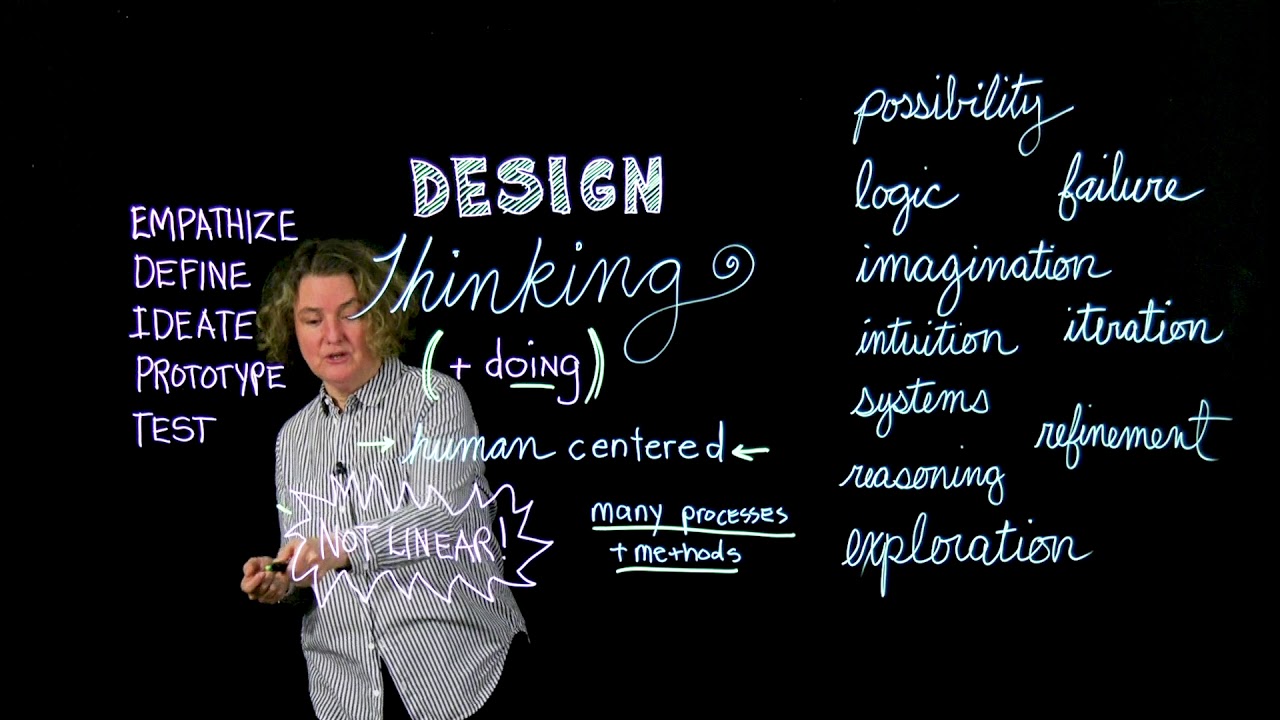
design thinking is a design process that enables us to solve complex problems it combines deep end user experience systems thinking iterative rapid prototyping and multi-stakeholder feedback to guide us through the successive stages in our design design thinking like complex systems is interdisciplinary it cuts across traditional domains by recognizing that everything in our world is designed thus it takes design out of its comfort zone of building chairs and fancy coffee cups to apply it to all areas from designing effective organizations to creating healthare and financial services the design process is a bit like blowing up a
balloon and then slowly letting all the air out of it again it requires an initial phase of Divergent thinking where we ask expansive questions to explore the full context in many different possible options before having to narrow our vision down upon a single solution and refining it through convergent thinking but this process is not mechanical it is more evolutionary meaning we cannot fully foresee the end product from inception it emerges and thus we need to think about the future in an open way that means having confidence in the possibility that an unknown outcome is feasible
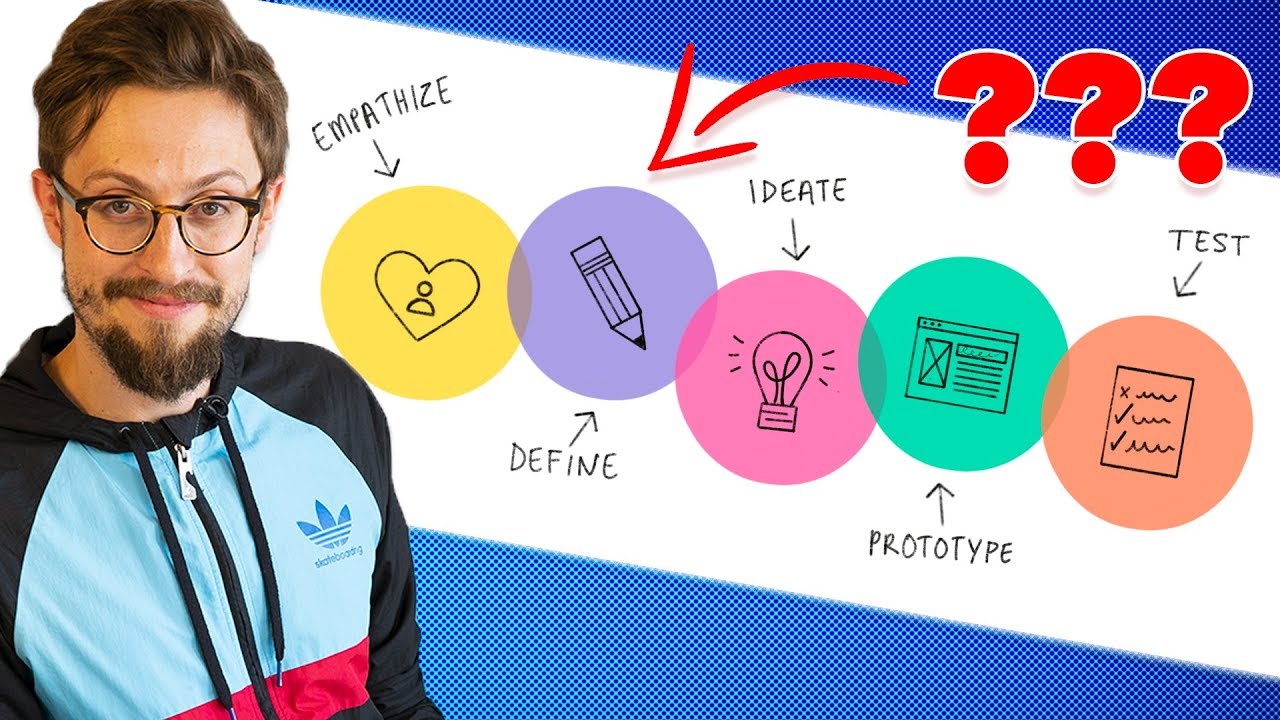
as the whole point of the design process is that we will create something something that does not yet exist and thus is unforeseen but we don't have to reinvent the design process wheel every time there are a few broad stages to it which different people will Define in different ways but we're going to talk about some of the most often identified phases in the design thinking process they include the stages of researching ideating prototyping and testing these steps don't necessarily follow a linear path they can occur s multaneously and be repeated firstly the researching phase
what we are doing here is not creating a thing what we are creating is a solution and this solution is a solution to a problem that a particular person or people have thus we need to understand the context within which our system will exist and where it lies in relation to other things within that environment it is only when we see the given context within which a pre existing version of the system operates that we get a full insight into why it is the way it is and from this can begin to conceive of an
improved solution when we don't understand the context then we will be likely to Simply go round in circles simply reacting to the pre-existing solution one generation of designers decides that straight lines are the greatest thing extoling all their virtues making everything square and rectangular with pointy Corners until until the next generation of designers comes along who are now sick of straight lines so they start a new Revolution of Curves and rounded Corners until everyone gets tired of all the curves and rediscovers the straight line again and so on by understanding the context and the history
of the context to a design we can see its parameters the advantages and disadvantages of both extremes and try to find integrative Solutions if we remember there is always two qualitative ly different levels to a complex system the local and the global as designers of the system we will be dealing with it primarily on the macro scale but at the end of the day everything really plays out on the local level and we need to understand that local context where people interact and live out their lives through these products and services people can't always express
exactly what the problem is or know exactly what it is they want so we need deep immersion to piece it together for ourselves ethnographic studies customer Journey maps all forms of enduser experience and importantly empathy This research phase is a muddy confusing part of the process that is often bypassed in pursuit of arriving at the end result quickly but with these complex engineered systems it is critical to building a solid foundation with which to move forwards on next ideation if the initial phase of of empathy and context understanding is all about the why then ideation
is about the what Within These complex systems there will be multiple stakeholders involved and we need to consider the perspective of each one the solution has to be viable for each of the multiple stakeholders involved that is from the human perspective of the end users that have to live with the finished product from the economic perspective of the businesses or organizations that are going to deliver the solution from the technology perspective of what is physically possible and we might add from an environmental perspective of what is sustainable given the resources available we need to be
aware that everyone brings some kind of perspective to this ideation process and each one of these perspectives will have some kind of filter on it it is only by identifying and removing these filters that we can truly think outside the box where real Innovation happens one way of achieving this is through collaboration design thinking suggests that better answers happen when five people work on a problem for a day than one person for 5 days from all these different perspectives we can come up with what is possible and feasible for all ideation requires creativity but also
rationality creative thinking to continuously create possibilities and then analytical thinking to rationalize their viability within the given constraints the next phase involves prototyping and experimenting once we have an idea for what we are building then we need to know how to build it and prototyping is the vehicle through which we experiment to discover this prototyping can be an art and a craft it requires practical skills to build and Imagination to bridge the gap between a mockup and the finished product the idea is to fail early many complex systems are big lumpy things like Transportation networks
you build them once and then you're stuck with them for many decades prototyping offers a safe environment to stay failing until we succeed lastly deployment and feedback designing something is a lot about learning and the best learning is supported by experience experience in the functioning of a system we are designing can only be really gained by putting it out there into its operating environment because it is only when it is in its finished context we can gain a full 360° view of it we do this by creating what is called a minimal viable product the
very most basic version of our system that is fully functional and from which we can get real feedback we can then Define key performance metrics and start our accounting of how well it is delivering its functionality we then iterate on this gaining feedback each time that goes into our accounting system to see if we're evolving in the right direction but of course the design doesn't stop there to make the product or Services sustainable we have to integrate this evolutionary mechanism into its full life cycle in summary then design thinking describes a repeatable process that offers
some structure to assist us in the design and development of a product or service it goes hand inand with the development of the complex systems that we have been talking about in this course by embracing their complex un certain interdisciplinary and evolutionary nature