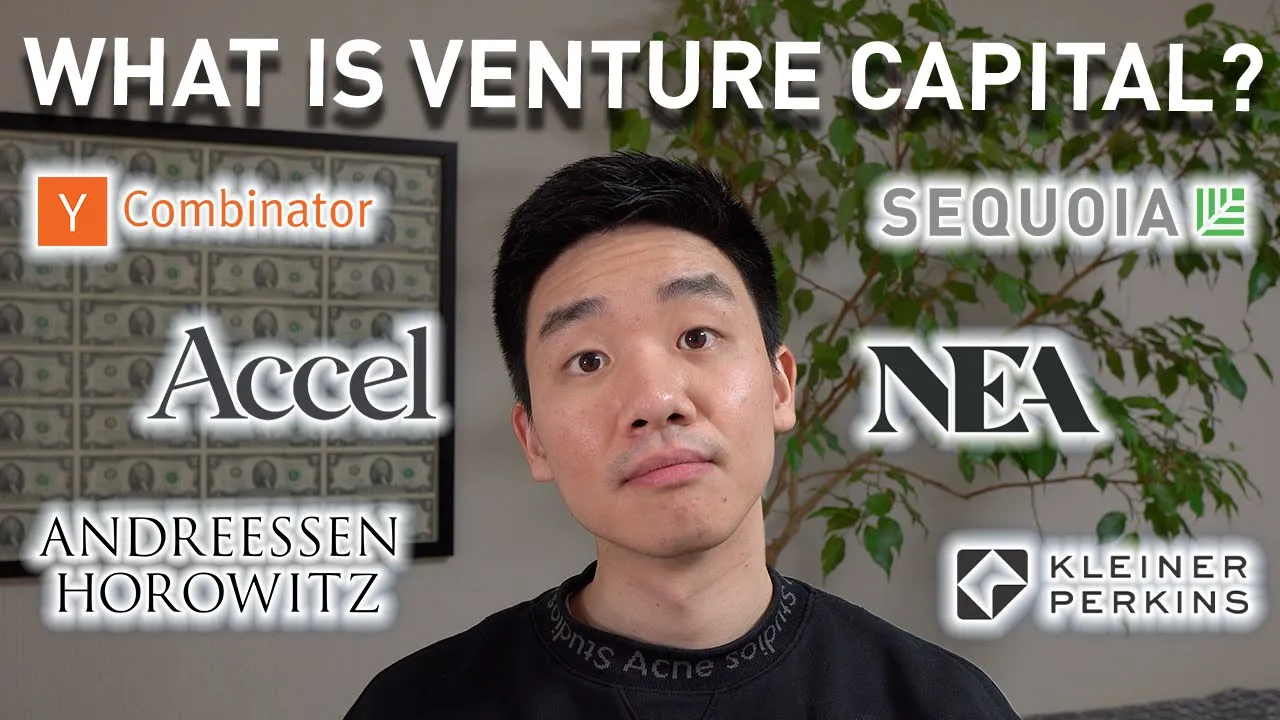
today we're gonna be going over venture capital which is one of the sexiest business industries in the world can a business industry be sexy let's pretend that it can anyway what's up everyone and welcome to rare liquid careers my name is ben and if you're new here i used to be a jp morgan investment banking analyst for a few years and a lot of my friends actually exited to the venture capital space so i spoke with a bunch of them in order to put together this video going into our agenda i'll first be going over
what venture capital firms do i'll then discuss the day-to-day responsibilities of an investor hours and lifestyle compensation and lastly some tips on how you can figure out if venture capital is right for you two quick things before i get started though first if you're interested in breaking into venture capital one of the best ways is first going through an investment banking program and if you're interested in recruiting for banking i have some resources that i compiled together i'll go over a little bit more later on in this video but you can check them out at
rareliquidcareers.com i'll leave a link down in my description below and second of all i have a podcast that i just started called rare liquid careers and on there i put i interviewed some of my friends i interviewed one recently who was working at bcg as a consultant and in the next episode i'll be interviewing one of my friends who works in a crypto venture capital firm so feel free to check that podcast podcast out if you're interested alright now with that said jumping straight into it let's first talk about what venture capital firms do vc
investors primarily work with entrepreneurs to help them build their businesses from the ground up in three main ways the first and most well-known way is through funding vc investors provide huge injections of capital that help companies hire talent and scale their operations the second is by providing insight the best vc investors have been around for decades and have seen a lot of companies come through the pipeline and so they can be great sounding boards for entrepreneurs especially during the toughest of times the third is by providing a strong network the best vc firms are extremely
well connected and can help entrepreneurs with things like recruiting top talent or making introductions for key business relationships venture capital firms are typically divided by the stages they invest in which include pre-seed seed which is the earliest round of funding then there's early stage which includes seed series a and series b rounds then the growth stage which involves series c to ipo and then there's stage agnostic which invests from the seed stage all the way to ipo one important thing to note is that venture capital investors typically don't receive any returns unless they sell their
equity to other investors in a later round otherwise vc investors need to wait until a company exits which means either an ipo or a sale to another company and that process can take as much as 7 to 10 years to get to as you can imagine the earlier the stage the higher the risk that you'll lose all your capital and so you're compensated with a higher percentage of equity on the flip side the later the stage the less risk so in the later stages you see higher amounts raised for less equity for example here is
stripes fundraising rounds and as you can see stripes valuation increased dramatically across its fundraising rounds and the earliest investors will roughly speaking see more than let's say 100 to 500 x returns while later stage investors may see something like three to 10x returns typically a venture capital firm starts off with one or two founders or partners who are just extremely knowledgeable about a certain space and then it's only as these funds really grow in size and reputation that they create new funds that focus on new industry sectors and so most venture capital firms especially when
they're small focus on just one industry such as software crypto or biotech next up let's talk about what vc investors do on a day-to-day basis one of the most important responsibilities of a vc investor involves sourcing new potential investments which can include sending a bunch of outbound emails receiving warm intros attending conferences and hosting events to attract companies looking for investment another important responsibility involves conducting due diligence on potential investments which starts with reviewing a pitch deck and can lead to valuation analysis an investment memo market research and more depending on the stage and industry
of the company vc investors also spend a lot of time supporting portfolio companies which can mean joining boards to provide insight introducing companies to customers or suppliers and helping with key hires as you grow more senior fundraising also becomes a large responsibility and so not only are you an investor but you also start to manage investors by providing regular portfolio updates checking in with them every so often and reaching out when new funds are being raised that's a pretty high level of what you do as a vc investor but what's important to note is that
across all the conversations i had with my friends who are in the space as an investor they all said that every day is different and it's really unpredictable it's more predictable to kind of predict what you're going to be able to do month to month versus day to day lastly one interesting thing that came up across multiple conversations is that there's actually way too much capital available right now in the venture capital space and not enough great companies so a lot of time vc investors will actually have to spend a lot of their efforts really
convincing founders of great companies that they are really needed and they should be the investors for that company so it sounds a little bit counterintuitive and hard to believe but i guess it's not that easy to give away millions and millions of dollars away to the best of the best companies because they have so many options available but you know if someone wants to give me a million dollars and i definitely would not say no to that all right now moving on let's go into the hours and lifestyle regarding hours it seems that about 60
to 80 hours a week is normal while 80 to 90 hour weeks are possible if you have multiple fundraising rounds going on an important thing to note about your hours though is that a lot of your time spent is very self-directed because most venture capital firms will give you a lot of autonomy and flexibility to really just work on whatever you really think you need to work on and so you may be spending a ton of hours one week reaching out to a ton of companies because there's kind of no limit to how many you
can reach out to and another week you might be spending a lot of time attending a lot of events and another week it might be just diligence and looking into a ton of different companies and so a lot of the time and effort that you want to put in is really up to you as a result being a venture capital investor is pretty much as entrepreneurial as it gets in the finance world because a lot of your success will be determined on your effort your scrappiness resourcefulness and a lot of times you have to be
very creative for example a lot of times vc investors gather a lot of their information from random sources on twitter and discord and those kinds of apps and a lot of new relationships are just established through dms on twitter and discord the last note i want to make about the lifestyle of a venture capital investor is that the hours you put in can be pretty high stress because at the end of the day you're putting in millions and millions of dollars at risk and a lot of those investments are actually going to go to zero
but it's your job of course to make sure that as few go to zero and many you know 10 50 100 x as possible and so even if you're not putting in as many hours compared to an industry like let's say investment banking each hour you're putting in does typically involve more stress because something like banking or consulting that's a lot more client oriented and focused on deliverables that you deliver to the client but you don't really care about in terms of implementation or long-term effects it's very different when you compare that with something like
venture capital investing where the capital is actually at risk and as i said could go to zero next up let's go into the hierarchy and everyone's favorite part compensation starting off with the hierarchy every firm is different but you typically start with analysts who are mostly hired from investment banking consulting tech or other industry relevant backgrounds then there is the associate level and associates are usually promoted from the analyst level hired from mba programs are lateral hires or are from the backgrounds i mentioned earlier for the analyst level next up are vice presidents and partners
who typically are promoted from their previous levels are lateral hires or are former successful founders moving on compensation is usually broken down into three categories which are your salary bonus and carry and carry is a percentage of the fund's annual overall profits which vary widely year to year and firm to firm analysts can be hired straight out of college on rare occasions and so for smaller firms the compensation can be as low as 60k and gets up to around 100k and you normally won't receive any carry associates receive anywhere from 150k to 200k and receive
a very small amount of carry if any but most firms don't give carry even at the associate level senior associates earn around 200k to 250k and this is where most vc investors start to earn carry though just a relatively small amount i won't read off the rest of the numbers because you can just pause the video and see everything else but basically at the vp level and above a significant amount of your compensation will come from carry which increasingly incentivizes you to make the best investments that you can if these compensation figures have inspired you
to get into venture capital one of the best ways to break in as i mentioned earlier on in the video is by going through an investment banking program and so if you're interested in recruiting for banking i used to be the jp morgan uc berkeley recruiting captain for a few years and i put together all of my best tips in a banking recruiting guide and i also have for sale my resume and cover letter that got me into jpmorgan and so if you're interested in any of those resources check out rareliquidcareers.com i'll leave a link
to it also down in my description below let's next chat about how you can figure out if venture capital is right for you by discussing three pros and three cons starting with the pros the first is that you receive a ton of flexibility and autonomy and you're only really hired if you have expertise or passion in the space you want to focus on so having a lot of freedom can be a huge plus if you're good at managing your own work and are intellectually curious second you're typically at the bleeding edge of technology and the
latest industry trends and so it's your job to speak with the best founders and experts so you learn a ton very very quickly lastly venture capital is great for those who enjoy forming relationships because so much of the work is people driven and both introverts and extroverts can succeed in venture capital you don't have to be the loudest or most charismatic person in the room you just have to figure out how you can provide value moving to the cons the first is the opposite of the first pro which is that if you enjoy having a
structured day-to-day routine then venture capital is probably not for you given that no two days are the same second you have to have a ton of patience given that if you invest early enough you may not see returns for seven to ten years and the vast majority of companies you look at you'll have to pass on which means a lot of time spent on meetings that don't really amount to much lastly as i mentioned earlier there is an abundant amount of capital in the vc space and not enough great companies and so it's a super
super competitive space and so unless you have a super strong reputation or are at one of the top firms and even still a lot of your time will be spent convincing founders that you can provide value if you want to learn even more about the venture capital space in a few days i'll be releasing an interview for my podcast rare liquid careers where i interview my friend who's a vice president at a venture capital firm and so if you're interested feel free to check out that video make sure to subscribe if you haven't already and
don't want to miss that interview lastly as i mentioned throughout this video if you're interested in breaking into venture capital and want to start off by first going through an investment banking analyst program and want to learn more about how to break into banking i have some resources at rareliquidcareers.com and with that said thank you so much as always for watching hope to catch you all in the next video thanks so much and peace out you