[Music] humans without a doubt the smartest animal on earth yet we're unmistakably tied to our AP Origins millions of years ago we were Apes living ape lives in Africa so how did we get get from that to this what happened what set us on the path to humanity the questions are huge but now there are answers at the threshold of humanity one ancestor contains tantalizing Secrets it is known as Homo erectus homoerectus had a slightly smaller brain slightly bigger jaw but it's basically us basically us almost 2 million years ago new finds are revealing the
truth about the ancestors at the heart of our Evolution here were the Trailblazers who first left Africa the first fir makers the first Hunters these creatures were capable of analyzing possible uses of tools and coming up with a technological solution to the the problem how do you kill a big dangerous animal without getting killed yourself Homo erectus pioneered what it means to be human colonizing whole continents and creating the first human societies our ancestors began to care about what others thought and care about what that individual thought about them now new discoveries are bringing them
alive as never before at last we come face to face with the ancestors at the birth of humanity right now on Nova [Music] the Great Rift Valley of East Africa 2 million years ago these spectacular Plains and canyons witnessed a mysterious event the birth of the first ancestor we can really call human new discoveries are revealing a creature surprisingly like us a world traveler a tool maker a hunter Tamer of fire creator of the first human societies amazingly the qualities that make us human began not with our own species Homo sapiens the true birth of
humanity began much further back in time millions of years ago imagine the entire span of recorded human history about 5,000 years taking us back to the Egyptian pyramids double it 10,000 years to the time when plants are domesticated and agriculture begins double it again 20,000 years Ice Age Hunters are painting stunning images on Cave walls and keep doubling six more times only then do we encounter our ancestor Homo erectus in Africa's Great Rift Valley for millions of years this massive geological fault line running the length of East Africa was a stage on which our human
evolution was played [Music] out it all started with the first Apes to walk upright on two legs about 6 million years [Music] ago there were many different types all variations on the same theme aplike creatures with small brains the fossil known as Lucy is the most famous example here she is just 3' 8 in tall with a brain the size of a chimps for millions of years creatures like her roam the forests and grasslands of Africa but then something changed about 2 million years ago new creatures appeared with abilities never seen before in the animal
kingdom meet Homo erectus a tool maker and Hunter one of of the first members of our genus the genus homo humans the transition to homo was probably one of the most important Transformations that occurred in human evolution arms got thinner legs got longer brains got bigger it was a huge evolutionary step from eight bodies to bodies like ours but what about the things that make us distinctly human creativity intelligence caring for each other how can we know when these got started with only skulls and Bone fragments to go on how could we ever know what
those first humans were really like it would take a momentous find to shed light on their lives Lake turana Northern Kenya surrounded by volcanoes and vast expanses of baking desert in 1984 famed anthropologists Richard and me leaky were working at this remote Inland Sea I was actually on the east side of the lake and then Richard flew over and said you've got to come there's something really exciting as the first family of paleoanthropology the Leaky were used to Fossil fines but this was very special one of ley's team had found a skull fragment of one
of those early humans he could tell from its size and shape it was Homo erectus and there was more than just a fragment so we started looking at this site on a on a more extensive basis and of course once we did we found the rest of the skull a complete skull was rare enough but it was just the beginning soon parts of the homo erectus skeleton which had never been found before started to emerge we couldn't believe it but we started getting pieces of ribs these were parts of hom rectus that nobody actually knew
about nobody had ever seen before so every bone that came out of the ground was something brand new to science and and we were looking at these things and it was really amazing and here they are the actual bones of a human ancestor who lived over 1 and 1/2 million years ago it's the earliest human skeleton ever discovered The Leaky called him tur boy his bones have revolutionized our understanding of the transition from eight to human the really important thing about turab boy is how complete he is we've got arms and legs and bits of
his spine and his ribs and usually when we find these things we get very excited about one little bit of bone but that little bit can't tell us very much about an individual so having a nearly complete skeleton we can start to ask big questions the first big question was what did he look like his skeleton tells us he was 5' 3 in tall with a build closer to a man's than an Apes but how close paleo artist Victor deck specializes in painting and sculpting our human ancestors with precise anatomical [Music] accuracy Victor's going to
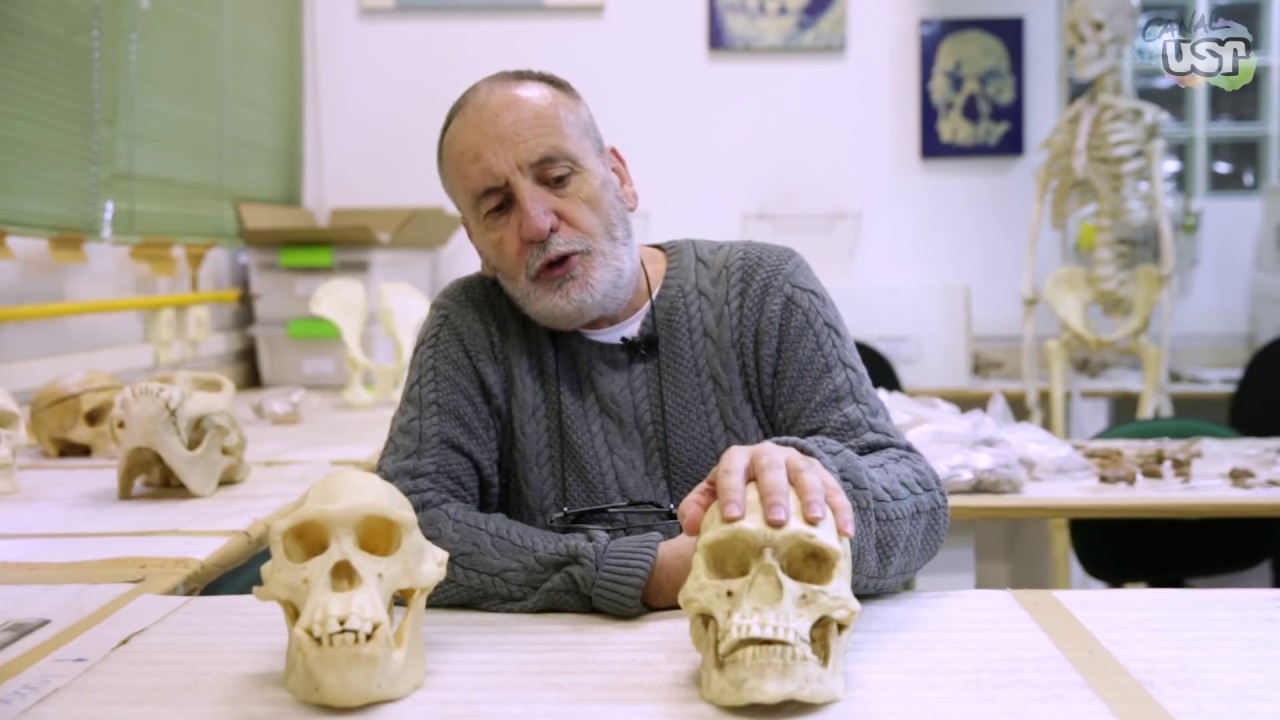
add turab boy to his family of ancient faces at this stage of the game I know that taboy is not an ape he is a very early true human and so here we have a modern human skull the faces are very similar to one another but turab boy's skull is a bit more primitive and has a lower forehead and a much smaller brain capacity Victor will build T boy's face muscle by muscle based on his studies of cadavers and modern Anatomy while his head may be primitive turoy skeleton is surprisingly human his hips are a
little wider his arms a little longer but his overall body shape is just like ours ton boy and erectus that's something that if you were to see from 100 ft away you would think well there's a large naked man there woman or or you know but it's a human it will take Victor a week to flush out turab boy's face meanwhile a team of animators is at work creating scenes that will bring tab boy and his people to life to make sure they do it accurately they have Enlisted the help of Harvard Anthropologist Dan Lieberman
they had a more forward position of the Palms when they ran just slightly there you go the blue suited actors are there to create movement references for the artists in the final animation they will be replaced by Homo erectus bodies and action their heads and faces based closely on Victor's model as tab boy's forensically reconstructed head nears completion a face emerges that looks a lot like us now for the first time in a million and a half years here he is our ancestor the Homo erectus called turab boy but what he looked like is only
the beginning of his story to reconstruct his life we need to find out how old he was and if we look at his skeleton we can see that the growth plates on his limbs that would fuse when he's fully adult are all unfused so even though he's very tall we know that he's still growing the the fact that tab boy was not fully grown has turned out to be a boon to researchers you can answer questions like did the boy grow up like a modern human or did he grow up more like an ape turana
boy was already 5' 3 in tall when scientists compared his bones and teeth to ours he seemed to be about 14 years old but when dental specialist Chris Dean began to study his teeth he was in for a shock it turns out that all teeth fossil or not preserve a remarkably precise record of childhood this is a fossil tooth and we can see the enamel cap which covers the core of the tooth which is made of dentine uh dentine is just another word for Ivory and within the enamel you can see the rods which are
running from the enamel denting Junction here out to the surface of the tooth enamel has a regular growth pattern like the rings of a tree under an electron microscope it looks like rods made of tiny beads each of the little beads along these prisms represent one day's growth because the cells which produce enamel are actually under the influence of a circadian or daily clock and those secretions during the day speed up and then slow down and there's a Perman record of that in every tooth so you can see rods running all the way through this
tissue and every day along the rod there is a wobble where the tissue slows down and then speeds up so if you count the beads in these strings you can figure out exactly how many days that tooth has been growing when Chris looked at the fossilized teeth of tonoy he got a huge surprise turab boy wasn't 14 years old he was eight what that implies is that the growth of the T boy resembled more closely that of chimpanzees today to be 5'3 at age 8 turab boy must have grown up very fast at a rate
closer to chimps than us a chimp's childhood is short it is sexually mature at about 7 human childhood is longer we reach puberty at about 12 so as humans evolved from apes childhood was extended but what advantage could be gained by having helpless children around to feed and care for who take so long to grow up the mystery of prolonged childhood is at the heart of human evolution it may be related to brain size we humans have the biggest brains in the animal kingdom in relation to our body size they're so big that most of
our brain growth has to happen outside the womb or our heads would never get through the birth canal a long slow childhood gives our brains time to grow after birth and time to learn everything we need to function in our complex Human Society ities that's the advantage of prolonged childhood for us at least but what about turab boy his brain was 900 cubic cm smaller than ours but more than twice as large as a chimps so was he on the way to thinking and Talking Like Us Ralph Holloway believes he was he's been collecting the
brain endocasts of human ancestors for over 30 years an endocast is a mold taken from the inside of the skull which reveals the shape of the brain Ralph is particularly interested in something called the broka area broka area is involved with memory functions executive functions but it does have a very important role to play in the motor aspects of speech in the brain of tur a boy Ralph believes he sees evidence for something remarkable a change in the brokas area tied to communication brokas caps regions on the turab boy are fully modern in terms of
their appearance it is good solid evidence for the having the ability of symbolic Communication in other words language it's a controversial idea and we'll never know for sure if tur boy could speak but there are other Clues to his intelligence the stone tools he left behind Homo erectus made tools like this hand ax here it's been chipped extensively on both sides the point enables one to do piercing tasks the heavy bit here can be used from cracking bone or or chopping wood it's a very very versatile tool and a sharp one it may not look
like much but the stone hand axe marks the birth of Technology Homo erectus has left us many signs of his inventiveness here in central Kenia Rick pots has been studying a treasure Trove of homo erectus Stone tool stone tools represented a momentous change because once you had Tools in your hands all the foods in the world could open up to you that represented a tremendous survival advantage here is a cache of over 500 stone hand axes made by Homo erectus just a mile away Rick visits the Quarry where for thousands of years these ancestors came
to shape Stone into tools leaving behind unused fragments in the crevices at my feet there were thousands of fragments of Stone from Tool making and there were several scars where Homo rectus struck huge flakes we also see evidence that they could recognize flaws they could see which ones would break if they took them away so they simply discarded them here what's amazing about that is you could imagine an early homoerectus sitting right here making decisions the kind of decisionmaking it takes to create a stone tool has been researched extensively by John Shay I'm just going
to tap it a little bit I'm just checking it out to see if there's any any internal flow pause before I do it there might be one in here it feels like there might be something in there but I like a challenge so I'll map it anyway even for an expert making a hand ax is not easy yeah there's a flaw but we got around it a good tool maker has to understand the properties of stone to make this thing nice and thin easier to carry easier to transport and more of the sharp Cutting Edge
I'm going to do something kind of counterintuitive I'm going to dull The Edge so that the next time I strike it it won't fail until I have a lot of pressure on it until I've hit it really hard the fracture will go much further than otherwise would so the home erectus did this tells us they were capable of thinking ahead of planning the consequences of their actions so let's have a look here what'll this what will happen here many of these stones have hidden defects failing to spot them could spell disaster there's still a flaw
in there I can hear it I can tell you see this it's right there now I've worked around it but if I were an early human and spotted this I would stop making the hand ax right now if I'm out running around the savanas chasing a rhinoceros and you know or butchering a rhinoceros as the lions are circling and my handaxe breaks I'm in trouble so you know I go home tonight I'm still going to get fed even though I didn't make a perfect handaxe as Homo rectus I might end up being the meal instead
you know a skilled Craftsman Homo erectus had evolved a new type of intelligence but his big brain came with hidden costs modern brains consume 25% of our body's energy our brain happens to be the hungriest organ in the body and in order to support a brain our size we need lots of calories with his big brain and body a homo erectus like tab boy needed more nutrition from his Savannah environment T boy had he grown to adulthood would probably stood around 6 feet tall this is a big strong creature that would have had a huge
energy budget one can satisfy an energy budget like that by eating plants but you have to eat a lot a lot plants but there's one food that can supply the nutrients a growing brain and body need and Africa was filled with it the one highquality resource that's probably most important for the evolution of the genus homo is meat and meat Bri products such as brain and Marrow and fat they're high in protein they're high in calories and they're easy to digest but the one problem with getting meat is that it's hard to get most Predators
rely on strength or speed to kill their prey our ancestors had neither today we are on top of the food chain so it's hard to imagine the predicament of those early humans here was a slow moving creature with no claws or fangs easy prey for the hry Predators around him this is a fossil forehead and brow Ridge of a homoerectus and on the brow Ridge you can see the bite mark of a carnivore well this reminds us that these homoerectus individuals weren't at the top of the food chain so how did turab boy a weakling
with a big brain which needed calories get his meat homus based problem how do you kill a big dangerous animal that has lots of meat and fat in it without that animal also killing you I think the answer to that was a very clever set of Innovations and that is endurance running and high activity in the middle of the day the ancestors of homo erectus small hairy Apes like Lucy were bipedal but probably didn't do much running but turab boy kind were built to run like us this an accelerometer Dan liberman believes they could run
long distances because like us they had lost their thick coat of body hair and could keep Cool by sweating not on this was the key to their success but how do we know if these crucial changes go back all the way to TOA boy's time over a million years ago skin and hair are rarely preserved in the fossil record so to find out we have to look to a creature that's been intimately connected with hair for a long time the Lous all animals seem to have some type of lice to parasitize them mammals have them
birds have them even fish to have types of lice but most other creatures have only one type of lice that parasitize them humans have one kind of Lous on their heads and another in the pubic area geneticists Mark ston King asked himself why the answer that seems obvious is that when we had body hair all over our bodies we had one type of lice then we became hairless until we only had hair on our heads and in our pubic region and so therefore you would have this hairless Geographic barrier to contact between the two Mark
was surprised to find out that the human pubic louse is very different from the human head louse somehow in the past it seems to have come from from gorillas because the pubic lice that is actually more closely related to gorilla lice now how it is our ancestors got pubic lice from gorillas I wouldn't care to speculate nonetheless one needs gorilla Li in order to really work this whole thing out the most likely scenario is that when we lost our body hair the original human Lae migrated to our heads leaving the pubic area temporarily unpopulated by
lice when our ancestors had contact with gorillas perhaps sleeping in their nests were Scavenging their bodies for meat the gorilla Lae colonized their pubic region eventually it turned into the human pubic louse of today so if we could find out when the human pubic louse and the gorilla louse diverged we would have a rough idea of when we lost our body hair fortunately there's a way to figure that out the genetic dating technique known as the molecular clock it's based on the fact that the sequence of chemical bases which make up DNA mutate at a
regular rate it's just a very simple idea that the rate of change in DNA sequences is more or less constant over time and that means that you have a way of determining when two species last shared a common ancestor by counting the number of differences in the genetic code of two species scientists can determine how long they've been evolving away from each other when Mark used the molecular clock to count the differences between the DNA of gorilla lice and human pubic lice he came up with a date for their Divergence the estimated date for the
Divergence is roughly 3 million years that means long before turab boy maybe even around Lucy's time our ancestors had slowly begun to lose their body hair turab boy was mostly hairless just like us and that may be what gave him an edge over other Predators most animals are at a disadvantage in the midday Sun because they overheat they can only cool down by panting and when they run fast they can't pant that means they can only run in short Sprints quad pets can get out for about 10 to 15 minutes and then they overheat but
hominids can cool down by sweating they use their entire body like like a dog's tongue our hairless bodies allow air to circulate freely on our skin and cool us down as sweat evaporates this makes us one of the best longdistance runners in the animal kingdom Dan liberman believes this gave our ancestors the ability to hunt in a very unusual way it's called persistence [Music] hunting and he believes the modern ethnographic record can show us how it was done the Bushmen of the Kalahari offer us an insight into how Homo erectus might have hunted 2 million
years ago the Bushmen know that at midday animals rest in the shade which is why it's the perfect time to be hunting once they locate their prey in this case audu the marathon begins their strategy is simple run it to exhaustion every time the animal tries to rest the hunters track it down and get it moving again they never give it a chance to cool down and the reason they can keep going is that they can sweat so if the theory is right the Bushman hunt may help explain how taboy got his meat Homo erectus
had come up with an Innovative way of feeding his hungry [Music] brain in this modern hunt the Bushmen ran in the fierce heat for over 4 hours the kudu was finally immobilized by heat stroke tur boy wouldn't have had steel tipped Spears like the Bushman but he wouldn't have needed them homore is probably hunted with Close Quarters weapons with Spears that were thrown at animals from a short distance clubs thrown rocks weapons like that they weren't using longdistance projectile weapons that we know [Music] of the homo erectus hunt was simple but effective it fed not
just their larger brains but the growing complexity of that early human society there are other social animals but none quite like [Music] us Society is in every corner of our lives our relationships communication rules symbolism all the things that bind us together what's behind it why do we become so social could it have something to do with another Innovation something unprecedented in our Evolution building fires and cooking here we got erectus the first species that looks like us and I think only cooking can explain the magnitude of this change the earliest evidence that our ancestors
deliberately used fire for cooking dates to long after taby's time but Richard rangam is sure Homo erectus was building fires much earlier now for the first time we had a species that was committed to living on the ground because they lose their climbing adaptations well how were they sleeping they had to be able to protect themselves from wild animals on the African Savannah full of predators who hunt by Night Richard believes turab boy and his people couldn't have survived Without fire and he thinks only cooking which makes food more soft and digestible can explain why
Homo erectus evolves smaller teeth and a much smaller gut these things are compatible with the reduced cost of digestion produced by cooking food nothing else is as our ancestors reaped the benefits of cooking something else happened too at least according to Rum we became more social humans have this wonderfully calm temperament compared to chimpanzees say where did it come from we were drawn to a common place the fireplace rum believes we learned to share and communicate sitting around fires waiting for food to cook look it's speculative but one thing is for sure in the homo
erectus World new social relationships had to be evolving the bonds between mothers and children must have been very different from the Apes for example a mother aratan will not allow any other individual to take her infant will be in constant SK skin to- skin contact with that baby for at least the first 6 months of life not a moment out of contact secure in this unbreakable mother infant Bond ape babies need less capacity to read the intentions of others than human babies whose bond with their mothers is surprisingly less secure the shocking fact is that
human mothers abandon their infants much more often than eight mothers infanticide by a mother is more common among humans than any other higher ape maternal commitment is a lot more contingent in humans than it seems to be in other Apes unlike most primates human mothers share parenting with others a child's survival can depend on making itself appealing to a number of caregivers perhaps that's why human infants have evolved a uniquely acute sensitivity human infants are born connoisseurs of mothers reading her facial expression looking for signs of commitment we are born hardwired with an awareness of
the intentions and emotions of others which is unique in the animal world when did humans develop this gift for a attributing mental States and feelings to others and for caring about what others thought about them could these social instincts have developed with Homo erectus along with Cooperative hunting bigger brains longer childhoods and the use of fire perhaps toab boy and his people already had social skills that would be familiar to us here were intelligent social beings with an increasing capacity for cooperation it may be this that made possible another great achievement The Exodus from Africa
for millions of years our earliest ancestors stayed on the African savanas but at some point they started to leave ancient fossil skulls and tools have been found as far away as China and Indonesia the question is when did they leave Africa and why when turab boy was found scientists thought they had the answer here was a strong large-brained ancestor capable of an arduous migration he had the look of a World Conqueror in the mid 1980s we were thinking that a homid like this one had left Africa but had done it maybe about a million years
ago for decades scientists believed big strapping humans like turab boy left Africa a million years ago but new discoveries are showing the migration may have started a lot earlier than that dimini Georgia the mountains and plains of the caucuses thousands of miles from the Great Rift Valley had never produced any fossils of early human ancestors but then an astonishing Discovery was made it was a lower jaw with teeth downward this way in the ground so when I started to clean those front teeth came to light it became obvious to me that we had found some
kind of homade but what kind the jaw seemed to be a primitive form of homo erectus but at first hardly anyone believed it in 91 when we found this jaw this was lot of scientists were quite skeptical about it was it was very hard to imagine Georgia Caucasus to be on the map of the human evolution since then demoni has been put on the map of human evolution in a big way the site has turned up a treasure Trove of homo erectus fossils they've transformed our understanding of who left Africa and when they showed that
the first humans to leave Africa were much more primitive than turab boy people thought that the homins that left Africa were very tall like turab boy with big Brands advanced technology and the Mani proved the the opposite at 4 and 1/2 ft tall they were smaller than turab boy with more aplike shoulders and a simple stone technology they are much more primitive they have small brains and same time they were using very primitive stone tools the next surprise came when they dated the site the ancient dimini landscape has been built up layer by layer over
millions of years 1.81 million years ago massive volcanic eruptions deposited a layer of Ash the fossils sat on top of this ash so must have been slightly younger around 1.8 million years old to the vast majority of scientists who believe that all our ancestors evolved in Africa this was a stunning surprise how had a small primitive Homo erectus migrated to the Caucasus almost 2 million years ago long before toab boy scientists now accept that as soon as Homo erectus appeared on the savanas of Africa they started to leave suddenly with the origin of erectus we
get this shift in body shape and then boom They're Out of Africa right away the Georgia fossils proved that homo erectus left Africa much earlier than previously thought an even more provocative find shows the migration may have started even earlier 5,000 m from Africa the island of Flores Indonesia in 2003 researchers made a discovery so strange nobody knew what to make of it they found the bones of a tiny human ancestor just over 3 ft tall even smaller than the dimini fossils they called this baffling new ancestor homo floresiensis and because of its tiny size
nicknamed it The Hobbit this has created a tremendous amount of grief because we're not really sure of what we're seeing here uh the size of the hoppit brain endocast is roughly 400 CC's that's barely bigger than the brain of Lucy the famous bipedal Ape from 3 million years ago it's not just a small brain and A Primitive looking face but the foot's primitive the hands primitive the leg is primitive the lower limb is very much like the Lucy skeleton that was a big surprise and in the cave where this primitive creature was found they also
uncovered stone tools something Lucy never had people have for a long time said well you need a big brain to make stone tools uh well okay homop Anis is making stone tools this creature has the brain the size of an orange clearly that equation's gone everything about these creatures is an enigma where did they come from and what were they some researchers have argued that floresiensis is just a dwarfed population of modern people that suffered some kind of disease that caused them to both dwarf and have relatively small brains but when scientists took a closer
look most saw no evidence of disease the stone tools and the shape of the face moved the focus to to our old friend Homo erectus some researchers think that homofloriensis evolved from Homo erectus but how did they get so small something called Island dwarfism may be the answer isolated on islands with limited food large mammals sometimes shrink over time on flues there were once pygmy elephants the size of cows could the same evolutionary pressure have acted on Homo erectus to produce The Hobbit or was this mysterious creature descended from an even more primitive ancestor so
perhaps we're sampling a period which is at the very beginning of the homo lineage so whatever The Hobbit was perhaps its ancestors were the very first wave of migration Out of Africa some unknown creature part bipedal AP like Lucy and part Homo [Music] erectus so if that's the case then what we see in Indonesia makes sense it's kind of a body that existed before human bodies became more [Music] modern what would push such primitive creatures out of Africa a key driving force behind the migration was probably a climate shift which spread grasslands from Africa into
[Music] Asia and with the grasses went the game animals animals are going to be moving out of Africa and the hominids will just be keeping Pace with those animals after all that's their livelihood of course our ancestors didn't know they were leaving Africa they just followed the animals they depended on through the canani up into the Middle East and Beyond it's often been called an exodus but it really wasn't like that when people think of Exodus they think of the Bible or they think of migration they think of Europeans coming over here to the new
world it probably wasn't like any historical migration this this dispersal of humans Out of Africa the process was probably very very slow much like the spread of any other animal species into new territories you could imagine a group of homo erectus moving their range a kilometer a year in One Direction and doing that continually over a long enough period of time you can get the distance from Africa to Indonesia covered in and say 15,000 years by a million years ago our ancestors had populated Asia from the caucuses to Indonesia and they were in Europe too
as a recent discovery in Spain has [Music] shown Homo erectus had conquered the old world the fact that they made it so far with limited technology and relatively small brains makes them seem even more remarkable and their longevity was astonishing a few pockets of homo erectus may have been still Clinging On in Asia just 50,000 years ago that's a span of two million years our own species has only been around for 200,000 what was the secret of homo erectus [Music] success the amazing finds at dimini have given us one last clue one of the skulls
belonged to an old man his Jawbone revealed he had lost all his teeth well before he died that was a real surprise it means that this individual survived 2 years without teeth for an elder to have survived that long without teeth must mean that others in the group were feeding him perhaps even chewing his food for him I love this story this was a remarkable testimony from the past about the quality of emotional life that may have characterized Homo erectus here is a tantalizing clue to what may be this ancestors most important Legacy the instinct
to look after each other and it helps us imagine tab boy's final day on [Music] Earth in the animator's scenario he starts the day out on a hunt but he has trouble keeping up with the hunting party why the evidence from his skeleton is that he was sick and in pain at the time he died if we look at his lower jaw we can see right here under the teeth that we've got a bit of an abscess and an infection that kind of an infection could have entered the rest of his body could have killed
him an abscess that ate away that much of his Jawbone would have been agonizing turab boy is in so much pain he's unable to continue the hunt knowing he would be looked after perhaps he returned to his campsite to find Comfort among the females I think he was probably a miserable fellow um in a lot of pain and very dependent on on support and handouts so it was a species that already felt that his one of our weaklings that you know we love and must must protect and care for to have got him that far
but however much they may have wanted to help him there was nothing they could do about the infection that was probably spreading through his [Music] body from what the evidence suggests I just always imagined him not knowing what was wrong with him and there's a sadness to it but all ultimately from that comes this Immortal being his skeleton was so complete it is likely he died in water which would have protected [Music] him it's very unusual to get a skeleton because normally these things are eaten by Carnival and in this case it seems that the
boy's body was washed into a swamp and so the carnivals never saw it and never destroyed it and it gradually decomposed and as the rivers flooded brought in more sediment buried it and you could see Footprints of hippos that had walked all over the bones and and some of the ribs and things were standing vertically instead of lying flat on the ground and you could sort of reconstruct the situation and how what boy what had happened after he died and and why he was complete it was just it really was it was amazing experience to
see it for almost 2 million years his bones were preserved by the Earth their Discovery opened a window for us on an unknown world the world of the most successful human ancestor of all time Homo [Music] erectus they've revealed to us that mysterious moment when almost everything human was born our bodies Our Minds our emotions think of all we've [Music] become trace the threads of our Origins through the ancestors who went before they all lead back to taboy and His Kind the first humans [Music] Nova's got a brand new Evolution website with lots to explore
about our ancestors we want to know what you think bookmark it today and give us your feedback find it at pbs.org for millions of years our ancestors shared the planet with other human species why were we the sole survivors could the fate of the neander hold the key this is one of the main goals of sequencing the nandal genome groundbreaking evidence tells a new story of human evolution our story part three of becoming human last human standing next time on Nova [Music] this Nova program is available on DVD and Blu-ray at shop pbs.org or call
1 1800 playay PBS [Music] [Music]




![[Evolução Humana] #5 Relação entre sapiens e outras espécies de hominíneos](https://img.youtube.com/vi/Ox46TXSHszM/maxresdefault.jpg)