Hey! You know what's the secret of tanks Italian? It's the only ones that are equipped with reversing lights .
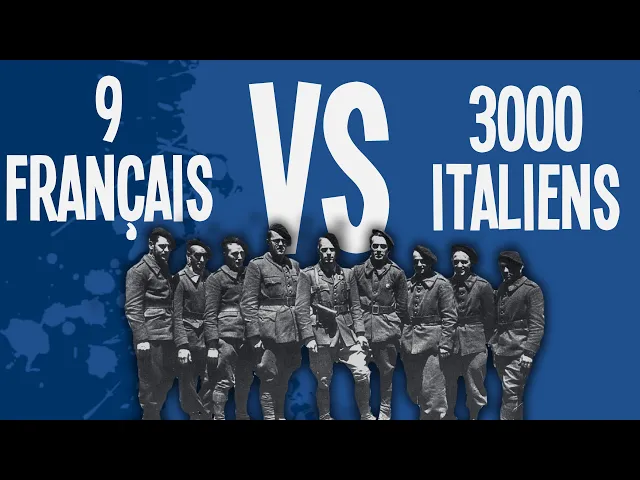
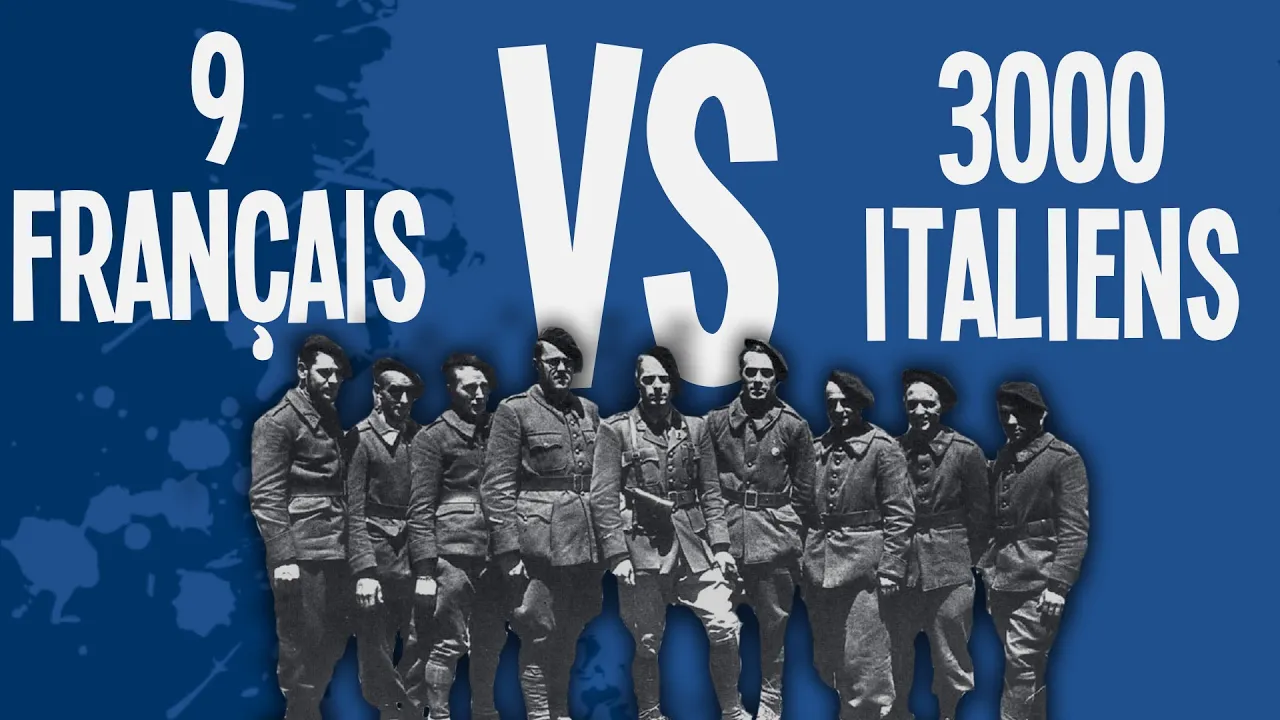
. . " 9 french soldiers vs 3000 italians soldiers!
My dear comrades, good morning! At the beginning of the second world war goes to stand one of the most unlikely battles of the history. 9 alpine hunters, locked up in a small bunker located in the city of Menton, near Nice, have orders to keep the bridge facing them against the Italian invader.
9 French soldiers against 3000 Italians . . .
Who wins ? That's what I propose you to discover in this new episode of Nota Bene ! But as usual, a bit of context to see more clearly!
On August 23, 1939, Joachim von Ribbentrop, German Foreign Minister meets his Soviet counterpart Vyacheslav Molotov to sign the German-Soviet Pact. It provides that both parties shall keep a total neutrality in case one of they enter into armed conflict with a power West. Incidentally, and in the most great secret, this famous pact provides that Finland, Estonia, Latvia, Bessarabia and finally Poland can be shared by both powers in case of invasion.
For Hitler the green light is given. On September 1st, 1939, Germany invaded Poland and two days later, on September 3, England and France declare the war on Germany: it's the beginning of the second world war. Two weeks later, on September 17, the Russians in turn attack Poland by the east.
The Poles are dashed and the offensive of the two powers continues in other territories provided for by the pact German-Soviet. The French, like the English, do not intervene not really; they wait, they look, they reinforce themselves while waiting for the Germanic shock. This is called the "Funny war "and that the Germans call the "Sitting war", basically nobody moves and everyone is looking at each other.
Well not everybody. . .
The Wehrmacht is walking through the Netherlands then Luxembourg on May 10, 1940, before attacking Belgium's infrastructure using of the Luftwaffe (German Air Force). They then go straight into the Ardennes to avoid French fortifications. In these massifs, the 7th French Army, who was to be posted, was moved by General Gamelin to cover others positions, then only the hunters Ardennes of the Belgian army to delay the advance of the Germans.
To be perfectly honest, we can not not to say that the French army was not at all prepared for the German invasion by the Ardennes, it was a possibility considered. But the speed of progression Hitler's forces in the ardennes has largely under evaluated, and this is what leads France to defeat. Despite effective resistance of Belgian soldiers , in just two days armored are on Sedan.
May 12, the resistance French, which is not yet prepared at this sudden attack, is crushed. Some light tanks are sent for contain the German breakthrough but the superiority enemy armored leave no chance. that's what we call the Biltzkrieg, the lightning war.
The Wehrmacht sinks very quickly in the land while panic seizes the French army. Morale is low and on the other side of the border, Belgium decides to surrender before his army is totally destroyed. In Dunkirk, nearly 400,000 soldiers French and British are back to the wall, encircled by the Werhmacht.
Only one blood cold foolproof combined with indecision Germans allow them to resist and evacuate 340,000 men, a third French, to the United Kingdom. It is in this context, seeing the roll German compressor clear the way and complete his job, that Italy decides to declare war on France on 10 June 1940. Better late than never, as the other would say.
Taking risks is good, but if we can do it once friends did the big part of the job, it's better. The Italian army, composed of 300,000 men mostly poorly equipped and little trained, crosses the Alps and runs into to an astonishing French resistance. Nearly two times lower in number, dispersed by redeployments to others fronts, the French have the advantage of having a strong line of defense, to own forts and mastering most of bridges that they can blow up in case offensive.
The border is almost hermetic, Italian soldiers fail to pass even during the massive attack of Mussolini on June 21, 1940. Even aerial attempts fail, the French army paying the luxury of sending his aviation directly into Italian territory to counter-attack. Like what we forget often but the French army does not have been defeated everywhere.
And among the battles that have marked history of this offensive on the Alps, one in particular can quite symbolize the heroic resistance of French soldiers face the invader : the battle of Pont Saint-Louis aka la battle of Menton. In the extreme south-east of France, the city Menton face the Mediterranean. It is directly connected to Italy by the bridge Saint-Louis which spans the brook of the same name.
In order to protect the border, a pillbox is built in the years 30, with two small openings to place an anti-tank gun and a machine gun aimed on the bridge. It is in this casemate of 12m², which is not made to house soldiers for a long time, that take refuge 9 alpine hunters whose mission is to protect the bridge against Italian soldiers. In the days following the war declaration of Italy, only the refueling in water and food disturbs the peaceful routine of the soldiers.
June 14, some guns can be heard in the distance, the clashes begin for their comrades but for the Saint-Louis bridge everything remains strangely calm. June 17, Marshal Pétain proposes to Germany to open negotiations for a armistice, on the other side of the bridge, loudspeakers broadcast military marches Italian while a voice challenges the French soldiers, sending them messages friendships. Alpine hunters begin to believe that they will not fight, which for them, we imagine, must be a relief !
Second Lieutenant Gros, who is replacing the adjutant then in service takes the direction from the little troop. Upon arrival, lack of hygiene hits him hard, the smell is nauseating and for good reason, the book is not supposed able to accommodate as many men during days. The living conditions are precarious, there is no running water and only two lamps producing a lot of smoke serve to enlighten.
To ration the water, Second Lieutenant Gros forbids his men to wash and shave. We stretched three hammocks that are huddled in one corner of the room main and four benches cover the floor of the corridor. To top it all, there are no toilets, the needs being directly made in a metal bowl and then emptied in front of the building through the slit of the machine gun.
Living conditions so difficult that the May 19, the soldier Boé, present for more of one month in the outpost, must be evacuated. He is replaced by the soldier Cordier who is the last to be able to enter the building before the start of the fighting. The morning of June 20, at 8:03 precisely, 7 Italian soldiers emerge from the turn at end of the bridge.
The costail Soldier Cordier as well that the Guzzi alpine are then outside of the casemate to better observe the surroundings. Some warning shots force intruders to turn back. Few minutes more later, about fifteen soldiers arrive at their turns from the bend to rush in the barracks of the riflemen, a building laid on the other side of the bridge.
Then suddenly everything accelerates, near two hundred men appear in front of French. The two soldiers under observation return to casemate, lock the door and join their companions at their combat post. A shell bursts in front of the blockhouse and several machine guns fired on hunters Alpine.
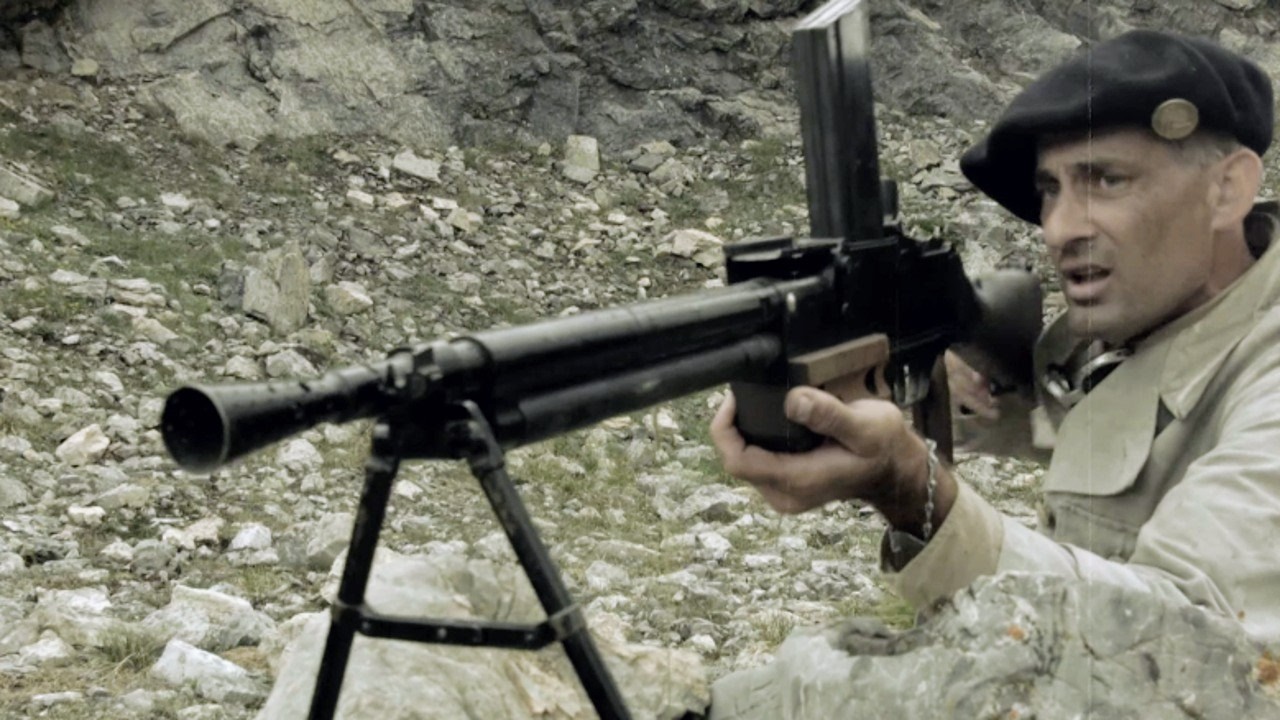
The outpost then asks for support artillery at Cape Martin, equipped with long-range cannons, and launch a rocket green in front of the building to confirm the oral request. Cannons thunder in the distance and unleash their violence on the troops Italian. At the machine gun, the soldier Petrillo opens fire on the enemy who is coming soon near the barrier of the bridge but this one jams quickly.
Sergeant Bourgoin, as a shooter on the anti-tank gun, receives the order to shoot that same barrier to intimidate them while the machine gun is recharged as soon as possible before resuming his infernal pace. If the Italians are getting closer to the casemate, it will become more and more delicate for Alpine hunters to counter them, and this because of the angles of fire of their weapons. Fortunately the building is equipped with Grenade chutes, to secure the surroundings taking little risk.
The Italians then retire in disorder to try to take others outposts to create a passage. But the French artillery continues to pound intensely their positions until the general retreat around 10am. Shortly after, some Italian soldiers come back, a white flag in their hand, present in front of the casemate in order to recover their wounded, the French soldiers do not open not fire but remain vigilant.
It is then said that around 11:45, an Italian soldier try his luck by wanting to take them by surprise. Only Private Bourguin, in office in the anti tank gun, realizes in time of the threat and triggers a reflex shot with his slightly oversized weapon who overcomes the intruder. Everywhere on the French side, the lines hold, men can then relax a bit, facing a quiet night but little serene to the idea that enemy troops return to the assault on Pont Saint-Louis.
On June 21, at 6 am, several soldiers are seen around the blockhouse, machine-gun fire disperses them. By noon, alpine hunters hear speak Italian in front of the post office when a man suddenly appears in front of the machine gun. He does not have time to flee.
An officer Italian and a dozen soldiers arise a few minutes later, same issue. All throughout the day, a few shells are pulled towards the end of the bridge but none opponent does not rest the end of his nose. June 22 is launched a general offensive on the part of the Italians, they are bombarding outrage the French positions and launch most of their strength to take the city of Menton.
However, surely a little chilled by the reception of the alpine hunters of Pont St. Louis, they decide to leave them quiet to focus on others fronts. This great day of combat is so goes on without much upheaval for Sub Lieutenant Gros and his men, do not perceiving that the sounds of fights in the distance.
At the end of the afternoon, the enemy captures part of the city of Menton, behind the front post of Pont Saint-Louis. The nine soldiers are therefore alone and to strengthen their sense of loneliness, their radio broke down, cutting them off from any communication with their allies. On June 23 in the morning, the enemies swarm around the casemate.
Alpine hunters can hear them but not see them. The grenades are sent by the chutes and the machine gun is heard then that the Italian troops fall in number. Once again we wave the white flags, again we pick up the wounded and the bodies.
The rest of the day is calm but the men, they are at the end of nerves. The next day from 18h, shelling intense are aimed directly at the casemate so to destroy it, without success. Two men are still slightly wounded and the anguish of French soldiers evaporates only with the response of the cannons of their allies who are targeting the Italians.
In the early morning of June 25, still without communications, alpine hunters are unaware but the armistice has just been signed by Marshal Petain. A silhouette is emerging near the barrier of the bridge, then two, then three . .
. A shot of machine gun sounds then a green rocket bursts out, asking Cape Martin a new intervention of the artillery. But nothing do not come.
A few minutes later another group of Italian soldiers venture near of the casemate. The balls spring from the blockhouse and take a man to the grave. They do not want to surrender the French !
But intrigued by the soldiers' nonchalance facing them, Second Lieutenant Gros gives the order to shoot over two officers who then approach in the middle of the road. They flee quickly. Nearly twenty minutes later, a flag white is stretched across the bridge.
Italians have understood that to do to understand to the irreducible Gauls that the war is over for them, you have to go out the big ways. Nearly 150 soldiers accompanied by trumpets trumpets walk calmly towards the pillbox. Charles Gros, asking these men to maintain in sight of the enemies, opens the door from the outpost and advance towards the Italian officers who announce him the armistice.
For all these men, it's not only a relief but also a great pride to have held this bridge for nearly two weeks. During this fierce fight, it's actually several thousand infantrymen Italians who threw themselves into the assault of the outpost and these surroundings, thousands of soldiers against only nine poor unhappy locked in a narrow building with a reduced field of vision. This feat, far to be mitigated by the signing of the armistice, is quickly recognized by the French army, and General Olry, who leads the troops of the army of the Alps, makes the nine brave soldiers to the order of the army.
This resistance is also welcomed by Italian officers who testify to a profound respect for the perseverance of the French. In the following days, the army of the Alps is dissolved and France begins a collaboration close with the German forces that resulted the occupation of part of the territory French for nearly five years . .
. If you liked this incredible story of these 9 alpine hunters, don't forget to let go a thumb up and share the episode. Thank you to the Cima brothers who allowed me to use many pictures of their website on the maginot line, I put it in description it's very interesting to see and there has a slightly more precise description of events.
See you soon on Nota Bene !