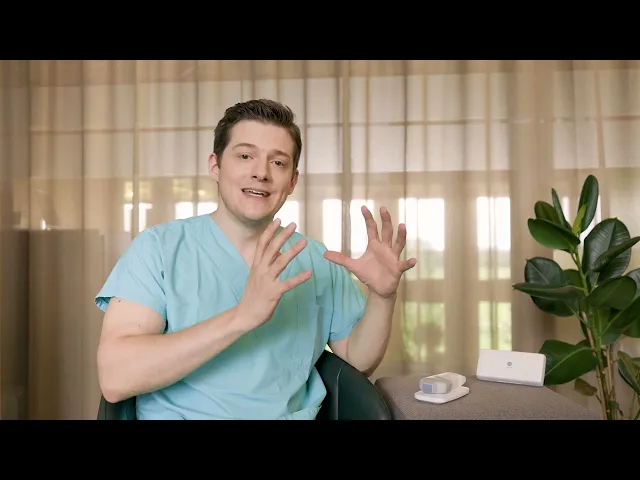
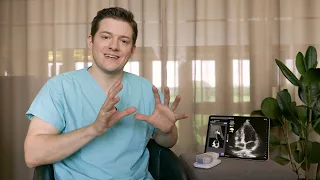
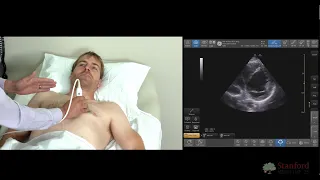
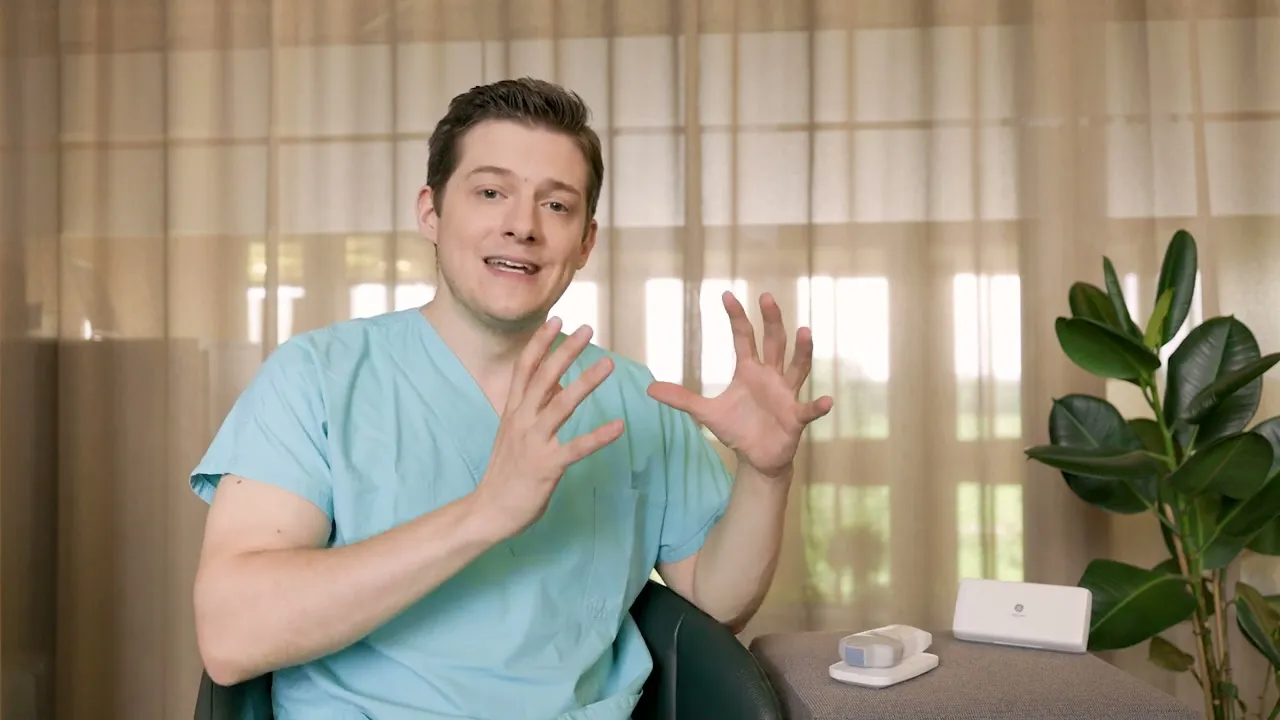
My name is Martin Altersberger and I am the head of the ECHO Laboratory in the State Hospital of Steyr. I am also responsible for the ultrasound training program in the Oberösterreichische Gesundheitsholding. We use in our clinical setting in the whole Oberösterreichische Gesundheitsholding ultrasound, wherever we find a machine, and especially with new developments in handheld devices - like we have here the Vscan Air™ ultrasound – and using ultrasound was never, I think, that easy.
There are plenty of challenges we face in our daily clinical practice. If you work in an Emergency department, if you work in an ICU, an Outpatient clinic as a Primary care physician, there are always questions we have to answer and very often we want to answer them immediately, for the benefit of our patients, and by that means it's important to learn to use ultrasound. With ultrasound we have a valuable tool which can give us a lot of information about also plenty of potentially life-threatening diseases and in this specific situation we can also use the Vscan Air.
The Vscan Air™ SL is the specific probe and I like that very much. It's for us, for the Cardiologists. You see this small footprint transducer.
You can use it in every kind of patient. But you can also scan the abdomen, you can scan the lungs, you can use the linear transducer as well for scanning the vessels. So you have plenty of opportunities where you can use this easy-to-use point-of-care device in your daily routine.
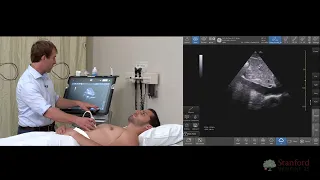
You can use it, for example, when you're on the ward, you're scanning patients while you visit the patient. When you're in an outpatient clinic or when you're going home to a patient, you can scan the patient there as well. You can scan not only the heart, you can see cardiac function of course, but you can also see are there pleural effusions, are there other fluid collections in the body, how are the kidneys looking like, how is the patient overall doing.
You can assess that with the help of point-of-care devices. Take a look at the machine. It's really handy, it's handheld and you can even bring it on vacation.
For me personally, it is crucial and essential to have a device, also a point-of-care device, which is easy to use, which is reliable, so the battery has to be durable enough. Besides that, it also should have Color Doppler imaging, which I can trust, Pulsed Wave Doppler imaging I can trust, and additional modalities I can use. And I want to use that not only by means of scanning one single organ, not only the heart.
I also want to scan the lungs, I want to scan the pleural line. So, optimally you have one part of your device which can scan deeper regions, for example, the heart, the abdomen, fluid collections, consolidations by means of lung ultrasound. But then again, for the superficial structures, for vascular access, you want to also have a linear probe.
So bring your point-of-care device to your patients and start scanning them.