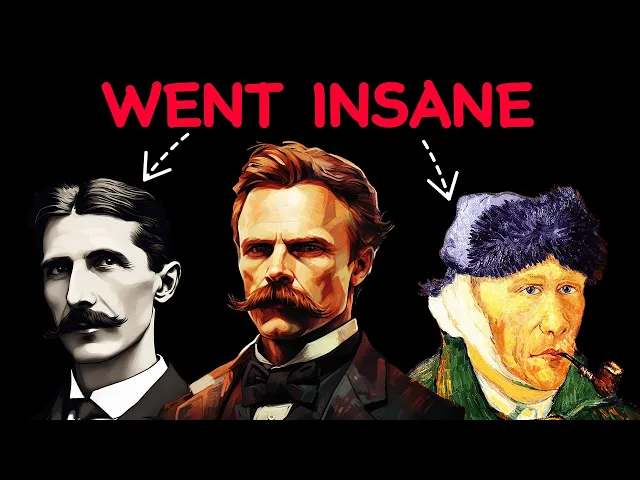
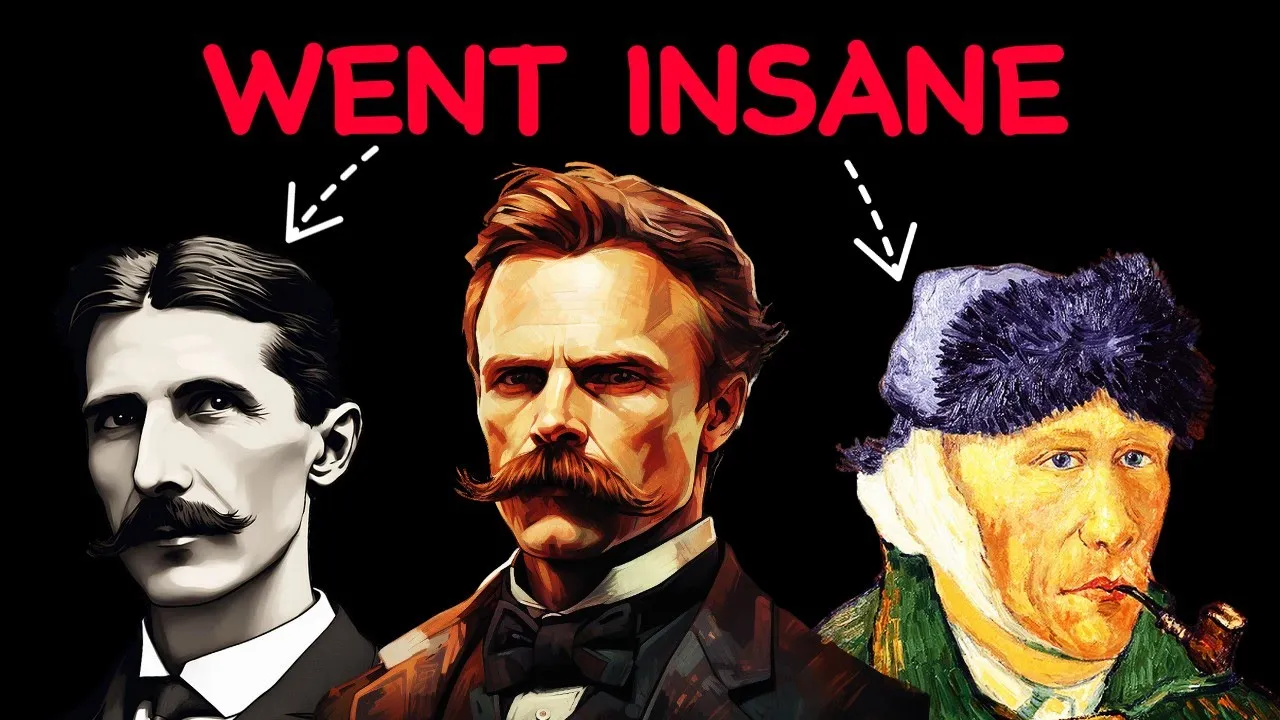
[Music] in 1889 friederick nche one of the greatest Minds in philosophy crumbled under the weight of his Brilliance on the streets of Torin he collapsed into tears embracing the horse that was being beaten an act that marked the beginning of his descent into madness for the remaining 11 years of his life he lived in isolation consumed by his fractured mind this isn't an isolated tale Nicola Tesla a man who lit the world with his inventions spent his final years alone obsessing over pigeons he believed could communicate with him and Vincent Van go the painter who
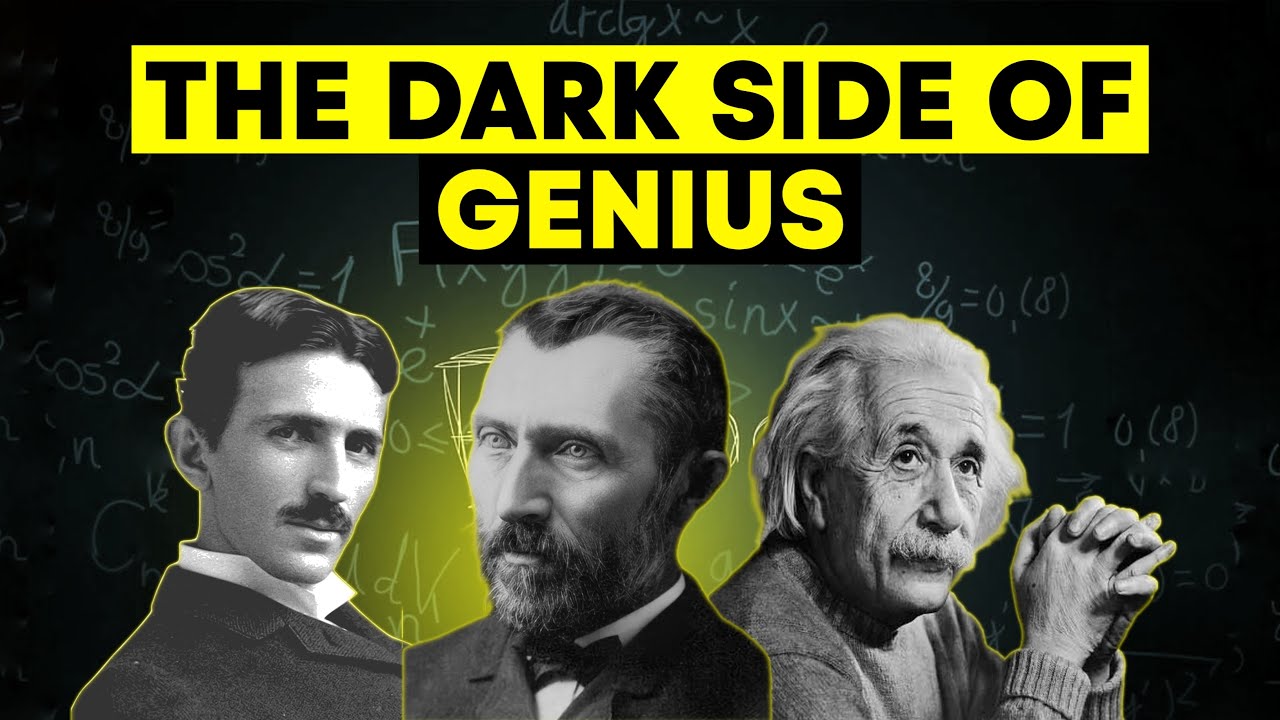
redefined art famously severed his own ear why do so many of History's Greatest Minds break under the weight of their genius is the same fire that fuels Brilliance also capable of burning the Mind itself the thin line between genius and Madness the type of mind that births revolutionary ideas be it art science or philosophy exists on the edges of human perception to quote mea himself one must have chaos in oneself to give birth to a dancing star but chaos doesn't come without a cost Geniuses see the world differently they challenge Norms EnV Vision possibilities no
one else can and pursue their Vision with an intensity that borders on Obsession but this deviation from the ordinary often isolates them the more they step away from societal Norms the lonier near the journey becomes and isolation coupled with a Restless introspective mind can be a dangerous mix the price of obsession take Tesla for example he believed celibacy was crucial to preserving his creativity and decision that left him utterly alone in his later years or Beethoven whose genius gave the world some of its greatest music but whose personal life was riddled with loneliness and conflict
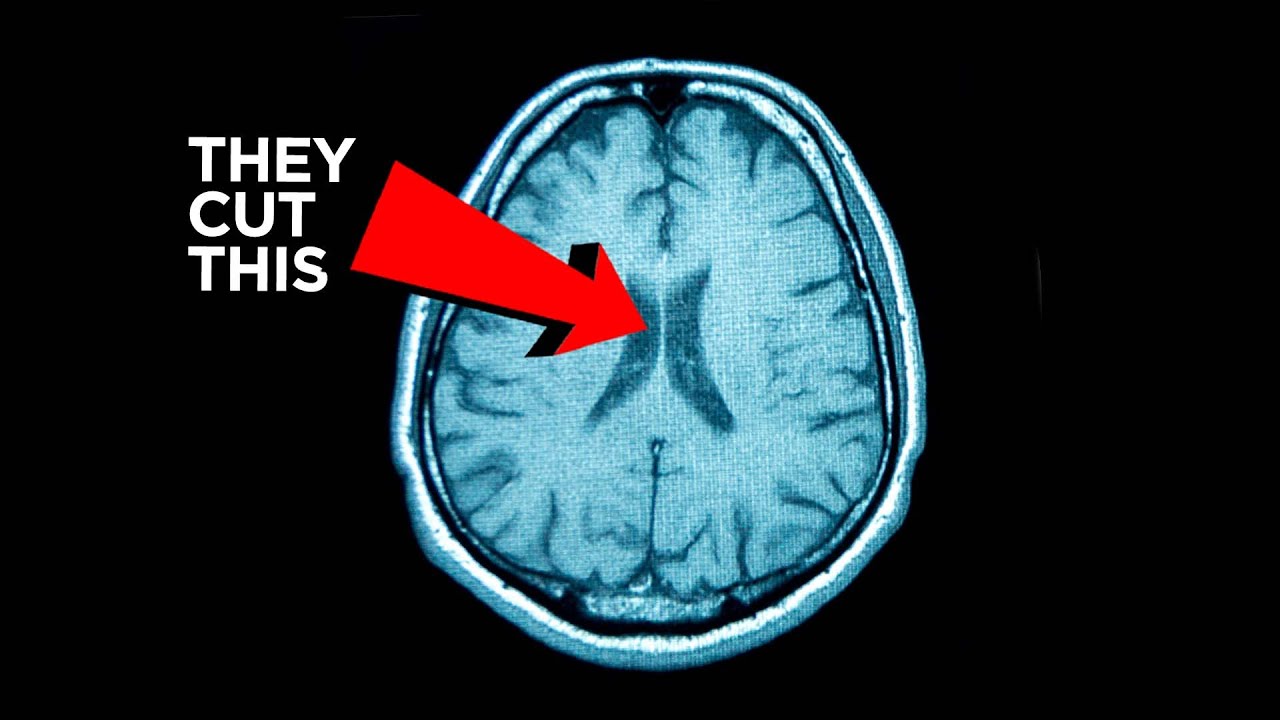
even Isaac Newton one of the greatest scientific Minds succumb to The Lure of obsession in his later years he was consumed by the search for the philosopher stone inhaling toxic Mercury fumes in his alchemical experiments likely a key factor in his eventual mental decline the Neuroscience of genius and Madness modern science offers some Clues research suggests that certain mental illnesses such as bipolar disorder and schizophrenia May correlate with heightened creativity bipolar disorder for instance involves periods of manic energy times when ideas flood the Mind connections form rapidly and creative breakthroughs occur but the flip side
is devastating periods of crushing depression isolation and despair psychologist K Redfield jamson explored this link in her book touched with fire detailing how many historic figures from Van go to Sylvia Plath wrestled with mental illness while producing works that have stood the test of time however Jamison also warns against romanticizing this connection Madness is not a prerequisite for creativity instead creativity often arises in spite of mental illness not because of it the human cost of Genius but the toll of Genius goes beyond the individual consider the Lives Many of these great minds LED few close
relationships no time for family and often a complete disregard for personal well-being for many there work was their life this raises an uncomfortable question to achieve greatness what are you willing to sacrifice is it worth trading happiness stability and connection for the fleeting Brilliance of genius and this isn't just a question for artists or inventors it applies to anyone chasing a singular goal whether it's wealth power or Mastery of a craft the same obsessive Focus that propels some to Greatness often leaves them disconnected from the world around them them the myths and realities of Genius
there's also a cultural myth that genius must be tied to Madness we hear stories of Van Go's severed ear Newton's alchemical experiments and Tesla's obsession with pigeons and we assume this instability was the price of their Brilliance but that's not the full story a study by the University of Southampton found that artwork was often perceived as Superior if people believed the artist was mentally ill this highlights a cultural bias we associate creativity with instability even when the connection may not exist in fact many artists and thinkers produced their worst work during periods of acute mental
illness suggesting that stability not chaos might be more conducive to creativity lessons from the great minds so what can we learn from these stories of genius and Madness first that Brilliance often requires Obsession but Obsession must be balanced the pursuit of greatness doesn't have to mean sacrificing everything else second we should challenge the romanticization of Madness mental illness is not a creative Muse it's a burden one that many Geniuses have struggled to overcome and finally it's worth asking yourself what are you willing to give up to achieve your goals genius may come at a cost
but it's up to you to decide what price you're willing to pay if this video resonated with you check out the link on your screen about why societ iety hates intelligence an exploration of why being different and thinking deeply often makes you a Target yeah see you next time