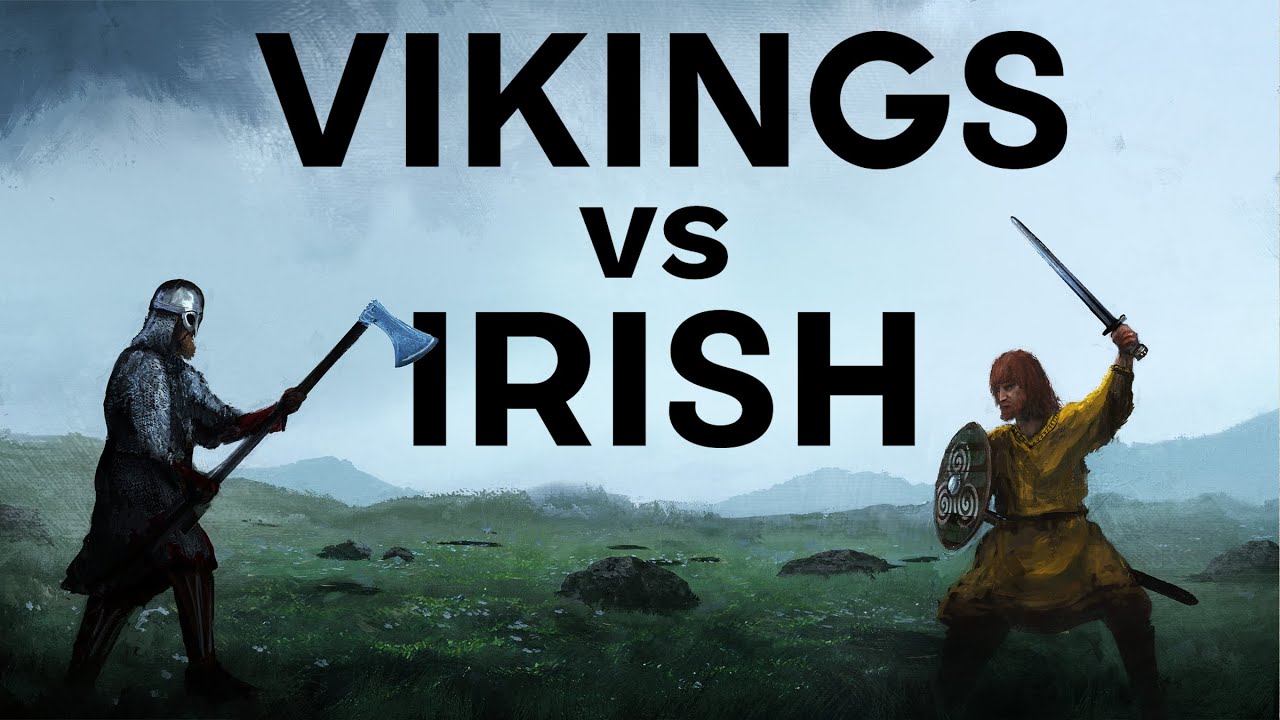
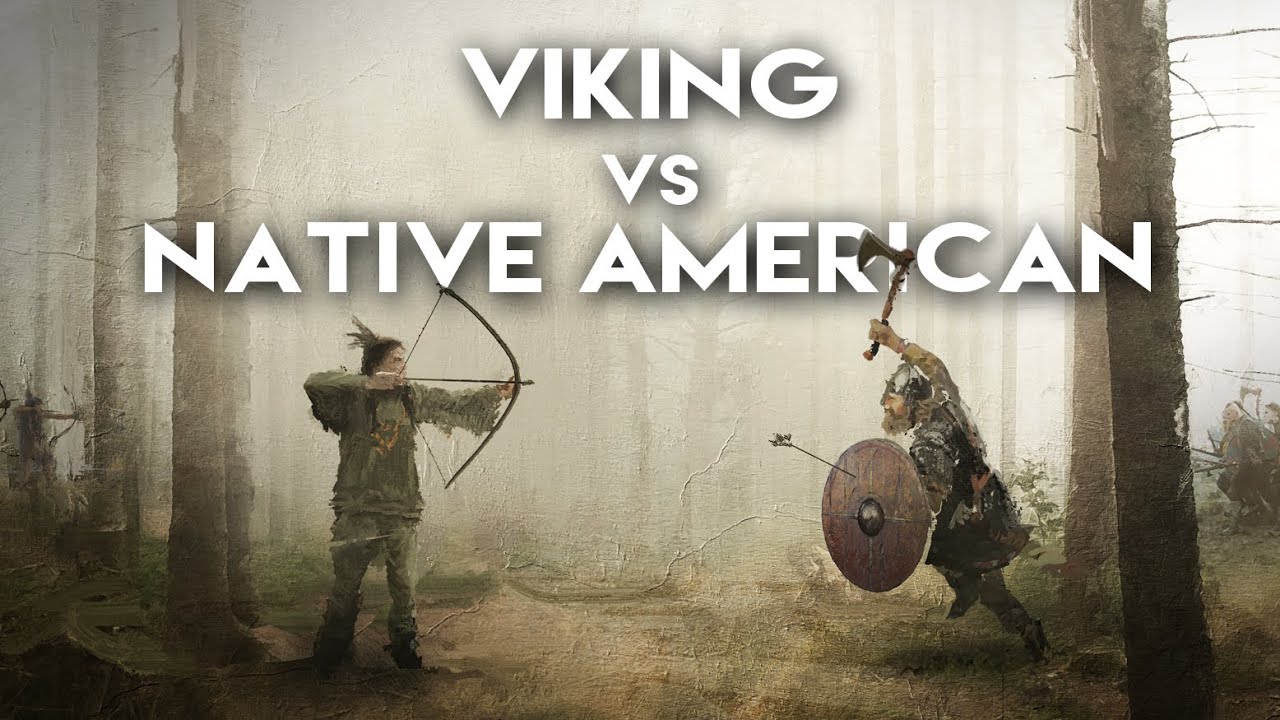
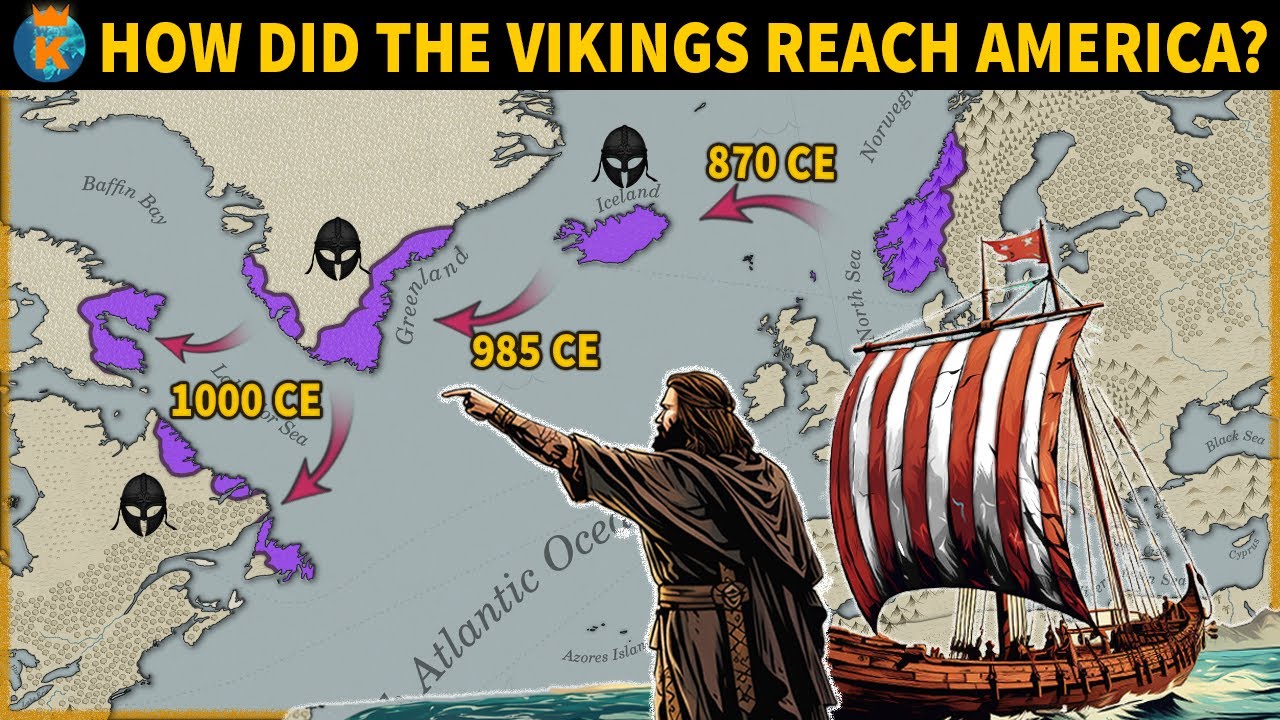
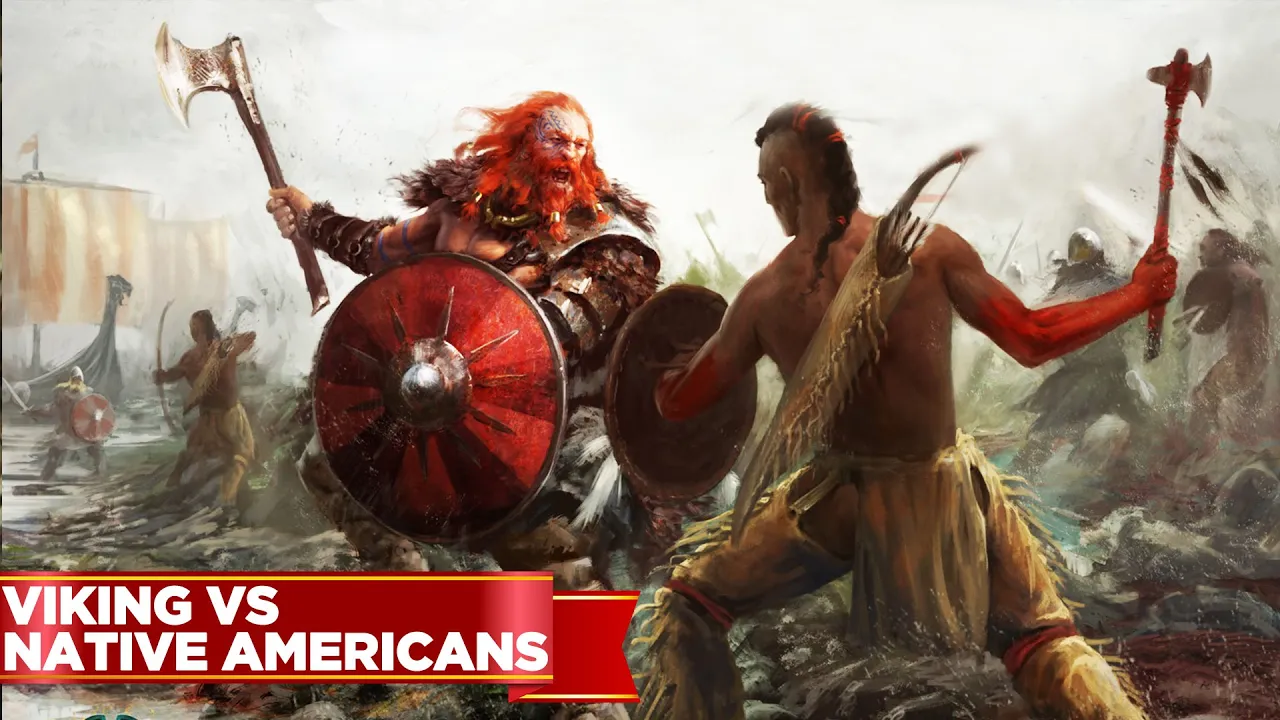
as quickly as they came they left stories of Vikings in North America tell a mysterious lands and foreign tribes known only as scrailings it was 1000 A. D for nearly 12 000 years the Americas had been cut off from Eurasia civilizations developed on each side without knowledge that the other existed nearly 500 years before Columbus sailed the ocean blue the Vikings journeyed to the Americas from Greenland and Iceland possibly multiple times and it wasn't very peaceful welcome back to nutty history today we're examining the Viking fingerprints in North America their clashes with the Native Americans and why they disappeared almost as soon as they arrived viewer discretion is advised for this video as some of this video may be offensive or disturbing we the makers of this video in no way support or condone the actions of the subjects featured by around 980 Eric the Red had begun a movement to colonize Greenland and it wasn't exactly by choice Eric was a wild man and had been banished from Iceland for three years because he'd eliminated someone he then named the pretty cold and inhospitable piece of land he found while exploring Greenland to entice people to move there it worked a few thousand Vikings ended up settling down and calling Greenland home Eric then heard of strange lands to the west from a merchant sailor who had been blown off course on his way from Iceland to Greenland Eric's son Leif Erickson was fascinated by the story so sometime around 1000 A. D Leaf set sail with 35 men to find out of this mysterious land existed apparently it did Leif and his men set up camp somewhere and what's thought to be Newfoundland there his foster father tyker was said to have gotten pretty tipsy on wineberries it's thought that Tiger's drunkenness could have come about from eating fermented cranberries gooseberries or squash berries all of which grew wild in the region leaf and his crew didn't stay very long though they eventually left and headed back to Greenland there are no accounts of encounters with Native Americans during Leaf's brief visit to the new world the Viking greenlanders had probably met some Native Americans in Greenland however there's evidence that they traded with the thul ancestors of the Inuit Ivory carvings of Norseman have been found at Thule archaeological sites as well as iron and bronze tools that the Thule weren't capable of making themselves it's thought that the Viking name for Native Americans scralines probably originated from the old Norse word Scruff which means dried skin most likely a reference to the animal pelts worn by the Inuit ancestors in any event Leaf's brother thorvald ended up making a second voyage West a few years later thorval and his men set up shop for the winter at the camp Leaf left behind in the spring the Vikings came across nine natives sleeping under skin covered canoes and attacked them eliminating all but one the one who survived ran to get enforcements a battle ensue and thorpole lost his life to an arrow despite tense relations with the Native Americans the Vikings ended up staying another winter before heading back to Greenland a few more years would pass before another Norseman made the journey to the new world this time it was thorf and Carl cefni thorfin was a wealthy Merchant with a distinguished lineage he organized a far larger Expedition than either of the Erickson Brothers had with three ships between 160 to 250 men and women and livestock thorfin's Expedition ventured farther south than either leaf or thorvalves they ended up settling in a place called there they encountered more scrailings it started off peacefully enough the two groups barted with each other with the Native Americans trading Furs for a red cloth and a wondrous liquid called milk that came from the cattle the Vikings had brought over but then things took a turn the Viking colonists lived on a knife's edge with the native peoples and there were increasing instances of hostility and outright fighting it all came to a head when according to One account a bull from the Viking Camp got loose and frightened a group of Native Americans they fled but came back in greater numbers ready to fight they attacked the Vikings with catapults and a legendary battle ensued it could have been the last straw for thorfin and his prospective Colony they abandoned the site and returned to Greenland no European would attempt to settle in the new world for hundreds of years unfortunately there isn't much evidence or archaeological finds able to back up the presence of Vikings in the Americas there are a few however such as Lance armetto's in Newfoundland which might be one of the most intriguing archaeological sites in the world back in the 1960s a Norwegian couple kelji instadt and Ann steiningstadt began scouring the northeastern Canadian Coast hoping to find archaeological evidence for the places mentioned in the sagas on the Northern tip of Newfoundland they found it Lance on Meadows has become the only confirmed Viking settlement in North America the site includes the remains of eight sod houses evidence of iron work that couldn't have been done by Native Americans and a boat building frame experts think the site could have possibly been a ship repair center partly because of the physical evidence for boat building and partly because the settlement sits at a perfect spot for hopping across the North Atlantic to Greenland a final piece of evidence confirming that Lancel Meadows is indeed a viking settlement is a small but significant little pin the bronze pin with a ring at the end was likely used to attach a cloak around the neck and it is most definitely Viking there have been others just like it found at various Viking archaeological sites in Scotland and Ireland and they've all been dated to between 9 20 and 1050 A.
D one of the only other pieces of hard evidence for Viking presence in the Americas was found farther south on a beach in Brooklyn Maine one day in August of 1957 an amateur archaeologist named guy melgren discovered a curious old coin at first he suspected it was a medieval British Penny but then in 1978 experts identified it as a Norse coin that was minted between 1065 and 1093. the site where the coin was found called The Goddard site includes a huge number of arrowheads leading some to speculate that the arrival of the coin coincided with the arrival of archery among the Native Americans in the region were they taught by ancient Viking visitors The Goddard coin was met by a significant amount of skepticism by historians and archaeologists there had been some fakes in the past regarding the Viking discovery of America including a hoax map and a fabricated runestone with Norse inscriptions found in Minnesota however the norsecoin has been held up to scrutiny by experts who agree that it is original and that it had all the wear and tear of a coin buried for centuries we don't know a lot about the Vikings settling in the Americas for periods of time but we do know of three expeditions to the new world because of two sagas The Saga of Eric the Red and The Saga of the greenlanders together they're known as the villain sagas both were written down a couple of hundred years after the events that they relate from around the year 1000 they differ in some respects but tell the same basic stories about Viking settlements in North America however there is Mysteries surrounding where exactly they landed the sagas mentioned three main places helulan Markland and Vinland helderland was the farthest north and means land of flat stones in the middle there was Markland which means land of forest and far the South was Finland which means land of wine there's lots of speculations about where exactly these places are based on how their Landscapes are described in the sagas some think Helen could be Baffin Island in the northern Canadian territory of nunafute marklin has been hypothesized to be a labrador farther to the southeast and Finland is thought to be modern day Newfoundland another mystery surrounds the location of thorfin's camp stromfurd and the sagas Strom Fjord is described as having strong currents with high tides a bay that acted as a natural Harbor craggy rocks in the distance a winter where the sun rose by mid-morning and set in mid-afternoon and so many birds nesting that it was hard not to step on eggs various places along the northern coast of North America have been proposed for the location of strong Fjord based on these descriptions from the Bay of Fundy and Lance armados in Canada two Buzzards Bay in Massachusetts and even as far south as the Long Island Sound in New York a final piece of the Vikings in America mystery has to do with why they didn't stay why couldn't these Fierce Warriors survive in the Americas for more than a few years why didn't they set down Roots why doesn't a significant portion of the population in North America today speak Norse lots of people have speculated about the reasons for this maybe they didn't bring enough people and supplies with him on their expeditions maybe they were driven out by hostile Native Americans but one of the leading theories has to do with the weather during the 11th century leaf and thorval Ericsson and Thor Finn calcefni LED their expeditions to the new world the climate was warmer it's known as the medieval warming period and because of it there were warmer Summers and less Arctic sea ice but then it got colder starting in the 12th century what's become known as the little Ice Age caused temperatures to drop and Ice to accumulate making many of the sea routes impassable it also made life on Greenland and Iceland very difficult for the Vikings evidence points to food shortages and plague between 1250 and 1700 Iceland's population fell from 150 000 to just 50 000.