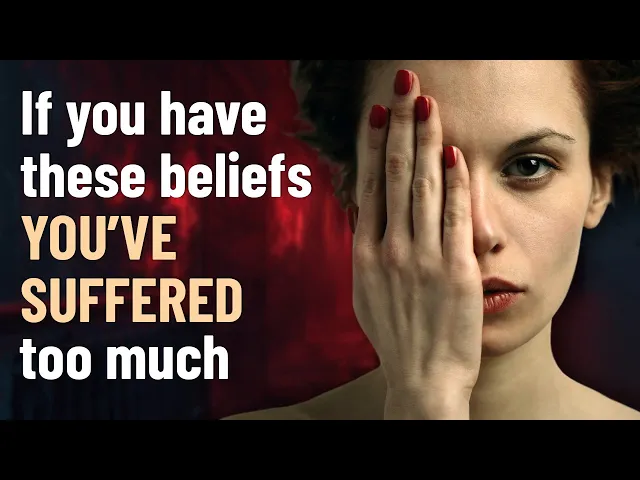
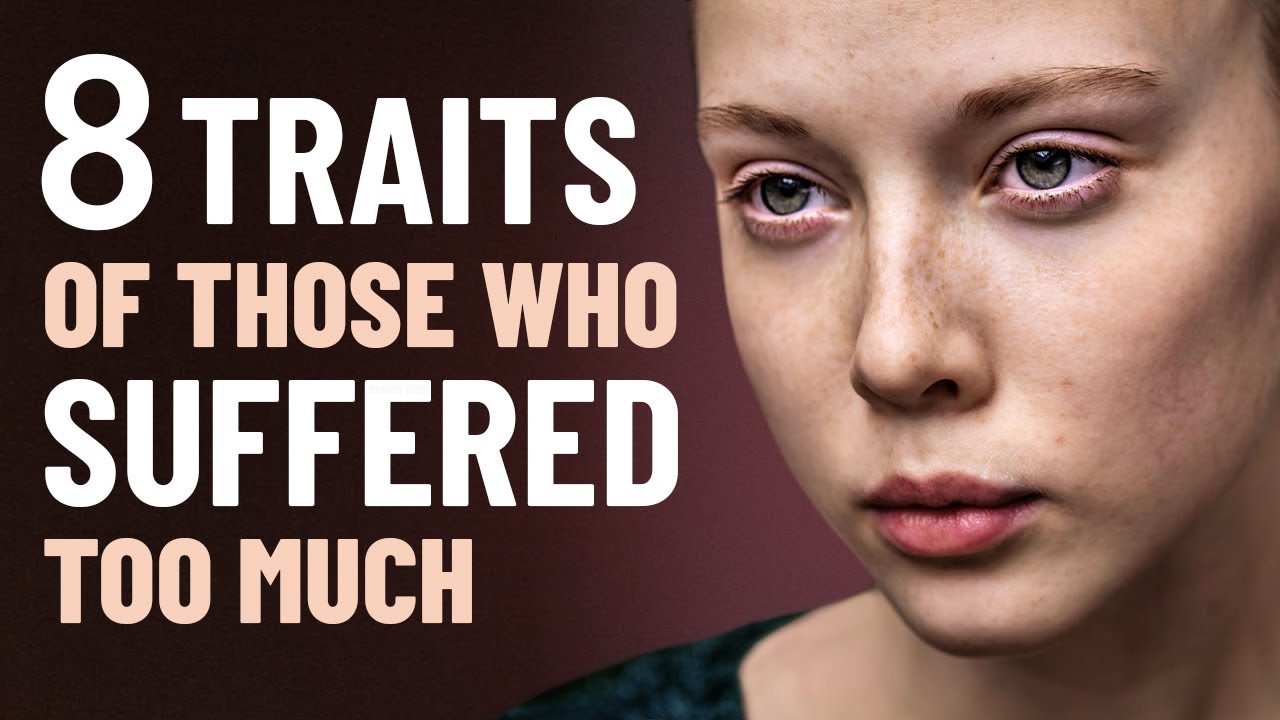
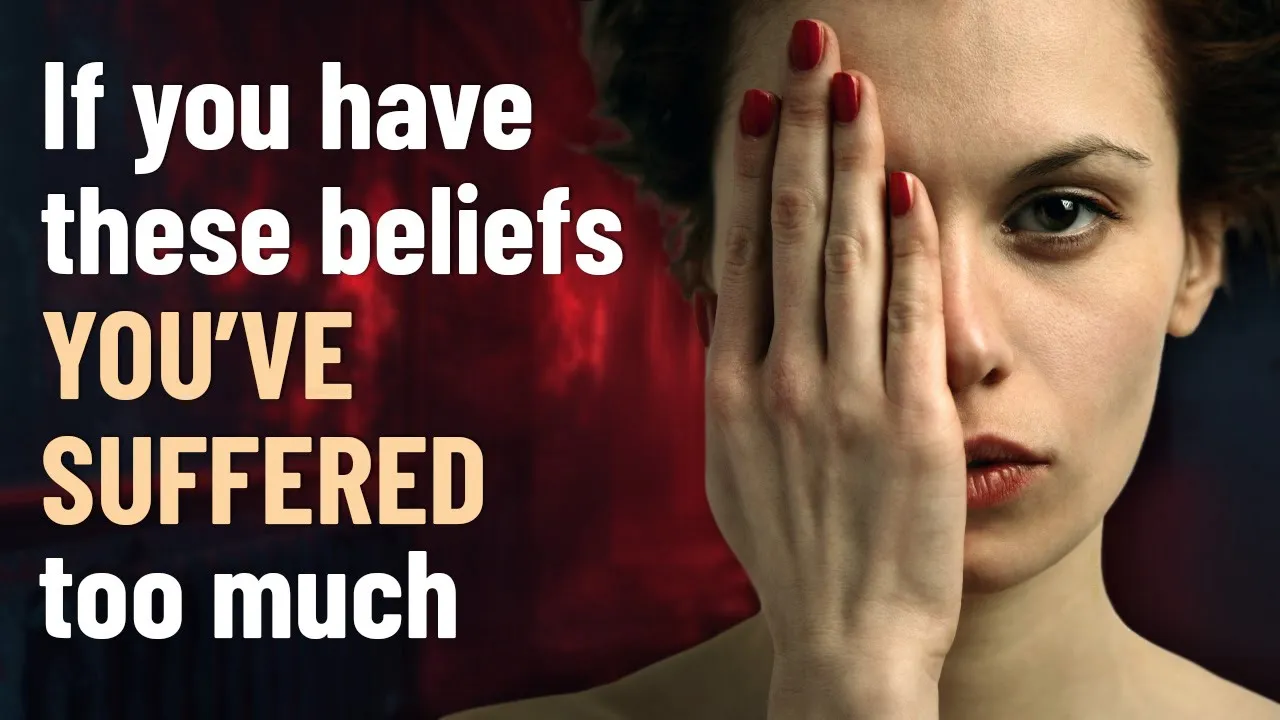
Brainy Dose presents, if you have these beliefs, you’ve suffered too much. Suffering leaves marks that aren’t always visible, but they show up in the way you think, feel, and move through life. When pain becomes a constant presence, it shapes your beliefs, often in ways that hold you back.
You start to see everything through the lens of your past wounds, convincing yourself that trust is dangerous, rest is undeserved, and happiness is fleeting. If you recognize these beliefs in yourself, it’s not because they are true; it’s because suffering has trained you to think this way. But acknowledging them is the first step toward unlearning them.
With that in mind, here are the silent, deep-seated beliefs that might be keeping you trapped in the past. Number one, I can’t trust anyone completely. Trust is the foundation of healthy relationships, however, when you’ve been hurt too many times, it starts to feel impossible.
If people have betrayed you, lied to you, or abandoned you when you needed them most, your brain naturally starts to assume that trust equals danger. You begin to see vulnerability as a weakness and hesitate to rely on anyone, even those who have never given you a reason to doubt them. This makes relationships exhausting.
You find yourself analyzing every word, every action, searching for hidden motives. You might even sabotage connections before they have a chance to grow, just to avoid the pain of future disappointment. While caution is wise, shutting everyone out isn’t the answer.
The challenge is learning to differentiate between those who deserve your trust and those who don’t, and that takes time, patience, and self-compassion. Number two, if I express my needs, I’ll be a burden. If you grew up in an environment where your needs were ignored, dismissed, or met with frustration, you might have learned to suppress them entirely.
Over time, you start to believe that asking for help means you’re a nuisance, that people will only tolerate you if you remain self-sufficient, agreeable, and low-maintenance. This belief creates a draining pattern of over-giving and emotional suppression. You may struggle to communicate when you’re hurting, convincing yourself that other people have bigger problems or that you should be able to handle everything on your own.
The truth is, expressing your needs doesn’t make you a burden, it makes you human. The right people will never make you feel guilty for needing support. Number three, I’m not allowed to rest.
For some, rest is a luxury. For others, it feels like an act of defiance. If you’ve suffered too much, you might have internalized the idea that your worth is tied to your productivity.
You feel guilty when you take breaks, as if every moment must be spent proving your value to the world. The result is burnout, both physically and emotionally. You push yourself to exhaustion, convinced that slowing down is lazy or selfish.
But rest is not a reward, it’s a necessity. You need to recognize that you don’t have to earn the right to exist. You are valuable, even in moments when you’re doing nothing at all.
Number four, my worth is based on what I can do for others. In a similar vein, many who have suffered develop a deep fear of not being enough. You might believe that in order to be loved or accepted, you must constantly prove your usefulness by being the one who always listens, always helps, always gives.
This belief often stems from childhood experiences where love was conditional. Maybe you were only praised when you achieved something or received affection only when you were making someone else happy. Gradually, you started equating self-worth with self-sacrifice.
Love and value should not be transactional. You deserve relationships where you are appreciated for who you are, not just what you provide. Number five, I can’t afford to make mistakes.
If failure has ever led to harsh consequences, like punishment, humiliation, or abandonment, you may have developed an extreme fear of making mistakes. You overthink everything, trying to avoid the smallest errors because, in your mind, even minor slip-ups can mean rejection or shame. This really stifles growth.
Instead of taking risks, you play it safe. Instead of exploring new opportunities, you stay in your comfort zone, afraid of what might happen if you mess up. Look, mistakes are not proof of inadequacy; they are proof that you are learning, evolving, and human.
The only way to truly fail is to let fear keep you from trying at all. Number six, if I let my guard down, I’ll get hurt. Pain teaches us to protect ourselves.
If you’ve suffered too much, you might have built walls around your heart, believing that staying emotionally distant is the only way to avoid future heartbreak. While boundaries are important, complete emotional isolation only deepens loneliness. Not everyone will hurt you the way others have.
Letting your guard down doesn’t mean exposing yourself to harm. It means allowing yourself the chance to experience deep, meaningful connections. Little by little, at your own pace, you can begin to let in the right people and create the safety and trust you may have been missing.
Number seven, happiness is temporary. When you’ve experienced too much loss, disappointment, or heartbreak, happiness starts to feel like a trap. You’ve been let down too many times to be able to fully embrace joy, so instead, you keep your emotional guard up, always waiting for the other shoe to drop.
This belief steals the beauty of the present moment. Even when things are going well, you struggle to enjoy them because you’re bracing for an inevitable downfall. In reality, happiness isn’t always fleeting, it’s just that suffering has trained you to expect it to be.
Finding ways to welcome joy, even in small moments, can help break the cycle of fear and allow space for peace, laughter, and lightness. Number eight, I must always be in control. When life has been unpredictable or painful, control can feel like the only way to stay safe.
If you’ve been blindsided by betrayal, loss, or unexpected hardship, uncertainty feels like a threat rather than a normal part of life. To protect yourself, you try to manage every detail. Planning, anticipating, and micromanaging everything in an attempt to prevent bad things from happening.
But control is an illusion. No matter how much you plan or prepare, life will always be unpredictable. The more you cling to control, the more exhausting it becomes.
Learning to let go is not about accepting chaos. It’s understanding that flexibility, resilience, and ‘trust in yourself’ are far more powerful than trying to dictate every outcome. I’ll say it again, these beliefs are not truths, they are echoes of past wounds.
They were formed in moments of suffering, but they don’t have to define you forever. So, start questioning them, challenging them, and rewriting them. You are not your trauma.
You are not your past. You are someone who has endured, survived, and is still standing. And that means you have the power to heal, grow, and believe in a life that is bigger than your pain.
If you enjoyed this video, give it a thumbs-up, and share it with your friends, so we can keep making them. For more videos like this, hit the subscribe button, and don’t forget to click on the notification bell. Also, to learn more about many other interesting topics, be sure to check out our other videos as well.
Thanks for watching!