Hey everyone it's Triston and welcome to your undivided attention the great late media theorist Neil Postman liked to quote Aldis Huxley who once said that people will come to adore the technologies that undo their capacity to think he was mostly talking about television this was before the internet or personal computers ended up in our homes or rewi our societies but postmen could have just as easily been talking About smartphones social media and Ai and for all the ways television has transformed us in our politics our eating habits our critical thinking skills it's nothing compared to
the way that today's Technologies are restructuring what human relationships are what communication is or how people know what they know as Postman pointed out many times it's hard to understand how the technology and media we use is changing us when we're in the thick of It and so now as the coming wave of AI is about to flood us with new technologies and New Media for it's never been more important to have critical tools to ask of Technology's influence on our society and Postman had seven core questions that we can and should ask of any
new technology and I'll let him tell you in his own words what is the problem to which a technology claims to be the solution whose problem is it what new Problems will be created because of solving an old one which people and institutions will be most harmed what changes in language are being promoted what shifts in economic and political power are likely to result and finally What alternative media might be made from a technology now I I think about these questions often and it may not surprise you to hear that today's episode is one I've
been wanting to do for quite a long time Since nail postman has by far been one of the most influential thinkers for my own views about technology his ideas have been so cleare eyed preed starting in the 1980s about the role of technology in shaping society that I wanted to dedicate a full hour to exploring them so today we invited two guests who thought deeply about Neil's work Shan illing is a former Professor who now hosts the gray area podcast at Vox and has often written and discussed Post's relevance to our current cultural crisis we
also have Lance Strait a professor of communication at forom University he was actually a student of postans at NYU and spent his career developing the field of media ecology that Postman helped create Sean Lance thanks for coming on your invited attention glad to be here thank you you know for me Neil postman has been such a profound influence on our work so in 2013 when I was kind of Having my own Awakening at Google that there was just something wrong in the tech industry there was something wrong about the way we were going to rewire
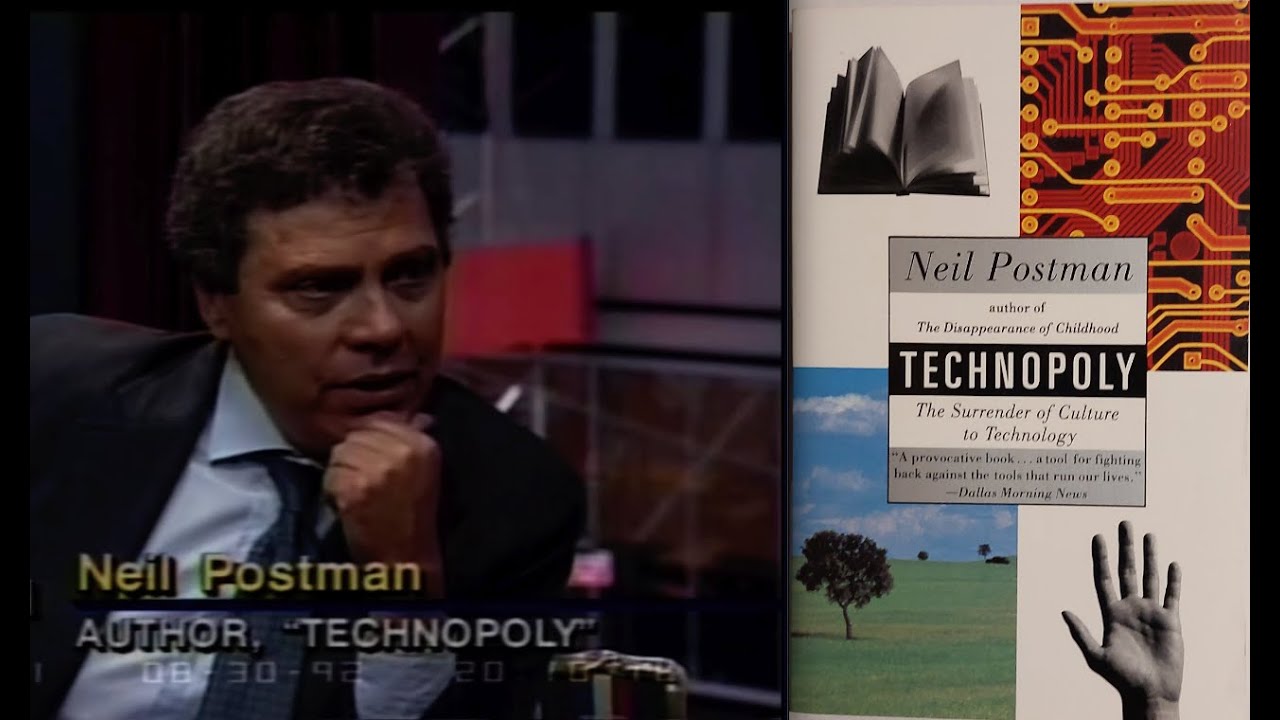
the global flows of attention uh and something wrong with the the scrolling Doom scrolling culture that I saw on the Google Bus and I you know used to be someone who really deeply believed just in this kind of um you know Tech is only good we can only do good with it it's the most powerful way to make positive Change in the world and it was this friend of mine Jonathan Harris who is an artist in in Brooklyn who first introduced me to Neil postman's work and you know his books technopoly and amusing ourselves to
death and I just could not believe just how preent and just prec prise he was in his analysis and I have been wanting to bring Neil postman's um you know just really critical insights to our audience who include a lot of technologists for such A long time so I'm just very grateful to have both of you on and um hope we can have like a really rich conversation so um just to sort of open with that that's great I think I got Postman pilled back in 2016 or 2017 and it's it uh I mean I
came up as a political scientist political theorist that was my education and we didn't really encounter any of this stuff right uh but once I sort of internalized the media ecological way of seeing things it really kind of changed How I understood all of politics it's pretty profound what was your entree into postman's work and what you see as kind of his critical insights in 2016 I was invited by a former uh classmate of mine to give a talk at Idaho State um this is sort of right in the beginning of the Trump erir and
all the chaos um involved with that and I gave my little talk and then I went for a hike with my buddy who's a media theorist and we got to talking and at the end of that he Sort of introduced me to postmen and media ecology and that was sort of the The Germ of the book that we ended up writing together the Paradox of democracy which came out in 2022 um but before that I had never really encountered uh mediology Neil Postman and for me the value of these great media EOL is that they
really Force us to stop looking at media as just a tool of human culture and Instead to see it as much more as a driver of human culture and this changed the way I looked at the political world I mean what you discover when you look at the history of democracy and media is that all of these Revolutions in media technology the printing press the telegraph radio film TV the Internet it's not so much that these Technologies are bad had it's that they unleash new rhetorical forms and new habits and new ways of thinking and
relating to the World and each other and that's very disruptive to society and the established order and we're sort of living through that I could go on but I'll I'll pause and and let Lance speak Lance H how about you how did you first get into this work and uh starting with your being being a student of Postman well I mean I could go back to the 7s um as an undergraduate in a class on educational psychology uh postman's first big book Teaching as a subversive activity was uh on the reading list and that was
when he was still following mclan with the argument that we need to adjust ourselves to the New Media environment just to note for the audience Marshall mclan is another very influential media ecology thinker from Canada who famously coined the idea that the medium is the message and you hear his name throughout this conversation but I first uh read him in I guess uh in in 79 with teaching As a conserving activity which was also when I first uh met him and uh that's where he did his about face um although maintaining the mediology Outlook but
arguing that we needed to counter the biases of Television because we're inundated with it and when Postman introduced the um idea of media ecology and he gave it a very simple definition that it's the study of media as environments and once we understand that then it's no longer just a tool that we Choose to use or not use and we have complete control over but rather it's like the environment that surrounds us and influences us and changes us and when we look at Democratic Society and Democratic politics that was shaped modern democracy was shaped by
by a typographic media environment and that television is reversing so many of those characteristics and is really question about what Will Survive that uh of the various institutions that grew up within The media environment formed by print culture so there's just already so much to dig into here so let's set the table a little bit for listeners um let's let's start by talking about Neil postman's book amusing ourselves to death which is really a critique of television and how the medium of television and taking over society and transitioning us uh from Lance what you're just
talking about of a typographic culture to a television Culture would completely shift and transform public discourse uh you know participation democracy education does one of you want to take a stab at kind of the cliffnotes version of postman's argument before we dive into specifics well I mean it it really is the shift from typographic era to the television era and that that um has undone a lot of key elements of American culture um you as you may know I did a book that followed up on on amusing ourselves to Death called amazing ourselves to death
and I don't I I don't think Postman quite made it overt in amusing ourselves to death but he has four case studies you know and there're the news politics religion and education and how each one has been transformed in a negative way from by by television and I what I tried to explain is that what Postman Hit Upon there are the four legs that the table of American culture stands on politics Democratic uh you know elections Obviously journalism the you know um as the first amendment and the way that uh makes possible Democratic participation absolutely
often overlook but religion forms the kind of moral and ethical basis that our Republic was founded upon and then education as the promise that uh people will be literate like the bottom line of education is Reading Writing and arithmetic that people will be a lit will be literate enough to uh be able to govern themselves to get Access to information and and think rationally and make good decisions Sean do you want to add to that there's there's so much here I mean when people talk about you know typographic culture versus televised culture let's just zoom
into what do we really mean because so much of Postman and Marshall mcclan is is essentially a kind of holding up a magnifying glass to the invisible when we say it's structures you know the way that we think like what do we actually Mean by that what's the phenomenology of reading text on a page that's so different from uh you know watching this podcast in a video right now well for me I mean the point in all of this is to get us to really see how every medium of communication is acting on us by
imposing its own biases and and Logics and they are different you know I mean Postman talks about so you know you have the printed word what is it to read a book what is the exercise of reading It's deliberative it's linear it's rational it's demanding what is TV it's visual it's discursive it's entertaining it's all about imagery and action and mve movement what is social media it's reactionary it's immediate it's algorithmic it it kind of supercharges the discontinuity of TV and monetizes attention in new and Powerful ways right and like once you have this media
ecology framework you look at the eras of politics that coincided with these Communication Technologies you can see it in the language of politics you can see it in the kinds of people that win elections how they win those elections how they appeal to people you can see it in the movements and the dominant forces at the time and like I was saying it still blows my mind that I made it through a graduate education and political Theory and we never managed to read any media ecology because it really is especially in a free and open
Society Where people can speak and think uh and persuade one another it's a kind of Master variable that's not often seen as that but it should be so so let's dive into that just for a second so you know people think okay we live in a democracy you have candidates those candidates debate ideas they have their platforms they talk about themselves and then voters are sitting there and they kind of take in all those arguments and they make a rational choice and that's just Democracy and democracy is democracy it doesn't change over the last 200
years so let's just um explain uh Sean what you were just saying maybe Lance you want to do this uh in what way does does media Define the winners and losers of our political world I mean Postman gives so many examples but well I I I think we have to start with the fact that uh you know democracy was founded on the idea that uh people have can have enough access to Information to make decisions you know but it it also presupposes that people will talk to one another and be able to speak in a
rational way I mean postman's kind of uh wonderful illustration is of how people went uh to listen to the Lincoln Douglas debates for hours upon end and you can imagine there was a carnival like atmosphere but still that people were willing to sit and listen for for whatever 6 hours of debating going going on whereas today everything Is reduced to these sound bites you know these 10c sound bites and and so uh and you know Postman points to two key Technologies in the 19th century that um start the ball rolling away from typography and ultimately
come together with television one is TE the T graph because just by speeding things up we have no time to think and reflect and and that really is harmful so just the speed at which we're moving right which we see today where We've you know in this moment we feel overwhelmed and there's like a new story every few hours some new thing happening and we don't know what to do and the other thing is the image the photography of the 19th century becomes the dominant mode of communication uh so between the two it's all about
appearance and personality that's that's uh communicated over the televised image and this rapid turnover that favors celebrity and fame over Substance yeah can I just say something real quick sure um the the telegraph is such a a good example of like a practical example of mclin's you know the medium is is the message you know that how the the medium itself the technology itself doesn't just influence uh content it it really dictates what it actually means you know and I was going back and and I was reading thorough actually when I was researching my book
and you know thorough was talking about The telegraph as a kind of Proto social media that it was that was actually he's arguing that it's actually changing what constituted information that with the telegraph it became a commodity to be sold and bought right we get the the the birth of the penny presses and tabloid journalism and for him that was sort of the end of the idea that information was something that was definitionally important or or actionable it just became another source of entertainment It became a consumer product so much of our work in this
podcast and at CHT obviously it's like there's this question of why does any of this matter like why why are we here talking about this and it's because technology and media are having a bigger and bigger influence on constituting our culture people always say you know if culture is Upstream from politics then now technology is constituting the culture that is Upstream from politics uh I was Just at at Davos in um in Switzerland and I would say the most popular question being asked and it was like right on Inauguration Day January 20th and basically the
dinners I was at people said what do you think will matter more in the next few years the choices of political leaders or the choices of Technology leaders and companies and especially when you tune into Ai and so I just want to ground this for listeners of like why are we Even talking about this it's because technology is going to structure what a human relationship is what communication is how people know what they know the habits of mind so I just want to just make sure we're returning to kind of set the stakes of why
this is so important because so often I think the thing that's that's problematic for me about Postman is it just feels so abstract mclan the medium is the message it doesn't hit you about how significant That idea is so I just want to return Lance to the thing you were saying about um the Douglas Lincoln debates in the 1800s I think most people don't know we kind of re pasted it they debated for 3 hours each I believe it was one guy took 3 hours then the next guy took three hours and then there was
like an hour rebuttal can you imagine 7 hours of political debates that are long form speeches in front of live audiences and just what a different notion of the word Democratic debate so here we are we're using this phrase democratic debate but the mean meaning of it has completely shifted of what constitutes those two words in you know the year 2025 uh then the year 18 you know 62 and so let's just dive into I think another aspect of why this matters which is the power that media confers in the way it sets up um
what kinds of people uh uh win or or lose Sean you looks like you're trying to jump in what's interesting is that You know for postmen the TV erir was all about entertainment right so like everything that unfolded on on or through that Medium had to be entertaining because that's what the laws of TV demand but this era where TV is still around it still matters but not nearly as much there's there's much more of a convergence with other mediums like the internet and social media which are now more dominant really culturally and politically and
on these mediums it's Not about entertainment so much as attention the attention economy is mastered now right so in the TV era politicians really had to be uh attractive and and likeable they had to play well on TV now they just have to know how to capture and hold attention which means leaning into spectacle and provocation and performative outrage or virtue as the case may be they dictate a different kind of political skill set to win one one of the reasons why both Postmen and mclan are so preent uh at least that people think of
them that way you know that they're what they were talking about largely television and yet it seems to apply so well to today and for some for many people really it seems to better fit today is that their analysis was based not on not just on the specific medium of Television but on the idea of electronic media generally uh but I think entertainment was was postman's way of getting at the larger Point which is that it's trivial it's not serious and what catches our enter our attention It's a larger set of Dynamics and entertainment was
just kind of way of pinpointing but it really is that non-serious trivialization it's a different kind of entertainment so I just want to um name a push back that I got when I remember speaking to these arguments in the tech industry when I was at Google in 2013 Which is people some people might say why is that a problem if people like to amuse themselves people like Amusement um don't we all need some amus Amusement uh in in the world um what would you say to that or what would postman's argument be against that well
Postman wasn't against Amusement you know he said television is great the best thing about TV is junk he loved TV uh especially Sports um you know we we actually bonded together as Mets fans uh although his Real love was the Brooklyn Dodgers but you know in in their absence uh it was the Mets uh he also and he you know loved basketball um and and all of that I mean Sports is one of the great things that television can can provide and it's awful for politics it's awful for religion and it really has degraded religious
uh you know um participation and presentation by putting it on on television and also you know through uh social media and and uh and and all the Other uh advances that that we've seen um and it's bad for education son I would go back to what you were saying earlier about distraction which is a really important word I think that's more closely pegged to the the role of Technology here fragmenting our attention pulling us around like Greyhounds chasing around a a slab of meat I mean I you know I was talking to Chris Hayes the
other day who was on my show with and he has a new book out About attention and and the fragmentation of attention and really sort of the death of mass culture in any meaningful sense right and I was asking him well I mean isn't democracy on some level a kind of mass culture and if we can't pay attention together if we can't focus on anything together then what the hell does that make of our Democratic politics right I mean it that's what concerns me right I mean I Remember you know reading mclan who you know
would talk about media and time and he was so obsessed with electric media because it flattened time and it made everything instantaneous and um and he would argue that this sort of scrambled society's relationship to time and you know like radio and TV and now the internet create this landscape where everything unfolds in real time but you know in a printd dominated culture where you're consuming weekly or monthly Magazines or quarterly journals or books that facilitates a kind of deliberation and reflection that you don't get when everything is so immediate and frenzied and in a
democracy where the Horizon of time is always the ne the hell the next election it's the next new cycle that kind of discourse makes it very hard to step back and think beyond the moment it makes it very difficult to to solve Collective action problems and all the most important problems are Collective action problems totally yeah I think to sort of my interpretation of what you're both saying is that there isn't a problem with people having a music m in their lives or having entertainment it's about whether the media systemically structures the form of all
information in terms of its amusing capability or its entertainment capability and that that systemic effect makes us confused about whether we're actually consuming information or Getting educated versus we're really just being entertained um and he says you know basic quote the television is transforming our culture into one vast arena for Show Business um and that was for the television era when I think about social media era and I think about Twitter or X I think you know social media is transforming our culture into one vast vator Stadium arena for basically drama and throwing insults and
you know salacious tweets uh back and Forth another sort of uh key concept that that Postman is critical of is the information action ratio uh and I remember this actually in the tech industry that so many people and I used to really believe how many problems really had to do with people just not having access to the appropriate information it was just all about information access I mean I had a tiny startup called apture that was was a talent acquired by Google that was all About giving people contextual access to more information I remember it
do you remember that okay yeah yeah it was good yeah well thank you I mean it was motivated by I think the good faith version of this which is that if people don't have imagine you know right when you're encountering something that you have no in basic you have no reason to be interested in the the perfect most engaging you know Professor guide lecturer you know museum curator showed Up and held your hand and suddenly just told you why this thing that you're looking at is the most fascinating thing in the world and that's what
this little apture thing was it was basically providing instant contextual Rich information that was supposed to me to entrance you and and deepen your curiosity and understanding about everything and it was driven by my belief which is very common in the tech industry that it's all about you know Driving so much more information access and if we only just gave people more information then that would suddenly make us respond to climate change or respond to Poverty or do something and so I'd love for you two to articulate what was postman's kind of critique of information
glut and the information action uh ratio he speaks of well you know I his what he would say is that in the 19th century not having enough information was a problem but we solved It we solved it long ago and that's the and that creates new problems s because we just keep going and going and going you I mean I would say you know think about how most of human history not having enough food was a problem and today we are wrestling with the you know the issues of obesity um because we solved that problem
a long time ago we've got plenty of food but we just keep going and going and going so I mean this was actually one of mcl's points is That you push things far enough and you get the reverse you you get it flipping into its opposite it so information scarcity um by solving it we get we create a new problem of information glut and that leads us you know as you say since most of that we're we're powerless to do anything about it leaves us with irrelevant information leaving us feeling impotent powerless which again I
think a lot of people are feeling particularly right Now yeah I always found with those types there's a tendency to conflate information and Truth as though they're the same and they are not the same I don't know how anybody can look at the world right now and say that this uh super abundance of information has been a boon for truth and to to the point that Lance is just making it's this combination of being constantly bombarded with information most of it some of it true a lot of it um A lot of it terrible being
bombarded with that and also the simultaneous experience of complete impotence in the face of that we've also engineered an environment that elevates the lies it elevates the falsehoods it elevates the distractions it elevates the things that stimulate our more base Primal impulses and uh in that in the contest between uh diversions amusements provocations and uh dispassionate truth I think we all Know who's going to win that fight 99 times out of 100 and I would really think it's really important to distinguish between information and knowledge and knowledge is something that we largely got from books
um and information is something that we're inated through the electronic media and it isn't doesn't really have to be true or false uh and that's why in a way the distinction well while valuable in some context but the Distinction between misinformation disinformation and just information is not that important because it that you know when we have information glut anything goes you can't you know you can't tell what's what because it's not relating to anything out there things a critical point that you're making because even let's say uh we solved the misinformation disinformation problem boom it's
gone it's all gone from all the Airways you're still just bombarded By information glut and information that doesn't give you agency over the world that that you're seeing the company's profit from mistaking and reorienting or restructuring what agency means in terms of posting more content on social media so I see the social cause that's driving me to emotion and then I hit reshare and think that I've like done my social action for the day I think Malcolm Gladwell wrote about this like 10 years ago um so that the kind of failures of Of tech solutionism
I'm going to reshare this content what I'm really doing is actually driving up more things for people to look at and keep getting addicted on social media so I'm perpetuating the money printing machine that is the social media company I want to actually get us to AI because so much of this conversation was really motivated for me about how do we become a more technology critical culture which I think is what Postman was all about It's like what does it look like to have a culture that can adopt technology in conscious ways aware of the
ways it might restructure Community habits of mind habits of thought Education Childhood development and then consciously choose and steer or reshape that that technology impact dynamically such that you get the results you would want by adopting that technology and in doing that I think I want to turn at this point in the conversation to his Other book uh technopoly uh which he wrote several years later which the subtitle is the surrender of culture to technology and I think this is actually the heart of what I'm I mean I think that amusing ourselves to death is
a very accessible thing for most people and the race to the bottom of the brain stem and social media as an extension of TV I think technopoly really gets to the heart of what does it mean to have a society consciously adopt uh technology In ways that it leads to the results that it wants and what does that relationship look like so how would we set the table of the argument that Postman is making in technopoly either of you yeah I mean I this book was very interesting uh in a lot of ways his idea
of technopathy is really like a a more accessible expression of heiger critique of Technology Technologies are are things We use in the world to get things done or improve our experience in the world and then gradually as we move into the modern world technology becomes almost a way of being as Postman says we we became compelled by the impulse to invent it's Innovation for the sake of innovation it is a blind Mania for Progress disconnected from any fixed purpose or goal and that's sort of what postmen is calling uh technopathy where our whole relationship to
the world is Defined by and through technology technology is this autonomous self determinative Force that's both undirected and independent Of Human Action and we're almost a tool of it rather than the other way around here's Postman in his own words well in the culture we live in technological innovation does not need to be justified does not need to be explained it is an end in itself because most of us believe that technological Innovation and human progress are exactly the same thing which of course is not so Postman was talking about the personal computer as a
quintessential technology of technopoly I mean my God what would he make of AI which by any measure is and will be far more immersive and totalizing than personal computers I just want to briefly add the quote that Postman cites from thorough since we've mentioned it multiple times that Our inventions are but an improved means to an unimproved end and I think this really speaks to what he's what you're speaking about Sean which is postman's critique that we deify technology we say that efficiency and productivity and all the new capabilities whatever they are that technology brings
are the same thing as progress that technology progress is human progress and this is it's never been important to interrogate the degree to which that's true and and Not true and this is not an anti-technology conversation but it's about how do we get critical about it lanc we going to jump into that well first I'd say that Postman would say that haiger was a Nazi and and should not be mentioned anymore um but uh that the big influences on technopoly were Lewis Mumford who was one of the great uh intellectuals of the 20th century and
and a key medicology uh scholar and then Jac alul Uh and uh it definitely is this argument that particularly in in America it's not about this the stuff it's not about the gadgets it's about a whole way of looking at the world and and that efficiency becomes the only value that we make any decisions on you know that we're which means that it's almost impossible to say know when somebody's goes here's a more efficient way to do this you can do it faster do more with it um and we almost never say no and you
Must have seen this new thing about mirror genes or whatever the the you know mirror bacteria yeah they can create or organisms with mirror image uh DNA which our bodies would have our our immune systems would have absolutely no defense over and so we shouldn't do it well um somebody's going to do it I mean you know that somebody is going to do it because once we have that capability nobody puts a stop to it um you know uh Postman did know about AI cuz that that It's been around you know for uh much longer
than PE you know than this sudden uh you know emphasis on it and Joseph weisen bound who uh somebody that Postman knew I was one of these sort of pioneers in artificial intelligence he did the Eliza program and and in his book uh computer power and human reason you know he introduces the word ought that we've forgotten to use o u g HT you know ought we do this not can we do this but ought We do it and that that is just vanished from our vocabulary uh and you know he argues that we need
to reintroduce it Sean you know I I always think of that uh hilarious John Stewart joke you know that the the last words a human being will ever utter will be you know some dude in a lab coat who says it work worked you I like trist I would ask you a question I mean you you are you are part of this world in a way I am not you talk to these people the people who are Building AI who are who are want to build AGI and whatever else I mean they are acutely aware
of how potentially destabilizing it can be why did they persist in that is it just the simple will if we don't do it China's going to do it or whoever's going to do it and so therefore we got to be first same thing with the nukes I guess related to what what Lance is speaking about that if we don't have a collective ability to choose which Technology roads we want to go down and which ones we don't and if we just say it's inevitable someone's going to do it and better we the good guys who
we think we have better values than the other guys better off that we do it first so we actually even know what the dangers are and can try to defend against the bad guys and I think that the thing that you know um Lance you you were just speaking about with the mirror bacteria uh is is a perfect example because the Reason that Postman questions here about how do we consciously make decisions about what technologies we should do and not want to do rather than just because we can we do it is because AI is
about to exponentiate the introduction of new capabilities into society so it's just it's going to be a Cambrian explosion of brand new text and media and generative everything that you can make you can make law you can make new religions you can make uh you know as we say language Is the operating system of humanity from code to law to language to democracy to convers ation and now generative AI can synthesize and decode and hack the language either of conversation in the form of misinformation hack code in the form of hacking cyber infrastructure hack law
in the fact of overwhelming our legal systems or finding loopholes in law and so as we're unleashing all these new capabilities it is more important than ever that we get an ability to Consciously choose do we want to do mirror bacteria but then the challenge is as technology democratizes the ability for more people to do more things everywhere Beyond Global boundaries our problems are international um but our governance is not International we have National governance responding to Global interconnected issues and then we can see the political headwinds are not really trending in the direction of
Global governance which is looked upon as a kind of a a conspiracy of of people who are out of touch of the national interests of the people which is a very valid critique so yes Sean I'm sort of wanting to play with you here on what's your your relationship to to this question that you're laying out I don't know you know I mean I'm just constantly thinking of what are the trade-offs going to be I mean you just think about the the explosion of of the Internet and the trade-offs involved there you know I one
consequence of that there are a lot of incredible benefits I love the interwebs I use them every day my but one of the consequences of that is the complete destruction of Gatekeepers of any kind of boundaries at all on the information environment so we lost a capacity s uh Society lost the capacity to dictate the stories Society was telling about itself and you know digital just exploded all that you Know the internet is like this Choose Your Own Adventure Playground and it unsettles and and undermines trust you know and you know a lot of people
might say well good uh these institutions the elite were corrupt and untrustworthy to begin with okay fine but we tend to underappreciate how much what we take to be true is really just a function of authority most of us haven't observed an electron or melting Glacier we take it to be true Because we believe in the experts who tell us these things are real and we believe the video clips on the evening news of glaciers melting but if that trust is gone and the infos space is this you hopelessly fragmented thing riddled with deep fakes
and misinformation and consensus reality isn't possible anymore then where does that leave us I will say I I think there's actually a way to get to a good world it's just we have to Distinguish between the internet being a problem versus the engagement-based business models that profited from drama derivatives you know the amusement culture the Tweet ification culture um and personalized information bubbles which are incentivized so it's important to recognize the reason we have personalized it's not just that you can Choose Your Own Adventure it's also true but the mass like reinforcement of personal uh
information bubbles is Actually incentivized by the business models because it's better to keep you coming back if I give you more of the thing that got you interested last time and so we can we can split apart the the toxic thing of the engagement based business models from the internet and then I think you could say is there a different design of Internet protocols and and design of of these uh meta monopolies meaning these Network effect based social media uh places where There's only a handful of them could they be designed in a different way
that actually do reward the kinds of mediums that actually enrich and bring out the better angels of human nature and that's still The Optimist in me that believes that it's possible to do that Lance I see you sort of nodding and and also maybe uh skeptically uh nodding your head here so feel free to jump in well I I mean I I think postmen would question whether more technology is the answer And every new innovation create solves some problem problems but creates many more which we then solve by more Technologies and we just it just
keeps expanding and expanding and expanding that way and you know when I teach my students mediology I I try to emphasize let's think about what are the useful what are the appropriate um uses for this particular medium and then what's inappropriate and you know if we can start with that then uh you know that The internet uh or various aspects of it are great for certain things and they empowered people who were you know kind of in minorities and and brought together people uh who were having difficulties in a lot of ways I I can
speak just in terms of my own family with having raised an autistic uh child that uh you know parents of autistic children largely unable to like go to a self-help group in person because your hands are full and being able to uh Communicate oh over a a discussion list or or group um online was was you know very valuable so you know this is where you know we face this problem of trying to you know trying to evaluate the costs and benefits I actually feel like there there is a vision of a world that would
work and I agree with you Lance that it it actually it takes asking what are the appropriate uses of a technology and the actively inappropriate uses and then consciously designing our social Structures our social norms our culture like not designing but like you know uh practicing cultural values that allow us to say what how do we reward those appropriate uses and anti-reward the inappropriate uses now I I want to just move a little bit from admiring the problem because there there's a tendency to kind of reash all these things and I I think that Postman
is unique in offering uh I don't know if I'd call IT solutions but but a form of of taking an Active and agentic stand on technology and he has this famous lecture Series where he outlined seven questions that we can ask of any new technology and he said that these questions are a kind of permanent Armament with which citizens can protect themselves from being overwhelmed by technology um you know the first is what is the problem to which this technology is the solution what is the actual human or social problem for which that technology is
the Solution it's a very basic question but it's a very powerful one so anyway we can go into some of the others but I'm just curious if either of you have a reaction to this or as we move into more of a Solutions oriented posture um you know Sean what what what's your your sense of this I think it's a great question I just go back to what we were saying a minute ago how do we answer it what is a mechanism for having that conversation you know I science is very Good at giving us
more of what we want it cannot tell us what's worth wanting in the first place and the problem is I don't know how as a soci Society we have that conversation together about what's worth wanting and then have a conversation about how how to go about getting it I just don't know and the problem with some of these new technologies like AI is it's not even clear what they're going to do you know so it it's it's very hard to Talk about uh the tradeoffs that might be involved but I don't know it's not a
very good answer because I don't have one I guess well and it's it's interesting because I think that um so one of the things that actually excites me about AI is the ability to use it to more quickly augment society's ability to see the downsides and externalities and play out simulations of various new technologies because one of the things that we have To get incredibly good at is actually foreseeing the negative unintended consequences before they happen so you know imagine inventing Plastics but actually knowing about forever chemicals and then taking a left turn so we
don't go down the road of creating more you know pollution then we have the capacity to clean up um and the same thing with with social media um and and that's one of postman's other questions is whose problem is it so if it's you know the Problem of not being able to generate you know content at scale who whose problem was that um this is basic second question the third question is what new problems will be created by solving this problem with this technology so in the case of generative media you know we will create
a new problem of people have KN no idea what's true true because now anybody can create anything and flood the information Airwaves uh and then he asks which people and institutions will Be most harmed by the adoption of this technology so for example Gatekeepers or the idea of trustworthy or having you know any kind of Authority or expertise is suddenly going to be eliminated by the fact that there's a flood of information kind of a denial of service attack on Democracy uh through all this stuff that's coming and then uh he has this really important
subtle question that he asks what changes in language are being promoted by this technology And and I'm curious um Lance if if you have some some examples that Neil has has given on that one because I think it's it's such a crucial one that's very subtle well sure and I think it's actually a very important one and it you're right that it does uh sort of take a left turn from the other questions but um what what what's often missed um when folks just look at like amusing ourselves today and and technopoly um but um
is that postman's Grounding was in the study of language and he was um he started out in English education and and he was also very much associated with General semantics um and which in in a large part is about our use of language and trying to understand uh our misuse and how that changes our thinking I mean I think for me a great example is community and and when you think about the use of the word community in a real Community people are together and they don't all share the Same interests and viewpoints which is
what we mean when you talk about online community virtual community and that's where you get that siloing effect you know in a real Community people have to negotiate with people who are very different from themselves and and find a way to live together and you can't just like pick up and leave you know where you live where whereas on the internet you can just you know click a button and you've left that community and you find One that's more to your liking so that meaning of the word Community I Has Changed drastically by that usage
and and that is also you know you could also connect that back to a kind of orwellian quality because that was um you know the idea in 1984 and it's expressed in the index that we can change the meaning of words and change the way people think uh that may not be happening in um all that intentionally as it was under a totalitarian system and it Actually did happen under Nazi Germany and S and in the Soviet Union um but it's still happening and it's still changing the way we think I think it's an EXC
and feeds back into real community so when people are in real Community their expectations have been formed by these online experiences and these new definitions for Words Sean I guess I've done a lot of Technology bashing here and and I just want to say it's not all of our problems cannot be Laid at the feet of technology I mean it it is also true that over the last three four decades we have stopped as a as a society investing in Social infrastructure community centers libraries third spaces where people can actually get together and talk and
be with one another and engage their community and not just be home alone ordering pizzas with the app so that they don't have to engage with another human being in the entire process right So My worry is that these technologies have pushed Society in a more soulistic Direction it's pulling us more inward um you know like Allah the movie her I feel like that's where we're going where people are just they're they're they're going to be in relationship with chatbots they're going to be you know at home using VR technology or whatever and they're going
to stop going outside and doing things with other people and so we have failed on both fronts and there is A there are policy solutions that could counterbalance some of this if we invested in those things and we we haven't or we stopped and we should again I I agree I just wanted to name one other example of language that change that is is happening Without Really Reckoning with it is elon's redefinition of saving Free Speech when he takes over Twitter to protect people's ability to reach millions of people anonymously inside of a Newsfeed That
rewards the most salacious inflammation of cultural fault lines in the cultural war and like a system that just like rewards the toxicity of inflammation on cultural fault lines everywhere and then saying that that's about Free Speech it's like it's it's a it's a kind of a newei and kind of turn on what what was freedom of speech really meant to protect in its original Essence as defined by the founding fathers and had nothing to do with um or It did certainly did not foresee a world where a single person could reach uh 200 million people
every every day with their thumb as many times as they wanted to um and that's a different thing than the the the deeper ideas and so I just think that that's question of of um language we just imagine a society that is actually asking that question so imagine a sort of a postman informed society and every time there's a new technology rolling out their immediate First thoughts are instead of being entranced by it and deifying the technology and welcoming it with excitement and using it they first ask what is the problem for which this technology
is the solution whose problem is that what are the new problems that are going to be created by this technology what are the changes in language that it's actually hiding from us about the way it's reconstituting things so I just I I feel like that's a Vision of of society that um you know I'm reminded of the I think it's the opening chapter of technopoly where he talks about the story of was it Socrates and and famus umus Theus famus um and and where it's it's really about what what is a conscious adoption strategy of
Technology where I think in that story they're actually talking about should we adopt the written word and they're sort of talking about that as a choice and noticing all the things that that's Going to give and also it's what it's going to do and also which things it's going to undo in the society and and I just feel like that's that's so Within Reach is to have cultures that actually are critical of technology in which you know Postman is part of the curriculum of you know political science science courses at every University and part of
undergraduate education um and it's all the more important because technology is so Central in the fundamental shaping Forces of the entire world so maybe I'm just a dreamer but this is the uh the place where I'm going do you think it's the responsibility of the people building these Technologies to ask themselves these questions or do you think it's the responsibility of the public to ask and answer these questions and then impose their Solutions it's all the more important that the people building it have a critical understanding of what it will do because They're they're being
at the driver's seat and the control panels about how it's going to roll out means that it's it's even more important that they're contending or tending with these questions than it is with the regular public and I think the regular public needs to tend with it as contend with it as as maximally as possible Lance well I I mean the history of invention shows that inventors pretty much are wrong about what their technology is going to Do and so the last people I think Arthur Kesler called them Sleepwalkers you know that uh I I I
television's a great example because when television's introduced or you know especially uh at in the post-war period all of the write up of it is it's going to bring culture into everyone's home they'll have Opera and ballet and classical music and it's going to be wonderful for uh de Democratic politics because we'll be able to televise political conventions And people will see you know uh debate and discussion on political issues um you know and they couldn't be more wrong uh and I you know think there's a great spirit of play that comes with invention it's
just you know to see you know what can be done what we can do but uh you know it's just I I don't even know if an AI program I mean you mentioned this before Tristan but I don't know if that can uh I don't know it can Adequately uh foresee all of the consequences because you introduce a change into a highly complex interdependent system it's going to change something it's going to change other things they're going to interact with one another and it's a complex system for sure yeah you don't know yeah and to
be clear I I want to say a couple things I agree that um we don't inors don't have a good track record of uh foreseeing the consequences Of their invention I do think that there are tools one can use to much better foresee what those consequences will be in 2013 how could I foresee that the attention economy would lead to a more addicted distract and sexualized Society it's because the incentives at play help you predict the outcome and I think an incentive literate culture that follows the Charlie Monger quote you know if you show me
the incentive I'll show you the outcome if we can understand what the Incentives are you can get a very good sneak preview of the future I don't think it's it's a an easy thing to reach for but I think it's something that we need more of if we're going to be a technology enhanced society and actually make it through um because we're quite in danger now Sean yeah look even if the answer to these questions is you know in the words of Nate baratti nobody knows we should still be asking them that would at least
be a start and That's just not something that we've done or are doing I I think one of the real needs is to really reinforce lit y um and that this is ultimately what's being threatened um because that is the foundation of democracy and it's the foundation of the Enlightenment in postman's last book was building a bridge to the 18th century you know which wasn't saying that we should go back to the 1700s but that we should retrieve from that era that literacy Typography the enlightenment and the respect for Science and democracy that existed back
then that we need to reinforce those elements of the media environment that um the electronic media are really doing away with and you know when you say what what is AI what is the problem that AI is going to solve and I actually mentioned it before I mean information glut is one of the problems that it that it's there to solve um but I think one of the problems Is that reading and writing are hard they're hard to do uh anyone who has written a book you know will will tell you that and what could
be more unnatural than sending a a five-year-old uh to sit still for hours on end you know but that's what you need to learn how to read and write um and so what are we doing I mean we and we've been doing this for a long time now we're developing technology to read for us um and to write for us I mean that's What AI voice synthesis and and voice recognition that's what it's all doing um so we don't have to do it ourselves so the way to at least try to mitigate this is by
reinforcing those aspects of the media environment that we still have you know that um that are under assault today yeah I would just say that in a lot of ways the problem of our time is this misalignment between our interest and our incentives and the tragedy really is that we have built tools that Have undermined our capacity to alter our incentive structures in healthy ways exactly exactly that is it that if if all if our whole damn problem could be distilled that's it I don't know what to do about that but that's the challenge ahead
of us and we've got to figure it out completely completely agree if incentives control the outcome then and governance is normally the ability to change what those incentives are you pass a law or a policy and you build Social norms and consensus in order to get that law or policy passed to change and say hey you're not allowed or you can't profit from this thing that would be highly profitable like whether it's you know underage U you know drugs sex trafficing whatever the thing is um so I I completely completely agree I know we're basically
here out of time and just want to close with um this this quote uh that no medium is excessively dangerous if its users understand what Its dangers are it's not important that those who ask the questions arrive at any at my answers or Marshall mcluen this is an instance in which asking the questions is sufficient to ask is to break the spell and that just feels like what we're uh arming here is let's let's arm ourselves with the questions to protect ourselves from getting further overwhelmed and uh also let's be honest about the nature of
what's coming questions are are most important medium That's from language and that's the way that we start start to think about things critically and deeply well no one's going to listen to a three-hour Lincoln style speech to save us so we just need a kickass meme that's going to bring us all together it's your job to find a tweet for this one and create some memes that are going to go viral we'll tweet our way through it no worries Sean and Lance just wanted to thank you for Coming on your undivided attention that was great
my pleasure thank you so a thought I'd like to leave you with there's a quote from the introduction of amusing ourselves to death that is always stuck with me where Postman Compares two dystopian Visions for the future the first presented by George Orwell in 1984 of surveillance and big brother and the other presented by Alis Huxley in Brave New World Postman wrote what Orwell Feared were those who would ban books while Huxley feared was that there would be no reason to ban a book for there would be no one who wanted to read one Orwell
feared those who would deprive us of information Huxley feared those who would give us so much that would be reduced to passivity and egoism Orwell feared that the truth would be concealed from us while Huxley feared the truth would be drowned in a sea of irrelevance Orwell feared that we would become a Captive culture while Huxley feared we would become a trivial culture as Huxley remarked the Civil Libertarians and rationalists who are ever on the alert to oppose tyranny failed to take into account man's almost infinite appetite for distractions and it was hostman fear that
it would be Huxley not Orwell whose prediction would come true