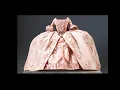
[Tanya Melendez] Good evening and welcome to The Museum at FIT's fashion culture series. Tonight it is our pleasure and our honor to have our very own director and chief curator Valerie Steele present her book "Paris Fashion" which is a very important book in the history of fashion and this is a new edition. So please join me in welcoming Dr Valerie Steele.
[Dr Valerie Steele] Thank you so much. Paris fashion has always been one of my favorite books. It was my second book that I wrote and it came out first in 1988 and then a second edition slightly updated in 1998 and then a few years ago my publisher asked if I'd like to do a new version with three times as many pictures all in color and although I can't imagine wanting to redo any of my other books this one I loved working on so much if nothing else it's been a fabulous excuse to keep going back to Paris and doing research.
So I said yes. However it ended up taking me longer than I thought because I didn't want to just add to the last chapter and do a new intro. I went through the entire book and basically rewrote about a third of it adding some of the new information that's been found over the years.
But when the book came out reviewers were very surprised because it wasn't history of haute couture and it wasn't just the standard history of fashion which goes you know there was Worth and then there was Poiret and then there was Chanel and then there was Dior and then there was Saint Laurent. This wasn't what I thought was the most important thing about Paris fashion. Of course the designers were important but it seemed to me that what made Paris for 300 years and counting the capital of fashion was really because of the depth and sophistication of the fashion culture in Paris which involved knowledgeable and sophisticated fashion performers and spectators who included artists, writers, flaneurs, actresses, milliner's, a whole host of people who collectively made Paris really the center of fashion.
So this was what the book was about and what I continued to focus on. Of course the designers are important too but as you'll see what made it special was the culture. Now you have to go back to a time before Paris was the capital of fashion and for a long time there were many little fashion centers.
There was wonderful fashion very early on in cities like Florence in Italy or it courts like the court of Burgundy. The dukes of burgundy in the fifteenth century were much richer and more powerful than the kings of France or even in the 10th century the court of Hyeon Ko in Japan or in Ming Dynasty China the city of Suzhou these were all major fashion cities. With the rise of the nation-state Spain became the first sort of large national fashion center and Spanish black partly derived from the court at Burgundy swept all over Europe in Protestant as well as Catholic countries.
In the 17th century though with the appearance on the scene of Louis XIV France became the most powerful and wealthy continental state and french fashion became the leading type of fashion. In part this was a question of deliberate government policy. The minister of the economy in effect Colbert said "fashion will be to France what the gold mines of Peru are to Spain.
" In other words this was going to be the source of France's wealth and foreigners were absolutely astonished at how the French were obsessed with fashion. It seemed that every day they were coming up with new fashions and in particular fashions seem to be emerging from the court. So here you see a 17th century image of a courtier and this was the kind of fashion that 17th century French dictionaries would describe the word mode fashion and say it's the style of clothing followed at the court and then the Encyclopedia would go on and say the French produced the most and newest fashions and they're followed by people all over the world except in Spain.
The Spanish never changed their fashions. And foreigners in other countries agreed as well. They were astonished at the not constant novelties that emerged in Paris.
This was already I think you could say that Paris was the capital of Western fashion by the last quarter of the 17th century and this became even more true in the 18th century when a style of very elaborate aristocratic dress became fashionable but it was no longer so codified as it had been at the court instead it was a question of individual aristocrats or wealthy bourgeois who developed a culture of novelty. Here you see of course Francois Boucher's painting of Madame de Pompadour who is a the official mistress of Louis the 15th and a great leader of fashion and the arts. But equally important was the rise of a real fashion industry based in Paris and this involved all kinds of artisans whether they were embroiderers, feather makers, couturiers which just meant people who sewed or modiste and here you see a little modiste which is someone who went around selling the trimmings that went on dresses or on hairstyles or hats.
It didn't yet mean milliner the way a hat maker the way it does now and because the dresses stayed with the same silhouette for a relatively long period and were very expensive to produce, the way you made them new was by adding new trimmings. The most famous of these modiste's would be Rose Bertin who was known as the minister of fashion for Marie Antoinette and she of course didn't go around kneeling on her customers floors like this little gal. Instead except for Marie Antoinette whom she visited at the palace all of her customers came to her and she was apparently already very bossy and very proud and always boasting about the new styles that she developed for the Queen.
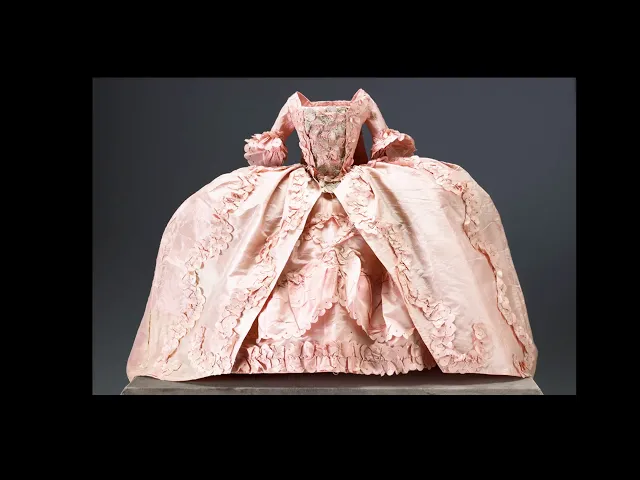
Another aristocrat said you sometimes had to kind of slap her down or her insolence would get too great because she was already so full of herself as a leader of fashion. The fashion media also were developing and although there were some early attempts at doing fashion magazines and of course as you saw before fashion prints for a long time the most popular method of disseminating new Paris fashions was through these little fashion dolls the famous poupée de la rue Saint-Honoré and here you see a dress for one of these fashion dolls. They were sent out approximately once a month from the little boutiques on the rue Saint-Honoré and they went all around Europe, England, the Ottoman Empire, the New World and this was the way you got information.
Some of them were doll sized but actually a couple of years ago in Paris I saw a life-sized fashion doll which was extraordinary in a private collection wearing a court gown. Then you did have also of course the fashion press which developed and I bought these two prints early on in my collecting career and the first one over there is a French one from about 1800 from 1800 and you can see the woman's decolletage is so low that her nipples are actually showing. Several months later in February 1801 the British made this copy where her decolletage has been pulled up and to compensate for that there's a little table with bare-breasted caryatids below.
So when I bought this the French dealer sneered la Poudre anglaise English prudery. Americans also copied French copied Paris fashions and in the book you'll see some examples of copies from the Godey's Lady's book which are taken from originals from la mode illustrate but the Americans were very ambivalent about copying things from Paris. They are constant complaints about licentious Paris and infidel France where woman stoops from her high position of of modesty and virtue and descends down into the sort of vulgar crowd and they complained about how could the daughters of Puritan ancestors wear clothes created by the courtesan class in the wicked city of Paris.
So this ambivalence existed there. Paris was the desirable source of all new fashions on the other hand there was something that seemed at the very least undemocratic or immoral or excessive or Catholic about all these fashions. Now in the 18th century Paris was also still the capital of men's fashion and it was just as luxurious and decorative as women's fashion.
There was nothing effeminate about a man wearing a pink silk or velvet suit with fine lace and embroidery of flowers. That simply signified that it was aristocratic. However already in England by the 1860s a new style of dress was emerging not just among the urban bourgeoisie but also among English aristocrats.
So here you see this wonderful painting of Sir Brooke Boothby who is a natural man lying in his beautifully tailored grayish brown wool suit lying on the ground holding a copy of Rousseau. So you can see that he's a natural man but he also happens to be the eldest son of a baronet and so this new type of fashion for upper-class men began to appear in England by the 1760s and also spread to France. Many French aristocrats quickly became anglophiles when it came to this sort of clothing and they too started wearing English style dress.
So sometimes French writers would remonstrate and say go back to your silks and your embroideries, carry your hat under your arm and not on your head. Remember to do it the way it's done in Paris. But this was the trend of the future and already by the end of the 18th century, London had become effectively the capital of men's fashion but Paris remained the capital of women's fashion.
Even before the Revolution, new styles were emerging that were less formal than the kind of elaborate dresses worn over panniers and stays that you saw in the portrait of say Madame de Pompadour. Here you see already in 1783 a painting by Elizabeth Vigée Le Brun of Marie Antoinette wearing what was known as a chemise dress. So very lightweight, high waisted, deliberately naive and neoclassical.
This was part of a wave of neoclassicism that swept through all the arts and Paris. Unfortunately this painting was very badly received when it was shown in public. People said the Queen was showing herself virtually in her underwear and it was quickly taken down and replaced by another portrait of the Queen wearing a formal court gown with hoops and a tight stays and showing her with two of her children.
Liberty of dress was officially proclaimed during the French Revolution and although Daniel Roche is correct in saying that the revolution did not revolutionize fashion, nevertheless dress was a very significant element in political discourse and a few components of revolutionary dress did permanently transform fashion. Here you see Count Mirabeau in 1791 giving a speech in front of the National Assembly and he's wearing the clothing the official clothing of the Third Estate. The first estate not not the aristocracy, not the ecclesiastical officials, but everybody else.
The 99 percent of the population and it's a dark wool suit and although he's an aristocrat he's wearing that to proclaim there shouldn't be these divisions between the departs of society that everyone should be a citizen. And so this was clearly seen as a kind of highly political statement and indeed this would be the future of menswear. This kind of dark wool suit.
Meanwhile the working class were wearing somewhat different clothes and here you see this is a portrait of an actor. The actor Shannara playing the role of a sans-culotte that is a working-class man. Now the term sans-culotte means without knee breeches and unlike aristocratic and bourgeois men who still wore knee breeches and silk stockings, some working-class men wore trousers and so you see him here wearing trousers, wooden sabot.
He's not wearing a red Liberty cap because that had already fallen out of of favor with the Revolutionary Government that was too radical. Instead he's wearing a cockade of blue, white, and red revolutionary nationalist cockade on his hat. So this was the look of the more radical working-class group in the Revolutionary period and it was at this point that the government passed a law in which they proclaimed that no person of one or the other sects can constrain any citizen or wife of a citizen from dressing in any particular manner.
Each being freed to wear the clothing of appropriate to their sex and if you tried to prevent them from doing that or force them to wear something else you will be under pain of being considered and treated as a suspect. That is a counter revolutionary and that was a very bad thing that could send get you sent to jail or even to the guillotine. And that law was actually passed because some radical sans-culotte women were trying to force other women to you know wear cockades and so on and the government was very much against women getting involved in politics and so they're saying no no you can't force people to wear anything they don't want.
And so this again indicates that as Lynne Hunt puts it "questions have dressed lay at the heart of the French Revolution in both its democratic and its totalitarian aspects. " In terms of fashion history Paris really became known among other things as the capital of revolution and they were of course repeated revolutions after the great Revolution of 1789 and this in a way has translated also into revolutions in avant-garde art and avant-garde fashion. Here you see two pictures.
On the far side after the radical Jacobin phase that the revolution ended, there was a period when some rather wild styles would emerge where the enclouage of the man and his somewhat English style but exaggerated clothing and the woman the merveilleux the marvelous one in her more radical version of this neoclassical dress. And then here closer to me is of course Delacroix's famous Liberty Leading the People which was painted in 1830 the year of the 1830 revolution. I won't walk you through this also the 1848 revolution in the 1870 commune etc but Paris was a city which was prone to explode and became really sort of the center for all revolutionaries.
Now the same year 1830 we see this beautiful fashion illustration by Giovanni from La Mode and this was the period in which Balzac was writing for the same magazine saying the toilet is the expression of society and in the book I talk a lot about how Giovanni's images of different types and Balzac's novels are filled with different types of people and they're clothes are always a very important component in to telling you who they are. Balzac believed fervently that dressing the way you wanted to become was the best way to become that in the future. So he really talked a lot and people at the time consistently believed that you could dress in a way that would help you rise in society.
So there's a lot of imitation a lot of competition. This is when you start seeing more and more books explaining the etiquette and fashion because more and more people are dressing in more or less fashionable styles. In addition to a novelist like Balzac you had poets such as Charles Baudelaire who were very interested in the issue of fashion.
He was personally a dandy who wore almost all black and this again became very much a feature of menswear over the course of the 19th century. So sometimes called the great masculine renunciation where they gave up all of the color and decoration in favour of dark and sober looking clothes. But of course for a true dandy like Baudelaire the dark sober style was a question of less is more you know any old nouveau-riche grocer could appreciate jewels and fancy clothes but it took a more refined sensibility to pay more attention to the cut and detail of your clothing.
Baudelaire also was one of the first to talk about the relationship between La Mode and modernity so fashion and modernity were closely linked and he talked a lot about how he liked to look at fashion plates because each one was imprinted with the feeling of its time so that the way a sleeve or a skirt was cut gave you important clues about ideals of beauty at that exact moment in time. So he was really sort of among the first philosophers of modern fashion. You can also see in this the importance of fashion imagery in helping to create the image of the Parisian because if Paris had been seen for a long time as being the capital of fashion increasingly over the 19th century you see an equal or even greater emphasis on the figure of the Parisian who because of her clothes and her demeanor represented modern beauty and it was not only that the great lady could be a Parisian but courtesan could, a fashion professional, even a poor little grisette could.
Anyone who aspired to become a Parisian could hope to do so. At the time there were many people writing things like provincials put on clothes but the Parisian dresses. The Parisian is more of a woman than any other woman in the world and then think but anyone could come to Paris and become a Parisian if she were really dedicated to that.
One of my favorite lines came from a woman writer in the 1860s who wrote "in Paris half of the population lives off fashion and the other half lives for fashion. " Notice this also there's a chapter in the book about how these fashion plates influenced artists and so you see here with Monet's women in a garden how the silhouettes of the dresses are similar to the way the dresses are silhouetted in a fashion plate and at this point Monet who didn't have enough money to be buying dresses for his models he might have rented them or borrowed a dress because you could rent a dress just as rent the runway it's not a new idea. And in fact they're very similar very similar looking women but in different poses and in different dresses and this again is similar to the way fashion photography works that you're showing fashions from all different angles and putting them together into the same image.
Here you see an example of a dress from The Museum at FIT's collection which is very similar to the kind of dresses that Monet was portraying. Now the rise of the haute couture was a crucial moment in the history of French fashion. So by the 19th list second half of the 19th century Paris became the capital of luxury fashion of haute couture which was not just a question of an individual dress made for an individual lady.
That's any kind of couture that's just sewing. There were hundreds of little couturiers sewing dresses for ladies but with the rise of the haute couture men like Charles Frederick Worth took fashion from being a small-scale craft and turned it into big business and high art. He didn't just make one dress for one lady I mean he might do that for the Empress Eugenie but for most of his customers he made a line of dresses, sketched them, and then you could order a particular model from this line in a particular color or fabric.
You could modify it slightly say it changed the sleeves on one but basically it was a kind of industrialized production. It was mostly hand sewn but it's already conceived of as a collection. At the same time that you have the rise of the haute couture you also have a retail revolution so the rise of the department store and increasingly you have ready-made clothes available.
Suits for men and clothes that didn't need to fit so closely for women. So things like shawls and mantels were often produced in factories and were sold ready-made or almost entirely ready-made just needing a little touching up when you brought it at the department store. Here you see a cartoon mocking Worth well you see he's sort of there and his assistant is doing the actual pinning.
He's there and he was famous for telling people what to wear and having to wait for inspiration to have strike before he would come up with a design. Very very interesting much mocked character but very formidable in transforming fashion in this way into something that was a new kind of business. He was very fond of American clients.
He said they had the faces, the figures, and the francs and a lot of them were even very wealthy women sometimes their husbands or Father's in-law will complain they've got so many clothes from Worth particularly if they were lucky enough to be visiting the Imperial one of the imperial palaces for a long weekend which could involve as many as 20 different changes of dress. Again another artist inspired by the world of fashion Edgar Degas. The milliner's even were before Worth in putting labels with their names on them into the hats.
Worth of course did that also as Worth felt he was a real artist and so the label was the equivalent to the signature of the artist on a painting. It was his grief his scratch that made it his and made it more valuable. So you have then Paris as this ideal shopping City with the department stores, the little boutiques, the haute couture salons but fashion is not just about making and buying clothes.
It's not just a big store. The geography of fashion and it's significance socially went way beyond that to the whole idea of a theater of fashion. Here you see Mary Cassatt's painting of a woman with the pearl necklace in a loge.
Paris was in effect a stage on which the newest fashions were acted out by viewers at the theater as well as by the actual performers like Sarah Bernhardt and some of the performances were attended assiduously by small-scale couturiers and milliner's who wanted to see what the famous actresses were wearing by famous designers and some designers had very close relationships with particular actresses. You also had a private world of soirees and balls where people of the same social class would gather and would understand again the nuances of fashion within that particular world. This is one painting by Jean Béraud who did a number of such images both of interiors and of the same kind of people going bicycling in the Bois de Boulogne or going to a chocolate shop or the theater.
Some of you know that last year we had an exhibition here on Proust's Muse and Paris fashion has a whole chapter about Proust and fashion. Here you see the Countess Greffulhe wearing the marvelous dress that she co designed with the House of Worth and Proust learned a lot from the Countess Greffulhe and from her cousin who was also a great connoisseur of fashion. This kind of sophistication of fashion culture and the fact that great writers and artists thought there was nothing inferior about looking down on fashion.
Fashion was an important manifestation of society and of personality so it's very different than America where you had writers like Thoreau saying beware of any occasion that requires new clothes. Instead this is a culture which is just saturated in an interest in fashion and men as well as women were very interested in it. The first of the sort of avant-garde fashion revolutions in the 20th century occurred with the rise of the sort of new silhouette somewhat neoclassical silhouette particularly associated with Paul Poiret.
Poiret claimed that he had abolished the corset and put one's women into brassieres instead which is not true but he did help promote and popularize this particular new silhouette. What you really are seeing though if you look at these figures here and then compare it with photographs at the time you're seeing the gradual development of a new ideal of beauty from the voluptuous Venus of the later 19th century to the slim youthful Diana of the early 20th century and in 1903 Le Mode magazine interviewed a lot of actresses including Ray John asking about who's your favorite couturier, who is your favorite jeweler, who's your favorite corsetier, and Ray John said pas besoin I don't need a corset and of course you look at her photograph and you go honey you are wearing a corset. But the point was it was now starting to be thought that it was better not to need a corset to be naturally slim but curvy.
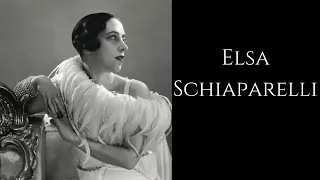
Here you can see another illustration from 1913 where you can see the fashions from 1813 were very similar to those from 1913. You were looking back and having a new neoclassical era. The period between Piret's harem and Dior's new look was one dominated by a regiment of women of which the most important were Gabrielle Coco Chanel shown here and late a little bit later Elsa Schiaparelli.
But there were literally dozens of famous women couturiers in this period because the feeling was that who better than a woman designer would know how to dress the new woman of the 1920s and 30s. Male designers like Patou had to say to the press you don't have to be a woman to design clothes you know men can design clothes too. In the 20s and 30s there was a lot of interchange between New York and Hollywood and Paris.
Here you see Josephine Baker in Paris wearing Parisian fashion with her car but you also had Parisians and French people looking at Hollywood movies listening to music from Harlem and there was constant back-and-forth of ideas. I remember reading one French fashion magazine which was instructing its French readers how you could bake or fix a your hair you could make your hair look like Josephine Baker. During the Nazi occupation of Paris obviously contact was cut off with most of the Allied countries.
Germans could buy clothes and wealthy or connected French people could buy clothes and South Americans sometimes would be buying clothes in Paris. The Germans initially wanted to bring the whole Paris fashion industry to Berlin but lalangue who was head of the Couture Association managed to convince him that it wouldn't function anywhere outside of Paris so he managed to keep it there. However it nearly destroyed the French fashion industry in terms of its influence in part because people discovered in England and America that in point of fact between 39 and 45 they could get along without guidance from Paris which they hadn't really attempted to do since the Napoleonic Wars when fashions designs were smuggled out anyway.
After the war with the rise of Dior and the new look suddenly Paris made an immense push to regain its prestige and its financial position as being the capital of fashion for women. As Dior said we came out of a period of war of women who looked like soldiers and boxers. I dreamed of women who looked like flowers and very rapidly within a few years of French fashion French couture was back on its feet and designers in other countries were once more copying Paris fashion.
But underneath the strength of the couture system was gradually being hollowed out so that although it appeared very very strong during that Golden Age of the French couture from 47 to 57 in fact things were happening elsewhere in the world that were making the couture increasingly old fashion. Specifically you have the rise of youth culture in London and in America in particular which undercut the whole interest in grown-up formal fitted expensive clothes. Last year we had a wonderful show about Paris fashion 57 to 68 by Colleen Hill which talked about the rise of French ready-to-wear and of the youthquake designers in Paris.
People like Emmanuelle Khanh shown here who said haute couture is dead and these younger designers often women were promoting the idea of youthful styles for a young market. The couture fought back creating their own versions of many dresses. André Courrèges for example said I'm the man who invented the miniskirt Mary Quant only popularized it and Mary Quant said well that's not how I remember it but anyway it was the girls in the street who invented the mini skirt.
It wasn't a fashion designer and here you see Yves Saint Laurent and this is 1967 with a very radical trouser suit and then of course a year later it was May 1968 and youthquake and sort of semi revolutionary fashion came to Paris in a great burst. Meanwhile in America the ready-to-wear industry kept chugging along and although much of it was indebted to copies of Paris styles they were also radical new sportswear looks and new sort of much more casual looking styles. In 1973 the famous Battle of Versailles took place when five American designers were shown versus five French designers and designs by Stephen Burrows and Halston seemed younger and fresher or at least the models many of them african-american made the clothes seem so much younger and fresher than the more formal and fitted Parisian couture.
So you are having new things coming out of New York new things coming out of London. You are also having new things from the 50s on coming out of Italy. All kinds of boutique fashions coming out of Florence and then that Florence fought with Rome which had the automotive the couture and then eventually by the 70s Milan took over and you had designers like Versace and Armani and Missoni who were showing clothes in Milan that were easygoing kind of easy chic clothes.
Pierre Bergé once said to the American journalist Jaycox what did the Italians ever invented except spaghetti and this was kind of an and Jay Cox wrote the article and he said well hmm how about a kind of easy elegance in clothes like Armani that seems to be very different from the stiff formal French fashions. However by the 80s French fashion was booming again. Here you see Christian Lacroix who in 87 was the first major couture house to open in years from having had hundreds of couture houses in the 50s it had dropped a number and essentially the couture became like a trailer for the film which was really makeup and perfume.
So it was kind of an expense like an advertising expense. Nevertheless the fashion was really fashionable in the 1980s. If you're old enough you might remember that at all levels and this is when the French started really having a fashion Museum at the Louvre and they started all kinds of more modern fashion schools and they started showing fashion shows at the Louvre and really emphasizing fashion as a part of the patrimony of France.
In the early 90s things went into a bit of a downer and the press even in France started saying that you know was the couture dead and the Americans were quite open saying the coouture is an absolutely defunct thing and then suddenly in 97 you had John Galliano going to Christian Dior and the couture suddenly became super exciting again. You also had other foreigners such as Alexander McQueen here also Givenchy 1997 and this in a way shows how Paris has been able to co-opt the best talent from other fashion cities. In the 80s you've seen the rise of Tokyo as an exciting fashion city but all the best designers like Rei Kawakubo ended up showing in Paris.
So instead of Tokyo really challenging Paris it just fed the best of its talent there. Nowadays of course you've got fashion cities all over the world Milan, New York, London, Tokyo, now Shanghai, the Paris of the east and even even more you know sort of from from Moscow to Mumbai everywhere you have Fashion Week's and fashion shows. But it's still Paris seems to be attracting some of the most avant-garde of the designers like Iris van Herpen.
So fashion is not just of course a material production of fashionable clothes it's also a symbolic production, an idea, a series of images. It's something which is exciting and new Didier Grumbach who's been working in Paris fashion since the 1950s wrote he said in 2015 Paris has changed, the system has changed, everything has been transformed. For the system to function the participants have to be international, production has to be international.
It's clear that we are no longer we no longer can or should be a hundred percent French anymore. So things have changed a lot fashion is a global phenomenon and yet if Paris is not the capital of fashion it is still I think very much first among equals in the fashion cities of the world. Thank you very much.
[Applause] Thank you. The first question is what role do you think museums play in Paris fashion. I think a big role partly because museums are telling the history of fashion and the history of fashion is marked by a very strong presence of Paris but also nowadays we're seeing a lot more with the big fashion houses are working with museums to create their own exhibitions so you have the big Dior show now at the Museum of decorative arts or their own Museum like the Yves Saint Laurent Museum so you have a kind of iconization of particular designers by the houses and by museums.
I think museums have had an important role also in getting us to think about fashion as being an art form and we tend to see fashion in real life and when we go to our closet, when we go shopping, when we look at Instagram, when we see our friends but when you see fashion in a museum it's looking at it from a different perspective and I think the French have always thought about fashion as being an art form. Back in the 18th century Mercier said fashion is a cherished triumphant art form and so I think museums have had a big role in reinforcing that idea. What fashion designer has inspired you the most?
Hmm well I'm very much a fashion person in other words a neophyte. It's whatever I'm working on now at any given moment. I mean in the past of course I've been very very influenced by people like McQueen.
I really wildly admired. I'm working now on a big exhibition for fall 2018 on the color pink and quite apart from the fact that everybody's been doing millennial pink for the last three years a few designers like Rei Kawakubo of Comme des Garcons has been doing really interesting things with pink for quite a few years now. She's most famous for doing black black black seven shades of black but already in the early 90s she was doing radical disruptive things with pink.
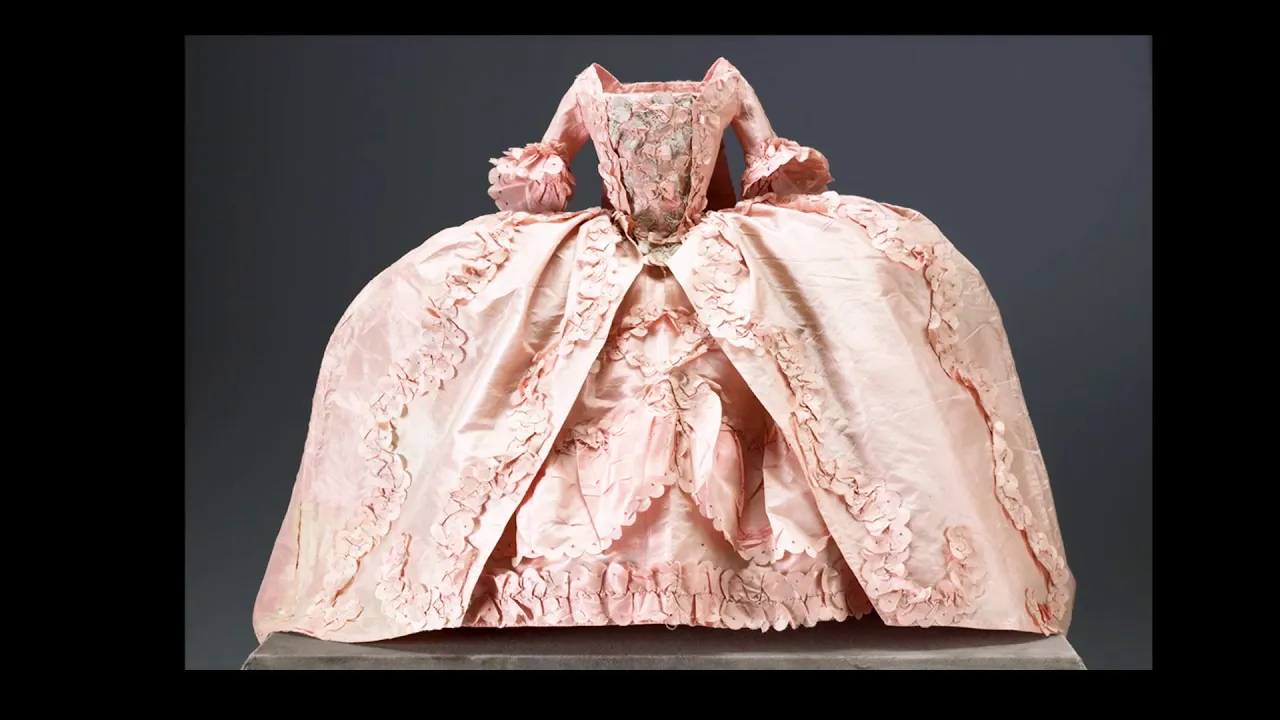
And her biker ballerina collection for example she was showing how the ballerina pink is not just the sweet soft pretty girly thing but the ballerinas are tough and athletic just like bikers and I've bought a couple of things for the museum from Rei's 18th century Punk collection which used a lot of pink and I'm going to be showing one of those garments next to a really beautiful pink robe a la francaise from the 18th century that the museum just acquired. So at the moment I'm sort of obsessed with people who are doing pink which also includes interestingly for a middle-aged not to say older white woman like me. It was really exciting to be able to discover all the pink in hip-hop so I'm desperately trying to get a hold of Camron to get the pink mink that he wore to New York Fashion Week in 2001 because that sort of helped turn all the hip-hop guys on to pink.
What's my all-time fashion exhibition? Well I do think the two versions of the Alexander McQueen show at The MET and at the V&A were quite fabulous. There were different rooms I preferred in different museums.
For museums fresh fact shows I've done here I have a great love of my gothic show and I loved working on Daphne Guinness with our show. I also still remember years ago an amazing really amazing Charles James show at Brooklyn which I think has never really been outdone. That was the most amazing Charles James show ever.
I remember asking one of the guards jokingly if he could just leave the room for a while so I could try and steal one of the dresses. Do I have any advice for a budding fashion curator? Yes see if you can in turn get advanced training at least a master's degree and try and get internships at museums and build up your area of expertise so that you're capable of doing things on your own because there's not very many curatorial jobs.
When I had my epiphany to work on fashion I had a million adjunct jobs for more than a decade but in the meantime I wrote you know my first ten books and I started my fashion magazine and I was doing stuff on my own so don't wait to be hired try and do things yourself that are contributing to knowledge about fashion. You can always do a an imaginary exhibition online, you can write reviews of other people's exhibitions. There are lots of ways that you can show that you are becoming an expert of fashion history and you have potential for being a fashion curator.
Thank you very much.