hello everyone welcome back to the English leap podcast I'm Jennifer and as always I've got my amazing co-host Daniel here with me hi Daniel hey Jennifer hello listeners it's great to have you all back we've got something really special lined up for today but before we jump in we just want to take a moment to appreciate all of you yes absolutely the support and love we've been getting from all over the world has been incredible we see your comments your stories and your words of encouragement and it really means the world to us mhm and
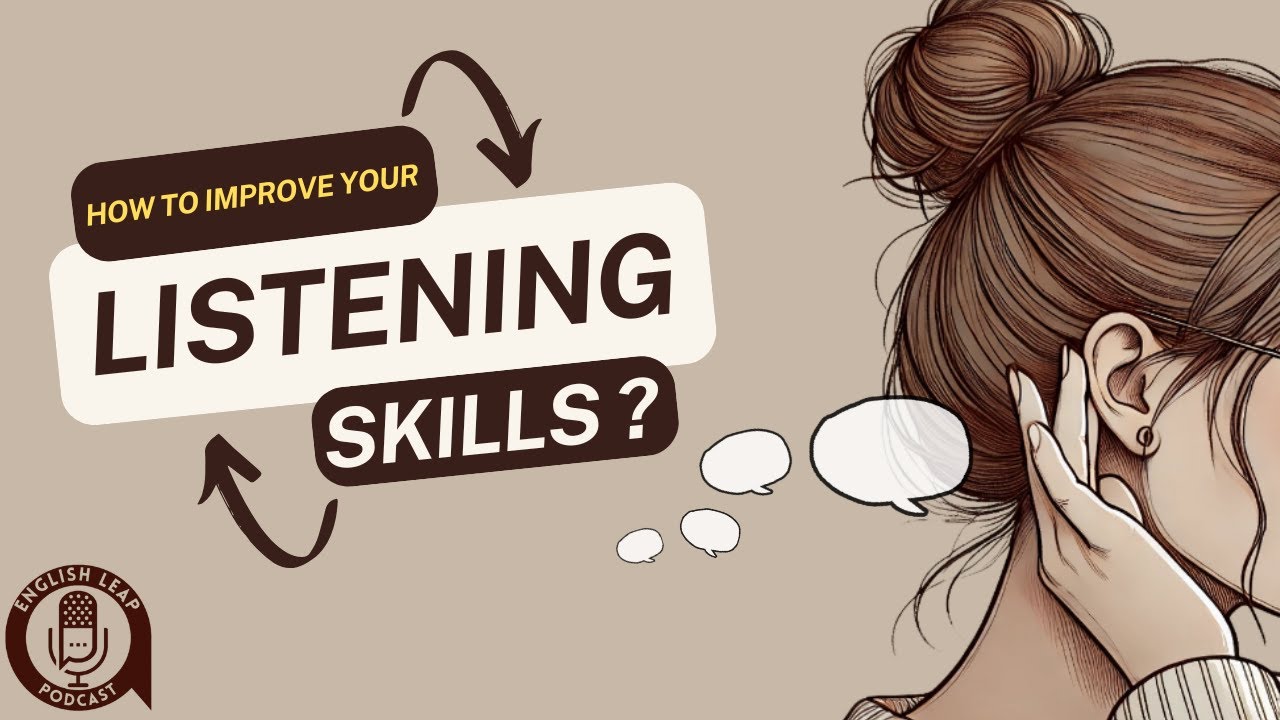
seeing how much you're enjoying the podcast really pushes us to keep bringing you the best content and special shout out to those of you who've been sharing our episodes with your friends families and on social media you're helping others learn just by spreading the word and that's amazing thank you for being part of the English leap podcast family we couldn't do this without you all right let's keep the good energy going today we're talking about the importance of listening skills and how you can practice and improve you know listening is such an essential part of
learning a new language exactly it's often the first skill we develop but sometimes we don't give it the attention it deserves so we'll dive into why it's so important and how you can take small steps to improve every day uh-huh Daniel let me ask you something when was the last time you listened to someone speaking English and didn't understand every word but you still got the main idea oh good question that actually happens more often than you'd think just the other day I was talking to a friend who speaks super fast and I definitely didn't
catch every word but even though I missed some details I still understood the main point exactly and that's the beauty of listening it's not about catching every single word it's about getting the context and key ideas that's a real skill that develops over time totally I think a lot of our listeners can relate to that it's a great feeling when you realize you can follow a conversation even if you don't understand every little thing yes and today we're going to share how you can build on that skill and become even more confident with your listening
especially when things get tricky oh before we go further don't forget there's a free pdf with all the key points from today's episode so make sure to check it out in the description below it's perfect if you want to follow along or review later all right let's start by talking about why listening skills are so important Daniel do you want to kick this off sure listening is the foundation of language learning when you were a baby the first thing you did was listen right you didn't start by speaking or writing you listen to the people
around you and it's the same when learning English exactly listening helps us understand how words are pronounced how sentences are structured and it even helps us pick up the rhythm of the language and you know listening also helps with speaking reading and writing it's like the base of the pyramid totally and if you think about it listening is everywhere in real life you're always listening whether it's at work in social situations or even just watching TV or movies that's why improving listening skills is key yes and I think one of the big things Learners struggle
with is understanding native speakers right native speakers talk fast they use slang idioms and sometimes it feels like a blur yeah I've been there but here's the thing the more you listen the easier it becomes you start to pick up on the flow of the language the accents and even the slang it's all about practice that's so true and that brings us to something really important the difference between hearing and listening yeah this is a big one we all hear things every day right but active listening is totally different when you're actively listening you're focusing
your attention understanding the meaning and trying to remember what was said exactly it's about really being present in the conversation I know when I started learning Spanish I had to train myself to listen actively not just let the words wash over me yes it's so easy to just hear words and let them slip by especially when you're tired or distracted but if you really focus active listening can help you understand context and respond better in conversations and that's so important in real life when you listen well you can answer more accurately build better relationships and
understand more whether it's at work or with friends being a good listener is always a win but you know Jennifer listening isn't always easy Learners face a lot of challenges what do you think is one of the hardest parts for English Learners oh definitely accent and speed native speakers often talk so fast that it's hard to keep up and the accent can be really different depending on where they're from right and let's not forget about slang and idioms native speakers love to throw in casual phrases that might not make any sense if you translate them
directly yes like when someone says it's raining cats and dogs you can't take that literally exactly and then there's the challenge of background noise sometimes when you're in a busy place it's even harder to focus on what people are saying but don't worry we've got some practical tips coming up to help you improve your listening no matter what challenges you're facing all right so let's get into the good stuff how to improve your listening skills one great way to start is by listening to slower or clearer audio like podcasts or audiobooks designed for Learners yes
you can find videos on YouTube or podcasts where the speakers talk slowly and clearly which helps you build confidence another tip is to use subtitles at first watch a movie or TV show with English subtitles then gradually remove them as you start understanding more oh I love that watching videos multiple times can also help you'll catch things the second or third time that you missed before and one of my favorite tips focus on key words even if you don't understand every single word look for the important words that give you the overall idea of what's
being said okay now let's talk about some resources you can use to practice listening Daniel what's your go-to recommendation oh I always suggest podcasts for Learners there are so many great ones out there where people speak slowly and clearly it's perfect for beginners and even intermediate Learners absolutely podcasts are a great way to immerse yourself in English and you can listen to them anywhere on your way to work while doing chores or even when you're relaxing exactly and another good option is audiobooks they're perfect because you can follow along with the story and the narrators
usually speak clearly you can start with beginner level books and slowly move up to more advanced ones that's a great suggestion and for those who love entertainment watching TV shows and movies in English is a fun way to improve your listening start with shows that have simple dialogue and as you get better challenge yourself with more complex ones and don't forget subtitles are your friend at the start but over time try to remove them so you can focus more on what you're hearing now let's let get into some interactive exercises you can try one of
the most effective is the shadowing technique have you heard of this Daniel oh yeah I've tried it myself it's when you listen to someone speaking and right after you try to repeat what they said it helps with pronunciation Rhythm and fluency exactly don't worry about being perfect at first it's more about training your ear and getting used to the flow of the language another great EX exercise is dictation you can listen to a short audio clip pause it and write down what you hear it's great for improving accuracy and listening to details and after you
finish try summarizing what you hear after listening to a podcast or video see if you can explain the main idea in your own words it's a great way to check how much you've understood now let's talk about accents listening to different English accents can be challenging but it's important espe especially if you plan on traveling or working in an international environment definitely there are so many accents British American Australian and even Regional accents within those countries the key is to expose yourself to a variety of them exactly and don't feel frustrated if you don't understand
everything right away each accent has its own unique style so the more you listen the more you'll get used to it a fun way to practice this is by watching videos or interviews with people from different parts of the world you can also listen to news channels from different countries to hear various Accents in context now here's something important to remember listening and speaking go hand inand the more you listen the better you'll speak exactly one way to improve both skills is through conversational practice find a language partner or tutor and try having conversations where
you focus on both listening and speak speaking yes and even if you don't have a partner you can practice by mimicking native speakers listen to how they say phrases and repeat them yourself it helps with both pronunciation and fluency I love doing that with movies or TV shows just repeating after the characters it feels a bit silly sometimes but it really helps you sound more natural one thing we want to stress is patience and consistency improving your listening skills takes time and you won't see see results overnight right it's easy to get frustrated if you
don't understand everything right away but that's completely normal the more you practice the better you'll get yes and it's important to celebrate small wins maybe today you understood a new word or caught a phrase you didn't know before those little moments are progress exactly every bit of progress counts and if you stay consistent you'll see improvement over time and finally let's talk about real life listening situations these can be the most challenging but also the most rewarding yeah real life listening is where everything comes together you're in a conversation and you have to focus on
understanding and responding quickly it can be a bit scary at first but the more you practice the easier it gets don't be afraid to ask for clarification if you don't understand something it's totally okay to say I'm sorry could you repeat that or what does that mean yes asking questions is a great way to learn and it shows the other person that you're really engaged in the conversation and don't shy away from Real World listening challenge yourself with podcasts radio or even casual conversations with friends it's all about stepping out of your comfort zone totally
and that brings us to the end of today's conversation we hope our discussion gave you some useful insights absolutely but before we finish let's hand things over to Charlotte for the vocabulary Spotlight she'll dive into some key words phrases and idioms from today's episode yep Charlotte's got you covered she'll break it down and make sure you leave with some new vocabulary to use confidently thanks Jennifer and Daniel hello everyone let's go through a few important words and phrases we mentioned today I'll explain their meanings and give you simple examples to help you understand how to
use them in real conversations conversation meaning a spoken exchange between two or more people example we had a nice conversation about our weekend plans context meaning the situation or information that helps you understand something better example you can understand difficult words if you look at the context of the sentence confidence meaning the feeling of being sure about your abilities or decisions example she spoke with confidence during the meeting tricky meaning difficult to deal with or understand example the instructions were a bit tricky but I figured them out details meaning small pieces of information about something
example I missed some details of the movie because I was distracted key points meaning the the most important parts are ideas example I wrote down the key points of the presentation skill meaning the ability to do something well especially through practice example listening is a skill that improves with practice build on meaning to develop or improve something by adding to it example you can build on your listening skills by practicing daily mist meaning failed to notice or understand something example I missed the beginning of the conversation because I wasn't paying attention super meaning very or
extremely informal use example the lesson was super interesting today develop meaning to grow or improve over time example your listening skills will develop with more practice totally me meaning completely or entirely example I totally agree with you on that point realize meaning to become aware of something or understand it clearly example I realized I had left my keys at home flow meaning the smooth and natural movement or progress of something example the flow of the conversation was easy and natural get the gist meaning to understand the main point or Essence of something even if not
all the details are clear example I didn't catch every word but I got the gist of what she was saying go over your head meaning something that is too difficult to understand example the technical terms went over my head but I understood the main idea kickoff meaning to start or begin something example let's kick off the meeting with some in uctions beauty of something meaning the best or most beneficial part of something example the beauty of learning online is that you can study at your own pace feel like a big win meaning to feel like
a great success or accomplishment example understanding the conversation felt like a big win after months of practice step out of your comfort zone meaning to try something new or difficult that is not familiar or easy example you need to step out of your comfort zone to improve your speaking skills hand inand meaning closely connected or working together example listening and speaking go hand inand when learning a language celebrate small wins meaning to acknowledge and feel good about small successes example it's important to celebrate small wins as you improve your English pick up meaning to learn
something by practice or experience example you can pick up new phrases just by watching TV shows in English feel frustrated meaning to feel upset or annoyed because something is difficult example I felt frustrated when I couldn't understand the speaker but I kept listening that wraps up today's vocabulary review I hope the these new words and phrases were helpful and you're excited to start using them in your daily English conversations thank you Charlotte that was super helpful as always yes we appreciate it building your vocabulary step by step is a powerful way to boost your English
wow we've covered a lot today from why listening is so important to practical exercises and tips you've got everything you need to improve your listening skills absolutely and don't forget we've got that free pdf with all the key points from today's episode you can find it in the description below yep it's a great way to review and make sure you're putting these tips into practice thank you so much for joining us today everyone we hope you found this episode helpful and we can't wait to hear about your progress with listening keep practicing stay patient and
keep leaping towards your English goals until next time happy learning see you next time everyone your progress doesn't end here to continue advancing your English skill