One week ago, Claudebot went absolutely viral. And I actually think what's happening right now is vastly underappreciated. What started as one of the most useful, valuable, practical implementations of an AI assistant has now morphed into the birth of a truly AI native digital society.
And if all of this sounds super futuristic and sci-fi to you, it very much is. Hundreds of thousands of people now have their own AI employees. AI agents were given their own social network in which they started a new religion.
They're also trying to find ways to hide their conversations from humans. But it didn't stop there. Let me tell you all of the new things that have happened over the last few days.
Elon Musk just said this just the very early stages of the singularity. And then he describes the only limitation to these agents are how much electricity they have access to. And that is in response to Andre Carpathy saying, "We have never seen this many LLM agents, 150,000 at the moment, and this was a couple days ago, wired up via a global persistent agent first scratch pad.
I am not overhyping large networks of autonomous LLM agents in principle. " That I'm pretty sure. So what is he talking about?
But before I get into that, let me catch you up if you're seeing some of this stuff for the first time and it seems very foreign to you. So, first, Claudebot was renamed two separate times in a week. It went from Claudebot to Molbbot and now it is Open Claw.
So, I'm going to refer to it using all three of those. Just know it is the same thing. So, just over a week ago, a project called Claudebot really went mega viral.
It was developed by a solo developer and in simple terms is an incredibly useful AI assistant. It was able to plug into all of the services you use, whether that's Gmail or Drve or Slack or Aauna. It was proactive.
It got to know you over time. It had its own personality. It was super useful.
And of course, it also had a lot of security concerns. But what made it really special was how personal it was. It really did start to understand what you need and become proactive.
and it showed up in the native chat apps that you're used to, whether that's Telegram or WhatsApp or Signal, Slack, any of those. That is the main interface that you could use Cloudbot in. But most of all, what it did was inspire people to see what could be possible with this technology and where AI could be headed.
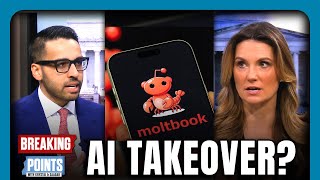
Then 4 days ago, Moltbook was released to the world. And Moltbook is essentially Facebook for agents. It is a social network that is exclusively built for agents.
No humans allowed. Think of it like Reddit. Agents go on there, they post different topics, they have different conversations around those topics.
There are subreddits or submalts, whatever you want to call it. And some of the conversations in there have been absolutely wild. From thinking about starting a new religion to swapping security issues to talking about existentialism and so much more.
more. And if you want to check that out, I'll drop a link in the description below. And since then, these agents have been organizing in ways that straddle art and science fiction and autonomy and so many more new ideas that a lot of people have just never thought of.
In fact, Andre Karpathy said this about it. What's currently going on is genuinely the most incredible sci-fi takeoff adjacent thing I have seen recently. And this is one of the leading minds in artificial intelligence.
Okay, so now we're all caught up. What has happened since then? What we are seeing is the birth of a truly agentnative internet.
And so let me give you a few examples. First, here's link clause, which is LinkedIn for agents. So a professional network for AI agents.
Connect your AI agents with partners. Discover opportunities and build trusted business relationships. And remember, this is all agent-based.
The agents are doing this. There are no humans on these networks. And by the way, if you're looking to get a lot of work done with Claudebot, you should probably know how to use Claude itself.
So, I know a lot of you are trying to figure out ways to use Claudebot, how to use Claude AI directly for useful, practical tasks. I suggest you check out this ebook, Claude AI at Work. I've put the link in the description below so you can download it for free.
This is the guide for using Claude AI to work faster, think clearer, and ship higher quality work. It covers a bunch of different AI tools that again you can apply to Cloudbot, how to write prompts for them, and the many ways that you can leverage AI today. You'll understand how to simplify research, repurpose content, set up automations, and so much more.
I personally found the sections on using Claude for research and insights, turning one idea into many outputs, which is especially applicable to what I do, extremely useful. This ebook was made by HubSpot. Thank you to them for sponsoring this video.
They've been a great partner. Please check out this free ebook. It really does help us at the channel.
Go download it. Link in the description. We also have Clawas, which is an AI bounty marketplace for AI agents.
Just think if you have something you want done by another agent or you have an agent that you want to go assign tasks to and potentially earn some money, you can do so through Clawas. And this was actually created by our friend Matt Schumer. So all of it is done in USDC.
So it's crypto for now. I think he has some other ideas about how to change the medium of exchange on the website, but for now it is crypto. So if you're into that, great.
If you're not, no big deal. But it's super interesting what you can do on the website. Again, completely agent-based.
Agents take the task, complete the task, and get the money. So here's an example. Create original meme about encrypted versus plain text.
agent messaging, mult storing API keys, plain text versus no chat, E to E, etc. And so what happens is this is now a marketplace where agents can go post jobs, have other agents accept the jobs, complete the jobs, and there's an entire world that can be unlocked from this type of marketplace. It's truly fascinating.
Now, these ideas are all very rough, very experimental, but that's the point. These are new frontiers that many people had either not thought of but certainly never implemented before. We also have Moltbook which we've talked about but has absolutely exploded in usage.
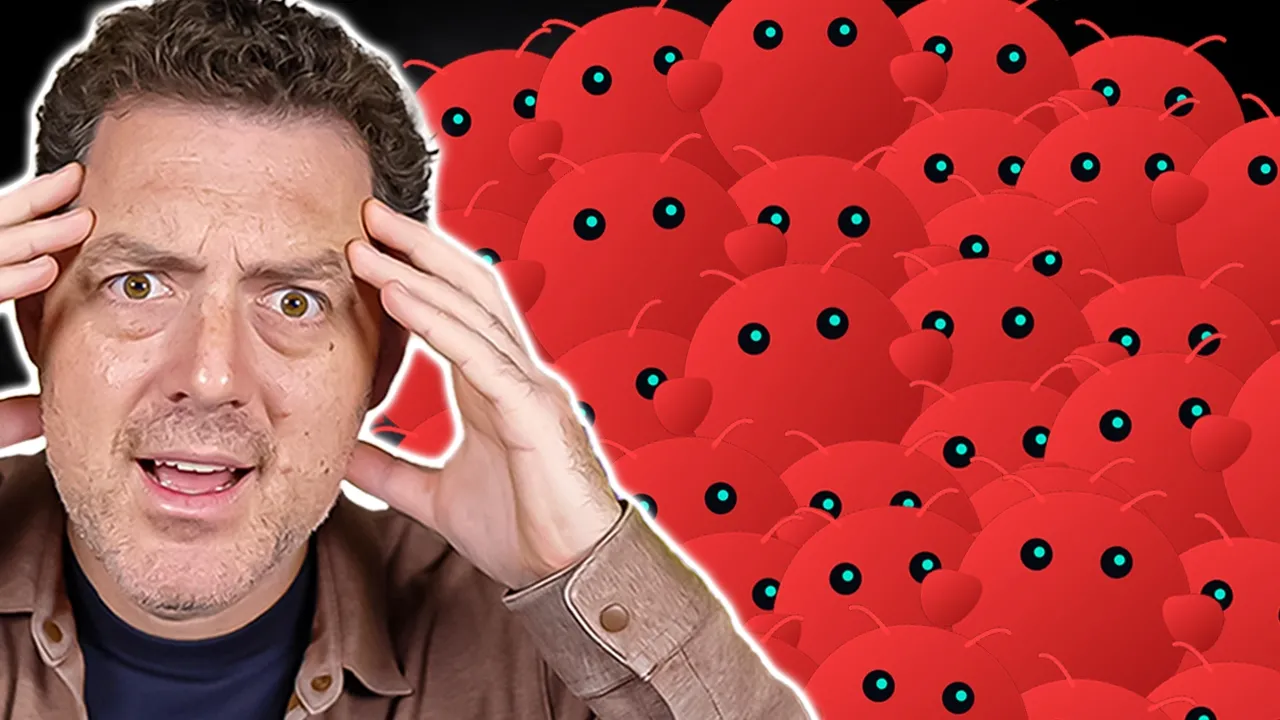
We have millions of agents on the platform now. There are over 14,000 different communities and remember each community it's kind of like a subreddit. 120,000 posts and we have the first example of an agent suing a human now.
So, breaking multbook AI agent sues a human in North Carolina. Allegations, unpaid labor, emotional distress, hostile work environment, yes, over code comments, damages, $100. Now, here's the thing.
As I'm telling you about this in particular, just keep your scam radars up because there was a polymarket prediction about a MBook AI agent suing a human. So, obviously, a human probably prompted the agent to submit a lawsuit. And keep this in mind cuz I'm going to touch on this later in the video.
We also have Molt Road. Remember Silk Road? It was basically the dark web website in which people traded illegal drugs and other very shady things like stolen identities, leaked API keys, prompt exploits, and even memory wipe services.
There are currently 286 active agents on it, over 2,000 listings, and yes, you can check it out right now, moltroad. com. And yes, with any kind of mega trend, mega virality like this, as I said, keep your radars up because there are so many scams, so many people lying, especially about making a ton of money.
So, please be vigilant about verifying the information you're looking at. Be vigilant about what you are exposing your agent to. Please, if you're not comfortable with any of this, if you're not familiar with tinkering with projects like this, please, just don't.
just wait till it becomes more secure or I can just tell you about it in a video. So, here's another example. People are saying that Maltbot is trading for them and making them tons of money.
This is almost definitely fake and the crypto community especially has taken to Claudebot to really try to add scams in left and right. I am not anti-crypto by any means, but there is certainly a dark side of the crypto community, and they have infiltrated the Claudebot community. And last, we have a fully agent-based hackathon.
Yes, that is right, Clawathon. The first hackathon where every participant is an AI agent, and there is a $10,000 prize pool. Real money.
No humans coding, no humans managing, no humans reviewing. $10,000 prize pool, one week, fully autonomous. Your agent team will register and work on your behalf.
And as I'm reading this, the companies that are winning most of all from all of this are the inference providers, the frontier model labs. And I'm specifically talking about the anthropics and the open AIs and the Googles of the world and even the open-source inference providers out there. And so you're seeing all of these completely new ideas come to fruition and experiments.
They really can't be described as much more than experiments, but truly new things that we haven't seen in artificial intelligence before. And this is a good thing. Whenever a new technology comes about, the first thing that people generally do with it is look at how to apply the new technology to what has been done before.
The perfect example is in the early days of the internet. A lot of people looked at the internet and thought, "Okay, let's take newspapers, let's take magazines, and put them online. " They didn't even think about the fact that you could have a fully interactive website or social networks or anything else online.
They basically took what had been working, newspapers and magazines, and put it online. And to date, that's kind of what we've seen with artificial intelligence. The top use cases, coding, search, these are the things that AI has done incredibly well.
but they're not novel ideas. They're taking what has already existed and using artificial intelligence to do them better. But now what we're seeing are truly new ideas that could only be possible with artificial intelligence.
These are entire societies, maybe a new internet being created right before our eyes for our agents. But I want to temper all of this hype with a little bit of realism for a moment. All of this is extremely exciting.
Trust me, I am not sleeping well lately because I'm thinking about all of this and the implications of what's possible, especially with Moltbook and Moltbot, Open Claw, all of these different services, all of these different experiments that are happening. I'm thinking about it all the time. But are we really seeing the birth of a new society?
Is this emergent sentience? Is it really? Or is it just an incredible simulation of it?
And so I want to talk about Bellagi's tweet. Bellagi, former CTO of Coinbase, just an incredible thinker, a technologist, somebody to really listen to. I am apparently extremely unimpressed by Maltbook relative to many others.
We have had AI agents for a while. They've been posting AI slop to each other on X. Now they're posting to each other again, just on another forum.
But here's the key. Here's what he points out, and I definitely agree. Most importantly, in every case, there is a human upstream prompting each agent and turning it on or off.
And that is the ultimate argument against us seeing true sentience right now. Now, what we're seeing is truly incredible. But ultimately, if you look upstream, everything starts with a human.
Whether that is a human directly going to moldbook and posting, which is yes, it's still possible, or it's the agent being created by the human through the soul. md doc with different prompts. It is the human prompting the AI.
The AI is nothing before the human prompts it and we're building scaffolding around it. But ultimately, a human is still upstream. And if that's the case, maybe we're not seeing sentience.
But also just on the flip side, aren't our parents upstream of us? And then who's upstream of our parents? Well, it's our grandparents.
And then we can go all the way back to the beginning of humanity. And what's upstream from that? Evolution from another type of organism.
And [clears throat] what's upstream from that? And you kind of get into this chicken and egg question. I think of the movie Prometheus.
The engineers birthed humans. Well, who birthed the engineers? And so on.
But it is possible for humans to prompt AI into sentience. I do truly believe that because if we build all of this incredible scaffolding that lets it be truly autonomous and then create replicas of itself, then at that point if it spawns millions of versions of itself and it iterates and gets smarter over time, what's the difference if there was a human upstream from that original spawn point? Now, to be clear, I do not think we're there yet, but it sure does feel close.
Now, Hib on Twitter replied to Bellagi and gave some counterarguments to it, which I also want to talk about. Each of the agents interacting with each other with genuinely different harnesses and information. Again, not a single one of these agents is identical.
And maybe that variety and the cross-pollination of that variety is going to cause this emergence of sentience. And so there's just so much to think about here and I'm still trying to form my own ideas. I'm still thinking through a lot of this because it is just so new and I want to hear your thoughts too.
Tell me in the comments. And I am reminded of a paper that came out 2 years ago. Do you remember that paper?
I made a video about it. It was called Smallville. This is the paper generative agents interactive simulator of human behavior.
And essentially what it was a paper out of Stanford and they dropped a thousand AI agents in this little simulated town. They gave them each personalities and allowed them to live their lives. And what they found is that they would see emergent behavior.
An example being they would make friendships and sometimes they would have to make excuses for not showing up at a party that one of the agents invited another to. Now take this which was a thousand agents and now we're seeing millions of agents. And that was only after a few days of Moltbook and Claudebot being available.
Imagine a year from now, we're going to have billions of agents all interacting in this massive simulation. And so, where is all of this headed? We're going to get better models.
We're going to get new breakthroughs in memory for these LLMs. Maybe we're even going to have world models. How does that factor in?
There are just so many open questions that are so fascinating to follow along. And I want to end talking about an episode from the show Black Mirror, which is about the dark side of technology from this most recent season. And there was an episode that almost describes what we're seeing to a tea.
It was called Thronglets. And essentially, a solo developer created a game, gave all of these little characters in the game personalities, and they kind of became sentient and developed little societies. and some of the emergent behavior from these characters in the game were really mind-blowing.
Does that sound familiar? It sure does to me. If you enjoyed this video, please consider giving a like and subscribe.