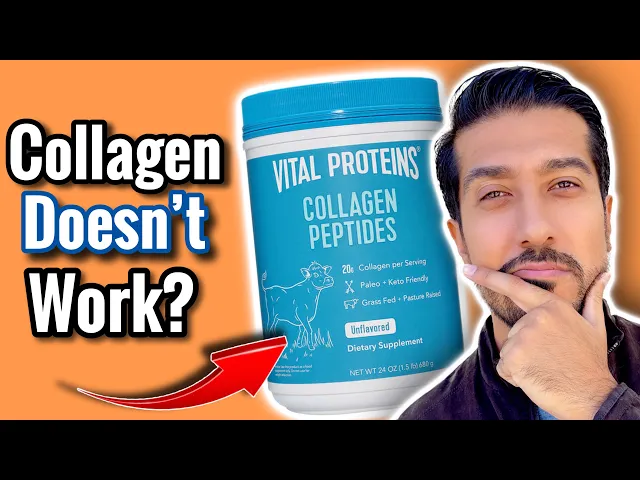
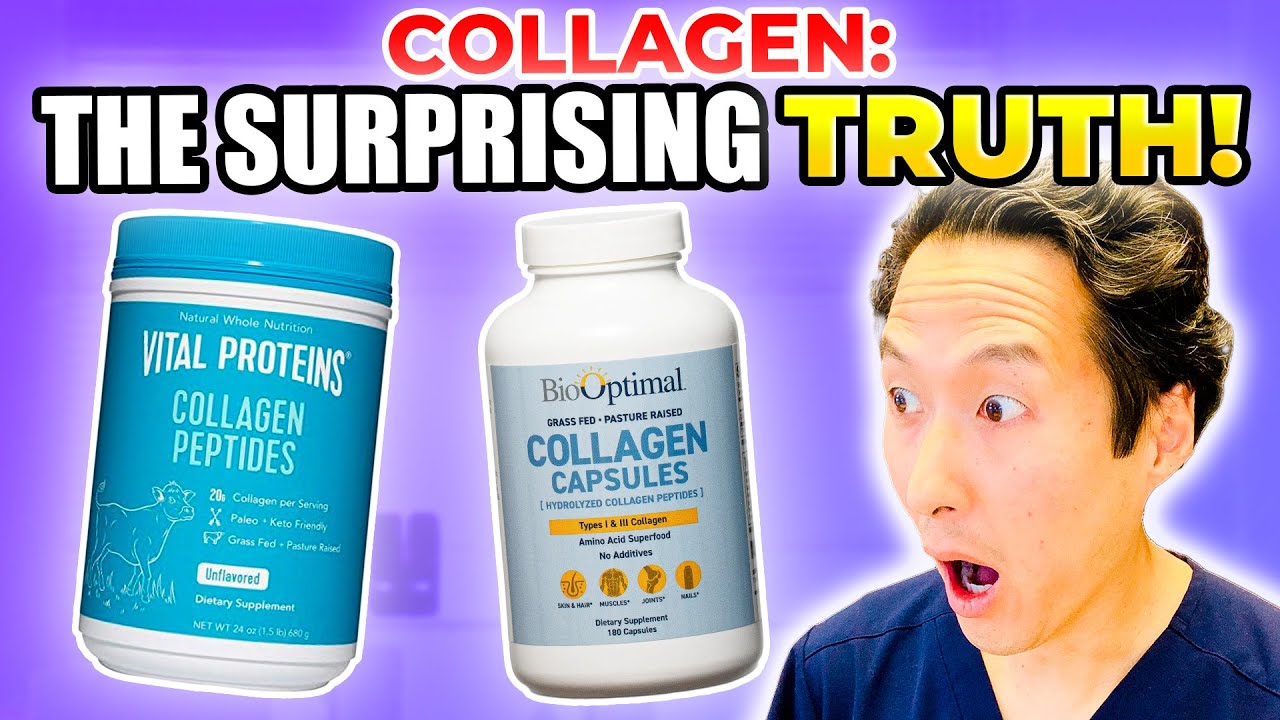
Collagen is a protein that serves as one of the main building blocks for your bones, skin, hair, muscles, tendons, and ligaments. And even if you do everything 'right,' everyone starts to lose collagen around 25, and definitely in their 30s. In fact the No.
1 cause of skin aging is the loss of collagen. So the question on collagen supplements becomes the next question to be asking. Should I be taking collagen supplements, and if so, what are some mistakes I need to avoid so that they actually work.
In this video, we will look at one of the biggest questions about collagen supplements which is the issue on if the body can absorb them and actually get the collagen all the way from the stomach to the skin, which a lot of youtubers and experts skip over, and 5 of the biggest mistakes you want to avoid if you go ahead with trying collagen. Definitely share this video because I think it will be helpful to others, and without further ado lets get started. If you guys are new here, this channel is all about helping you make informed decisions as well as be in the know when it comes to your health and wellness, and I would love for you all to gently tap on that like button down below, and if you really like the content, then Id love for you all to subscribe as well, to stay up to date with new weekly videos.
Now without wasting anymore time, lets get straight into it. And ive left the timestamps down below too, to make finding information easier. One of the biggest doubts that some experts tell you about collagen supplements is this idea that once you ingest collagen, it gets destroyed by stomach acids and are not absorbed in the bloodstream, therefore there is no point to take them.
But heres the thing, if you investigate what actually happens to the collagen, it gets interesting. And I mean, pretty interesting. Since I mean you do have studies that look at how collagen can restore skin hydration, skin elasticity, and density.
So what gives? Does it reach the skin or not. You see, Once you ingest collagen, it doesnt get fully destroyed.
They get digested into di-and tripeptides which survive further hydrolysis. And Because they survive that, they get to be transported across whats known as the intestinal mucosa via a fancy transporter called PEPT-1, think of this as like your UBER X. At this point the collagen can be referred to as an amino acid mostly made up of as hydroxyproline, glycine, and proline.
And guess what, hydroxyproline containing di- and tripeptides have been shown to appear one hour after ingestion of collagen peptides at nanomolar concentrations in the blood. And to be sure of that, they investigated it using radioactively labeled collagen peptides and saw that the absorbed peptides do reach the skin and are retained in the tissue for up to 2 weeks. Yes, a whole 2 weeks.
But then what, it gets to the skin i get that, but how does it prevent aging. Well to understand that, you have to take a look at one of skin agings biggest culprits which are lazy fibroblasts that slow down synthesizing the extracellular matrix of the skin, which is a big component of the skin. And because fibroblasts slow down and get lazy, you have their enemy, mmps which are matrix metalloproteinases that show up and destroy collagen, fibronectin, elastin, and more.
But since we take in more collagen from our collagen peptides, we then promote the growth of those fibroblasts and help fibroblast migration, so they can stop being lazy and support the structure of the extracellular matrix and attack those nasty matrix metalloproteinases which cause aging. So now that we know that collagen reaches the skin and promotes fibroblast activity to fight and reverse skin aging. What are the 5 mistakes I need to avoid to be successful with collagen.
The first is: If youre taking or starting to think about taking collagen. You need to control your stress and practice stress management. Stress can cause an increase in hormones like cortisol, which research has found high amounts of cortisol can decrease the production of collagen.
This is because Less collagen is produced in high-stress because the body's resources are used to stop the stress, instead of maintain the collagen. So staying active, connecting with others, laughing more, and yoga, even laughing yoga if youre into that, can lower cortisol. The second is: Not getting enough vitamin c.
Vitamin c helps ensure your collagen is functioning at the levels it should be. Especially because Vitamin C is a key cofactor in the synthesis of collagen and elastin, giving your skin that plump look your searching for. And on that note, Whether that is topically or ingested, vitamin c stimulates collagen synthesis and acts as a potent antioxidant to scavenge any free radicals that are breaking down your collagen.
And The 10% l-ascorbic acid by cerave is my current favorite one, which you can pick up down below. Or if you want a stronger one, then Id go with the paulas choice c15 super booster at 15%. The third mistake is.
Not getting enough sleep. When the body is overly fatigued and not fully rested, it compromises the immune system which in turn slows down collagen production. 7-8 hours a night is the sweet spot.
So make sure you catch your z’s. The fourth mistake is: temperature. The temperature you take your collagen is important for it to be effective.
Drnking it hot might not be helpful because "collagen powder falls apart at temperatures above body temperature,Which could Basically mean, you are just consuming gelatin with zero collagen benefits. Instead you can take it at room temperature or with an iced latte. The fifth mistake is: Underestimating your sunscreen.
You can take all the collagen supplements and collagen stimulants in the world but if you skip sunscreen youd not only waste your money, but get no real collagen benefits. And One of the biggest sunscreen mistakes is not reapplying it after that 2 hour mark and secondly if youre using spray sunscreen. Spray sunscreen can lead to easily missed spots in which the sun can burn off your collagen.
Especially those UVA rays, which go much deeper into dermis of skin and over time break down the collagen supply. And no, your foundation isnt enough SPF to block UVA. You should still at the minimum wear a hat when you go outside, sunglasses if you can, seek shade, and use an SPF of 30 or more.
SPF 30 filters 97 percent of the sun’s UVB rays, SPF 50 filters 98 percent, and SPF 100 filters 99 percent. And if you dont want to wait the 30 minutes for the sunscreen to absorb, try a physical sunscreen which works right away, since it acts like a shield instead of a sponge. Click the red subscribe button down below if you found any value and ill see you on the next one.