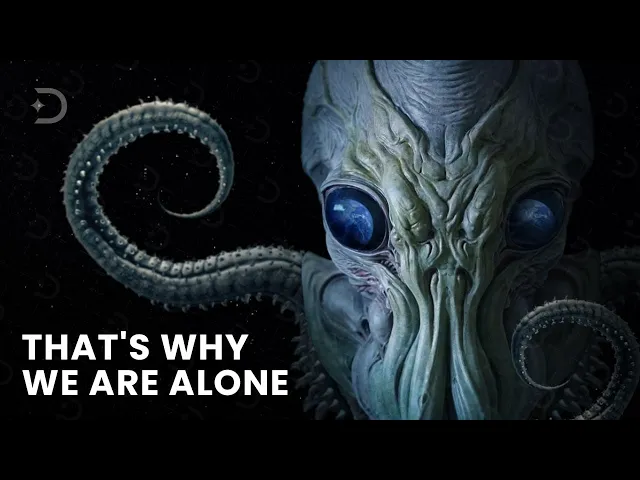
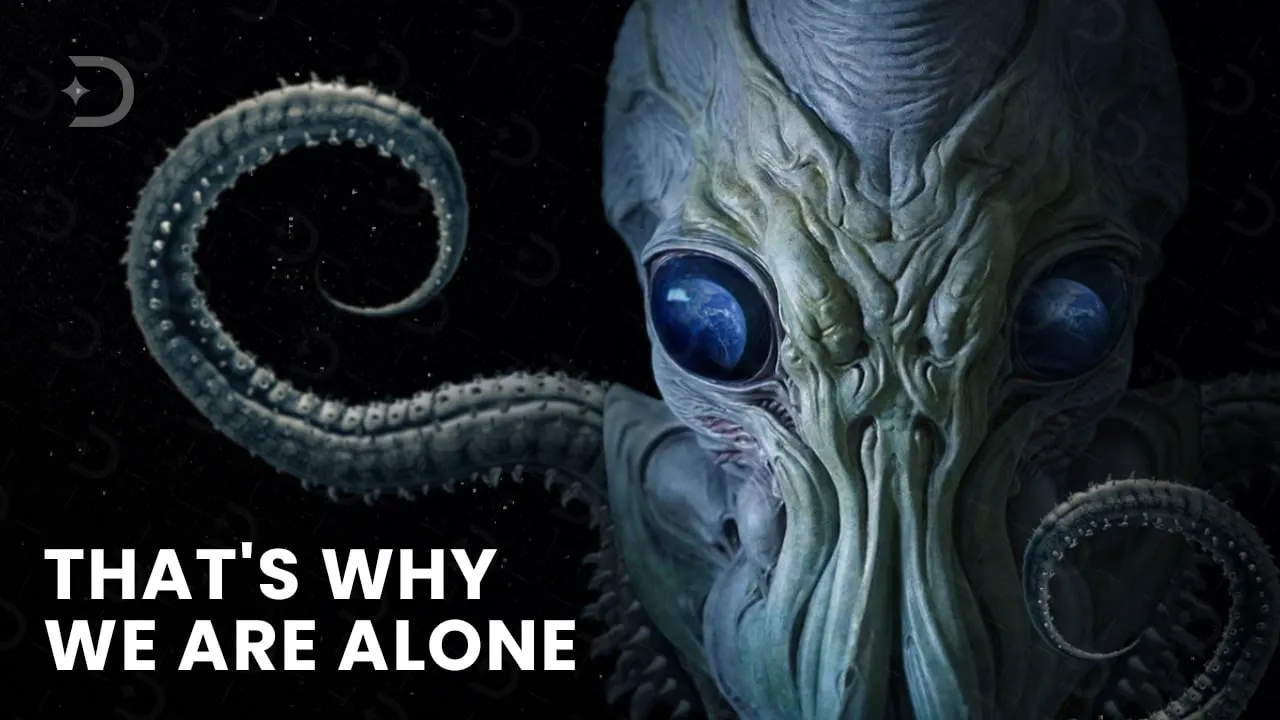
If we consider our solar system is typical of billions and billions of other similar systems, then where are the extraterrestrials? The universe should be full of intelligent life by now that would create some kind of signal that is easy to detect…yet, we have seen and heard nothing. There is one possible solution to the unnerving silence of the cosmos, and it could be the most chilling answer to why we’ve heard from no one…because if an alien civilization does exist out there somewhere, they certainly know we are here…and that is something that should scare all of us.
[LOGO] You may have heard the term ‘Fermi paradox’ before. In its simplest form, the term asks the question: ‘If intelligent life is common in the universe, then where is everybody? ’ You might be thinking that the physicist Fermi wrote papers on the subject, and that his life work was based around finding aliens.
But this couldn’t be further from the truth. Enrico Fermi was a physicist who created the world’s first prototype nuclear reactor. He never really wrote much about extra-terrestrials.
Fermi was chatting with colleagues at a lunch in Los Alamos about a cartoon showing aliens emerging from a flying saucer carrying trash cans stolen from New York City. That’s when Fermi asked ‘where is everybody? ’ Everyone understood he was referring to the fact there wasn’t any solid evidence of alien visits to our big blue planet.
The conversation then turned to the topic of interstellar travel where Fermi concluded interstellar flight might not be possible, might not be worth the effort, or a technological civilization doesn’t last long enough to invent interstellar travel. Keep in mind that Fermi was saying this in 1950, when rockets hadn’t yet reached Earth’s orbit. The so-called Fermi paradox, which questions the existence of extraterrestrial civilizations, actually misrepresents Fermi’s views.
Fermi didn’t question the possibility of alien civilizations, only their ability to have interstellar travel. So what is the Fermi-Paradox if Fermi didn’t create it? In 1975, an astronomer by the name of Michael Hart penned an article in which he said ‘they are not here; therefore they do not exist’.
Hart’s claim was that if smart aliens existed, they would inevitably colonize the Milky Way. He believed that if they were anywhere, they would be here by now. But since they aren’t, and we’ve seen no signs of aliens, it means that humans are the only intelligent life in our galaxy.
And if that is the case, then looking for intelligent life elsewhere is probably a waste of time and money. But then another famous physicist named Frank Tipler came along in 1980 and elaborated on Hart’s assessment and asked the big question: Where would a civilization get the resources needed to colonize a billion stars? He came up with an interesting idea where a civilization could build an artificially intelligent machine comparable to the current human level, that could replicate itself.
If you sent one of these out to a neighboring star and told it to build copies of itself using local materials in that system, then you could send those copies out to another neighboring star until the galaxy would be crawling with these self-replicating machines. Tipler said that since we haven’t seen any of these machines, that we’re the only intelligent civilization in the galaxy. Now, we really have no idea how many advanced alien civilizations might be out there that could pull off such a feat.
But a man by the name of Frank Drke came up with an equation that gives us a rough estimate of the number of civilizations in our galaxy that might have signals we could detect. And those civilizations could exist in the thousands. Many different solutions to the Fermi Paradox have been suggested over the years.
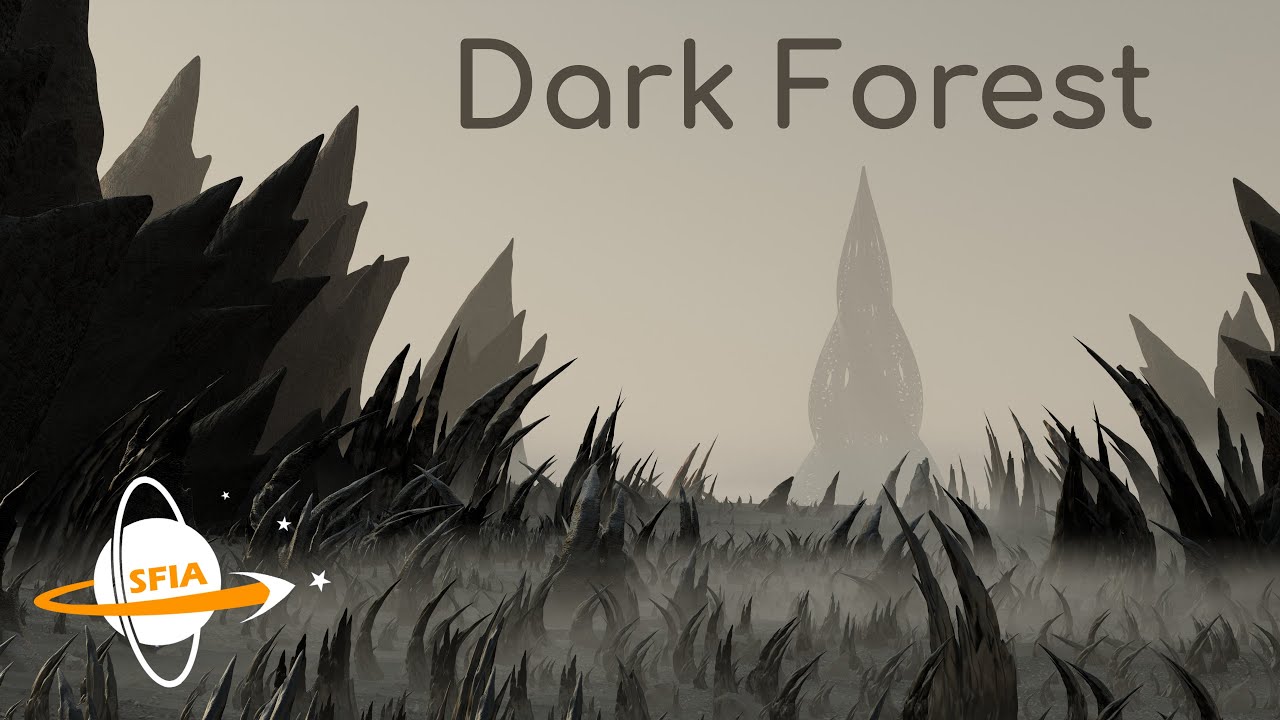
One solution to the so-called Fermi paradox might be the scariest solution of them all. It’s called The Dark Forest Theory, written by Chinese science fiction writer Liu Cixin, and it's possibly the most chilling theory, as you’ll soon find out. Imagine the universe as a vast dark forest, and us humans, along with other advanced civilizations out there, are the hunters.
The hunter doesn’t light a torch to draw attention to himself. To be noticed might be harmless, but on the other hand, it could bring the jaws of a hungry lion, or even worse…get the attention of another competing hunter. Now, we don’t have interstellar travel yet.
But as far as interstellar communication, it is possible with technologies and equipment that’s already available. Lasers could easily send signals across the galaxy. Of course, there would be delays in the signal assuming the limitations of the speed of light.
But we’ve done a lot more than just send out some radio signals. In fact, we’ve done everything but be silent, from deliberately sending messages and spacecraft out into space, to unintentionally sending out radio and TV signals which leak into space. The Voyager probes are already on their way out of the solar system, and if there is an intelligent civilization out there, they could be intercepted.
These two probes basically carry all of humanity with them. That could be a good thing, or it could be a bad thing. That said, we’ve more than lit the torch in the dark forest.
The next question is who, or what will spot our signal, and come to check it out? This should make everyone nervous… Famous science fiction writer Arthur C Clarke once said that two possibilities exist: either we are alone in the Universe or we are not. Both are equally terrifying.
We should understand that it’s impossible to know the intentions of a newly contacted civilization if one was ever found. It could be possible that some alien civilization could have studied us, seen our destructive nature, and decided it’s better to leave us alone. We could end up wiping ourselves off the planet, let alone worrying if someone will do this to us.
We could end up being lucky, and a more advanced civilization would step in to help us reach the stars and become an interplanetary species by sharing their technology with us. There might be peace on Earth after the realization of not being alone in the universe. But we need to be realistic and ask ourselves ‘why would another civilization do this?
’ Another advanced civilization out there might be scared to death of what we would do to them if they were discovered. On the other hand, it might be in civilization's best interest to shoot first and ask questions later to avoid being destroyed or wiped out by another more advanced civilization as we’ve seen in several science fiction films like War of the Worlds. Nobody knows who would annihilate who in a first meeting.
It’s pretty much a given that if a civilization has discovered interstellar travel, their weapons technology is likely far more advanced than anything we have here on Earth. That’s what The Dark Forest theory is; that it’s possible all other civilizations out there in the cosmos have chosen to remain silent for fear of being destroyed. But the scariest thing about all of this remains.
. . and there’s nothing we can do about it now… We’ve just been too noisy.
It could be that there are many different extraterrestrial civilizations out there that know we exist. But the reason we don’t know about them yet is because they haven’t been transmitting signals like we’ve been doing from Earth. An intelligent civilization out there that has discovered Earth might not see us as a threat to them, since we haven’t reached a technological level for interstellar space travel…but they could be waiting for that moment.
They could be waiting to see if we will continue to be a peaceful race, or if our planet will just become uninhabitable to all life anyway. However, it would be really tough for another advanced civilization to stop accidentally sending out radio signals into space like we do, unless they are more advanced and use another form of communication that we cannot see, hear, or understand. And that brings us to another possibility as to why we don’t see or hear anything from space…maybe there really isn’t anyone out there.
That’s pretty hard to believe, since there are as many as 40 billion Earth sized planets in habitable zones. But despite the fact that the universe may be teeming with hospitable planets, there's no guarantee they'll stay that way long enough for life to evolve. According to a recent study from Australia National University, wet, rocky planets like Earth are very unstable when they are first formed.
If any kind of alien life hopes to evolve and thrive on a Terran planet, there is a very limited window of just a few hundred million years to get everything moving. Think about our own planet and what it’s been through. From a ball of lava being pummeled by asteroids, to a freezing ball of ice, and then back again.
The chances for life to succeed on an initially wet, rocky, planet in the habitable zone is extremely difficult. It’s not that life might be rare or hard to get started in the universe, but that habitable environments aren’t stable during the first billion years. Of course, thanks to our Earth, here we are.
We know from our own discoveries that the universe is a deadly place. All it takes is a supernova, a gamma ray burst, a solar flare, or a huge asteroid to wipe out life on a planet. We know some of those things have happened right here on Earth.
It might be difficult to deal with the fact that we are the only intelligent life in the Milky Way, or perhaps the entire Universe. Perhaps after all these billions of years, other civilizations have come and are now long gone, and maybe we’re the last ones left in the universe. As for the Fermi paradox?
There really isn’t one. We can’t say that aliens exist or not because no one knows if travel between star systems is possible in the first place. There was a lot of excitement when the Central Intelligence Agency declassified thousands of UFO documents.
In some of those 3 million documents, there was not enough evidence to identify objects caught on aircraft instruments. Maybe extraterrestrials are here now and we just don’t know about them. Regardless of whether we have or haven’t been visited by extraterrestrials in our galaxy, UFO experts say that humanity is closer than ever to finding the existence of alien life.
With all the telescopes we have searching, we’re bound to find something. So what do you think? Do you think we’ll find evidence of life out there sometime soon, and should we keep looking for aliens?
Sound off in the comments. And make sure to stay tuned here on all the amazing things happening in our universe by subscribing. Thank you for watching.