Wagadugo's suffocating heat pressed down on the city like an unrelenting weight. The streets were busy with the usual hum of life. Motorbikes zipping through traffic.
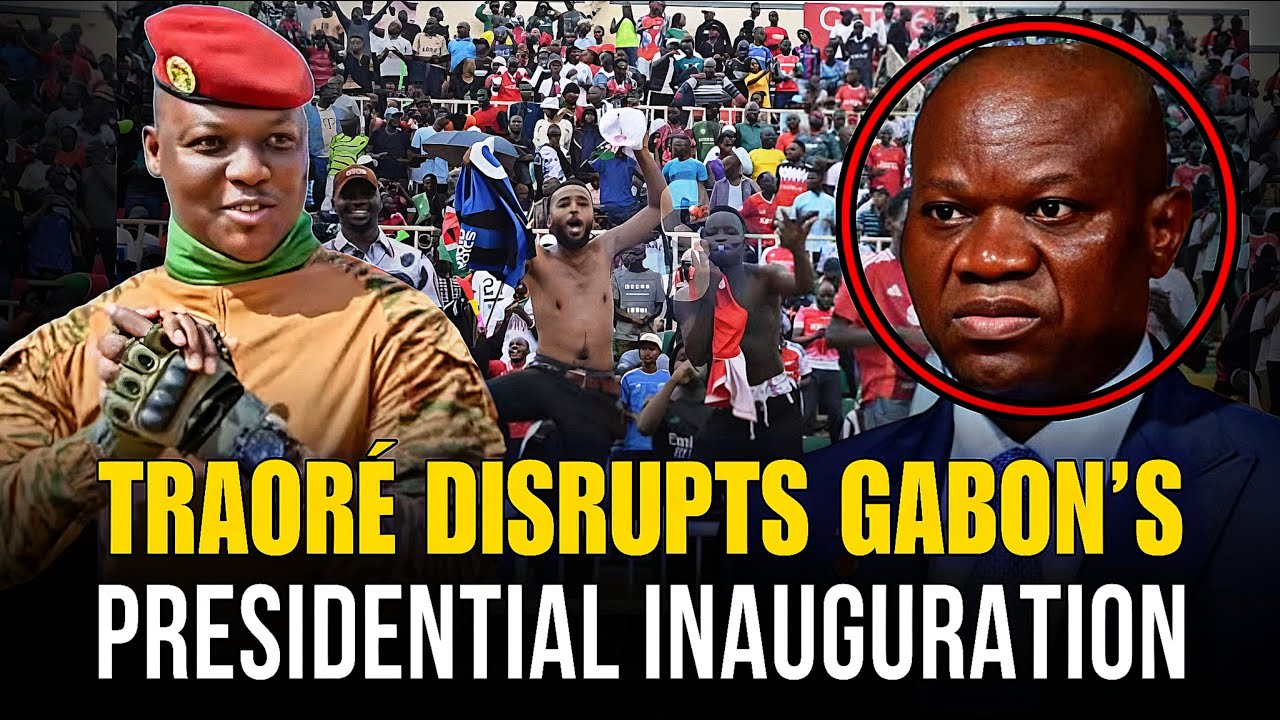
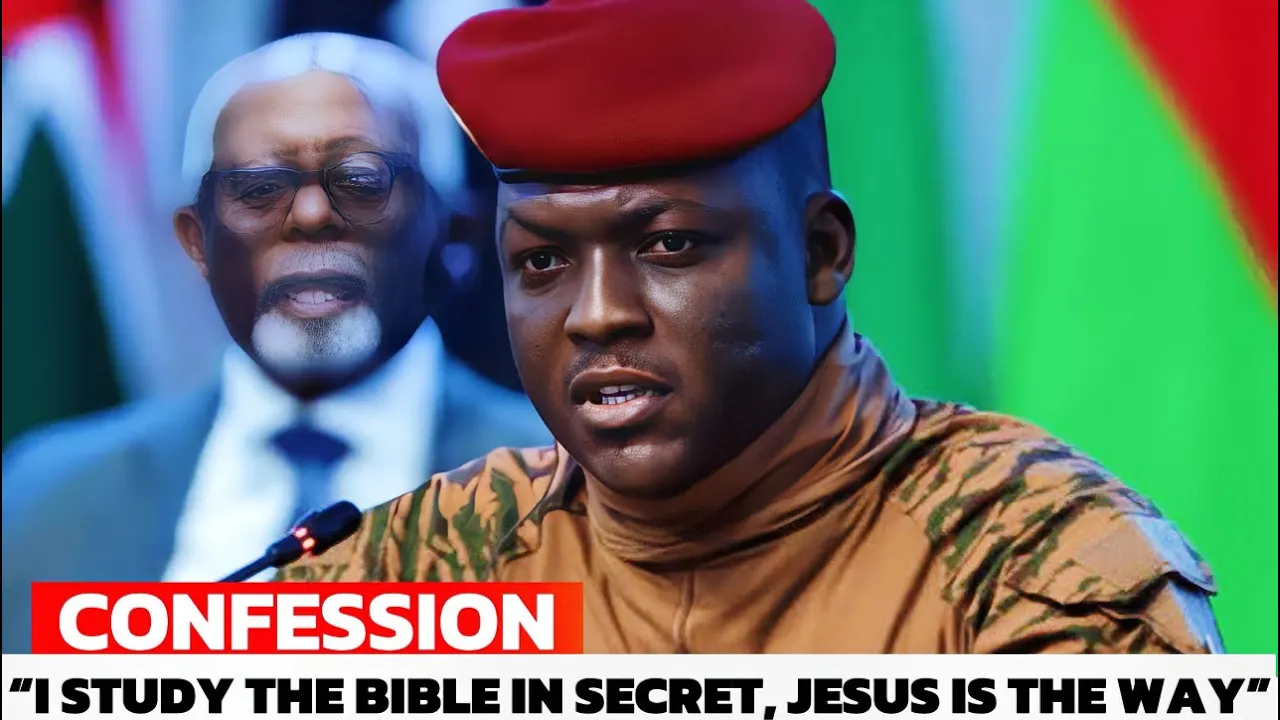
Vendors shouting about mangoes and cloth. Radios blaring news of the recent coup attempt on April 16th, 2025 that nearly tore apart the government. In the heart of it all stood Captain Ibrahim Trare, the military leader of Burkina Faso.
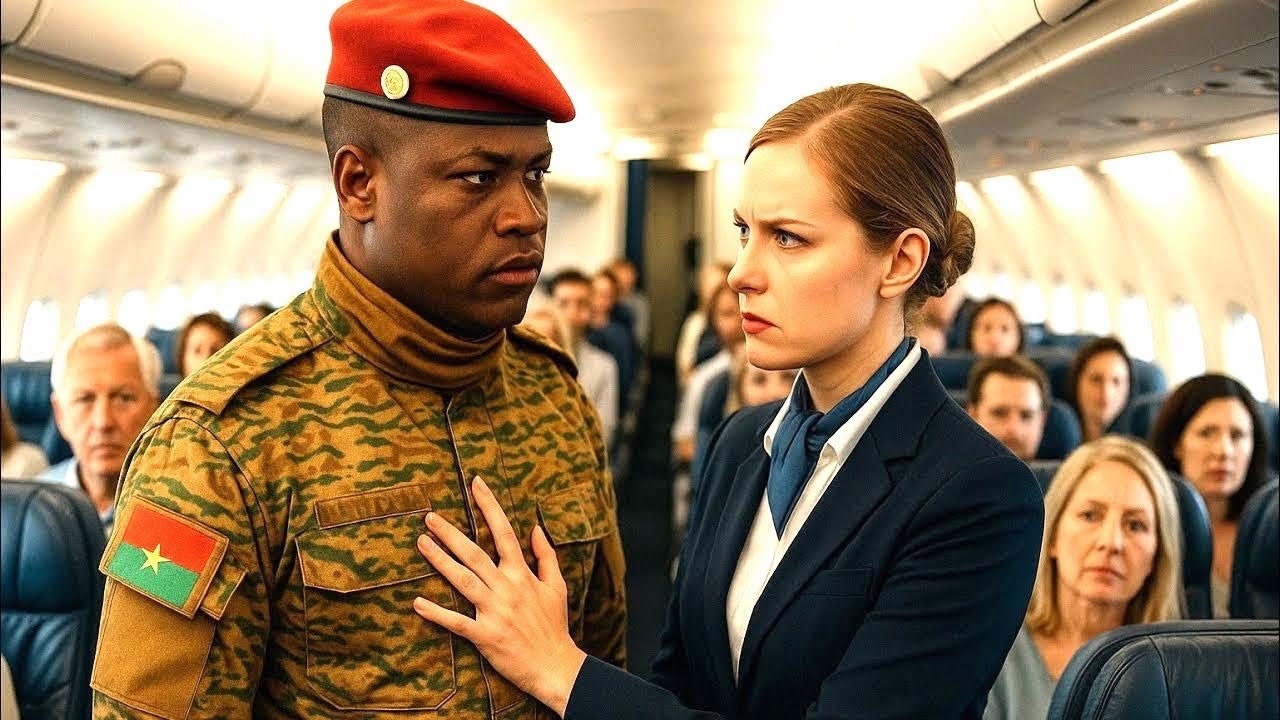
He was in a small TV studio, his green beret sitting perfectly at top his head, a pistol strapped to his hip that caught the studio's sharp lights. Despite the oppressive heat, the weight of his responsibilities made the air feel heavier. Publicly, Trouore had become a symbol of a new era for Burkina Faso.
His leadership often compared to that of Thomas Sankara, the former revolutionary president known for his anti-western stance and commitment to the empowerment of the people. Like Sankara, Trroware was a proud nationalist, often vocal about his disdain for western influence in his country's affairs. He had rejected international aid that he saw as exploitative, seeking instead stronger ties with countries that shared his vision for independence and self-sufficiency.
Among the most prominent of these alliances was with Russia, which had become an increasing influence in Burkina Faso under Trareore's leadership. His alignment with Moscow was seen by some as a necessary counterbalance to the West's growing interference in African politics, while others viewed it with suspicion, worried that it might pull Burkina Faso into a different kind of dependence. But today, in front of the camera, Trare wasn't concerned with political rhetoric or alliances.
His thoughts were elsewhere. As a devout Muslim, he prayed five times a day, turning to Allah for guidance. Yet, despite his public persona, strong, defiant, and rooted firmly in his Muslim faith, he carried something else in his heart.
A deep unspoken love for Christianity. It had been planted by his grandmother Awa, the only Christian in a family deeply rooted in Islam and further nurtured by Reverend Father Paul, his high school teacher. Enemies in Ivory Coast want to break us.
Trare's voice rang out through the studio clear and strong as he addressed the nation about the recent coup plotters who had tried to destabilize the country. His words were firm, and his message was one of unity and strength. Yet, privately, beneath the tough exterior, Trare felt a deep internal call for something much more profound.
Not just a fight for power, but a call for love and unity, grounded in the lessons his grandmother had imparted to him. A lesson from Awa's Bible, one that never left him. Love your enemies.
Pray for those who hurt you. Matthew 5:44. In March 2025, President Trrowé declined an offer from Saudi Arabia to build 200 mosques in Burkina Faso.
Instead, he advocated for investments in education and health care, reflecting a balanced approach to religious development. This decision underscored his commitment to maintaining national sovereignty and promoting secular development. In his childhood in Luga, Trare grew up surrounded by a family deeply steeped in Islam.
His grandfather was a strict Muslim with four wives, three of whom followed the tenets of Islam strictly, praying five times a day, their headscarves bright under the sun. But Awa, his grandfather's second wife, was different. She was the only Christian and her Bible was always open.
Traoreé was her favorite grandchild. Under the shade of an acacia tree, Awa would read stories from the Bible to him, teaching him lessons of kindness, love, and forgiveness. She would often say to him, "Ibraim, God loves everyone, even those who do wrong.
" One particular lesson stuck with him, one that he would carry throughout his life. Matthew 5:44, "Love your enemies and pray for those who persecute you. " This was not just a lesson.
It was a moral compass quietly shaping his understanding of the world even as he grew up in a Muslim household. When Trare moved to Bobo Diolaso for high school, he met Father Paul, a Catholic priest who became a pivotal figure in his life. Father Paul's classroom was modest, dusty bookshelves and a creaky fan, but his lessons were powerful.
They weren't just about history or religion. They were about understanding the human condition, the power of forgiveness, and the call to love even in the face of hatred. Ibraim, Father Paul would say, adjusting his glasses.
Loving your enemies is the hardest thing, but it's God's way. It's Jesus's way. Despite being a Muslim, Trare found himself staying after class, asking Father Paul questions about the Bible.
He prayed five times a day. But he felt a hunger for something more, something that spoke to his soul, a desire for peace beyond the violence and chaos of the world around him. It was during these moments that his dual faith began to form.
A Muslim who cherished the lessons of Christianity. A quiet unspoken truth he kept hidden from others even as he rose through the ranks of Burkina Faso's military. Today, as he stood before the camera, calling out the enemies of the state, the coup plotters, and the enemies from Ivory Coast, he could not deny the internal conflict within himself.
His public image was one of a proud anti-western nationalist like Thomas Sankura whom many admired for his rejection of foreign interference. But privately Trare's heart was torn between the two faiths that had shaped him. His Muslim faith was steadfast.
But his love for the teachings of Christianity, of peace, of forgiveness, and of unity was a quiet, unspoken part of him. The speech ended. Trrowé walked out of the studio, the lights dimming behind him.
In the hallway, he paused for a moment, his breath heavy in his chest. He thought of the country he now led, torn apart by jihadist forces controlling 40% of the land, the Christian population living in fear, and the wounds from the February 25th, 2025 Kaya Church attack still fresh. He thought of Aminata, the young girl he had read about in the report, a survivor of the attack.
Her parents had been killed. Her church had been burned to the ground. Yet, despite it all, she had forgiven the perpetrators.
Trrowé turned and walked into his office, sitting down heavily at his desk. The weight of his decision to fight not only with military might, but with love pressed on him. Could he reconcile his Muslim faith with the Christian call to forgive his enemies?
Could he truly lead a nation that was bleeding from within while holding on to the lessons of love that had shaped him? He reached for Awa's Bible, its leather worn from years of use. The pages were fragile, but the words within were steadfast.
He turned to Matthew 5:44, the passage that had guided him since childhood. Love your enemies. pray for those who hurt you.
" His throat tightened and for the first time in a long time, he allowed himself to feel the full weight of his responsibility. Not just as a military leader, but as a man caught between two worlds, struggling to bring peace to a fractured nation. Charé spent the next few days buried in his office, the pressure of leading a fractured country gnawing at him.
He had already faced enormous resistance from the political and religious factions within his own country. He was Muslim, but he had never kept his love for Christianity a secret. Awa's teachings, Father Paul's wisdom, those lessons had shaped him, and he couldn't ignore them now, even as his nation fell deeper into the chaos of civil war and religious division.
It was in these dark moments that he reflected on the tragedy of Kaya, the attack on the Christian church, and the pain that followed. The survivors, many of whom had sought refuge in Wagadugu, were now living in displaced persons camps. Their faces haunted him, their names, Salimata, Jean, Pierre, Aminata, burned in his memory.
He thought of Aminata, particularly a young girl who had survived the brutal attack and who had lost her parents in the massacre. Her faith had remained unshaken, even in the face of unspeakable loss. The words of his grandmother, Awa, echoed in his ears.
God loves everyone, even those who do wrong. But how could this be true? How could anyone forgive the monsters who had taken innocent lives?
Trare sat in his office. Awa's Bible opened before him. The words of Matthew 5:44 stood out.
Love your enemies and pray for those who persecute you. Could he do that? Could he, a military leader torn between his duty and his heart, truly love those who had inflicted such pain?
Could he show the world that peace was possible even in a country torn apart by jihadists and religious conflict? The next day, Trareore made a decision. He would visit the displaced person's camp.
He needed to see the survivors face to face. He needed to hear their stories to understand their pain. He wasn't sure what he could offer them, what peace he could bring, but he knew that he had to try.
As he walked through the camp, the harsh reality of Burkina Faso's suffering became even clearer. The camp was overcrowded, its tents sagging under the weight of desperation. Children cried out for food, women whispered in anxiety, and men argued over limited resources.
It was here, amidst the chaos, the tray came face to face with Aminata. She was sitting outside a small tent, her wooden cross hanging from a string around her neck. Her eyes were fierce, filled with a maturity beyond her years.
The camp worker had told Trrowé that she was a survivor of the Kaya attack. But there was something about her that caught his attention. Despite the devastation she had experienced, there was a quiet strength in her presence.
I am Ibrahim Trareore, he said, kneeling in front of her. I am so sorry for what happened to your family. Aminata looked up at him, her eyes unwavering.
They shot my mother and father, she said flatly. Burned our church. But I forgive them.
Trrowé felt the ground beneath him shift. She forgives them. How could she?
How could anyone forgive those who had torn her world apart? But as he looked into her eyes, he saw something he had never expected. Peace.
A deep, unshakable peace. "How do you forgive? " he whispered.
Aminata touched the wooden cross around her neck, her fingers delicate, but sure. "Jesus forgave those who killed him," she said. "If I hate, I am trapped.
Forgiving makes me free. " Her words hit him like a lightning bolt. The simplicity, the power of her message broke through his walls.
Could he too forgive? Could he lead his country not just with military might, but with love? I don't understand, he said softly, his voice cracking with emotion.
You will, Aminata replied. You have to try. Char felt the tears well up in his eyes, a mix of grief and hope swelling in his chest.
For the first time in years, he allowed himself to feel the full weight of his emotions. He had spent his life leading with military precision. But in this moment, he realized that peace, true peace, would come not from force, but from love and forgiveness.
I'll try, Traé said, his voice barely above a whisper. I promise Aminata, I'll try. The days following his meeting with Aminata were a blur.
Char could not shake the weight of their conversation. He had always believed in his Muslim faith, but now the teachings of Awa and Father Paul had entered his heart more deeply than ever before. The line between his religious identity and the call for peace seemed less distinct.
The teachings of forgiveness, love, and unity had become the foundation of his leadership. But as he faced increasing pressure from the huta, Muslim hardliners and international critics, Trare struggled to find the courage to act on his newfound convictions. The country was falling apart.
Jihadists controlled large swaths of the land, and the threat of more attacks loomed large. His promises of peace seemed increasingly impossible to fulfill. Yet, even in the face of mounting opposition, Troué knew what he had to do.
He turned to the teachings of Awa and Father Paul once more. "Love your enemies," he murmured, staring out the window of his office. He had promised Aminata and he would not break that promise.
He would choose peace even if it cost him everything. The days after his encounter with Aminata were both a blur and a slow, haunting passage of time. Trare found himself in a constant state of inner conflict.
He could still feel Aminata's eyes, those unflinching eyes that saw right through him, challenging him to live up to the teachings of love and forgiveness that had guided him his entire life. She was just a child, yet her words had struck him with the force of a sledgehammer. Jesus forgave those who killed him.
If I hate, I'm trapped. Forgiving makes me free. Everywhere he turned, the wounds of his country festered.
His country, his people were bleeding. The jihadists attacks continued and more churches like the one in Kaya were being desecrated. The Christian population was being terrorized, driven into hiding.
The Muslim leaders, his fellow soldiers, and even some members of his huta were beginning to question his allegiance. The divide between Muslim and Christian was growing wider by the day. And yet, the very people he was supposed to protect, all of them, needed healing.
Trare sat at his desk late one night, his green beret off, the dim light of his desk lamp casting shadows on the wall. The report on the Kaya church attack lay open before him. Its stark images like ghosts haunting him.
He had seen them too many times before. The photographs of the burned church, the twisted wreckage of lives lost. And then beneath it all, there were the names, the survivors, the children, the faces of a nation torn apart.
He closed the report slowly, his fingers trembling. He couldn't escape it anymore. He couldn't avoid the deeper call of his own faith.
The words of Father Paul echoed in his mind. "Loving your enemies is the hardest thing in the world, but it is God's way. " Trareoreé ran his fingers over the leather of Awa's Bible, its surface worn from years of use.
The words within were like a constant drum beatat in his chest. He had grown up with them. He had always believed them.
But now they demanded more of him than ever before. This war, the war for peace, was not just external. It was within him.
His Muslim faith taught him to lead with strength, to defend, to conquer. But his Christian heart, the one shaped by Awa's prayers and Father Paul's wisdom, urged him to fight with something far more powerful. Love, forgiveness, and unity.
He stood up, pacing the room, his boots echoing on the concrete floor. The weight of his role as the leader of Burkina Faso pressed on his chest. He had pledged to protect his people to ensure their safety.
But the violence, whether from jihadists or political enemies, was never ending. He couldn't find peace in his leadership, not without reconciling these two parts of his soul. How can I lead if I can't even forgive?
He thought. He thought of Ammonata again. Her simple words of forgiveness had cut through the military strategist he had spent years becoming.
He saw her sitting in the dusty camp, the cross hanging around her neck, her eyes full of grief, but also full of unyielding hope. The same hope that had kept her faith alive despite all she had lost. "I'll try," he had promised her.
But now standing on the precipice of his decisions, he wondered, "Can I do it? Can I forgive those who've done this to us? " The weight of the coup, the incessant threats from jihadists, and the internal division within his hut became unbearable.
But even as his country teetered on the edge of collapse, Trrowé began to hear the faint whisper of something more, something he had once thought was impossible. It wasn't just a strategy of war that would save Burkina Faso. It wasn't just military might.
It was a message of peace. One that came from his heart, shaped by his dual faiths. One evening, as he sat at his desk, the radio crackling softly in the background, a new report came in about another attack.
A church had been bombed, its survivors scattered and desperate. His heart sank. He felt the pressure mounting.
The weight of the nation's suffering seemed to have settled squarely on his shoulders. And yet, amid the cries of his country, he thought of Aminata once more. Her words echoed louder now.
Forgiving makes me free. It was then that he realized what he had to do. He made the decision to take the next bold step.
He would call a meeting, but not just any meeting. He would bring together the leaders of both the Muslim and Christian communities. He would sit them in the same room despite the risks, despite the firestorm it might ignite.
Despite the pressure from his huta to choose a side, this is the only way. He thought he was ready to sacrifice his position, even his safety, to bring peace to the land. The next morning, word spread like wildfire.
Captain Ibrahim Trareore, the leader of Burkina Faso, was calling for a secret summit with both Christian pastors and Muslim imams to discuss a ceasefire, a pact of peace, a path forward. As the meeting began in a small hidden community center outside the capital, the weight of his decision settled on his chest. It was a risk, one that could fracture his power, his alliances, and his position.
But it was the only way to heal the nation. The room was filled with leaders, men of faith, both Christian and Muslim, who had lost so much, but who still carried a flicker of hope in their hearts. The air was thick with tension, but there was also a quiet anticipation.
Everyone knew the stakes. I am not perfect, Trroware began, his voice steady but full of conviction. I am a soldier, a leader, a Muslim.
But I also know that the teachings of love and peace must guide us all. Awah, my grandmother, taught me that God's love transcends all religions. And Father Paul taught me that loving your enemies is the hardest but the truest way.
He glanced around the room, meeting the eyes of pastors and imams alike. "I'm not here to divide. I'm here to unite," he said.
"And I'm willing to risk everything for peace. No more killing for faith. No more division.
" The room fell silent. Then Pastor Henry Yay, a respected leader of the Interfaith Council of Peace, stood. Captain Trrowé, he said, his voice calm but firm.
You have our support. We know the pain, the fear that has gripped our people. But peace is possible if we walk together even through the fire.
The Imam Shik Adrisa spoke next, his voice filled with strength. Jihadists do not speak for Islam, he said. They kill us too.
We stand with you, Captain, for peace. The room, though heavy with tension, began to shift. They were all here, despite their differences, to work toward a common goal, peace.
It wasn't easy. It wasn't perfect, but it was a start. The summit ended in quiet whispers of agreement, but Trrowé knew that the hardest part was still to come.
The political backlash was inevitable. Hardliners within his honta would not stand for what they perceived as a betrayal of Islam. The Russians too would question his intentions.
He had already felt their cold gaze after the rejection of Saudi Arabia's offer to build mosques, preferring instead to fund schools and hospitals for all. But despite the pressure, Troure remained resolute. He had made a promise not just to Aminada but to his people, to himself, and to the memory of Awa and Father Paul.
He would lead with both strength and love, guided by the faiths that had shaped him. In early 2025, Troué declared that anyone attempting to divide Christians and Muslims in Burkina Faso would face life imprisonment. This strong statement was made during a joint celebration marking the end of Ramadan and the Lenton period where he joined both Muslims and Christians in prayer.
Trare has warned those who kill in the name of faith that they will have no place to hide, signaling a zero tolerance policy for religiously motivated terrorism. This stance is particularly significant for Christians who have faced targeted attacks by jihadist groups like Jamaus Ulis Islam Muslim JNIM which aim to establish an Islamic caliphate. And then came the bombshell.
An explosion rocked the city again. News spread quickly. Another attack, this time near a mosque orchestrated by jihadists.
The tension that had been simmering suddenly erupted. People were afraid. The coup leaders were furious.
But Charé stood firm, unwavering in his commitment to peace. He walked out to the public, to the people, to the world, to show them that love was stronger than hate. I am Ibrahim Trare, he said, his voice breaking through the chaos.
And I will not let this country fall into the hands of hatred. We will not be divided. We are one.
Burkina Faso. This is my pledge.