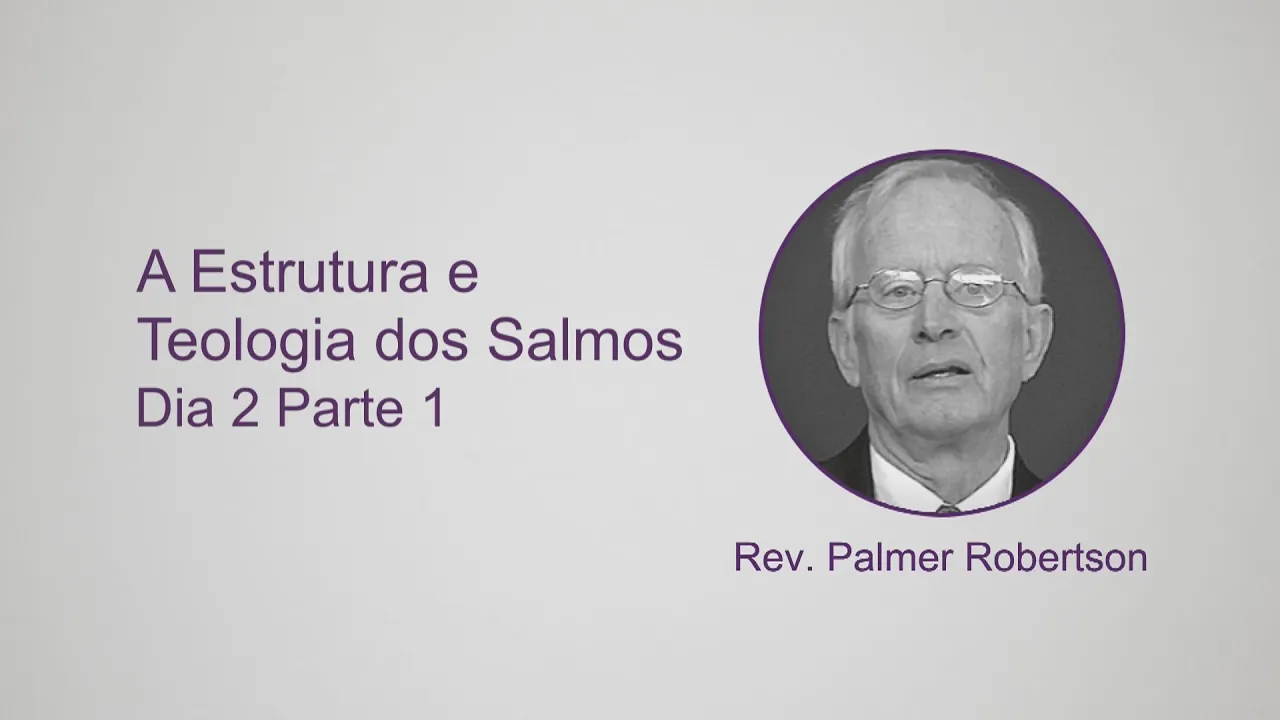
[Music] so we're looking at the prevailing themes of the five books of the psalter and we're seeing the redemptive historical progression across these five books we notice the contrast in the size so there is a difference in the sizes of the books we cannot look at all the details but it's quite interesting to see some indicators of an intentional breaking into smaller segments the two larger books has no intention now nicely not all grouped together but nicely distributed to break these two larger books into smaller segments is very apparent [Music] psalm 2 is broken into four very even stanzas [Music] you can have refrains that are repeated and of course in the acrostics you have the alphabet to remind you what's coming in the next verse among other things it seems very likely that the intent was for the ordinary israelite to be able to memorize the whole book of psalms on this song how could he meditate in the torah of the lord day and night if he had no copy of the bible but if he's got luther's little bible if he has the little bible as luther described it martin luther confession praising the lord when he looks at the creation as he goes out with his hoe in the morning praising god in the midst of worship adorable psalms to remind him that he is called of god to be a blessing to the nations of the world encouragement to keep trusting god as the gracious good sovereign savior now we looked at the prevailing themes and the prevailing theme of book one is confrontation confrontation enemies enemies enemies means enemies this is the seed of satan yes i and salvation for god's people ultimately will come only by the destruction of god's enemies you read the book of revelation in the description of the plagues that come down upon humanity this is reality it's a heli change and we need to recognize it this is almost among your cities we do not rejoice in the fall in the downfall of our enemies but we accept the revelation that god has given us as to what the state of humanity is we should never get in a position of being embarrassed about the psalms the imprecatory psalms the psalms of judgment upon god's enemies now the basic theme word in book two is that what is it communication what are two very clear indicators of of a change of perspective and relationship to these same enemies why is first 270 something to 50 something in book one over elohim and you go to book two and just the total reverse 190 something to 30 something and that psalm 67 when it substitutes elohim for yahweh in the benediction of the priest upon god's people is amazing may elohim bless us and make his face shine upon that's the very heart of the abrahamic covenant [Music] in you all the nations of the world will be blessed and when the nations are blessed then their blessings will come to us and when those blessings come to us there more be more blessings to the nations at the same time to be concerned about communicating that blessing what is the second indicator that we're dealing with a different kind of relationship to the foreign nations into the enemies [Music] along with the divine name difference come so we should have this attitude toward our next-door neighbors they may be muslims they may be jews [Music] as those that could receive the blessings of god just as we have received devastation let's go to slide number six right there we go devastation um psalm 83 excuse me some 73 to 89. consider four prominent psalms of book three that underscore this theme of devastation if you would read verses one through eight of psalm seventy four foreign [Music] foreign right farting they come in your sanctuary with axes they act as though they're chopping through a forest on fire they burned it to the ground they defile the dwelling place of your name could that have been described in books one and two the psalms of david why not who cannot grow because the sanctuary hadn't even been built in the days of david they were worshiping david wanted to build a house for the lord but it was denying him so this has gone well beyond the redemptive historical stage of david in his struggle to establish the messianic kingdom of righteousness and peace used to have when did someone come in and burn the sanctuary of solomon to the ground they are syrians is that serious no they took the northern kingdom but they could not take jerusalem no ran home as fast as he could and there he was murdered by his own sons in his own temple right they're carrying much of the northern the 10 northern tribes away in exile when they attacked the northern queen of syria attacked the northern kingdom but they could not take this out so who took the southern kingdom who destroyed jerusalem the babylonians now there were phases of the destruction of jerusalem by the babylonians 605 bc when when ezekiel and daniel were taken away into captivity b. c a major deportation and then 587 bc now look at a second psalm here psalm 79 read the first three verses ourselves okay psalm 79 there's a little bit of difference than from psalm 74 the nations have invaded your you can virtually see genesis chapter 15 in verse 2.
the covenant that god entered into with abraham the dead bodies of your servants as food for the birds of the air uh you remember in that covenant-making ceremony abraham divided the pieces and then he had to frighten the birds away that was the sign of the ultimate curse a body not buried i don't see now during the as much critique as my disorders these corpses have used it in the house with the birds of the air and the wild beasts of the field coming in and devouring the carcass [Music] but the difference in psalm 74 and 79 is that 74 says nothing about the destruction of jerusalem and in the 596 bc invasion of nebuchadnezzar we have this young teenage king king jehoiachin and he surrenders as soon as nebuchadnezzar gets there so apparently nebuchadnezzar did not devastate the whole city [Music] but now in 586 bc must have been as mad as so he came in and totally destroyed according to king's every every building in jerusalem he leveled here's a third psalm of devastation but this time it is the northern kingdom's capital of sumerian there's a little phrase added by the septuagint to the heading of psalm 80 so the septuagint writing two or three hundred years before jesus christ concluded that psalm 80 was talking about the destruction of samaria the northern capital and that is confirmed by the first two verses here our shepherd of israel you who lead joseph like a flock verse 2 before ephraim benjamin and manasseh awaken your might and save us is there any hope in the midst of these devastating reports yes you need to look closely at verses 14 through 17. psalm 80 verses 14 through 17. verses [Music] verse 12 he says you have broken down the walls of our city verse 16 using an image here your vine is cut down burned with fire let your hand rest on the man of your right hand the son of man you have raised up for yourself said what is this this is a messianic home is but it's a messianic hope associated with the northern kingdom the the end of psalm 78 just two verses but here's a play on the word benyamin benjamin the descendants of joseph of the northern tribe let your hand rest on each you mean no that is man of your right hand sister and in those two phrases you've got ben yamin benjamin you've been adam but you have also an expectation of a messiah ben joseph nice to me [Music] in jewish tradition they have an expectation of two messiahs it's quite fascinating messiah ben joseph is going to come to deliver israel from from jerusalem from its oppressors messiah [Music] is going to come and raise him from the dead this is an anticipation of our lord jesus christ and this phrase ben adam son of man yes does that sound familiar to you where have you heard of the phrase son of man where do you hear about son of man over and over again it's obvious he refers to himself as the son of man the second adam who's going to start the new human race because this phrase was not recognized so fully as as messiah loaded with political expectations of the messiah who was going to deliver deliver them from the oppression of the romans two groupings of statements about the son of man i i see you're reading dear hottest watch you can find this in vox system but the son of man is going to come in glory with the clouds of heaven glory and that movement and that's what you have with this messiah the nation devastated down into the pit where his brothers because of the false accusations of the of the wife of the man he was working for him then up up up to pharaoh's right hand so despite the devastation there is exaltation you remember what jesus says to the two men on the road to the for the messiah to suffer and then to be raised to glory just suppose jesus had not suffered imagination where would you be next estadios you would still be in your sin so this is messiah ben joseph 89 begins on a very positive perspective but notice how this psalm concludes you have renounced the covenant with your servant and have defiled his crown in the dust you've put an end to his splendor and cast his throne to the ground verse 44.
you put an end to his splendor and cast his throne to the ground so this is the fourth psalm in book three that talks about the devastation of israel you don't find this theme in books one and that's how book three concludes yeah i think you live [Music] are sacrificial they even have no land because they've been carried away into exile and that's the end that's the last note that we get from book three of the song yes maduro maturation maturing follows devastation psalm 8 or book 3 ends with their king being carried away into exile their temple has been destroyed burned to the ground their priests and their sacrifices are no more sir they have no land don't take my stairs so what have they got what does psalm 90 say as it begins before lord you have been our dwelling place through all generations it's not ultimately all these things of worship it is you that is the center of our worship in our life bringing them to understand that though everything is taken away from them in their life was struggling with this anticipation of the exile of the people and first this feisty little properties he's fussing right in the face of god how can you do this that's important as it is but in the end he's resolved and now it has obvious conflict today and he says though you take away the cattle that gives us milk and cheese you take away the grain that makes bread for us so you take away the divines that provide grapes for us for our wine yet i will rejoice level of maturity it's in philippians when paul is in prison that over and over he uses the word what what is the word that is the theme word of philippians where is it and rejoice in the lord always and again i say rejoice rejoice rejoice and again i say rejoice no matter what the circumstances we should be able to rejoice [Music] is that in portuguese also okay very good but let's hear you sing it then with now another amazing thing about book 4 is that which really is the central element of this book psalm 99 now this phrase this this is when they're in exile for example it looks like their god has been defeated by the babylonian god is it whereif it looks as though their god yahweh has been defeated by the babylonian god but their faith makes them understand now none of us would enjoy being cast into exile if you can imagine brazil being defeated by russia or some outer country and you're deported separated from your family you're put in digging ditches now this phrase jave malach occurs only in book four of the songs and in one other place in the old testament that one other place is first chronicles chapter 16. yes what's going on in first chronicles chapter 16 look at first chronicles 16 verse 1. what's happening so what has happened foreign i'm not going to tell you you have to tell me is that a rhetorical question is it what happened it's not a rhetorical question is it yeah no no it's not a rhetorical person i'm expecting an answer from you again [Music] sacrifices they go on all the time but this is something very special what is it the ark is being he's saying is bringing abroad to the temple okay of course it's not brought to the temple it's brought to the tenth that's all david had was a tenth but what is the art what is the symbolic significance of the art symbol presence of god not just the presents the fact the fact that god reigns it's a symbol of the throne of god it's a symbol of the throne of god god reigns between the cherubim this is an earthly image of god's throne that is in heaven the image is that and there was always a glowing light between the wings of the cherubim indicating god's presence right above the ark of the covenant and his he was either the image of course we don't think of god as as having a human form hello but it's as though he were seated in heaven with his feet resting on the ark of the covenant or he is himself as it were seated on the ark even as he is seated in heaven on his throne so david is bringing up the ark whereby the messiah's throne is being united with god's throne [Music] david you know he tried once and failed that's a good sign of worship be sure you do it according to the pattern shown you in the mountains as the westminster confession says man is not to worship god according to the devices of his own mind so you don't somehow get a soccer ball and kick it up and down the aisle and that's some representation of god's destroying his enemies now david then look at verse seven first chronicles 16.
that day david first committed to asaph and his associates this psalm of thanks to the lord and we find a very key phrase here and i'm trying to put my finger i thought it is verse 25. no that's verse 31 yes verse 31 let the heavens rejoice let the earth be glad let them say among the nations what the whole of this psalm of david celebrating the bringing up of the ark is climaxing with the phrase because the king god is now on his throne in jerusalem psalm 96 is taken from first chronicles 16. my niv version right under psalm 96 says 96 1-13 parallel passage first chronicles 16 23 through 33.
uh english so you see the bringing up of the ark was an event as significant as the accident [Music] by the incorporation of first chronicles 16 into the psalter in psalm 96. [Music] and psalm 96 is right in the middle of the whole of book four of the song there's another critical phrase that is found both in first chronicles 16 and in psalm 96 verse 25 of first chronicles 16 25. great is the lord and most worthy of praise he is to be feared now and they resurrect this psalm of david psalm 96 and on either side 95 and 97 use this phrase above now i have done my best to search the rest of the scriptures and i cannot find any other place where the phrase above all gods is found other than first chronicles 16 and the heart of book 4.




![Tim Dilena MESSAGE ✝️ [SHOCKING] YOU ARE NOT ALLOWED TO IGNORE THIS MESSAGE!](https://img.youtube.com/vi/eVSCcANmrKM/maxresdefault.jpg)