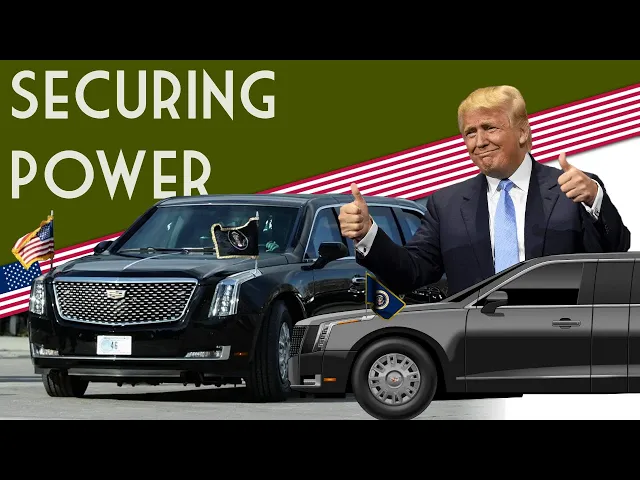
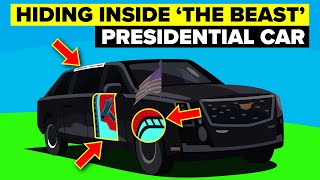
Before winning the election, the thing that put President Trump back into the news cycle worldwide the most wasn’t his campaign or his policies, but the two attempts on his life. Fortunately for Trump, he survived both incidents almost unscathed. Now, as he has been reelected as the President of the United States and sworn in for his second term on January 20th, one familiar asset will be giving him and his security team peace of mind: the United States presidential state car, also known as The Beast.
Built like a fortress on wheels, this vehicle was designed to strict specifications to ensure that any future would-be assassins don’t "Kennedy" Trump as he travels across the nation with his presidential motorcade. The history of Presidential state cars is a fascinating one. The first automobile associated with the White House, a 1907 White Motor Company steam car, wasn’t purchased by the sitting president but by Theodore Roosevelt's Secret Service, enabling them to keep pace with his presidential horse-and-buggy.
Roosevelt’s successor, William H. Taft, was the first to introduce automobiles for presidential use. With a $12,000 budget, he acquired a small fleet that included a Baker Motor Vehicle electric car, his preferred 1911 White Motor Company steam car, and two Pierce-Arrow vehicles, which became the dominant brand of presidential cars until the mid-1930s.
President Woodrow Wilson was such an enthusiast for the three Pierce-Arrow cars purchased by his administration that, upon leaving office in 1921, he personally bought one from the government for $3,000. Neither the fact that presidents weren’t technically allowed to drive, nor the fact that his legs were paralyzed, stopped President Franklin D. Roosevelt from sitting behind the wheel of his 1936 Ford Phaeton, equipped with hand-only controls.
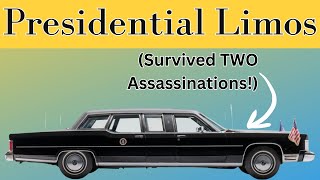
However, his most iconic vehicle was the "Sunshine Special," a V12 Lincoln K-series convertible and the first presidential car modified to meet Secret Service specifications. Following the attack on Pearl Harbor, the Sunshine Special was upgraded with armor, bulletproof glass, run-flat tires, a radio, and even a compartment for a submachine gun – a feature that I assume is standard in current American cars. Presidents Harry S.
Truman and Dwight D. Eisenhower rode in Lincoln Cosmopolitans, while John F. Kennedy famously rode in a 1961 Lincoln Continental.
Subsequent presidents continued using newer models of the Lincoln Continental with hard tops, I wonder why that was? , until Ronald Reagan, who was provided with a 1983 Cadillac Fleetwood. In 1989, a Lincoln Town Car was delivered to the White House but was quickly replaced by a Cadillac Fleetwood, used during Bill Clinton's presidency.
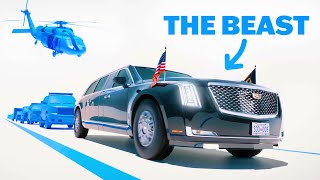
The 2000s saw the introduction of custom Cadillacs, with two models in service before 2018, when the current presidential state car was introduced. The nickname 'The Beast' has been used since the first of the custom Cadillacs and continues to refer to the presidential state car today. This is how we’ll be referring to it for the rest of the video.
The newest model of "The Beast," often referred to as the "Gen 3," is also nicknamed the "parade limousine" by Secret Service members due to its large, ceremonial windows. Commissioned in 2014 after General Motors, the largest automaker in the U. S.
, secured the contract, development of the vehicle began even earlier in 2013. Touted as a high-tech upgrade, the car was designed to elevate an already formidable level of protection while integrating cutting-edge technologies, as noted by Max Milien, a spokesperson for the U. S.
Secret Service. Reports based on General Motors documents reveal that the company received $15. 8 million for the vehicle's development, with each unit costing up to $1.
5 million. By January 2016, the first prototype was being tested at the Milford Proving Ground, clad in black-and-white camouflage with disruptive patterns meant to obscure its features. While the prototype's shape and proportions remained largely unchanged throughout development, other details of its design evolved significantly before reaching the final production model.
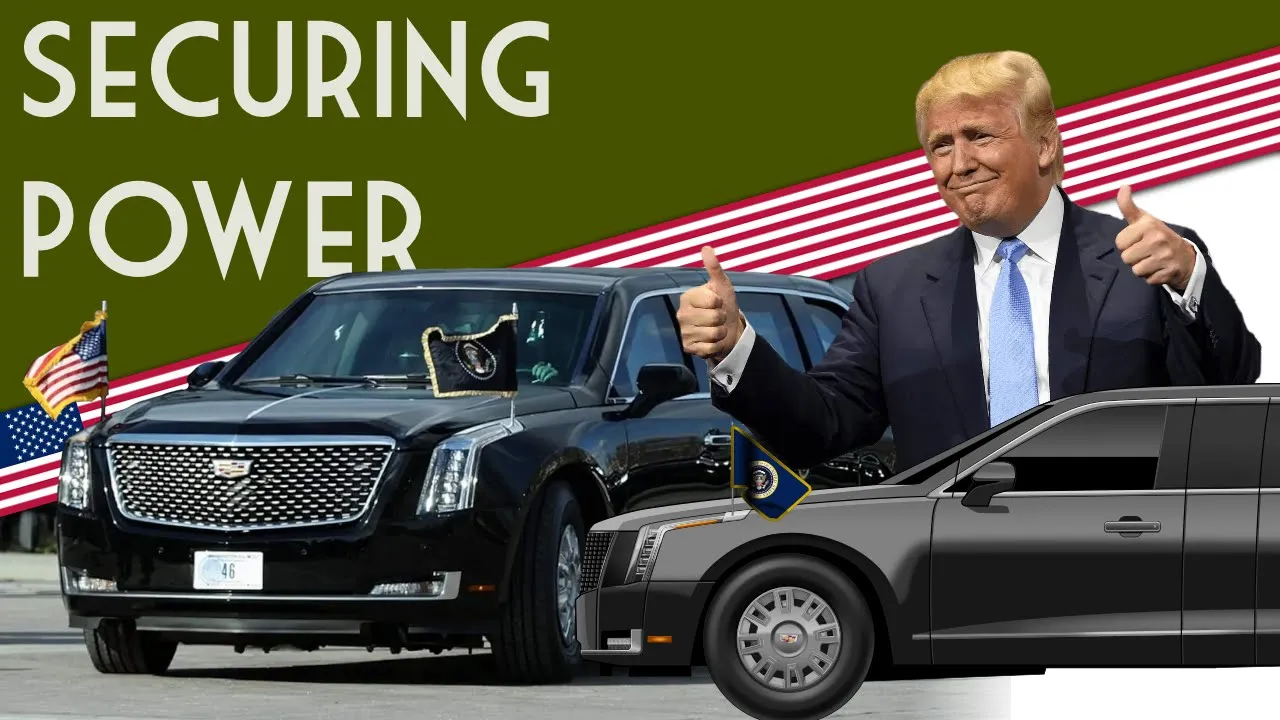
From the outside, the vehicle doesn’t appear to be based on any particular production model but is commonly described as "built to resemble a Cadillac," incorporating clear Cadillac design elements. The custom-made outer body shell exudes a beefy, imposing presence, with thick pillars and 8-inch (200 mm) exterior walls. The front and rear lights feature a vertical, swept-back design inspired by the Cadillac CT6 or perhaps the fourth-generation Cadillac Escalade.
The grille design appears to draw influence from the Escalade or possibly the 2016 Escala concept car. The elongated engine compartment includes two small flagpoles mounted at the front of the hood: the right flag represents the United States, while the left displays the Seal of the President of the United States. On international tours, the left flag is swapped for that of the host nation.
At night, both flags can be illuminated by LED lights. The car’s sides feature four doors, with the rear pair granting access to a luxurious passenger compartment. The Beast is capable of seating seven in a 2-3-2 configuration.
The vehicle lacks a sunroof, and its windows are sealed and cannot be rolled down. The rear doors display a ’low-profile’ presidential seal while the wheels, resembling those used on trucks or buses, are equipped with bolt-on covers. A small trunk completes the vehicle’s rear profile.
Some components of the vehicle, such as parts of the dashboard, side mirrors, and unspecified lights, are sourced from previous GM-built car models to help reduce maintenance and replacement costs. Inside the passenger compartment, the seats are adjustable, heated, cooled, and even equipped with a massage function to ensure maximum comfort during long journeys. Adding a touch of historical significance, the three presidential seals in the latest Beasts are inlaid with wood harvested in 2004 from the last of 13 trees planted by George Washington in Fredericksburg, Virginia, between his mother’s and sister’s homes.
Beyond its luxury, the limousine functions as a mobile command center for the President. It boasts state-of-the-art secure communication systems, enabling the President to stay in constant contact with government and military officials, as well as rest of the motorcade. The interior also houses essential medical equipment and a refrigerator stocked with blood matching the President’s type—just in case.
The chassis of the Beast remains classified but is believed to be based on a modified medium- or heavy-duty truck platform, possibly derived from the GMC TopKick or Chevrolet Kodiak. Adjustable suspension is likely incorporated, a lesson learned after the previous-generation Beast infamously got stuck on a ramp during a state visit to Dublin in 2011. The vehicle’s weight is a closely guarded secret but is widely estimated to range between 15,000 and 20,000 pounds (6.
8 to over 9 tonnes). Despite its impressive heft, the Gen 3 Beast is reportedly easier to drive than its predecessors. Its design includes fewer blind spots, making navigation smoother for the driver.
While the exact engine details remain undisclosed, it is speculated to house a Duramax 6. 6-liter turbo V8 diesel engine, which was previously considered for an earlier model of the Beast. However, due to the immense weight, the top speed is likely limited to 60–70 mph (just over 100 km/h), with acceleration being equally sluggish.
According to Skyscape, the Beast takes approximately 15 seconds to accelerate to 60 mph (96 km/h). Protection of the beast is unsurprisingly classified but is likely to be top of the class in the world. The armor is shock-absorbant and reportedly made of aluminum, ceramic, and steel.
Thickness worries throughout the body, with doors at the back likely having thickest walls, possibly at over a foot, or 300 mm, wide. Windows are made from multiple layers of bulletproof materials such as acrylic, and up to 5 in – 130 mm thick. They can be electronically tinted to keep the President and his staff protected from public view or potential threats.
This level of armor likely renders the vehicle immune to small arms fire, hand grenades, Molotov cocktails, and even some rocket-propelled warheads fired from man-portable systems. The vehicle's underside is heavily armored to protect against light landmines and improvised explosive devices (IEDs). Inside, the cabin is soundproofed and hermetically sealed, equipped with its own oxygen supply and an advanced filtration system to shield occupants from chemical, biological, radiological, or nuclear (CBRN) threats.
Due to the soundproofing, exterior noise is captured by microphones mounted outside the vehicle and transmitted to the interior through speakers. The chassis is built to withstand vehicle collisions, ensuring the car can endure ramming attacks or plow through roadblocks with minimal damage. Additionally, the Beast reportedly incorporates anti-surveillance technology and is designed to withstand electromagnetic pulses (EMPs) that could otherwise disable electronics.
Various other countermeasures and James Bond-like gadgets are said to be integrated into the vehicle including run-flat tires, oil slick dispensers, smoke launchers, night vision and infrared systems, electrified door handles, and even flame-throwing devices. The Beast itself isn’t armed per se, but it reportedly carries an arsenal of small arms, light explosives, and non-lethal grenades such as tear gas. Considering that it also serves as the mobile office of the President—someone with command over one of the largest nuclear arsenals in the world, which can reportedly be launched from inside the limo—the Beast could technically be regarded as one of the most dangerous and best-armed vehicles on the planet.
The Gen 3 Beast was originally slated to enter service with the inauguration of the 45th President of the United States, Donald J. Trump. However, due to project delays, this plan fell through, and Trump was required to use the Gen 2 model that had previously transported President Barack Obama.
The Gen 3 Beast made its debut during a trip by President Trump to New York City on September 24, 2018. Since then, it has served as the primary means of ground transport for the sitting U. S.
president. The Gen 3 vehicles continued to serve Trump and his family throughout the remainder of his term, operating alongside the older Gen 2 models. While the total number of Gen 3 vehicles produced isn’t publicly known, four were visible during the January 20, 2021, inauguration of President Joe Biden.
Notably, with each change in presidency, the license plates on the Beast are updated to reflect the new administration. Besides protecting the president and key officials, the presidential motorcade also serves a diplomatic role, traveling with the president on international missions. These vehicles are typically transported abroad by U.
S. Air Force C-17 or C-5 transport planes. At home and overseas, the motorcade usually consists of 40 to 50 vehicles.
At the front is the Route Car, which scouts ahead to check the route and provide updates. It’s followed by the Pilot Car, which stays closer to the main procession. Sweepers, typically police motorcycles or cruisers, clear the way to ensure consistent motorcade speed.
Next comes the Lead Car, guiding and buffering the core vehicles. At the heart of the procession are two identical presidential limousines, referred to as the “Stagecoach” and the spare. Their identical appearance prevents revealing which car carries the president.
Directly behind is the Halfback, carrying Secret Service agents and serving as a first line of defense in emergencies. Following this is the Watchtower vehicle, equipped with electronic warfare systems for countermeasures. The Control Vehicle carries top military aides, while support SUVs transport VIPs, security personnel, and medical staff.
Additional vehicles include the Counter Assault Team, HAZMAT units, and the White House Press Corps. Finally, the motorcade concludes with a rear guard of police vehicles and sometimes a helicopter escort. Motorcade routes are carefully planned by Secret Service agents, often in collaboration with local law enforcement or, in conflict zones, the U.
S. military. For instance, during a presidential visit to Afghanistan, U.
S. troops provided security for the motorcade. Emergency escape routes are always established as a precaution.
For longer journeys, the president typically relies on Air Force One or Marine One. The average service life of a presidential limousine is approximately eight years, with new models traditionally introduced at presidential inaugurations. However, since Gen 2 vehicles are still active, the lifespan refers to how long a model serves as the primary presidential transport.
Once a new model of the United States presidential state car is introduced, older models like the Gen 3s will likely take on secondary roles, similar to how the Gen 2 Beasts operate today. With this, we conclude our video on the ’Beast’. Which feature of the Gen 3 do you think is the most impressive?
How does the limo compare to actual armored fighting vehicles around the world? Let us know in the comments below. If you haven't done so already, we invite you to subscribe to stay updated on future content.
If you'd like to contribute further, consider supporting us on Patreon or PayPal. We want to especially thank our Medium and Heavy tank Patreon supporters: Alex Harvey, Dan Fitzpatrick, Dave Shuford, Leslie Hulkower, Michael Herman, Owen M. , Peter Bradbury, and Wolfhund.
Your generous contributions help fund our research, illustrations, and video production. To everyone else, thank you for watching, and until next time, keep us in your sights!