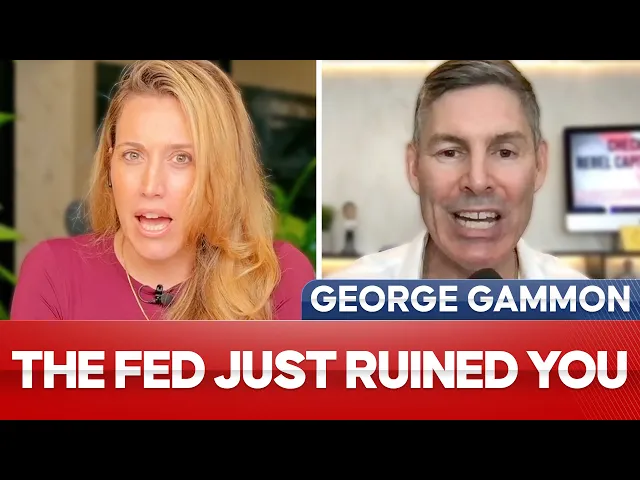
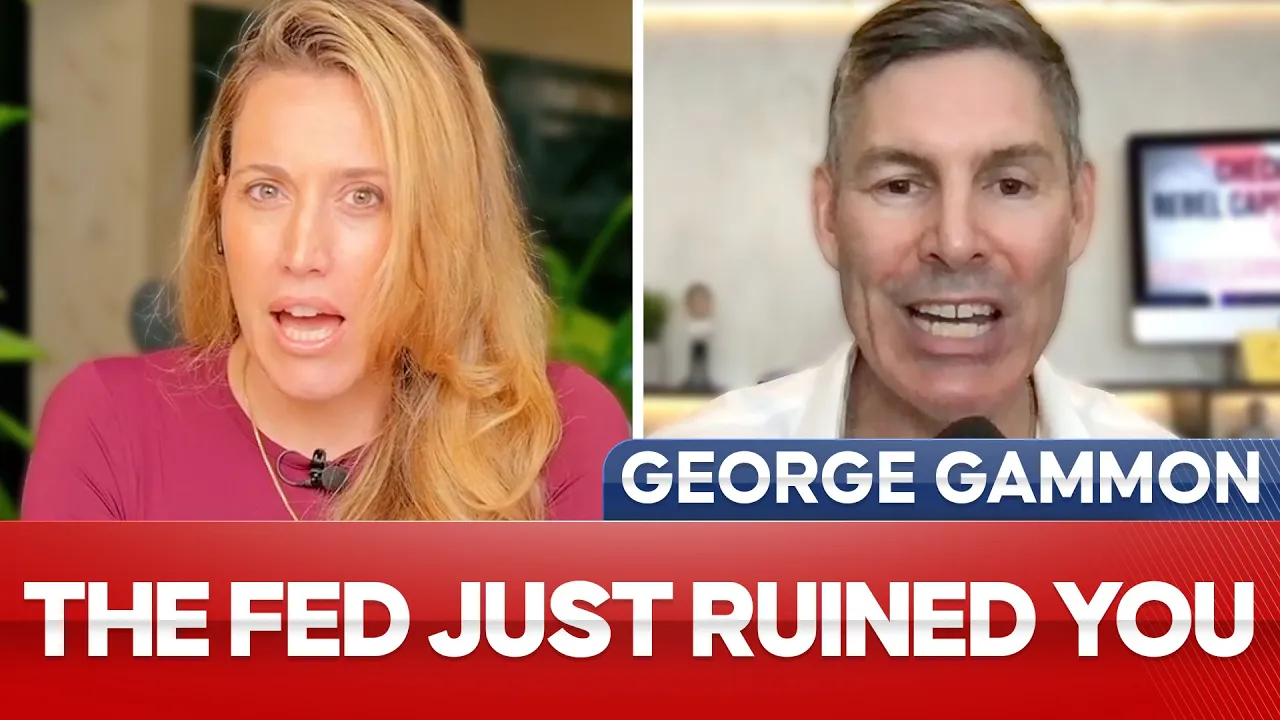
[Music] hi this is dellaa Kon welcome back to the dellaa Kon show here on itm trading well my guest today says the FED made a huge mistake huge cutting 50 basis points so now what does he think that even more fed officials are coming out saying more is needed more Cuts more aggressive George gamon The Man Behind The Rebel capitalist show welcome back so good to see you my friend oh thanks for having me back it's always fun to talk yeah well let's talk about what you call a very big mistake made by Powell and Company tell me why and then I'll get to the second part tell me why well first of all I think the big mistake they made is they didn't cut more not that they it's not that they cut too much they didn't cut enough and uh just very simple if you look at two-year treasury yield gunlock always points this out that the FED just follows a two-year and if you look at the Delta between the two-year in fed funds where it was prior to the 50 basis point cut you see that it was pretty much at an all-time extreme going back to the GFC so what this is is the market telling us how far off sides it thinks the FED is the Fed likes to use the term the neutral rate or The Terminal rate or R star something like that to determine you know where the the goldie the Goldilocks interest rate should be for fed funds and uh but that's just simple just look at the two-year Treasury and if you go back and look at history what happens is when the FED tries to catch up with the two-year treasury what ends up happening is the two-year treasury doesn't flatten out or it doesn't start to go back up it goes down even further so as an example let's say you've got the FED funds at 5. 25% and you've got the twoe treasury trading at let's just say it's trading at 3. 5 and then let's just say that the FED Cuts all the way down to 3.
5 at that point you never see the two-year treasury just flatten out and say okay the FED is done all the cuts already baked in they've done their job we're in this Goldilocks economy now the two-year treasury just goes forward maybe two you know 3. 5 3. 55 3.
6 something like that that's not what happens d they cut down to 3. 5 or they're getting close to that Mark and then the 2-year treasury just keeps going down further and further and further and further so so the FED if you look at these uh interest rate hiking Cycles which obviously we have to have to get to the rate Cuts you see that they never go in kind of this gradual fashion like if you look at the dot plots or you look at the their projections for where interest rates the FED funds is going to be in let's say the end of the year uh or maybe the end of next year it's always this nice slow decline but then when you look at reality and you compare that with history you see that they never drop rates in just a slow fashion it's always like Wet n Wild it's always like one of those water slides where you just start here it's like a Wy coyote thing and the only time that I can see going back to to call it the 1980s or so where they had a rate hiking cycle where they didn't cut dramatically was back in the mid 1990s uh this was 1995 1996 uh but during that time you didn't have an inverted curve and you didn't have the unemployment rate spiking uh which we can see just using the Som rule as a broad proxy so anytime that you have those factors those huge those very powerful economic indicators especially when they're lined up when you have unemployment spiking and you have not only an inversion but an uninversity curve uh you always and that's preceded by a Fed rate hiking cycle you always see a decline in fed funds at a very uh well again the Wet n Wild scenario so that's why I said the FED probably made a mistake but it wasn't that they cut 50 instead of 25 it's that they didn't cut by 75 so are you are you happy to hear that you know we're speaking ahead of a lot of other fed official sours lat to speak but I mean just the ones that spoke earlier today Chicago fed Chief Atlanta fed Chief echoing that the FED will have to move uh more aggressively here and and and you know with more rate Cuts ahead um is this the right path it depends on yes well it it depends on what your objectives are so if your objective is to soften the blow let's say of a recession then yeah that's that's the right path uh I'm not going to say that they're going to avoid a recession because they've never ever ever ever been able to stop a recession through these rate cuts when we have all these other economic factors or uh indicators that are lined up so they're always responding to a recession they're never preventing a recession but like I said it doesn't mean that they can't soften the blow to a certain degree um you know it they make it better than it otherwise would be but that doesn't mean that it's still not a hard Landing or it's still not devastating I mean we look at the GFC as a perfect example you could say that yes it would have been worse maybe it would have been but it was still pretty darn bad even though they cut rates I I was going to say because Powell you know would would would be the you know Mount Rushmore of uh Central Bankers if he is able to orchestrate the soft Landing uh but you know based on what you're saying you don't think he's going to get it well they never have so you just have to ask the question why have they never orchestrated a soft Landing in the past it's because they're always behind the curve that's why they always follow the two-year and so if this time isn't different which I don't know why it would be uh then they need to follow the 2-year down even more uh because we're headed for a hard Landing that they can't really prevent uh but they again they might be able to make the recession uh a little better than it otherwise would have been you did a great uh video and I urge everyone to check it out on yourtube your YouTube channel where you go into detail about the fed's decision here and you bring up a very key point about the narrative The Narrative that the Fed wants us to believe so if we can go a little bit more in depth here about what are what do they want us to be thinking right now they want you to think that they control the economy they they want you to think that lower interest rates uh means that they're providing liquidity or that lower interest rates or lower interest uh lower interest rates excuse me mean that they're quote unquote stimulating the economy and therefore if they just lower these interest rates then all of a sudden we're going to see the unemployment rate flatten out and then go back down to 3. 7 or 3.
4 and they do that while at the same time the inflation rate as measured by the CPI goes down to let's say 2. 2 2. 1 uh uh 2% something like that and then We're Off to the Races and it why because the FED just dialed it in perfectly you know it's like this thermostat on the wall and it's 69° a little too a little too cold uh 71° a little too hot so we're just going to dial it right into 70° and then the economy is going to respond people are going to take out more debt because now interest rates are lower this is going to increase aggregate demand and because aggregate demand goes up that's what uh prevents us from going into the recession and that's how they orchestrate the no Landing soft Landing this is the narrative and this is what they want you to believe but it never ever ever ever works out that way you also say if you look underneath the hood at the reality of it all let's talk about the reality not the narrative they want us to believe you see the economic storm clouds Brewing is the labor market leading that leading that pack for you of the Brewing problems yeah I mean you just look at the Som Ral it's a simple proxy and all that is is just a 3-month moving average of the unemployment rate Rel relative to I believe it's also a 3-month moving average of the low in the unemployment rate over the past 12 months and I mean take that back to the 1950s and it's pretty much 100% accurate and so the Claudia s comes out now I don't know why she's doing this maybe because she's a Democrat or something like that and she's saying that oh we'll just ignore the PS rule even though it's been right every single time because of immigration uh you know so they've got x amount of people people that are unemployed and therefore if you increase the denominator uh then well that doesn't mean that you know the demand side is weak that just means that the supply side is the reason why the unemployment rate is going up well this is a completely bogus uh answer because number one they calculate the unemployment rate using Census Data from 2022 before you had this huge spike in Immigration so although it may impact the rate of inflation it wouldn't impact the rate of change you see and the rate of change is what the P rule is obviously all about and then also if you want to argue that you'd have to say that the 1970s should have also debunked the Som rule because we had the labor force participation increasing because of women coming into the workforce so why on Earth was it just as accurate the 1970s as it was in the 1980s and the 1990s and the 2000s so that's the the one main thing that's staring you in the face but also interest rates I mean look if the US economy was running on all eight cylinders you wouldn't see the 10-year treasury trading at I don't know where it is now but call it 125 basis Points Plus under the the FED funds rate I mean that that's not a sign of a healthy economy it's it's crazy that you actually have to point that out you say hey this is kind of unusual this is very unnatural what that is it's the bond market telling you that future growth and inflation expectations are lower lower than where they are right now and that you should and why is that because the banks are just taking that balance sheet capacity and a lot of the financial institutions and instead of lending that money out to the real economy they see that as too risky so instead they just buy treasuries and they buy treasuries because that's quote unquote risk-free and that's where you've got the most liquidity so when whenever the market is riskof they're going to go into the safest most liquid asset and globally uh you know whether we like it or not that is the US Treasury and more specifically the long end of the curve and so that's why you see the yield curve invert because it's the players in the global economy that have uh I call it information asymmetry Daniela uh these play players in the treasury market that that really move it one way or the other they have a lot more information than you and I will ever have oh yeah in fact I would argue they have way more information than the FED will ever have because they're the ones that are talking to these Global banks in the euro dollar system they're the ones that are talking to these multinational corporations that are doing business that are doing the borrowing and so they get this Intel first and foremost and that's what prompts them to do X Y and Z with their balance sheet or a and C whether it's okay I'm hearing from all these multinational corporations that business is great business is booming and therefore yeah I'm going to keep lending because I'm going to try to go for that higher reward I'm going to go for that higher yield because the risk reward makes sense but if you're hearing the complete opposite then you're like no way am I going to lend out to this environment because I'm worried about being paid back and even though I might be able to get a little higher interest rate the risk reward doesn't make sense when I could just sit here in 10year treasuries and collect 3.
5% and they're doing this Daniela while the FED increases interest rates at the front end of the curve and that's what inverts it and that's why the in my view the yield curve is such a powerful predictor and that's why it has almost a 100% accuracy rate it's because it's it's it's functioning the underlying uh the underlying fundamentals that or the underlying actions by the market participants that drive the yield curve is in my view based on Insider information and Insider information is is a great way to trade just ask Nancy Pelosi right oh um let me ask you this George because I don't know if you caught the press conference at the end of Powell's uh uh you know speech yeah what if you were in the room what is the one question you would have asked Powell or challenged him on what's the one question I would have asked him how on Earth can you sit there with a straight face and say the economy is doing fine and the the the consumer is resilient and the economy is running on all eight cylinders if the economy is doing so great why the hell did you just cut by 50 basis points I mean let's remember that the last time they cut by 50 basis points was the GFC and the time before that it was the bust so I I don't get it he he's completely contradicting himself by saying that the economy is doing fine but yet we're going to have to cut by 50 if the economy was doing fine you wouldn't have to cut by anything let alone 50 basis points and then I'd ask him about the two-year Treasury and I would say uh you know are you guys just following following the two-year and are you concerned that you're just cutting 50 basis points when you look at what the interest rate markets are actually telling you and then I'd point at their own tools that they've said in the past they P pay most attention to which is something called the near-term forward spread and the near-term forward spread is screaming recession just as much if not more than the inversion in the treasury curve we're going to talk the election um but were you surprised that the Trump campaign didn't seize the moment and jump on that and highlight the fact that the economy is in dire traits I don't know they're both idiots Danel I I try not I try to pay as little attention to to Trump and Harris they're they're both just uh economic knuckle draggers I mean they have absolutely no idea you got one person that's just pure evil and obviously that's Camala Harris and then you've got another guy that's just a complete megalomaniac that has no uh principles you know he has no uh kind of uh moral North Star that guides his decision-making process it's just completely all over the place right now if I had to choose between the two obviously I'd go with Trump because the number one concern for me or I think the number one concern for Americans in general or maybe the entire developed West is freedom of speech so if you're going to be a one uh on topic voter uh I think that topic should definitely be censorship and you've got to go with the party that is going to censor Free Speech the least and uh that's obviously Trump so um you know I don't like him but he's a hell of a lot better than Harris but the bottom line is I can't stand listening to either of them well you know November's going to one heck of a month George with the election and then the next FC so what I'm hearing from you you're expecting the FED to do we can expect more Cuts in November basically oh absolutely yeah I mean if the the way this typically plays out is uh and again I want to make it very very clear there are no certainties there are only probabilities and when you look at these economic indicators you can't use them to sit there in time specifically when you're going to go into a recession uh what we have to do is say how have these Cycles played out in the past so if you look you see okay the first thing that happens is the curve inverts the next thing that happens is the curve starts to steepen out due to a bull steepener which is the front end going down faster than the long end the next thing that happens is the unemployment rate spikes the next thing that happens is you have an uninversity that's that it that is sustained right the next thing that happens is the Fed drops rates which uh makes that which steepens out the curve and then the stuff hits the fan and then a year later you have the NBR come out and say oh yeah by the way this whole past 12 months when we were telling you that the economy was strong and resilient yeah go ahead and disregard that we lied it was actually in a recession this exactly what they did in 2008 where they announced in December of 2008 that we that we had been in a recession since January you it's like oh thanks a lot I appreciate that and this is the way these things play out so what we have to do Danielle is just go through our checklist and then we can determine the probabilities of it playing out the same way so check so check number one is inversion of the curve we got that y okay next we got the bull steeper boom check that one off the list the next one is is the unemployment rate spiking we got that one off the list the next one is the unversioned the curve that sustained we got that one off the list because now the 2-year is trading under the 10-year next thing is we got the FED dropping rates boom check that off the list so the only other thing there is the recession in the NBR now it is true we may have a no Landing we may have a soft Landing or something like that but the bottom line is so far so far this cycle has played out the exact same way that every single cycle has played out going all the way back to the 1950s when you have an inversion of the curve and you have the all these other you know the Som Rule and the spike it this is the way it always plays out so I don't know why it would now you could say it's on 100% probability but the probability is extremely high and that's really how you want to position your portfolio Okay let me take Okay so let's take a one step further if we can forecast and you know figure out this is the probability of how it's going to work out how should we be positioning our portfolio who wins who loses in these scenarios uh well me personally I've got the bets on the long end of the curve uh now I would prefer to bet on the two-year I wish I could do that but there's really not a great vehicle uh that that gives you some good bang for your buck on betting on the two-year you know just buy the 2-year but that's you're not going to get too many price moves even if they drop rates or even if the interest rate on the two-year goes down substantially so you know calls on the TLT is something that's interesting if you can get some liquidity uh gold is interesting if we don't have a liquidity event and obviously I love the chart on gold I mean you can't the chart on gold is just absolutely fantastic so uh the only issue with gold I have is if you go back and look at recessions where we have have a liquidity crunch the first thing people usually sell is gold because it's doing its job gold is insurance and gold doesn't have counterparty risk and you're always going to get a bid so when we go into like a GFC type Leman event you're going to see gold sell off because that's the only thing that people can actually sell and and that's and again it's because gold is doing its job and so but if you look at a recession where we don't have a liquidity event then uh gold there's no reason for gold to sell off and usually that's just uh you know what the central planners do to try to get through the recession is a huge huge huge Tailwind typically uh for the price so um for me I'm very comfortable just holding 10% of my portfolio in Gold just as an insurance policy uh but that's all I do and then just you know sit back and look at the chart and see these things play out but uh I I would be very hesitant with the stock market right now uh for obvious reasons because it's completely overvalued and if you're going into a recession you really don't want to bet on the stock market a lot of people think that if the FED drops rates then that means the S&P 500 will go up but if you look at uh the past Fed rate Cuts you see that that's only applicable if you don't go into recession so if you've got all of these things lined up like we talked about earlier in the discussion then the odds are that once the FED drops rates that's actually negative for the s&p500 over the next six months but on that note it depends if we get a liquidity event Daniel I don't put it past them to buy stocks I the bank of Japan did it so why on Earth wouldn't the fed and they understand just as much as we do that the entire economy is is just built uh or propped up by asset prices I mean right now we're in a depression we are in an economic depression uh when you look at the poor and the middle class there is no different between the lot of the poor and middle class right now in the United States in 2024 than in the 1930s the only thing that would add to the only reason why we're not at negative GDP is just because you've got the top 20% of people who own assets and they're getting rich and they're the ones that are out there buying the Ferraris and popping bottles of Champaign and going to all the restaurants and doing all the shopping on Amazon the the poor in middle class are are to struggling to say the least and that's a wild understatement so you have this massive bifurcation in the economy and the FED knows that so my point is if the fed's going to try to uh respond to a recession they're going to do it by trying to prop up asset prices because that's the only thing they have you make me think of another question here George of the the line between the poor in the middle class I mean uh what What's the number where middle class starts a family that makes how much per year George well I would say I would you know just broadly speaking I think anyone in the United States right now that's making under $100,000 a year is is saying what booming economy all I see is is recession and then anyone making over let's just say $150,000 a year that has assets they're they're Scrooge McDuck you know they're swimming around in their in their safe full of gold coins and whatnot and uh you know just saying what on Earth are these fools talking about we're not even close to a recession this is the greatest economy that I've ever seen in my life and so this is the the contrast so you just have to ask yourself you know what is making that happen and it goes right back to asset prices so you you got to think about what the US economy would look like if you had asset prices go down by 50% like we saw in 2008 I'm talking about the S&P I'm talking about the housing market from 2006 to 2012 I'm not saying that's going to happen I'm just saying go through that thought experiment and what would happen so that crippled that crippled the US economy in uh in 2008 2009 2010 uh and but I would argue that the economy was far less dependent on asset prices back then than it is now as far as aggate demand I where's the aggregate all this aggregate demand that you're seeing you know we're past whole simmies we're past the PPP we're past the point where the a lot of people don't have to pay their mortgage or pay their rent so where is all this aggregate demand coming from right and the answer is the stock market the answer is housing prices this is all just paper wealth this is not the fact that we're producing more goods and services and this is complete nonsense it's just paper wealth that and that paper wealth can evaporate very very quickly you know while as you were speaking about uh gold it made me think of the headline and I'm sure you saw billionaire John Paulson um saying he'd be looking to pull out his stocks completely and go all in cash and gold you know this would be Amplified scenario should there be a Harris win thoughts on that yeah I mean I think he's being political too I I don't think it I mean again for the stock market is it going to crash if Harris gets elected and if Donald Trump gets elected is it going to Skyrocket I I I doubt it I mean it it is true that if she pulls one of these numbers like a a unrealized capital gains tax or something or Price controls yeah that's that that is that's terrible uh for the markets that's for sure can she get that through I don't know and is and our price controls any more insane than tariffs ones that that Donald Trump is is talking about or then he just came out the other day and he and he you know he's supposed to be a free market guy and a champion of small government and then he's saying how he wants to cap interest rates on credit cards at 10% what look as if he's Milton Freedman or something like that I me come on this is they're all terrible they're all terrible it's just which one is is the least horrific Daniela it's just you know just to to wrap here George just bringing it home for the folks cuz I have some people that that emailed me and just feel like there's no end in sight right now it just feels like you know what no one's even talking about the debt right it's like how how how do we get out of this George well the and I brought this up I brought this up to sorry not to interrupt I brought this up to Brian Lundy and I know you're speaking at his conference yeah uh he has one of the best conferences out there and I said it's almost like you need someone drast like a Malay drastic because or else how do you how do we get out of this well look at how Argentina got out of it you have to get to a point where you're just absolutely desperate yeah and the United States is not at that point so you know I mean look at history how have uh other societies gotten out of their Mala it's because they have to hit rock bottom they have to hit rock bottom and and I hope we don't have to do that in the United States but I think the the probability is uh very low now the good news is we don't have to worry about a debt crisis that's the good new that's the the least of people's concerns you don't have to worry about the dollar crashing and you don't have to worry about the treasury market going no bid you don't have to worry about how we're going to finance deficits ask the 10year treasury Daniela the 10year treasury right now is trading less than it was in 2009 when the debt was 9 trillion I'd like to remind your viewers that right now the debt is 35 trillion 35 trillion and the dollar as measured by the dxy is higher than it was in 2009 and the 10-year treasury is trading lower so if we had a debt problem if we had a problem financing the debt because now all of a sudden the interest payments are over a trillion dollars and blah blah blah blah blah blah blah the 10-year treasury would not would I repeat would not be Trading at 3. 6 what what moves the long end of the curve isn't really supply of treasuries it seems very counterintuitive but what it is is it's really growth in inflation expectations and this is why you can add $25 trillion of Supply in treasuries over the last 15 years and interest rates go down they don't go up I mean even compared to 2019 we're at 22 trillion in debt back then so we added $13 trillion in debt just since the beginning of the seresa sickness and the 10year treasury yield is 125 basis points under fed funds and so what happens here is Wake Me Up When the 10-year treasury is trading at 8 n 10% until we get to that point you've got nothing to worry about as far as handling the debt because there's massive massive demand out there and don't take my word on it don't take my word forget gamon just look at the treasury market they're telling you that demand is almost insatiable for these treasuries right now so the problem with the debt and I I always argue this I say look the um the the real crisis is that there is not a debt crisis I wish there was because then we could pull back this spending and then we could get a Malay type situation but unfortunately the real problem with the debt in the United States is not servicing it it's the economic distortions that are created by the government spending you see so we we we've to sit there and say that we've got this exorbitant privilege I would say it's the exact opposite from a standpoint of this just allows us to continue to charge the credit card more and more and more and more and more and more and more and more because of the Dynamics of the global monetary system the way the monetary system is set up outside the United States where all these dollars are created in the euro dollar system I I won't go into great detail but it sets a bid for treasuries that's why if you go back and look at uh you know this explosion in debt the explosion in deficits you have to ask yourself why have we not seen the rubber meet the road already why why are interest rates at 3. 6 and not already at 10 you think the treasury market doesn't know about the unfunded liabilities you think the treasury market doesn't know about the dollarization you think they don't know about the G bricks currency you think they don't know about Social Security payments and the Social Security fund going broke of course they do of course remember there's a there's uh information asymmetry Daniela meaning that we have the least amount of information all of that is already priced in to the treasury curve or excuse me it's already priced in to the interest rates themselves and what they're telling you is we want more why because because this is really the underpinning this the collateral the treasuries is the underpinning for the global monetary system ah and I I and I don't like it and and also too i' i' remind you that as the global economy slows down that means the demand for the collateral that underpins the global monetary system increases right and that just gives the United States the ability to spend more and more and more and more and more and more and more which creates these economic distortions which is why which is why the poor in the middle class right now are suffering through a Great Depression it's why when I go to Tucson Arizona I see a zombie apocalypse of of of drug addicted homeless people walking around with heroin needles sticking out of their arm that's why it's because the government spending created that the central planners and authoritarians that gave everyone this stimy check and then locked everyone in a cage for two years and told them that they couldn't produce any goods and services because they were non-essential that's why we've got the drug problem that's why we've got the poor middle class in an economic depression and unfortunately there's nothing that stops IT because there's this insatiable demand for treasuries because of the way the global monetary system is constructed to begin with you just uh you brought up a very very valid points and I'm sure someone's yelling at the screen saying well George what would you label 35 trillion in debt then if it's not a debt crisis what is 35 trillion in debt it's 35 trillion in government spending above and beyond taxes for heaven's sakes but I think a better way to look at it is the government spending as a percentage of GDP that's your problem that's your problem so as the government spending as a percentage of GDP goes up and up and up the economic efficiency goes down down down down down that's why central planning and communism doesn't work right that's why those economies don't produce a lot of goods and services right because they're centrally planned meaning government spending is 100% of GDP so right now we're about 50% so as the government spending goes higher and higher and higher which it absolutely will I'm not sitting here saying that the deficits are going to improve or that the ud debt is not going to explode it absolutely is in fact I would probably argue that it's going to go a lot higher and it's going to get a lot worse than most people that claim the uh treasury market is going to blow up I would say as far as the deficits in the debt you know I'd say it's going to go way higher I would not be surprised if in the next 5 years the debt is well north of 50 trillion well maybe even three years you know especially if we have a recession and the deficit to GDP goes up to who knows 15 20% but that doesn't mean that the price is going to be paid in the treasury market that doesn't mean that we're going to have a hard time financing our debt or our deficits it just means that we're going to have an additional amount of spend government spending that is going to continue and exacerbate the problem of misallocation of resources and malinvestment so the bottom line is look at what the economy has done since 2019 look at what has happened as far as the bifurcation that we were just talking about look at what has happened to the POR middle class getting squeezed so my point is you've got to expect that at an accelerated Pace moving forward into the next five years because we don't have a debt crisis we have a government spending crisis yeah and those two things are completely different and I get so frustrated with all my friends that are that go to the New Orleans investment conference because they sit there and they focus on the wrong thing they sit there and focus on the long and of the curve blowing out but forget that forget that don't waste any time on that look at the past 25 years and if you can't tell me why we have not yet had a debt problem then that means your models suck that means your models are broken and you've got to re-evaluate your models for heaven's sakes and when you do re-evaluate your models you see exactly what I'm talking about well that's why there's such good debates at that show because you're there are no everyone's on the exact same page it's say me and Brent Johnson debating the the other 45 speakers that are there yeah but but you know what you you brought up just you know just I I you know you brought up a really really good point um when you were referring to the the druggies and the and the home the homeless situation right now because I was having this conversation with my in-laws this weekend who are you know true New Yorkers I'm from Montreal I've been living here 10 years but so I haven't seen all the cycles of the city but they've lived through you know the 60s the 70s the 80s the 90s you know the Giuliani decade all and they were reflecting back on how bad New York was in the80s and making comparisons to how bad it is today when I asked them you know they were saying it was bad but you didn't see the homeless that you see today and I said well how come where were they why didn't you see like it was dangerous yes and there were issues yes but you didn't see the homelessness that you see today why is that so Amplified so I thank you for hitting hitting on that not only that but but look back in 2019 you could you could go into Walmart and actually buy something now you can't in Tucson you can't even buy anything without getting some gal to come over and open up the the cage for you I I went into Walmart Danielle when I was just there and I was trying to buy fingernail clippers fingernail clippers from China these things were $218 and that was lock huh yeah and that was locked yes and I get some gal to come over and actually unlock this because it's all behind like iron bars or whatever it is so she has to unlock this just so I can get the little uh fingernail clippers and not only that this Walmart had been completely remodeled to the point where the the section that's like a CVS you know within Walmart where they sell those things and like the hair care products and whatnot yeah yeah yeah they they had they had recreated it within the Walmart so there was a uh kind of a funneling system right to where there was a bottleneck where they had a security guard so the only way to get in and out of that section was through this bottleneck where they had this security guard sitting there fulltime and then within that section within the Walmart they had the gal walking around so if you wanted to get a bottle of shampoo or some you know $2 piece of metal from China she could open up the thing for you and then you could walk by the security guard so he could see that she actually opened it for you to know that you weren't stealing it for heaven's sakes and guess what Danielle I live in Columbia medine Columbia everyone sits there oh are you scared of being in a third world country a third world country and all this complete nonsense well you know what when I go down to a a CVS down here or my local drugstore guess what I don't have to do I don't have to get the gal to come over and open up the cage just so I can get a bottle of shampoo because no one's stealing right here in the third world country so that in and of itself what does that tell you about what's happening to the overall economy in the United States and we've got one thing to blame and that's the central planners and the authorit and the authoritarians creating these economic distortions well you just gave me goosebumps with that uh bring it in bringing it home for everyone watching because I know people are going to be saying okay George you just blew my mind with this segment what what am I supposed to be doing with this information now what do what do we do with this information portfolio as far as portfolio yeah I mean I just want to say as far as yeah like your portfolio you mentioned yeah let's talk there let's just wrap it bring it home but also just in terms of Life are we still smiling you're smiling but I would get the hell out of an urban area that's for sure I wouldn't be within well I shouldn't say that I would I I would be at least probably 10 to 20 miles away from an urban area uh that's number one and then I would start looking into Plan B stuff you know our good friend Doug Casey talks about that all the time so I'm sure your viewers are familiar um but then as far as my portfolio I mean obviously you have to you have to own gold at all times I mean that's just a no-brainer but you especially have to own gold in these times it's not because of you know hyperinflation or anything like that I would like to remind your viewers that we have never in the United States gone through a recession where you had unemployment rate Spike and you did not see the inflation rate go down never not once not even once I just did a video on this about a half an hour ago so people like to reference back to the 1970s and say oh my gosh we had this inflationary recession inflationary recession no we didn't no we didn't in the 7475 recession in 1980 when you saw the unemployment rate Spike at the end of this recession or in the middle of it you saw the inflation rate go down not up not up so the my point is you own gold right now because as far as I can tell gold really doesn't always respond to inflation it doesn't always respond to geopolitical risk in my view what it usually responds to is counterparty risk and Faith or lack thereof in the system and based on everything that I'm seeing right now I I personally have a lot less faith in the system and I think that's the main reason why gold is catching a bid and if you're a long-term investor you know sure you could see a dip if we get this liquidity uh so I'd be very very careful there I want to be clear but if you're a long-term investor um you know I or not even an investor if you're just someone that's trying to protect your purchasing power for heaven's sakes uh you've got to have a certain portion of your portfolio on gold but then like I said I like uh liquidity I like the the t- bills I like rolling those I like if you want to get cute you know you could play the long into The Curve but then I want to start setting up a watch list just like I I had thank goodness going into the surve of sickness because you know March of 2020 when everything went on sale and that's when you want to be buying and that's the hardest time so if it is true that this time is not different then what that leads us to believe is that over the next six months or a year we could see the S&P 500 go down maybe 15 20% and that could lead to some very very very very interesting buying opportunities for those people that are prepared and then when the central planners come back out and muck up everything else once again by doing stimulus or Ubi or who knows what the hell they're going to do to try to get us out of this recession that's when you can ride the next wave up because the one thing we know definitively is they cannot afford to have a sustained or I should say a dramatic um decrease in the level of asset prices uh it's it's terrible it's great for those who own assets uh but it's terrible for the United States and Society at large there you have it folks George gamon on a silver platter gold platter uh I love the energy I love the content Rebel capitalist is the show George does tremendous work check him out we adore you George thank you for coming back on the show I appreciate it thanks for inviting me we'll see you soon and uh we'll see all of you soon here again on the Danel cambon show here on itm trading don't forget to subscribe to our Channel and to sign up at damon.