hello everyone and welcome to chapter eight so happy to have you for this lecture go ahead and tuck in and start taking notes here are learning objectives for this chapter uh again i feel like you guys can probably read through this yourself so we are going to start with telomeres we've been talking about dna for the last chapter in a bit and we need to talk about how cells are able to divide so many times but the fact that they are actually not immortal they cannot keep dividing over and over and over so what happens
is we have these little telomeres which are going to be sort of sections of non-coding repetitive dna that kind of serve as a protective end to our dna strands or our chromosomes okay so what's going to happen is that every time we have the replication of these chromosomes for each cell these telomeres are going to get shorter and shorter they're kind of like a car's odometer in that they kind of keep track of the mileage of the cell and in this case the mileage is is how many times the cell divides and so once we
get to the end of the telomere so we've we've ex we've uh basically cut off from cell division over and over so many times that the telomere is now too short uh that is when the cell itself will die because remember in order to have a new cell it has to come from a pre-existing cell but that pre-existing cell then has to essentially you know reach the end of its little cell life uh after it um goes through cell division so many times telomere telomere length is going to change uh as you go from an
infant to being older your body is going to need to experience more cell division as you are growing uh as a child and that is going to be uh just to give you an idea your telomeres when you're an infant are able to have about 80 to 90 cell divisions occur before they experience cell death meanwhile when you're about 70 um you'll only have telomeres long enough for about 20 to 30 cell divisions so things really start to slow down as you get older so when there are malfunctions in the telomeres you can sometimes get
a condition called hutchinson-gilford progeria these siblings shown in this picture both have progeria this is a syndrome that causes shorter than normal telomeres so they're particularly short it's almost as if instead of as an infant you have those really long telomeres you have 70 year old telomeres which causes the individual to appear to age at a very rapid rate the average life's expectancy is about 13 years for someone with progeria but they can live up to 20. um some cells are able to rebuild their telomeres examples of that are single-celled eukaryotes like yeast and cells
that produce gametes um so those are those sex cells and then telomere rebuilding at an uncontrolled rate of cell division that is what we call cancer and we'll talk more about cancer later in this lecture so some chromosomes are going to be circular and others are linear we've talked about this before but the big thing i want you to get out of this slide uh one the difference between prokaryotic and eukaryotic cells as far as their chromosomes go and that is that prokaryotic cells are going to have a singular circular chromosome attached to the cell
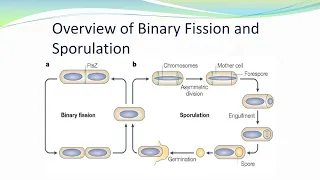
membrane meanwhile with eukaryotic cells you're going to have uh the chromosome specifically that dna strand which we're going to call chromatin wrapping around proteins called histones and they are going to form linear chromosomes so not circular but linear so like a line we've talked a little bit about cell division just briefly uh but let's talk about sort of the mechanics of it so here we have a prokaryotic cell going through cell division which is known as binary fission first we want to look at this word replication which is where the cell creates a duplicate of
each chromosome so this is where the parent cell so a single cell is going to divide to create two daughter cells when it comes to prokaryotic cells this cell division is going to produce two identical daughter cells from one parent cell and what this is called is asexual reproduction we're going to talk about the difference between sexual reproduction and asexual reproduction here in the next few slides but just know this is binary fission it's only going to happen with prokaryotic cell division uh this this is that process but it's actually kind of similar to eukaryotic
cell division but we'll get to that i promise as i promised here we go so this is eukaryotic cell division but it's also sort of the whole cycle of the eukaryotic cell cycle so the first thing i want to point out are the gap phases uh in this whole cell cycle so that is that first phase that we see there gap one this is going to be and i like to think of it as like the infant phase if you will um it is a phase that is just normal cellular functions taking place um for
this cell uh it's sort of like it's adolescent phase in a way then we're going to have that second phase skip over that one that obviously i skipped over we have s phase this is very important to make a note of because it stands for synthesis specifically dna synthesis and when you think of dna synthesis i want you to immediately think of a replication of the dna so your dna is replicating in order to form something called a sister chromatid and we'll talk about those here in a minute but essentially it's just making an exact
copy of all of the chromosomes so they're still the same number of chromosomes that we started out with in gap one but everything is being replicated sorry my cat is deciding that he's really excited about dna replication next we're gonna move on to gap two gap two is going to be this second growth period um in preparation for cell division now everything that i've talked to up to is going to be all part of interphase and interphase is something that takes up the priority of a cell's life so we are going to be in interphase
almost all of the time except when we're in the mitotic phase or going through mitosis mitosis is going to be how we get from one cell to two cells when it comes to eukaryotic cells and then the last little phase is going to be cytokinesis but i sort of have maybe a different uh idea then maybe some people cytokinesis can kind of be this intermediate phase between interphase and mitosis but we'll talk about that here in just a minute so as we are going through all of these different phases g1 s phase g2 and mitosis
we need to have a way to be able to sort of uh check and make sure that everything's going the way we want it to as far as our cells in our dna so there are three primary checkpoints that will regulate the cell cycle in eukaryotes the first is the g1 or s checkpoint this is going to check and make sure that the dna isn't damaged and as going to check that the cell has sufficient nutrients the g2 or m checkpoint is going to make sure that the dna has replicated properly he is really enjoying
these blinds i apologize for that noise the last phase is the spindle assembly checkpoint and this is going to check for spindle fibers being built and attached uh properly in the points that it needs to be attached and we'll talk about that when we talk about mitosis so kind of put a little check in your mind that this is going to be talked about later and we're going to start talking about mitosis here in just a minute so here is the process of making a copy of our chromosome uh making an identical copy of our
dna so what this is called is dna complementarity and essentially what i want you to know and i'd maybe write this down if you're taking notes is uh that the bases on one strand will always have the same pairing partner on the other strand and this is a very important concept to kind of understand because as our dna essentially splits apart or gets sort of unzipped we are going to fill in that side and that is going to result into identical daughter dna molecules so how dna replication occurs is we're going to have an unwinding
and separating of that coiled up helix that we were talking about in i think the last uh lecture so what happens is we have this molecule that's essentially going to unwind our ladder and then what's going to happen is we're going to have reconstruction and elongation and this is going to happen with our dna polymerases you'll remember that we have talked about rna polymerase do make sure that you know that this is dna polymerase so our dna polymerase as it's moving through and unwinding and replicating and doing its whole process it's also going to proofread
our dna and correct any errors that it comes across and it does a pretty darn good job of it actually um most errors are going to be caught and fixed but if they aren't mutations can occur which they happen actually pretty frequently unfortunately but sometimes it's not a bad thing and when it's not a bad thing that is where we have evolution so most cells are not immortal as you can kind of imagine due to mitosis generating replacements a lot of the cells in your body essentially move from a baseline and then push the cells
above them up and off so eventually those cells will get sloughed off which is essentially what dust is except that's like the sloughed off skin cells the fastest growing cells on a plant are going to be the root tips which makes sense so that's that's where a lot of mitosis is going to be occurring you also have a lot of mitosis occurring at uh your hair roots um so that is pushing the hair up and so it's growing off of where you know it's coming off of your skin essentially sort of like i always think
of like a push pop how you push like a popsicle uh through the little tube that it's in and you're eating off the top of it right but you're still pushing from the bottom up and out so this picture here is a skin slide picture and those layers are going to push up until you see those kind of stringy parts at the top flake off or come off and that is what dust is is bunch of skin cells so mitosis has two purposes that is growth which we've talked about and replacement which we've also talked
about so mitosis is going to replace worn out old cells um so nearly all somatic cells which you can make a little note somatic means body cells these are all the cells throughout your body and all of these cells are going to go through mitosis except for your gametes your gametes we'll talk about later but that is a process called meiosis so in animals the rate of mitosis varies for different types of cells for red blood cells uh these are all going to be replaced every two to four months while the cells lining your intestines
are replaced every three weeks so it sort of depends on how much use the cells are getting how much use and abuse if you will if they need to be replaced quicker if they can last a little bit longer so kind of fun stuff this term coming up apoptosis is cell suicide what this means is that cells that accumulate a significant amount of genetic damage which could potentially lead to cancer they are known as at risk cells are going to be planned to go through cell death so they might not be at the exact end
of their life as a cell but we are going to essentially kill them off anyway because we don't want problems to arise in their cell division cells that go through this are cells like the digestive tract and your liver your skin cells are also in a way kind of a part of this as well moving on to mitosis so we do have this uh overview of mitosis i do want to make a little note interphase is not one of the phases of mitosis mitosis is composed of a few phases actually four kind of five if
you count cytokinesis but interphase is not one of them so before we get into all of the steps that make up mitosis we want to talk about a few things that need to happen before we begin mitosis and the first being that our chromosomes are replicated remember they have to replicate during that s phase during interphase what's going to happen is we are going to produce sister chromatids your sister chromatids and if you look over at the illustration it is the part that is right underneath the word replication our sister chromatids are twin sisters that
are conjoined at the centromere so they are stuck together and once they condense then we're ready for mitosis so initially they're kind of loosey-goosey as chromosomes have a tendency to be and then they're going to condense and that allows us to begin mitosis and as mitosis begins we're going to have spindle fibers form and we'll talk about that here in just a second but the spindle fibers are going to attach to those centromeres so that little central hip that our sister chromatids are are uh conjoined at so very important thing to make a little note
of but we are going to talk about why that happens and what happens after uh we have those spindle fibers attach so again interphase we have that first part uh that is not technically part of mitosis interphase is going to be that normal uh time period of growth and uh development for a cell we're also going to have interphase be that very important part where chromosomes replicate and then we enter into mitosis the first phase is called prophase prophase is where we have the nuclear membrane surrounding our dna which is now our condensed sister chromatids
breaking down from there the sitter chromatids uh will have already condensed or are condensing at the same time sometimes so before sometimes it's during but regardless they have to condense in order for mitosis to occur and then we have our spindle fibers forming and our spindle fibers are forming from an organelle called the centriole we've talked about this organelle before but there he is there's his purpose is to form spindle fibers from prophase we're going to enter into a phase called metaphase this is where our sister chromatids are going to line up at the center
of the cell so they create this perfect little line going across an imaginary equator which is really cool uh and how they do this is those spindle fibers attach at the centromeres of our sister chromatids that's little central hip and then they're going to start this little game of like tug of war so pulling back and forth until the sister chromatids line up in the middle this happens because those centrioles which have our spindle fibers coming off of them migrate to the opposite ends of the cell and you can see that in this illustration really
really nicely we have the centrioles on opposite uh ends of the cell they are attached at those centromeres uh in the middle of our sister chromatids and they're pulling back and forth until they line up and that is metaphase from metaphase we enter into anaphase and this is where the spindle fibers start pulling our sister chromatids apart so one half of a sister goes to one side of the cell while the other half goes to the other side remember our sister chromatids are identical so we have one half of that identical dna going to one
side and one half of the identical dna going to the other so the same thing is going to either side of the cell from anaphase we're going to start to see a little bit of cleavage being created between where those new cells are starting to develop and that is telophase telophase the chromosomes are going to begin to coil and that is because the nuclear membrane is starting to form uh and then cytokinesis is going to start which again it's sort of part of mitosis part of interphase it's sort of you know toeing the line between
the two and cytokinesis is just the cytoplasm being divided into the two daughter cells so remember the cytoplasm is all that gooey junk uh within the cell including the organelles so we have two daughter cells make a little note these daughter cells are completely identical to the parent cell the parent cell has not disappeared it is now just in the presence of two cells it is now formed into two cells so from one cell we have two and that is mitosis so in a way that is a sexual reproduction but not really because you're not
forming a whole uh organism uh with asexual reproduction it's sort of the process of forming a whole organism like we did with the prokaryotic cells and binary fission that's asexual reproduction it's very similar though so you can see how evolution potentially has you know created multicellular organisms by using that process of binary fission or asexual reproduction to form uh cell division in eukaryotic cells it's pretty neat so asexual reproduction occurs when a single parent produces identical offspring and that means not just that the offspring are identical to each other they're also identical to the parent
kind of like cloning in a way sexual reproduction is going to need at least two parents i don't know of any circumstance where it needs more but at the very least we need to and this is going to produce an offspring um that is unique from the parents and also from its siblings uh we are going to need the fusion of two reproductive cells or gametes from the parents and they're going to need to come together for a process called fertilization so this is where a sperm meets an egg and you create a zygote and
then that zygote becomes an embryo and then that embryo becomes a fetus and then that fetus becomes a baby and that is that whole process so that is sexual reproduction some species um like in some plants can actually use both methods of reproduction which is really cool and very evolutionarily advanced in a way so sexual reproduction and meiosis meiosis is going to be the other process that we talk about to form a different kind of cell so we talked about mitosis and mitosis occurs in somatic cells again those body cells meiosis is going to be
the process to create gametes gametes are going to be like an egg cell for a female or a sperm cell for a male uh another really important thing to make note of is these gametes are going to be something called haploid haploid means that it's going to have half the number of chromosomes of the parent so a diploid cell every other cell as well as kind of diploid creatures are going to have a set of chromosomes for humans we have 46 total chromosomes we get 23 from our mom and 23 from our dad to give
us 23 pairs or 46 total chromosomes that is diploid having the whole set okay half of that is haploid and that is what we get with egg and sperm cells so that when the egg and sperm cell come together they create a diploid cell so once the egg is fertilized 23 chromosomes from the egg 23 chromosomes from the sperm come together fertilize create that zygote which is now diploid and has 46 chromosomes could i beat that dead horse anymore okay so all offspring have a tendency to resemble their parents yet no offspring should look identical
to their parents or to their siblings we do have this example picture here of the kennedys which they all look very similar they all had very distinct teeth as well as hair color and sort of face shape kind of squarish in a nice sort of handsome way um but the kennedys all look similar the kennedy boys did and that is because their parents gave all of the kennedy boys quite a few um similar uh chromosomes in those the form of those gametes but they're not all the same so meiosis is going to have two important
outcomes it's going to reduce the amount of genetic material in gametes so that you know you don't get like 92 uh chromosomes instead of you know 46 and it's also going to produce gametes that differ from one another with respect to the combinations of alleles that they carry in general what that means is you're going to have genetic diversity which is incredibly important for eukaryotes we want that genetic uh variation especially for organisms that go through sexual reproduction genetic variation is one of the biggest advantages to sexual reproduction okay so here we are going to
talk about something called a homologue or homologous pairs homologous pairs are the same chromosome but ones from the mom once from the dad so they're a pair that goes together um you know for like chromosome one you've got chromosome one from mom and chromosome one from dad together uh they are important as a set because they are homologous pairs do make a note that meiosis only takes place in the gonads for females this is going to be in the ovaries for males it is the testes and we've talked about how many chromosomes we want to
start with and what we want to finish with so meiosis is going to reduce the genome by half and i've kind of talked about this before when i was kind of beating that dead horse um but essentially it's it's this idea that we are going to take um through the process of meiosis to create haploid cells or haploid gametes which are also daughter cells don't let that confuse you we're not saying that all of these cells are going to be female that's just what we call the in product from one parent cell to haploid or
two to the offspring of that parent cell they are known as daughter cells so what happens with meiosis is we have a diploid parent cell that has our homologous pairs one from mom one from dad and keep in mind that this means that it is not chromosomes from the participating parents creating the new offspring this is the grandparents if you will so if we have you know mr and mrs smith this is how they are going to produce the sex cells an egg and a sperm to create their offspring so let's say we're looking at
this diploid parent cell that is from mr smith mr smith has a chromosome set from his parents so his mom and his dad they are going to form those chromosomes that he has in order to pass on to his offspring so as mr smith's diploid parent cell is going to go through meiosis that information is going to be split up and then split up again so we go through meiosis technically twice in order to get a haploid which you know half of that chromosome information i know it's a little confusing but just bear with me
so we've got my meiosis uh this is division one so this is where our homologs are going to separate these are stages one through three so again interphase is you know interphase where our chromosomes are going to replicate in preparation for meiosis that is the exact same as that mitosis and then we're going to enter into prophase and everything's relatively the same except that our homologous pairs of sister chromatids are going to come together and then cross over so that is the big difference from there we're going to enter into metaphase and that is where
our homologs move toward the center of the cell at this point they're referred to as the metaphase plate uh and they line up this is also different from mitosis and that's what those little little uh red uh squares mean okay from there we have anaphase and that is where our homologs are going to separate and are pulled to opposite poles our sister chromatids are going to each uh going to each side and are going to be a mix of maternal and paternal genetic material so we have in a way sort of jumbled up all this
genetic information in order to get some genetic variety and and diversity so from here we've got meiosis ii going to be happening so we have that telophase and cytokinesis occurring uh to form our daughter cell one and daughter cell two but we want to go further than that so we're gonna go enter into prophase ii where we have our chromosomes in our daughter cells condense and spindle fibers fibers form this is the same as with mitosis so these cells after we go through meiosis one it's pretty much the exact same process as mitosis so we
go through prophase metaphase anaphase and we end with telophase uh and cytokinesis but instead of ending up with two identical daughter cells we have four unique haploid daughter cells and that is the big sort of takeaway here is what do we end up with mitosis the end result is two identical diploid daughter cells for meiosis it's going to be four haploid unique daughter cells very important okay so moving on from those processes let's talk about if cell division gets out of control what that can result in is cancer and that's not a good thing um
so cancer is characterized by unrestrained cell growth it can cause serious health issues it's the second leading cause of death in the united states the first is heart disease it is responsible for 20 of all deaths worldwide and it occurs when disruption of the dna interferes with a cell's ability to regulate cell division so this is this is kind of an overall what is cancer but let's talk about how cancer cells uh differ from normal cells there are three primary ways the first is that cancer cells have no contact inhibition so while normal cells divide
until they bump up against other cells or tissues at which point they stop dividing because you know boundaries cancer cells don't have those boundaries they don't know personal space limits so cancer cells will ignore the signal and continue to divide and pile up on top of one another which they just keep going and keep going they're sort of like the energizer bunny the second is that cancer cells will divide indefinitely while normal cells will reach a certain limit and stop dividing and go through cell death cancer cells do not have that limit they will divide
and divide and divide for infinity if they can and then last cancer cells have reduced stickiness so while normal cells like to stick together their buddies they would prefer that cancer cells are able to break off from each other and this can lead to something called metastasizing so you've probably heard of metastasizing before we're going to talk about it a little bit more in respect to tumors so we have something called benign tumors which can be removed safely that's fantastic you want a benign tumor if you get a tumor at all malignant tumors are not
good these can be inoperable they also can break off little pieces of themself and spread throughout the body and that is called metastasizing which is not a good thing the way that they metastasize and move throughout the body is through the circulatory and lymphatic system so your circulatory is like your blood and the lymphatic system is sort of like a fluid um pickup system it sort of follows along the same way as the circulatory system it removes excess fluid from your tissues but it's throughout your whole body it also has a lot to do with
your immune system but regardless however those malignant tumors move around it's not a good thing and to answer the question of how cancer kills an organism is that it interferes with other structures and cells so those cells are going to grow in areas um you don't want it to grow in any area but let's say you have a tumor or cancer developing in your lungs that tumor is going to inhibit your lung tissue and your the cells in your lungs from performing their normal functions which obviously is not a good thing and that will interact
with your breathing abilities so the cancer itself doesn't kill you cancer interfering with your other organ systems will kill you so treatments for cancer unfortunately can be as painful and as difficult as the disease itself if you've ever had um a loved one or someone you know go through cancer treatments you know that it's it's difficult so you have two main types of treatment chemotherapy and radiation the difference between chemotherapy is that it's a whole body treatment essentially you're pumping a poison into the body and hoping that essentially the poison will kill the cancer before
it kills the person or the organism having the cancer and then the next is radiation this is much more targeted it does not go through the whole body this is going to target one area an example i can think of immediately would be like prostate cancer if it hasn't metastasized it's staying in the prostate uh radiation therapy is really awesome they'll use like little beads essentially to surround the prostate and target that cancer specifically there so that you don't have to go through chemotherapy both of these therapies are aiming to disrupt the cell division process
so mitosis of the cancer cells what this does though is that it can also affect other cells that also go through mitosis rapidly this can be skin cells as well as cells in the intestines and your hair cells so that is why your hair falls out because that process of mitosis is being disrupted we're trying to attack just the cancer of course but what ends up happening is you disrupt the mitosis process or that cell division process of the normal cells so unfortunate things that happen as a way to try to get rid of that
cancer i always think of the way my grandmother has sort of talked about it and she has used the phase phrase um it's like killing a fly with a hammer you know it's really really aggressive and hopefully it works but you can do some damage to other things by doing that process there is no cure for cancer sadly but technology is moving a long way there have been very successful stories of chemotherapy and radiation putting cancer into remission the cancer never truly goes away but it does go into remission and that is a fantastic diagnosis
to receive so moving on from that very heavy topic uh to how male and female gametes are produced in a slightly different way so what we have here is an image of the gamete development in female animals and i know i said meiosis ends in four cells but for females technically it only ends in one viable cell the other three cells are known as polar bodies which essentially means that they're useless they're trash your body reabsorbs them we don't need them so for males the process of meiosis to create sperm cells which is called spermatogenesis
is going to result in four mature sperm cells for females this process of meiosis uh to create one of these egg cells which is called oogenesis is going to produce one ovum and three polar bodies which are essentially just trash okay so how do we get our genetic diversity uh through these processes and that is crossing over and we kind of glossed over crossing over when we were talking about meiosis but we did mention it so crossing over or genetic recombination occurs when homologous chromosomes swap genetic information so this pair um so chromosome 1 from
you know maternal copy and chromosome 2 from a paternal copy they're going to just swap a little bit of information uh in order to spread that diversity um so each of the four chromatids are going to be packed into a haploid gamete in the end but they're not all going to be the same they're going to have some similar information to pass on and that's why siblings look similar or you might look similar to your mom or your dad but this is how we get that genetic diversity and where that genetic information being exchanged occurs
is called the chiasmata a little less important information just know what crossing over is so we talked about this ever so slightly what are the costs and benefits of sexual reproduction um a big benefit to sexual uh reproduction is genetic uh differences um so that genetic variation as i keep harping on um big big important thing is genetic variation um a cost though is that sexual reproduction is very slow it's very costly when it comes to energy and another big one is vulnerability vulnerability is a big one so while animals are mating they are very
vulnerable while a mother is pregnant she is vulnerable and then while she is also giving birth or also nursing the young she is still very vulnerable so contrary to that asexual reproduction the benefit is that it's very fast for example some bacteria can make a new generation in 20 minutes which is insane and also super cool um but a cost is there's no diversity so if something happens where this particular organism that reproduces asexually um is quite susceptible to maybe temperature you know as soon as that temperature reaches a certain point it's like boom everybody's
gone so there's no diversity to make it to where some of the individuals will have a little bit more temperature tolerance than others so not everybody in the population dies so to say one method is better than the other there's cost to both but there's also benefits to both so you know hey sixth one half dozen the other you can decide which one you think is better so let's test some of your knowledge i am going to give you about five seconds so if you want to pause on that slide um you can also check
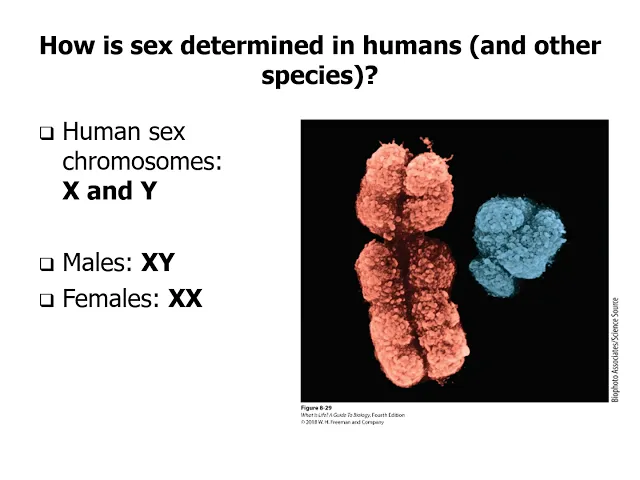
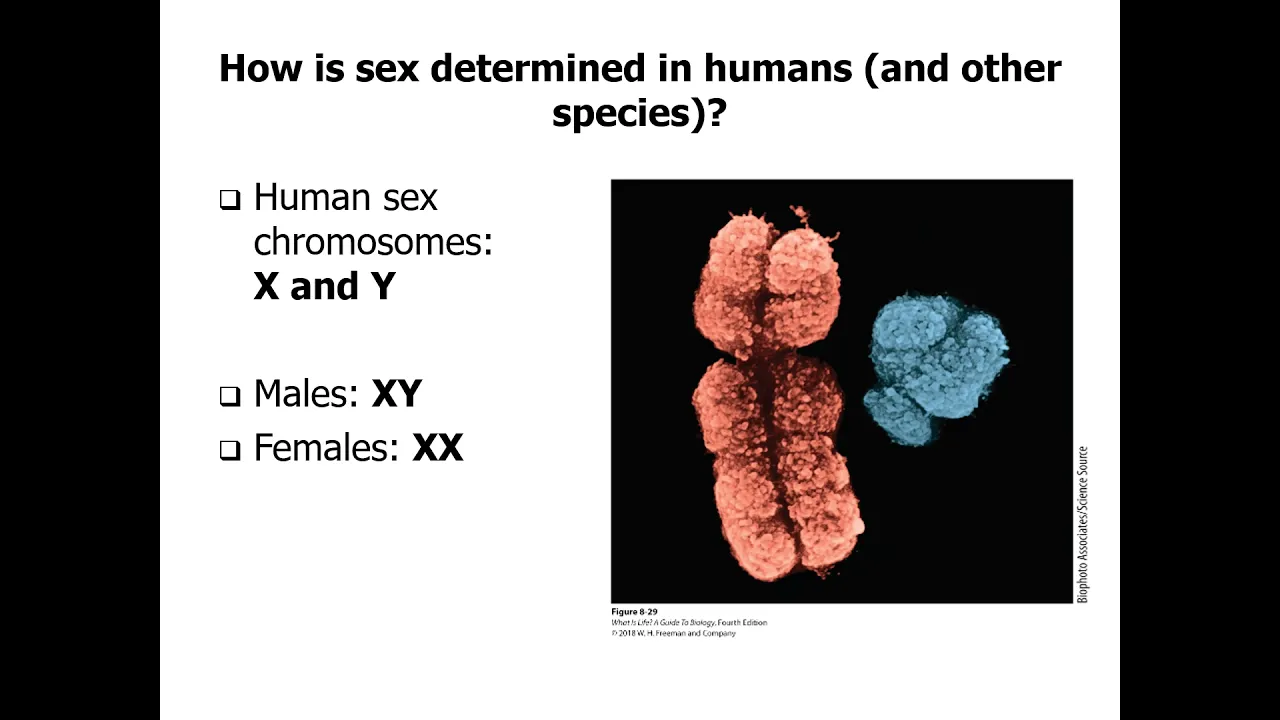
your information uh with the slides that i posted for you okay so hopefully you got some of those answers right um if you have a question as to why you got something wrong feel free to email me from here we're going to move on to how sex is determined in humans as well as other species it's kind of interesting cool stuff so human sex chromosomes are going to be the x and y chromosome so everybody's got at least two um maybe potentially hopefully males are going to have the combination of x y and females are
going to have xx so sex is determined in humans um based on the sperm cell that the father produces um but what happens and something that's kind of interesting is that females lack a y chromosome which tells us that the y chromosome is not necessary for development of a functioning human the x chromosome however is because everybody has an x if you don't have an x chromosome you probably won't make it to development but we know a lot of information as far as the x chromosome being very important unfortunately and no offense gentleman the y
chromosome is much less important it's also substantially smaller than the x chromosome there's less information that is included on it so determining sex in other species uh you can have hermaphrodites which produce both male and female gametes examples of these are earthworms garden snails and most plants in humans we do not call them hermaphrodites this is something known as intersex and typically you've probably heard of this term hermaphrodite it is essentially a term that is referring to the uh genitals of an individual um and saying that they have both sets of genitals or parts of
both sets of genitals and that is uh known as intersex for birds the mother is going to determine the sex of the offspring she can do this as she is producing the eggs it's kind of cool ants bees and wasps are going to be determined by the number of chromosomes sets an individual has for example male ants bees and wasps are going to be haploid that means they have half the number of chromosomes as the females which are going to be diploid which crazy stuff it's so interesting and so cool what happens is you'll have
a male if the egg is fertilized or if an egg is unfertilized um for a female it's just so cool i mean tell me it's not from there something kind of interesting when it comes to turtles and you've probably seen the way sea turtles lay their eggs in sand they dig a nice big hole uh and then they plop their little uh clutch of eggs in there and the environment is going to determine the sex of the offspring specifically temperature um and it comes down to like literally like a degree will determine whether or not
the egg is going to produce a male or a female turtle so kind of cool okay so um over to the right here i do want to point out that this is something called a karyotype this is where we can see every chromosome of an individual and of course you can see that they're in pairs one from mom one from dad for each chromosome and then at the end we have our sex chromosomes so there are 23 pairs in total or 46 all together and then that last one doesn't have a number that is either
going to be xx or xy and in this case we are going to start talking about what kind of happens um with birth defects uh in respect to chromosomes um so there was a study that looked at down syndrome and mother's age of the offspring so what they found is as the age of the mother increased so did the incidence of down syndrome so what that tells us and honestly you could do this with just about any genetic condition where a mother is older and she is having offspring at an older age the same goes
for fathers if the gametes are older or being produced by an older person there is a higher likelihood of passing on genetic information that is going to lead to maybe unfavorable conditions for the offspring so there are two different methods that can be used to collect cells from a fetus in order to sort of screen for any conditions that may be developing that maybe the sonograms don't show and i am going to struggle with these words amniocentesis there we are uh is a sample that is taken from the amniotic fluid surrounding the fetus inside of
the mother so she has the placenta which is sort of like an egg shell surrounding um the fetus that is developing and the fetus is floating around in something called amniotic fluid it's sort of like a baby broth if you will it's a nice fluid that's going to act as a cushion and also nutrients for the baby the second is chorionic villus sampling or cvs these are cells that are obtained from the placenta so that outer uh covering for the baby so trisomy 21 that is the technical terminology for down syndrome it was first described
by dr john langdon down in 1866 it was revealed by the presence of an extra copy of chromosome number 21 so that means that there are three copies of chromosome 21 and this will affect one in 1 000 children going sort of hand in hand with trisomy 21 that is an example of something called non-disjunction and that is an unequal distribution of chromosomes during cell division cases of trisomy tend to involve only chromosomes with the fewest genes these chromosomes can include 13 15 18 21 and 22. other chromosomes that have non-dejection um will essentially either
lead to death or a lack of development of something important like a skull or a brain or a heart or things like that it's not a good time problems associated with reproduction can increase increase as a woman ages and is having offspring which we've talked about before so life is possible with too many or too few sex chromosomes and here are a few examples so this first one is called turner syndrome this is going to result in a female who only has a single x chromosome which is really really cool um so what happens is
this individual will have a shorter height a web of skin between the neck and the shoulders underdeveloped ovaries they're often sterile and can experience some learning difficulties so they only have one sex chromosome meanwhile with kleinfelter syndrome you will result in a male who has underdeveloped testes a lower testosterone level they're usually infertile and the development of some female features may occur this is going to result in an individual who has a tendency to who is male but who looks a little androgynous or a little bit feminine so this this individual has two x chromosomes
and one y and you can see um on the left where they're getting it from so the mother's egg has two x chromosomes and then uh the male uh father is going to produce one y chromosome or it's going to be the mother has one x chromosome and the sperm cell has an x and a y um so kind of interesting stuff i think the last two examples i have um involving sex chromosomes are x y y males which can sometimes be called super males because they have two y chromosomes they're normally taller than average
and moderate to severe acne is also a condition their intelligence may be slightly lower than average and oddly enough and the study's really biased unfortunately but quite a few xyy males seem to have like i said potentially higher testosterone um but end up maybe having less ability to perform a good judgment so quite a few x y y males are actually incarcerated so it may be a genetic thing as to why that happens so the last example is an xxx female they're usually sterile there's no obvious or physical mental problems but these can usually or
sometimes be called meta females so kind of neat there's one last question hopefully get it right and that is the end of chapter eight as always make good choices have a wonderful day and if you have any questions do not even hesitate to send me an email