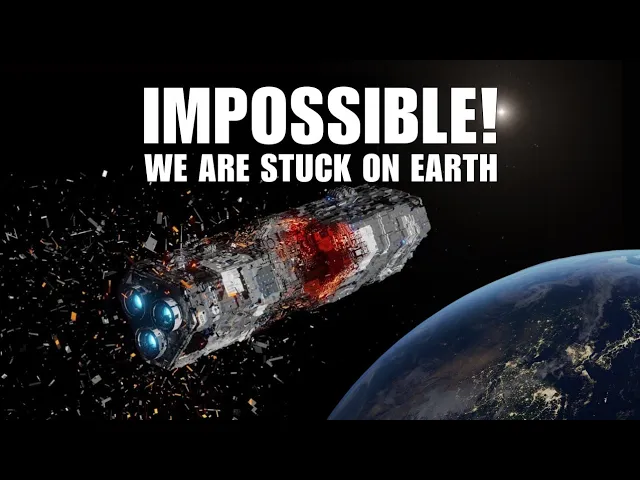
in recent times Humanity has pulled off amazing achievements in space exploration we've set foot on the moon sent robots to Mars and launched probes to the farthest reaches of our solar system still we're nowhere close to truly leaving our own system behind have you ever wondered why we've been able to explore a few nearby planets but still can't Venture Beyond them today in the space World we're going to look into the current limits of space travel and understand why Interstellar Journeys remain in the realm of Science Fiction from the speed of spacecraft to the tremendous
amount of energy needed the hurdles are much bigger than most people imagine I'll go over these challenges and show what would have to be conquered for us to someday reach other stars then you'll see why this might be a problem without an easy solution the history of space exploration is filled with extraordinary milestones in the late 1950s we took our first steps into space driven mainly by the space race between the United States and the Soviet Union the launch of the Sputnik satellite in 1957 marked the start of this era and not long after cosmina
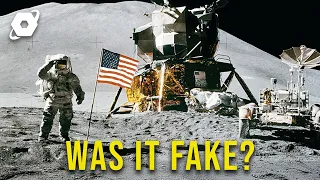
Yuri gagaran became the first human to orbit Earth in 1961 these breakthroughs showed that leaving Earth's atmosphere was possible and paved the way for future crude missions the most remarkable achievement of that period was Humanity's arrival on the moon in 1969 with the Apollo 11 mission that accomplishment proved that no matter how unlikely it seemed we could achieve huge goals fueling the dream of one day visiting other planets over the years the focus shifted to uncrewed missions probes were sent to distant parts of the solar system and we saw notable advances like expeditions to Mars
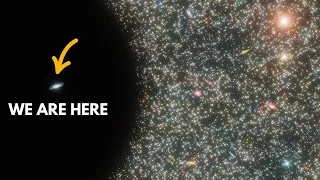
and ongoing studies of Jupiter and Saturn Voyager 1 launched in 1977 is currently at the border of interstellar space over 20 billion km from Earth even so it's still incredibly far from any other star system highlighting just how vast space is and how limited our abilities remain despite all we' done we're still confined to our Cosmic backyard leaving the solar system to travel to other stars would require technology far beyond what we have now this brings us to a crucial Point why are space distances such a huge hurdle one of the biggest barriers to Interstellar
travel is simply the distance even our solar system is enormous Earth is about 150 million km from the Sun a measure known as one astronomical unit to grasp that scale note that Voyager 1 the farthest spacecraft from us took over four decades to reach the outer limits of our system and it still hasn't fully left when we consider moving beyond those limits to reach another star the challenge grows dramatically the closest star Proxima centor is about 4.24 light years away one lightyear is roughly 9.46 trillion kilm if we hypothetically sent a spacecraft moving at Voyager
1 speed it would take around 70,000 years to get there that doesn't even include the technical difficulties along the way even with more advanced concepts like laser powered solar sails we'd still only achieve fractions of light speed meaning the trip could last decades or even centuries to relatively close destinations this is one reason why Interstellar travel remains theoretical another big issue is that as distances grow it's not enough to just make spacecraft go faster the laws of physics dictate that for each small increase in speed the energy required grows tremendously that leads us straight to
the next problem we don't have propulsion technology anywhere near what's needed to cross such vast distances in a reasonable time frame as if dealing with huge distances weren't Tough Enough limited propulsion makes it even harder the speeds reached by spacecraft today may seem high by Earthly standards but they're nowhere near enough for Interstellar travel within the span of a few human Generations Voyager 1 for instance travels at about 17 km/s impressive when seen from our planet but insignificant for Journeys measured in light years that's because our current propulsion methods are based on basic physics principles
that limit a spacecraft's acceleration the most commonly used approach up to now chemical propulsion relies on fuels like hydrogen and oxygen which spark a controlled reaction to propel the craft this system works to leave Earth and handle relatively short trips in the solar system but it becomes unfeasible for very long voyages because the amount of fuel needed would be impossible to carry research on other types of propulsion is already underway such as ion drives that use electrically charged ions to create thrust NASA has used this method on some probes like Dawn which explored asteroids in
the main belt ion propulsion is more efficient in terms of fuel but it provides very low thrust resulting in very slow acceleration in other words even if it's more economical it would take years to reach velocities that could help on very distant trips there are also theories about Fusion powered propulsion using the same reactions that take place inside the Sun in theory this could provide enough energy to accelerate a craft to a meaningful fraction of the speed of light however we still haven't mastered Fusion in a practical way nor do we have the means to
build compact reactors for use in spacecraft creating a system like that which is both safe and functional still seems Out Of Reach then there are even more futuristic or nearly fanciful ideas like solar Sals and Laser propulsion one example the Breakthrough starshot project plans to send tiny probes to Proxima centor using powerful earth-based lasers aimed at reflective sails if it succeeds they might reach 20% of the speed of light and get there in around 20 years but it faces huge challenges laser Precision durability of the tiny probes and above all slowing down at the destination
without a way to break these craft would just Zip by the star system without enough time to study anything so the problem of propulsion isn't just about going faster it's about balancing Energy Efficiency and and what technology can actually provide so far nothing we have or even Envision matches the scale of that Adventure meanwhile there's also the energy problem to leave the solar system and reach another star the amount of energy required is almost Unthinkable present day spacecraft generally rely on two sources solar and nuclear both have major drawbacks for Interstellar missions solar power works
well near our sun but it quickly becomes almost useless as distance increases because sunlight weakens drastically Al nuclear power which comes from radioisotope thermoelectric generators rtgs is more promising for long missions probes like Voyager and New Horizons use this approach converting heat from radioactive decay into electricity it lasts for decades but still doesn't deliver enough power for advanced propulsion systems even if by some miracle we solved propulsion and energy challenges there's still a fundamental concern human survival on an Interstellar Journey spending a long time in space brings serious biological and psychological risks we don't fully
understand yet outside Earth's magnetic Shield Cosmic and solar radiation increases the risk of cancer and can harm the nervous system and the Heart Solutions include more robust shielding and materials that absorb radiation but there's still no reliable way to protect a crew during a flight that might take decades or centuries on the psychological side space missions have shown that isolation and confinement take a heavy toll on astronauts Mental Health even on relatively short trips imagine a crew spending decades in a spacecraft with no in-person contact beyond their fellow Travelers boredom loneliness and lack of external
stimulation can lead to depression anxiety and more serious psychological issues tests like the Mars 500 project showed that these effects can be significant even over shorter periods communication is another hurdle even within the solar system sending and receiving messages can take minutes or almost half an hour depending on planetary positions for something as distant as Proxima centor a message would take over 4 years to arrive and another four to come back keeping the human body in good shape is also critical microgravity weakens muscles and Bones causing loss of muscle and bone mass on longer flights
the crew would need strict exercise routines to minimize this damage and even then it would be hard to fully counter it but there's an obstacle many consider insurmountable time itself it's not just about how long a journey might take but also about time dilation described by Einstein's theory of relativity let's break it down Crossing Interstellar distances can take centuries complicating any plan to complete it in a single generation and prompting scientists to consider solutions that challenge what we know about time and Longevity one idea is so-called generation ships self-sufficient craft where multiple Generations would be
born live and die until finally arriving at the Target the original crew would know they'd never see the final outcome only their descendants would this Sparks giant logistical and ethical questions how do we ensure the technology lasts for centuries how do we guarantee that future Generations will keep wanting to continue the mission plus the first generation would leave by choice but future Generations would be born aboard the Ship Without ever being asked if they wanted to inherit that goal it's a deep debate for another time another theoretical idea is hibernation or cryogenics the crew would
be put in a deep sleep state with biological functions greatly reduced only to wake up at the destination possibly centuries later but this is still pure science fiction we don't have a safe reliable way to keep people alive in hibernation for that long without serious harm we're not even sure if it will ever be possible and I won't even start on Concepts like wormholes warp drives or manipulating SpaceTime that all remains theoretical speculation without any practical proof it could work relativity's time dilation teaches us that time is not solute it varies with speed and gravity
at velocities near the speed of light time moves more slowly for travelers than it does for people who remain stationary so while the crew might experience only a few years everyone back on Earth would see decades or centuries pass by if we also consider strong gravitational sources like black holes we'd have the same kind of time Distortion seen in the film Interstellar the problem is that even if we traveled close to light speed the crew would be totally cut off from everything and everyone left behind it would be a one-way trip that makes it impossible
to create something like Star Trek's United Federation of planets which depends on trade and cultural exchange among different species that level of interaction would take far longer than any practical timeline so why would a future corporations send a shipment to another part of the Galaxy when they'd never hear from the ship or see the cargo again any spaceship moving that fast basically becomes its own separate world with no home country and no past and what purpose would that serve faced with all this it's obvious that although the idea of leaving the solar system is inspiring
it lies far beyond our current abilities our space exploration is still in its early stages and Interstellar travel seems likely to stay in the realm of Science Fiction for a long time maybe we'll need to accept that we can only explore our own solar system in depth which by the way is huge and might take thousands of years to fully investigate regarding the puzzle posed by fy's Paradox if the universe is so vast and full of life where are all the aliens there's a straightforward answer if we look at our own situation if the universe
is about 13 billion years old and it takes roughly 5 billion for intelligent life to emerge on a planet orbiting a sunlike star then many civilizations could have evolved before us and had entire eras to advance their space technology but since they haven't shown up here it might suggest that even with plenty of Life out there traveling between stars at light speed is impossible for any intelligent Society it doesn't mean aliens don't exist it just means they might not be able to overcome the universe's immense distances there are no warp drives or wormholes that negate
these vast Cosmic gaps so each civilization ends up confined to its own Cosmic backyard able to explore only the nearest parts of its Stellar neighborhood what do you think does the universe really not allow us to explore it the way movies depict or is there still some unknown scientific discovery that could unleash our potential to Journey Among the Stars share your thoughts in the comments if if you enjoyed this video please leave a like it's very important and if you haven't subscribed to the channel yet I invite you to click the Subscribe button below thanks
for watching and see you in the next video