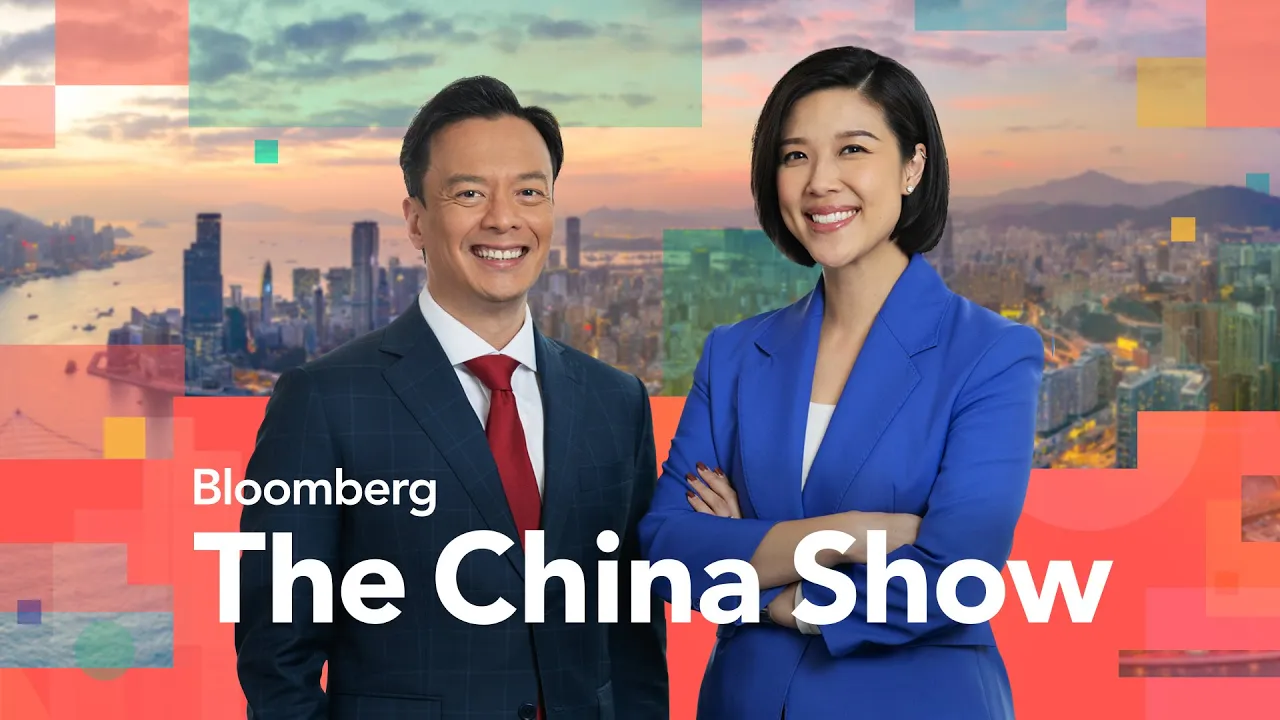
Good morning and welcome to the show. Just half an hour away from the opening bell in Hong Kong, Shanghai and Shenzhen. You're watching the China show. I'm David from Stephen Engle. As you can see, our top stories today, the Bank of Korea delivering an unexpected rate cuts back to back their move following its policy pivot last month. Now, Asian stocks are struggling for direction while bond yields slip ahead of a US holiday. Of course, the fresh economic data giving support to the Fed's cautious stance on interest rate cuts and Chinese autonomous driving started posting slides
more than 7% in its debut in New York. We'll speak this hour with the founder and CEO, James Park. All right. We'll get you straight to breaking news right now in the market reaction that we are seeing so far. This is just fresh out of the oven. Couple of minutes of the Bank of Korea following up with its key interest rate cut. We're now down to 3%, largely unexpected. And certainly when you look at the market reaction, particularly when bond futures at these levels at about 119 trading at the highest in about two years or
so, certainly underscoring that while the direction of travel was expected, the timing was not so much. We weren't expecting that to come today. That being said, we'll talk more about this in a moment here. Asia ex China going into the open today. And keep in mind, of course, there's also the separate story and speculation in China that led to that massive rally We had in the afternoon session yesterday into the overnight session of the Golden Dragon Index, which we'll show you in a moment there. In fact, just on that very note, rights of the likes
of be widely King soft agora, where some of the big moves overnight be wide. Of course, on the back of that report that we had that suggests that they're talking to their suppliers. I've been talking about telling them to expect a 10% price cut next year, that the price war will continue going into 2025. Golden Dragon Index up overnight. Bucking the overall trend, weakness across global markets. We talked about some of these big movers. Off cloud again rebounding 18%. We were, of course, speaking with them yesterday. And just very quickly, the approach of The open
today, 27 minutes away. Futures, two futures. You have this this this rally in iron ore prices, which I believe is now up to four straight days. And of course, the renminbi fix of the day is going to be very much in focus today, Steve. Amidst this melt up in the dollar. Steve. Yeah, that's right. And look what we're seeing with the Korean one, obviously, following this Bank of Korea surprise move. I mean, this is interesting because after of course, not cutting in four years last month they cut and now back to back in January. The
Bank of Korea doesn't like to do back to back interest rate cuts unless there's an economic crisis. Well, they must be seeing a sense of urgency given the the brooding headwinds, of course, in the global Economy coming up in an export dependent economy. Yeah, And certainly and I think this time in the next hour of the China show, Jason Peng out of Jp morgan will be joining us, in fact. So one of his calls really there was he's long career rates is low. Malaysia's days long, Thailand is long KGB's because he thinks there will be
an offset like what we got right now out of the Bank of Korea. So we'll get more on that in a moment. Expect more from the statement out of the Bank of Korea in about 30 minutes from now. And of course, in the next hour, we'll be that briefing out of the Bank of Korea, Governor. Now, that takes us into the China story today, and maybe we're waiting for the offset. Right? Investors are waiting for the offset. There was speculation it might come initially in the form of an earlier central economic work conference. I think
we will talk more about this later on. But it was a screenshot, Steve, wasn't it, that really sparked this rally yesterday in equity markets in China. Sure it will. We can't corroborate that obviously, but verified one. Yeah. Unverified essentially saying that the central economic work conference which is usually held in December and it probably will be held in December, maybe earlier than expected. I guess the November ends tomorrow, doesn't it, essentially. So, yes, it might come a little bit earlier and it might, given what we just saw with the Bank of Korea. Obviously, they are
trying to get ahead of things. Will there be stimulus coming from the Chinese authorities as well to ward off any kind of headwinds that they the Chinese economy? Further headwinds that the Chinese. Yeah, absolutely. And it's not we're we're we're pushing lower recently. Right. And I think Steve's point there, too, is really markets are infatuated with speculation right now. They're waiting for the next thing to be announced. And I think just on that graphic we just show you before we talk about the Fed and inflation, we have two briefings out of Beijing today, the Commerce
Ministry and also the the foreign ministry separately taking place in the afternoon. Oh, yeah. And we have a third one way now, sorry, today in Hong Kong, which is, I guess, Non-market related. But anyway, oh, I heard Cathay Pacific yesterday, as a side note said, by January, we're actually going to get there. They'll be back to pre corona capacity. Yes. Let's go. The problem is, is foreign carriers are not coming back to the levels that we saw pre-pandemic toggle Oh, no. So Cathay is not going to cut their prices. Where when have they anyway? 75
basis points worth of rate cuts are expected based on fed funds features a couple of hours ago. So this actually includes the one that might be coming in December. Then you get two more, two or three more next year. We had inflation print overnight and we're still dealing with. And on the Korea story, really an m ethics complex that can't seem to catch a break. Mexican peso, the real the Philippine parcel breach 60 yesterday. Really a stronger dollar story. Let's bring in thomas tor head of apac investment strategy at blackrock. I mean this melt up
in in the US dollar how much. More do you think we're going to see short term? It seems to me like we are borrowing a lot from next year's returns, not just in terms of the US dollar appreciation, but also in terms of US equity appreciation. So there's still a lot of there are still a lot of policy to come, right. The rhetoric is there in terms of Trump's fiscal expansion, corporate corporate tax cuts, personal tax cuts, those are all net inflationary. And also it will strengthen the US dollar. But then you have, you know,
central banks like BOC are actually trying to get ahead of this. So, you know, what's the net differential going to be? I do think we'll see a little bit of a stronger US dollar, but I'm not expecting exponential returns in that next year. Is this move by the bank do you see as a precursor for other central banks in this part of the world, maybe also taking preemptive preemptive steps as well? I think we can see that. I mean, certainly in China, I think that could be the case. That's more of a tariff situation than
anything else. But, you know, if you look at Taiwan, for example, I think it's a relatively similar position Indonesia, Malaysia, All these kind of economies. The difference is that, you know, they're coming from a much lower base level in terms of where they raised interest rates, not for all of those economies, but for a lot of those economies. So when you look at the interest rate differential that's expected next year, you know, I still don't think we're gonna get three rate cuts from the Fed. So, you know net net that's that's a US dollar strengthen.
How has that been priced in the fact that you think that markets are too dovish around the Fed for example. Well no because you know if you look at the interest rate swaps, they are saying three rate cuts by the end of next year. So I don't I don't think that's priced in. The difference is going to be, you know, when we start to see these inflationary prints coming in higher, You know, the Fed will start to look at maybe were one and done, maybe were two and done. And then what's the impact on US
dollar? What's the impact on earnings growth? Do you think that that might cause it there will there be any, I guess, negative impact on you as equities to be more specific? Because if they pare back those rate cuts? Yes, I think so. I mean, it really depends on what area of the market you're looking at. You know, if you if you look at post Trump election, where there has been a pretty big rotation trade rate to small caps, financials value, you know how long that will continue. I think that still has some legs. But as
you start to move into the second half of next year and you start to see inflationary data coming in stronger, you know that the impact from Fed rate Cuts could actually impact some of those smaller companies more than the bigger companies, because the bigger companies, very simplistically, are the ones with the stronger balance sheets. How do you see all this playing out for Japan? Obviously, they are sort of pausing on their rate hikes, but we're also seeing, of course, the yen did strengthen overnight. It's still pretty weak, though. 151 Yeah, in terms of in terms
of yen BOJ, I mean, and Japanese equities, I think there's a couple of things here. One is is the macro side of it. Right. We are seeing inflation returning to some extent. But key to this is the wage growth, right? Wage growth is super important for the BOJ and for the Japanese economy. You have the domestic side of things where there's still a lot of money sitting on the sidelines waiting to be invested. It takes time, right, for this to filter through into the investor mindset of, you know, we can no longer sit in cash
because inflation is going up. Here are equities. They look pretty good in Japan. We're seeing increase dividends, buybacks, etc. And then you have the BOJ moving in the opposite direction of pretty much every other central bank. That creates a lot of diversification for owning Japanese equities in the portfolio. So, you know, I think 2025, it will still be a very good year for Japan. What's the best Japan specific strategy then? So I think what what's happened in Japan is, you know, 2023, the first half of This year, it's basically, you know, just by and is
Japan Baidu exposure. Right. And we saw that up until May of this year. And then we saw huge outflows from Japan, Japan, exposure ETFs. And I think what's happened what happens now is, you know, that was driven by structural reform, but no one actually knows what the impact is going to be. Now, I think it's a much more active market. So we're looking more at active type of funds. Obviously, Japan is being driven more by value. Dividend type of exposure is less by growth. And that's one of the reasons why why it's a nice diversifier
in portfolio. So I think Japan is more of an active market at this point. All right. We'll have more with Thomas Tai in a moment. We'll get we'll bring you straight now to Mark Cranfield, who is with us in Singapore to talk us through the breaking news we had in the last few minutes or so, this unexpected rate cut mark out of the central bank there. And in many ways, one could look at this mark as an insurance cut. Ironically enough, the book might be telling us things are not going to be okay. Mark, obviously
they're citing lower inflation, lower growth for next year. But I think traders looking at this will think there's definitely an element of Donald Trump preemptive work in here. Most Asian central banks will obviously be concerned that they don't really know what's coming next year. They think the trade situation globally is going to get more difficult for Everybody. And Asia is obviously very exposed. Anything negative that happens to China will have spillovers to the rest of Asia. So it wouldn't be surprising if there are other. And central banks having a very similar thoughts to the Bank
of Korea is that we may need to to help our economies in advance of what could be coming down the pipe next year. So it was a surprise in the sense that only four analysts were looking for this rate cut. Very few of the people surveyed. And yet when you think about what's coming and the conditions, maybe there's going to be a few other people who would take a similar view. They're willing to let their currencies take a bit of a hit because they know the dollar is going to stay strong for a relatively long
time. There's not much they can do about that. The dollar will turn when the United States themselves at the time is right more than the rest of the world. So in the meantime, they're just preparing themselves for what could be a pretty tough year next year. Yeah. Mark, obviously the book doesn't work in a vacuum. So to your point about other central banks. Which one do we need on the calendar? Which one do we need to circle in saying we need to readjust our expectations that perhaps more cuts, faster and more frequent are coming? Well,
certainly everybody in Asia and the Bank of Japan are going in their own sweet way. They still look as though they want to raise rates and possibly even next month as well. But you've got to think about everybody And especially those where the currencies play a huge role. So South Asia in particular, anybody in the South Asian region is usually willing to allow their currencies to take a bit of flexibility, and that would mean they would have room to lower interest rates attached there. But yeah, every single Asian Central bank meeting for the next six
months at least, I would think is a live meeting. Nobody can discount the fact that you might get some pre-emptive easings from anybody in Asia now. All right. AM live strategist Mark Cranfield in Singapore. We'll be coming back to you often, I think, as you just alluded to. Still ahead on the China show, a bit of securities will be with us to talk China markets and why they're cautious about the next few months. Plus, we'll be speaking with Pony AI's co-founder after shares slipped on their US trading debut. And in the next hour, J.P. Morgan
Asset Management joins us as we assess the risks from Donald Trump's tariff threats. And we are counting down to the open of trade in Shanghai, Shenzhen and Hong Kong. This, of course, is the China show. Earnings season is here. Third quarter earnings season, as we've been talking about, is really in high gear. Bloomberg is first to break the numbers. We have some big earnings after the bell. Earnings from caesars crossing, the bloomberg terminal. Mondelez is reporting credit amd snap. Let's keep the conversation going with the smartest insights. The bar keeps getting higher. 20% growth rate.
When your comps get tougher, how much can you beat and raise? Continuing coverage on Bloomberg? Context changes everything. Okay. Welcome back to shows here. So the strong dollar, this unexpected rate cut out of the Bank of Korea, the your midpoint of these of the days out not in the PBOC. We're looking at a reference rate of seven 1894. I think it's worth just mentioning before we talk about the Microsoft story, that yesterday in the afternoon session, equities rallied quite hard, expecting that we may get an earlier economic central economic work conference. And the range on
the onshore rate when it traded yesterday was actually the widest in about two or three weeks. So watch when that opens up in about 14 minutes from now Steve. All right. Well, Bloomberg has learned that the US Federal Trade Commission or the FTC has opened an antitrust investigation into Microsoft. We're told they're drilling into everything from the company's cloud computing and software licensing businesses to cybersecurity offerings and I products. Bloomberg's Seattle bureau chief Anna Edgerton is with us. So and I mean, Microsoft is no stranger to past regulatory investigations. How is this different and how
serious is it for MSFT? Well, the technology industry, of course, has changed a lot since the late nineties when Microsoft was under investigation previously. And Microsoft itself is very different. We have more details about what we what About what this investigative demand includes. And we know that the Federal Trade Commission is looking at Microsoft's cloud computing business, other software and the way these things are bundled together. There are a lot of complaints from competitors that it's really hard for a company like Slack or Zoom to compete with the way that Microsoft bundles products like teams
in its other software. So we anticipate the Federal Trade Commission to seek more details about these programs and try to figure out whether or not that's illegal illegal behavior on Microsoft's part. What's next for Anna? Well, Microsoft will have to respond to this to this investigative demand. It's kind of like a civil subpoena in some ways. And then, you know, the Federal Trade Commission will take that and try to build a case or decide that they don't have enough evidence to take a case forward. You know, we will have a change of administration here in
a few in a few months. And it will be interesting to see how the next administration continues this case and how the Federal Trade Commission positions itself against some of these big tech targets that we've seen it take up in the in the past. And I thank you so much for staying up for us. Anna Edgerton there, our Seattle bureau chief, on a latest here on Microsoft and really takes us into the broader US tech story with the pullback in big tech. Of course, overnight still joining us here on set is Thomas Tai, head of
APAC investment strategy at BlackRock. It's the time of the year when we're getting these sell side projections on The S&P 60 507,000. How much credence do you think we should be putting on this target that you can be in trouble on that one? I would say it's the cleanest read right now in equity markets, the cleanest place still US equity. It seems like that. But the the overweight US equity call is is consensus, as you were just alluding to. And the question of you know is there any alternative to to US equities know, I think
on the fixed income side things are a little bit easier in terms of asset allocation because short duration seems to make a lot of sense, maybe moderation. I think the the issue we've seen is we've seen a lot of inflows into longer duration and the expectation we're going get a lot of rate cuts and we might see that rotate. On the equity side, we have seen a Pretty big move back into US equities since September, but now it's the rotation trade. So you know, how long can could that last? Because investors are essentially reaching into
next year with the expectation that earnings growth is going to be outside of the Mega-cap seven. So, you know, will that actually come through? We don't know. There's a there's a lot of uncertainty around policy as well next year. And the final thing is, you know, a lot of the quote unquote bad stuff can happen quite early in terms of tariffs, labor, deportation, etc., that the quote unquote good stuff is later in terms of corporate tax cuts, etc.. So managing that balance is going to be difficult. But I think, you know, the valuation Situation is
a slight concern, but for the moment it is very much a U.S. equity driven strategy. Is there enough visibility down that runway into next year for confidence in rotating out of the MAG seven into other areas? No, I don't think so. I think this is more of a short term tactical trade. I mean, the US data has been relatively good. There is we are seeing this this weighting out this breadth. But, you know, we are kind of priced for I don't want to say perfection, but it does seem like if you look at 14 and
a half, 50% earnings growth projections for S&P 500 and S&P 500 X, the big seven, that's quite a it's quite a big number. So a lot can happen by then. Want to ask you about India too? So we've talked about Japan to a lesser Extent China, India. What happens to the India story next year? Yeah, I keep it very simple. When it comes to India, China and Japan, I basically say short term, the trade is China, medium term, the trade is Japan, and long term the trade is India. You know, I think there is still
some froth to come out of the market in India. But if you think about it on very simple, simple asset allocation level, investors still want the growth in India. So we need to see valuations come down a little bit. We have seen a little bit of rotation out of Indian equities back into China because the China underweight was really funding the India overweight. So we've seen that rotation. And, you know, I think China will continue to be a trading market. I think the only play there really is to be neutral at the moment because there's
so much uncertainty and it's so volatile. But India is still the longer term structural growth driver. I just think in the short term you might see a little bit more froth coming out of that market. China played through Hong Kong or we took an onshore. I think the difference with this China equity rally and we have seen a lot of them right over the last 20 years. I think the difference with this one it is it's more onshore driven, whereas before it was like, you know, we're short the ADR is with short Hang Seng Tech,
etcetera. You see the short squeeze offshore outperformance. Now it's okay. Policy is very much being delivered towards domestic. We need to get consumption up. This is more of an onshore market story. Thomas Toy for Rosen Cross. Again, happy holidays to you, sir. Have a great one. Thomas Stark, the head of APAC investment strategy at BlackRock going into the open today, we're looking at declines here and a paring back really of that rally from yesterday, a quarter of 1% down on the Hang Seng index. The fix came coming in stronger again out of the PBOC maintaining
their headline is maintaining support there for the Chinese currency. The Thursday session under 8 minutes away. You're watching the China show. Right. Welcome back. Just to recap the breaking news in the last half hour or so, and, yeah, the Bank of Korea delivering an unexpected rate cut. Only four out of the larger pool of economists did expect the move to come today, which they did. And I think in a couple of minutes we'll be getting more from that statement out of the Bank of Korea. In the meantime, of course, the market reaction has been what
one would expect from a dovish move. Stocks are up, currencies down, bonds are bid substantially, half of 1% to Korea. Bond futures and not trading at the high is here in, I think two years or so. Steve. Yeah, this has taken us all by surprise. Only four of the economists surveyed by Bloomberg expected any kind of move today there. Most of them were expecting to hold pat. So it upends the applecart. We're going to have to adjust to that. And as Mark Cranfield earlier said, look, every central bank meeting in the Next six months in
Asia Pacific alive. Yeah. On the back of really the prospect of the tariff threats ahead. And I think in Korea case as well the they are very open in economy right so it's I think one of the economists that we had on the show and earlier shows mentioned that now is not the time to focus on financial stability. And if you cut rates, that might metal that horse a little bit. But it's really worrying about future growth. Absolutely. And again, this is an export driven economy. There's some signs, obviously, of CPI easing, also, of course,
housing softness. So there some domestic issues. But is that external potential shock coming from an agnostic as far as when it comes to tariffs? Trump administration, they will put tariffs probably on anyone, not allies as well as adversaries. Absolutely. Going into the open today, we're looking at a quarter, 1% to the downside, some strength coming through in the dollar. Largely speaking, more in the market story in the open is just ahead. This is one way. Welcome back and good morning to our viewers joining us from across the Asia Pacific. If you're joining us out of
excuse me, the U.S.. Well, first off, happy Thanksgiving. Of course, we're going into that part of the year. Couple of things to tell you about as we go into the session today. So this melt down in yields and treasury yields really boosting the Japanese yen. That's number one. Number two, IMF continues to be under Pressure. So things like currencies like the Philippine peso, which crossed 60 for the first time, past tense yesterday. One watch. You have the Brazilian riyal, of course, which is at a record low of the rupees, very close to that. And giving
us something to talk about today is the Korean one, which is down against just about everything following that unexpected rate cut out of the Bank of Korea. We'll see how that plays out across the EEM complex right now. The opening bell on onshore. And keep in mind, we're coming up a very strong rally in the afternoon session yesterday on speculation that that central economic word conference may is the operative word may be getting shifted earlier than usual. Anyway. It's the time of the year any way that We should be getting that meeting, which is typically
the early part of December. The other bit too, as we change things up and as you look at a ten year yield, have a look at Hong Kong open is also potentially given the speculation out there, a higher fiscal deficit to work with. As far as the budget and the fiscal push is next year is concerned, we are paring back the gains yesterday, 7/10 of 1%. The big movers, of course, this one is set to report earnings, i believe tomorrow. We have two briefings today getting a bit something on my throat today. Can I have
some water, please? If we can. Thank you so much of the we have a foreign ministry briefing. We also a commerce ministry briefing as well. I look like that cleared up very Quickly. A couple of movers to tell you about, too. And of course, a stronger fixing on the currency today. So JD Health Goldman out with some changes to their ratings across the health care space. So JD Health was upgraded at Goldman to two two by price target is that that's where we're trading right now Alibaba health same brokerage are also pulling back going the
opposite way as far as that ratings go. President I believe reports earnings today. That one actually also is is is a change out of Morgan Stanley rated NU overweight with that specific price target pop mart that's also a board that's a bull com call though that's a new buy and of course made what we talked about that is set to report Steve Earnings on Friday day of take a glass of water I will take it from here. Let's bring in Wendy Wu China equity strategist at b of a securities. Good morning Winnie. Let's just talk
about the China markets as it stands right now. There's obviously the geopolitical overhang since the last time we've talked, but also there's so much expectations. There's, you know, news and rumors of a screen shot saying that the central economic conference in Beijing is going to have an earlier than expected meeting. There's going to be stimulus, stimulus, stimulus on the agenda. What's grabbing your attention right now? So thank you for having me. Happy Thanksgiving. I'm actually marketing in Singapore this week. And I think one a couple of interesting feedback here, Right? You know, in Singapore, we
have sovereign funds. We have many long term long only regional funds. But this time round it seems even the long term investors focus are more on the short term. So many people focus on the next 3 to 6 months or even next 3 to 6 weeks. What's going to happen and what are the China policy responses? And clearly, you know, yesterday there's chatter, speculation about the increase. The fiscal stimulus is making investors excited again. However, I think generally there are some increasing concerns or frustrations regarding the China policy response. And I think some investors say,
you know, we've been buying into that news, buying into the speculation and sell on the fact, and that seems to be the Pattern. And I think there are some feedback about the policy stimulus so far. Very much is still focused on, you know, the local governments or potentially the banks. But not enough has been done in terms of helping out the real economy, the private sector companies. And on the consumer side, we need David here. So my guess is, based on your tone, nothing, nothing much has changed, although maybe the opportunity to your point on
our short term and, you know, tactical trades, what are some of the best opportunities right now given the recent pullback, particularly in Hong Kong? Yeah, I would say from a 3 to 6 months perspective, things might need to go worse before it goes better. Right. Because I still think, you know, for China is probably a responsive strategy in terms of they need to see what is the new Trump administration going to do? What's the policy focus? Is that focusing on tariffs? Is that focusing on technology decoupling or is that focusing on financial markets, the financial
sanctions or on the currency side? So, you know, I think for China, they probably need to wait to to you know, they see the for the external policy shots to determine the right response to how much we are to focus and how to execute. So unfortunately, in the next 3 to 6 months, if we look at the fundamental side, you know, we don't get earnings and you will probably march next year and I doubt the full year earnings will be better or beating expectations. And on the external side, we'll probably see that geopolitical tensions first
and the China response later, maybe in two Sessions in March or potentially even later at the July. So for the short term, we still focusing on guanxi, the protection, you know, other than the very short term trading on the news, selling on the fact we think that Asia might be more resilient, that defensive whereas issue of ADR could be more vulnerable to flow position selling, especially if we hear more bad news regarding to sanctioning all, you know, Hong Kong market or capital market or targeted geopolitical tensions. Well, on that note then, Winnie, what? Let's drill
down into technology and China in particular. What's your outlook there with, you know, earnings have been lackluster, but there's also increased chatter, as you just alluded to as well, about sanctions or even more executive orders by the current administration in the U.S. limiting chips, certain HBM chips into China as an added headwind for China's tech ambitions. Yeah. You know, interestingly, we've been hosting a number of experts who talk about these things. I think, you know, some experts feel is that this could be seen as a major escalation. Right. Because so far, the Biden administration has
this small yard and a high fence policy or strategy. But if they were going to pull down a hundred or 200, the semiconductor or future A.I. companies onto the entity list, it could be viewed as a major escalation and a huge expansion of the so-called small yard. So how is China going to respond to that? Whether there will be retaliation will be the key thing to watch. And then interestingly, on the capital market response perspective, you know, when we see that kind of news, typically institutional investor or overseas investors are much more concerned, more worried.
Right. But on the other side, we're seeing Asia, small cap technology and semiconductor companies had a very strong rally this week because the view is, look, okay, this is another push to localization. So the domestic semiconductor company is actually going to benefit. So we do have this very short term disconnection between the Asia small-cap market performance versus the fundamentals. Winnie, you guys put out a report, I think along the same lines we just talked about here, tariff and beyond the US election impact and the notion that we're getting from some other people, Not maybe not
necessarily yourself, is that, you know, the second Trump White House won't be as bad on China as the first one, the trade war and everything else. Let me ask you a question that you've actually posed on your report itself. Would it be a paradigm shift? Will this one be worse than the first time around? And do any sector stand out this time around that we should be watching out for within the Chinese equity market? Mm hmm. Uh, our fear is that this time will actually be worse than the first Trump administration. You know, so I
think especially in China, I'm sure some local brokers compare this to 2016 to 2020 and said, look, in those four years, China's economy, China's equity market was actually doing fine. And other than the initial shock in 2008, China was able to pivot and and rebuild its export very quickly. But I worry that this time it could be much more severe. It's not only about trade, it's also about the competition in technology on the capital market, even on talent to human resources. So, you know, on the other side of the spectrum, there are concerns that are
we facing a paradigm shift that, you know, the free flow of capital, free flow of goods, free flow of talent, human resources in the past 30, 40 years will be looking at, you know, some reversal trend. And that's really concerning. So, you know, from our perspective, we are a bit more cautious. And even in the recent discussion with the investors, when we see earlier this week, you know, President elect Trump talk about 10% additional tariffs, China market actually didn't respond that Much. So the question is, is that really already in the price or is there
some level of complacency that we need to be mindful of? So I would still say that, you know, this time is different than last time and that we need to be more careful of some structural changes from sector perspective. For the very short term, we say focus more on the domestic focused sectors. So, you know, the bangs or potentially the coal, some of telecom, the telecom, media services, domestic consumption services related sectors might be more resilient and less impacted by these tariffs or geopolitical tensions. And then, you know, looking six months out potentially, we need
to look at China's policy response and the Biden stimulus beneficiaries. I do think, you know, some of the large Internet companies, they still have Pretty solid fundamentals and strong balance sheet. So when the market do suffer from floor position selling and Instacart trading, it will be the opportunity to add to these quality bite us potentially in the next 3 to 6 months. Winnie, thank you so much. Out of Singapore today. Usually based out of Hong Kong China equity strategist at BofA securities. Just on that note that when he was just pointing out here, Wired magazine
actually reporting this morning that this is something we should expect come Monday, that the Biden White House is expected to announce more measures on Monday aimed at further restraining China's ability to develop advanced chips. And how it means what it means tangibly is that we could end up seeing around 200 Chinese firms added to this entity list. Right from that, let's go to the Bank of Korea here. The rate decision out more in the statement coming through that they will be looking at the impact of now back to back interest rate cuts out of the
Bank of Korea. They've also lowered their inflation projection for next year. Plenty more ahead here on the China show. Okay, here we go. Breaking news, The U.S. is readying more curbs on the China story that will stop short of early proposals. That's a headline crossing right now. So the US will be adding over 100 firms to the entity list, including partners of Huawei. They'll be also imposing some restrictions around A.I. memory chips, and these new controls Will not sanction 60, reversing some of the earlier plans. So lots of details there. We'll unpack our reporting a
bit later on in the show. But suffice to say, the question right now, Steve, will really be around. Does this go further in limiting China's ability and the firms, their key access to further their A.I. plans, particularly large language models here? Yeah, I mean, I think it's something that we talked about a little bit yesterday with Samsung. They've been having some problems, obviously, with their HBM chips, high bandwidth memory, which, you know, the next generation goes and helps those accelerators, air accelerators and video. So Micron has done really well there as Hynix has done really
well. And I believe, David, from what you've Just read there, these HBM chips and access to China will be included in this latest restrictions that we were reporting. All right. So shares of Chinese driverless tech firm. Speaking of I pony I slipped in their U.S. trading debut, erasing an early pop upwards. For more, let's bring in Bloomberg's tech reporter, Annabel Jewelers. And you have a guest coming up. I mean, this is a company I've been covering for quite a while. I took a test drive in the I pony I Toyota robo cab in Beijing. Interesting
technologies. A lot of people are trying to do it. That's right. I mean, it's a it's an extremely competitive environment just within China alone. And it's been an interesting moment because it's sort of rush into the year when where you've got pony listing. We ride also just made its debut moment is another deep route to raise financing. So yes, a very competitive environment internally, but also, of course, you've got those external pressures. And one of those is those rising geopolitical tensions. Joining us now is James Peng. He's co-founder and CEO of Pony Eye. And. James,
thanks so much for joining us this evening. I want to kick off actually with what that breaking news just came through, because this is really an environment of of rising tensions between the US and China. I know that so far you've been able to avoid those those risks that are being posed by export controls on Semiconductor and advanced computing technology. But how are you factoring them in to your business plans moving forward, given you've just got this huge cash that you've raised through the listing? Yes. First and foremost, thanks for having us on the show.
In terms of the sanctions on the chips, actually for us, it's nothing new. We have dealt with this for quite some time already so far. Our strategy was and remains to be that we will diversify our supply chain. And I think as the more and more manufacturing of the chips are coming out from either in China or rest of the world will try to have more diversified supply chain to further de-risk our exposure to the geopolitical tensions. Hi, James. This is Stephen Engle here. We met, I believe, at the Beijing Auto Show last year. This
year. And I did take a ride in one of your lighter and pony equipped Toyota robo cabs in Beijing. I do understand that. You know, you're a company that had some robo trials in the Bay Area, but also in multiple cities in China. So you kind of have, you know, influence in both the United States and China, obviously. But what was the main questions as you took your company public in New York? What was the main concerns, if you will, of potential investors when you went on that roadshow in the United States with increased geopolitical
tensions? Surprising, actually. The geopolitical tension clashes wasn't at the front and center of the investors, but rather the investors more actually more focused on the economical Side of the robotaxi. People are really interested in to figuring out when will be a time for the robotaxi to be actually large, scaled, deployed and be profitable. So I think the good news is that people really believing that 0 to 1 has already finished and now is the time for the for the autonomous driving companies to really go to the large scale commercialization. What does that look like exactly,
James? Because right now you're operational in four of the top or tier one cities. But what does that actually look like, say, over the coming 1 to 2 years? I know that you're going to continue to focus your efforts primarily in China, but talk to us about the competitive pressures that you face there as well. Yes. Our our especially if you're talking About the next two years, our main focus will be on the Tier one cities of China. And actually, just just this year, we also signed a deal with Baidu Auto and gong to add
to mass produce autonomous driving vehicles. So that means in the next two years, we'll have at least three models coming out of the assembly line will be launched into the Twin Cities in China. So I think the with the support of the for the support of the regulators and the residents actually get more familiar with our services, I think I think we will have a much larger fleet, have a bigger coverage, and hopefully the world will be able to actually have a much larger scale commercialization. So, James, how much benefit is the ground truth data,
so-called ground truth data that you are collecting in China and all the domestic EV makers that are want a part of autonomy? How much of an advantage does that give you over the potential arrival of full self-driving FSD by Tesla into the China market, perhaps by as early as the first quarter of next year? Yeah, I think it's not too much about the ground truth per se. It's really about the the technology that we can actually simulate a large scale traffic data and being able to train our air drivers in a diverse environment because driving
itself is an interactive process. It's not really based on the human driving behavior alone. So so actually, by using large scale simulation model, by using the end to end model, we were able to overtake many of the other methods of autonomous driving and be able to provide a much safer and Efficient solutions. James, it's clear that there's quite significant support from not just local governments, but also from from Beijing in China as well. I'm curious because I was just reading through your prospectus early this morning, the filing you made to US regulators. But essentially you
said that China authorities have significant oversight and discretion over the conduct of our business and may intervene with or influence our operations as they deem appropriate. I'm wondering if that also came into any of the conversations and if you could just give more context on that to our international audience. Yes, of course they are. As I said, they are. I think most of the investor investor took this as more like on the positive side, because essentially mobility and The transportation as a whole is a highly regulated industry. I think having the government, although you can
see on my hand, is a heavy hand, but on the other hand it is a supporting hand. So I think having the local authorities together with the national relevant departments actually having a clear rule for the autonomous driving industry, it's helping the whole industry to be more mature. So so I think most of the investors actually took this as a positive sign means that the government actually took this as a mature in maturing industry instead of a. Just something that that we need to be active against. So so I think overall, having the government at
the backing is a good sign. James, let's talk about the US market and the potential there as you have Listed in the United States. There were stories that maybe Uber Technologies would have invested into your IPO. What kind of talks are you having with companies in America that might want to partner with you and your technology at a time when, of course, you know Detroit and the major legacy automakers are struggling with their EV outlooks while Tesla is trying to push theirs. And we all know that Donald Trump and Elon Musk are our best buddies
now, right? Yeah, sure. Because, I mean, there's markets outside of China and the U.S. so and so there's a big slice of the pie outside of these two big markets. We actually over the last year or two, we started launching our services and having local partners in some of the global markets, such as South Korea, Singapore, Middle East, Luxembourg. And in some of those markets, I think I think the local partners or even the US partners, as you just mentioned, that Uber could be are good collaborators to us. Mm hmm. James, just briefly, because we
just got one minute to to the end of the break. There is the risk that the US bans this type of software, autonomous driving software in the US. Do you see that presenting a challenge to you? Not really, because we actually already started limiting our offerings in the US, although we still have R&D efforts. But but as I already mentioned, we are actually more branching into the international markets outside of U.S. and China. So so I think the even pending our services in the US will not have a Significant impact to us. James Peng, co-founder
and CEO of Pony. I thank you for joining us. And of course, thanks to our tech reporter Annabel Jewelers Dave. Yeah. Interesting from James Powell. We'll be having James Pan coming on in the next hour, of course, and a separate conversation on fixed income. And the reason I say that when you look at these markets. James from Jp morgan, he'll be joining us in a few minutes. His top calls are go long Asia rates Malaysia, Thailand, Korea, China. Why the offset that he is expecting that we did get out of Korea a couple of minutes
ago that will boost those parts of the market given the tariff threat out there and given all the curbs we've seen so far in the last hour or so. So we'll continue the conversation in the second hour of the China show is Just ahead. Good morning from the Asia Pacific. Good Thursday morning. So just some context really into how busy the last 2 hours have been here. So almost everything that we've got planned for the show got thrown out the window. So we're we're making things as we go along. We're not making things up, were
effectively just jumping on the next hoop. So a couple of things here. Surprise rate decision rate cut out of the Bank of Korea, number one. Number two is we now understand the timing of the new chip curbs coming through out of the Biden White House and an expanded list that might cover more Chinese firms. That's number two. So equity markets in the region are Either flat or slightly lower, like the Hang Seng index. And gone were the all the tailwinds coming throughout and speculation yesterday that an earlier central economic conference would be in the offing
could still come. We don't know. But certainly the price action has gone away. Dollar China big swings here on the back of well, number one, a stronger fixing. And number two, again, the chip curve story. Keep in mind, though, yesterday quite a sizable range on dollar onshore. This is dollar offshore, as you can see, the fix and then that dip into the last couple of minutes or so, we've given back a little bit right now retraced slightly higher. So on net net, we're trading at about seven 2471. Okay. Let's have a look at where we
are in the dollar story, too. So we had inflation numbers coming in. No nasty surprise leaving that sort of open question mark on the U.S. dollar as far as the rate conversation goes in the U.S. and its preferred inflation gauge picked up in October. Can we scroll, please, through the teleprompter? I'm just going to hit. That is true. Thank you so much. 75 basis points of cuts priced from the current level into the end of next year. So this might include well, this does include any rate cut we'll get in December plus two or three
more maybe going into next year. We know about the dollar strength, eight straight weeks of gains on the dollar index, the Bloomberg gauges as well. This is the JPM M currency index. This is a live spot. And as you can see, this acceleration in declines over the last two months or so. I think we're down 3% in October, a further 3% on this measure in November so far. And it takes us into the IBM story currently of the if you won, you lose, you put it that way. The one is down against everything today, all
of its peers. After the BOC cut interest rates, I would say unexpectedly as far as timing goes. But certainly most of the economies that didn't get this one right, currently we're expecting some easing anyway. But this is now back to back cuts out of the Bank of Korea. Now, our next guest, in fact, almost called this in fact call this. They're making money from this trade. The trade tariffs and the uncertainty Ahead will lead to an offset in domestic policy to shield these economies from any headwinds. Jason joining us here on set and Jason Pang,
Asia rates and portfolio manager at Jp morgan Asset Management. Congratulations. You guys call this off. Thank you very much. David. Thank you. Yeah. Okay. So talk us through how how you're thinking about next year and what next year looks like because the Bank of Korea gave us a preview of perhaps what to expect. So I think the way that we've been approaching all of this is I'd like to think that we are more experienced investors compared to 2018 when we had the first trade tensions and so-called tariff escalations and all of those Things. So I
think when we are modeling all of this and thinking about the future of 2025, I'd like to think as I said, we're more experienced as such than the way that we've been positioning ourselves has actually been a bit more on the overweight side in terms of most Asian duration. And of course this includes Korea. I think I've had sort of just give you a more thematic outlook of what we're thinking is we will expect more uncertainty on export and trade going forward. So Asia, as you know, are mostly trade oriented economies. For those countries with
stronger domestic demand, we expect them to outperform from a macroeconomic perspective. But of course, those with weaker domestic demand, which I think, you know, depending on how people interpret It. But I guess the Wall Street side does think that, you know, domestic demand on Korea has been a bit on the weaker side. Then naturally, these central banks may need to ease further even if the Fed, for example, stays on hold. We actually think that the playbook may end up being a bit like China's 2018, where rates can go lower. Of course, the interest rate differential
will have to be compensated by ethics, but it doesn't mean that as an investor you can't make money out of this, if that makes sense. So what does the Bank of Korea move today tell you about the pre-emptive nature of other central banks? And where would would you likely see that kind of action? And again, the currency, the currency weakness that would come from that? Yes. So it's true, Stephen, that we don't Necessarily feel that currency is the main trade for next year. And of course, that, you know, for this for what it's worth in
terms of this case of price cuts, we are, you know, making money from it. We're generating good alpha. We are overweight as a starting point. But I. What also mentioned that we are overweight across other parts of Asia and particularly the low others such as Thailand and Malaysia. Even though we acknowledge that there's been a decent move in Korea rates today, it's worth to point out that actually Thailand, Malaysia have actually been slowly grinding lower as well. Now, of course, I'm not saying that they're going to cut immediately, but if you shop the external side,
I think Thailand may actually have more room to ease further from here. So, again, you know, I'm not penciling Any massive cuts per se, but if you get a tariff, the rest of the world wants you to even 25%. I think 50 basis points of easing is quite reasonable for some of these countries to insulate against the external shock. Can we take your same thesis and apply that to China and the ten year. Say, for example, India is at, let's call it just above 2% right now. I think on a structural basis we have been
overweight China rates for quite a number of years now or longer term. So so you know, we've continued to, I guess, progressively make money every year in the China strategy piece. I think at this juncture, as we all know, CCP yields are much lower than before. Having said that, we do expect still a degree of monetary easing of a seven day repo cut rate cuts or something else, more fiscal easing. And I think all of this will gradually lead towards a lower interest rate environment for China as well, particularly if the terrorists pick up more
asymmetrically next year. How do you see this with corporates in China as they go to the market with their bond sales technology companies, everyone? That's a positive sign. But is this going to increase? So tech companies have, as you know, been issuing convertible bonds due to cheap funding. And even on the credit side, as you know, recently, there's been some big splashes on issues. And I believe you guys cover some of those companies. So putting it this way, the funding is cheap. If you think about it from a spread perspective, these companies are able to
issue some 100 basis point spread, you Know, for a very long period of time. And then they can micromanage the US Treasury rates, funding and hence, you know, just assuring a very cheap level. So I think it makes natural sense for them to do so. As Asian investors. For us, I think we are more welcome in terms of these developments because as you know, the JACKI market cap index has actually been progressively shrinking due to less issuance. Yeah. So when you're issuing these in such size, of course it's tight spreads. Right. But as a market
cap index inclusion perspective, this is all actually positive for the investment universe. So that's how we've been thinking of it. Yes. Are they? It makes sense from an issuer perspective. Obviously, for everyone in the market, it's a good thing because the you know, the let's say, the the the overall universe improves. But if I'm a if I'm looking to buy into this still, what do you think of the valuations? Valuations are tight. Okay. So I think even for us, when we approach all of these recent tech issuances, it's a bit more selective to be honest.
We don't necessarily see the need to to buy everything there. But whereas, as you probably know, India has had some corporate headlines recently, we've seen good value creation there. And I think for names that we particularly would like or, you know, do not see massive issues, some of them did cheapen up by 70 to 120 basis points, depending on tenor. So I think even though we acknowledge That the China side of spreads are tight, there's not much going on and we're not necessarily big buyers of it. We've acknowledged that there's also value creation in other
sectors or countries where we've been actually deploying capital in those segments. What's your view on Japan? I'm not sure if you are ex-Japan, but as you know, Japan is in definitely in focus right now as they're in the divergent path of rates. Yeah, I'm not exactly the expert, so I think I can just mention a few quick highlights. And it's the fact that within our own teams overall, there is a more structural bias to be more constructive on the yen due to sort of the fundamental recovery that we've seen. And I think traditionally, as you
can see in the overnight session, in the case of Latin American currencies, there was a big correction which also led to It, again, to rally quite substantially. So if anything, this year what we've seen is actually the reversal of carry trade. And I think then because of that and because of the overall bias of a gradually or incrementally decent macroeconomics for Japan, I think all of this can lead to, over time, a more decent yen performance. So I'd say that the quickly take is, you know, at least for me, I have a bias to play
it more on the long side, certainly not on the short side. Just to end on the macro question here, you know, everything is almost benchmarked to the ten year in the US. Is there anything on the horizon that you think might lead to a a melt, a further a material melt up in US Treasury yields? So I think there is geopolitical tension is some of the headlines that you guys covered earlier in the day on on the Semiconductor side. I think those challenges and tensions will remain. I put it this way. So so let's say
at December FOMC. Right. All eyes on NFP. You get a weak print the Fed will cut now as you move into inauguration next year in January. I guess the question then becomes, well, what kind of tariffs are being layered upon? How much is being levied upon? And I think that's what. Is being debated on the street right now. Now, if you're living on the higher site, then I think what we should be expecting is actually, you know, a more on hold bias. So if that's the case, you have to decompress maybe 25 to 50 points,
cut up that you think that your pricing Currently that may imply maybe 25 basis points higher in U.S. Treasury ten year from now. James, thanks for joining us here in studio. James Pang of Jp morgan Asset Management. Now looking at Jason Pang, what did I. What did I say? I said I made the same mistake early on. What's on the teleprompter? No. Yeah, well, I can't read. I'm dyslexic, but anyway. Jason. Jason. J.P. Morgan. J.P.. Apologies. Thanks for pointing that out, Dave. Look at Asian chip stocks now with our reporting that the Biden administration is
considering additional restrictions On sales of semiconductor equipment and memory chips to China while stopping short of some stricter measures previously considered. I'm not going to get her name wrong. Let's bring in Debbie Wu, who leads our North Asia tech coverage. So, Debbie, how should we be reading this? This is a complicated story. It's clearly an escalation of the export controls in high tech. But also, there's a caveat in the lead to this story, and that is it doesn't go as far as previously reported. How do we rationalize these contradicting moves? Well, I think there's some
nuances here. We are seeing that the Biden administration is weighing additional measures to finance access to chip equipment and then memory chips. But at a certain time, some of the its previous considerations, including us Saying our sanctions are mobile while we suppliers so clearly on a number of plants run by all while we saw production partners make our it's going to be smaller than no previous categories of privacy we reported at. Oh there's going to be a six suppliers sanctioned. But now it looks like the Biden machines will be sanctioned too. So, Wolf, I think
the administration looks like it's still grappling with how do you strike a balance between not really really sanctioning Chinese chip makers that poses a threat to U.S. national security while really not hurting a lot of Chinese consumer electronics providers that's really focused on supplying electronics to domestic market. So I think that's where all the nuance is coming from. And we are now seeing not because of the lesser measures that we really see expected that the Japanese saw equipment and then other component suppliers, all the other tariffs are jumping because of this. Yeah. I'm glad you
brought that up, because do we have a better idea? To your point, the market is is bidding up some of these names in Tokyo and to a lesser extent, I guess, in South Korea. Do we have a better idea of who might end up being the sort of winners here if, if and when we get this announcement? Oh, I think winners is probably a bit of a declaration, but this is only a partial win for us. So equipment makers, including Applied Materials and then research because they've been lobbying that you well, Washington or the Biden
administration is insisted on not unilateral measures To control China's access to US equipment. Then Chinese firms could just turn to other rivals, including a pogo electron, and then not touch equipment suppliers. And that way, while US equipment suppliers may lose revenue, all their rivals will gain. So that's where the catches lie. And so we can consider that this is a would be for us equipment suppliers, but they are still going to lose more China sales. So what the new what measures come out Debbie will in Taipei for us there on this Bloomberg scoop that it's
coming and it's coming quite soon this announcement right We will leave you now with some light pictures out of the Bank of Korea. Live briefing, which is just starting at this point, in case you missed it, that they unexpectedly cut interest rates, Announced that rate cut about an hour or so back. And in a couple of minutes, we'll be joined by one of the four economists that actually got this one correctly. This is Ben. Welcome back. So it's just 1116 in the morning in Seoul right now. The be having a press briefing, unpacking that rate
decision. They expected, too. Well, they cut interest rates somewhat early, more than earlier than most in the market had expected, although one of the economists who'll be joining us, in fact, right now predicted the move to happen today, one of the four. Joining us out of Singapore numerous John Wall Park. Well first you got this one right and congratulations in the call. What are you typically looking to hear From the governor as we get as we get this press briefing underway? Yeah. I think Matthew wants to know more about it. Why the sudden leak? Could
the palace wait? Because they had kept saying that they are concerned about housing prices. They are concerned about affects markets, and those costs are still with us. But even then, they just cut the policy rate. So markets would like to know that. What is the true driver for today's decision and the beyond that? I think the market also interested in, you know, the like the UK. So you know the pessimistic about growth forecast over the next two years. That's because of it are mostly exposed to us. That's because of the structural factors To wait on
the domestic economy I think are the both can be the reason but the markets would like to know more about. Yeah the key driver the UK growth forecast. John woo Stephen Engle here. We're getting headlines from governor reid saying it was not a unanimous decision. Two members opposed today's rate decision. What does this as well as the surprise move today tell you about the path for future and perhaps more frequent cuts or is that it for this year? And what will be the first quarter look like next year? First of all, you know, the it
shouldn't be like a unanimous decision because the in October meeting the the bill that brought forth guidance which suggests the policy rate, you know, the over the next three months there was only one member to forecast, you know, the lower Rates in November. So I think the you know, today's decision, I think there should be some dissenters voting against the rates because I think it's very natural. But having said that, that, you know, we today we are seeing that, you know, the block they can move if they, you know, have a concern of a growth.
And the policy statement I think is very interesting, the policy take. But I think there are, you know, the two key changes to the policy statement today. First of all, the buck just removed housing prices. You know, the key factor, you know, the that drove the hawkishness, but they just moved housing prices from the policy statement, you know, as a policy reaction functions. And secondly, the PUK also, you know, the removed you know, the trade off Previously the PUK always they said that like you know the lower rates it can have negative impact on financial
stability like you know lower rates can push up housing prices. So because of that, there is like growth there, financial stability, trade of that was a very big constraint on the monetary policy. But today they just moved those two factors. So I think even if we saw, you know, the dissenters to two dissenters, it's quite a bit. But in terms of the direction, I think it'll be okay. We continue to cut the policy. Wait until they see it's done. Hmm. Okay. So we talked about timing direction. I want to ask you as a final question
on magnitude. It's it's one thing that they brought Forward the cut that was going to happen anyway. It might be another thing if it's they'll still go as deep as we expect. How how low do you think the repo rate gets out of the Bank of Korea in this current cycle? Yeah, If you look at the you know, the inflation forecast for next year is 1.9%. So I think the okay can easily get down to trend half next year. So but you know, the still two one half policy rate is still I think it's a
slightly tightening area. So I think they eventually should go down to 2.25% next year. Thank you so much for taking the time and joining us. Last minute General Park there. Nomura Korea also covers Taiwan economists there on well, yeah, what made him call what they did and what the book did. Okay. Just to recap some of the lines which have come through so far out of this ongoing press briefing, it was two members that opposed the rate cut today and that the bank of we, of course, will continue to monitor and also work with the
government to manage any volatility that arises because of this as well. Today's decision was as tough as tough as any. Plenty more ahead. This is Bloomberg. And welcome back. We are seeing live pictures of the bank of Korea's governor Ri talking about the surprise rate cut back to back rate cuts from the Bank of Korea. That was a very surprise move, 25 basis points from three and a quarter percent to 3%. Governor yi is talking about the red sweep in the United states exceeded Expectations. And in the statement from the Bank of Korea, essentially saying
that Korea's export growth likely to weaken under protectionism. So, again, perhaps a preemptive move ahead of increased tariffs from the incoming Trump administration. And it was a difficult decision by the board of governors there in Seoul as two members dissented and voted against the move today. Yeah, in fact, Steve, I'm glad you brought that up, because on that note that this was preemptive, they have now come up their models with a specific number on how much future growth this actually creates. This move today, which was I think the other point that he was making. It
was not unanimous. It was a tough decision as any. So it adds .07 percentage points to GDP growth. And I now wonder whether that's part of this new revised forecast on growth that they've also come out with from 2.1 to 1 .1. 9%. In any case, of course, I think we're just obsessing too much over semantics. But the point being here is certainly we are feeling still the aftereffects of the U.S. election that took place and policymakers are attuned to any potential fallout in their economy. He's basically saying today's decision was as tough as any.
And keep in mind, the Bank of Korea is remiss to do back to back cuts in their meetings unless there is an economic crisis of some sort. Does this equate to an economic crisis for an export dependent economy? That's up for debate. Yeah, well, a part of that to us, I guess, to your point, you know, wanting To stave off any potential future crisis has had and a lot of central banks will be on notice because of what they did right now in might every meeting, not just in Korea, be live except Japan to the
point of my Cranford live from here on going into the rest of the next couple of months or so. We'll leave it here for now. The one is done against everything else. A couple of quick movers to tell you about. E-commerce stocks in China are up on the back of some news here. I think this is a Xinhua report that they're looking to boost, well, first ease export procedures and also some of the logjams in the cost there at some of the ports. That's number one. Number two is SAIC and some of the carmakers like
BYD. And the report yesterday that we've seen do indicate that they are pushing their Suppliers for to accept more price cuts from next year. So an indication of the price war and where that continues into 2025. All right. It's time for lunch as we head into the lunch break over in Tokyo, if not already. You know, some people tend to get ahead of the crowd as well. So if you're in elevators joining us right now, where most of our viewers are actually situated. Hello and welcome to the show. The Japanese currency is actually on track
for the best week going back, I think four or five weeks anyway. 156 north of that to right now, we're closer to one $51 yen. Let's hope this equity market breaks out of its range soon. I mean, certainly Japan has really been one of the top picks from the conversations we've had recently as one Of the best hedges against all these tariffs taking place. So hopefully at some point this market zone's out of zone two. If you get my analogy right, it's been stuck at this range for quite a while or so. Asia, ex-Japan, we're
looking at the Asia Pacific down about a 10th of 1%. S&P futures are steadying following the drop that we had overnight. I mean, I would imagine going into Thanksgiving as well and going into the rest of the week and we're looking at when we might get this announcement on chip curbs and what happens with the Microsoft story, too. So volumes are actually quite thin as we approach, of course, the longer weekend truncated trading sessions in in America. Right back to the China story. We have two briefings to look ahead to today. These are regular briefings,
of course. But then again, as we as markets crave for more information on what we could expect from policymakers, we have two foreign affair and a commerce ministry, maybe commerce ministry on the back of some of the things that we've been talking about here. Chip curbs and the like might be worth paying attention to, Steve. That's right. I mean, this is the regularly scheduled Commerce Ministry briefing, as well as the Ministry of Foreign Affairs. Are we going to hear anything about the June as well? A story yesterday with the the defense minister, who has only
been in the job 11 months, has been put into an investigation into possible what, malfeasance? Yeah, if I want to put it that way. Misbehaviour. Yes. According to DFT, I believe that's after listening to the previous defense. That defense minister lasted in the job only seven months and he also was investigated for crimes. Yeah. All right. Well, we're watching Bhiwadi after a leaked letter showed it's asking suppliers to accept price cuts next year amid stiff competition in the sector. The China Securities Journal is also reporting a similar move by SAIC. Let's bring in Bloomberg's Asia
transport reporter, Linda Liu. First of all, I guess another deeper price war. I mean, it's already been vicious. You know, profitability is nowhere in sight for a lot of these carmakers. Where does this take the the health of the auto sector in China? Yeah, the report was met by really fierce debate on social media because Everybody is just watching this intensely to see if the price war is going to get worse next year. Now, this indication coming from Biden say asking their suppliers to further cut 10% shows that maybe they are hoping to launch another
round of price cuts in the beginning of next year as competition doesn't seem to be letting up. And now consumer may be the only winner in this war because prices of cars now are so affordable in China. The suppliers you have, these carmakers, they are all losing out on the margins. And, you know, this is a story that's become already political because of particularly globally. Right. As you know, these cheap cars, of course, make their way in many, many markets. How might this further exacerbate that conversation, particularly with the US And Europe now looking to
impose further tariffs, of course, because of what's taking place? Yeah, I think these Chinese automakers really have to weigh up, you know, the moves that they launched and the domestic Chinese market with launching these saw really intense price wars that take the prices of their cars down to very, you know, thin margin levels. That means that they really need to open up new overseas market where they can actually charge higher selling prices and hopefully make up for these margins they've lost in the home market. But then that's also running into these tariff actions from the
EU as well as the US, where they allege the Chinese automakers have an unfair advantage due to receiving subsidies from the Chinese government. So these carmakers really stuck in a difficult place managing all of these tensions, as well as trying to keep Market share through price cutting. Right. Linda, thank you so much. Linda. Lou there, our Asia transport reporter, she's going to she's been very busy and given the interview we just did as well with air, which listed overnight. So we'll let her be. There we go. So speaking of the debut overnight, not the best
day at school, first day down about 8%. We did speak, though, with as we were just talking about, they would see. And a co-founder about their plans for what they plan to do with the cash that they raised, the growth strategy and how they're dealing and navigating these tensions between Washington and Beijing. In terms of the sanctions on the chips, Actually, for us, it's nothing new. We have dealt with this for quite some time already so far. Our strategy was and remains to be that we will diversify our supply chain. And I think as the
more and more manufacturing of the chips coming out from either in China or rest of the world will try to have more diversified supply chain to further de-risk our exposure to the geopolitical tensions. Hi, James. This is Stephen Engle here. We met, I believe, at the Beijing Auto Show last year. This year. And I did take a ride in one of your lighter and pony equipped Toyota robo cabs in Beijing. I do understand that. You know, you're a company that had some robo trials in the Bay Area, but also in multiple cities in China. So
you kind of have, you know, influence in both the United States and China, obviously. But what was the main questions as you took your company public in New York? What was the main concerns, if you will, of potential investors when you went on that roadshow in the United States with increased geopolitical tensions? Surprising, actually. The geopolitical tension questions wasn't at the front and center of the investors, but rather the investors more actually more focused on the economic side of the robotaxi. People are really interested in to figuring out what will be a time for the
robotaxi to be actually large, scaled deployed and to be profitable. So I think the the good news is that people really believing that 0 to 1 has already finished and now it's the time for that, for the autonomous driving companies to really go to the large scale commercialization. What does that look like? Exactly, James, Because right now you're operational in four of the top or tier one cities. But what does that actually look like, say, over the coming 1 to 2 years? I know that you're going to continue to focus your efforts primarily in China,
but talk to us about the competitive pressures that you face there as well. Yes. Our our especially if you're talking about the next two years, our main focus will be on the Tier one cities of China. And actually, just just this year, we also signed a deal with Beijing and the going to order to mass produce autonomous driving vehicles. So that means in the next two years, we'll have at least three models coming out of the assembly line will be launched into the Tier one cities in China. So I think the with the support of
the for the support of the regulations and the residents actually get more familiar with our services, I think we will have a much larger fleet, have a bigger coverage and hopefully the world will be able to actually have a much larger scale commercialization. All right. Some breaking news right now. And this story's continuing to give us a lot to trade on. So apart from the price cuts and the Non-unanimous decision, it looks like there is a decent part of the monetary Policy Board that are still open to reducing rates even further over the next three
months or so. I guess good context here is he had three of the six and there's a tie, of course, and that's when the governor comes in. It's rare we see the bank do back to back. It's perhaps even more rare that we might see another one on top of the back to back rate cuts. Steve, you've been covering this, too, as well. Does this tell us anything really about their outlook and how much how uncertain because of elections? Absolutely. This shows how uncertain the outlook is, especially even Governor Dean talked about how they were
taken by surprise by the red sweep in the United States. And then, of course, we've had everyone's been headline surfing since then, as Donald Trump has talked about, even more tariffs on top of what he's talked about on the campaign trail. So I think they were taken by surprise and they've admitted that they said this was a very difficult decision, as difficult as any. And it's showing that the board is a bit split as well on how far to how dovish They should be into 2025. Yeah, they're leaving the door open and all options are
on the table, but they have to watch the currency as well. They can't go, you know, let the currency weaken too far. Right? So they're going to be managing it perhaps in lockstep with the government a little bit to make sure to manage the currency fluctuations. Yep, certainly. Okay. For more context on this story, for our clients to be, go on your Bloomberg Terminals commentary analysis, and most importantly, given today the nature of today's decision. Context. This is. And welcome back. You watching the China show. Here are some of the major corporate stories we are
following here. Bloomberg has learned that SoftBank is looking to increase its stake in Openai by acquiring up to .5 billion in shares from the startup's employees. Sources say the Japanese company will make a tender offer for the stock, allowing Openai employees to cash in shares if they choose. SoftBank contributed half a billion dollars to open a $6.6 billion fundraising round in October, but had pushed for a larger allocation at the time. Well, the U.S. Federal Trade Commission, or FTC, is investigating Uber over whether it violated consumer protection laws with its subscription service. Documents viewed by
Bloomberg News showed the FTC is looking at the enrollment and cancellation aspects of the product. The Uber one service provides discounts on rides and delivery orders for an Annual fee. Okay, the let's stay on transport. So we've we have an extra runway in Hong Kong today literally that I'm not that's not symbolic or anything. So it starts operations at the airport but it could take at least another year though, for the hub to reach its full capacity. That's broken down into a transport reporter who joins us here on set to talk us through I mean,
okay, runway three, but is this a big deal? Why is it a big deal? It's a big deal when you think about how cities, countries all want to grow. They put billions of dollars into extra expansion, particularly on campus, because they can help generate billions of dollars of of economic growth. And so when you see Hong Kong, you see Singapore, Seoul and whatnot all expanding and pulling in billions, this is all to set themselves up not just for Regional competition, but for global competition. And today, yes, Marks was several years in the making, 8 billion
spent. But what we have found is that despite all the money that's been poured in, all the anticipation, everyone's talking about how great this new runway is, they're not really making much use of. It is going to be a 4% increase in in takeoff and landing slots next year. So they're really not making much use at the moment. Yeah, it's the new runway is like the other ones, long and flat, but not going to have as much traffic. So what does this mean for Cathay Pacific? And I love double barrelled questions, but the second part
of that is very much tied to that. Why aren't the foreign carriers coming back? So I think for Cathay Pacific at the Moment, they've been trying to rebuild and it's been difficult for them. They have had their own staffing issues, but we've got some good news from them that they are going to see themselves hit 100% of their pre-COVID flight capacity by January. That helps set themselves up to look to the future, look towards the third runway and take advantage of the additional capacity to expand over the next several years. But clearly, they have a
challenge of rebuilding and getting to that point. But then we see foreign carriers at the moment, and it's fascinating the fact we've got this third runway. There's not much appetite for long haul foreign carriers to come into Hong Kong. And clearly this has an impact in Hong Kong, its attract ability. And given it's sluggish economic growth, there is that challenge where, you know, the Russian air space has been a big Challenge for those coming from Europe, for example, and even more broadly from North America. So it's I think for for Hong Kong, this is still
a big moment for them. But clearly this movement has come at the wrong time. Now, is that I'm curious for Foreign Kerry, is that an economic consideration? It's certainly a commercial consideration. Why there? They're not coming back in such a big way. I'm just curious what the conversation is there. I think for the foreign carriers, clearly there is a cost component to this, trying to be able to not necessarily just compete, but have a flight that is viable, you know, not just spending more money to go around and and charging ticket prices, which Are not
going to make them deliver the profit that they want and clearly they can fly elsewhere, then they will do so. Yeah. And the whole hub status, I mean, Seoul has made improvements. Bangkok is making improvements. Others like Hong Kong, even the Chinese mainland Chinese airports are as well. So there's a lot of competition. Well, hopefully Cathay Pacific lowers their their airfares. Yeah, that's the first thing they're going to be hoping to say, have a monopoly here. What are you talking about? All right. I love Cathay Pacific. Bloomberg's transport reporter, Danny Lee, thanks so much for
joining us. And you can get an insider's guide to the money And people shaking up the finance hub in our Hong Kong edition newsletter. It's out every Thursday. That's today. Even on Thanksgiving. It's out today. You can sign up via bloomberg.com slash newsletters. Plenty more head time to get our turkey. Dave is a Bloomberg. Oh, okay. We're back live. There we go. So the center of gravity across financial markets has really been in Seoul over the last 2 hours or so. And it's actually so we're still within the regular sort of timeframe this press briefing
takes place, although it's really been busy as far as headlines go. So in case you're just joining us right now, the big recap very, very quickly, they cut interest rates. Very few expected that they would cut rates today. It was a split. It was not unanimous. It was the toughest decision as any as according to the governor. And three out of the six members on the board are actually still open to further cuts within the next three months or so. And the rebuke has sufficient means and intent to deal with. And this is the other
thing that was pointing out earlier on, they will be working with the government and within the toolbox that they have to deal with some of the currency fluctuations that this certainly creates and has created so far. When you look at where the currency is, were weaker by a third of 1% and where weaker against virtually all of its peers. The the Korean one here. Steve Yeah, that's right. Keep an eye on this one as far as into the next first quarter of 2025. If there's that dissenting three three, I guess on the board saying that
they're not averse to further cuts in the next three months. Yeah. All right. We are having a breaking news out of Australia. Australia's Labour government, Dave, is reviving plans to overhaul the Reserve Bank, including splitting its board in two. This is as we're in last minute talks with the Greens Party. The Government is open, according to this Bloomberg story, to retaining the Treasurer's right to override RBA policy decisions, a power that has never been used. Dave, since the RBA was established in 1960. The RBA reforms are among dozens of bills that the Government is trying
to pass through the Senate in the final 24 hours of sitting this year ahead of a Possible election next year. So seeing not much reaction right now on the Aussie. All right. Renowned economist Nouriel Roubini is warning that Donald Trump's agenda of tax cuts and tariffs is shaping up as a double edged sword for the United States. The CEO of Roubini Macro Associates told us more about the potential impacts of Trump's plan on inflation and growth. Some of the economic policies of Trump may lead to higher economic growth, too being pro-business, keeping tax rates low,
deregulating the economy. But unfortunately, many of these positive policies are going to have an implication of higher inflation and lower economic growth. The first thing he has already announced is going to be targeted against Mexico, Canada and China. And that's only the beginning. He has said we might have up to 20% tariff on all our trade partners, up to 60% against China. You want to have massive deportation of people. In the last few years, the increase in migration has kept a lid on wage growth has increased, the labor supply has increased economic growth. So definitely
mass deportation is stagflation already. He wants not only to make all those tax cuts permanent, but with other promises and no taxes on tapes on over time, on Social Security, on income earned abroad and so on and so on. This estimate that these things may add to the deficit by $8 trillion. So much demand inflationary, it may want to weaken the dollar. That's going to be inflationary. It may interfere with a dependence of the Fed getting out of the Paris Accord. It's going to make climate change much Worse, increase the food price and things of
that sort. It's interesting, Nouriel, a lot of things you just said or what a Bitcoin would say as to why you should buy Bitcoin. There's now the Bitcoin ETF. They're over 00 billion, clearly a big hit. There's talk that it could be a strategic reserve. You have gold in the portfolio. Is there anything that could move you to add Bitcoin to your ETF and to help accomplish some of these goals? You know, the Bitcoin is highly volatile. It can go up by 10% one day and down ten, 15% another day. If you want a stable
store of value, you would not put bitcoin into your portfolio. The kind of assets we're actually thinking about are all that do well when You have lower growth and you have higher inflation, whether it is tapes, short term treasuries, gold is a hedge against inflation, debasement, dollarization, geopolitics, financial crisis, some exposure to add commodities. They're going to do well in a world of inflation. Now, I'm an environmentally sustainable rate, so it's a diversified portfolio of assets that have done well in these types of Taylor Riggs. I'm skeptical for a lot of reasons about cryptocurrencies at
Bitcoin because they're not currencies, they're not that you. Of accounts, not the scale of means of payment that on the stable store of value. And if you want, well, preservation rather than high volatility, you want to stay away from those types of assets. Okay. That was the. Well, no, you're really, of course, speaking with our colleagues. And, of course, one of the intelligence analysts, Eric Belcher, and is there in in New York for us. Okay. Let's have a look at some movers crossing some of the movers around in this Chinese market to start things off
here with. I think these are some of the logistics related stocks in focus here. Well, a couple of lines coming through. This is. So you have some logistics stocks, some low altitude economy stocks are on the up. This is actually China says it will aim to increase financing support for for the group as well. So if you want to attach a number to that, that the China's aiming to reduce the the ratio of total social logistics Cost to GDP 13 and a half percent by 2027. That's the action plan. Let's change the page and have
a look at some of the digital finance companies too. That should be mostly on the up. This is also on the back of a development plan that's been put in place. You, the People's Bank of China and six other government agencies are vowing to crack down on illegal financing. Activities have taken place, of course, in the digital space and the strengthening risk aversion. Some of these players, as you can see, are being built up on the back of that conversation. Right. We'll leave you with a look at the Hang Seng index going into the last
hour of the morning session here. And we're now down 1%, down to 200 Points. And we've effectively unwound the gains in the afternoon session yesterday. That's right. I mean, they lost a little momentum from that September stimulus. Will we get more from the central work conference in Beijing? This.