We're scientific advertisers and we're into direct response marketing. It doesn't matter whether we're lazy or not. If we find an event works, if if it took us five minutes to do that, then awesome. If it took us 20 hours, then it is what it is, right? If someone wants to learn copy, should they go to this path to learn like the classics? Should they go to the newer courses? Should they do a mix of them? Or how do you see like this copyrightiting journey to actually become a good copyriter in 2025? >> That's a great
question actually and I think both have their pros and cons. I would say >> what do you think is the the best book that people should should read like the first one the the holy grail let's say >> Dan Kennedy and Paris Lampropolis they usually recommend this book >> I have no idea what this book is about I Actually never heard about it >> in most competitive markets nowadays it's hard to find a truly new fresh big idea but you can go back to older prototypes so yeah I think definitely that's something that every copyriter
should be doing. And now comes the unique mechanism of the solution. Um, I'm going to basically give you uh what I consider to be the ultimate persuasive message template and how you can customize it to a long form sales letter Or VSL, a shorter form sales letter, a YouTube ad, a Facebook ad, or an email using all the biggest insights that I learned from this. [Music] Thank you so much, man, for being here, for giving me a little bit of time. I know that we don't know each other, but I saw your sales letter breakdown,
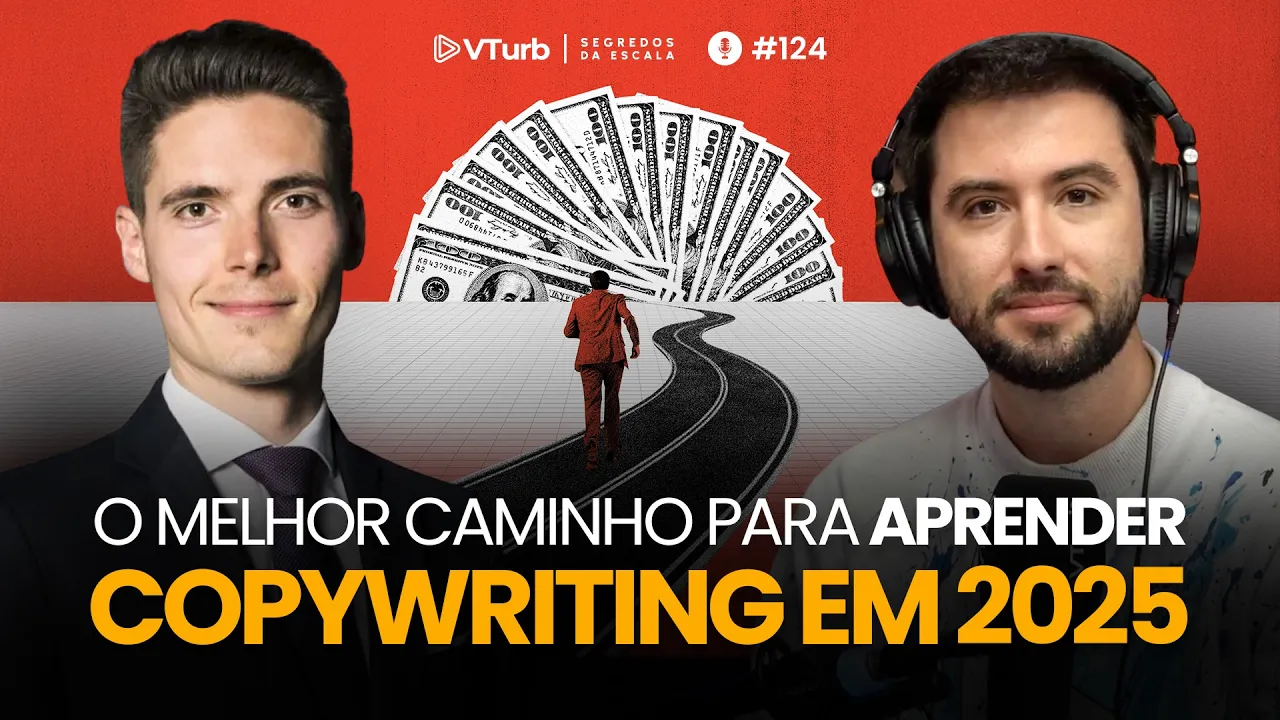
and I thought, "Oh my god, this guy really knows how to study copyrightiting." So, I'm really impressed by that. I'm also a Direct response copyriter. So maybe we can share something and create some valuable content to the vitor audience. >> Sure. So it's great to be here. Thank you so much for inviting me. It's my honor for sure. Uh and looking forward to this conversation. >> Thank you, man. So first of all, could you please just tell the audience a little bit of what you've done and what you're doing right now so people can get
to know like your qualifications? What Are you a specialist in? >> Sure. So uh my relationship with copywriting started around 2017. Before that I was working at well first of all in a boring corporate job. Then I quit that. started working as a direct salesperson for a wealth management company and I were doing like 50 60 cold calls per day and uh selling people you know investments and it was like I had to show up in suits you know it was a very very elegant type of workplace but I didn't really like that that much
because of how the leadership looked like and eventually I I uh I left that job and then one of my friends here I live in Budapest Hungary although I'm in from Transylvania IA Romania. But I'm not a vampire, I promise. Wink. But uh but u like one of my friends here in Budapest, he owns an email marketing agency now. But he got started with copyrightiting back in 2016. And I was always interested in the psychology of Marketing. I have a background in psychology. I have a bachelor's in psychology and I have an MBA as well.
So business and and psychology. and he was like, "Dude, like I'm I'm writing emails for companies and I'm I'm making thousands of dollars with it and this is really cool." And at first it sounded a little unbelievable to be honest. >> Uh and I was like, "Are you sure you're not scamming people on the internet or anything like that? No, no, no. Take a Look." And then he showed me what he was doing. And after I left this wealth management company, I felt like, okay, well, this is pretty much it. I have to uh make
this work. and uh and I want to make this work, especially since um when I left that company, well, I actually got fired preemptively before I wanted to leave, which meant I got like a lot of commissions were not paid to me and the sales sky cycle was really long uh with the deals that we were doing. So, Uh actually I realized that I only had like one and a half months of living expenses back then and I realized that okay, copywriting, I committed to this, I have to make it work. >> Yeah. And uh
I I budgeted two weeks for myself to just learn about it, watch a few courses, uh read a few books, and then I landed my first client on Upwork within like 3 weeks or something. And it was a sex shop. >> So, uh it was pretty interesting. That Was my um my uh introduction to copyrightiting. >> That's awesome. So, and when did you think that you actually got good in copy? what what did you do? >> Uh well in the beginning as many others like I made pretty much all the mistakes that I could. Um
at first and I'm sure you've also experienced this during your journey. At first you don't you feel like you don't not know nothing and then you watch a few courses you start to Learn about it for months and uh maybe you see a few um you know results from your work as well and then you start feeling like wow now I'm getting really good at this right >> good nobody else is like not even my family has no idea what this is my friends have no idea it's so slick like I have this this unique
course from this al-ist copyrightiting guru and how these are the secrets that are going to make me successful. But then eventually you Realize that the more you learn the more questions open up and the more you realize how much you don't know. So it took like >> four five uh years at least to get to a level where I felt more comfortable. Um and during that time I was just learning like crazy. So in the beginning I was consuming as many courses as I could. I was borrowing courses from my other uh businessminded fans. I
was reading books, listening to podcasts, of course, Practicing the craft itself. >> Yeah. >> Um, >> but what really made the difference was um I joined Kevin Rogers's uh real free life program. Craving Rogers is the founder of Copy Chief. A lot of copywriters uh you know, >> yeah, >> get there eventually during their career. And um and I joined his uh his one of his higher level coaching Programs. And this was around 2020 I think or 2019. Uh and then another mastermind or or or highle program that he had and uh one of the
key concepts was to create authority content for yourself. And at that point I felt relatively confident in my my abilities to some degree. And um I real I figured like what type of authority content could I create that is timeless that is evergreen that I can also learn a lot from and that can also give a lot Of value to people. And um I I I decided to do a like a challenge. First it was supposed to be a 30-day challenge, then a 50-day challenge, then a 90-day challenge, and then eventually became a 100 day
challenge. So this was my 100 day proven sales letter breakdown challenge which is there up on YouTube. Um it's like free for all. You can just watch the videos and my you know I was fortunate in a way because COVID was just around the corner. So I did this During CO and during CO especially the first few months uh everything was in lockdown. So there wasn't really much else to do right. So 100 days, every single day, I would just find a long form sales letter from a true titan of the direct response marketing and
copyrighting industry, study it, analyze it, um mark it up with my comments, and then turning on my camera and shooting a breakdown video of it, like explaining what's happening here, why this works, Why this doesn't work, what I think the copyriter was planning to do there. And I think going back to your original question, this was the key thing that made me much more comfortable and made me um internalize a lot of those learning lessons from the past because instead of just passively consuming information or just writing copy, I had to teach it back. So
then suddenly I kind of was forced to uh learn these things and understand these things at a Way deeper level. And one of the uh rules during this was that I couldn't edit the videos at all because I knew that if I were to start editing them, it would take me forever and I would fail the challenge. So I as as soon as I uh you know hit record, I just had to talk for half an hour >> even when I had block or anything like that. So >> that's that's really interesting, man. That's really
cool. There's a concept Called the the I think it's called the Dunning Kruger curve. funny. Yes, >> I I think that's it. Yeah, it usually happens with people that are just learning something out that, you know, they they learn a little bit. They think, "Oh, I know everything. I'm I'm the [ __ ] I I'm the best." Then they start to know what they don't know. And yeah, the same exact thing happened with me. And now I I don't even consider myself good in copy anymore, man. I Think I'm I'm bad at it because there's
just so much thing that I I don't know. But one thing that I wanted to ask you is that you follow this path which is really hard which is to actually study like classical copyrightiting study you know Gary Halbert John Capos Jimmy Schwarz these kind of guys and I think that's really cool if you want to be like one one of the top copyriters like really know your craft really know what you're doing I think that you need to to Study this but right now after doing this for 10 Here's my opinion is that this
is a little bit of like inefficient because you you are studying like this copy from 100 years old maybe 50 years old which most of the times does not apply today. So maybe just buying some online course from some guru that actually knows copy. For example, Stefan Georgia, he has that R&B course which is very famous. Or maybe Peter Kell, he also or Peter Q, he also has his like Copy framework. John Benson also like he teaches how to to write PSLs. So these guys like you said that they sometimes they are inventing new stuff.
Most of the time they're just like applying old stuff which basically is just the ADA formula attention interaction. At the end of the day in my opinion all copyrighting formulas they just go back to that but like we have these two paths to learn. We can go to the classicals which will take a long time and then try To apply this today or we can just go to these things that like these new curses. They will not teach you everything but I think it's more like applicable. you can actually get more results. How do you
see that? If someone wants to learn copy, should they go to this like path to learn like the classics? Should they go to the newer courses? Should they do a mix of them or or how do you see like this this copyrightiting journey to actually become a good copyriter in 2025 Which we are very close to? >> Um, so that's a great question actually and I think both have their pros and cons. I would say it depends on what you want to optimize for as a copywriter. So, if you're after trying to uh quickly scale
up your career, land a few clients, start generating money, then obviously going the faster route is better. And having a course which um uh which is a little bit more modern in a way and it applies to the specifics of 2025 um and especially the specific marketing channels uh that you want to do. So like if you want to become a lot of people want to become email copywriters. So obviously if you wanted to be an email copywriter the first point wouldn't be to start studying John cables that much because yes the princip but there
are way many way more specifics when it comes to email deliverability and how to weave stories into your emails how often To send and a lot of other things that aren't necessarily tied with copy itself but more like building the audience putting great offers in front of them. Um, so that being said, um, I wanted to optimize. I always felt like I'm kind of like the scholar type of person. So, someone who's like a sponge and likes to, uh, just, u, uh, pull as much knowledge into it as possible cuz one of my ultimate goals
in life is to, and this has been ever since my childhood, Is to get as close as possible to understanding how the world, including the human mind, works. And since I have that degree in cognitive psychology, I wanted to understand things at a much deeper level. So I would say for me or for someone who really wants to get to the bottom of things, I would still uh definitely study the old masters because they invented the game and that's like the unfiltered version of things. And um if You can see at least in my case
I always felt like if I can see like let's say how Stefan Georgi teaches things inside RMBC and that's like a fantastic course and I think Stefan did invent new stuff with that and it's no wonder that it's so famous. It's an amazing model. Uh but what are the the the key principles that he's tapping into that were invented by the old school guys, right? Um, and I think combining those two ideally is something that uh will will give you a It will open up it's kind of like opening up your third eye, you know,
if we want to be a little spiritual or like uh opening up a whole new um um sensory uh organ or something because then you'll be able to um realize you you mentioned that you you like history, right? So, it's kind of like studying um I don't know the Second World War, which was relatively recently in terms of history, and you can learn a lot from that. But if you go back to Roman times To the Punic Wars, for example, or many other previous war wars, you're going to see that there are many similar things
in terms of military strategy, how people scheme against each other, and you can take many lessons from that and apply it to today's world, let's say, with the ongoing wars right now. If you were a and you can make better predictions based on that. >> Yeah, of course. >> That's that's what I would say here. I Think both have their merits. >> One thing that is really cool right now that I actually recommend that people do is that they need to know what's working now in kinds of like what formats are are working what kind
of messages are working. For example, hey, right now 2025, what is working is Tik Tok ads with like a 5,000word sales letter. Why does it work, man? I don't know. People test it And it works. It's that is always happening. People are always testing new stuff. So, the first thing that people should should know is what's working now, what kind of messages in what kind of media. And then when it comes to the actual copy that they need to write, one thing that I I think is very helpful that will make it like shorter the
the the time length to people actually get results is just to go to a >> for example an online swipe file >> and find out what kind of angles, what kind of big ideas, what kind of copy promises used to work in the past and then apply this today in our world. And the thing is that all these ideas for example there is a an advertorial I don't know who who wrote this right but the headline was something like this Atlanta housewife uh investigated and almost arrested for losing 70 for losing 60 63 pounds. So
it was an eight weight loss advertorial. It's a crazy headline, but man, I I already saw people using this in like online advertorials and also today there's a VSSL, a video sales letter running here in Brazil with this exact angle. So, people just keep like getting like these 50 year olds big ideas and then applying to to today to these newer formats and then it just keeps working and working and working. And what what do you think of this approach? Do you think it's valid or do you think people Are like being lazy when it
comes to their copy? >> Oh, it's definitely valid. Like we are scientific advertisers and we're into direct response marketing. It doesn't matter whether we're lazy or not. If we find an event works, if if it took us 5 minutes to do that, then awesome. If it took us 20 hours, then it is what it is, right? So yeah, I think definitely that's something that every copyriter should be doing because we all know that Big ideas are really important for VSSLs especially or for colder traffic and in most competitive markets nowadays it's hard to find a
a truly new fresh big idea but you can go back to older prototypes of um so so create like newer versions or you know optimized versions of older ideas to today's audiences because most audiences have definitely forgot about it, right? And I think most ideas have a shelf life. It's like with fashion, right? We we all see this with With like girls and also with like suits or or or different types of jeans, for example. You know, sometimes you wear baggy. The 80s it was all baggy jeans for example. Then in the '9s, it was
it was slim fit jeans. And now I'm seeing here in Budapest at least or in most of Europe especially women they're wearing baggy jeans jeans once again right um it just has like the cyclical element to it and the same applies to big ideas and um also it depends on what's happening in The world right now like for example I'm sure you've heard about the end of America VSSL >> of course >> 2009 when it was written it uh it generated like 600,000 new paid subscribers within a few months and then it kept working for
years and then everybody tried to rip it off and then eventually it stopped working because everybody was trying to use the same angles and nobody Started using it. But now with what's happening in the United States right now, the more you know chaos in the world generally, the more uncertainty and uh and uh there are especially in the US there are like you know regardless of which side you are on politically you think that the government is going to [ __ ] right or the country is is going in a very bad place. Once again
pulling out an idea like the end of America, like the end of American Hedgeimony or the dollar as a re reserve currency or the gold standard, like what if the gold standard is going away because now uh the the US wants to build a strategic Bitcoin reserve. You can pull out those ideas, modify them a little bit, and they're going to work great. >> Yeah. Yeah. This idea even worked here in Brazil. The copy was like the end of Brazil. And I I don't know if you know this, but Agora, they they have like a
Business unit in almost every country. I mean, not almost every country, but the countries that have like a good economy, and they tried this exact same copy in all the countries, and it just kept working, working, working, working. I I was actually Yeah. I I was a copyriter in the Brazilian agura like for I did an internship there for only one month. And that's crazy that once you have a working copy, you can just like uh scale globally. So that's it's pretty cool. >> That's why it's so powerful. >> Yeah. So when when you're actually
studying like the classics, what do you think is the the best book that people should should read like the first one, the the holy grail, let's say, >> right through advertising? Definitely. >> People always say that, man. >> They always gen. Yeah. >> Yeah. Although uh Dan Kennedy, famous super famous marketer um like suggested a few other lesser known books like for Example there was a guy for called and I might butcher his name secret viral uh um someone from the Germanspeaking countries and uh he he um did a lot of testing with direct mail
and using copy for direct mail. So he also wrote a book that's very very hard to find and apparently some people who are real insiders at this like uh you know Dan Kennedy and Paris Lampropolis um they they um they usually recommend this book um and uh just to show that I'm Definitely not at their level uh I don't remember the exact name of the book right now uh but I think it's called the handbook of direct mail dialogue methods so it already has something called the dialogue method which could be looked at as like
a unique mechanism. Uh but handbook of direct mail actually I just found it in the Spanish Amazon and it costs €312. >> Oh my god man can you please send the link in the chat? >> Yeah because I think it's it's out of print for sure. And uh here's here's I'm dropping the direct link in the chat as well cuz the other one had some tracking. So this one's also uh um an underrated book and I it's on my list to read it. Um I was preoccupied with different things but breakthrough advertising is easier to
get. You can get it from Brian Curts if you wanted a print version or you can find it online other places. Another great book it leads from uh Mark Ford/Mich Masterson. Um you probably heard about that as well >> of course. Yeah, >> it's in the Agora circles. It's it's like again very well known. Um and that basically uh outlines six different um ways that you should uh begin a sales message with based on the stages of awareness and the stage of market sophistication. So that's definitely a really good book. And um also there are
Many other books that I mean do you want me to keep going with book recognitions or you were just asking for the number one? No, actually I I just want to I mean I want to talk a little bit more about that. But first you you mentioned first Eugene Schwarz, then you mentioned this other book that man, thank you so much for mentioning it because I I have no idea what this book is about. I actually never heard about it like the handbook of direct marketing. So I'm Really >> Yeah, I'm really like stoked because
I I'll I'll be able to study. So thanks for that. I already learned something in in this podcast, something very valuable. But ju just to to you know uh create some content for the audience why did you recommend the breakthrough advertising by Jennif why why do you think it's so important that people should should uh see it >> I mean in a way it might have some hype to it nowadays in copyrightiting circles eventually you get such a big level that immediately you're like the new bible >> in this reg >> but I think there's
a big reason for that and uh breakthrough advert advertising still holds up even to this day. It's not the easiest book to read, but Eugene Schwarz was the first person who really um outlined a specific model for the deeper psychology of advertising And direct response marketing and copyrightiting. He came up with the stages of awareness, the five stages of awareness. And that's why we have funnels now day cuz like hey, you want someone, let's say, who's problem aware, you want to hook their attention on Facebook with some sort of big idea. Then you drive them
to a VSSL and you move them from uh problem aware to solution aware uh product aware and most aware or you can do that with a webinar Funnel, an email funnel. It's your choice. Um so that's one big concept. The other big concept would be the stages of market sophistication. So why um you know you need a mechanism eventually cuz if you just if if your market is is getting exposed to more and more similar ads eventually they they become very skeptical and jaded and then you can't just make bigger claims anymore but instead you
have to come up with the mechanism and nowadays every VSSL has a unique mechanism and then you have to the mechanism itself but then eventually even that stops working and then you have to appeal to the person's identity and you have to like identity politics with them and like super emotional stories and and stuff like that. I think that's the reason why breakthrough advertising is still so so popular and and rightfully so. >> Yeah, I I I kind of agree with you Because to me breakthrough advertising is the best book when it comes to copyrightiting
just because of this concept. But as you said, I think today like it it has this status of like being like some sort of a bible in the direct response community. But in my view and I don't know if you agree with me. I would like your your opinion on that. But in my view right now all the markets are very sophisticated. You you would need a mechanism for all of them. I don't remember seeing any market in any of my clients for example that people are just using straight out benefit VSSLs. They they usually
have like a very strong unique mechanism and they usually are also using the the lead number five in the great leads book which is the secret lead. >> If you go to the to the top ClickBank offers you just go to the first page all of them are using secret leads with a very strong unique mechanism. So at the End of the day, I think it's really cool the book. It's really awesome to know where this concept come from. But for some reason, which I don't know, people today are just going I mean I probably
know it's working. So people are just going to one single funnel which is like I mean not single funnel but one single like concept of presenting your sales message which is secret leads with a very strong unique mechanism. So if at the end of the day, if you want to make More money today, maybe you should not read like Genie Schwarz. Maybe you should just find out how to make better secret leads and better unique mechanisms. >> What do you think about that? Do you think it makes sense or you think that I'm like saying
[ __ ] and we have all these other kinds of of like sales me? >> Depends on what you want to optimize for. If you want to go optimize for the super short term, uh then yes, maybe and Definitely like despite this, always try to study your competitors if you're in a different if you're in a uh sophisticated market and see what specific leads are working with them because they might try something new and then you can iterate on that. Um but that being said, um using a secret lead is a tactic overall. It's not
necessarily a principle fundamental. And uh if if you don't know like eventually it will stop working because everything Stops working or it might still work but the the the um the numbers don't really make sense anymore. The cost per acquisition would be too high let's say. Uh and then what do you do, right? If you if you start to scramble and figure out what to do next at that particular moment, you might lose weeks or months um not necessarily generating the money that you could be generating because you don't know what what to do after
that. What to do after the secret lead uh uh Stops working and u yeah I mean now it's a it's a popular type of lead. Uh but there were times in the past when in certain markets and in the US market specifically uh the secret lead wasn't really working that well anymore. So people a lot of contrarian leads for example or then they started appealing more to identity once again and then secret always comes back. So >> it's like fashion once again. >> Ah got it. Got it. Cool. Yeah. Right now In Brazil secret leads
like the the control. Everyone is using it. I think even in the US, is it true? At least I don't remember any of my US clients using other stuff. Yeah. >> But I've seen it stop working in like when having discussions on masterminds with other copyriters and and and other like hot seats. Um I think it it depends on every single person's specific situation but for sure if everybody has That as a control just because of the the Pareto principle eventually like it's going to stop working because everybody's using that and then everybody would be
rich but the world doesn't work like that. Yeah, of course. Going back to the books that we were talking about, have you heard about a book called Quick Start Copyrightiting System >> by Tony Fus? >> Yes. Have have you heard of have you Read it? >> Um I haven't read it fully. I I I once found a few um like outlines from it and I don't remember exactly at this point what was in it because I read a lot of copyrightiting books at this point. Uh but I I' I've had many other people also mention
the title over the years as well. >> Yeah. So this book to me is like the best book when it comes to learning copyrightiting. It's actually not even a Book. I think it's it's more like a system. It was written by Tony Flores and also Clayton Makepiece which you probably know. He's a legendary copyriter. >> I also Tony Flores. Yeah. >> Yeah. And it has like maybe I think a thousand pages or something like that. And it's very like step by step do this then do that with lots of examples. And it's by far the
best copyrightiting uh curse slashbook that I read. >> Even better than all the classics in my opinion. I mean it's not like a real book. It's more like a home study course. And yeah, I just maybe if you're in the audience and you want to learn more copy, I think you should grab this one. It's my recommendation. If you read, I think maybe you do the same. Start recommending it, too, because it's amazing, man. It's like the the best book when it comes to copyrightiting, like step-by-step Processes. >> By the way, Eugene Schwarz has another
uh book that's uh way way lesser known. It's called Breakthrough Brilliance. And uh in it he teaches a lot of uh more advanced and more abstract microcopywriting elements like things like how to specifically formulate your sentences, where to put the verb, how to make it more visual and stuff like that. So this is like a really hard book to get through. Uh but uh if you want to Get to the next level, then breakthrough brilliance is also a good one. >> Have you read this one? The breakthrough brilliance. >> Um I haven't read the same
the the whole thing. Once again, uh it's just I was just concentrating on on other things, but I did study it and I did uh start to it's it's hard to get through and eventually you also learn a lot from just um um some courses actually um implemented many things from this book Like Todd Brown has a few highlevel copywriting courses for example um and implemented many of these things here. Uh, and I think this is a great example of what we talked about um, a few minutes before when it comes to should you study
something newer or should you go back to the original source. In this specific case, I think it's way more productive at least in the short term to um, study someone else like a newer guru's work who created the course based On many of these principles versus you going back there and trying to figure out everything on your own. >> Yeah, got it. That's cool, man. Yeah. I never studied this book, Breakthrough Brilliance. I know that Jean wrote it, but I never like studied. And also, if you're in the audience and if you want to learn
more about this guy that Chaba just mentioned, Todd Brown, he has a podcast here, too. It will appear on the screen right now. So, after this Podcast, you can check it out, too. Uh, but Chaba, let's talk about how to actually write copy, man. Let's say that you're going to write a VSSL, right? or or just a sales letter, a normal sales letter. What's the very first thing that you do in your in your process right now? >> Um, am I writing this for myself or for a potential client? >> You Yeah, let's say that
you're writing it for yourself. Yeah, because I would Say it's it's it has a vastly different process because now I'm relatively niched down into what I'm doing because I'm only writing copy for my own list or my own email list and I'm not working with clients anymore for a while. Um I just teach copy and marketing. Um but for myself, I already know like what's most important when it comes to uh the uh performance of a campaign. You have three big things. the audience, the list, the offer, and the creative. And Brian Curts, you know,
talked a lot about this. He's one of my mentors. And according to him, 41% of the total um performance or the total results from a campaign come from the audience itself. Like, how good is your list? Cuz if you mail out a mediocre VSSL to a really really high spending, nice quality list, you're going to still make a lot of money. then the offer which is like 39% and 20% only the pure copy and the creative and the design and and stuff Like that. So I already have a relatively good idea of what my audience
wants. So for me nailing that offer audience match which is the most important part I would say takes less time because I already have it formulated in my head. So I can get away with basically uh sitting down putting together the offer and just writing the copy like from start to finish in a way. Uh and I have my own style. But if I were to start writing for someone else, Let's say for an agora style situation, uh well, I would definitely spend a lot of time first to um to get to know that the
specifics of that market to figure out which hooks and which ideas are working currently right now. Also, which ideas have been tried over the past few months and years. And um this will take a long. So like if you really want to create a control it it might take you months actually of work cuz cuz it's a very competitive thing But I would definitely spend at least a week just um just studying swipe from >> similar yeah some similar offers that are out there right now or that have been working or that have stopped working
and I would definitely try to figure out okay why did the ideas that stopped working stop working and how can I avoid that in my own idea and then I would also uh take a few like three of the top current ideas find the common Ground between them >> and to figure out a way on how I can take the strengths from each one and then also add my little special sauce to it and then if one of them is let's say uh weak in the benefits department or it doesn't build enough desire I would
make sure to try to build more desire higher or if the uh unique mechanism is not the strongest or I feel like based on the research it's kind of losing its edge then I would try to come up with a Either better version of that unique mechanism a more intriguing version or a brand new version and I haven't even started writing yet that's just like the research and the thinking >> the research yeah but that's the most important part right you need to get it right otherwise you mess up everything >> yeah yeah for sure
so the writing part itself once You have the ideas and the unique mechanism and the know you know the offer audience match and you know That the guru that you're working with like the financial guru let's say for agora style company or the product that you're promoting is like it's good it works there's branding behind it preferably um then then you know like writing out the the the sales page itself isn't the hardest part that's I would say >> it's easier of course 30 >> yeah I agree 100% % manment. Uh ju just So we
can get like some p p p p p p p p p p p p p p p p p p p p p p p p p p p p p p p p p p p p p p p p pract practical advice to people when you're doing this research, do you have like some some tool that you use? For example, you say, "Hey, I'm going to look at the the top offers." So you can you could just go, for example, to ClickBank, look at the top the top offers, then you can get
some information there. You can also, for example, go to Facebook ads library Or Google ads transparency, which is like this py of these ad networks. Then you can type there the keywords of of your niche and then find like the the VSSLs or webinars or whatever that are scaling which means the ads that are getting lots of impressions and that are running for a long time. We also have paid tools that allow you to do that. One that I use a lot is called deep d deepub which it looks like a porn site but it
isn't. It's actually just a Normal spy tool, but we have lots of them like ad spy and anx. So in in my process, I usually use this kind of tools to make it easier. But do you have tools that you use to or how do you actually do it like to to get this information on your research checklist so then you can transform transform this later in copy? >> So um I think it depends on what what I want to optimize for. So, uh, are we looking at a promotion which has to beat An existing
control for a very competitive company or do we want to just create like a quick and dirty first version? >> Yeah. >> Or something that >> I really like this question, man. Everything that I ask you, you say it depends on what we're optimizing for, but it makes total sense. Yeah, it actually depends. >> Yeah. Well, I I would say we just want To to make money and we we Yeah, we we don't have a VSSL yet. Let's say we just want to make a good VSSL that will actually sell sell make sales. So, maybe
a cheap and dirty version. >> What's the traffic source for that? Are we using cold ads for it or do we have a partner list who are willing to promote it like semi-warm audiences? Do we have our own list? Maybe >> I think the best case would be like cold traffic because then you can kill the Most. Yeah. It's the hardest though. But >> yeah. Yeah. Yeah. >> So in that case I I think it's we can't just get away with like a rough quick dirty 8020 version. We want to like go deeper than others.
So I would actually approach this from different sides like four or five different pillars of my research methodology. First of all, I would definitely just interview someone who really knows this market well. So, if you have if you know of a copywriter Or a copy chief who even if you have to pay them uh who is like really in depth in this like for example, if I were to create a uh a promotion for the supplement industry, I would probably try to interview Kim Kazi Schwam because I know that she's an Aless copywriter who's very
very much into this type of thing. She's coming to the podcast, man. Maybe I think it's next week. Next week. >> Cheers. Shout out. She's amazing. So, Uh, this was just an example. So, I would try to um shortcut their own lifetime experience and try to profit from it and figure out like get get like a a a highlevel overview of what's working according to them and what are they see what are they seeing, right? Once I have that information, I would definitely do do some extra research on my own. Uh using some tools that
you mentioned. So, uh going to ClickBank and just just like seeing what the top 10 VSSLs in this are doing. Uh going to specific forums. I like YouTube comments, for example. So, uh, if you if you search for videos that kind of talk about the problem side of of what you want to fix or what you want to sell in a product and the potential solution side there, I would open like 10 or 20 of those videos and based on like views uh, in the last year and I would scroll through the comments and because
I'm I'm sure that we're going to see tons of Heartfelt voice of customer data there. >> So, I would definitely use that as as as as a big uh part of the research process as well. If I have a list or we have a list or we have a partner list that you could use, I would also survey them for sure. Uh send out a quick survey asking about like, hey, what's the number one biggest problem when it comes to X? Also ask a few uh like uh quantitative information there, a few yes or no,
a few more open-ended questions. And I Would also do one-on-one interviews with people. So to go really deep, like five is enough. I would say just put out a a like an ad either in fa like not necessarily Facebook, but if we have a warm list, put out an ad for them. Uh which is like, hey, I'm looking for people to interview. I'm not selling anything, but if you're willing to commit 30 minutes of my time, then you get this bonus or you can get this course for free on that. I'm willing to Have like
a a quick, you know, coaching call with you or anything like that. And I would uh I would use like a specific methodology there to just discover more about their specific one-on-one situation. After I have all this, depending on how much time I still have, um I would preferably um probably uh spend a lot of time thinking about it myself. If I had an assistant, I would give all this stuff to the assistant. Clayton Makepiece used To do this for example all the time like she would hand these over to other copyriters in his uh
he would send uh with um give this to other copyriters on his team and then what the copyriters did they did the thinking and the connection and then they came back to Clay and said okay so based on the research here are the top five problems pain points desires uh false beliefs that they have custom stories that they usually have Moments of highest tension or uh horror stories from competitors or products. Here's a bunch of testimonials. Here are specific voice of customer data. And then I would start to assemble my structure based on that. If
I didn't have that, I would probably use AI in a way. So I'm not the like not I wouldn't consider myself an expert at AI at all. I barely use it almost. >> Yeah, me neither >> use it at all. Uh it has its merits especially when it comes to research but again I think it would be very very helpful to just put that dump that hundreds of pages of data uh into AI and let it kind of crunch it and create like a more um easy to study outline out of it or something. But
just be careful because overall like AI it like at this point most AI models don't really have new high quality information to to be fed with. So uh they're very vanilla. They're very boring and they Kind of like aggregate all sorts of boring B2B text in a way. And I'm sure that a lot of listeners have also seen this. When you ask AI about something it always gives you like very generic boring stuff. >> Yeah. Yeah. I agree. One thing that that I would add since we're talking about this AI stuff is that you can
also for example get all these VSSLs in your research, transcribe them, then just give to chat GPG and then just ask it, Hey man, hey chat, what do you think about this person that is reading this VSSL? Who is this person? What do they believe? And then from from the VSSLs you can like like extract a lot of good useful information and also information that is working right now that is actually make making sales right now. So you can really get to to the pain points because at the end of the at the end of
the day the the the VSSL is the the final product the final content that People made after researching everything. So, it's a very useful thing to study. And also, man, I I don't know if you do that, but I I would like to give this tip to to the audience and maybe even for you. One thing that helped me a lot when it comes to to doing this research is to just like read books that my prospect wrote about them themselves. So, for example, I have I had like a skincare brand here in Brazil. It's
like City Beauty by Golden Hippo, but in Brazil. It was called Jatennena. It's a bad name, I know, but whatever. And there's a book in Amazon called Face It. What women really feel has their look changed? And man, that that book, it's amazing. It talks like how women really feel when they get the first wrinkles. H how they feel like invisible, how their their partners don't love them anymore, don't find them them beautiful, how they think that their life like their best Life is already over. now they're going to suffer. So, and in in in
we have books for everything. We have books for weight loss, for like uh the the pain niche like arthritis, diabetes. If you go to to the Amazon bookstore to the Kindle store, you can find books on all sorts of things also all sorts of niches and you can just put all these books into chat chat GPT and from there you can extract all this good information. So to me, that's one of the most Valuable research tip tips because man, they wrote a [ __ ] book about it. They like they thought about it. They revealed
stuff and then they wrote the book just to give to you everything that they're feeling. So you can just read everything. So yeah, to me that's amazing. >> That's an amazing tip for sure. And uh if you're listening to this as the audience, definitely uh uh take that tip to heart because uh that's a that's one Of the best ways to shortcut what people are really really feeling. >> Yeah, I like it. >> And also, so sorry, go ahead. One thing I add to this is that well that's why if you really want to create
a VSSL then you you have to like ideally you want to hire a copyriter or if you're doing it yourself you should have at least like 5 to 10 years of experience in the specific market that you're selling into because otherwise it's it's not going to Work like you would have to uh have that copyriter spend months reading books like what you just mentioned in order to really understand that and I think that's why a lot of alist copyrighters are so expensive if you want to hire them because like they've been doing this for 30
years and they they remember all the controls over 30 years that have worked that have stopped working and they know like they have the experience with it's just like a heart surgeon Right like if you had to go to a heart surgeon you wouldn't just go to any doctor you would go to someone who has a lot of experience with this >> yeah of course I agree but I also I I I sort of agree. If you want like the best thing, of course, you need to go to an alias copyriter. But as you said,
I think we can do a cheap and dirty version of it and make some money. Not not a lot of money, but just a little bit of money just seeing what's working Out there at least. Uh I mean, we have over uh like almost 7,000 clients and man, most of them they don't know [ __ ] about copyrightiting, but they know how like how to run the business. So they think, "Okay, my video needs to have this promise here and then needs to have this thing." They just grab that RNBC copy script. Then they just
follow it. The copy sucks, but they make like 10K a month and they like super happy with it. So yeah, if you're just starting out, You not make millions, but at the end of the day, you can make a living out of it. You can make some money and, you know, be happy. Do your thing. >> Yeah. Yeah, that's a great point. And uh like I was referring to the best case scenario like if you really wanted to like a $10 million control or something but of course like I don't want to scare your audience
into thinking oh my god I'm not even going to start because it takes this much work. This is the best Case scenario. That's what I would do. >> Awesome. So Chaba after you do the I mean the the point to do the research okay in my thinking is to find out just what people want and what do they believe. I mean if we could get like in a nutshell I would say that because then you need to to like promise hey you will get what you want if you read this and this promise needs to
be believable. So you need to know what they actually believe because if they don't believe Something that you're going to say, you should not just say that. For example, if they think, hey, h like this like CrossFit for weight loss doesn't work. So you cannot promise like lose weight with CrossFit. It needs to be something that either they already believe or something new that they can believe and then you need to have proof to to do that. So in my thinking the point of research at the end of the day is just to find out
these two things and of Course that takes a lot of work. You need to interview people. You you can read books. You can do all these things. Do do you agree with that or do you think there's more to it when it comes to research? >> I mean in a way yes I do agree with it. Uh I would add a few more elements. I would also want to find out you know like uh their pains and fears. I would want to find out uh not just what they want but also like what are their
key Desires, what are their unfulfilled needs because there might be some difference with between there beliefs definitely beliefs about themselves, beliefs about other solutions, beliefs about other companies, false beliefs um and also things that um that make their identity. So like how they but I think in a way that's tied in with beliefs. Yeah. So, we can we can slice it and dice it. Ultimately, we're talking about the same things. Yeah. I Would just try to categorize it based on a few other different factors. Got it. Got it. Awesome. So let's say that our friends
here in the audience, they already did did their their research. So they know a little bit of their niche of what's working now, what kind of format in what media. What's the second step that you do and that you think that they should do too? Like you go to structure the mechanism or you go to write the headline or I Mean what do you do? Um I would so once I know the exact ideal customer avatar that I'm speaking to and I've ident identified the stages the stage of market awareness that I want to catch
them in and the level of market sophistication that they're probably in and I know what the competitors are doing. Uh and I have that gathered all in one place. I would next find a big idea. So I would try all based on that information. I would spend the next Chunk of time um just figuring out ways and putting out a big quantity of ideas that I think could be a great big idea for this campaign. And then once again I could use chat GPT to uh help me with the creative process as like a uh
an assistant in a way >> and I try to narrow it down and then and then figure out one big idea that I feel happy with before writing anything else. >> Just just a question about that. I don't know to you man, but to me I find this Big idea concept very like how can I say that maybe hard to understand maybe fuzzy like it look it looks like it doesn't have like a clear definition out of it and to be honest in my copy process today I don't even use big ideas because I I
don't like I I I don't really find them helpful. So in in your view, how do you what do you think is this this thing this big idea? Why do you need it? And and how do you usually find it? >> Well, I think it goes back to Eugene Schwarz in a in a way. So if one of the key concepts once again in in breakthrough advertising, Eu Eugene Schwarz said that you cannot really create desire for a product. You can only take the hopes and dreams and fears and desires that already exist in the
hearts of of people in your audience and focus that onto those desires onto your product. So your task is the copyriter is not to create mass desire but to Channel and uh and and direct it. So basically what the big idea is is it's hard to uh put a key definition on it because I don't think in the ancopedia Britannica there's like a definition for a big idea but for me what that would mean is that what's the one message that will for sure hook people and make them feel like wow like this is different
and superior compared to anything else I've seen before. It also ties in with the unique mechanism Of course but gives people new hope. They make they feel like wow I haven't heard this before. I want to learn more. Uh no way that can't be possible. Wow like this could change everything. So that's that's kind of like what a big idea is. And I know that by definition it's an idea. It's hard to define it. Yeah. >> And then line itself is how you communicate that big idea in a sexy way. So the headline and you
spend a lot of Copyrighting effort in coming up with a great headline, but that should express the big idea. And then the lead sparks curiosity and builds more desire for people to learn more about the idea. So that's the trailer for the sales letter itself. That's how I look at it. Does it make sense? Yeah, I I of course yeah when I read about big ideas that's like what people usually say like these kind of definitions and from that my my takeaway is that We we can like define the big idea just by completing the
the phrase the copy talks about X and this X in my view is usually the big idea and if we use this like mo most of the copies they just talk about how people can do certain thing in a certain way like with this kind of mechanism. So to me at the end of the day I think that the big idea is just like a different name for the the mechanism because like for example if you have like a weight loss VSSL where You talk about like the discovery of the root cause of weight loss
and then at the end of the day this root cause is the mechanism and then you just present it in in in your headline in in your lead you talk about this then you actually talk about in the mechanism itself. So yeah, that that that's like my definition of it. Like the big idea is just the the mechanism and the better the mechanism, the better your big idea, The more people will believe your message. And then the lead and the headline is just a way to present like the the preview, the trailer of the mechanism.
So so you can hook people to your message. So they will consume the message. So they will stop the like desiring their desire and they will start desiring like the mechanism and they at at the end of this the sales letter they will this desire since they're desiring now the mechanism you Can just sell it to them in the offer section and yeah I mean that's what I did because like this big idea was very fuzzy to me. So to me I just think okay what's the the mechanism is this one all right so that's
what I'm going to talk about in the lead and that's it. I don't know if it's like wrong or anything, but after reading a lot that that's what like that was like my my discovery, you know. >> Um I think it's not wrong. Like there's No such thing as wrong. If it works, it works. Um I think it depends again on like how skeptical the market is. uh because if there's stage three market sophistication, the fact that you have a unique mechanism itself and that sounds unique can be the big idea in itself cuz that's
different as >> but eventually if you wanted to sell um like internet marketing in the most competitive US markets, you can no Longer get away with that. So you need something that is a little detached from your unique mechanism. So a few examples that come to mind that I really loved when I was doing the sales letter bay down challenge was um there was so even if we go back to the end of America for example that has nothing to do with the unique mechanism there but the big idea was the end of America and
it connected with people because they thought that America was Supposed to be the shining city on the hill the beacon of light the hegemony the you know this the best thing ever and Then what do you mean the end of America? And it tapped into the fear that people were already experiencing or uh the famous sales letter they left when I sit down at the piano but then I started to play. Again, has nothing to do with the mechanism, but it has a big idea which is tied to the redemption story that many people Experienced
in their lives when when they were looked down upon and they were ridiculed and then they came back a few years later, let's say, to their hometown and then suddenly people realize, wow, this guy made it. So >> that emotional state is a is a big idea or there was another example uh Canadian Canadian social security. I don't know the exact headline but the big biggest part of the headline was called like the secrets to uh tapping into um your own Canadian social security as an American. there. Um, it has nothing to do with Canada
or social security, but it has to do with buying stocks that pay you dividends, right? And then eventually, if you have enough stocks and you get paid enough dividends, it's kind of like having your own social security or your own uh retirement payments just like they have in Canada. >> Got it. >> Should I give you one more example or do You think it's enough? >> No, I I think I got it. The thing is I I think that this I mean the the John Cable's headline there I don't know if it's a big idea
to be honest. Uh I think it is but all this talk about big idea I think it was it got very po popularized very popular sorry uh because Agura they needed a process to create a lot of copy fast because they are very very big and then in the finani financial niche I think you can do that pretty easily Because there there's always something happening so right now Trump got elected so people will say hey Trump got elected so America will end you need to save your money or Trump got elected, America will make a
lot of money. You can make even more money right now. So everything that happens, they can create a copy about it to deliver the very same benefits. So that's why they use this big idea process a lot because it worked for them. But if you're selling for Example weight loss or any other niche then I think it's really hard to find these ideas because there's not much happening you know and that's why in other niches I I don't think that that's that useful but in the financial niche of course I mean that I mean that's
the only way to do it if you need a a lot of copy something happened this something that happened will make you money or you make you lose money here's how to protect yourself or here's how to to Make even more And but in the other niches though, I think that doesn't happen a lot often. I mean, I don't know. >> As I said, I'm not the best copyriter, but these are my observations when I look into this. >> Neither am I. Uh, it's a good point what you're making and obviously it came from companies
and maybe they they sold the idea that the the whole big idea behind the big idea was that this is such a Such a cool but and in a lot of cases you don't need that. Then again, like originally when we started this copy process discussion, we were focusing, I think, on like if I wanted to create something really really good, I would still try to find at least a something that I consider a big idea. It might not be at the at a at an Agora level, but it might still be some sort of
uh of of big idea. Like in fitness when you had like P90X, it's a it's a it was a sis pit System there. They had the unique mechanism called muscle confusion which really sounded like wow this this is uh a truly different way to get what I really want and now it makes sense why I wasn't able to lose weight before um but but but I don't know whether they had like a specific big idea maybe the mechanism was just enough um >> I would still spend probably a day or something thinking about this uh
and you know this is actually like as you get Other like A-list copyriters on the podcast, ask them the same question. I will really >> I will get the really heavy hitters who are the best at the industry like what what do they think about this? Uh because I'm sure they they can answer it more. But this is a very interesting, you know, topic. Do you need one? Do you know need one? How much do you need one? probably for people who are getting started more Or who don't necessarily want to get at a super
deep deep level with copy having the unique mechanism itself is the is the big idea and especially if you're a market which is like yoga or yoga in Brazil or something that isn't really that super super uh sophisticated in terms of marketing. >> Yeah. Well, since I'm a copy nerd, don't worry, man. I will do that. I will do that for you and for me too. I will ask Ken King Crow is going to be here. Brian Kurt is also going to be here. And you know, do you know someone that I'm interest prompted you
this question because you know I really curious what Brian says to that. Yeah. >> Awesome. I I'll ask him. And he knows someone that I'm trying to bring. I don't know if I will make it, but if if it works out, it will be my dream. But I sent an invite to Gary Benga. So yeah, >> I knew you were him. Yeah. >> Yeah. >> If I can get him on the podcast, man, I think I'll start crying because he he's really my hero. He's like to me the the best copyriter ever. He's awesome. I
learned so much from him. >> Actually, you know, Gary Ben has the famous marketing bullets as a free resource that he has. Uh it's also one of the best books that you could read, although it's not a book on copyrightiting. Uh, now that we talked about this, maybe it's worth revisiting It and see what he says about the idea because I'm sure he talks about the big idea there. >> I think so. Yeah, he I remember that he said that he quoted that thing by David Aguave like if you're if if your advertising doesn't have
a big idea, it passes like a ship in the night or something like this. I don't remember. >> Yeah, it's pretty cool. But anyway, getting back to our little process here after let's say that you you have a big Idea, right? What do you do next? What's the next step? So once I have that, it's pretty much developing the unique mechanism itself. So Stephan Georg's uh you know process for that is perfect. I don't think you need to like necessarily deviate from that if you don't want to. uh just find the unique mechanism of the
pro problem, find the unique mechanism of the solution, use the templates in R&B if you want and Then tie that in with the big idea >> and then just start writing >> you know you know the thing >> one thing that I I I find out when I was studying Stefan's uh framework I actually I even talked about this with him he was actually the first guest in my podcast if you go to the vtor podcast on YouTube but but that's in our Brazilian channel this podcast here will be in both our Brazilian channel and
also our English channel and one thing That I I I found out that I would like to get your opinion on is that this thing this unique mechanism of the problem it usually works best when you are like in a health niche because like like in a sales letter it usually goes like this right you grab their attention You say, "Hey, read this." Then you say, "Hey, this is me. This is my story." Then you create like authority and credibility. And then after you say, "Hey, to get the benefit, you need to do X." And
this X thing that you need to do in the health niche is usually solving the root cause of the problem. So they say, "Hey, if you want to lose weight, you you need to solve your slow metabolism. Here's how to do it with the unique mechanism of the solution. And if you want to rejuvenate, >> you need to uh like supply collagen to your skin. Here's how to do it with this collagen supplement. >> So, there's usually a problem attached to it. You need to solve this problem. But if you're like in a make money
niche, there's usually not a problem. For example, you don't say, "Hey, here's why you don't make money with email." Uh usually you just present the you just present the the opportunity. You say, "Hey, here's how you can make money with email." And that's it. and then you say here's like this specific method which Is the best one to help you make money with email. So in my view this unique mechanism of the problem usually works best with health and sometimes with relationships but when it comes to making money the make money niche I think it
doesn't work that much and that's why Agora Agora sorry they they don't use it they just like present the opportunity and they just just sell them how to do it. H what do you think about that? Do you think it makes sense or do You think like the RNBC just works for everything and that's it? >> I think again as a principle fundamental you could apply it to pretty much anything if you want. Maybe you have to think a little harder, but like a sudden example I could come up with in the in the make
money online niche. Like let's say you're targeting people who are more beginners on average and they want to like coaches, consultants, whatever and they want to um make more Consistent monthly revenue cuz they have a lot of feast stem famine and that's not good for them. And then uh the unique mechanis mechanism of the problem would be well you're not making any money because uh you're focusing too much on social media and everybody told you to focus on social media but uh but actually that's [ __ ] Instead, what you need is an engaged email
list. And with the specific method that I teach, you can build an engaged email list Quickly without paying for ads and without uh I don't know messing up your deliverability or sounding too salesy or something. >> Yeah. >> Uh so that could be a unique mechanism of the problem and solution uh one after the other. But it only works in a specific context, right? And I think this is again true with regarding big ideas and and uh unique mechanisms in general. It only works when that like if I have a more sophisticated audience for this
example who already has who already is doing email marketing, they know that they should be doing email marketing to generate more money from from it and they know that uh they can get more consistent revenue out of it. So it wouldn't work that much. In that case, you'd have to come up with a more sophisticated. In that case, maybe the unique mechanis mechanism of the problem would be something like, well, um you're Uh sending um yes, everybody told you to start sending daily emails and you're doing that and you're spending so much time on it.
Uh but it's not working. And the reason why it's not working is because your email deliverability sucks and most of your messages are going to spam. H and then the unique mechanism solution would be well everybody told you to write a bunch of emails but nobody told you how to make sure that your text side is properly set up with This or like with specific um you know uh words to exclude from the emails or whatever. >> Got it. Yeah. >> No, it it makes total sense, man. Of course. I think it's just a little
bit harder to use the framework because you actually need to to have this thinking uh to to think a little bit more and you also need to actually find a problem that people will believe that they have right otherwise it will not work. So if They're not doing like social media for example or if they if they don't don't even think if they see that hey actually my emails are getting delivered. So it's a little bit hard to convince them of the problem. I think >> so. Yeah. >> But yeah, so that's awesome, man. So,
Chaba, uh, I would like to thank you to I would like to say thanks to you to opening up your copy process here. And as I say to you, I really like talking Copyrightiting and learning from other people. And yeah, from all these guys that are coming here, don't worry, I will try to extract everything from them. We are doing this online so we have like less time around 1 hour but I think next year 2025 I'll go to the United States and meet these guys live so we can have like a live podcast here
a long form podcast like two three hours it will be awesome but I would like to thank you so much for giving me a little Bit of your time and also for the people that want to know more about you want to learn from you maybe become your client how they how can they get in contact with your content with your uh like product. What should they do? >> Sure. So uh I do most of the uh content production nowadays to my email list. So all the best stuff that I publish is uh is for
my email subscribers. So the best way for you would be to uh get on my email list and you can do so well if you Don't want to get on my email list, let's start with that. Then uh I'm sure we're going to include the link in uh in below this video, but you can just check out the 100 day proven sales letter breakdown challenge on my YouTube channel. There's no opt-in required or anything. You just click the link, you go to the playlist, and there's like a 100 hours of of really really high quality
uh copy breakdowns. And that's how you also found me. So uh um I think You also vouch for it that it's high quality. But if you want to go if you want to go one step further because obviously a lot of people notice the unique mechanism of the problem. Uh obviously people don't have the time to watch a 100 hours of content in you on YouTube no matter how good it is. So that's why I've put together a cool little cheat sheet for you called the secret copy recipe. And this is basically my top biggest
insights from Breaking down these proven sales letters of all time. And you can get it by going to game ofcon conversions.com. So almost like game of thrones game ofconversions.com/copyrightiting-secs. And in this and now comes the unique mechanism of the solution. Um, I'm going to basically give you uh what I consider to be the ultimate persuasive message template and how you can customize it to a long form sales letter or VSSL, a shorter form sales letter, a YouTube ad, A Facebook ad or an email using all the biggest insights that I learned from this. So that's
how you create the unique mechanism of the problem and solution right away in the CTA section. So pretty cool. If you want to get my free book called The Rapid Lead Activator, this is more email themed. So the first one that I mentioned is aimed at uh people who are interested in copyrightiting and the psychology behind marketing messaging. If you want to get My free book, which is about what I consider to be the best five follow-up emails, you should send new email subscribers, then just get uh my book on gameconversions.com/rla. So the letters rla,
rapid lead activator. And then once again, two ways to get on my list. And then if you want to work with me personally or if you're just going to chat or anything like that, uh just reply to one of my emails. That's the best way. I do conversational Marketing. I believe in them a lot. So, reply to one of my emails. We can start a conversation and if it makes sense to work with you one-on-one or join my high ticket uh group implementation program, Frontend Freedom, then we can also talk about that. >> Awesome. Awesome.
So guys, all the links they will appear here, they will be on the description, right? And also in the comments. So, if you want to learn more about Chaba, how he he he how he works, How to create better copy, better emails, you you have all these links down here. So, go there, click it, and if you like the podcast, here's what you should do. Click the like button so people will see this podcast more. This will be awesome for us. We can we will be able to invite more people here to create more content
for you. And that was another episode of the Bitter Podcast. Thank you so much, guys. See you. Gabbras. So eat the mice.