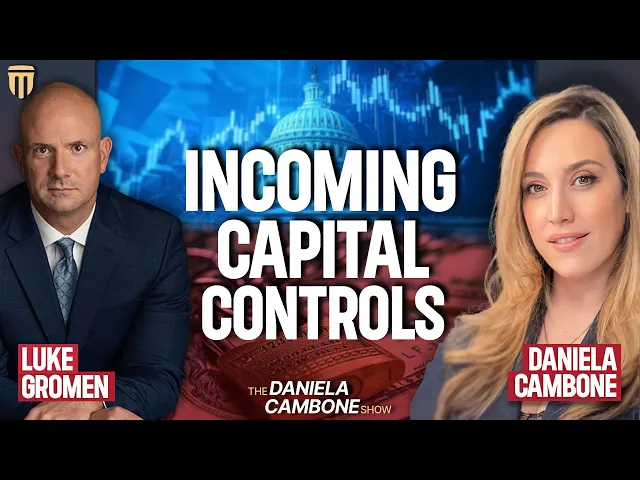
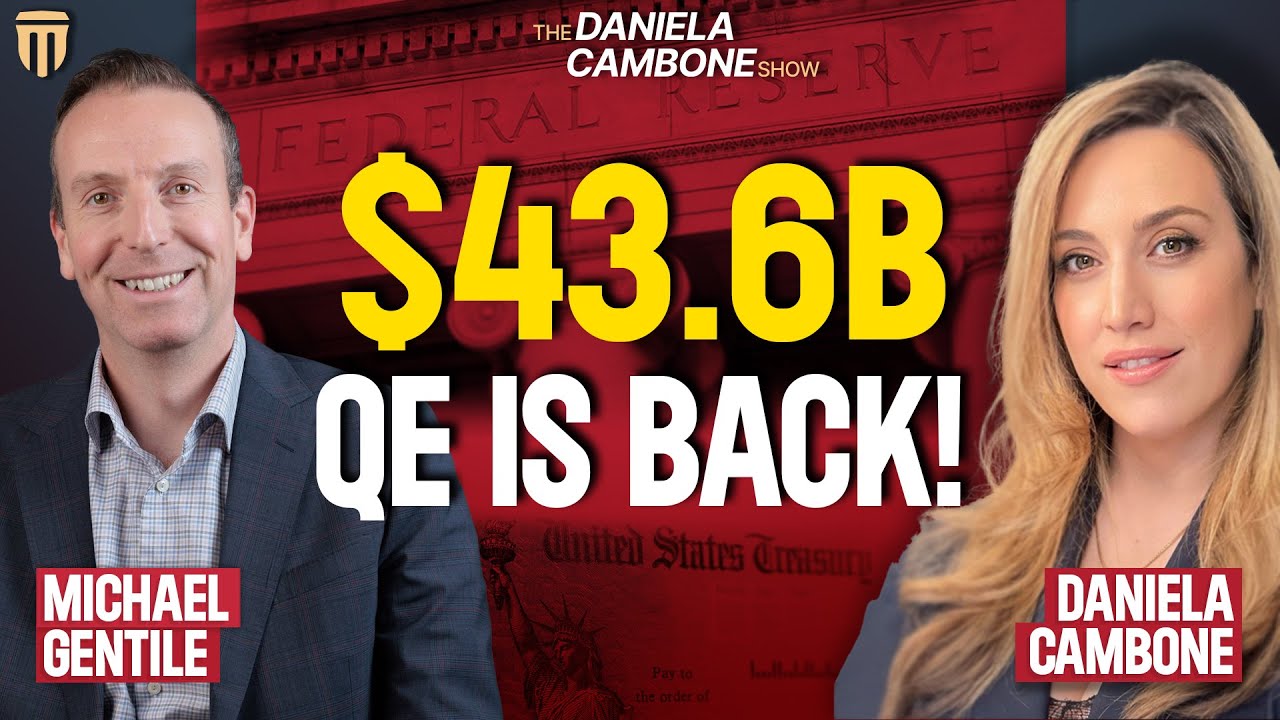
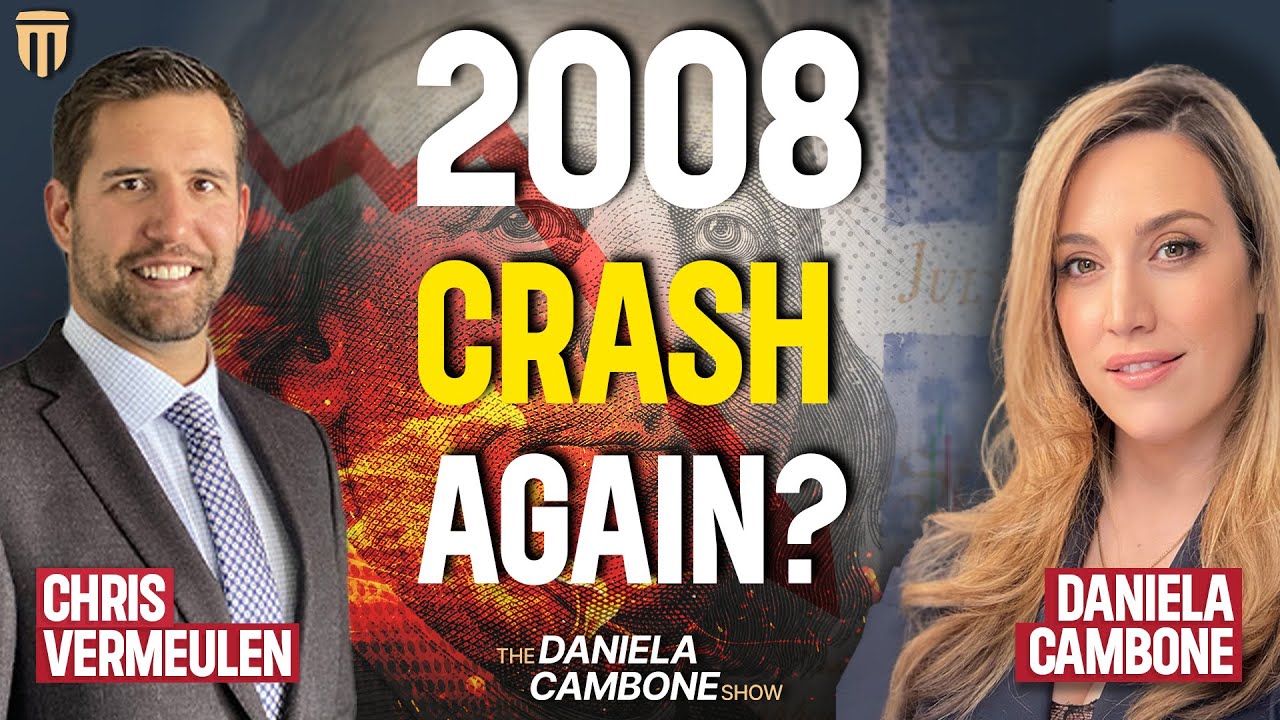
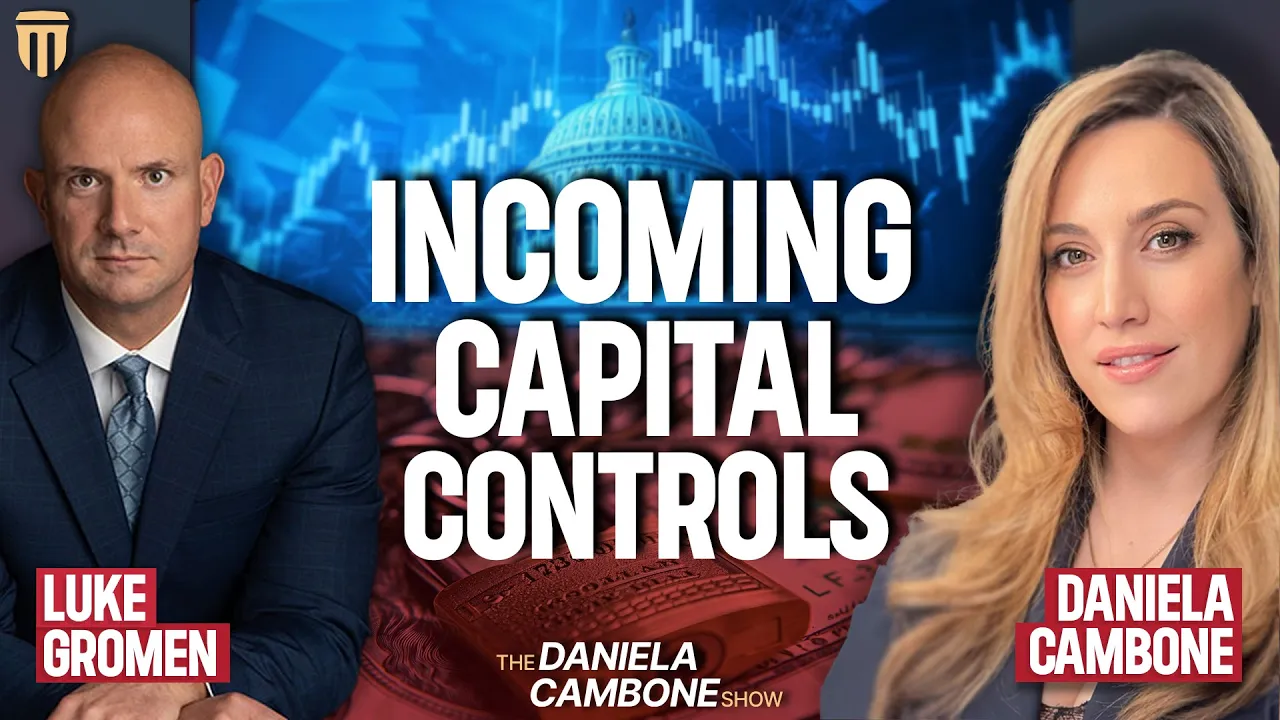
My guest today says that gold and Bitcoin will likely trend upwards until a critical turning point. He says if the US brings in capital controls as a way to sustain its trade war, the dollar's world reserve status could be severely weakened, pushing capital into gold and Bitcoin. Super excited.
He's joining me today, Luke Roman, founder and president of Forest for the Trees. Luke, it's been a long time coming. Welcome to the Dingle Cambodia Show.
Thanks for having me on, Danielle. Sounds great to be here. Like I said, super excited to to talk, you know, all these good things with you.
Uh I want to start with something you recently said. You said, quote, "The dollar's reserve status will basically be relegated to gold at one point. Gold will be reserved.
Dollars will not be because Europeans can't have it. The Chinese don't want it. It's not like people are going to switch to Europeans, European bonds or Chinese bonds or British bonds or Japanese bonds.
There's nowhere else, no one else that can do it. So, it's going to go to gold. Gold is going to the moon.
Luke, is this still an accurate statement? Yeah, I think I think the outline of it is. Yes.
Because ultimately, um, you know, it's one of these discussions you get into and it's a little bit like religion or politics, right, around the dollar status. And clearly, it's very political. But what I mean by that is that people say, well, what's, you know, what's what's going to happen to the dollar reserve status?
And for me there's a requisite follow-on question that is rarely asked which is what do you mean by that? Do you mean usage or do you mean actually FX reserve actually reserving it? Because from a usage standpoint I think the dollar is going to remain the dominant currency.
I think it's got a lot of infrastructure. It's got a lot of network effect. Um yep and and Gresham's law says you pay in the bad currency and you save in the good.
And like there's a lot of reasons why I think usage of the dollar which is dominant will remain dominant. With that said on the reserve side uh we've seen a trend for the last 11 years where global central banks stopped reserving on net treasury bonds. They stopped reserving dollars in 2014.
They stopped growing their holdings of dollar reserves perhaps more accurately and incrementally they have sold treasuries and they have bought a lot of gold in that time. And so there has been a shift underway for the last 11 12 years at the central bank level to gold. Yeah.
To gold from treasuries. And so I think that is one of the big macro gears of our lifetime. And I think it's going to continue.
Fantastic point. I would I would insert another question to take it one step further. Is there one that has more clout, usage or reserves?
In the short run, probably usage. It's a great question, right? Because in the in the very short run, you can weaponize that usage, but in the long run, it's reserves.
And we've seen so I I would say, okay, going back to 2012, we kicked Iran out of the Swift system. we in the in the EU and their economy hyperinflated overnight. We we we've we've sanctioned Russia a number of times.
The the the threat of Treasury sanctions in the short run of not being able to use dollars is a very severe threat. And in the long run, we have seen once the US used that weapon on Iran, the reaction from China and from Russia and from others, which is moving away more quickly and building up alternative infrastructure such that we can now see that in the long run, right? 2012, we kick Iran out.
That's a usage problem. 2022 Russia invades Ukraine, we freeze Russia's FX reserves, the ruble is going to be rubble. No, it's not.
Russia, while they are certainly having high inflation, they're running a raot uh economy uh due to the war, they have not tipped over. They have been able to prosecute a very intense war, the most intense war on the Eurasian continent since in Europe at least since um since World War II and their economy is fine. The ruble is higher than it was when you know the immediate aftermath of the invasion and those sanctions.
So in the long run having the reserves be dollar denominated is dominant and some of that is also because of the secondary and third derivative effects that that creates which is to say once central banks who are it can be thought of as price insensitive buyers of treasuries. They buy for political reasons. They buy to manage their currency what have you.
Once they stop buying, the next marginal buyer of treasuries is price sensitive at a time when the supply of treasuries has gone sharply higher. And so ultimately you get into this situation that we've seen over the last 10 12 years which is you know you've got a sort of fine marginal buyers of treasuries. uh upward trend in you know absent a collapse in the economy due to a once in aundred-year pandemic upward trend in interest rates um it does initially squeeze the dollar higher etc.
So it's I think again it's a question of of of time frames. In the short run I would say the usage is dominant but ultimately in the long run it's the reserves dynamic that is dominant and critically we're at least 12 years into this. So we're, you know, I think in most investors time frame, if you frame it properly, into the long run impacts of it.
And I want to get back to uh central banks, but first just tying it back to the intro and to your thesis of you know, if these capital controls are are placed uh what is the likelihood uh that that will happen and what do the controls look like for you? Yeah, I think the the critical point is as it relates if if you want to have a trade war with the factory of the world, China, like we are basically instituting or we're prosecuting. Um, and China we know has very tight capital controls.
Ultimately, it's not a question of if, it's just a question of when. In other words, the longer the trade war goes on with China, the longer the breakup goes on with China, it becomes a matter of when, not if. And then what do they look like?
Because you simply can't maintain. The US can't keep an open capital account. Let dollars come and go however they please while ch well while putting pressure on China while China has a closed capital account because ultimately it creates an economic disruption.
This trade war separation, whatever you want to call it. If China had is not letting capital escape and the dollar is the reserve currency, then ultimately if the US has an open capital account, it turns the United States into a source of funds for the world as the global economy which is highly indebted and will need funds in the case of the disruption from a US China trade war. And so what happens is is everybody goes, "Okay, I want to get my money out of China.
" Chinese say no. But they go, "Okay, well, I need money. Who's open?
US is open get sell stocks sell treasuries and the US loses the trade war because stocks go down yields go up and the US has a fiscal crisis so that's why I say it's a question if we are going to stay on this path of you know lots of people saying oh this is permanent and I think it probably is permanent this break up with China not a lot of people are taking the second step which is that's fine maybe it's it's probably strategically the right thing to do and It cannot be accomplished unless you put some form of capital controls on capital coming into and out of the US or else the US markets will tank bond market, stock market, dollar like we saw in April and that was no fun for anybody for a couple of weeks. So uh that's where I think this is if if one believes that this is a restructuring of the global trading system as I do and I think as a lot of people do then it is fata complete there's going to be some form of capital control. the United States is no longer going to have open capital account.
He can't. I think bigger picture. Um, and it it makes me think of a a point Ray Dalio brought up again that the international geopolitical world is breaking down because the era of one dominant power, the US that dictates the order that other countries follow is over.
He argued it's being replaced by you unilateral power rules approach. Uh, so while the US remains the most powerful nation, Dalio says it's now operating a more self-interested America first framework. I think that's basically what you're you're saying as well here, Luke.
Yeah, I think it on on on some level. Yeah. And ultimately that that you know, America's role has been to sort of, you know, be margin the last marginal demand for consumer.
It has been the place where global savings have been recycled into. It's why our market cap is equity market cap is 70% or whatever it is of the world is basically the world makes stuff, the world sells stuff, the world earns dollars, and then they recycle those dollars into our markets. And for a number of reasons, it's no longer in our interest to do.
And if it's no longer in our interest to do, then you're going to have to, you know, basically put up some sort of walls, taxes, controls, however that looks like. They I don't think we'll ever hear the United States is putting up capital controls. It'll it'll be framed as you know like Operation Iraqi Freedom or the Affordable Care Act or all of these things were actually the opposite of what they are.
It'll probably be like maintaining US financial dominance and stability or something you know and there'll be capital controls and the Fed if I take it one step further I believe will be you say will or might be forced to cut in such scenario. I think ultimately if if we want to pursue the policies we want to pursue from a national interest standpoint of um not having China make most of our military weapons for us within 10 years as um as as Secretary Rubio said in his confirmation hearing then yeah they're going to have to get on board. This is another way where there is this sort of you and we've gone from the state of denial to the state of anger.
You know, when you look at the five stages of grief, you know, around sort of ddollarization and the global shift in the monetary system, we've gone from denial to anger. Now, we're in bargaining, which is this sort of bargaining stage of like, well, we can separate from China and have an open capital account and the Fed's going to be able to maintain their inflation mandate and like, no, no, they're not. you can either separate from China and the Fed's going to have to vacate their uh or abregate their inflation mandate, which is to say what they did in World War II, which is one way or another help the Treasury cap yields.
Um or you're not going to separate in China. You're not going to be able to. What's the step after bargaining?
Uh depression and then acceptance. Why? Where's the happiness?
Where's the bliss? When's the level of bliss come in, Luke? Well, I think there's, you know, I think in the long run, I think it's a it sets up a really good outcome for the US, for the world.
We're sort of, but between here and there, um, yeah, you know, we're in this this bumpy stage where, you know, what's normal for the spider is chaos for the fly, right? This is this can't be good for bond holders on a real basis. You also say recession won't be fatal.
Mhm. But it's coming or I don't think it's I don't think uh uh a nominal recession I don't think is coming. You could have a recession on a real basis.
That's entirely possible and that is not fatal. In other words, nominal recession is we wake up and and and nominal GDP and real GDP are both down whatever they've been down. Sort of classic plain vanilla recession.
And why I say that is that's what we've seen over the last call it 40 years of our recessions. 35 years of our recessions. Um in the last three recessions dating back 35 years to 1990 the deficit the GDP in the US has risen by anywhere from six 6% 8% and 12% of GDP.
Uh peak the trough in the recession. Well we're at a starting point of 6 or 7% of GDP. So minimum the deficit in a in a nominal recession in the US would go to 13%.
And it could easily go to 20%. Like why the reason it would be fatal is we would have um we would have a deficit of 13 to 20% of GDP with def debt of 130% of GDP. You're done.
You're going to have a recession where rates go up and that blows up everything and you go into a debt death spiral. So that's it's fatal. Well, you can have a a real recession, right?
Where, you know, nominal GD a real, you know, real GDP is shrinking, but nominal GDP is growing 10. You know, inflation's running 12%. You know, something like that.
That's not fatal, per se. It's going to feel not great. It's going to probably, you know, it's it's stagflationary.
That's not necessarily fatal because you're going to be working away the debt. on that point of debt death spiral and we know the trajectory we're on. Um, how does that play out for you?
I mean, and now we have the big beautiful bill that's adding, you know, x more amount to the whole debt equation. How how how much more can the system take and handle, Luke, is the question. That's much more a political question.
you you we found right and what I mean by that is how long until there's protests in the street about inflation because ultimately this is all inflationary and you know if it's 10% inflation reported as 10% inflation that's not sustainable but if it's 10% inflation and reported at three and a half and most of the country believes what they're told on that front then as long as you don't have political disruption political ical instability, protests, etc. You can kind of keep that going. Now, to your point, I would argue we're sort of at that, you know, where we're we're dipping over that line back and forth in the last eight, you know, years.
We've had more political populism. We've had open protests in the streets, etc. , etc.
, in a way we haven't had in 40, 50 years in this country, 50, 60 years, probably. Um, so we're we're sort of there. you're going to need something that is much more structural.
And you know, this is another way in which we're sort of in this bargaining phase, right? We came in with the Trump administration and it was going to be, hey, they're going to doge, they're going to cut, and it's it's like, come on, there's no way they can cut enough without touching things that are politically fatal to the establishment. And so now we're like, it's end of May and guess what we're hearing from Bessant, from Musk, from others?
Well, we can't exactly cut that, so we're just going to grow it really fast. Exactly. That was that was the only option all along, you know, this first three months of the administration.
Maybe it was a nod to the sort of, you know, the MAGA hardcore, whatever it is about we need to cut, we need to cut, we need to cut. Like, everyone wants to cut and be responsible until you go, hey, here's your contribution. Cutting and being responsible.
I'm like, whoa, whoa, whoa. No, you know, no, I'm I'm good. Let's just run it hot.
So, here we are. Exactly. I mean, you know, I had it just made me give a nod to David Stockman.
I had him on who for folks watching was basically the Elon Musk under Ronald Reagan and tried to do exactly this. And you know, when I interviewed him, he said, you know, good luck to Elon. I wish him well, but it's not going to happen.
Not going to happen. I want to get back to the big big point here. Central banks and what they're doing.
And you mentioned, and I had to fact check that twice, that since 2014, they haven't bought US treasuries. Um, but they've bought, and this figure is higher probably now, $600 billion worth of gold. What is it about gold that central banks like so much and want it on their reserves?
Luke, I think it's I think it's it's multiple. it it preserves real purchasing power. Uh and what I mean by real is in oil and commodity terms, gold is rising in oil terms.
It's gone from seven barrels per ounce in 2008 to almost 60 barrels per ounce today. So your gold if you're a if you're a sovereign and you're especially if you are a a China or a Korea or a if if you're a oil e importing creditor of the United States um your purchasing power and imported commodities is huge and and the flip side is if you're OPEC or you're Russia an oil exporting creditor of the US it's also critical to maintain the purchasing power in oil terms of your FX reserves and so uh gold has grown the purchasing power of FX reserve reserves of the creditors of the United States. Number one, and I think the reason they're seeing that is in the aftermath of 2008.
Uh it became clear that the United States was never going to reform itself. It was just going to print the money. Um that's how we got out of '08.
And when you look at that 08 was kind of cute. They printed whatever they printed. Um that's fine.
But then you look at 100 trillion in entitlements and 70 million boomers who are not used to being told no or hey, you know, eat bitterness or whatever they want to call it, you know, as the Chinese called it. And you know, you sort of go, okay, they're probably going to print that money, too. And they've not been wrong.
So, it's the purching power. And then since 2022, it's simply been the the recognition that treasuries aren't safe as a sovereign. Um, they can be frozen.
They can be they can be taken. They can be seized after Russia invaded Ukraine. And people say, "Well, then don't invade other countries.
" And that's all fine and good, but this is the real world we live in. And nations have national interests. And the US has been saying for 10 years, we're going to weaponize the dollar.
We're going to weaponize the Treasury. And it was weaponized. And so the other interest of gold is absolute national control.
It's sitting in your vault. and Russia proved that, you know, you can prosecute a very expensive war against NATO and not run out of money and maintain the value of your currency aided by capital controls and high inflation. But the gold has gone a long way in helping that process.
And so I think it's both of those dynamics. I think it's it's really fascinating though that you have these, you know, distinct countries, various countries all on this common ground. Canada with the as the exception that they realize that gold is is the solution.
This 6,000y old asset, Luke, um it fascinates me that they they they see the power of gold, right, via v the devaluation of the of the dollar here. Yeah, it's gold is nothing more than a 0% yielding bond of of finite issuance and infinite duration uh with a completely flexible face value. And when you look at the competing reserve asset, which is a treasury bond, that is finite face value, infinite issuance, and finite duration.
And so once you get into this stage of the long cycle, it's superior in every way. Well, that said, I mean, could you ever see the day that central banks would own Bitcoin? Yeah, I could see that.
Yeah. I mean, I think you've seen a few dip their toes in the water, right? Not central banks, but the UAE.
There's been a sovereign wealth fund in the UAE that has bought a little bit. Um, yeah, I think you could see that. Absolutely.
Because there's a lot of things that Bitcoin does that it does it at least as good, if not better, than gold. So, getting back to the opening point that, you know, if we see the capital controls and whatnot, we could see gold and Bitcoin head to the moon. I just want to have a better understanding of what that moon looks like for you.
For me, it looks like secularly higher prices in dollars. secularly higher prices against commodities uh and against sort of all other currencies as well. Ultimately it means um more countries are going to be forced by events to essentially do what what China and Russia have been doing which is facilitate the nondoll trading of commodities in particular more trade more broadly and then net you know settling in goods net settling in gold.
So, in other words, you know, China pays Russia for oil in yuan. Um, Russia ends up with yuan. What do they do with the yuan?
Well, they can buy a lot of really good stuff. Must be good stuff because we're still buying a lot of it as America. The world is still buying a lot of Chinese stuff.
And so, whatever yuan is left over after Russia's done buying, you know, weapons, semiconductors, Huawei equipment, everything they buy from China, uh, then they can take the the net and they settle it in gold that floats in Chinese yuan. And if you look at the price of gold in Chinese yuan, it is like up and to the right. And so the value of that gold is rising in real Chinese goods terms over time.
It's a virtuous cycle of trade. On that point, you know, obviously central banks get it, but why hasn't the North American North American because China got it and India got it financial investor really piling into gold yet? We haven't seen that yet.
I think it's the same reason. So I think it's the same reason as as as that same investor was was piling into housing in 2004, you know, 3, four, five, six even. And why they were piling into stocks at the end of the '9s is that, you know, the the they it won't believe it until it happens.
They've Americans are the only people on the planet that have really never lived through a sort of a an inflationary recession. You know what we just described a currency crisis of sorts. Um where you know the currency goes down and stocks go down and yields go up.
That's never happened to Americans. They have never had a recession where bond yields go up. Everyone else in the world has.
And so they know like when I talk to people outside the US and they're watching what's happening in the US like this is so familiar. This is just you know the American version of something that's happened over and over but Americans by and large won't and it's not just Americans it's human nature but but they're not going to react until they've lived it. So I think ultimately once it really kicks off, you know, I think if we would have had another month or two of what we had in April, right, where you had gold going up every day and the dollar going down every day and yields going up every day and stocks going down every day, like that's what the world has lived through at some point in their life, everyone other than the US basically.
And I think, you know, I think it'll take a little bit longer for that to happen, you know, for that hype of that price action for Americans to realize it. And you know their I think their their their base case by their actions is like it's going to well I'll be able to notice I'll be able to sell all my bonds and maybe so if I were to ask you to pick a number like Luke Groman wouldn't be surprised to see gold at pick a number. The number I have referred back to a lot of times is the market value of the US's official gold.
So market price times whatever 8,100 tons of gold, right? As a as a percentage of the foreign held portion of US Treasury bonds. In other words, all of the all of the all of the bonds the Treasury bonds that foreigners hold.
And as recently as 1989, that was, you know, when the Berlin Wall came down, that number was 20%. Uh the long-term average of that ratio was 40%. And when we had an honest to goodness dollar crisis in 1980, uh that number was 135%.
That was a true gold bubble because literally foreigners if they if you had an open gold window in that way, foreigners could have exchanged every single foreign treasury they held for gold, US official gold, the US still would have had 35% of its gold left over. In other words, the US foreign treasury debt was 135% goldbacked at market price in 1980. Today, that number is 10%.
even after all this run. So for us to just get back to 1989 levels of the market value of US gold in her in in terms of how much it's collateralizing US foreign held treasuries. Gold would have to double from here for it to go back to the long-term average.
It would have to quadruple. And so you know my base case is you know it's still at least a double from here at least. Last point I want to get in Luke.
Um, you know, I wa rewatched your interview with Tucker Carlson. I think that was an important interview because it normalized I think for the first time we saw the use of monetary reset on a mainstream platform. And since that interview, people almost feel free like I could use the word financial reset of some sort.
Uh, did you get that impression as well? I mean, I feel like you just opened the doors that we could now use that word or or it's no longer considered a conspiracy theory. Um, you know, I I think there's probably some level of of recognition like I had, you know, family members reach out and go, gosh, I didn't realize the US fiscal situation was in the state that it's in.
Right? So I think there was some level of recognition maybe less around even the word reset and more normalization of it but just this recognition of when you look when you run through the math and lay out the very obvious and it's very easy to go and and sort of check these numbers and you go oh my gosh like there's there's no way out of this without financial repression or inflation or inflation and growth running well above the interest rate. There's just no way there's no way out of that.
And that's fine. Like it's not one of these, oh the world's going to end and then the zombies come in. Like that's another thing I've noticed for Americans is like you run through this what we're talking about when most other people in the world they're like oh well so this is happening again and you run through Americans and it's like oh no then the world ends and then the zombies come and like there's this whole and the reality is is no like life goes on just your currency's worth less in gold terms and inflation picks up for a while and the debt goes down and bond holders lose and it's a restructuring and like it's happened over and over and over time in memorial so You know, I thought it was um it definitely reached a big audience uh you know, from from that standpoint.
And I think it it opened up, I would say, more normalized or open some eyes around exactly just how untenable, you know, the fiscal situation is uh more than anything else. Well, I appreciate that. I appreciate you, Luke.
Um thank you for coming on today and sharing uh your thoughts. Um Luke Roman, founder and president of Forest for the Trees. I just love love that name, Luke.
Thank you. Thank you. Thank you very much.
Thanks for having me on, Danielle. It's great being here. And thank you all for watching.
We'll have more great content. Sign up at della combon. com and of course subscribe to our YouTube channel.
That's it for me. We'll see you soon. Hi everyone.
If you're starting to question the system and want to protect what you have earned, you will want to download our free gold and silver protection guide. It's a clear, easy to follow resource that explains why gold and silver have stood the test of time and how they can help you build real financial security even as the dollar weakens. You'll learn about which metals to consider and the plan that best suits your needs, not Wall Street's.
So, click the link or scan the QR code to get started today. You're not going to regret it.