and the next thing I want to talk about is I want to slowly shift us into a more bigger picture concept so how about the physical data center Network architecture within a data center what do we have well we have rows and rows of racks and within each rack as represented in the picture here we have C servers underneath typically at the bottom of the rack and then what we have at the top of the rack is called tour switch or top a rack that's what tour stands for top of rack switch so we have
multiple top of rack switches for high availability purposes of course and for dual homing purposes and then what ends up happening is those top of rank switches ultimately get aggregated and terminated into aggregation switches and those aggregation switches would ultimately connect to the core of our Network which would connect us to the outside world this is typically how a data center is configured physically now how about a virtualized data center so once again a data center is racks of server switches and and storage area network or sand and you have rows and rows of those
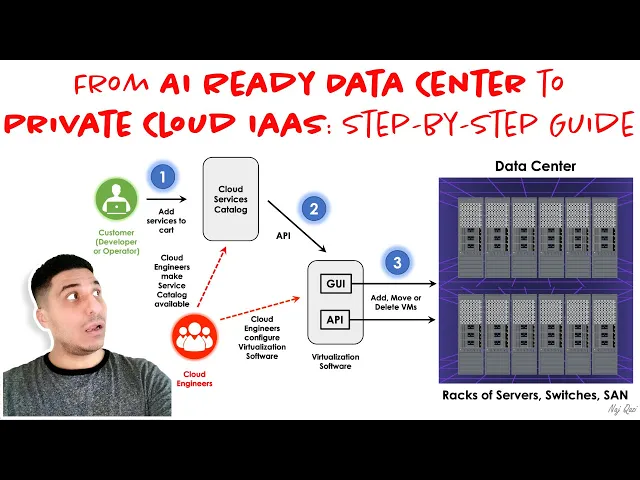
racks within a Data Center and what you're seeing in this picture here is actually cabinets these are more advanced than racks cabinets have a nice enclosure they have a door in front and they provides a form of physical security and what we have here is a customer who could be a developer or an operator within our Network and they may need to run a certain application so let's say they came up with an idea of a brand new application which is going to revolutionalize our business well to run that application they're going to need resources
they're going to need CPU memory RAM they're going to need server right so what they're going to do is they're going to create a change request into some sort of a ticketing system that's how their request typically shows up so they're going to log into two most popular systems out there are service now or remedy so they're going to generate a ticket and one of those systems asking for whatever resources they need so they say so they may have a business justification hey I designed this app called n app it's going to be an awesome
web app and I need eight core CPUs I need 16 gigs of RAM and I need 100 Gig of storage that's the request in the ticketing system now that request will generate an alert and the data center engineers and that data center engineering team most likely is going to be composed of server Engineers Network Engineers storage engineers they're going to get that request through the titing system they're going to analyze that request and then they're going to go ahead and log into a tool like VMware V Center and go ahead and through the guei configure
things or they may also use an API using a tool like anible Chef puppet for automation to be able to translate that ticketing system request into the resources that that team needs and ultimately you're going to add move or delete virtual machine Ma and once again virtual machine has a CPU memory storage and network piece attached to it you're going to take all those components and get the resources provision and then ultimately end user gets an email saying their ticket request has been closed and the resources that they have requested to have been successfully provisioned
within the data center now this virtualized data center workflow typically could take days up to weeks it just depends on how welld designed your system is and how well designed your teams are what if you have critical team members that are out on vacation well you may be in a world of hurt things will be really slow it may take a month or so for that request to be processed now in today's world it's not acceptable so what that led to is a private Cloud architecture which we also called I as or infrastructure as a
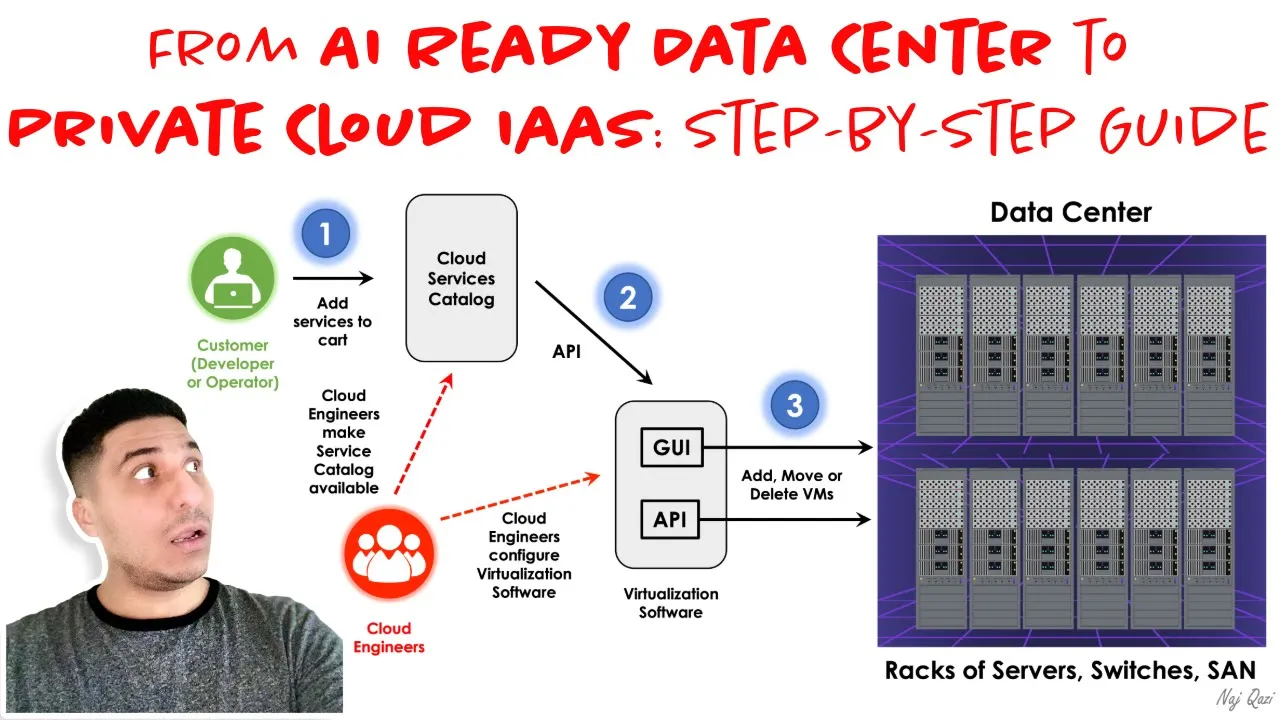
service type mindset here what we're doing is we're offering our infrastructure as a service to our end customers which could be developers application designers software developers and we also call that on Prem you would typically when you're reading different literature you're going to see this terminology constantly come up on Prem or on premise it's typically being referred to a private cloud or private data center type environment so once again we have a customer or a developer in this case same request but here instead of going to a ticketing system they go may go to a
web page and they may select okay I want to add this VM that basically has eight core CPUs 16 gigs of RAM and 100 Gig of storage that may be available as a small VM option in the organization and when they do that through the magic of API or application programming interface and I actually did several videos on API so feel free to Bross through my playlists but ultimately through the magic of apis what's going to end up happening is that request is going to get translated into the virtualization software through GUI or some sort
of an API most likely through an API and ultimately what that means is the resources will get provisioned within the data center now what's cool here as you guys can notice as as compared to the previous workflow we don't have the data center engineering team in the middle of the workflow we literally removed that team and I'm sure the minute I said we no longer need data center Engineers involved in the workflow that probably drained all the blood out of your face before you freak out too much here's the cool thing we still need data
center Engineers now it's called a cloud engineering team but the idea is it's the same team but their job function is that they're the ones who are making the cloud services catalog available to the programmers right so how is it that a developer can go to a web page and then select you know small VM medium VM large VM whatever they need to be able to do their job and you know deploy apps and whatnot how did they get that well Cloud Engineers made that available because remember this is on Prim so our team made
it available and then another thing Cloud Engineers did was they actually configured the virtualization software for it to be able to understand that automated workflow which is Step number two through the API operation so it's all like behind the scenes there's no magic right basically the cloud engineering team is The Wizard of Oz in this design if you will so if you're a data center engineer your job is not going anywhere if anything you're going to become more and more relevant because now you are part of a strategic it operation instead of just being an
expense Center you're now truly a business partner because you're providing a service to the customers which are employees in this case hope you enjoyed today's video if you did give me a thumbs up hit subscribe and I'll see you in the next video