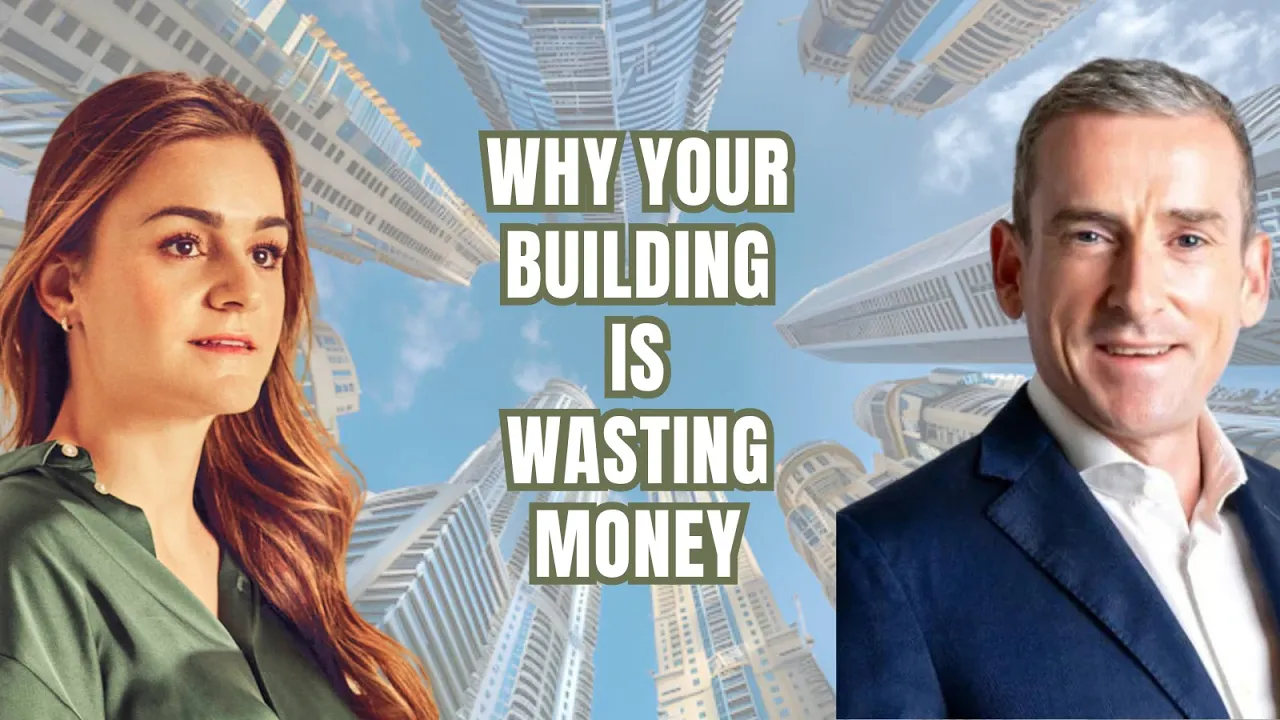
one of the things that's missing from the supply chain or designers of buildings is the ability to actually give the data back to clients so they can actually make better decisions and what I mean by that is should they want to make decisions that work shortterm but don't work long term whereas the analysis where's the the whole love life cycle cost model where's the energy cost over time these things can be done very quickly from from a digital model it can see okay you're going to save this now but if you actually spend a bit
more now your bank balance would be 100x after 5 10 15 20 years and as well moving people into the realm of considering that the building is around for 50 60 years it's a little bit of a mindset shift that needs to happen there I would suggest before we go into the podcast if you could just go and rate this show on whichever platform you're listening to it it makes a huge difference to the podcast the amazing conversations we get to have and the incredible guests were able to get on the podcast so it's probably
not something you would think about but if you could just go rate the show follow it or share an episode it does make a huge difference to the show thank you so much in a world increasingly facing the challenges of climate change with the building green podcast we will dive deep into the intersection of architecture design urbanism and environmental responsibility I'm ladina ship your host I've been an architect and building site manager for the past 10 years during my studies at eth in Switzerland as well as in my working environment I've had many touch points
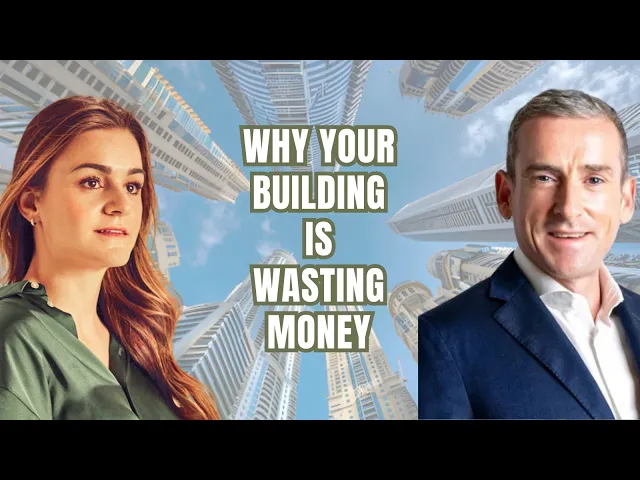
with sustainability like many of you I guess I've also learned to question what I've been told which is why I decided to go deeper into the topic and uncover what sustainability actually means my mission is to highlight the transformative power of sustainable architecture not just as a practice but as a catalyst for broader societal change subscribe for more of our content and enjoy the show today on Building green I'm thrilled to welcome Paul Patterson founder of elevation Sustainable Building Solutions Paul has years of experience in engineering construction and sustainability spending back to his roots in
Scotland his passion for Energy Efficiency and reducing the carbon footprint has shaped his impressive Journey Across The Globe from major project in the UK to the rapidly developing landscape ape of the Middle East in this episode we're going to explore how P has identified inefficiencies in traditional building design early on and pushed for energy simulations to really Drive savings his mission at elevation is to place energy and carbon reduction at the center of building design construction and operations and what about the truth about sustainable buildings at the end of this episode PA debunks the myth
that they cost more explaining how optimized designs can actually reduce capital and operational costs Paul's focus on closing the performance Gap in building operations and his dedication to real world Energy savings make this an exciting and valuable conversation welcome to the show Paul thank you so much Paul for joining me today on Building green super excited to to be talking to you today thanks for having me pleasure to be here Paul you've had an impressive Journey from working on huge projects to starting your own company tell me your story and what's the first experience that
got you interested in making buildings more sustainable I started my career back in 2003 back in Scotland where I studied and the topic of Building Services engineering at University The Building Services engineering some some may know that as as MEP mechanical electrical and plumbing and my job uh as my career started was to um start to learn the ropes be involved in the design of heating ventilation air conditioning systems Plumbing Systems Drainage Systems electrical systems essentially everything that went into a building would' be working with the architect uh to design coordinate and specify and as
I kind of started to learn from some really highly experienced engineers and forget that kind of early early part of my career it during the mid NS uh ughs of this makes me sound so old but anyway um they revised the building regulations in United Kingdom and they revised made some changes and required more uh thought towards Energy Efficiency and I was kind of looking around um both what our business was doing and what I saw in the market and I saw a a focus on kind of rule of thumb type approaches and how things
were being designed for instance if if your fan had to be uh sized if you calculated it needed to be x times big you would perhaps specify as x * 1.25 to add margin just in case something went wrong and that was the way things were were happening and I kind of thought to myself well that's a bit odd because surely if you're specifying and designing and installing all of this extra stuff that you don't need that's going to have an impact on your energy and I got more more interested in that topic and looking
at ways to simulate energy and simulate buildings that design stage and started to propose different ways things should be designed in order to first of all simulate them and then get them sized more towards the ideal digital simulation I wouldn't call it Perfection but kind of starting to focus on energy rather than just on on the engineering component so as I get more involved in that I started to work with oneing the major software providers in the UK are also based in in Glasgow and we did some nice uh research development work where we were
looking at ways to analyze predict uh energy in carbon for a new building project at the design stage and then see if we could actually deliver that once the the building was built and created and what we started to do was work all the way through that uh chain from design through to construction through to operation and use some digital technology to prove that the theory works and to prove that you could actually both predict and then deliver um some highend uh energy and carbon savings so that's always been my interest trying to make things
as optimally designed as possible reducing waste I just like that idea and I like that approach so in the mid 2010s after that part of my career was over I decided to come to Dubai uh first personally and I started working for a uh a Contracting firm in Dubai and so I'd went from a consulting firm I was now a different region totally different world working as a for a mechanical electrical contractor I was based in one of the was a mega project in Abu Dhabi at the time I was doing a commute and um
I kind of got exposure to the other side of the of the world so understanding okay it's all very well and good specifying and designing and trying to do these things but someone's got to actually build it um and figure out what's what's going to happen so I got that extra experience and that kind of my career kind of meandered a little bit uh through uh through that contracting business I then ended up at a I was in a Consulting business for four and a half years ghd again moving moving kind of up the ranks
and getting more involved in the more of the wider range of of project delivery rather than just the engineering component um and it was through that Journey that I started to keep thinking about the old days not necessarily with a with a small team in my eye but as especially in the uee as geared up for cop 28 and 2022 sustainability is becoming more of a a real tangible requirement it was becoming clear the size of the prize the built environment was kind of questioning itself more and more people were starting to understand that the
problem that people had been talking about since the early 2000s was still a problem and I decided that go back to where I first started and focus on that specific problem in answering the question how much energy should my building be responsible for how do I make sure I deliver on that Target and how can I continually improve on that Target all the while trying to meet uh carbon emissions that are Set uh locally nationally and globally so it's through that origination story that I know find myself trying to continue to do what I started
back in 2006 I'll be it under my own Steam and kind of a little of more of a focused focused Direction it's a beautiful story why did you move to Dubai was it pro for professional reasons yeah yeah I kind of wanted to expand uh I want to expand my career uh try something new uh yeah both myself and my wife decided that we we wanted to kind of make a change in our lives and we thought well let's let's head over to where there's a lot of building happen so there's a market for the
types of services that we do so yeah there more of a let's go and let's just go and expand our Horizons a little bit was the idea did you feel they were more advanced when you first arrived I kind of thought they could be um I kind of thought it could be but back in 2015 I did find it maybe not quite as advanced as what we were thinking definitely not as advanced as the is what was happening in the United Kingdom so there's been a a kind of slow process with regards to sustainability in
this region I think still trying to move away from specifically focusing on just compliance to code requirements and and that kind of um regulatory landscape to more thinking about okay how do we push the boundaries a little bit more how do we deliver more uh rather than just meting the kind of bare minimum of what the government targets are that's interesting so Paul then you you founded your company elevation what what's the mission of the company and what how do you plan to make a difference in how buildings are designed what we like to say
is we're here to drive a paradigm shift in how buildings are designed constructed and operated and that's moving to place energy in carbon Central to the story from before A pen gets put to paper till after um that space is being used by by the public or or whoever the stakeholders are so moving away from Simply thinking about the energy uh consumption of a building as an afterthought or something you might only find out about after you've got a Year's worth of bills perhaps five to 10 years after you first thought about constructing the project
to putting this right to the very very very center of the story um and I think that provides a lot of value on the number of fronts firstly it enables uh our clients developers and investors real estate owners and operators to drive down capital expenditure cost because if you're thinking about energy and carbon at the start you can actually reduce the amount of systems and services that you need you can then unlock further value uh during uh the operation of your asset because the the better the systems are tuned and matched to the actual building
requirements the less energy uh that these buildings will consume therefore it will cost less to run the the flip side of that is the the changing evolving landscape of of carbon emissions so it's not unrealistic to think that at some point in not too distant future carbon will be taxed so if you're not controlling your carbon emissions contribution from your real estate asset from the very start of your project you're storing up a problem and you're adding risk to your uh your portfolio so ultimately it's about maximizing value and minimizing risk and how do we
do it well we work again with developer clients before projects are created or we work with designers for are designing projects we create digital models of their buildings we using our engineering knowledge and our deep experience of Building Services or MEP should should everyone from the this part of the world be listening um and Rec create recreate the systems and services and the automatic controls and everything that's going to be created in that building in the digital environment and allows designers to optimize analyze um figure out best for project uh design Solutions in order to
again minimize the energy and carbon cost of these projects you probably know I'm an architect and from from the perspective of an architect or for an architect what are like the key metrics that you analyze and that you're looking for in the design process first and foremost for following the the legendary energy hierarchies it's all about reducing the need for energy first then improving the improving the performance of energy consuming equipment and then once you've done all that nice stuff and perhaps you're also going to be looking at offsetting those energy requirements with renewable systems
but we're very much a proponent of trying to move the market away from considering a project that is going to be let's use the new build Market let's trying to move away from okay I want a new build project and I want it to be lead Platinum fine however what you're actually requiring is you're requiring your new project to have an energy cost and energy usage intensity eui is it shortened to of a certain value that either fits what the regulations are going to be saying or it fits in your Global portfolio targets because you're
DEC decarbonizing across across your many many many assets so the key metric for us is energy use per square meter per year that's the number that we're seeking to propose to clients and that should be the the kind of north star of a project and help guide uh guide the decisions and of course how that number comes out the lower the number the better the lower the number the better you've got better fabric u values you've got good shading um uh on your facad to offset any of that that solar game which you don't want
um you perhaps getting some nice cross floor natural ventilation should the the prevailing climate and wind directions allow and then you're looking to kind of push the boundaries a little bit and and what kind of systems and services you're going to be installing on top of that is there like any key element that's often forgotten that really drives that um energy consumption lower besides of passive architecture like size and positioning of the windows again yes uh insulation materials shading systems and of course efficient um devices is there anything that that you've seen with your experience
it's often forgotten by Architects or other stakeholders I I don't think forgot and I think there's a there's a lot of good movement in terms of trying to do that that passive design uh space i i the struggle that a lot of projects have is the pace so it's difficult to start to code in these these measures and these kind of nice design decisions because you're kind of in a 4 6 8 week time frame to try and push push as hard push as hard as you can um and of course in this region I'll
speak specifically about the region Ian which is the Middle East it's difficult to look at kind of natural ventilation Solutions because okay well you may be able to bring in some air from the outside at certain periods during the winter it's it's not really that much and you kind of find that the cost benefit analysis doesn't really um marry up to that okay and Paul you've talked about the performance Gap in buildings before can you explain what that is and how we can close it to make buildings truly energy efficient yeah so the performance Gap
has been a term that's been flying around for um many many years and it it essentially says that a building when operated can be using two to five times the amount of energy than what was predicted at the design stage so taking that as red that's based in data that's the charted Institute of Building Services Engineers who have have got this definition for the building performance Gap the the theory then becomes it comes back to considering that if we are trying to reduce the amount of car carbon in the atmosphere in order to maintain temperature
rises to within a band that's more than 1.5° C now more than likely if you're trying to reduce that number of carbon emissions um and you have a built environment which responsible for 39% of global carbon emissions then it stands to reason that you have to be considering that your projection of your energy cost of your buildings are your design you want to keep that maintained through to your operation or you want to be very very clear on any expected variance or any reason for the variance because if you're not then we're not actually meeting
our strategic Target our Global strategic Target which as I said at the start is reducing the amount of carbon emissions so the the performance Gap can be caused by a number of things that been caused by inaccurate um projections at the design stage and one of the ways we see this manifest is if a consultant is doing an energy model using a compliance approach ashr 90.1 model um anything specifically just focused on a compliance requirement and then reports that as the energy use that's incorrect that's not the way it should be done there's more Nuance
to it and there's more in-depth analysis needed that can underestimate it um another way it can be underestimated or sorry there can be a variance is if systems are oversized I mentioned that earlier so if a system is oversized take for instance uh a ventilation system or a cooling system if it's oversized what that's really meaning is it's it's working at part load for not to get too technical but it's working at partial load for most of the year and the the more oversized it is the more inefficient that part load performance is you end
up using more energy than what you would expect so oversizing is a contributing factor there's unforeseen or untracked or missed changes during a construction process of course construction always changes um could be there's additional uh systems installed there there's things that we haven't known about and then there's the other um the other ones that you re you could reasonably expect which is perhaps the building is going to be used for something different or perhaps the uh original um anticipated occupancy profiles for the building have now doubled maybe there's twice as many people in the building
so these are going to have dramatic effects on energy but the key message is we got to be able to firstly have an accurate prediction and I say accurate based on the level of information that's available but we got to be able to track that all the way through the stages and understand any reasons for the variance this is what we're really trying to get to why do you think are we still at the point where the building industry often designs without fully understanding operational energy costs I think um again back to the pace in
certain markets pace of construction pace of design naturally means that there isn't a breathing space for this type of thing to be considered I'm not saying that's right I'm just saying that that's that's a contributing um factor I think it's easy to also not look into the future and again I relate this to how we actually live our life is the immediate need is to do something quickly and to get off our desks and to move on to something next as humans we're not really too super interested in factoring in the longterm effects of decisions
um and I know as well someone's going to tell you that you're going to have to maybe spend another couple of dollars right now to save $100 $5 down the line still people will say oh you know what I'll just keep the money in my pocket at right now because 5 years down the line is a long way away so there's a lot of these types of uh mental challenges in terms of the kind of human condition but I think one of the things that's missing from the supply chain or designers of buildings is the
ability to actually give the data back to clients so they can actually make better decisions and what I mean by that is should they want to make decisions that work shortterm but don't work long term where's the analysis where's the the whole love life cycle cost model where's the energy cost over time these things could be done very quickly from from a digital model that can say okay you're going to save this now uh but if you actually spend a little bit more now your bank balance would be 100x what it is uh after 5
10 15 20 years and as well moving people into the realm of considering that the building is around for 50 60 years your this part of it is the key part this six Monon design window is locking everything in for a 60e duration so yeah that's it's a little bit of a mindset shift that needs to happen there I would suggest if you're enjoying the show I have a small favor to ask that would mean the world to me by writing and sharing the podcast you're helping us grow and spreading our mission of making sustainability
really desirable and cool to wider a audience besides of that imagine impressing your colleagues with the latest insights on sustainable architecture so make sure you follow the podcast and become the most informed in the room thank you so much for your support where do you think do we have more potential unsaving energy um in the construction process or later in the running the building as I mentioned there's various aspects of getting that design right uh at the start and getting that projection right at the start but you're going to have more opportunities when when the
building is running because you're going to have as I say Decades of of operational costs where every kilowatt hour that you potentially save is is money straight back into the bottom line of the asset owner or or asset operator but here's the catch you don't really know how much energy is the right amount of energy for your building unless you've went through this process and again let's take the new build you've got a design that gets created there's there's estimates on how the building is going to be used Etc but all your systems and your
services and all of that key hard stuff is going to be coded into this model it's going to be updated during construction and then you can tweak it based and should for instance your building no longer be a restaurant has been turned into been turned into another I don't know commercial off terrible example but you're going to be changing the the parameters of this theoretical projection um as more information becomes available but what that's going to give you is the the technology tells you what is your optimal energy use for the building then that becomes
your Baseline so then you're able to use that every year to review how your building's actually operating against what your Baseline would be so that's that's the kind of the key the key value of of going into that detail at the design stage and then you can unlock the significant savings as you operate your building and can you compare in terms of Energy Efficiency in Dubai or in Abu Dhabi a small single family home with a big hotel Tower or office tower it would be um a real challenge but but the way that the metric
that would be used is back to the eui metric so that kilowatt hours per square meter per year would be a metric that for similar types of buildings you could then use to compare like a leak table generally you would have your leak table of um vas you'd have your leak table of commercial office space You' have your leak table of hospitals You' have your leak tables of educational facilities because you want compare within categories because each one of them will have a drastically different uh energy profiles and energy requirements hospitals especially Laboratories etc etc
so you would assign them to categories and then you you'd want to refer to International benchmarks or even better if you're in the the UAE perhaps looking at starting to Benchmark Baseline your existing assets um so you have something to compare against to measure against to improve against and can we say which category is the most inefficient and which one is the most efficient per square meter the numbers um vary so let's look at Villas so the Villa the home that I'm in my number of UI is around 160 kilow hours per square meter per
year so if you know the area of my the place where I live you times it by 160 and that's how much energy costs or electricity I'm going to have to purchase in a year to keep it cool modern more modern Villas homes that are building here are pushing down to south of uh 100 so into kind of 90 95 areas so like a 60% 70% increase than what would have been built 15 years ago we're now seeing the market been able to produce now but it's difficult to say for any category of building you
would have your bu C you would have your kind of median performers you'd have your really really bad ones and you'd have your really really good ones I haven't yet seen any perhaps pattern that would say that this is less efficient building type than than that you can say that that building type uses more energy than a building type like this you could say that but yeah I don't think you could say that it was less efficient so we can say either you're design or building a villa or a hospital or an office building there
is no excuse on not having it or building it very energy efficient zero excuse absolutely zero excuse and there's various guidance coming out again I always turn my eye to the UK because I think they do lead the way in terms of all this types of discussion UK in Europe but UK especially they now have um a lot of documentation out there which is specifying this this eui number for various types types of buildings and that is where the future will be it won't be that you just have to meet this code or you you're
going for lead Platinum will be okay you're building a new home here's the energy performance number that you have to achieve that's where things have to head so Paul you've talked about how getting a lead Platinum certification isn't really enough to truly make buildings sustainable can you explain why that is and what you think is the key to designing buildings that are really good for the planet I like to call it the lead Platinum Paradox uh what I mean by that is just because you've ended up with a lead Platinum building does not mean that
you have advanced uh the goals of the built environment which is to decarbonize and support Global decarbonization goals and why I say that is that you could get a lead Platinum building but still have um an inefficiently performing building you haven't closed the performance Gap because potentially that's not something you've looked at your projections might not be accurate and also although the the lead score card is does have a lot of weight attached to the energy performance there's also a vast amount of other credits available across the materiality site location um and all these other
categories so you could actually drop some some credits in your uh energy performance um aspect and pick other ones up from different categories and nothing to stop you doing that so you could have le Platinum but you might not have an energy efficient building and it also doesn't prescribe to these eui targets either uh and I also don't think it mandates I'm sure people will jump on for be seeing if I'm wrong I don't think it mandates using um energy performance modeling I think you can still do a kind of more of a manual prescriptive
approach so there's a few gaps um but I do also like to caveat with the the lead to movement and all of these Green Building movements has been the tide that has risen All Ships it has been a good thing my argument in my position is it's been great however we need something more robust and we need it more focused on the carbon targets and the energy targets which are related to science based targets which again are related to how much carbon you trying to ruce embodied carbon is a big issue in construction what are
the biggest challenges in reducing embodied carbon and and how can the industry start tackling this more efficiently I think it's a this is a data problem um EMB body carbon is challenge alling the supply chain isn't quite there in terms of uh transparency of data across the piece so you're going to have gaps in terms of understanding um the the carbon emissions associated with products that you're going to be using to build that is improving but that's it's a it's a challenge and it's it's a relatively new thing so there's going to be time needed
before all of the products that are used in the construction sector have environment product declarations that's that's going to take time that's the biggest challenge uh with that part that said there's still some fantastic databases out there there's still ways to get very very good approximations um software like one click LCA as an example as a accesses Global databases and that it gives you access to some good data but region to region I think that there there's some gaps in the data and I think also think that it's more advanced in the actual construction part
steel concrete um all of the all of the stuff that creates the building the mechanical and electrical side I think again is is lagging a little bit behind um the other parts so it's it's progressing but there's a challenge there for those of our listeners who are not familiar with what embodied carbon really is can you break down what it is and why it's such a huge problem testing me testing me deeply here so body carbon for a for a material would be the amount of um the amount of energy that's used to create that
material so say it's a glass you're going to have um a process say for arguments stake it's a 10 step process you're you're going to be getting some uh resources together you're going to be taking them to a factory there's going to be some smelting involved there's going to be a furnace involved there's going to be Transportation involved all of these activities that would have burn fossil fuels generally so all of those activities are all of the the fossil fuels that are burned to create your pan of glass would be a certain amount of kilog
of CO2 well it's called embodied carbon doesn't mean it's inside it it just means that that's that product has cost the planet in carbon terms what however many kilograms um and when it comes to those types of materials you have providers who um are helping to solve these problems by either using more circular economy approaches or perhaps electric furnaces is a good example so perhaps it's fully renewable systems there's new technology there instead of burning um gas Foss fuel to get your high temperatures there's no ways to use renewable electricity to do the same and
that would reduce the embodied carbon of said product are there any materials that you that you really ban from all your projects or some materials that you like to use as Alternatives and that are often underestimated in terms of things that are banned well they're banned either by regulation or Again by by some of these green buildings four card so it's the classic um hydr Hydro fluorocarbons um from alides and paints those are the ones that that that shouldn't be used um I do like the move to more low carbon concrete and one of the
the people that been working with here in the Middle East is is providing um a graphing solution um so they're creating graphine which is a form of carbon they're creating very thin carbon I'd have to go back through the website but they're creating carbon from waste products and they create a carbon solution which went added to uh a concrete mix enables that concrete mix to be stronger to dry quicker to use less water and to require less concrete volume so it's a way to decarbonize the amount of carbon needed in concrete so there's a lot
of these new technologies appearing these new um startup technologies that are now starting to become more and more um of an option for Builders as well which is super interesting to see do you see a huge shift in in the importance or the amount of efforts that go into researching research for new materials I've noticed the shift in the last few years um i s think there's a lot of work to be done especially around um like I I I say this relatively tongue and cheek but I I do see it with actual seriousness as
well and just when I I still go to conferences and I see discussions about how building Information Management how Bim is going to change the construction landscape and change the way buildings are designed and delivered and I said to the I said to either people I'm sitting next to if they listen to me I'll say I've been listening to the same things here for the last 20 years it's the same presentations why are we still talking it why is it not this is what's happening this is the next thing our industry is a long-term lagard
I think there's a legendary McKenzie statistic that our productivity is about 1% growth which is two percentage points less than just the base global average that's pretty outrageous we like to do things extremely slowly so the pace and the rate of change is not fast enough but I think that complaint will be going until the end of time there's opportunities for us in um new methods of construction offsite fabrication um doing things a little bit differently rather than bringing everything to a site and having a 100 people assemble and all the quality problems with that
and all the risks and the safety is why are we not prefabricating off site more and bringing it and just assembling it there's various movements and smaller pockets of the industry the guy and Saudi I think are are more heavily proponents of this um so I I would summarize it that not enough but there is there is some but change takes time in construction you've worked on a lot of different projects what's what's the biggest lesson you've learned about making buildings more sustainable there's a challenge here in terms of communication coordination and kind of transfer
of data um risk and risk and liability when I mentioned RIS I mean that it's easy for designers perhaps not to push the envelope because well what if you get it wrong no one's going to thank them if they get it wrong I think when it comes to construction and the construction process I think there's there's certain gaps there in terms of how that can drawings and procurement and that coordination piece is coming together and I think that can that can impact sustainability because again perhaps you're not linking what's being purchased and what's being procured
back to What's um what you've actually assumed in your energy model so there's there's gaps and discrepancies that can start to build uh from there um yeah those are kind of the key the key areas of the top of my head yeah I mean the building process is already very complex there is lots of different stakeholders involved lots of requirements so so everybody likes keeping it as simple as possible so if we now add this challenge of sustainability and questioning everything um from the first moment on it's it's good to have someone in a team
like you that knows what he's talking about that has his his tools and stuff to really go deeper into those questions and then you can solve them for the designer help them solve it and and not just like leave them in the dark with with a few more questions about sustainability exactly but I think it has to be like focused and again not just not just sustainability for sustainability sake but one of the things we're actually looking at is um say for instance you're designing a net zero energy project so that's even more critical because
what that's essentially saying is that once you've constructed your building and after 12 months of energy consumption you're going to look at your meter bills and you're going to see you've used x amount of energy and then you're going to double check that against your renewable energy production and you're going to want to be sure that the amount that you've used is less than the amount you've produced if you don't do that you haven't got a net zero energy project and why I'm linking it to that is because that again comes back to a super
super accurate Net Zero Energy prediction at the design stage that enables the sizing of the Renewables but there's then that strand of information or all the assumptions that have been made in that projection have to be continuous all the way through a construction process so we're currently working with some clients to try and facilitate a more easier process so again when someone does a drawing that involves energy consuming equipment or when somebody procures something that is energy consuming there's an easy way for that to be automatically checked against your inputs and a kind of early
warning system you have a problem here this should be okay you're within a certain percentage range of what this value should be I'm thinking like system efficiency or power rating of equipment because if you start to get those things wrong your client has significant risks in terms of actually delivering what what you were supposed to deliver so that trying to fill that Gap with clients and contractors to make everyone's life easier in order to deliver uh deliver the final product Paul I have one last question for you can you debunk one common myth related to
Sustainable Building they don't cost more why you would be surprised by how often I get this answer they don't cost more they don't cost more unless you're spending all your budget on certifications it's back to what do you mean by sustainable so let's link back to energy carbon targets my position and I will put to anyone who listens is if you've got a robust energy Target you've projected and brought an Advanced Energy performance model you've used that to inform your systems planting planting equipment sizing you're going to end up buying less than what you would
have if you didn't go through that process if you're buying less it cost you less it cost you less to build and it cost you less to run sustainable buildings in terms of low energy and low carbon shouldn't cost more and if people are telling you they're costing more well give me a call I'll give you another um I'll give you another Viewpoint thank you so much for for this great answer poll it has been a pleasure talking to you if people want to give you a call or follow your work in general where can
they find you yeah go on to our website elevation carbon. or look me up Paul Patterson on LinkedIn I generally post a few times a week which I'm sure well I'm sure some people might be getting bored of but I should continue to do it for as long as I can so yeah look me up on Linkin or check the website I'm going to leave the links in the description of the episode thank you very much Paul thanks so much an absolute pleasure thank you for having me a huge thank you for listening make sure
you subscribe to the show wherever you listen to the podcast to support me and so you don't miss an episode and while you're there I'd also be so grateful if you could rate and review us if you have any guest suggestions or any feedback you can find me on the socials at Latina ship thanks