[Music] journalism welcome to global journalists I'm Jason McClure Poland was once a model of democracy in Eastern Europe in the 1980s it's solidarity trade union movement played a key role in the collapse of Soviet influence in the region in 1999 it was the first group it was among the first group of former Soviet bloc states to join NATO five years later it became a full member of the European Union fuelled by trade and investment from Germany and other EU nations its economy grew steadily even through the financial crisis of 2008 but since 2015 there have
been some big changes that's when a populist right-wing party called the Law and Justice Party or pis won both the presidency and a majority in the lower house of Poland's Parliament law and justice has sought to force dozens of senior judges from the judiciary shunned refugees an advanced a lot critics say would criminalize the discussion of Polish participation in the Holocaust freedom of expression groups accused the government of systematically undermining the Press by politicizing public broadcaster's and pursuing lawsuits against critical journalists all this has greatly strained Poland's ties with the EU which has moved to
sanction Poland over the decline of the rule of law in the country so on this edition of global journalists a look at challenges to democracy in Poland and a few minutes we'll bring in some journalists who have been tracking this issue closely but first we're gonna talk to yon chained ski in Brussels he's a senior policy editor at Politico Europe and was previously a Warsaw based correspondent for The Economist in the Financial Times he's recent book is called startup Poland yon welcome thanks very much for having me well talk to us just a little bit
about this far-right populist party that has been making some big changes in Poland help us just to understand how how it's grown and what its roots are its roots are in what you mentioned at the beginning in solidarity it's part of that sort of broader anti-communist movement from the 1980s the thing with a law and justice is that its leader Yaroslav karinski who is a simple member of parliament but is the de facto ruler of the country has always thought that the 1989 transformation that saw the end of communist rule was fatally flawed that what
should have happened was prosecution exclusion of the of the former communists from power and sort of a wholesale rebuilding of the country at that point so he's for decades he's had a fundamental disagreement with the makeup of the country and that the so what he's trying to do now is essentially go back to 1918 1989 and rebuild the country from scratch creating new elites new businesses new court structures the feeling that that the Poland that has existed for the last 30 years is fundamentally illegitimate and needs to be deeply changed well one of the metaphors
that I've heard people use when they talk about the changes that have taken place in Poland over the last couple years is that it's like people that law and justice is piling pebbles one on top of another until you have sort of this mountain that is in effect a large change in from where Poland was a few years ago can you talk to us just a little bit about you know what all these little changes have been the the biggest change is in in the court system Polish courts traditionally haven't been enormously effective they've been
kind of slow there they're there they haven't been very well managed this law and justice party was in power very briefly from 2005 to 2007 and many of the parties more radical ideas were stopped by the courts and so this time around karinski immediately after they they won the elections in late 2015 tackled the courts taking the the model from Hungary they saw that you can't push through the kind of radical societal change that they want to do if you leave the court system intact and so the the effort has been to remove inconvenient judges
to put in party loyalists in into senior judicial positions and to very overtly bring the court system under the control of the ruling party well we're going to talk about the court system more a little later in the program but one of the things I want to ask you about as well is that it does seem like there is sort of the idea of Polish identity is also important to the law and justice party and even the way that poles talk about what happened during the Second World War has become sort of a key issue
for them talk to us a bit about that about that there was this controversial law about I think they called the death camp law that was passed earlier this year this the law justice party its popularity and its enormous ly popular in the country right now rests on two main foundations one is very generous social Pro social welfare programs reverse knee retirement age baby bonus is that sort of thing the other one is I'm sorry baby bonuses so these are government payments for having a having a child or having a second child and second and
subsequent children you get about a hundred and fifty dollars a month which in poorer parts of the country is a huge amount of money if you have a large family it's enough to dramatically change your economic situations so that's that's one pillar the other pillar is a very strong appeal to national pride and nationalism they've created this sort of cult around guerrilla movements that fought the Communists in the late 1940s and early 1950s they were very unsuccessful and were quickly wiped out but they've they've sort of created this this myth around these around these movements
that that was the sort of essence of Polish Ness and a strong appeal to Polish pride they they feel that the last 30 years where Poland was economically quite successful that it that there was this feeling that they were culturally sort of Europe's little brother that they that they weren't able to be proud to be poles and so now there's there's an effort to appeal to Polish history to show that the the poles have a lot to be proud of that they're as good or better than the French or the Germans and and that's that's
a big part of their their popularity this so-called Holocaust law is part of that that approach what it what it does did is it's criminalized statements that attributed participation in the Holocaust to the Polish state or the polish nation and many historians felt that that what that did is that made it more difficult to look at more troubling aspects of Polish wartime history Poland was obviously a victim of the war it was occupied by the Germans the Germans did terrible things in Poland some poles were very brave and they they try to help Jews the
vast majority of poles were for reasons of personal safety or ambivalence did nothing one way or the other and a minority small minority poles actively helped the Germans kill Jews but it's this discussion of those that small minority of poles that actively helped the Germans kill Jews that the that was criminalized or there's an attempt to criminalize this not exactly it's theoretically you can still talk about that sort of thing what you can't do is attribute the crimes of these people to the Polish state which was an underground state at the time or to the
Polish nation at large but it's it's a very clumsy law and it does create the the specter of Polish prosecutors sort of poring over academic books or TV programs to decide did what this person say violate the law or not so it makes a very difficult part of history subject to sort of political interpretation and there was a huge blowback from Israel and the United States they've changed the law a little bit so that the the the the prison part of it has has gone but but the law essentially still remains on the books and
it's it's a really big problem for for relations with with many countries well yon chains key thanks so much for joining us today thanks for having me the Global Journalists on today's program we're talking about Poland's right-wing populist government a government critics say is undermining the rule of law in a country that had been a model for democracy in Eastern Europe we just spoke with Yun Chang ski of Politico Europe to broaden our discussion now we're going to bring in three other journalists who have reported on Poland extensively joining us from Warsaw is Christiane Davies
he's a correspondent in Poland for the Guardian Christiane welcome I also with us in London is Paul while the he's a European correspondent for Canada's Globe and Mail newspaper Paul welcome to the show and on the line from New York is Hanna kozlovskiy she's a correspondent for the online news outlet courts and previously reported from Poland for The New York Times and the magazine Poland today Hanna welcome hi well Christian let me start with you we just heard Yong Yong chain ski talking about the controversy around this death camps law in Poland I think another
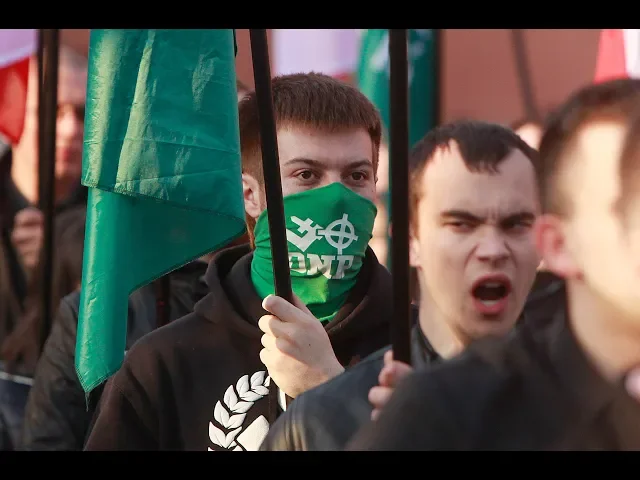
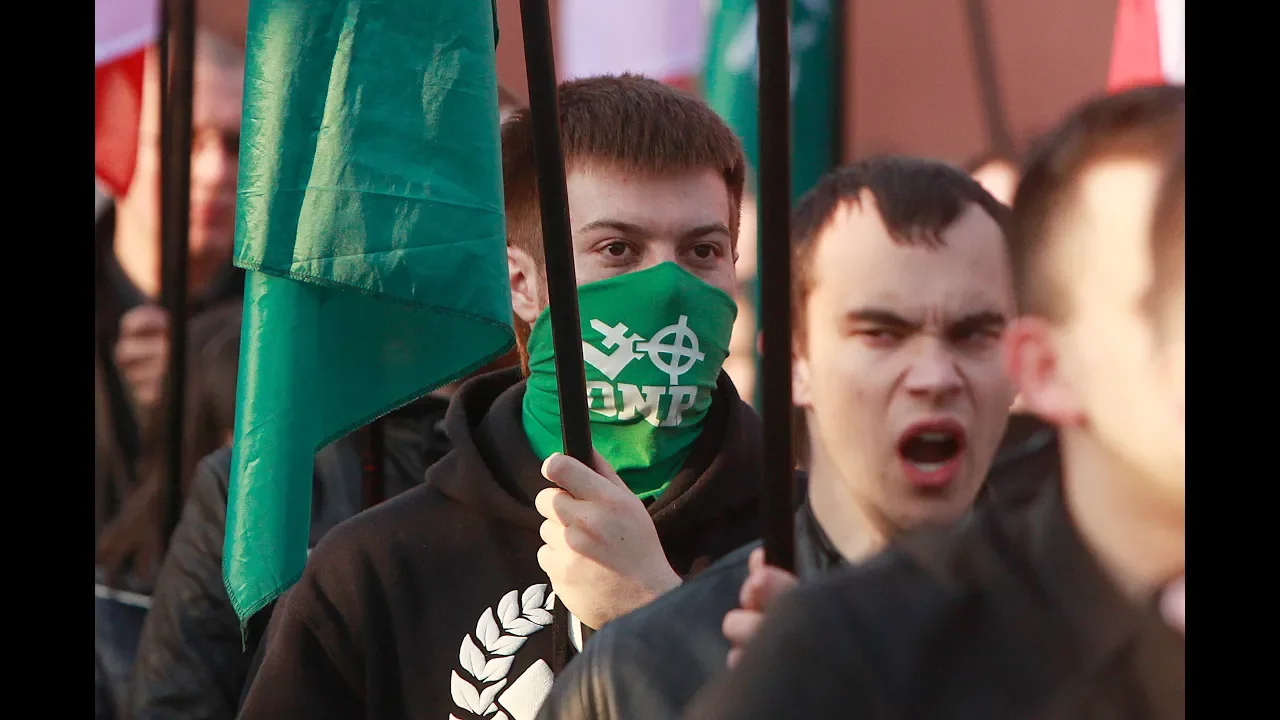
element of this that along the same theme is that there have been some very large far-right marches in Poland especially around Poland's Independence Day in November talk to us just a little bit about the March last year well it's interesting this March has been organized by far-right parties for about the last 8 10 years and it's grown in scale every year but it only reached international attention last year which is interesting because in 2016 for example it was equally big and with the same kind of events but it didn't get very much attention and I
think this is partly because it feeds into more of a global fear or the rise of the far right or at least in in the Western world I think it's important to say that Lauren justice is not a far-right party itself but it defines itself against liberal values and what it regards as unacceptable liberal kids and correctness and so the far-right play a role of provoking moderates and liberals and the left and Lauren justice is able to portray itself and somehow a party that protects Patriots even if they may go a little bit far they
may express themselves in a uncomfortable way they they like to think of themselves as them and the Patriots on one side and everyone else on the other and we should be clear though that in this big March November I think there were banners that said Europe must be white pray for an Islamic Holocaust these these were skinheads some of the people that march are skinheads neo-nazis obviously you know sort of far out of the mainstream was in a different city in a different time that was M but yes there were extremely nasty banners the problem
in Poland is that unlike in a lot of Western countries there isn't much of a real distinction between the right and the far-right and between nationalism and patriotism and that means you get a lot of different kinds of people all mixing together and so what some people would say with that marches oh the far-right was only one part of it and the rest of it were normal Patriots going about their business and the problem is it's very hard to disaggregate those different movements the problem is and that people who are not on the far-right don't
seem to have a problem with attending a march organized by and with the participation of those very dangerous movements well Paul well D if I could turn this to you then we heard young chains key talking a bit about the changes in the Judit Poland's judicial system explain to us just a little bit about exactly what the Law and Justice Party was trying to do and what the response of the European Union has been sure I mean what they've been trying to do is kind of a continuum of what they've been trying to do since
they got into power in 2015 and that is kind of you know reorganize a lot of the public institutions in the way they see them and of course you've just heard a lot of discussion about how law and justice is very keen to protect the national identity they're they're very nationalist party I would argue as opposed to maybe a far-right party there's a lot of parties further right than them believe me that are even more extreme with the judiciary their argument has always been that the judiciary is full of old communist it's been been badly
managed and badly run for years because it's stacked with communists and the whole thing and you heard it before is just his whole thing is to get away from this kind of communist Europe and he views the courts as part of that year now the problem is what they've done is basically and in the eyes of a lot of people I mean this is the Communist there is it's almost 30 years ago now yeah a lot of these judge has been around that long I mean link to think about judging the supreme court in the
United States around for a very long time and he argues that these judges are holdovers from that year they've been on the courts for a long time particularly the Supreme Court and they gotta get be gotten rid of now the issue for the EU and a lot of others is the way they're going about getting rid of these people and that is politicizing the court they're effectively putting in you know watchdogs and they're putting in their own appointment process and basically the argument against them is that they are making their own appointees to the court
that will be beholdin to the party and that's caused a major problem with the european union it's also beginning to cause problem before an investor's companies looking to invest in poland are leery about the court system now even more than there were before partly because of the reforms but also because the judge as many judges are resisting these changes I'm not refusing to quit are refusing to hear cases and the whole legal system there's in a real turmoil so this is a big fraction this is a big problem any you well Anna Kozlovsky I want
to ask you about some changes to the press in the media there in Poland we mentioned during the introduction that there have been concerns that the public media has been politicized there there's also been government pressure on the private press talk to us just a bit about that sure so one of the largest TV stations is Televisa Posca the government-run state TV station which has historically been pretty neutral or at least in the 25 years 20 plus years after the transformation but with peace coming into power it's become basically a propaganda machine so you know
it essentially is spreading what we like to call fake news right or misinformation it's become just you know give us an example it's a it's you know it's um it's on the side of the the government party constantly and it misrepresents words of the opposition you know it's it's essentially become an instrument of power okay so sort of in the same way it sounds like it's similar to the way that Russia television RT sort of promotes the Russian government's ideology then certainly certainly good and what about what about for the private past obviously Poland has
you know it has a robust media system there are a variety of newspapers magazines online outlets are those journalists also commander pressure I would say but you know at the same time they are really trying to hold those in power accountable and I don't know I feel like I've noticed journey was becoming more activists recently for sure but there are also new investigative outlets that have pop up and you know they're they're really doing the necessary work there but but certainly they're there have their husband there have been lawsuits from the government side and and
and there's definitely been pressure and their access to politicians has been limited as well at certain points journalists weren't even allowed into the Parliament so so so yeah the the the press is definitely in danger I would say well Christian Davies if a guy could turn this back to you soon after the Law and Justice Party won the election a couple years ago you wrote an article for The Guardian headline the conspiracy theorists who have taken over Poland what what are some of the conspiracy theories that law and justice has advanced well as Young was
saying that Yaroslav kochanski's argument that the state is somehow still controlled by former communists it was developed in 1989 when in 1990 when he was on the fringes of the Solidarity elite um and that was an argument which had of course some truth in the in the early 90s in the 90s because part of transition was a compromise and it didn't punish former communist and so on but the more that time has gone on the less credible the less connection to reality it has because it's been 30 years now and what everyone knows in Poland
is that across all political parties there are communists there are many former communists in more injustice in fact one of the main people in law and justice helping with the so called D Communist Asian of the justice system is himself a former communist prosecutor so the conspiracy theory is that they are against all the Communists and all the Communists are against them and what it allows them to do is to say that anyone who is against them is de facto somehow a communist sympathizer whether they had any connection with communism or not and a lot
of oppositionists were in are in other parties the main opposition party is made up majority of egg solidarity activists as well and so that is the big lie at the center of it and then when your political movement is constructed on one large conspiracy theory then you have an interest in encouraging many other conspiracy theories to to supported so one one light tends to last leap to another a reminder that your tune in the global journalist I'm Jason McClure on today's program we're talking about poland's populist law and justice government which critics say is undermining
democracy and the rule of law in eastern europe we're joined by christian davies of the Guardian paul wall D of The Globe and Mail and Chanukah slavka of course if you're interested more global journalists check us out online at global journalists org you can find our archives and additional coverage of underreported international news and press freedom issues you can also like us on facebook where we live stream follow us on twitter subscribe to the podcast on itunes or see our video cast on YouTube Paul well D I want to pick up on the issue of
anti-immigrant sentiment in Poland that also seems to be that also seems to be a part of the law and justice movement talk to us a little bit about how that applies in Poland because correct if I'm wrong Poland actually has had relatively little immigration compared with its neighboring neighboring European countries yeah I mean they have they certainly don't have any tradition of emigration from places like North Africa or the Middle East however in fairness to Poland and they attack on it for being anti-immigration they do deal with an awful lot of immigration from Ukraine and
a lot of people coming from Ukraine because of the troubles in that country that would he considered probably economic migrants or even refugees in other countries so they do have a real issue on the Ukrainian border but they have not been you know taking in a lot of immigrants from North Africa or the Middle East or elsewhere that's partly reflects the history in the culture and the traditions there they're not used to that kind of immigration law and justice has been one of the leading you know countries in the EU against the views migration policy
that kind of teamed up with Hungary and others to sort of hit back at what he wants to do they would argue they're winning that battle because the EU appears to be backing off certainly Germany's backing off now with a new government Italy they're clearly onside with a lot of what Poland and what hungry want to do and another key part of this whole thing is some of the personalities involved I mean you got to remember that the guy one of the leading figures in the European Union right now is Donald Tusk he's a former
President of Poland he's the guy that you know that law and justice can't stand he's the guy that represented all of the establishment all of the bad things they would argue that happened to Poland after joined the EU and now you've got terrorists kajinski and his group in power can jet ski you know he's also an interesting character he had a brother who died in a plane crash he's been in mourning for him forever so there's a lot of really interesting personal politics behind a lot of this and that sort of feeds into this kind
of tension with the EU on issues like immigration well an acausal osika we heard Paul talking about some of this tension within the U the U has been taking some measures I think it's called an article 7 process which could eventually lead to Poland losing its voting rights within the European Union I mean is there any talk that Poland could exit the EU and in the same way the United Kingdom has done respond there's been a poll exit' the idea has been floated by a government official later backtracked of course this is very difficult because
Poland has benefited enormously from EU funds however it's a very useful propaganda tool to be you know to be creating yet another enemy so the EU has become you know an enemy that peace law and justice is using as well so even recently president Nam's reads with that called it the EU and imaginary community eliciting a pretty big outcry I just want to take one issue with what Paul was saying about Ukrainians so I don't know if I would characterize it as an issue maybe because they are supplying labor force in Poland and when you're
in Poland right now all of your uber drivers or your cashiers are Ukrainian right now so it's a lot of people would argue that it they're actually a boost to the economy well Christian Davies if we could just pick up on this point then as well about the popularity of the law and justice party one thing that I think is a little bit striking at least for Americans is that they do seem to have quite strong support from young people in Poland in the u.s. when we look at sort of the right-wing populist supporters of
President Trump we often think that it's many older Americans so it seems like the demographics are a little different in Poland talk to us about that it's an interesting phenomenon as you say in a lot of countries people say well the young people of the future and there was a newspaper column published in one of the main liberal newspapers in Poland recently in which the columnist says why are no young people on the streets protesting with us and it is very interesting that most of the opposition protests are middle aged people and particularly women at
the age of 60 and above and you've definitely seen that 10 years ago young polls would vote overwhelming for liberal for European parties and now they vote for nationalistic nationalistic parties instead it's a complicated issue but it seems that many young people feel frustrated in the liberal labor market I mean an economically liberal labor market and peace and other right-wing parties as offer them a kind of economic nationalism which they feel protects them sure but as Anna has mentioned I mean Poland is benefiting normos Lee it seems from being part of the European Union possibly
more than almost any other country is that that people don't see the benefits of that or is that that they had the expectations that Poland would have the living standards of France or Germany or wealthier countries and that they because they haven't achieved that there's dissatisfaction I think after 1989 in the 90s and the first entry of Poland was the EU in the early 2000s there was a younger generation that benefited benefited hugely and which now and not improperly at all but which now wields a lot of political and economic power and I think the
generations above them who they can't have replaced are resentful of that but they're also a generation below them who feel that they can't get ahead because the the generation ahead of them has benefited so much and so what you get is a middle class a middle-aged base for the pro-european liberal opposition and a lot of young people who are working a relatively insecure contract part-time work not with not with a lot of Economic Security who very attracted to parties that offer them economic and nationalism mixed with a kind of crude patriotism which they find very
attractive so it depends the country of course benefited as a whole hugely but you've got to break that down into different groups different age groups different generations well Paul well D talk to us just a little bit more about how Poland's economy has played a role in this oftentimes when people talk about the rise of populist movements there they're attributed to economic anxiety or economic insecurity as we mentioned during the introduction Poland's economy has actually grown pretty strongly even right through the financial crisis that have felled a lot of other countries yeah even still I
mean you're talking about a growth rate 3% twitching 4% times now it has slowed down a little bit in the last little while but really since Poland joined the EU it's done nothing but grow and it's probably at the tie end of the EU in terms of economic growth annually and right through the it didn't really feel the financial follow like anywhere else now that being said Poland is still quite a ways behind the sort of top EU countries like Germany France Britain even Italy it's not growing at the same level - per capita income
isn't quite as high so you're still seeing an exodus of people looking for work leaving Poland although a lot of them are starting to come back and they're certainly leaving Britain as well that I think feeds into a lot of this as well because you got to wonder how far the government can push this without starting to you know make foreign investors a little bit leery as I mentioned the judicial changes are scaring some foreign investment and I think the further they go with some of their reforms the more they have to balance off what
that will do in terms of the economy and also as you know some of their neighbours slow down they may slow down as well so they're in a kind of an interesting position the economy's doing very well and employments very low but they're still behind the EU leaders and they're still sort of there's an awful lot of regional disparity Orlov's an awful lot of inequality that they're gonna have to address aging population a lot of the same challenges that the rest of the EU has well we're out of time for this edition of global journalists
a production of the Reynolds journalism Institute of the Missouri School of Journalism and KBI a mid Missouri Public Radio honey thanks to yon chained ski Paul Wall D Hanna Kozlov suka and Christian Davies our assistant producers this week are Nicky Bram and Meghan Smaltz young Cheechoo is supervising producer and Maggie Duncan his visual editor Erinn Hayes audio engineer Travis McMillan is director for all of us a global journalist I'm Jayson McClure thanks for tuning in [Music] you [Music]