in 1974 during routine construction work to build a highway connecting the city of Aman in Jordan to the nearby city of Zara a remarkable Discovery was made one that would eventually rewrite a significant chapter of human prehistory buried beneath layers of Earth and hidden away for nearly 9,000 years lay some Mysterious Statues they looked unlike anything ever seen before they were lime plaster and Reed statue belonging to a mysterious ancient civilization the statues would later be hailed as the oldest large-scale human artifacts ever found they became known as the a gazal statues the discovery of
the a gazal statues sparked a wave of debate among Scholars who were the people capable of such sophisticated craftsmanship nearly 9,000 years ago what drove them to create these figures and why did they go to Such Great Lengths to bury them so carefully the questions seemed endless and with every attempt to uncover answers new Mysteries emerged the story of the a gazal statues begins in the pre potery Neolithic sea period dating back to approximately 7250 to 5000 BC this was an ERA when human Societies in the Levant and the broader near East were undergoing significant
Transformations they were transitioning from nomadic lifestyles of hunter gatherers to more settled agrarian-based communities the emergence of Agriculture permanent settlements and more complex social structures gave birth to early cities and Villages and a gazal was one of these pioneering settlements this settlement was not just one of the largest of its time but also highly organized with distinct zones for habitation storage and public activities it was within this setting that the a gazelle statues were probably created these were people who lived at the crossroads of significant cultural and technological shifts they were among the first to
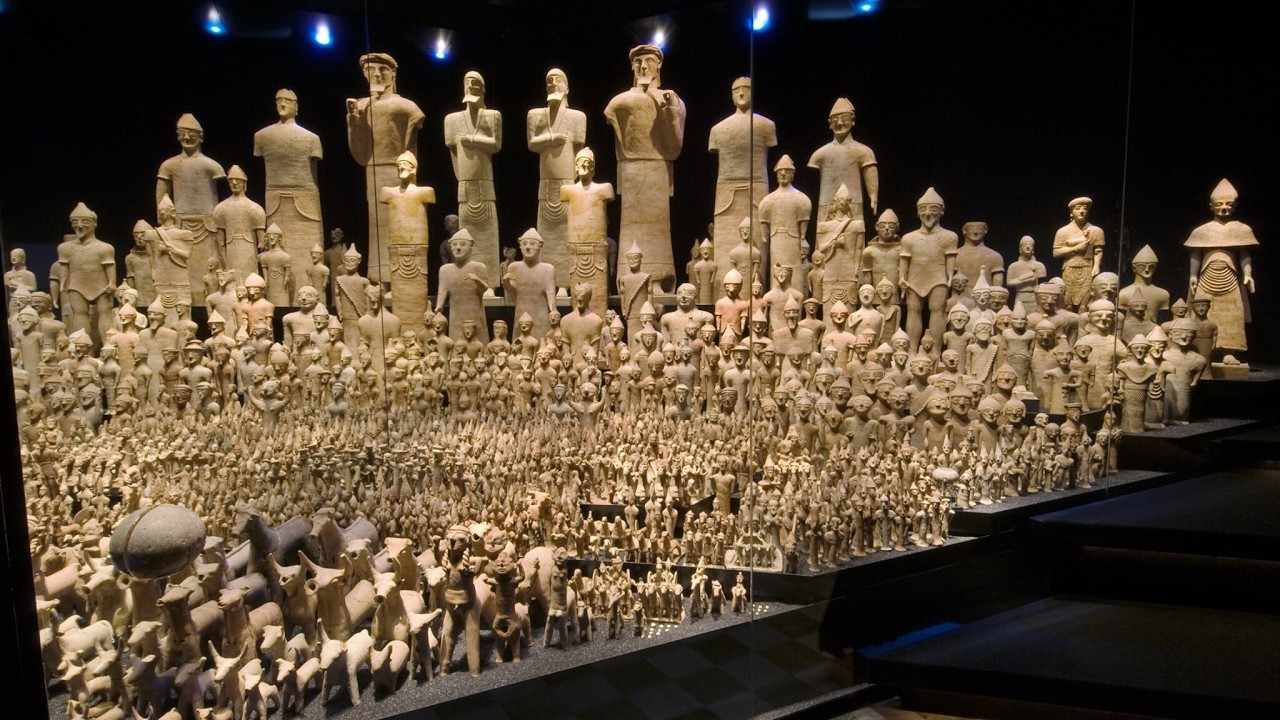
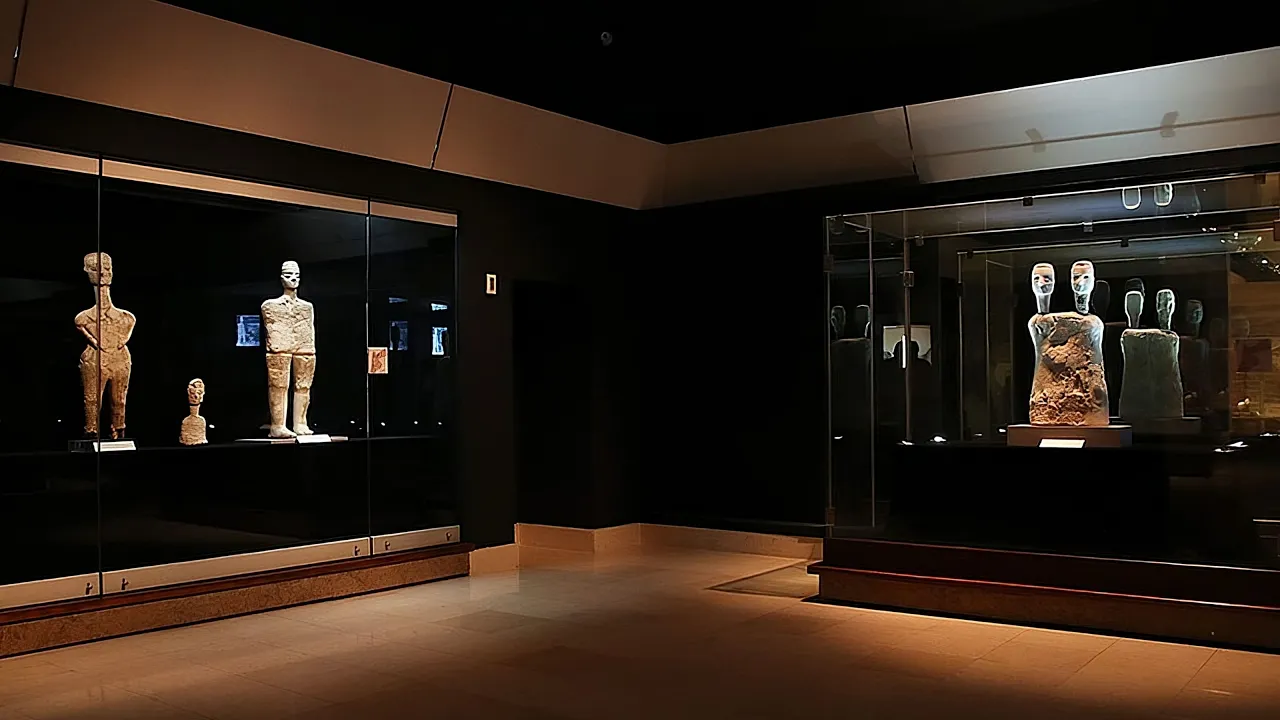
experiment with architecture pottery and sculpture and they likely Left Behind traces of their beliefs and practices in the form of these statues the statues themselves were not discovered until 1983 almost a decade after the initial finding of the a gazelle site archaeologists were conducting routine excavations when they came across something extraordinary a carefully dug underground pit containing plaster statues all remarkably well preserved despite their incredible age these statues were found in two underground caches or pits dug approximately 200 years apart in total 15 full statues and 15 busts were uncovered the statues were estimated to
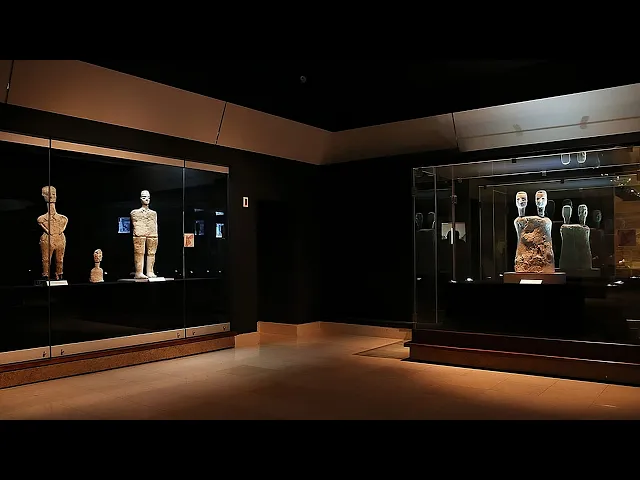
have been crafted between 7200 and 6250 BC making them some of the oldest examples of human figurative art ever discovered the a gazelle statues are made of a combination of lime plaster and reads and showcase a highly sophisticated artistic process for the time the core of the statues was created by bundling Reeds together which were then covered in layers of wet plaster to form the human shape over time the Reed cores decayed leaving behind the hollow plaster shells that were discovered in the excavation there are two main types of statues full body figures and busts
some of the busts are particularly intriguing because they feature two heads the heads of the statues were meticulously crafted with special attention paid to the eyes which were often outlined with bitumen a sticky tar-like substance that gave the statues a hauntingly lifelike appearance the eyes are wide and expressive as though the statues are staring out the figures represent both men and women though they do not feature avert sexual characteristics women are typically identified by slightly rounded bellies and breasts while the men are less distinctly characterized interestingly none of the statues feature genitals an a mission
that further complicates interpretations of their purpose instead the most detailed part of the statues is the face which suggests that the people of a gazal may have been more concerned with the Identity or spiritual essence of the figures rather than their physical form the statues are not life-sized with the tallest standing at around 1 m in height they are relatively flat measuring only about 10 cm or 4 in in thickness yet they were designed to stand upright possibly anchored to the floor in enclosed spaces this design hints that their intended purpose was perhaps for indoor
display during specific rituals or ceremonies though their relatively fragile construction suggests they were not meant to be handled or exposed for extended periods indeed the fact that the statues were buried in nearly pristine condition supports the idea that they were created with the specific intent of being interred one of the most fascinating aspects of the a gazal statues is their uncertain purpose while some archaeologists believe that they were made for ritualistic or ceremonial purposes others speculate that they may have been representations of ancestors or deities the statue's highly stylized features particularly the emphasis on the
eyes and faces suggest that they were designed for a strong connection to the spiritual or the supernatural the fact that the statues were buried immediately after their creation also suggests a symbolic or sacred significance perhaps they were offerings to the gods or representations of revered individuals within the community buried to protect the settlement or to honor the Dead the presence of two-headed statues is also another source of mystery to these interpretations could these figures represent dual aspects of life and death the physical and the spiritual or even a connection between the living and the ancestors
moreover the statue's creation required a considerable amount of Labor and resources which indicates that the people of a gazal placed great importance on the act of sculpture itself after their Discovery the a gazal statue underwent extensive conservation efforts The Fragile nature of plaster especially after Millennia of burial required careful handling the first set of statues was sent to the Royal archaeological Institute in Great Britain while the second group was sent to the Smithsonian institution in New York for restoration after their conservation the statues were returned to Jordan where they are now housed in the Jordan
Museum in Aman as well as the Jordan archaeological museum at the Citadel some of the statues have also been loaned to prestigious International museums one of the two-headed statues can be seen at the louvra Abu Dhabi and fragments of others are on display at the British museum in London and the louvra museum in Paris the a gazal statues remain one of the most enigmatic and or inspiring discoveries in the world of archaeology but for every answer they provide they raise even more questions why were they created what deepest significance did they hold and why were
they so carefully buried although much remains shrouded in mystery the discovery of these statues has already expanded our understanding of early human societies yet as more researches conducted new methods emerge and Technology advances we may one day uncover more about their true purpose symbolism and the civilization that built them with each new study these statues May slowly begin to share their secrets bringing us closer to understanding the creative and spiritual depths of our distant ancestors for now they stand as Timeless relics of the ancient world continuing to inspire curiosity and wonder for generations to come