[Music] So welcome back to the options crash course strategy series. My name is Jim Schultz, and in this video, we are going to cover the iron condor. We're gonna follow the same framework, the same protocol as we've already done.
We're gonna talk about managing winners, we're talking about managing losers, and then we are going to talk about managing everything in between. So let's begin with how to set up an iron condor. Alright, so an iron condor is a neutral strategy that benefits most from a stock that doesn't move too much.
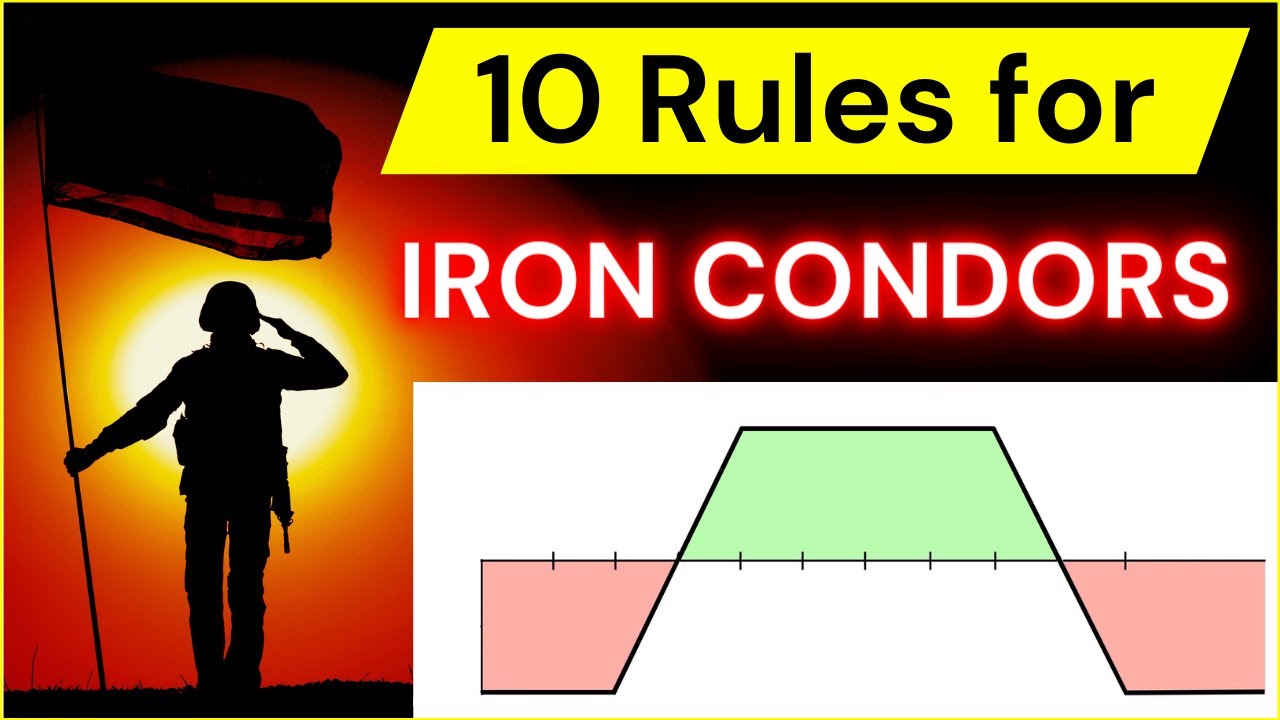
It is built from two out-of-the-money short vertical spreads: you have a short put spread below the current stock price, and you have a short call spread above the current stock price. Your best case scenario is that both of those spreads stay out of the money and are moving toward expiration, where they won't be worth anything. Now, on entry, we like to collect about one-third the width of the strikes.
The short put spread and the short call spread have the same width, so it doesn't matter which one you choose. But, similar to a short put spread or a short call spread, we're looking to collect about one-third of that width of the strikes. Now, with an iron condor, it's unique because you have two spreads, so you don't need to collect one-third the width of the strikes from one spread; you need to collect one-third the width of the strikes from both spreads.
Alright, so that's how an iron condor sets up. But now the fun part: how do you manage those winners? Well, it's actually going to be very similar to what we saw with our short vertical spreads, whether it be a short put spread or a short call spread.
We're going to target 50% of max profit. So what that means is if you sell an iron condor for a dollar, you're looking to buy it back for 50 cents. If you sell an iron condor for a dollar eighty, you're looking to buy it back for 90 cents.
It really is that simple: take these guys off once they reach fifty percent of max profit, and don't look back. Alright, easy enough. What about the not-so-fun part?
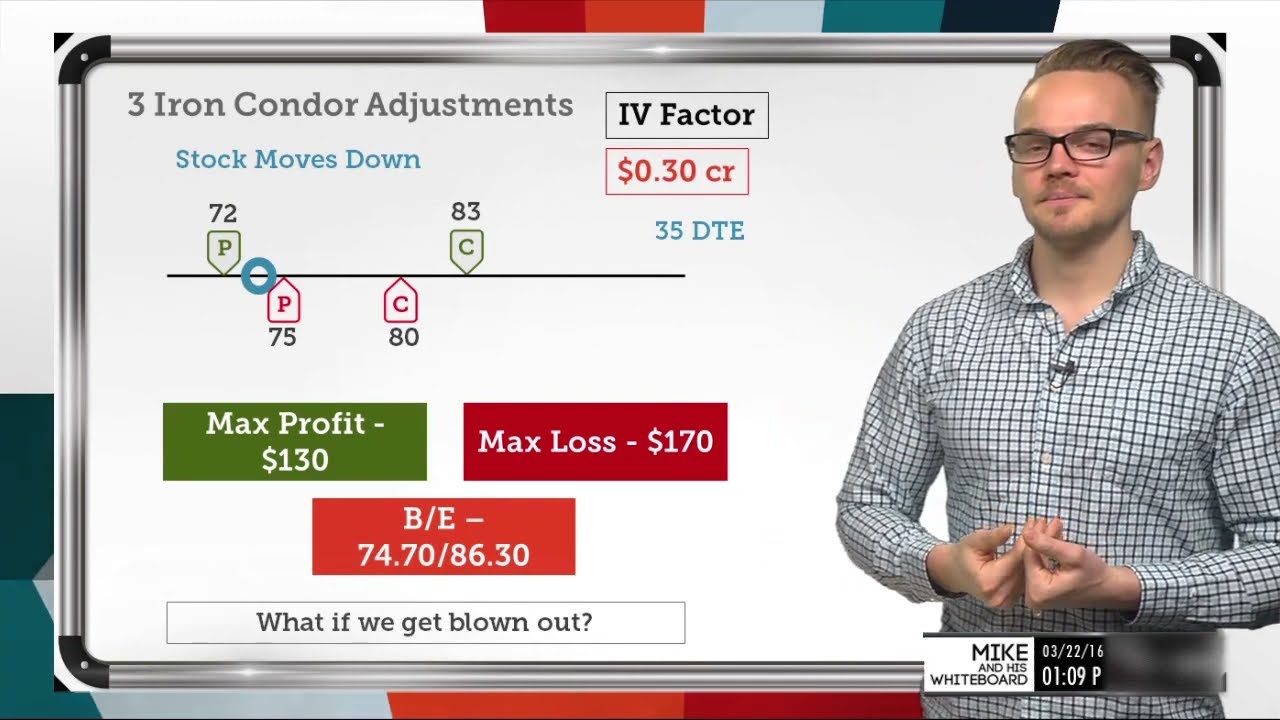
What about these losers when the stock moves up significantly or the stock moves down significantly? Well, what you're going to want to do is largely going to be driven by the width of the iron condor. So let's start with the more narrow guys, you know, your three-dollar wide iron condors and your five-dollar wide iron condors.
You can treat these very much like you treat every other defined risk strategy. You can pretty much just sit and wait. You control your risk on order entry, and then at 21 days to go, if you can roll for a credit, then you do so.
If you have to pay a debit, then you sit tight and do nothing. This is absolutely a viable alternative with these narrow iron condors. Now, to be fair, you could also roll the untested side.
So if the stock moves up a lot, you could roll the put spread up. If the stock moves down a lot, you could roll the call spread down. That is going to bring in a credit, and it will reduce your risk, but you have to be aware it's also going to shrink that region of profitability.
It's going to make it more difficult to be profitable on this trade because there's simply less distance between the two short strikes now, and there's already a tremendous amount of friction between the short options and the long options. Alright, so that's how you handle the narrow iron condors. But what if you have a wider iron condor?
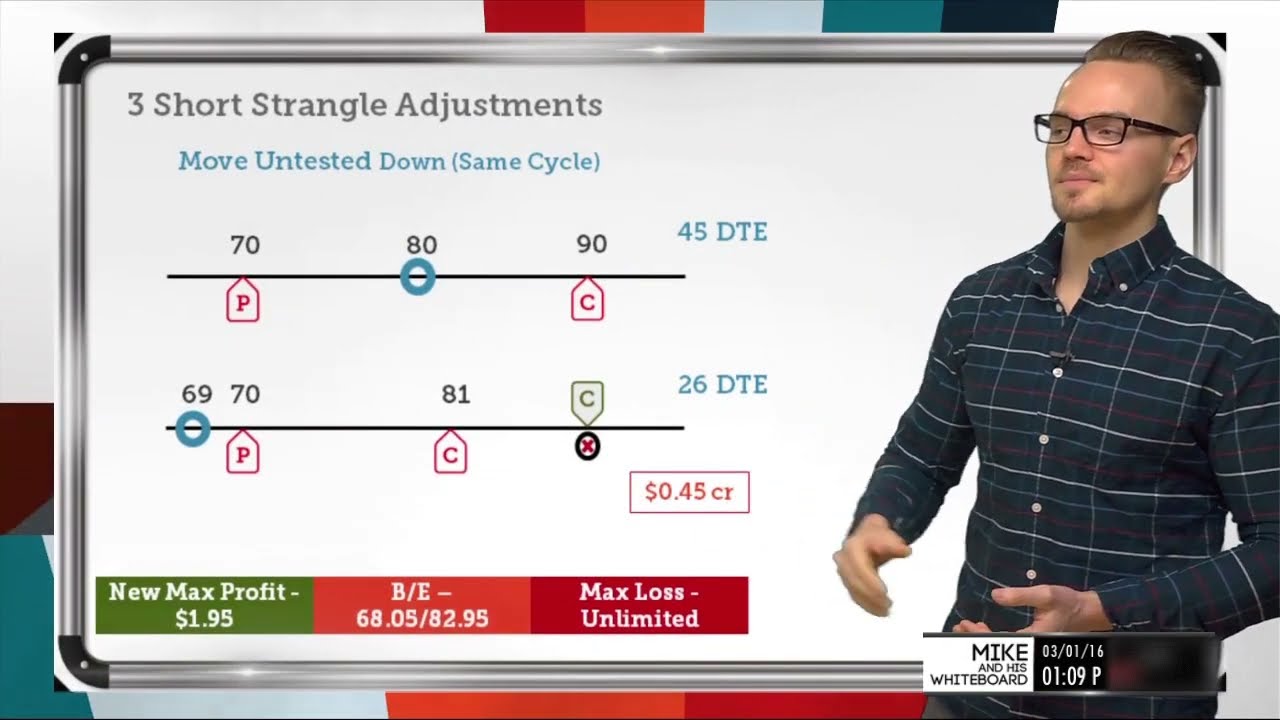
What if you have an iron condor that's, you know, I don't know, ten dollars or fifteen dollars or twenty dollars wide? Well, this is actually going to behave a lot more like a short strangle, which we're going to see in a future video inside of this series. Even though the risk is very much defined because you have so much distance between the short option and the long option, these guys are going to behave a lot more like a strangle.
So it's probably prudent to roll that untested side when one of your sides gets tested because you have so much additional distance between the shorts and the longs; there isn't going to be as much friction as you would have with a more narrow iron condor. So what this means is you will be able to reduce your risk, you will be able to bring in more credit, and you won't shrink your chances of being profitable on the position like you might with a three-dollar wide or a five-dollar wide iron condor. Okay, so that's how to handle the winning iron condors; that's how to handle the losing iron condors.
But what about all the other encounters that are kind of like not really a winner, not really a loser? You get 21 days to go, and they're pretty much a scratch. Well, this is going to be largely up to your discretion as a trader, but here is a good reference point to use—the same one that we used with our short vertical spreads.
Look at IVR, look at the implied volatility rank. If it's still elevated like it was when you put the trade on, then consider keeping it on. But if it has collapsed, if it has come in a little bit, then you might want to consider taking it off.
Following IVR and using it as your reference point here really allows you to take advantage of any volatility mean reversion that might indeed take hold. Alright, guys, that is it for the iron condor. Save this!
Video for future reference: Hey, share it with a friend! Right? Share it with one of your trader friends who’s trying to learn about iron condors.
When you are ready, I will see you guys in the next video inside of this series, the diagonal spread. We’ll see you there!