this is the video for b3.3 on muscles and motility it's a higher level topic and we'll be diving deeper into joints and Locomotion and here's a great connection to your Lang and lit class right so the antagonist in a story is someone who's doing like the opposite thing as the hero right well we have the same meaning here for antagonistic muscle pairs all of your muscles come in pairs because muscles can only accomplish one movement the only thing muscles can do is pull so for a muscle to pull it can go in One Direction but
if you want your joint to move in the opposite direction you need a muscle that will pull in the opposite direction so all muscles occur in antagonistic pairs because they pull in the opposite directions so great example here is your bicep and tricep so your bicep is going to be located here and your tricep is located here your bicep is great for flexing your elbow but if you want to straighten it back out you need your tricep to contract and to straighten out your arm now this relates to that protein Titan remember Titan is going
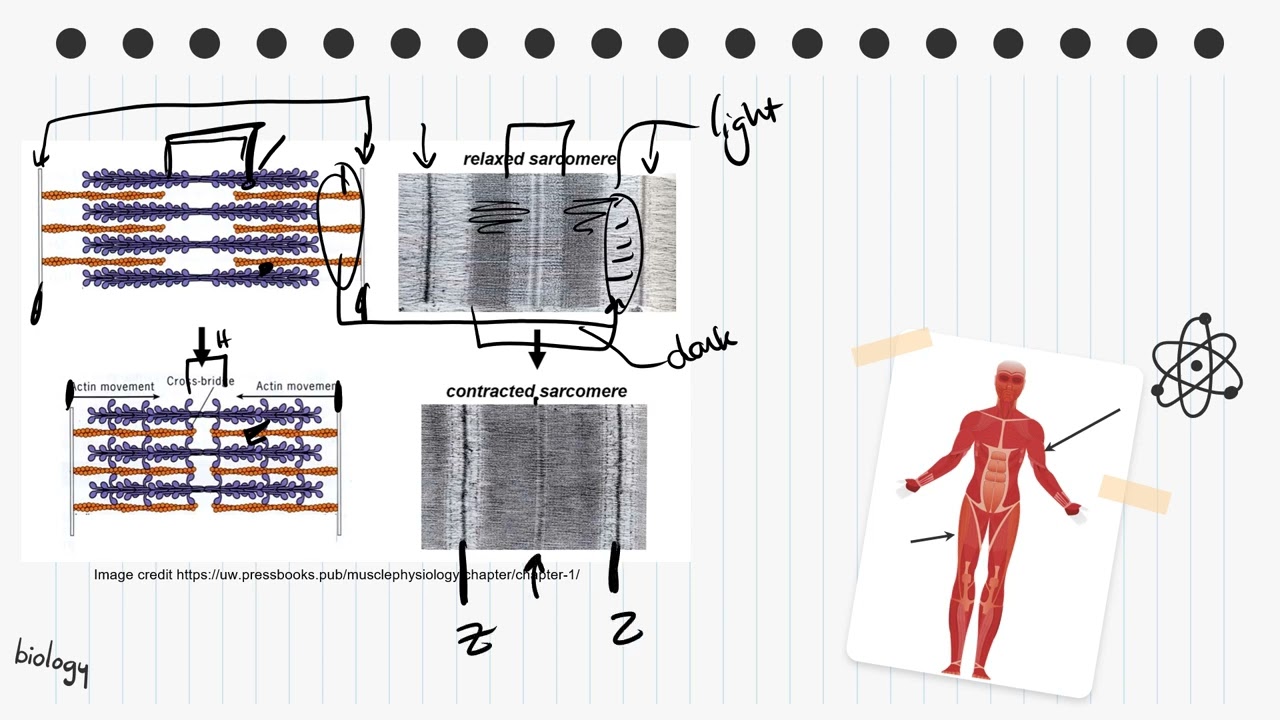
to connect the myosin to the Z lines when your sarom mirrors relax what they're doing is they're actually stretching that tighten and it becomes like a rubber band and it can actually make um recoil um and a real forceful contraction when that antagonistic muscle pair also needs to contract so it helps out with that antagonistic movement now in order for a muscle contraction to take place it needs to receive a message from a nerve okay and this spot where a neuron meets a muscle fiber is called a neuromuscular junction junction means place where they join
neuro is the neuron part and then muscle so this neuromuscular Junction is going to be a spot where the nerves of the muscles communicate and they communicate via neurotransmitters so if you haven't yet studied the topic on nerve transmission that's okay um for now we can just say that neurotransmitters are chemical messenger molecules that travel um from one neuron to either a muscle or another neuron something like that and the one that is involved in muscle contraction is called acetal choline so acetal choline will be passed from the nerve to the motor unit or to
that muscle so alt together this neuron and the muscle fibers that it controls is called the motor Ur unit you'll notice in this picture that one neuron can connect to multiple muscle fibers so each of these long skinny things is a muscle fiber or a muscle cell and this one motor neuron is going to connect to many muscle uh fibers here and that helps to coordinate their contraction so if we want an entire muscle made up of many muscle fibers to all contract at the same time it's helpful that they're all connected to the same
nerve so we know that muscles provide the pulling Force but what does our skeleton do in addition to providing like protection it can also serve as an attachment point for our muscle now it turns our joints into a lever and in order for a lever to work we need two attachment points one that moves and one that does not so let's consider um this joint here okay so I have a muscle that connects this part of the lever with this part I have a part that does not move and it is attached by a muscle
to a part that does move when the muscle contracts it moves the lever and it all pivots around this Central Point here called a fulcrum now there's a a relationship between the force and the distance moved okay so the attachment points and where they are attached it can determine not only the range of motion but the force that you can get out of that it's one of the reasons why insects have incredible abilities they can jump like 10 times their body height and things like that um because they have different attachment points and different amounts
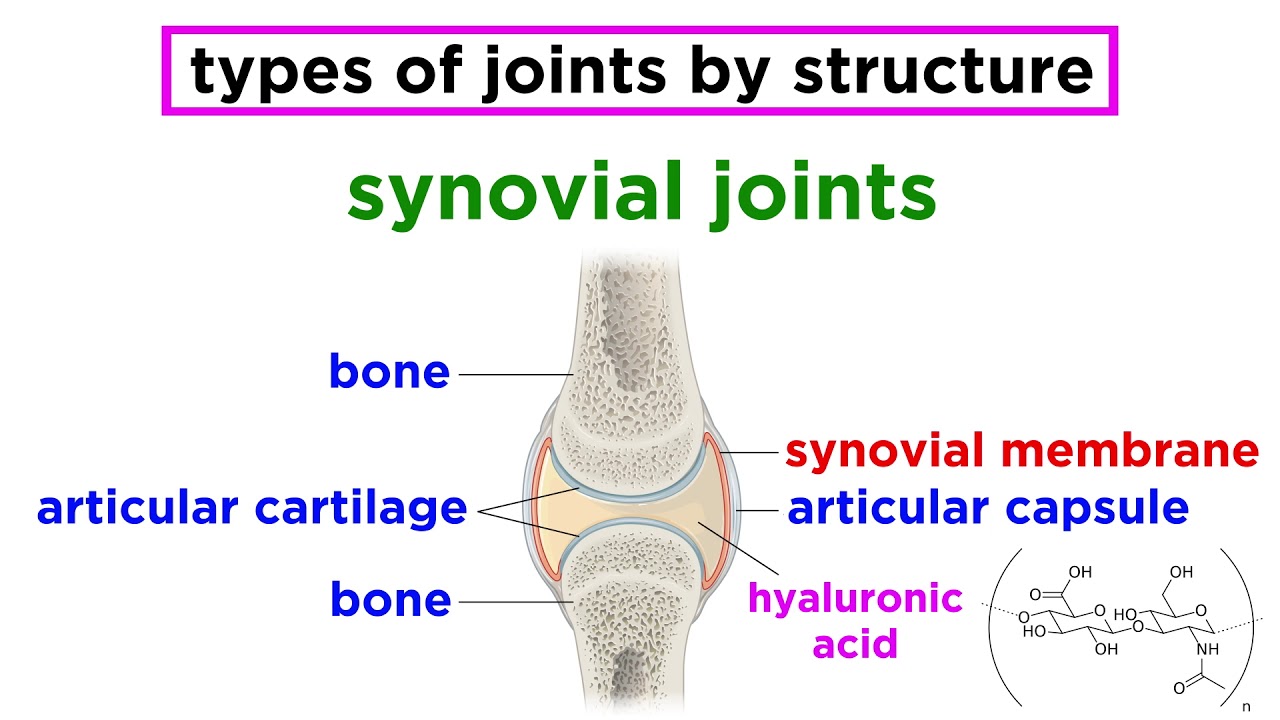
of force that they can create with these levers but it's just right now important to understand that your muscles are going to attach to two things on either side of a joint okay one that moves and one that doesn't move and when the muscle pulls it can help move that lever next we're going to do a drawing of a sovial joint now I'm not going to draw a specific joint in the body I'm just going to draw a generalized synovial joint so we can see all the pieces and how they fit together joints of course
connect two bones okay so here's one bone here's another bone and we have some connective tissue that joins the two bones together and those bits of connective tissue are called ligaments and these ligaments connect bones to Bones they're there to help stabilize The Joint there's probably a ligament on this side as well but I don't want our drawing to get too complicated now what we know about joints is that they are moved by muscles so I'm going to draw in a muscle um somewhere up here and muscles move joints by attaching to the Bone so
this muscle is going to have two attachment points one to each of the bones surrounding the joint and you can kind of imagine how if this muscle contracted it would pull this bone upward in this direction and that is due to these connections and these pieces of connected tissue are called tendons tendons are what connect a muscle to a bone so here's one tendon here is another one now if these bones were to move and rub up against each other there would be a lot of friction and that would be very painful so at the
end of Bones we're going to find this very slick type of tissue called cartilage and cartilage is there to reduce the friction between two bones in a joint so if you take apart bones um you'll notice this like slippery um type stuff at the ends that's our cartilage now because this is a sovial joint there's going to be an additional structure here that helps even further reduce the cartilage and that is something called a sovial capsule so I've done that here in green all right so we can see this capsule is just the edge of
it so this whole thing is called the sovial capsule it is filled with a fluid inside called the sovial fluid and again that's there to help further reduce the friction so this isn't a realistic or complete picture of any particular joint in the body but all synovial joints are going to have these components it's going to have bones muscles to move the bone there would also be a muscle on this side because muscles come in antagonistic pairs this muscle is only capable of flexion I would need another one back here capable of extending that joint
we're going to have ligaments that connect the bones together again tendons that connect muscle to Bone I should be finding cartilage and synovial capsules in fluid to help further reduce that friction all right so let's talk about a couple different types of joints there are several but we'll only highlight two one of which is called a hinge joint okay and so this is a joint that's very stable but it has a relatively limited range of motion so kind of like your elbow or here I have a knee this knee can either extend or it can
flex but it can only go in that One Direction so again um very stable but limited in its range of motion that's going to be different than a ball and socket joint so a ball and socket joint we're going to find these at like our shoulder or our hip okay and so when I think about how I can move my shoulder I can do lots of things I can do rotation adduction abduction protraction retraction I have a much wider range of motion it's not as stable we need some more stabilizing features right like some ligaments
and stuff um but just a very different type of joint that allows for a different range of motion and you can measure this with something called a gometer oo great IA idea um this is a measurement tool that allows you to measure joint angles and so you can investigate range of motion for different types of joints or the same type of joint in different people or in different ages there are a lot of independent variables that you can look into um using this goniometer now if you've already studied gas exchange this might sound familiar to
you but if not that's okay we're going to talk about an example of an antagonistic muscle pair and this example comes from from our intercostal muscle so inter means between costal refers to your ribs so these are the muscles that are in between your rib bones okay and so they'll be right in here and they're actually in the same spot but they are oriented in a different way so we'll refer to them like this so we'll have external intercostal muscles which I will abbreviate with an e and then we will have internal intercostal muscles which
I will abbreviate with an i so if I say I I just mean internal intercostal and so they um accomplish different movements when we are inhaling what's happening to our rib cage is that it is moving up and out and that is going to cause it to expand so that rib cage is getting bigger okay and that is due to the contraction of our external intercostal muscles they are um Contracting to really open up that rib cage when we are exhaling what we want to do is we want to make that um rib cage move
inward okay and down and that is going to make your rib cage um smaller okay so okay something like that and that's going to be due to the contraction of your internal intercostal muscles aside from breathing there are lots of reasons why organisms might utilize this idea of locomotion so remember Locomotion is the movement of a whole organism not all living things can do that motion could refer to just movement within an organism but Locomotion is kind of special actually and so this might be like anything from finding food getting away from predators finding a
mate my migrating lots of different reasons why organisms would have evolved the ability to have Locomotion and we'll wrap up this video with some special locomotive adaptations for animals whose common ancestors lived on land but now these current species live in the water so we're talking about marine mammals whales Dolphins things like that okay so they evolved on land but now they live in the water they need special adaptations one of which is they have a streamlined body shape so you can kind of see that here okay that they're not going to meet a lot
of resistance from the water as they are swimming through it so that's very helpful you'll notice that they've um kind of gotten rid of most of the hair or fur on their body to reduce friction as they're swimming through the water water is a lot more viscous than air so animals that live in the water um need to have adaptations for that they also have a very different a way system in your ventilation system your mouth attaches to your lungs and that's good we live on land everything works fine there if you live in the
the water however you're probably using your mouth to capture prey and do a lot of other things well if your mouth is open while you're swimming water would go into your lungs and that's bad so in these marine mammals they there's actually no connection between their mouth and their lungs there is is a connection between uh a hole at the top called a blow hole and it's the blow hole that leads into their lungs not the mouth so that's really interesting and then in the last bit here this is about just adaptations for living in
the water um they have fins and flippers instead of Tails there's still a pentad doylin there's still some fingers in there which is a really great example of homologus structures if you've already covered that and then they also have blubber here and that blubber does a couple of things it increases buoyancy but it also helps prevent any um or reduces the loss of body heat to the environment so some really great and very cool adaptations uh for Locomotion depending on environment and needs
![B4.1 Adaptations to the Environment [IB Biology SL/HL]](https://img.youtube.com/vi/dcr6HKLvRiM/maxresdefault.jpg)
![B3.3 HL Muscles Structure [IB Biology HL]](https://img.youtube.com/vi/wT6WhBTy7Hg/maxresdefault.jpg)




![B3.1 Gas Exchange in Animals [IB Biology SL/HL]](https://img.youtube.com/vi/1OqMFq43spw/maxresdefault.jpg)