Now, it would be irresponsible of me to stand here and tell you why I like this stuff so much and not point out any possible downsides to it. What's up, Lazy Dog fam? Hope all you are having a fantastic day.
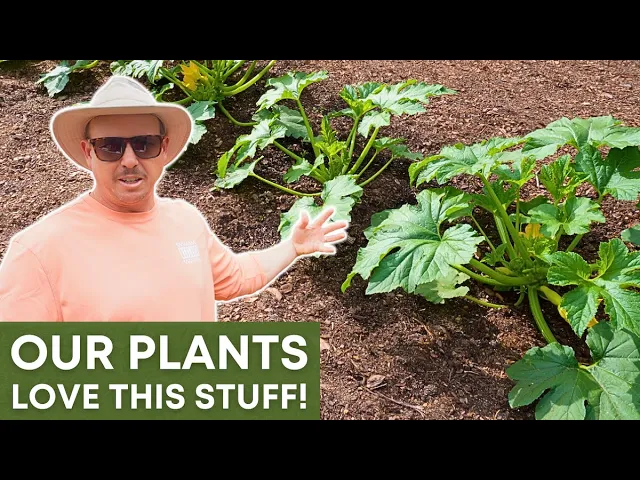
It is Tuesday, May 6th, here in South Georgia. And on today's video, I'm going to tell you why the stuff I've got on top of this plot here behind me is my new favorite mulch to use in the backyard garden and why I'm probably going to be adding it to all my plots sooner or later. So, we're going to talk about this stuff, compare it to some stuff we've used in the past, and tell you why we like this so much better.
But first, let me give a little primer, a little background on our particular no till system here. And I know the phrase no till can be a very polarizing phrase. Some people love it, some people hate it because the people that love it try to shove it down their throats.
And over the years, I've poked a little fun at the no teal Kool-Aid drinkers out there because yes, it can be a great system for a backyard garden, but to say there are no disadvantages to it would be misleading. And some people out there say our system really isn't no teal and we shouldn't call it that because we're still coming out here with a wheelho and cultivating the first couple inches of soil there. So, we still do some very light cultivation, but basically our system involves putting a thick compost layer on top of the soil and not mixing it in.
So, we're talking 3 to 4 in of compost on top of the soil. And what I have found over time, it makes some really good garden soil. It's not instantaneous.
It takes a couple years and it may take several applications of that thick layer of compost, but over time the rewards are there. So over time, it gives us some pretty healthy garden soil. It's not miracle garden soil underneath there, but it's pretty healthy.
The main reason, the biggest reason I like this system though is because my soil doesn't crust over it. It makes it a lot easier to weed in here. When it gets hot during the summer and it gets dry, that soil can get crusty and hard, but having this little compost layer on top prevents that from happening.
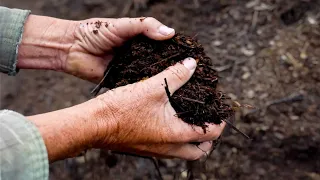
Now, you probably notic in that stuff I just showed you there, there are some little chips or pieces of pine bark in it, but we're not using wood chips. We're using something much finer. Now, we do use wood chips here in the raised bed plot between our beds, and it works perfect for this because we're never needing to move these wood chips around.
They just stay there. And we put a fresh layer on here every year or so. But in our inground garden, I need something much finer than just straight wood chips because our system involves making a furrow, a planting furrow with the wheelho, and I can't really run the wheelho through straight wood chips.
However, I can with this finer stuff. So, over the years, we've used several different types of compost or different toppings to create these no teal plots. So, let's go through some of those, talk about the pros and cons of those, and I'll tell you why I like this one better.
So, the first stuff we used was this composted gin trash. Now, this is not just straight gin trash right out of the cotton gin. It was piled up and allowed to compost.
And this stuff here worked pretty well. It has held up pretty well. Haven't really added any more to this plot in quite a while.
And you can see it's still there. Our native soil isn't quite this dark. I did have an issue with a little bit of pig weed seed in it.
And you can see a pig weed right there. Then a few years ago, we used some composted wood chips. So, a friend of mine's uncle not too far from here got a sawmill and they had these piles of wood chips that have been allowed to just decompose, you know, 10 to 15 years.
So, it's pretty fine stuff. And we used that because we had got a load of it to fill our raised beds. Had some leftover.
So, I figured I'd try it in one of our inground plots. And it worked pretty well. Had a few weed issues with it.
Had a decent amount of morning glory seeds in it. And I found that that stuff actually held moisture better than the gin trash compost did. However, the composted wood chips, they seem to burn up a lot faster on top of these garden plots out here.
And the places where I put it, you really can't even tell it was there now. And then earlier this year, we went with this bed mix on top of this plot. So, this is sand, mushroom compost, and some pine bark.
And we actually did a video back then when we were adding the bed mix to this plot here. And on that video, I told you that was probably not my preferred mix to put on a plot to convert it to no teal, but I had some in my trailer. I needed to empty that trailer to use it for something else.
So, I figured I'd give it a shot. So, I just used it because I had it. It's the same stuff we use for our potted fig trees and the big greenhouse there.
But now that I have grown some stuff in it this spring, I like it a lot more. And I think it is going to be my preferred go-to from now on. So, let's talk about why I like this stuff more.
Reason number one, very few, very little weed seeds in it. Now, if we look closely here, we can find a few weeds. A little bit of pcelain right there.
I hate that stuff. and a few more little ones scattered around here, but most of those are weeds that we had in this plot prior to adding this bed mix on top. So, they probably just grown up through it or got mixed around a little bit when we were planting.
Haven't noticed any new problematic weeds that we normally don't deal with in this plot. Another reason I really like it, the weeds die faster when I'm out there with my hoe weeding and flipping those weeds. So, when I'm out there with my little single tine cultivator here, just kind of flipping over those weeds as I'm working through those rows there, they die a lot faster after being flipped in that plot versus say that plot with the gin trash compost on.
Because for whatever reason, the pigeed especially in that plot with the gin trash compost, the pig weed holds on to that stuff really, really well. So even though we flip this pig weed over, it still has some soil attached to it, usually a lot more than that right there. And they don't die very fast.
However, in this plot here with the bed mix, when we flip a weed, the roots end up looking pretty bare and they die pretty quick. Now, for some that may seem like a very trivial issue, but I can promise you nothing is more frustrating than going through a plot with your hoe flipping a bunch of pig weed like this only to see it come back a few days later. When I flip those weeds, I need them to die that afternoon.
I don't need them to make a resurgence if we get some rain in the next few days. Another reason I like it, I can get it really easily 30 minutes from here. I can get a trailer load of it.
I get it from Greyco Fertilizer in the big city of Cairo, Georgia. Don't have any affiliation with them at all. I pay full price just like everybody else, but I figured someone would ask where we're getting it from.
So now you know. And it's relatively inexpensive. I think it's around $30 $35 a yard.
And because I use it for my fig trees, I always have it on hand. It's just a matter of me taking the time to bring it out here wheelbarrow by wheelbarrow load and cover these 30x35 plots. Now, it would be irresponsible of me to stand here and tell you why I like this stuff so much and not point out any possible downsides to it.
So, let's talk about the one downside. The top of this stuff tends to stay pretty dang dry. Now, that's not an issue when you're putting in transplants like tomatoes and you're digging past that mulch layer, getting down to the native soil, and that's where you're putting your transplant root ball.
However, it can be an issue when you're direct seeding something like squash or cucumbers. So, in our native soil, when we lay down drip tape, bury it in a furrow, and then direct seed on top of it, we can run that drip tape, kind of soak that seed bed, and we still get really decent, pretty fast germination. What I found with this stuff here is that the drip tape really won't soak the top of it to get some good germination from direct seeding.
keeps the plants plenty happy once they get going, but you got to help them out a little bit to get them germinated. So, what I have to do after direct seeding something like squash or cucumbers, I have to come out here every day after I plant, just take my little watering wand. I'm not soaking down the whole plot with an overhead sprinkler, but take my little watering wand and just water that row there.
Give it a little splash just to keep things moist enough to get some good germination. Once those seeds pop, don't have to do that anymore. The drip tape will take care of them because they've got roots going down there to where that native soil is.
So, that's the only really issue I've had with it so far. Not a huge issue, not a lot of effort to come out here and do that after we direct seed. And I think the pros outweigh that one con.
Now, it is going to be interesting to see. And I don't know when we'll grow a cover crop in this stuff. That will happen this summer or this winter.
It will happen probably within the next year, though. It'll be interesting to see how well we're able to get cover crop seeds to germinate in this stuff because cover crops, we're just scattering those and raking them in. Going to be interested to see just how much overhead water it takes to get those cover crops up and going.
I think they'll grow fine once we get them germinated. But considering how dry the top of that stuff stays, you know, cover crop germination could be a little bit iffy. I've got some things I can do though to kind of enhance that if we need to.
So, I said all that to say this. If you have a garden spot that gets consumed with weeds every single summer, you lose the battle every single summer. they go to seed every single summer and they're just multiplying and multiplying year after year.
This might not be a bad strategy for you if you have access to bulk compost or bulk bed mix like this. So, as long as you don't mix this stuff in with your native soil too much, this is a great way to kind of reset your garden plot and kind of ignore a lot of those weed seeds that you were dealing with in the past. So, you could take a garden plot that had a relatively high weed seed bank.
You go in there and add 3 to 4 in of compost or a bed mix like this on top. Like I said, don't mix it in. You don't want to be stirring up those weed seeds.
Just put it on top. After you put it on top, I would allow some time for a little bit of tarping because some of those weeds are still going to grow through that stuff no matter how thick you put it on there. So, tarping after adding it is going to help you out a little bit, kill off any of that stuff that tries to grow through it.
But if you do that, if you add that thick layer of compost, then do some tarping, it's going to give you a nice little reset, allow you to kind of get control of things again, and hopefully from there on out, you can stay on top of them, and those weed seeds won't keep multiplying, and you'll enjoy gardening a lot more. So, if you're considering topping off your garden plots like we do, be flexible. Try some different things.
You may find something that you really like that you didn't think you were going to like. And it's not a bad idea to do a little weed seed test before you get a big load of something. If you can just get a little pot full or a little bucket of it, let it sit out in the rain or water it daily and see what kind of weed seeds pop up from it.
You know, that's a good thing to check before you put a bunch of it on your garden plot and then have a weed explosion. So, I hope you enjoyed the video today. Hopefully that gives you some ideas that you may want to implement in your garden.
Doing it this way is not the only way to garden. It's one way to garden that I have found that I like. That doesn't mean everybody's going to like it, but you may want to try it.
And if you want to learn more about this system we use and how we integrate the tarp into all that, watch this video right here when we were spreading this bed mix on this plot here and putting that tarp on it. We'll walk you through the process of how we do that. So, check that out.