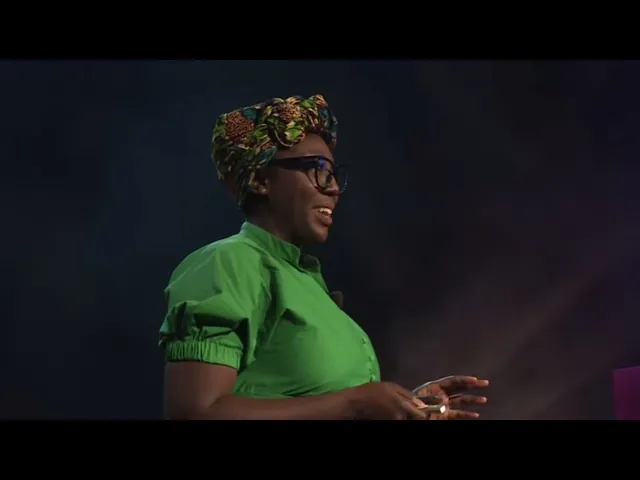
I'm just curious how many parents are in this crowd with children between the ages of zero to five clap hand raise amen preach anything just let me know who's here okay we got a few parents in here now the whole audience let's give them a round of applause because being a parent it's no small thing and the reason why I have such a se myself is like an ally and advocate for parents because at this stage in my academic career I am privileged to sit on some high levels of education policy globally I said on
three different major organizations and we're all looking at this outcome how do we prepare children to thrive in the future what does a student in 2030 who's going to be at this level in their academic career what skills do they need to know and if you're a parent that's a terrifying question because whether we say it out loud or not we don't really know what education is going to look like in 2030 we are all putting together our best educated guesses but technology is rapidly changing there's a buzzword that flows around 21st century skills have
you heard it it's like a selling phrase on a lot of things 21st century skills in education it's like a sexy word you know like 21st century skills and you automatically assume that I know everything what I don't but here's the thing what we're saying when we use to turn 21st century skills we're trying to provide you with our best educated assumption on what education is going to look like and what skills students need to have to thrive in the future and if you look at the World Economic Forum's this is their review of lifelong
learning and these are the skill sets they feel students need we have far more here under foundational literacies then reading writing and arithmetic and for the parents grandparents adults stakeholders in the room if we're honest with ourselves the education that we're preparing children for is not the education we received so we're all learning at the same time but it doesn't stop there there we go from foundational literacies to competencies and we start pulling in skills like we moved past literacy to digital literacy global competency now we're thinking about critical thinking skills and creativity and innovation
which are buzzwords within the larger community in itself but then we move on to character traits and if you look at the OECD's education 2030 framework they have designed 11 well-being areas I'm going to pause so you can like look at some of these notable suggestions these are all areas we feel children should have if they're going to do well in the future as adults if you look at this how many of these skills can you say you know what in Hong Kong we are knocking this out of the park like civic engagement you know
we Rock 2014 you know we we we gotta work we're clear on that housing you know apartment hunting here is enjoyable the landlords are the best whoever my future landlord is I love you don't raise my rich and the biggest one work-life balance if anyone in the room feels like you understand work/life balance please let me know I'll try to get you on stage next year because you have a message Hong Kong really needs to hear but for the parents who are in the room and you know you're laughing along but in the bit in
the pit of your stomach is this nervousness because they're like you know what I really have no idea how I'm gonna do this or how much it's gonna cost me to get my child of this skill set I am here to share with you a research-based evidence proven resource that is outstanding parents reading aloud and parent-child reading aloud between the ages of 0 to 5 and even further but during these foundational years it's a powerful thing now unfortunately in Hong Kong a lot of times when I say things about parents our reading aloud I get
parents that hear me and they think ok I get my child to the point where they can read and then I envision them reading alone reading very impressive books like Lemony Snicket's A Series of Unfortunate Events at the age of 6 you know because we're we're hard achievers in Hong Kong like I want to see them reading dense books and loving it by themselves and I want to say actually that's one outcome but the power of parent-child reading aloud it's more than just the skill it's the bonding and if anyone has experience being read to
or reading to a child there is something and I'm gonna use an unscientific term to describe it it is absolutely magical if you experienced enjoying a story with a child but that magic is not sprinkling through Hong Kong the way I'd hope the theme for this TEDx is emergence this was my moment of emergence I was in 2014 I was starting my doctoral research in Hong Kong on early childhood literacy and you know I told you a bit of who I am and I came in after doing a master's in Beijing so I already knew
I already knew I wanted to research this area and I knew I was passionate about parent-child reading aloud I'm like I'm gonna come to Hong Kong and I heard about the refugee situation so I'm like I'm gonna be the Michelle Obama of this movement and I'm gonna like help equality and all of that it's gonna be awesome and then I found out the rate of Hong Kong's engagement in early childhood literacy activities we were left guys we were left and I was like and I had to make a decision I decided right then and there
I could spend the next 4 years getting my credentials and then addressing the issue or I could drop my bucket right where I was and get involved in helping and that's what I did I went to parents where they were if you talk to parents and you ask them why they don't engage they'll tell you time so I went to the corporate office I didn't stop there I went to to the communities I went to the refugee Asylum centers and I shared everything I knew about effective early childhood literacy and it boiled down to these
four things talk read sing play now if you want to hear more you got to ask me back because I'm down to like four minutes but I will tell you a little bit more about read if you can read at least 15 minutes a day the research says that's the minimum amount of time you need to invest in order to start seeing some outcomes but I want to go beyond just the 15 minutes I want to talk to you about the power of reading in a way that ties back into those 21st century skills one
foundational skill is global competency the ability to collaborate and work well with others technology has made the world flat and there's a high probability that in the future students are going to work with students from different parts of the world at earlier and earlier stages what better way to introduce them to the world that through a children's book that presents the child being a child something they relate to and who better to teach them that than by someone they love more than anyone in this world the parent in the safest place that should be the
safest place the home and if you allow yourself to engage in this idea of reading aloud with the child maybe we can do something about this the pearls stands for the progress and international reading literacy study and it's issued every five years 2011 was the most recent cycle when I started as of December 2017 they release the latest results the 2016 pearls good news we moved up two spots I've been looking at the United States and England no no no we're not higher than them they didn't take the take-home survey so they're just there to
let you know like they didn't participate we but we beat Macau and we beat Morocco you know whoo we're on our way Hong Kong stories a bus but I tell you this much in all seriousness we got a great deal of work to do we do and whether we are reading aloud with our children engaging with our children in loving ways or if we feel like we're being absorbed into the wider pressure of society that's trying to make us think we need to be on the cutting edge of every new class or every new course
our children are following in our footsteps and this opportunity to be in front of you is to let you know there are people like myself who are advocating for you who take issue with the fact that you are dealing with a lot of pressure financially socially to raise children that meet this ideal that's always changing but one thing remains the same if you are willing to set up a tradition of reading aloud with your child creating a pathway of storytelling which opens up conversation you can build a bridge we don't know what the world is
going to look like but if you have established a pattern of reading aloud with your children talking about civic events using that story time to have conversation you can pull into that into the future and when you notice your child may be dealing with bullying may be dealing with emotional issues you can grab a storybook you can sit down with that child and you can talk to each other through a story you create a space a dialogue and you remind them of the pattern you already have so it's not some new thing they already know
this is what we do so my call to action to you all in another five years another pearls exam will come forward let's all come back with a story to tell about how we built a bridge that connects our children to a better tomorrow [Applause] [Music]